







27 vs 30 Hair Color: Which Suits You Best for Skin Tone and Style Choices?
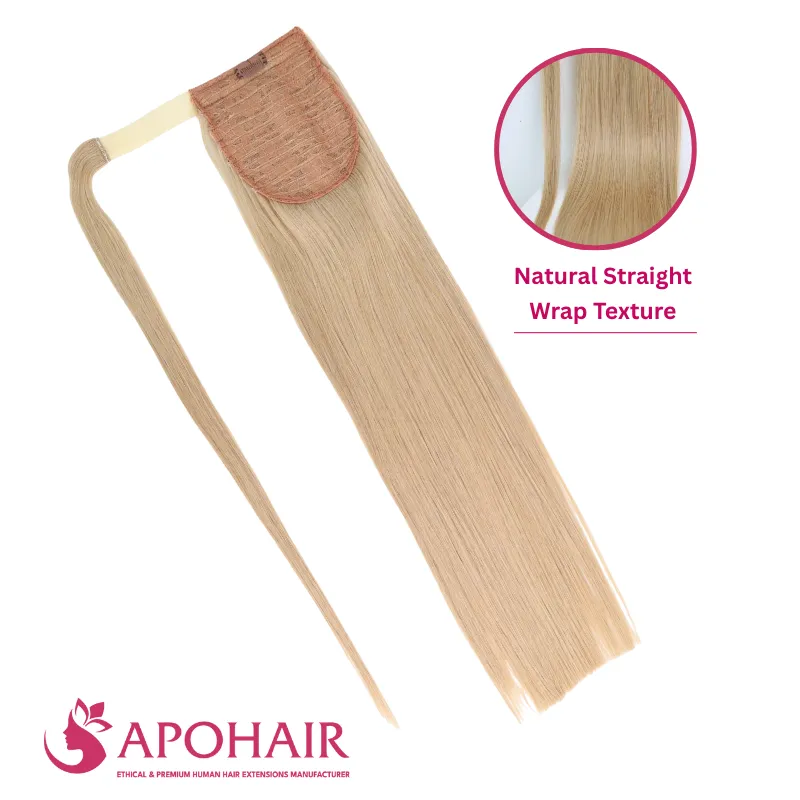
#27 and #30 are both warm colors, but they’ll give you a totally different look once they’re on your hair. You should check out #27 if you want a bright honey blonde. It’s got these gold undertones that really catch the light when you’re outside. On the flip side, #30 is more of a medium auburn. It’s a bit darker because of that red-copper base, so it feels like a warm brown. If you want to stand out with a clear blonde look, go for #27. But if you’d rather tone things down and stay in the brown family, #30 is the way to go.
We’re going to break down everything that makes these two shades different, from the color family and brightness to the undertones and how they match your skin. Besides, we’ll also look at how they fade over time and when to use each one so you can feel totally confident before you go out and buy anything.
What Is 27 Hair Color?
#27 hair color is a warm honey blonde that sits right at a Level 7 or 8 on the professional color chart. It gets its golden vibes from a mix of blonde, brown, and warm red pigments, which is why most brands call it honey blonde or strawberry blonde. You might even see it labeled as a light auburn blonde on some color rings. Either way, this shade is definitely in the blonde family because it’s meant to look bright and luminous rather than dark like a typical brown or auburn.
The main thing you’ll notice about #27 is its yellow-gold undertone. That sun-kissed, honey glow is exactly what makes it different from those cooler, ashy blondes. Since it’s a Level 7 or 8, it falls right in that sweet spot of light-to-medium blonde. When you’re out in the sun, it looks like a radiant golden blonde, but once you step inside under in-house lights, those honey tones get a bit deeper and look more like a rich amber. People usually mix it up with #30, which is darker and more of an auburn, or #613, which is way lighter and closer to a platinum blonde.

What Is 30 Hair Color?
#30 is a warm, medium-to-light auburn brown that sits right at a Level 5 or 6 on the professional color chart. It gets its signature red-copper vibe from a mix of light brown and warm red pigments, which is why most brands just call it chestnut or copper brown on their color rings. Even though it has those vibrant copper-red tones layered in, it’s definitely rooted in the brown family because of that solid, dark-blonde-to-medium-brown base.
The standout feature here is that red-copper undertone. It adds so much dimension and gives the hair almost a metallic glow when it catches the light. At a Level 5 or 6, it’s basically the sweet spot for a light-to-medium brown. When you’re out in the sun, that copper-red on your hair really pops and looks super vibrant, but once you step inside, it settles into a cozy, earthy reddish-brown. People usually mix this one up with #33, which is darker and cooler, or #27, which is way lighter and sits more in the golden-blonde category.

What Are The Differences Between 27 And 30 Hair Colors?
The main differences between #27 and #30 hair color come down to how bright they are, their specific undertones, and the overall vibe they give your hair. Think of #27 as a golden-blonde highlight shade at Level 7 or 8, making it much lighter and more “blonde-coded.” On the flip side, #30 is a copper-auburn base color at a Level 5 or 6, so it feels more like a rich, warm brown. We’ve put together a quick breakdown table below to show you exactly how these two warm shades stack up across six different categories:
| Feature | #27 Hair Color | #30 Hair Color |
| Color Family | Blonde family (golden-blonde base) | Brown family (auburn-brown base) |
| Brightness | Level 7–8, light blonde range | Level 5–6, light-to-medium brown range |
| Visual Appearance | Warm golden blonde, with a glassy shine on straight hair | Rich copper-auburn, glossy sheen on straight hair |
| Undertone and Base Pigment | Yellow-gold dominant undertone | Red-copper dominant undertone |
| Best Use Case (Highlights vs Base) | Highlight, face-framing accent (1B/27, 4/27, 27/613, T1B/4/27) | Both base and highlight (1B/30, 4/30, T1B/30) |
| Fade Pattern and Maintenance Demand | Fades to brassy yellow in 6–8 weeks; needs purple toning shampoo | Fades to orange-red in 8–12 weeks; needs blue-based toning shampoo |
Color Family: #27 is blonde while #30 is brown
Basically, #27 is part of the blonde family, while #30 is definitely in the brown family. #27 is a yellow-gold shade that’s been lifted to a Level 7 or 8. If you look at a pro color chart, it puts it right over the line into the blonde category. Mind you, #30 is built on a warm, light-brown base, loaded with red-copper tones. Since it sits around a Level 5 or 6, it stays firmly in the brown family and doesn’t quite hit that blonde mark.
Since they’re in different color families, #27 is going to give you a much higher contrast if you’re mixing it into dark hair. #30 acts more like a smooth middle ground between black and brown bases. Sometimes people mistake #27 for a light brown when they see it under warm indoor lights. At the same time, some people think #30 is a blonde shade if they aren’t used to seeing those lighter copper tones in auburn hair.

Brightness: #27 is brighter than #30
#27 is about two or three levels brighter than #30 on the color chart. To break it down, #27 sits at a Level 7 or 8, which puts it right in the light blonde range. #30 is more of a Level 5 or 6, keeping it in that light-to-medium brown category. Even in the exact same light, #27 is always going to look brighter because its yellow-gold base reflects way more light than the reddish-brown base of #30.
When you’re actually wearing these, #27 adds a ton of brightness and a sun-kissed feel that really frames your face. Whereas the deeper tone of #30 adds richness and warmth, making your hair look thick and lush without any harsh contrast. Just keep in mind that if your natural hair is super dark, you’ll need to lighten it first to get these colors to show up right. Since #27 is so much lighter, it’s definitely going to require more bleaching and processing than #30 will.

Visual Appearance: #27 looks golden while #30 looks auburn
When you see them side by side, #27 clearly looks like a warm golden blonde while #30 comes across as a rich copper-auburn. The biggest visual difference you’ll notice is just how much brighter #27 is, and you can easily tell the two apart from about 5 or 6 feet away.
The texture of your hair also changes how these colors pop. On straight hair, #27 gives off a smooth, glassy golden shine, but if you have waves or curls, it creates a warm, sun-kissed look with tons of dimension. For #30, straight hair gets a rich, glossy auburn sheen, while curly or wavy hair really lets that copper-red pigment catch the light for a vivid, deep glow.
If you’re taking photos with a flash or a ring light, keep in mind that #27 is going to be photographed as a super bright, almost platinum-warm blonde. #30 shows up in pictures as a deep, glowing copper-auburn with a really noticeable red pop, though. Even from a distance of 5 or 6 feet, most people can tell #27 is a blonde and #30 is an auburn just by looking at them.

Undertone and Base Pigment: #27 has yellow-gold while #30 has red-copper
#27’s main undertone is yellow-gold, while #30’s is more of a red-copper. Since #27 has a blonde base, those yellow-gold tones give it a warm honey vibe. Yet, #30 is built on an auburn base, so it’s packed with strong red and copper pigments. Because of that golden undertone, #27 looks amazing on fair to light-medium skin, giving you a bright, warm contrast that really makes your features pop without looking weird. If you have medium to dark skin, the copper-red tones in #30 are often suggested by our team because they blend so well with golden or olive skin tones.

Best Use Case (Highlights vs Base): #27 highlights while #30 blends as base
#27 really shines as a highlight or a face-framing accent, while #30 is versatile enough to work as both a highlight and a base color. For #27, it’s usually placed strategically to add brightness and a sun-kissed vibe around your face and the crown of your head. You’ll see it most often in mix codes like 1B/27, 4/27, 27/613 or T1B/4/27. These pairings use a dark base specifically to make that honey blonde pop with a really vivid contrast.
Then again, #30 works as either a warm base or a rich highlight depending on how dark your natural hair is. The most common codes you’ll find are 1B/30, 4/30, and T1B/30, which blend the auburn into dark hair for a really natural, graduated look. If you’re going for a balayage, stylists usually put #27 at the very ends and around the face for brightness, while using #30 through the mid-shaft to create that smooth, warm sweep.

Fade Pattern and Maintenance Demand: #27 fades yellow while #30 fades orange
#27 is going to fade to a pale, brassy yellow in about 6 to 8 weeks if you don’t tone it. Whereas #30 holds on a bit longer, fading to an orange-red over 8 to 12 weeks. This basically means #27 is the higher-maintenance choice since you’ll need to reach for your toning products more often.
The #27 loses its golden pigment first, which can leave you with an uneven yellow look. With #30, the brown base actually washes out first, which lets that underlying copper-red show through. Generally, #27 fades faster simply because lighter shades don’t have as many pigment molecules packed into each strand, so the color just rinses out quicker every time you shampoo.
To fix the fade on #27, you’ll want a purple or violet toning shampoo to cancel out that brassy yellow and get back to that perfect honey balance. If you’re rocking #30, a blue-based shampoo is your “best friend” to neutralize any unwanted orange. It’ll keep your hair looking like a rich, true auburn instead of a washed-out brassy copper.

Popular 27 Hair Color Ideas
#27 honey blonde adapts to dozens of styling directions, from single-process golden shades to multidimensional balayage blends. Here are 15 ideas that show the full range of this warm, golden hue across different techniques, placements, and skin tones.
- Golden Honey Blonde: A mix of warm gold and rich honey tones with amber undertones that reflect light and create a soft, warm glow with depth.
- Honey Blonde with Highlights: A honey blonde base with lighter highlights in a 3D effect that mimics natural sun-lightening, ideal for light brown hair.
- Warm Honey Blonde: Rich, warm tones with golden reflection that looks different indoors versus outdoors, flattering for olive skin or green/hazel eyes.
- Deep Golden Honey Blonde: Deeper golden-brown lowlights mixed with honey mid-tones for fall and winter warmth without washing out the complexion.
- Sandy Honey Blonde with Highlights: Beige-sand tones mixed with warmer honey highlights that prevent brassiness on naturally dark hair.
- Warm Honey Blonde with Dark Roots: Milk chocolate shadow roots with honey blonde starting above ear level for a face-framing, slimming effect.

- Honey Blonde with Caramel Accents: Caramel ribbons woven through honey blonde, concentrated in the mid-sections for a natural sun-lightened finish.
- Bright Honey Blonde: A lighter, brighter honey blonde with warmth near the face that transitions to deeper honey toward the back for summer-ready dimension.
- Honey Blonde Highlights on Brown Hair: Natural base preserved with honey-colored foilyage ribbons at a 50/50 dark-to-light contrast ratio for brightness without damage.
- Gold-Copper Honey Blonde: Coppery undertones mixed with honey gold that leans rose gold in some lights and warm honey in others, fading to a peachy blonde.
- Buttery Honey Blonde with Face-Framing Highlights: Rich honey base with money pieces 2–3 levels lighter around the face to brighten eyes and highlight cheekbones.
- Light Honey Blonde: Pale gold tones on a Level 8 base with Level 9–10 pieces woven through in irregular, baby-fine highlights for natural movement.

- Caramel Swirl Honey Blonde: Three-tone balayage with a neutral honey base, lighter wheat blonde ends, and deeper caramel concentrated at roots and mid-lengths.
- Sandy Honey Blonde: Beige-blonde base with subtle honey-gold reflections and half-shade variation throughout, flattering for cooler skin tones.
- Honey Blonde Bronde: Roughly 60% brown and 40% blonde with honey tones brightening the surface and ends, allowing 4+ months between appointments.

Popular 30 Hair Color Ideas
#30 chestnut auburn carries a rich, warm depth that shifts between copper, mahogany, and gingerbread depending on the light. Here are 15 ideas that show how this versatile shade works across balayage, highlights, solid color, and ombre techniques.
- Amber Chestnut Layers with Golden Accents: A mahogany-cinnamon brown base with chestnut highlights all over and honey-blonde babylights that give a golden shimmer at the ends.
- Umber with Hints of Chestnut and Caramel: Umber roots blended with spirals of chestnut, gingerbread, and caramel highlights in piecey streaks for an elegant, dimensional shade.
- Deep Chocolate with Chestnut Tones: A near-black dark chocolate base with painted chestnut and mahogany balayage starting at the mid-lengths, plus sangria-red accents for depth and bounce.
- Golden Chestnut Balayage: Bronde balayage with a reddish chestnut tint and walnut-colored roots that make grow-out easy for naturally dark hair.
- Chestnut Babylights: Multiple shades of babylights from caramel to copper to warm blonde that mimic all-over chestnut brown, working especially well on long hair.
- Ginger Curly Balayage: A warm, almost copper chestnut on long curly hair with highlights blended into a brown base for a low-maintenance warm-toned finish.

- Subtle Chestnut Undertones: Deep brown hair with thin chestnut babylights that follow the curves of the hair for a subtle warmth suitable for all ages and styles.
- Midnight Roots with Triangular Chestnut Highlights: Black-brown roots with chestnut balayage all over, creating stark contrast that draws the eye down and makes hair look longer.
- Chestnut Highlights with Copper Balayage: Dark brown roots layered with gingerbread and chestnut highlights, with coppery-red balayage brightening the tips for a fiery fall look.
- Spiced Blonde Chestnut: Chestnut leaning toward the blonde side with warm blonde face-framing pieces and dark blonde balayage throughout for flattering brightness around the face.
- Autumn Lob with Chestnut Overtones: Ashier brown roots with subtle chestnut face-framing highlights on a shorter lob cut, offering low maintenance and natural texture.
- Chocolate Bob with Shimmery Chestnut Highlights: A textured bob with deep chocolate roots and tiny copper babylights that bring out piecey red tones across the entire look.

- Blonde Balayage with Chestnut Lowlights: Honey blonde highlights set off by chestnut lowlights with darker roots, creating a low-maintenance color that grows out naturally.
- Subtle Golden Chestnut: Very subtle golden highlights on a naturally warm-toned brunette base that bring out the warmer, chestnut hues without heavy commitment.
- Ashy Chestnut Waves: Deep, dark roots with ashier chestnut balayage and caramel babylights for a sultry refresh without committing to full dark chocolate brown.

How To Choose Between 27 and 30 Hair Colors?
Deciding between #27 and #30 really comes down to five main things: Your skin tone, eye color, your natural hair’s color and health, your personal style, and how much time you’re willing to put into maintenance. We’ve broken down each of these factors below so you can see which shade actually vibes best with your features.
Define Your Skin Tone and Undertone
#27 is best if you have fair to light-medium skin with cool or neutral undertones. For medium to deep skin with warm or neutral undertones, #30 is the way to go. Just remember, your undertone matters more than how dark your skin is when you choose.
If your skin is fair or porcelain, pick #27. The golden blonde creates a bright look that really makes your face pop. For olive or deeper skin, #30 works better because the copper-auburn tones match your natural warmth. Think of it like this: skin tone is just about the surface, but undertone is the “hidden” color underneath. On cool undertones, #27 looks like a nice, intentional contrast. But be careful, #30 can look a bit “off” or brassy on cool skin if you aren’t careful. If you have warm undertones, #30 will definitely look more natural since its red-copper base matches the golden-peach warmth in your skin.

Consider Your Eye Color
#27 is a perfect match if your eyes are blue, green, or hazel. For brown, dark, or amber eyes, you should definitely go with #30. If you have light eyes like blue or green, #27 is your best bet. The golden tones make lighter colors look much brighter and more intense. On the other hand, #30 is the right choice for brown or amber eyes. Its warm copper-auburn tones really bring out the depth in dark eyes and make everything look super smooth and natural.
Basically, #27 looks great with blue or green eyes because the warm blonde provides a cool contrast. But #30 is the better pick for dark eyes because its red-copper base matches the natural warmth in your irises, giving you a really balanced and polished look. That said, you should still keep your undertone in mind since it’s what really counts, no matter what color your eyes are.

Reflect Your Personal Style
#27 is perfect for those bright, sun-kissed golden vibes. #30 is more about that warm, earthy look you can pull off all year. Both colors really show off different styles.
Go with #27 if you’re hitting the beach, doing a summer shoot, or just want that bright glow. #30 is a better fit for fall and winter, professional vibes, or just an everyday look where you want a bit more warmth.
If you have lighter skin and want to stand out, #27 is definitely the way to go. It catches the eye without needing any extra work. For medium to deeper skin tones, #30 looks super natural because the copper-auburn tones just blend right in. #30 works great no matter the season, but #27 is really at its best in the spring and summer.

Consider Long-Term Care
#30 is way easier to deal with than #27 in the long run. The color doesn’t fade as fast, so you don’t have to worry about toning it all the time. It’s a lot more forgiving if you can’t make it to the salon right away. If you want something low-maintenance, this is the one for you.
#27 loses its life pretty quickly, and you’ll usually see it start to change in about 6 to 8 weeks. #30 really holds up for 8 to 12 weeks with normal washing. You’ll need to catch up on toning for #27 every 4 to 6 weeks just to stop that brassy yellow from taking over the honey look.
#30 is much easier to live with between appointments because it fades into a nice orange-red that still feels warm. It won’t look “off” nearly as fast as #27 does. For anyone who wants to keep things simple, #30 doesn’t need much work, handles sulfate-free soap just fine, and stays warm and deep for a lot longer.

Check-up Your Natural Hair Color and Hair Health
Choosing 27 or 30 hair color really depends on your natural hair color and the health of your hair. #30 is much easier to blend into dark brown hair since it doesn’t need as much lift. If you want #27, keep in mind it requires more bleaching, which can be risky if your hair is already damaged or has been colored.
If your natural hair is dark brown (Level 2 to 4), #30 will blend in perfectly. These auburn tones are closer to your dark base, so you won’t have to lift your color nearly as much. For those with light brown or blonde hair (Level 5 to 7), #27 is much better because the golden tones match the pigment you already have.
One point to note is that you’re better off going with #30 if your hair is a bit damaged or you’ve bleached it before.
It doesn’t need much lift, and the coloring process is way less intense. To get a true #27 on very dark hair, you’d have to lift it about 4 or 5 levels, while #30 usually only needs 2 or 3 levels to look great.

How to Use 27 and 30 Hair Color Extensions and Wigs?
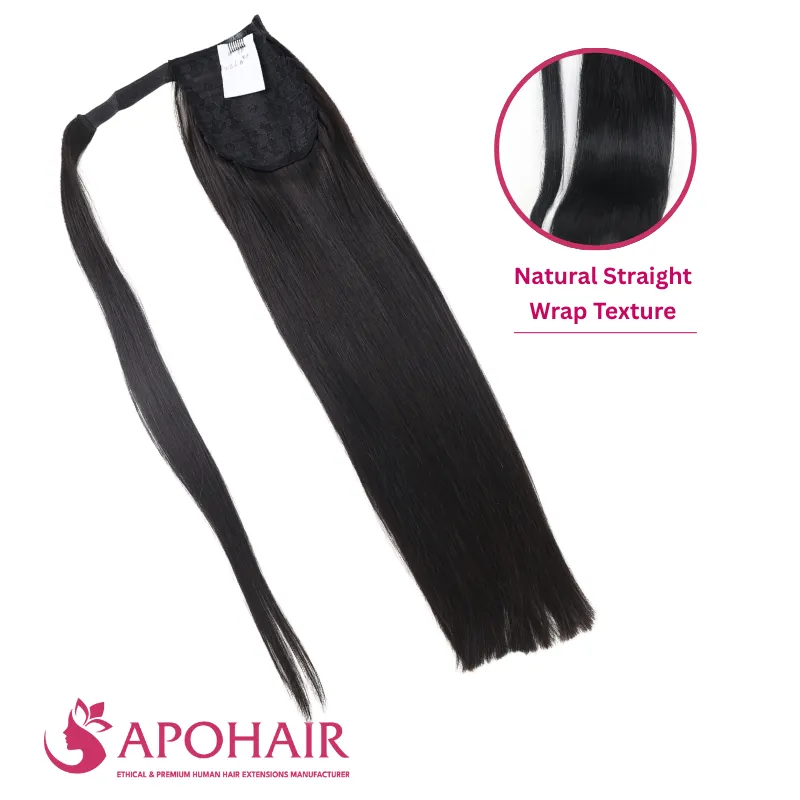
Instead of committing to permanent chemical dyes or waiting months for your natural hair to grow, you can instantly transform your look with the radiant warmth of shades 27 and 30 by incorporating high-quality hair extensions and wigs into your styling routine. You can wear both #27 and #30 hair extensions or wigs as a solid color, or mix them together to get more dimension.
#27 gives you that bright golden-blonde look that really pops and gives your face a nice sun-kissed glow. #30 is more of a deep, warm auburn that adds a lot of richness and looks great in photos, especially if you have a medium to deep skin tone. A cool trick is to mix #27 and #30 in one install. This gives you a natural balayage look where #30 works as the warm base and #27 adds those bright highlights around your face.
To keep your #27 and #30 extensions looking good, it’s essential to:
- Always wash them with sulfate-free shampoo in cool water.
- Try to use a deep conditioner every 2 or 3 washes.
- If you’re wearing #27, use a purple shampoo to stop it from looking too brassy. For #30, a blue shampoo helps get rid of any orange tones.
- Store your hair flat or on a stand and try not to use heat tools too much.
While you can try to dye extensions at home, bleaching dark hair to get to #27 can really dry it out or make it break. Also, it’s easy to mess up the color on #30 if you aren’t a pro. Buying your hair pre-colored from APOHAIR is a much better call. They handle the coloring at the factory using 100% Vietnamese hair, so the color is even and the hair stays healthy without the damage you get from DIY dyeing.

APOHAIR’s 27 and 30 Hair Color Extensions and Wigs
APOHAIR offers both #27 and #30 across our full lineup. We are proud to be a wholesale raw Vietnamese hair vendor, manufacturing all products in our own 33,000 m² factory, using top-quality human hair with cuticles aligned. We handle the dyeing ourselves and keep a close eye on everything to make sure the colors match perfectly every time.
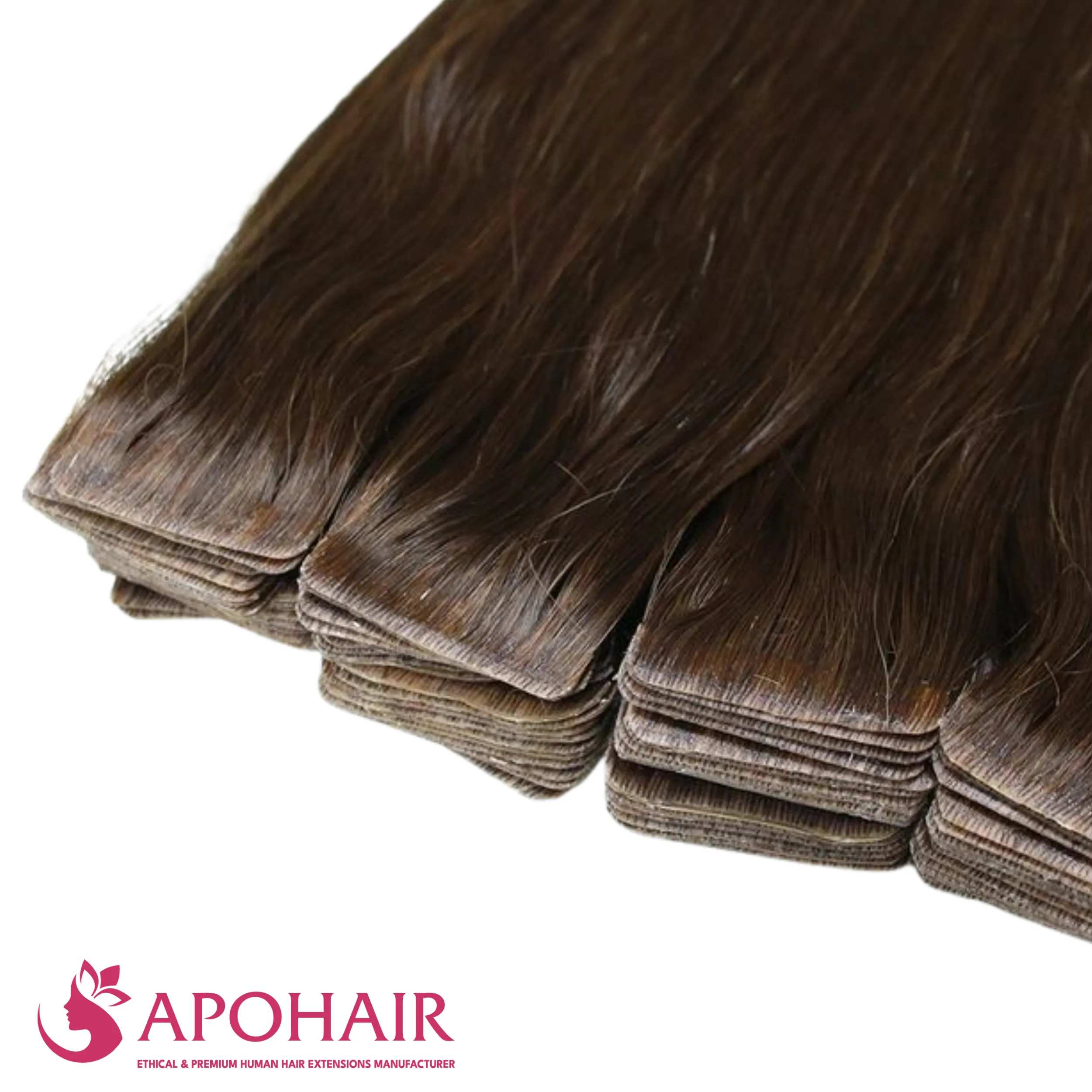
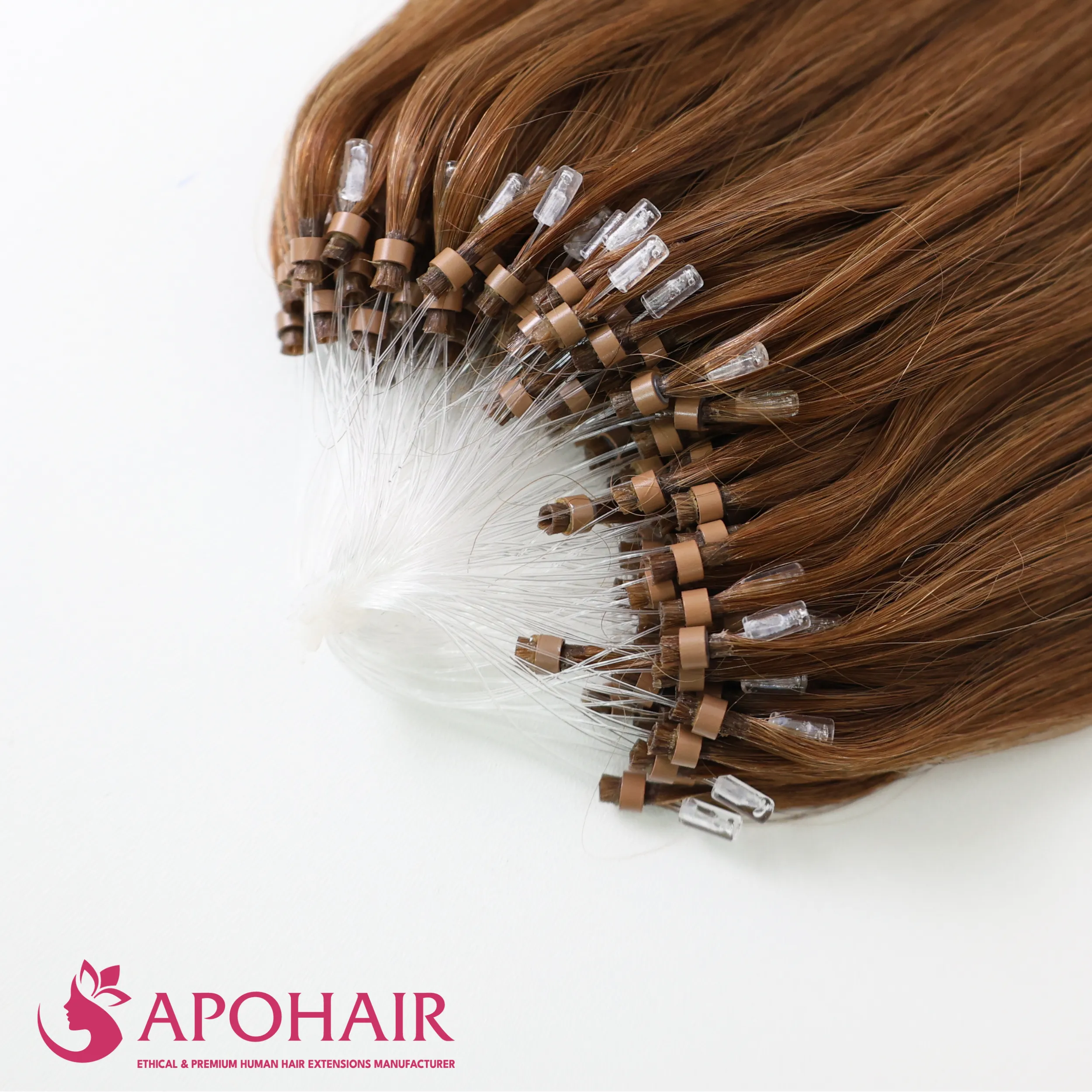
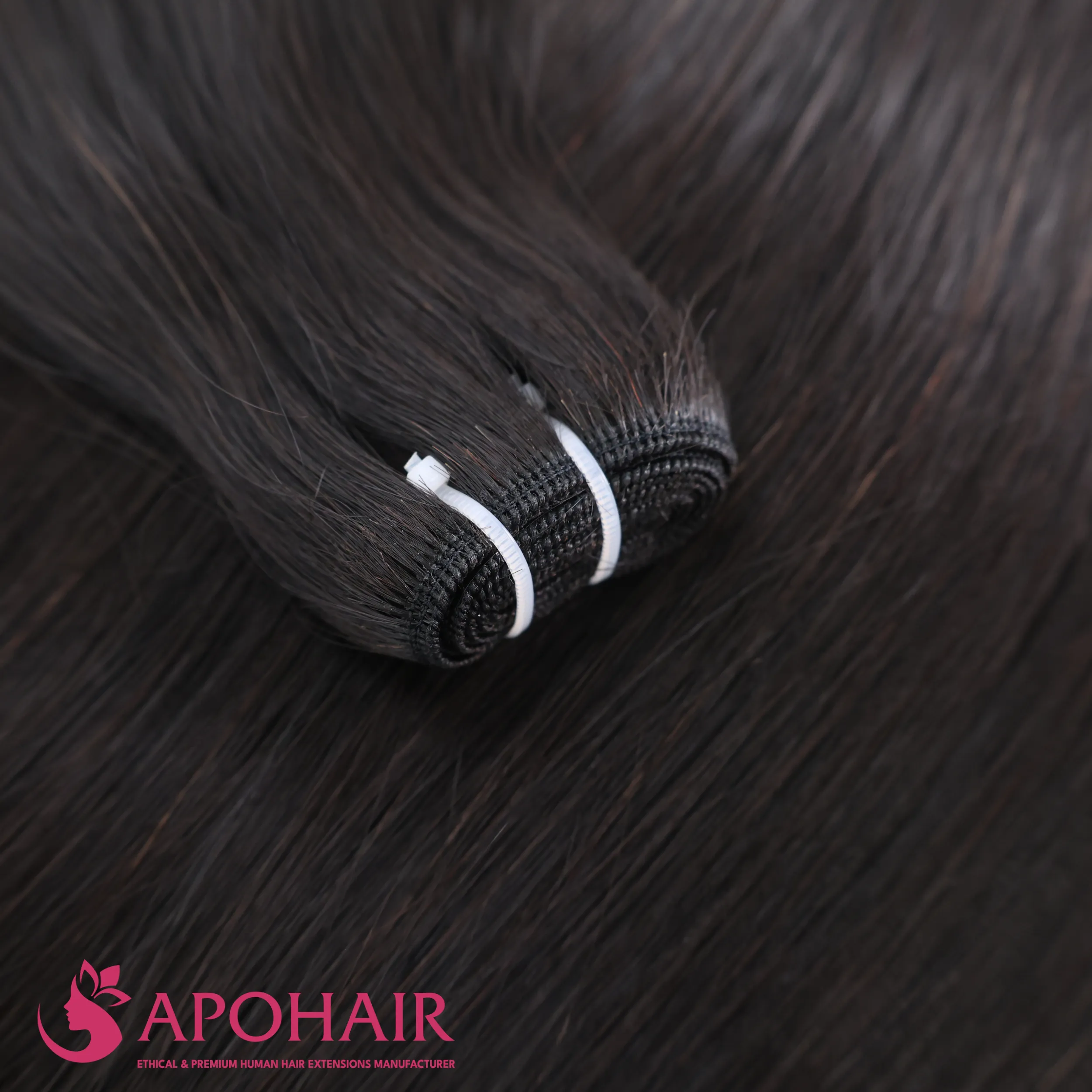
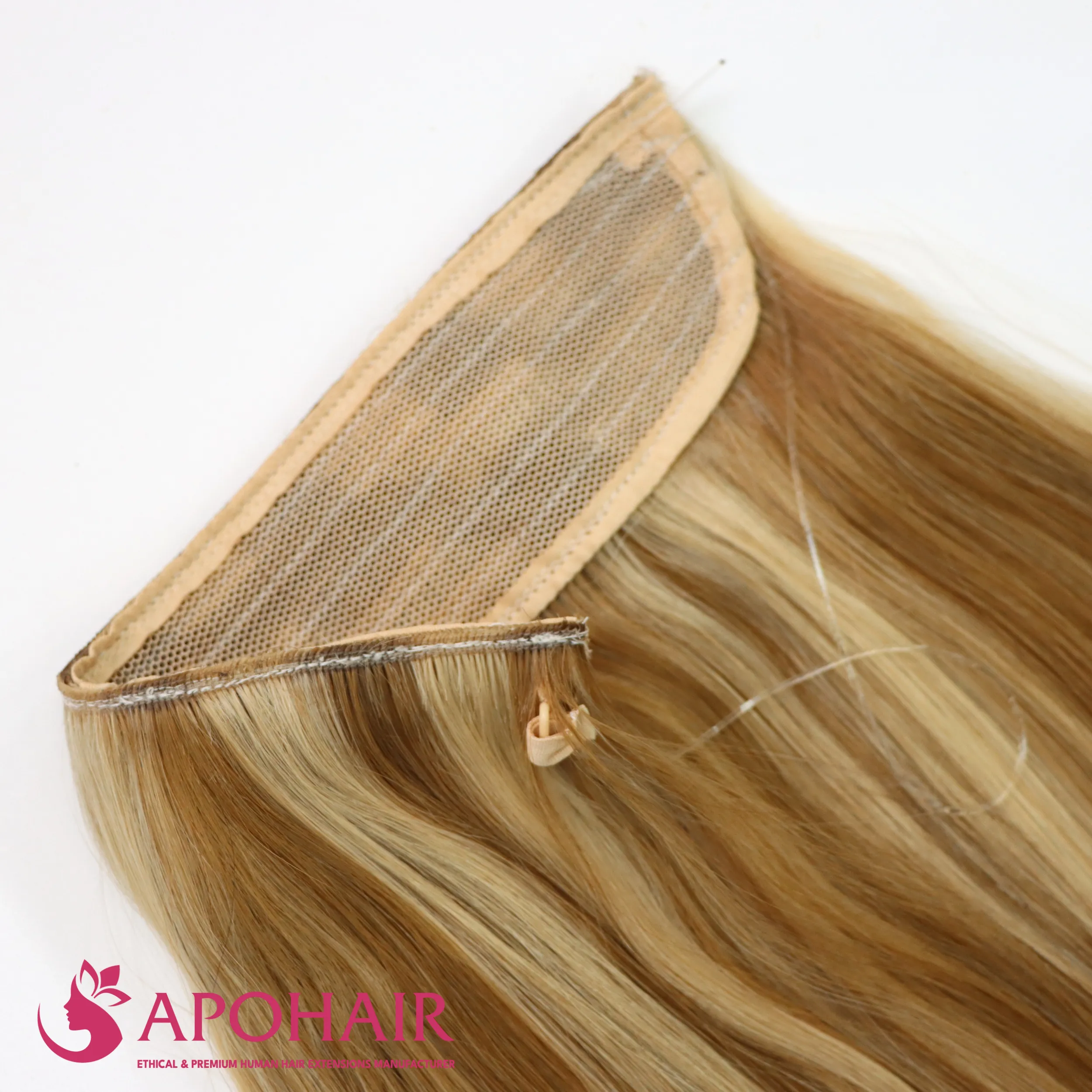
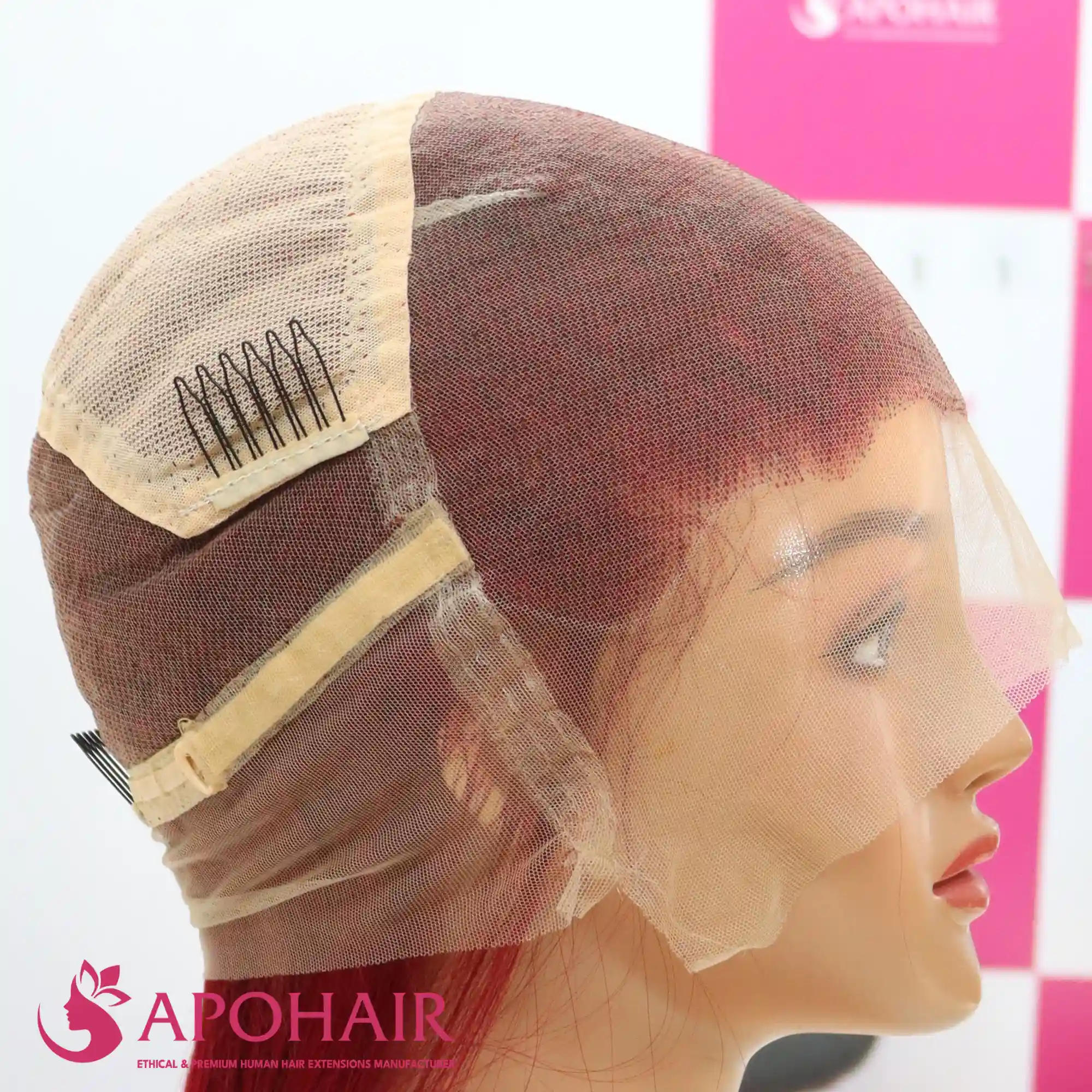
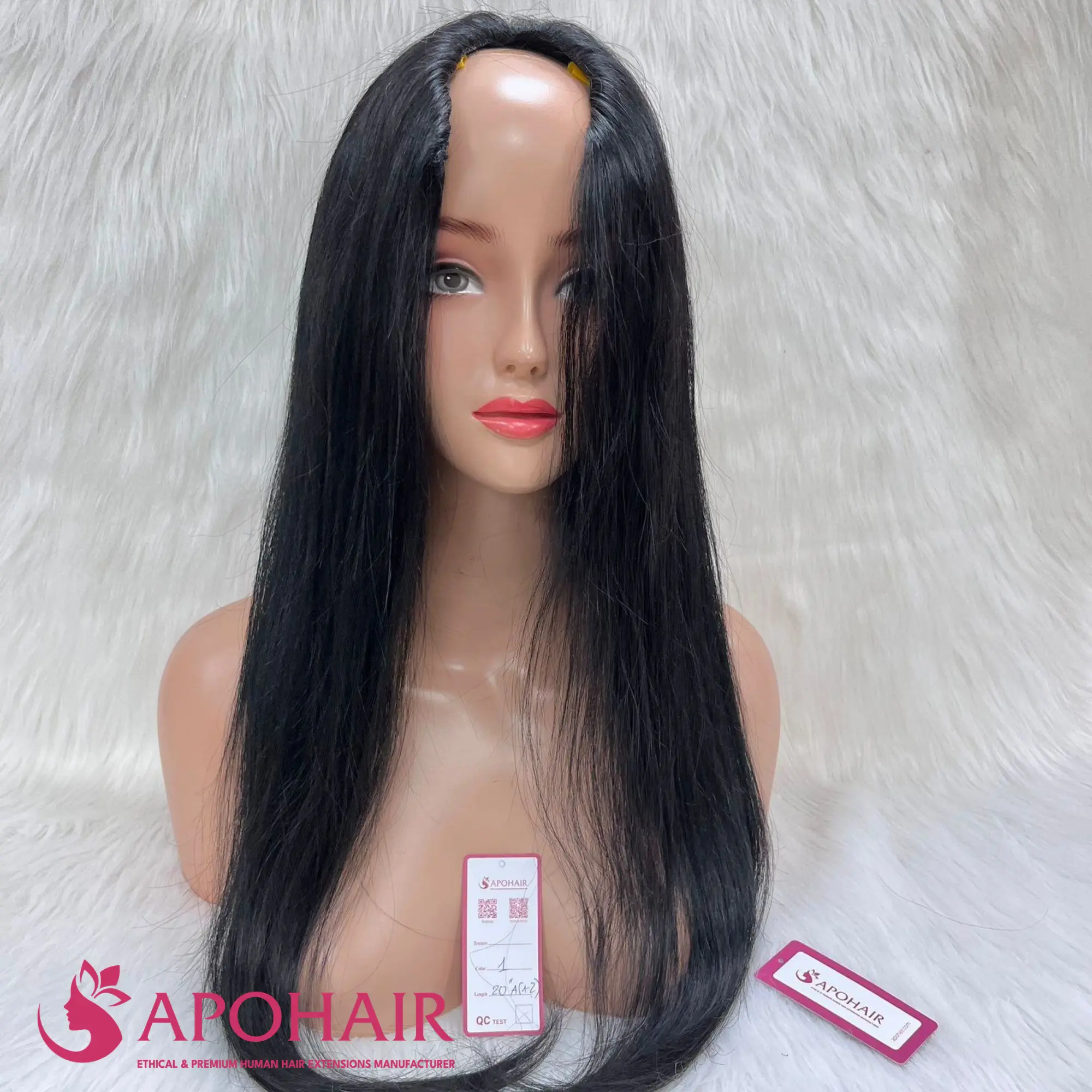
You can find both shades in any style you need, from clip-ins and tapes to wefts and tips. We also have nano rings, bulk hair, and a wide range of human hair wigs in over 36 different colors on our color chart.
At our factory, we sort through the hair to keep it all facing the same way from root to tip. Then, we gently lighten it and use professional dyes to hit the exact shade. Before anything goes out, we check every piece to make sure the color is even and the hair stays healthy. Choosing our pre-colored hair is a much better call than trying to dye it yourself, since APOHAIR makes sure the color sinks in well without damaging the hair.
What sets APOHAIR apart from other suppliers is a combination of sourcing, manufacturing, and pricing advantages built over 20+ years in the industry:
- 100% Vietnamese Human Hair: Single-donor collection with intact cuticles accepts color better than Indian or Chinese alternatives.
- Cuticle-Aligned Technology: All cuticles face the same direction, removing the risk of tangling and matting.
- Ethical Sourcing: Direct collector network in Vietnamese villages with verified fair compensation.
- Factory-Direct Pricing: No middlemen. Wholesale rates sit 30–40% below retail market prices.
- 20+ Year Track Record: 1,000+ factory workers and 100+ sales staff operating at full capacity.
- 33,000 m² Manufacturing Facility: Modern production lines in Nam Dinh Province, Vietnam.
- Global Distribution: Ships to the US, UK, EU, Australia, Africa, and Asia within 24 hours.
- Quality Guarantee: 7-day warranty with a free replacement policy on every order.
At APOHAIR, we turn real Vietnamese hair into top-tier extensions that salon owners and wholesalers everywhere rely on. We’re working to lead the way by making great products, keeping things ethical, and helping our customers succeed.
Ready to order #27 or #30 hair extensions and wigs for your salon or store? Contact APOHAIR for wholesale pricing and free shade samples.
FAQs Related to 27 Hair Color vs 30 Hair Color
Is #27 or #30 Better for Dark Skin?
#30 is the better fit for dark skin tones. Its copper-auburn warmth harmonizes with deeper pigments in the complexion, creating a natural, cohesive look rather than a stark contrast. #27 can work on dark skin, but it reads as a bolder, higher-contrast choice that requires more deliberate styling to balance.
What Is the Difference Between #27, #30, and #33?
These 3 shades sit in a deepening progression. #27 is a golden honey blonde at Level 7–8 in the blonde family. #30 is a medium copper-auburn at Level 5–6 in the brown family. #33 is a dark auburn-red at Level 4–5 in the brown family with cooler red tones. #27 is the lightest and most golden. #30 is the warm mid-point. #33 is the darkest with the most saturated, cool-leaning red pigment.
How Long Do #27 and #30 Extensions Last Before Needing a Color Refresh?
#27 extensions typically need a toning refresh at 6–8 weeks to control brassiness. #30 extensions hold their color for 8–12 weeks before toning becomes necessary. With sulfate-free shampoo, cool-water washing, and reduced heat tool use, both shades can maintain wearable color for up to 3–4 months before a full re-dye or replacement is worth considering.
Outro
While #27 and #30 are both warm color, they do different things for your look. We offer #27 as a golden honey blonde that’s perfect for highlights if you have lighter skin. On the other hand, we have #30, a copper auburn that looks great as a base or highlight, especially on medium to deep skin tones.
Besides, #27 fades a bit faster and needs more toning to stay fresh, while #30 stays deep for longer and is much easier to look after. Your choice really depends on your skin tone, style, and how much time you want to spend on hair care. At APOHAIR, we carry both shades across all extension types. We make them in our own factory using 100% Vietnamese hair to get the color just right.
APOHAIR ETHICAL & PREMIUM VIETNAMESE HUMAN HAIR MANUFACTURER
- Address: Building 3A, Lane 82 Duy Tan, Cau Giay, Hanoi, Vietnam
- Factory: Yen Luong Village, Y Yen District, Nam Dinh Province, Vietnam
- Phone number: (+84) 862 132 366
- Email: wholesale@apohair.com
- Website: apohair.com
