









Balayage vs. Ombre: Styles, Care & Extensions
If you are wondering what balayage hair is, it is basically a way to paint hair by hand. It’s like “sweeping” color onto the surface to make it look lighter from the middle down to the tips. The goal is to get that natural, sun-kissed vibe. While ombre saturates whole sections, balayage just paints them. Ombre starts lower down on the hair, but balayage blends in more smoothly. If you want a natural look, go with balayage, since ombre tends to look pretty bold and graphic. Also, balayage is way easier to maintain since it lasts longer, while you’ll have to go back to the salon more often for ombre refreshes. With balayage, the placement and how much color you get can vary, but ombre is all about that contrast between your roots and the ends.
This article shows you the real differences in how they look and how much they cost. You’ll figure out which one fits your hair, your wallet, and your style. That way, you can show up to your next hair appointment with a solid plan.

What Is Ombre?
Ombre is basically a hair color style that gives you a cool gradient effect. It goes from darker roots to lighter ends by saturating the color horizontally. Stylists apply the dye or lightener across your hair and then blend it upward so you get that smooth shift from dark to bright. You’ll usually see four main types:
- Standard ombre (dark to light)
- Reverse ombre (light roots to dark ends)
- Sombre (which is just a softer version),
- Color melt (where they blend a few shades together strand by strand for a really fluid look).
The gradient happens because the colorist puts plenty of lightener from the middle of your hair down to the tips, then lightly brushes the fade line upward so there isn’t a weird, sharp boundary. You’ll probably need to head back to the salon every 2 to 4 months to refresh the color, depending on how fast your hair grows and how bold the look is. This style is perfect if you want something high-contrast that really stands out. It’s a great choice for brunettes who want to add some blonde or if you want to try out fun colors like rose gold, violet, or teal without having to dye your hair from root to tip.

What Are the Differences Between Balayage and Ombre?
Balayage and ombre are actually different in three main ways: how the color is put on, where it sits on your hair, and the final look you end up with. Balayage gives you a soft finish with lots of dimension. Ombre gives you a much bolder look with a clear two-toned gradient.
| Factor | Balayage | ombre |
| Technique | Freehand painting; color swept vertically onto the hair surface | Horizontal saturation; color applied across a defined fade line |
| Placement | Starts 2-5 cm (1-2 in.) from root; increases toward ends | Keeps hair dark from root to mid-shaft; color shift begins at jaw level |
| Look / Vibe | Soft, scattered, sun-kissed dimension | Bold, two-toned gradient with a visible color shift |
| Maintenance & Touch-up Frequency | Every 3-4 months; new growth blends softly | Every 2-4 months; fade line shifts as hair grows |
| Customization | Adjustable by strand: placement, density, shade count, foilayage option | Adjustable by contrast level, fade-line height, and sombre vs. sharp dip-dye |
Technique: Balayage Paints While Ombre Saturates Sections.
Think of balayage as a way of painting hair by hand. Stylists just use their hands and a tint brush to paint color vertically onto the surface with smooth, sweeping strokes. Ombre is different because the stylist applies color horizontally across a specific line, making sure the bottom part is fully saturated. Basically, balayage is all about freehand painting, while ombre is a “saturate and blend” method that works across horizontal sections. To keep the look structured, ombre often involves using clips or foils, which you don’t really need for balayage.
Since balayage only goes on the surface and moves vertically, the hair underneath stays dark, giving you a lot of depth. Ombre goes for full saturation from the middle down, so it pretty much replaces your natural color with a clean shift. When it comes to time, a balayage session usually takes about 2 or 3 hours. An ombre session is a bit longer, usually around 3 to 4 hours, because they use more product and have to be really careful about blending that fade line.

Placement: Balayage Blends While ombre Starts Lower.
With balayage, the color usually starts about an inch or two away from your roots and gets thicker as it goes down to the ends. Ombre is different because it keeps your hair completely dark from the roots all the way to the middle, usually around your jawline, before the color actually starts to change. Since balayage begins further down from your scalp, the dye never sits right on your roots. For ombre, that shift happens at or below your jaw, so the top half of your hair stays its natural shade.
Because balayage stays off the roots, your new hair growth just blends right into the highlights without anyone noticing. With ombre, there’s a much clearer line where the color starts, so your roots show up sooner and are way more obvious. This means you can wait about 3 to 4 months before needing a touch-up with balayage. For ombre, you’ll probably have to head back to the salon every 2 to 4 months just to keep that fade line looking clean and balanced.

Look / Vibe: Balayage Looks Natural While Ombre Stays Bold.
Balayage gives you those soft, scattered highlights that look just like you’ve spent a lot of time in the sun. Ombre, however, is all about that bold, two-toned gradient where you can clearly see the color change. Balayage creates a multi-dimensional look that feels “lived-in,” with lighter bits woven all through your hair. It basically makes people think the sun naturally lightens your strands over time. The main thing about ombre is that obvious shift from dark roots to bright ends. It’s a look that’s meant to be noticed and shows you’ve definitely made a style statement.
With balayage, your stylist can change things up by playing with the depth of the color or how many sections they paint. They can even start closer to the root to give you anything from barely-there highlights to something that almost looks like ombre. Ombre doesn’t have as much variety because that high contrast is part of how it’s built. You can actually get a “soft ombre” look (people call it sombre or color melt) if you go heavy with the balayage from the middle to the ends. But a real ombre can’t ever copy the scattered, natural highlight pattern that you get with balayage.

Maintenance & Touch-up Frequency: Balayage Lasts Long While Ombre Needs Refreshes.
You’ll usually only need a balayage touch-up every 3 to 4 months. Ombre needs more work, typically every 2 to 4 months, depending on how fast your hair grows and how sharp you want that line to stay. Balayage is lower maintenance because the color starts away from your roots, so new growth just blends right in. Ombre is a bit more demanding since the color shift can start looking messy as your hair gets longer, especially if there’s a big contrast between your roots and ends.
For both, just stick to a simple routine: use sulfate-free shampoo, do a weekly deep condition, and try to stay away from too much heat. A UV-protective product also helps your color last. If things start looking a little dull, you can go for a gloss or toner between visits. Whether you do it at the salon or use a pro kit at home, it’ll keep your color looking fresh for another 4 to 6 weeks.

Customization: Balayage Varies While ombre Adjusts Contrast.
Balayage is way more flexible than ombre. Since it’s done by hand, your stylist can change up the placement and how much color goes on every single strand. With ombre, you’re mostly just choosing how much contrast you want and where you want that fade line to start. For balayage, you can decide how far from the root to begin, how many sections to highlight, and even how many different tones to mix in. If your hair is naturally dark or a bit stubborn, they can even use “foilyage” (balayage with foils) to get that extra lift.
Ombre customization is simpler: it’s all about the shade difference between your roots and ends, and how high up the color goes. You can go for a soft blend (sombre) or a sharp look that looks like a dip-dye. You can even mix both styles! Your stylist can paint balayage highlights through the top and then go for full ombre saturation at the bottom. That way, you get both the cool dimension and that bold gradient in one go.

Now that you understand how balayage can be customized, the next step is determining how much of your hair to actually lighten. Choosing the right coverage will define your final look and affect your touch-up schedule.
→ Compare partial vs full highlights to find your ideal style
Popular Balayage and Ombre Hairstyle Ideas
Balayage vs. Ombre on Dark Hair and Black Hair
Dark and black hair are perfect for both balayage and ombre. Here are 10 cool color ideas that go from subtle warmth to bold contrast.
- Caramel balayage on black hair: Paint some warm caramel tones from the middle to the ends to give your jet-black hair more depth.
- Honey blonde ombre on dark brown: A golden honey gradient starting from the jawline down to the tips really brightens up deep brunette shades.
- Espresso-to-chestnut balayage: Weaving soft chestnut highlights into espresso hair creates a warm, chocolatey look.
- Black-to-burgundy ombre: A deep wine-red shift from dark roots to burgundy ends gives you a bold, moody vibe.
- Ash brown balayage on black hair: Use cool ash brown highlights to soften a solid black base with some smoky depth.
- Black-to-platinum ombre: Going from black roots to icy platinum ends is a high-contrast look that makes a huge statement.

- Dark chocolate-to-copper balayage: Hand-painted copper tones through dark chocolate hair catch the light with warm, autumn-like flashes.
- Jet black-to-violet ombre: A trendy purple gradient from black roots to violet ends looks bold and shows off your personality.
- Toffee balayage on dark brown: Scattering rich toffee highlights through dark brown hair gives you a natural, sun-warmed finish.
- Black-to-rose gold ombre: A soft metallic pink shift from dark roots to rose gold ends hits that perfect mix of edgy and feminine.

Balayage vs. Ombre on Brown Hair
Brown hair is super versatile and works great for both balayage and ombre. Here are 10 color ideas for light, medium, and dark brunette bases.
- Golden blonde balayage on medium brown: Sweeping warm golden pieces through medium brown hair makes it look like you’ve just come back from a summer holiday.
- Brown-to-caramel ombre: A caramel shift from brown roots to warm blonde ends gives you a soft, friendly glow.
- Mushroom brown balayage: Cool, ashy highlights on a brown base create a modern look with plenty of dimension.
- Chocolate-to-strawberry blonde ombre: A pinkish blonde gradient starting from chocolate roots adds a fun, warm-weather vibe.
- Bronde balayage (brown + blonde): Mixing brown and blonde tones all over gives you a finish that looks totally natural.

- Brown-to-auburn ombre: A rich auburn shift from brown roots to warm red ends adds warmth if you don’t want to go full red.
- Hazelnut balayage on light brown: Adding soft hazelnut highlights to a light brown base creates a creamy, toasted effect.
- Brown-to-silver ombre: A bold silver gradient from warm brown roots to cool metallic ends mixes a classic style with something more modern.
- Sun-kissed beige balayage on dark brown: Weaving neutral beige tones into dark brown hair gives you a soft, beachy look.
- Mocha-to-honey ombre: A warm honey gradient from mocha roots to golden ends looks easy-going and very inviting.

Balayage vs. Ombre on Blonde Hair
Balayage vs. Ombre on Blonde Hair
Blonde hair is a great base for both balayage and ombre because you can really play around with cool or warm tones. Check out these 10 ideas to add some serious dimension to your look.
- Platinum balayage on dark blonde: Hand-painting icy platinum pieces onto a dark blonde base gives you a bright, cool-toned contrast.
- Blonde-to-pastel pink ombre: A soft blush shift from blonde roots to pink ends creates a really pretty and romantic vibe.
- Buttery blonde balayage on ash blonde: Weaving warm buttery highlights into ash blonde hair adds a nice golden, sunlit feel.
- Blonde-to-lavender ombre: This cool purple gradient from blonde roots to lavender ends looks amazing on fair and medium skin tones.
- Champagne balayage on sandy blonde: Adding champagne-toned highlights to a sandy base gives you a clean, low-key brightness.

- Blonde-to-peach ombre: A warm peach shift from blonde roots to coral ends is a fun and fresh way to show off your style.
- Creamy vanilla balayage on golden blonde: Soft vanilla highlights on golden blonde hair make your finish look glowing and multi-dimensional.
- Blonde-to-icy blue ombre: Going from blonde roots to steel blue ends is a bold look that feels like it’s straight out of a fashion magazine.
- Warm honey balayage on medium blonde: Scattering honey-toned pieces through medium blonde hair adds a lot of richness and warmth.
- Blonde-to-copper ombre: A warm copper gradient from light blonde roots to rich auburn ends creates a cool contrast that’ll definitely get noticed.

How To Choose Between Balayage and Ombre?
Picking between balayage and ombre really comes down to four simple things: the look you’re going for, how often you can make it to the salon, your hair’s current condition, and how much you’re looking to spend every year. Just go through each point below to figure out which style actually fits your life.
Think Over Your Desired Vibe
The first thing you should think about is the look you actually want. Balayage is perfect if you’re looking for a soft, subtle vibe. Ombre is the way to go if you want a clear, high-contrast gradient. Since balayage creates scattered highlights that blend right into your natural hair, it’s the best choice for anyone who wants an effortless, “lived-in” look rather than something that looks obviously dyed.
Ombre, on the other hand, gives you a bold shift from root to end that really makes a style statement. If you like a clean, simple aesthetic and want your hair to look like the sun lightened it, you’ll probably prefer balayage. But if you enjoy being expressive and love high-contrast styles, ombre will fit you better. Basically, if you want something subtle that matches your natural base, go for balayage. If you want a color change that people will definitely notice, choose ombre.

Look Into Your Maintenance Capacity
Balayage is perfect if you’re looking for a low-maintenance lifestyle. Since the color starts away from your roots, you won’t need to visit the salon as often as you would for an ombre. Usually, people with balayage only head to the salon 3 or 4 times a year for touch-ups. With ombre, you’ll probably end up going 4 to 6 times a year just to keep that gradient balanced and the fade line looking clean. Those extra 1 or 2 appointments every year really add up when you think about the time and money spent over 12 months.
To make both styles last longer between visits, you should take care of your hair at home. Use sulfate-free shampoo, do a deep condition twice a week, and try a color-depositing gloss every month. If your schedule only lets you get to the salon 3 or 4 times a year, balayage is your best bet. If you can manage 4 to 6 visits and really want to keep a precise gradient, go for ombre.

Check Up Your Hair Type, Texture & Health
Your hair type and whatever you’ve done to it in the past really matter when picking a style. Generally, balayage is a safer bet if your hair is fine, fragile, or has been dyed a lot before. Ombre usually needs a stronger lightening process, so it’s better if your hair is currently healthy. Balayage is gentler on damaged hair because the lightener only sits on the surface of certain strands instead of soaking entire sections, which means your hair deals with fewer chemicals overall.
Since ombre saturates everything from the middle to the ends, it uses more bleach over a bigger area. This can be pretty tough on hair that’s already dry or over-processed. If you have straight or wavy hair, both techniques will show up clearly. For curly hair, balayage usually gives a softer, more blended look, while ombre can look a bit bolder because of how your curls catch the light at the fade line. Both styles look best if your hair is at least shoulder-length, so the gradient has enough room to show off. If you’re dealing with gray hair or hair that’s been chemically straightened, balayage gives your stylist way more control than ombre does.

Figure Out the Total Spend
Usually, an ombre costs more for a single session than balayage because it uses more product over a larger area. However, balayage can actually end up being more expensive over the year if you’re going for a very light look that takes a few different appointments to achieve. In the US, a standard balayage session usually runs between $150 and $350, depending on your hair length and the salon. Ombre is a bit higher, ranging from $150 to $400 per session, since it takes more lightener, more time, and often needs a toner to fix any brassy tones on those fully lightened ends.
Don’t forget the costs at home, too. You’ll probably spend about $30 to $80 a month on things like color-safe shampoo, deep conditioners, and UV protection for either style. If you want to keep the cost of each visit low, go for a balayage that isn’t too bright. But if you care more about how many times you have to go to the salon each year, balayage is the winner. Having fewer appointments usually saves you more money in the long run.

How To Use Balayage and Ombre Hair Extensions and Wigs?
If you want a new look without messing with chemicals on your own hair, extensions and wigs are a great way to go. They give you that instant color shift without any of the risk.
- Balayage extensions: These add some cool dimension and highlights. They have lighter, hand-painted tones from the middle to the ends, so they blend right in with your natural color.
- Ombre extensions: These give you that classic two-toned gradient. They’re darker at the top and lighter at the bottom, creating a clear color change all through the hair.
To keep your extensions and wigs looking good, you’ve got to take care of them. Here’s a simple routine to follow:
- Stick to sulfate-free shampoo: This helps keep the hair from drying out or losing its color.
- Condition correctly: Only put conditioner from the middle of the hair down to the tips to avoid buildup at the top.
- Treat them weekly: Doing a protein or hydration mask once a week is a smart move to stop the colored parts from getting thirsty.
- Give ombre extra love: Since the ends are lightened, they need more care. Use a leave-in conditioner or some hair oil after every wash so the tips don’t get brittle.
You can dye human hair extensions at home, but it’s honestly pretty risky. You’d need a professional lightener and a good understanding of how the hair was colored before. If you make a mistake, you’ll end up damaging the pieces for good. Instead of trying a DIY project, it’s much better to buy pre-colored pieces directly from APOHAIR. Their factory-dyed hair is processed under professional conditions, so the tone is consistent, the saturation is even, and the hair stays way healthier than if you tried to bleach it yourself.

APOHAIR’s Balayage and Ombre Hair Extensions and Wigs
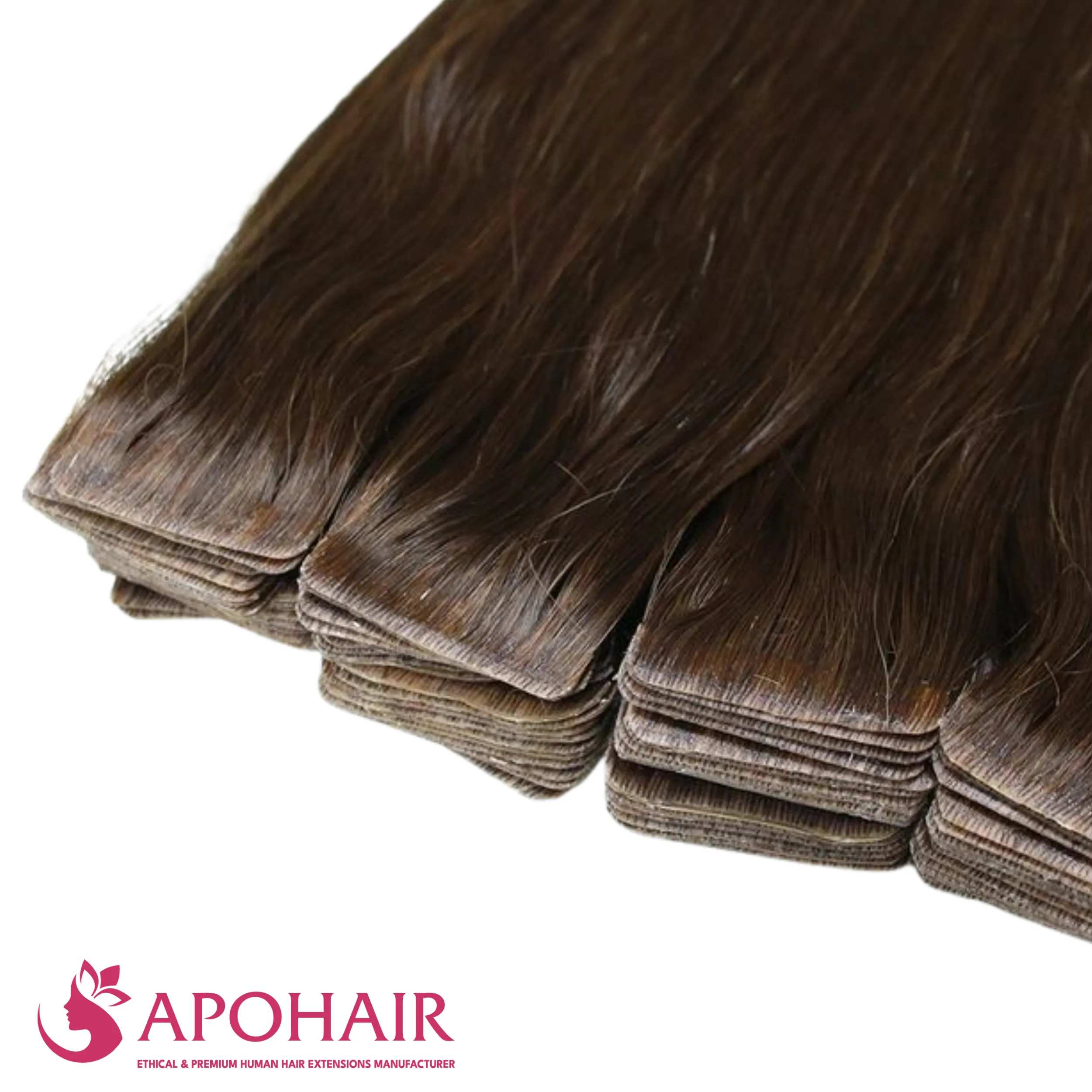
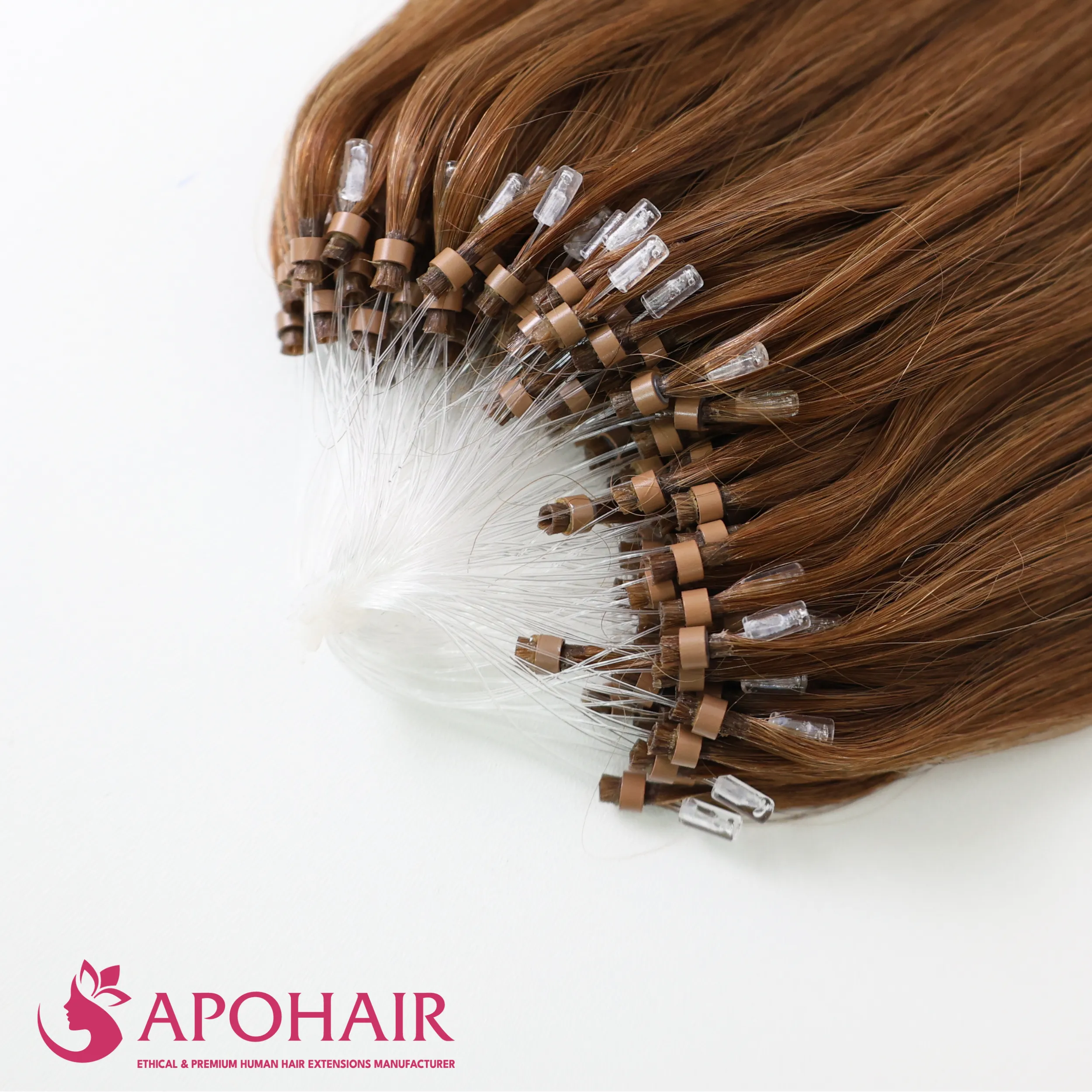
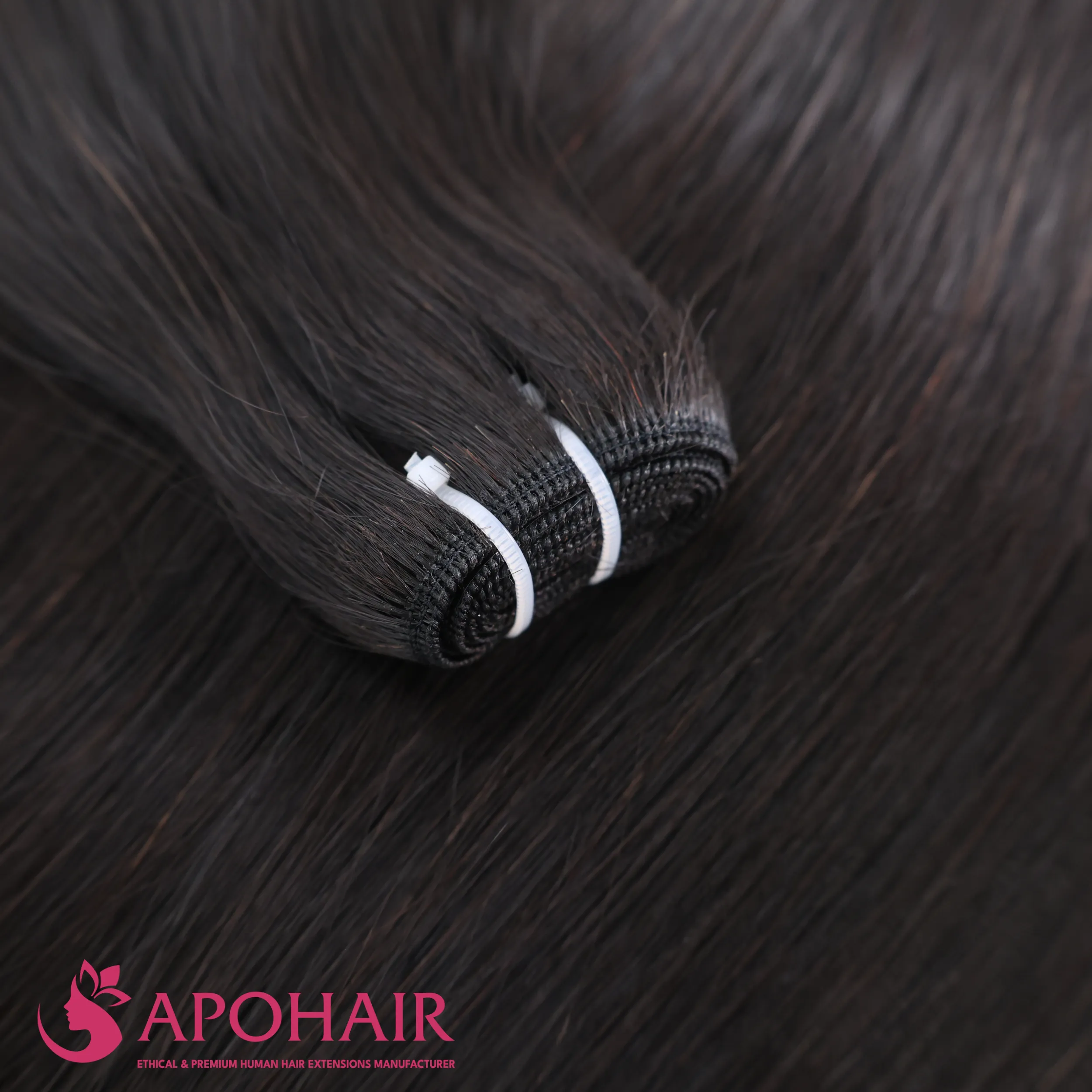
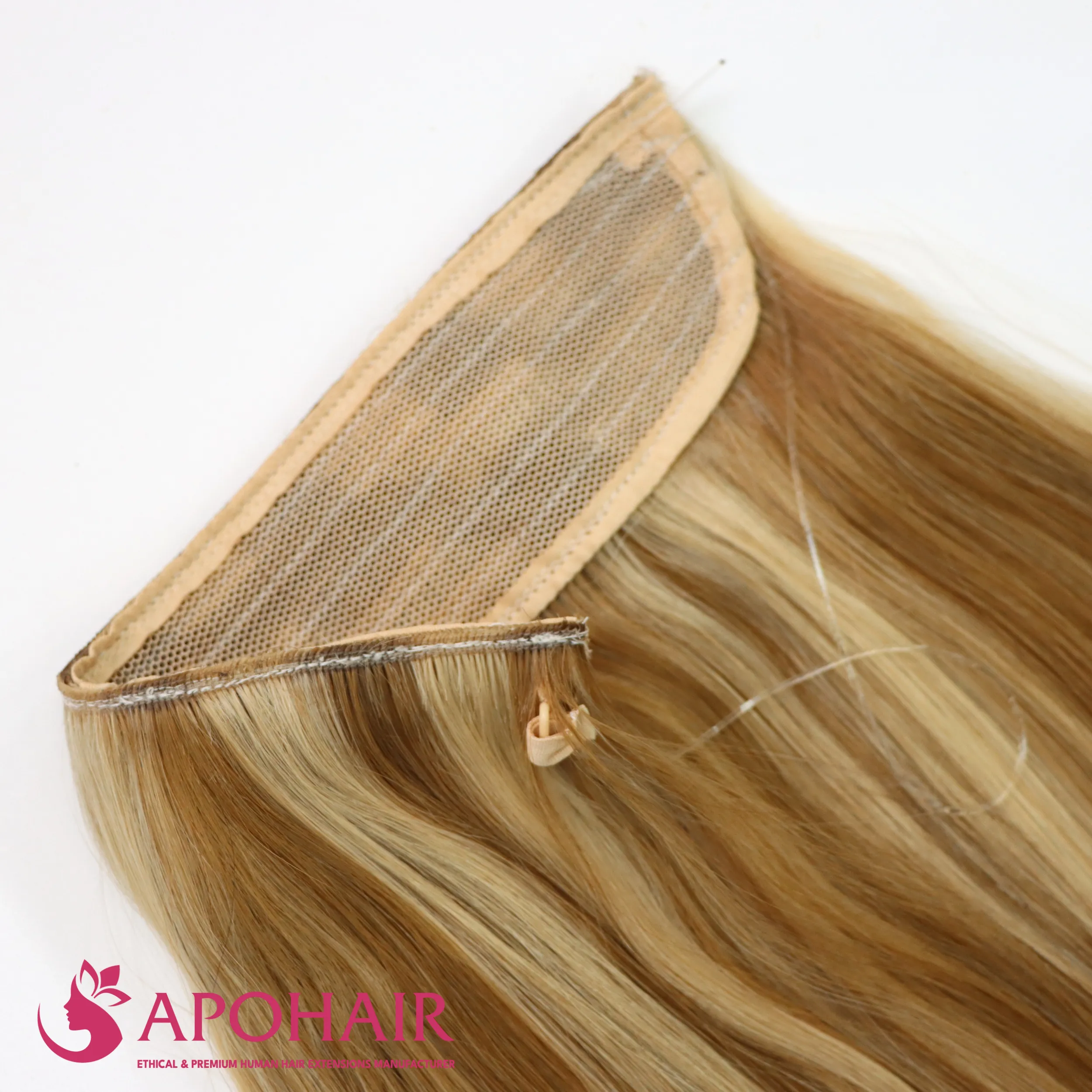
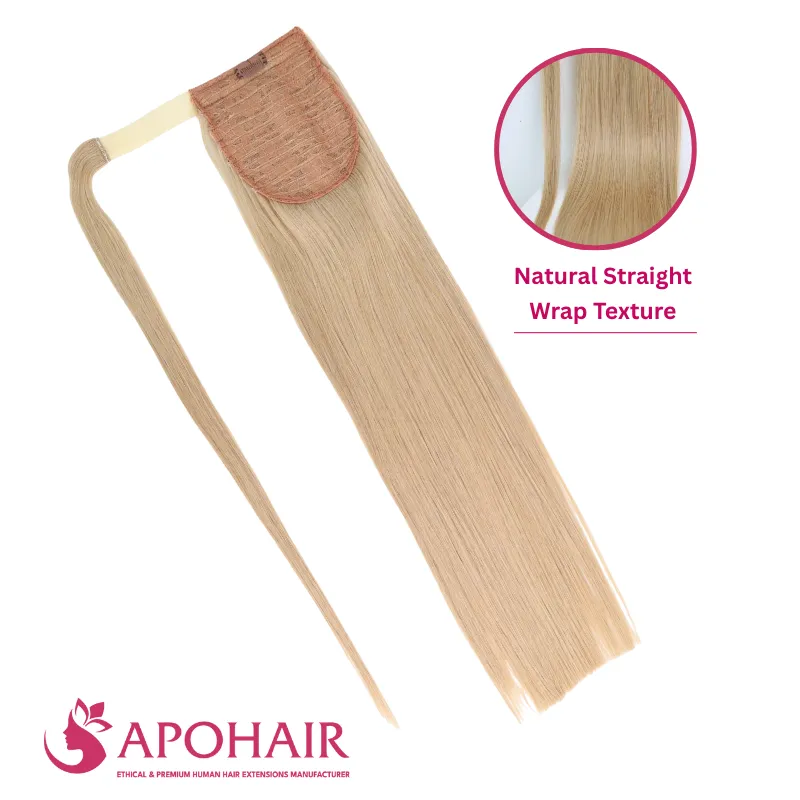
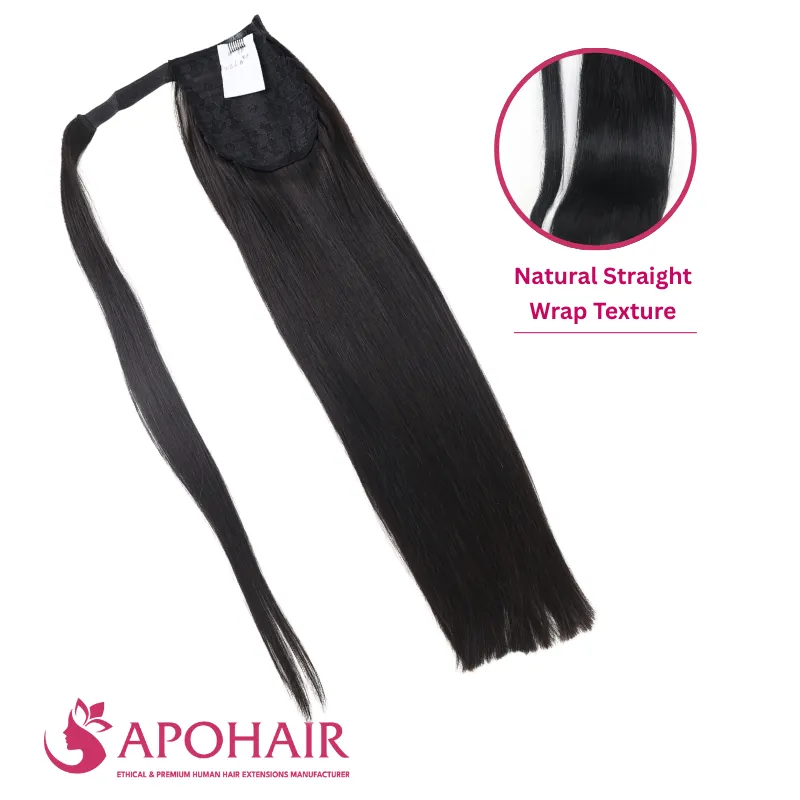
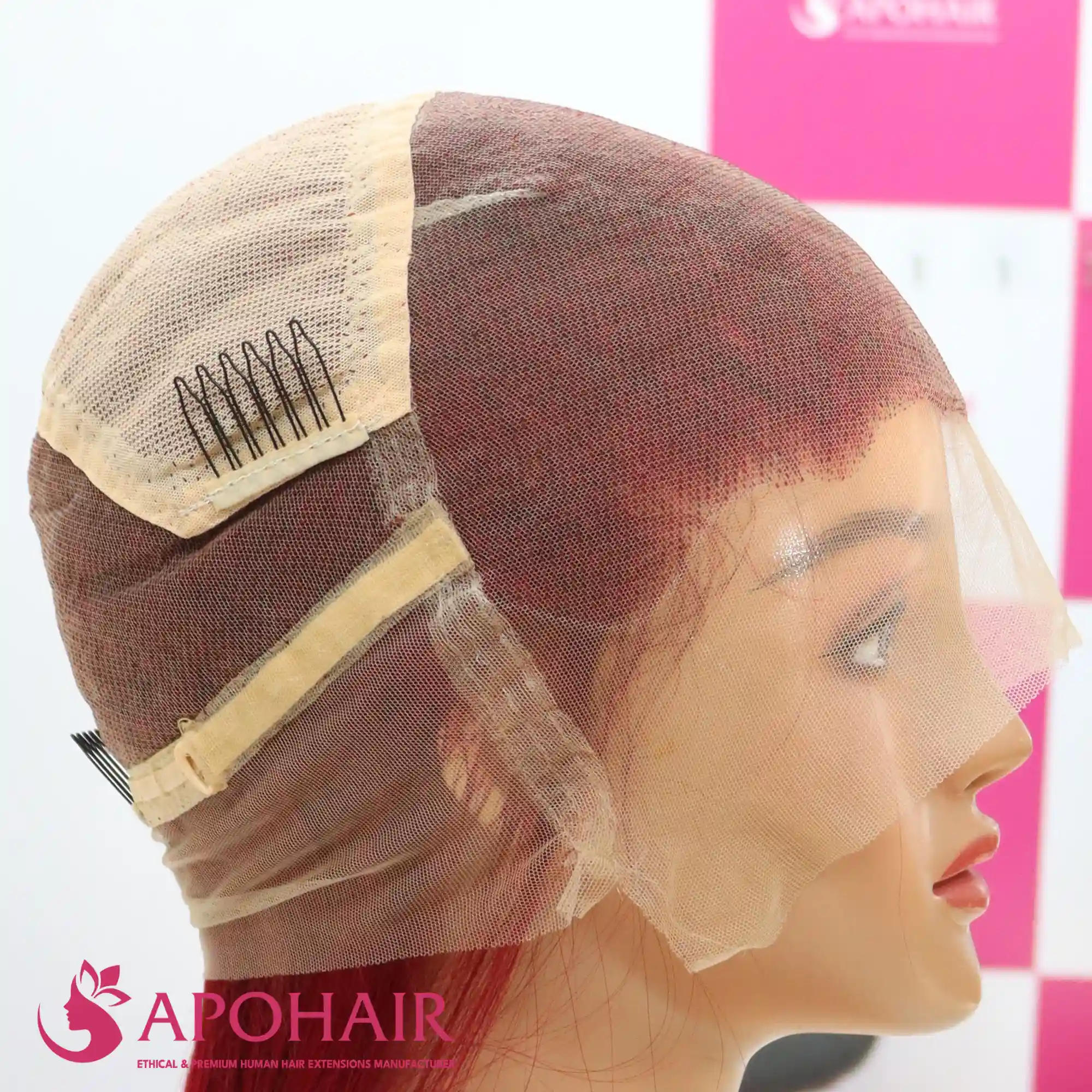
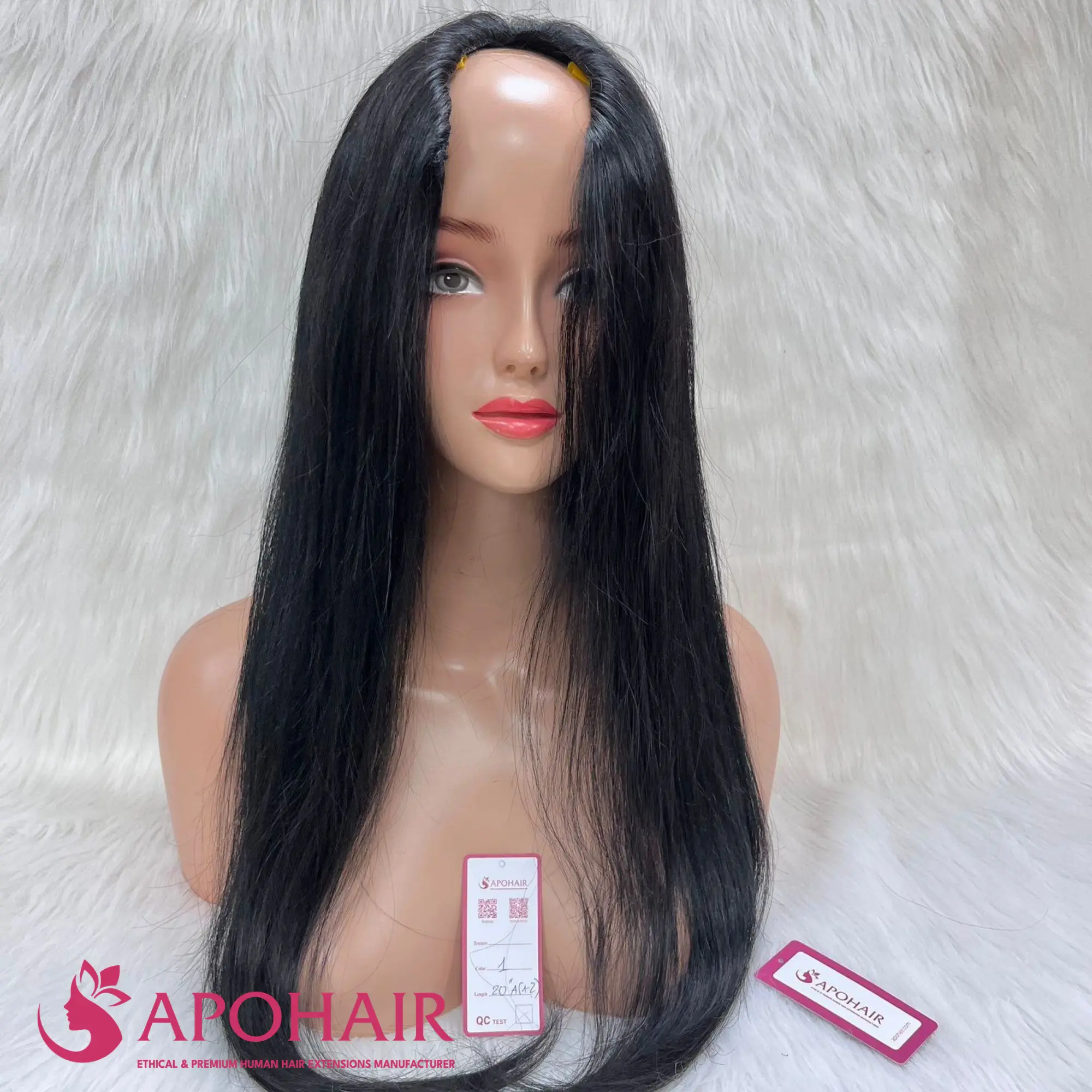
APOHAIR offers balayage and ombre options across their entire line of extensions and wigs. Everything is made from 100% ethically sourced Vietnamese human hair, and they keep the cuticles aligned even during the coloring process. You can find these colors in any format you need, from clip-ins and tape-ins to various wefts like hand-tied or flat wefts. They also have keratin tips, ponytails, and a full range of wigs like lace closures and U-parts available in these trendy shades.
At the factory, the process starts with healthy hair sorted from root to tip. They use professional lighteners on specific areas, like the mid-lengths for ombre or hand-painted sections for balayage, before toning everything to the perfect shade. Their quality control team stays on top of every batch, checking that the color is consistent, the fade is smooth, and the hair stays strong after processing. Only the best pieces that pass every test actually make it to the packaging stage.
What really sets APOHAIR apart from other wholesale hair suppliers is how they combine high-end hair quality with complete manufacturing control. Because they offer great wholesale value, it’s a win for both salon owners and individual buyers looking for a premium look.
- 100% Vietnamese Human Hair: Single-donor collection with intact cuticle layer accepts color better than Indian or Chinese hair sources.
- Cuticle-Aligned Technology: All cuticles face the same direction, which prevents tangling throughout the product’s lifespan.
- Ethical Sourcing: Direct collector network in Vietnamese villages with verified fair compensation for donors.
- Factory-Direct Pricing: No middlemen in the supply chain, with wholesale rates 30-40% below retail market.
- 20+ Year Track Record: 1,000+ factory workers and 100+ sales staff supporting global operations.
- State-of-the-Art Manufacturing: Operates a 33,000 m² (355,000 sq. ft.) factory in Nam Dinh, Vietnam with modern production lines.
- Global Distribution: Ships to the US, UK, EU, Australia, Africa, and Asia within 24 hours of order confirmation.
- Quality Guarantee: 7-day warranty with a free replacement policy for any product that does not meet specifications.
APOHAIR transforms authentic raw Vietnamese hair into premium extensions trusted by salon owners and wholesalers worldwide. Our commitment: global leader in the hair industry through ethical practices, manufacturing excellence, and customer success.
Select the Right Wholesale Inventory
If you are outfitting a salon or expanding your distribution, comparing the different formats of premium hair ensures you stock exactly what your clients need for their specific installations.
→ remy human hair weave wholesale — explore pre-taped, clip-in, and machine weft options
→ wholesale bundles of human hair — ideal for professional sew-in weaves and custom creations
→ buy human hair wigs wholesale — perfect for ready-to-wear lace frontals and closure units
Ready to stock balayage and ombre extensions for your salon or personal collection? Contact APOHAIR for wholesale pricing, free samples, and custom color matching.
APOHAIR ETHICAL & PREMIUM HUMAN HAIR EXTENSIONS MANUFACTURER
- Address: Building 3A, Lane 82 Duy Tan, Cau Giay, Hanoi, Vietnam
- Factory: Yen Luong Village, Y Yen District, Nam Dinh Province, Vietnam
- Phone number: (+84) 862 132 366
- Email: wholesale@apohair.com
FAQs Related to Balayage and Ombre
Is Balayage or Ombre Better for Dark Hair?
Both work great on dark hair, so it really depends on the look you’re after. Balayage gives you those warm, sun-kissed highlights from the middle to the ends without changing your natural base color too much. Ombre, on the other hand, creates a much stronger and more obvious fade. Go for balayage if you just want some subtle warmth, but choose ombre if you want a clear, bold color shift.
Can Balayage and Ombre Be Combined in One Color Service?
Definitely! A stylist can paint balayage highlights around the crown and top sections while using ombre saturation from the mid-lengths to the ends. This gives you the best of both worlds: a scattered dimension at the top and a solid gradient at the bottom. People often call this hybrid look “balayage ombre” or “hair painting with ombre.”
Which Technique Is Less Damaging, Balayage or Ombre?
Balayage is usually gentler because the lightener only touches the surface of specific strands instead of soaking the entire lower half of your hair. Ombre requires full saturation from the middle to the tips, which means using more bleach over a larger area. This naturally puts more stress on your hair, so both styles need a healthy starting point and good aftercare to stay looking fresh.
What Is the Difference Between Balayage, Ombre, and Highlights?
It all comes down to how the color is applied:
- Balayage: A freehand style where light color is painted onto the surface of certain strands from the middle to the ends.
- Ombre: A two-toned effect where the entire bottom half of your hair transitions from dark to light.
- Highlights: These use foils to apply color to specific sections of hair, from the root to the tip, for a very uniform look.
Conclusion
Choosing between balayage and ombre really comes down to your vibe and schedule. If you want a natural, sun-kissed look that’s super easy to maintain, balayage is your best bet. It grows out beautifully and stays off your roots. But if you’re after a bold, high-contrast statement, ombre is the way to go. Just remember it needs more salon love. If you’re still undecided, APOHAIR’s extensions are a perfect, damage-free way to instantly try both styles!



 ABOUT US
 Human Hair Extensions
 Wholesale Tape-In Hair Extensions
 Clip-In Hair Extensions
 Wholesale Keratin Hair Extensions
 Weft Hair Extensions
 BEST SELLING PRODUCTS
 Human Hair Wigs
 Bulk Human Hair For Braiding
 Contact Us