









Full vs. Partial Balayage: Differences, Costs & Maintenance
Full balayage lightens all layers of your hair for an all-over brighter, sun-kissed result. Partial balayage targets only the top layer and face-framing sections for a softer, dimensional finish. A full session takes 3 to 4 hours and costs an average of $193 USD, while a partial session runs about 45 to 60 minutes at $154 USD. Full balayage needs a touch-up every 3 to 4 months; partial balayage stretches to 4 to 6 months between appointments. Full balayage transforms your entire hair color, and partial balayage subtly refreshes it.
Whether you are just learning what a balayage is or are ready to book your next appointment, this guide breaks down the seven core differences between full and partial balayage, covers color ideas for brown, blonde, dark, and curly hair, and helps you pick the right technique based on your desired look, maintenance schedule, hair condition, and budget. Read on for the details that match your personal style.

Before exploring the differences between full and partial applications, you may need to close a knowledge gap and understand the foundational coloring technique behind both.
→ Read our complete guide on what a balayage is
What Is Full Balayage?
Full balayage is a freehand hair coloring technique where a colorist hand-paints lightener across your entire head, from mid-lengths to ends on all layers. The colorist sweeps lightener in a freehand motion without foils, so the color feathers from root to tip rather than stopping at a sharp line. This produces a seamless, all-over sun-kissed blend with brightness visible from every angle.
Full balayage requires a touch-up every 12 to 16 weeks (approximately 3 to 4 months), depending on the contrast level and your individual hair growth rate. This technique suits you best if you want a noticeable all-over lightening effect, a beach-blonde or high-contrast transformation, or a complete shift in your hair’s overall tone and brightness.

What Is Partial Balayage?
Partial balayage is a freehand hair coloring technique where lightener is hand-painted only onto the top layer of your hair and the face-framing sections, leaving the underlayers and roots in their natural state. The lightener reaches only the strands that catch the most natural light, while the darker base underneath creates depth. This produces a soft, sun-touched finish that mimics the way hair naturally lightens over a summer season.
Partial balayage requires a touch-up every 4 to 6 months, as fewer sections are lightened and the natural grow-out blends more seamlessly than a full-coverage application. This technique suits first-time color clients, those with virgin or fragile hair, and anyone who wants a subtle brightness refresh without committing to an all-over color change.

What Are the Differences Between Full and Partial Balayage?
Full balayage and partial balayage differ across seven attributes: coverage area, visual effect, contrast, time in the salon, cost, maintenance schedule, and customization range. Full balayage delivers a more dramatic result, while partial balayage offers a gentler, more accessible alternative. The table below compares all seven aspects side by side.
| Attribute | Full Balayage | Partial Balayage |
| Coverage Area | All layers, entire head | Top layer and face-framing sections only |
| Visual Effect and Contrast | High-contrast, all-over lighter appearance | Soft, dimensional, natural base shows through |
| Time in the Salon | 3 to 4 hours | 45 to 60 minutes (about 2 hours with toner and styling) |
| Cost | $76 to $452 USD per session (average $193) | $101 to $222 USD per session (average $154) |
| Maintenance and Touch-Up Schedule | Every 3 to 4 months; toning every 4 to 6 weeks | Every 4 to 6 months; toning every 6 to 8 weeks |
| Customization | Multi-tonal blending across all layers; up to 3 to 4 tonal levels | Placement-focused: money piece, crown glow, or gradient ends |
| Best For | Complete transformation, beach-blonde results, high-contrast looks | Subtle refresh, first-time color, low-maintenance schedules |
Coverage Area: Full Balayage Covers More Than Partial Sessions
Full balayage lightens the entire head, all layers from top to underlayer, while partial balayage applies color only to the top layer and the face-framing sections closest to the hairline. Full balayage reaches every section, including the underlayers hidden when your hair is worn down. This produces a consistently bright result visible from every angle.
Partial balayage concentrates lightener on the strands that catch the most natural light, the crown and front pieces, while the deeper underlayers stay in their natural color to create depth. The coverage difference means full balayage uses more lightener per session, which affects both the session length and the total cost.

Visual Effect and Contrast: Full Is Brighter While Partial Adds Dimension
Full balayage produces a higher-contrast, all-over lighter appearance, while partial balayage creates a soft, dimensional effect where your natural base color shows through the lighter surface pieces. Full balayage places visible contrast between your naturally darker roots and the lightened lengths, producing a bright, multi-tonal result that reads as a clear color transformation.
Partial balayage delivers a more understated effect. The lighter pieces sit on top of the darker base, mimicking the natural sun-induced highlights that develop over summer months. Clients with darker base colors, such as deep brown or black hair, see a more dramatic contrast difference between the two techniques compared to those starting with a medium or light base.

If you want dramatic dimension but prefer the lighter tones to be horizontally concentrated on your ends rather than vertically blended toward the root, another popular coloring technique might be a better fit.
→ Compare the visual differences between balayage vs ombre
Time in the Salon: Full Takes Longer, While Partial Is Faster
Full balayage takes approximately 3 to 4 hours in the salon chair, while partial balayage typically takes 45 to 60 minutes for application, with the full appointment (including toner and styling) running around 2 hours. Full balayage requires a longer session because the colorist sections and paints every layer across the entire head, a process of 180 to 240 minutes before toning and styling.
Partial balayage is faster because color placement stays limited to the top layer and face-framing sections. The colorist paints fewer strands, cutting application time to roughly 45 to 60 minutes (about 2.5 to 5 centimeters / 1 to 2 inches of coverage per section, versus full-head coverage). For clients with time constraints, partial balayage fits within a standard lunch break, while full balayage requires a dedicated half-day block.

Cost Comparison: Full Costs More While Partial Is Cheaper
Partial balayage costs an average of $154 USD per session, while full balayage averages $193 USD per session, a 15 to 20% difference driven by the volume of product used and the time spent in the chair. Partial balayage ranges from $101 to $222 USD, with short hair at the lower end and long, thick hair at the upper limit.
Full balayage ranges from $76 to $452 USD per session, a wider range that reflects session complexity, from a subtle softening on short hair to a high-lift platinum result on long, dense hair. Hair longer than 45 centimeters (approximately 18 inches) adds $30 to $80 USD to the base price at most U.S. salons. Other cost factors include hair thickness, color history, stylist experience level, and salon location.

Maintenance and Touch-Up Schedule: Full Needs More Frequent Upkeep Than Partial
Partial balayage requires a color refresh every 4 to 6 months, while full balayage needs a touch-up every 3 to 4 months. Both techniques grow out more gracefully than traditional foil highlights because the roots are left natural from the start. Full balayage needs more frequent touch-ups because more of the hair is lightened, making regrowth slightly more visible at the roots.
Partial balayage stretches longer between appointments because the lighter pieces sit only on the surface layer. The darker natural base beneath acts as a visual buffer that absorbs the grow-out seamlessly. Both techniques benefit from a professional toning or glossing service between full color appointments: every 4 to 6 weeks for full balayage and every 6 to 8 weeks for partial balayage.

Customization: Full Offers More Variety Than Partial Options
Full balayage offers a wider range of customization because the colorist works across all layers, allowing for multi-tonal blending, depth variation between underlayers and surface layers, and placement that shifts the overall perceived hair color. Full balayage allows the colorist to create up to 3 to 4 distinct tonal levels within a single session: darker underlayers, mid-tone body, and bright surface pieces. This produces a rich, three-dimensional result.
Partial balayage customization focuses on placement precision. The colorist can concentrate lightener on face-framing pieces for a money-piece effect, on the crown for a sun-on-top look, or on the ends for a gradient finish. Clients wanting a full-spectrum color transformation find more flexibility with full balayage. Those wanting a specific frame or accent find partial balayage easier to control and more consistent across appointments.

Best For: Full Transforms While Partial Subtly Refreshes Hair
Full balayage best suits clients seeking a complete hair transformation with all-over brightness, while partial balayage suits those wanting a subtle, low-commitment color refresh that preserves natural depth. Full balayage is the stronger choice for clients with dark base colors who want a clearly lighter, beach-blonde result, for those already wearing lighter tones who want uniform brightness, and for anyone ready to invest in a full-scale color session.
Partial balayage is the more practical choice for first-time color clients with virgin hair, for clients with fine, fragile, or chemically treated hair where minimizing bleach exposure is a priority, and for anyone on a tighter time or budget schedule. Both techniques suit all hair types, straight, wavy, curly, and coily, though curly hair may need slight technique adjustments (often called “curlyage”) to place color where it remains visible after the curl pattern contracts.

Full and Partial Balayage by Hair Type
Full and partial balayage both work on all hair types: brown, blonde, dark, and curly. The base color and texture affect contrast level, bleach requirements, session length, and the final visual outcome for each technique.
Full vs Partial Balayage on Brown Hair
Brown hair provides a warm, versatile canvas for both full and partial balayage. Here are 10 color ideas that complement a brown base:
- Caramel ribbons: Light caramel tones blended through mid-lengths for a warm, honey-kissed glow
- Toffee melt: Rich toffee shades painted from the face frame to the ends
- Golden bronze: Warm bronze highlights concentrated on the crown and top layers
- Chestnut sun-glow: Subtle chestnut lightening on face-framing pieces only
- Honey amber: Amber-toned pieces woven throughout all layers for a full transformation
- Cinnamon swirl: Reddish cinnamon tones on the top layer for a spiced finish

- Mocha latte: Creamy mocha highlights blended through the entire head
- Warm walnut: Soft walnut-toned lightening on the surface for natural dimension
- Butterscotch drizzle: Bright butterscotch on ends and face frame for a partial accent
- Pecan glaze: Warm pecan tones applied through all layers for a rich, multi-tonal result

Full vs Partial Balayage on Blonde Hair
Blonde hair accepts balayage tones with minimal lift, making both full and partial options quick to achieve. Here are 10 color ideas for a blonde base:
- Icy platinum tips: Cool platinum blended from mid-lengths to ends for a crisp finish
- Champagne highlight: Warm champagne tones on the top layer for soft luminosity
- Buttery gold allover: Golden tones painted through all layers for a full sun-drenched result
- Pearl ash: Cool ash-blonde pieces concentrated on the face frame and crown
- Sandy beige gradient: Sandy beige fading from the roots to the tips

- Vanilla cream: Light vanilla tones on the surface layer for a partial brightness boost
- Wheat blonde dimension: Wheat-toned pieces woven through underlayers and surface for depth
- Rose gold shimmer: Subtle pink-gold tones on the face-framing sections
- White blonde contrast: High-lift white blonde through all layers for a bold, full transformation
- Sun-bleached honey: Warm honey tones brushed through mid-lengths for a lived-in look

Full vs Partial Balayage on Dark Hair
Dark hair creates high contrast with lightened pieces, making the difference between full and partial especially visible. Here are 10 color ideas for a dark base:
- Espresso to caramel melt: Dark espresso base with caramel tones painted through all layers
- Midnight copper: Warm copper face-framing pieces against a deep black base
- Dark chocolate honey: Honey-toned highlights on the surface layer for a subtle glow
- Jet black to ash brown: Ash brown ends and face frame on a jet-black base
- Smoky brunette: Cool, smoky tones blended through all layers for a muted transformation

- Warm mahogany: Rich mahogany pieces concentrated on the crown and top sections
- Tawny bronze tips: Warm bronze on the bottom 10 centimeters (4 inches) of each strand
- Deep auburn accent: Auburn face-framing highlights for a partial, spiced effect
- Charcoal to steel: Cool steel-gray tones through all layers on a near-black base
- Molasses gradient: Warm molasses tones fading from dark roots to lighter ends

Full vs. Partial Balayage on Curly Hair
Curly hair requires adjusted placement to account for curl contraction, as color sits differently on stretched versus coiled strands. Here are 10 color ideas for curly textures:
- Golden halo: Light golden tones on the outermost curls for a partial sun-lit crown effect
- Warm terracotta coils: Terracotta tones painted through all visible curl clusters
- Caramel spiral tips: Caramel color on the last 8 centimeters (3 inches) of each curl
- Copper ringlet frame: Copper face-framing curls for a bright partial accent
- Honey-dipped curls: Honey-toned ends on all layers for a full, warm transformation

- Cinnamon twist: Reddish cinnamon through the top layer of curls only
- Bronze bounce: Warm bronze on stretched curls, creating a glowing effect when curls contract
- Toffee curl melt: Toffee tones blended from mid-shaft to ends throughout the full head
- Rose brown coils: Subtle rose-brown on the surface curls for a muted, dimensional look
- Sand-kissed spirals: Sandy tones on the crown and face-framing curls for a beachy partial finish

How to Choose Between Full and Partial Balayage?
The choice between full and partial balayage comes down to four factors: the visual outcome you want, your realistic maintenance schedule, your hair’s current condition, and the total annual cost you are prepared to spend.
Think Over Your Desired Vibe
Full balayage produces an all-over lighter, more radiant result, while partial balayage creates a softer, face-focused brightness that preserves natural depth. The right choice begins with identifying which outcome you actually want. Full balayage gives you a beach-blonde, high-contrast, clearly lighter appearance that signals a deliberate color change. Clients who want their hair to read as a different color from across the room find partial balayage underwhelming.
Partial balayage produces a subtle, lived-in brightness that reads as naturally sun-kissed hair rather than a salon color treatment. Clients who prefer their color to look effortless and unprocessed find full balayage too obvious. If you want your hair noticeably lighter from root to end, full balayage is the right technique. If you want your natural base to remain dominant with a touch of warmth and dimension, partial balayage is the right technique.

Look Into Your Maintenance Capacity
Partial balayage suits a low-maintenance lifestyle with two salon visits per year, while full balayage requires three to four visits annually. That schedule difference adds one to two additional salon appointments over 12 months. A client who visits the salon twice per year maintains partial balayage comfortably but finds full balayage growing out visibly between appointments, especially at a higher contrast level.
Full balayage requires a toning or gloss service every 4 to 6 weeks between full color appointments to neutralize brassiness. Partial balayage clients can extend toning to every 6 to 8 weeks. If your lifestyle allows three or more dedicated hair appointments per year and you can budget for gloss services in between, full balayage is manageable. If your schedule limits you to two salon visits per year, partial balayage is the more realistic choice.

Check Up Your Hair Type, Texture & Health
Fine, fragile, or chemically treated hair calls for partial balayage to limit bleach exposure, while healthy, thick, or virgin hair can handle full balayage with proper bond-protecting treatments applied during the service. Fine hair is more susceptible to breakage from lightener because the individual strands have a smaller diameter and a thinner cortex. Partial balayage reduces total bleach contact by limiting application to the top layer, which lowers the cumulative damage risk per session.
Curly and coily hair textures are naturally drier along the length than straight hair, so they require extra conditioning support during and after any lightening service. Partial balayage is often the safer starting point. Hair that has been chemically relaxed, permed, or previously lightened carries pre-existing structural stress. A colorist should assess hair integrity through porosity and elasticity tests before recommending full balayage on chemically treated strands. Gray hair lifts quickly and unevenly with lightener. Partial balayage on gray-blended hair produces the most controlled, natural-looking result.

Figure Out the Total Spend
Partial balayage costs approximately $308 USD per year across two sessions, while full balayage runs approximately $579 USD per year across three sessions, a gap of roughly $271 USD annually that does not include at-home maintenance products. The gap exists because full balayage requires one additional salon visit per year (three sessions versus two), which compounds the per-session price difference ($193 vs. $154) into a significant yearly total.
At-home maintenance costs apply to both techniques: color-safe shampoo, toning products (purple or blue shampoo), and deep conditioning treatments add roughly $20 to $50 USD per month depending on brand and washing frequency. Full balayage clients also benefit from professional toning or gloss services every 4 to 6 weeks, which adds $40 to $80 USD per gloss visit. If per-session cost is your primary concern, partial balayage saves $39 USD per visit. If total annual spend matters, partial balayage is the more cost-effective choice by $300 to $400 USD over 12 months.

How to Use Full and Partial Balayage Hair Extensions and Wigs?
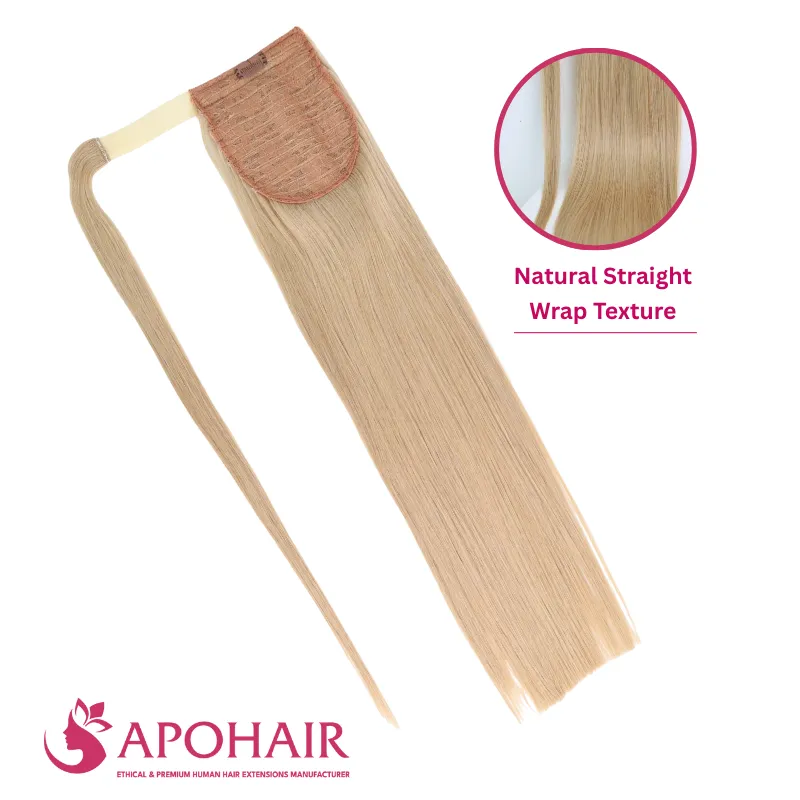
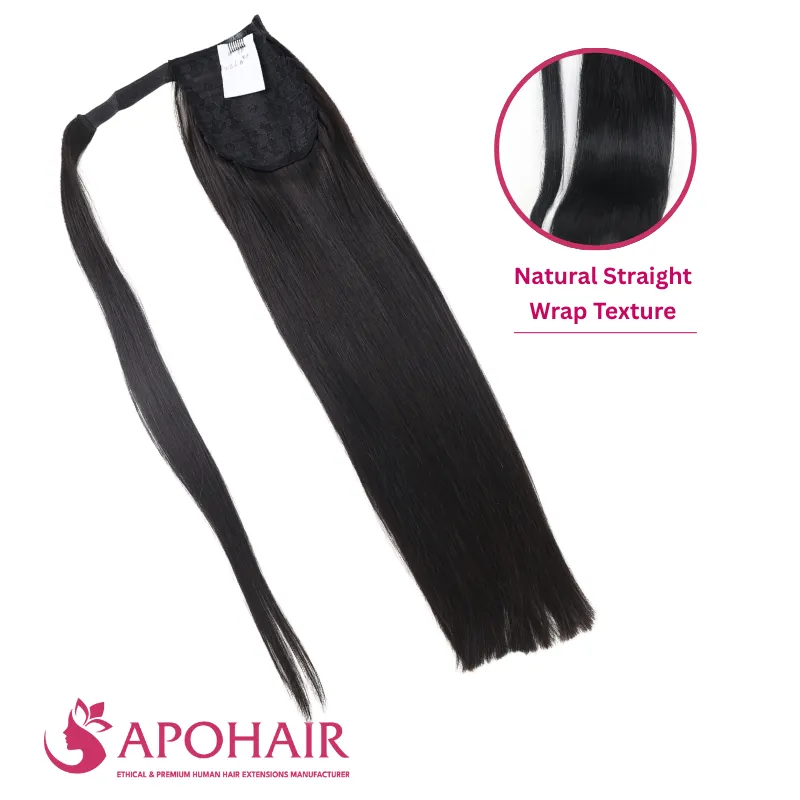
Full and partial balayage techniques applied to human hair extensions and wigs produce the same sun-kissed, dimensional results as on natural hair. 100% human hair extensions respond to lightener and toner the same way biological hair does. Full balayage on human hair extensions lightens all wefts or wig strands from mid-length to ends, creating an all-over brightened set that blends with natural hair when installed. Partial balayage on human hair extensions targets the top wefts or the front sections of a wig, adding face-framing brightness while the lower wefts remain in the natural base color.
Maintaining full balayage extensions and wigs requires weekly deep conditioning (lightened human hair loses moisture faster than untreated hair), a color-safe sulfate-free shampoo, and a purple or blue toning wash every 2 to 3 weeks to prevent brassiness. Maintaining partial balayage extensions and wigs requires the same core care: color-safe shampoo and regular conditioning. The toning wash interval stretches to every 3 to 4 weeks because fewer lightened sections accumulate brassiness.
Human hair extensions and wigs can be dyed with balayage at home using box lightener and developer, but at-home application carries a higher risk of uneven results and over-processing. Extensions cannot draw moisture from a scalp to buffer the bleach. Purchasing pre-colored balayage extensions from APOHAIR is the lower-risk option: the color is applied under controlled factory conditions, cuticle alignment is preserved throughout the dyeing process, and the finished result arrives ready to install with no at-home bleaching required.

APOHAIR’s Full and Partial Balayage Hair Extensions and Wigs
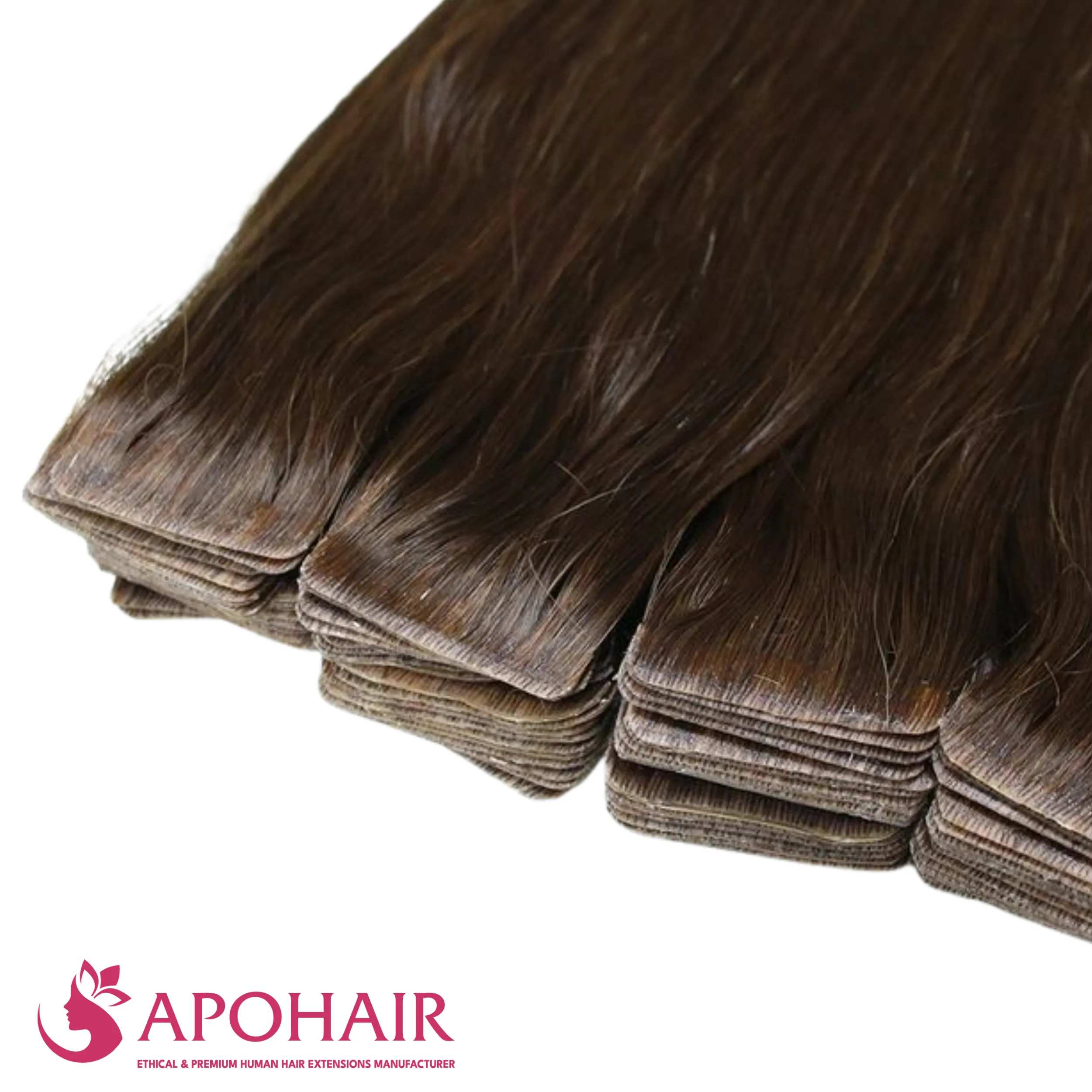
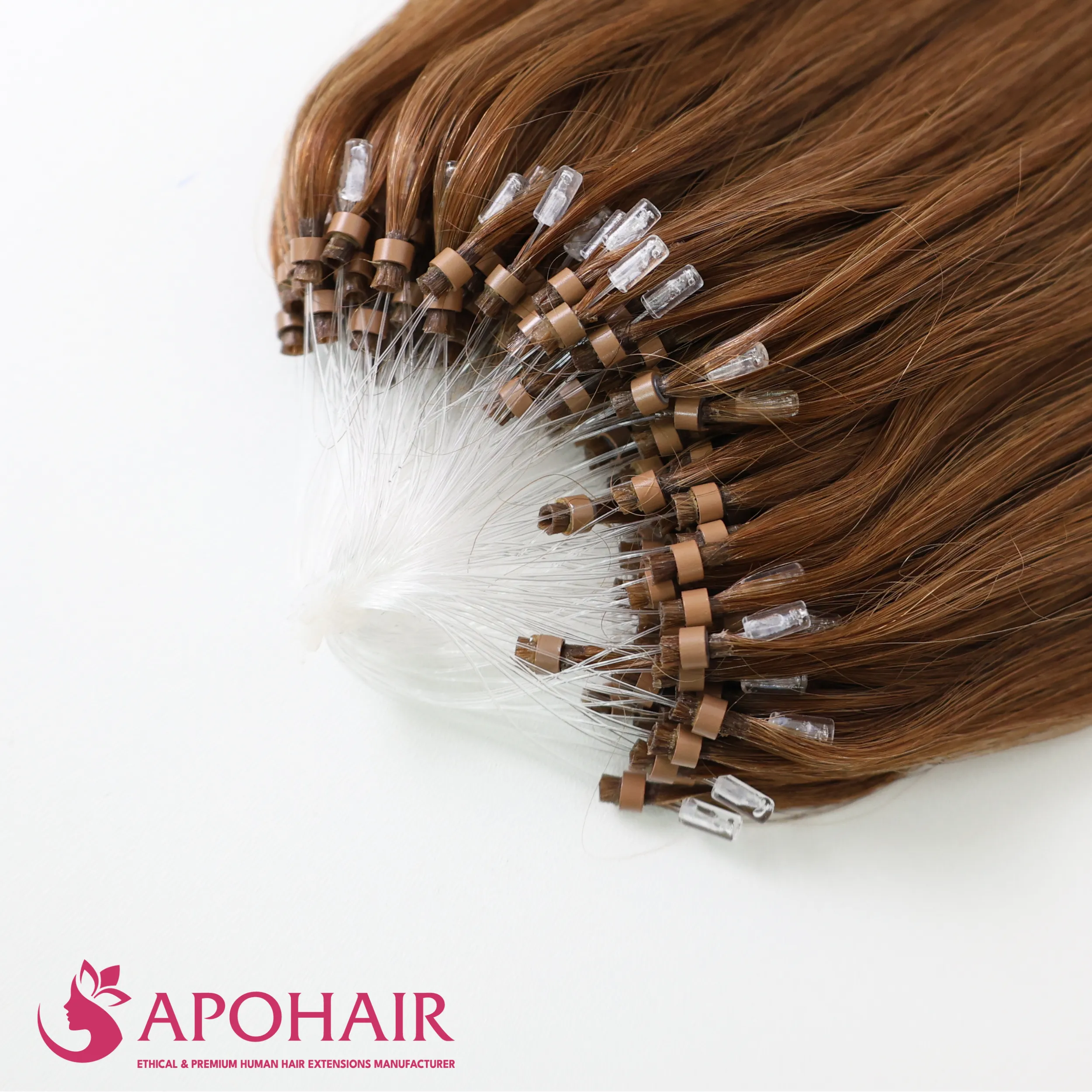
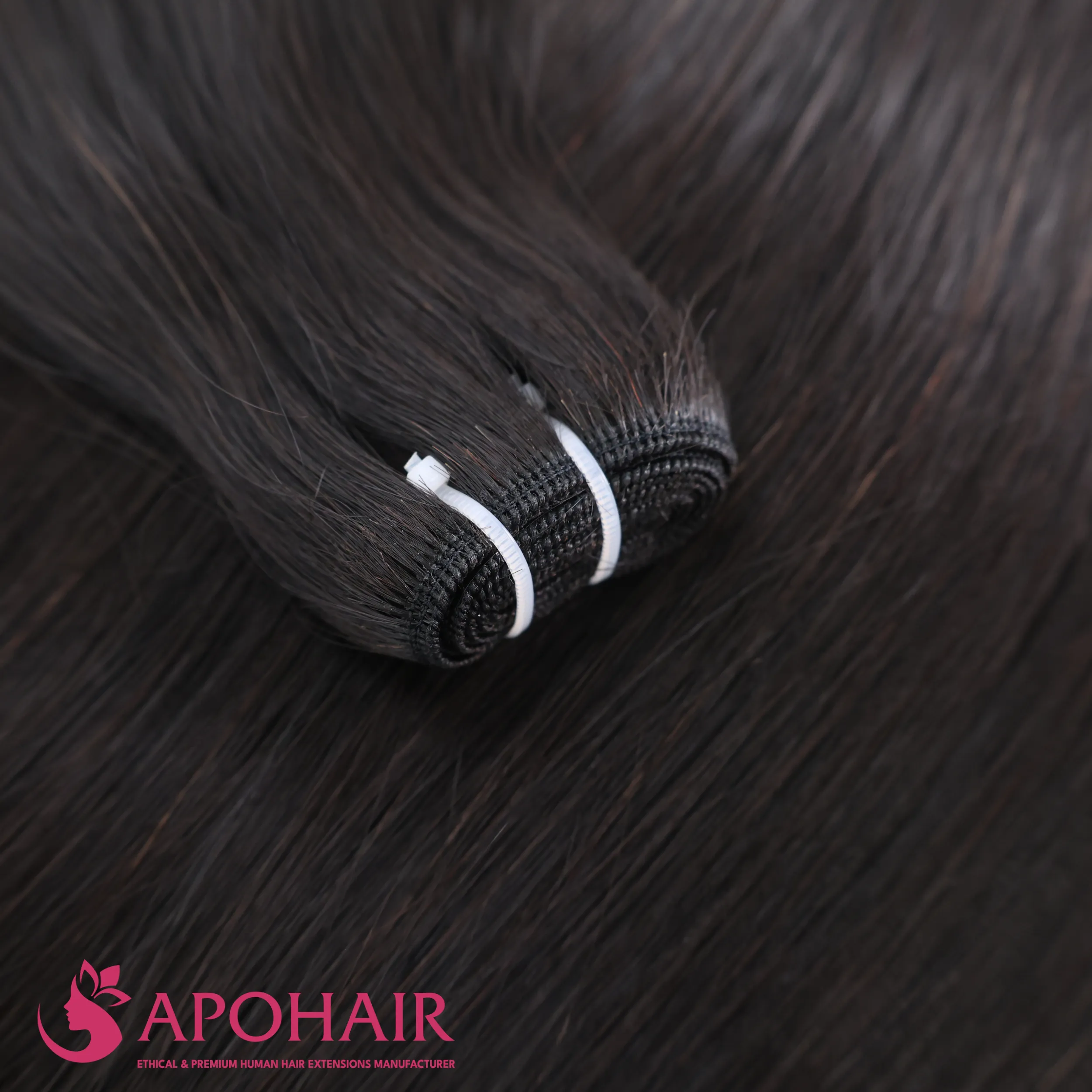
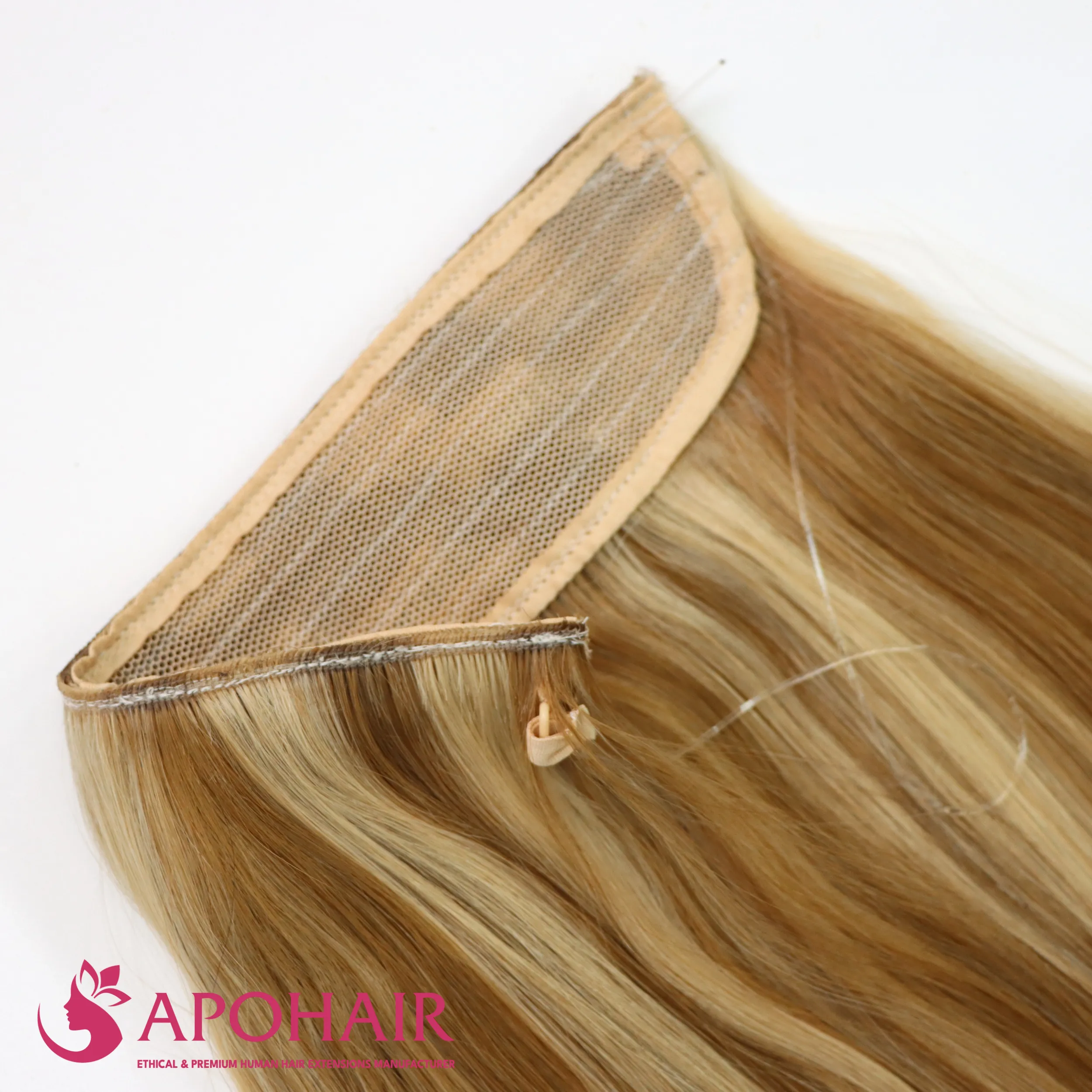
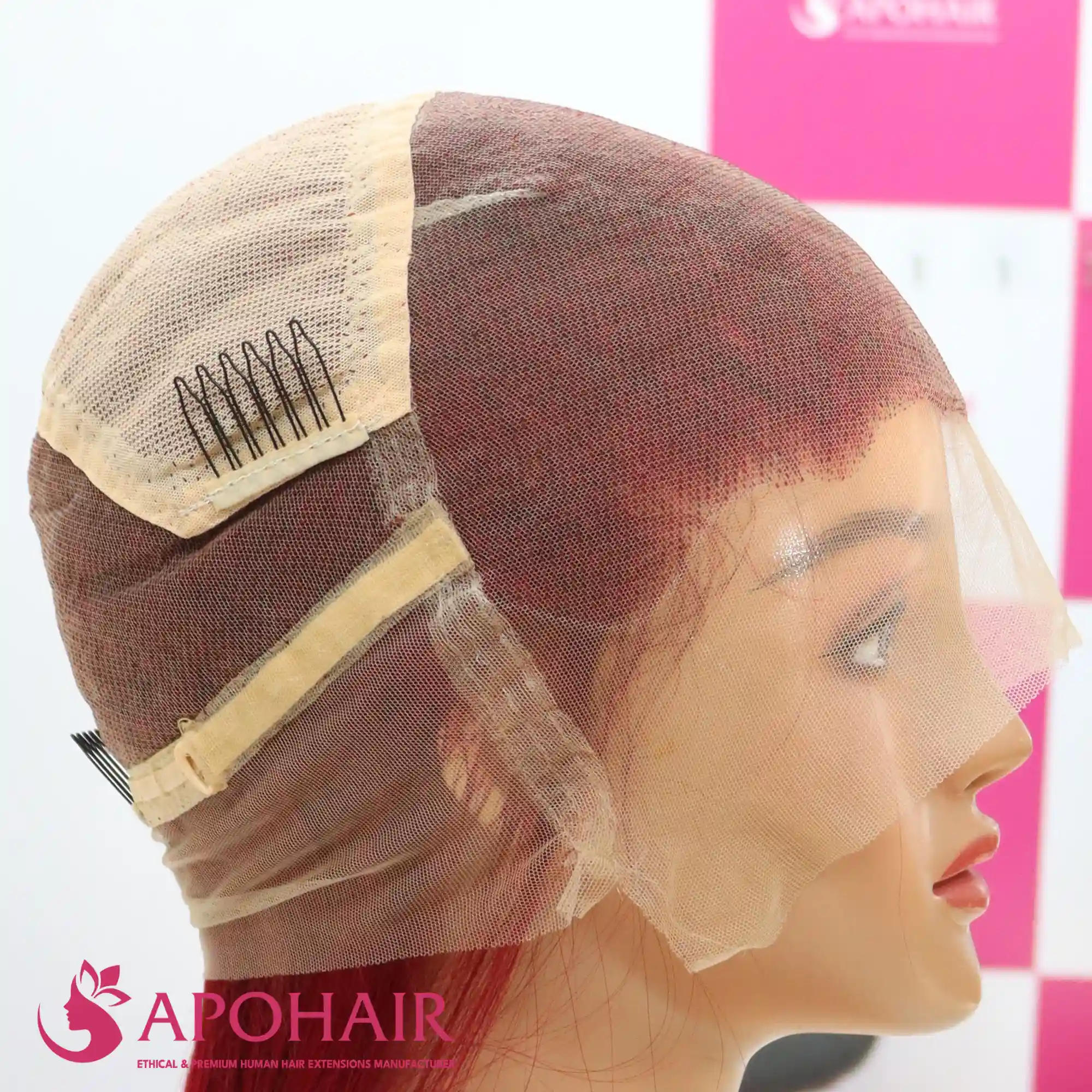
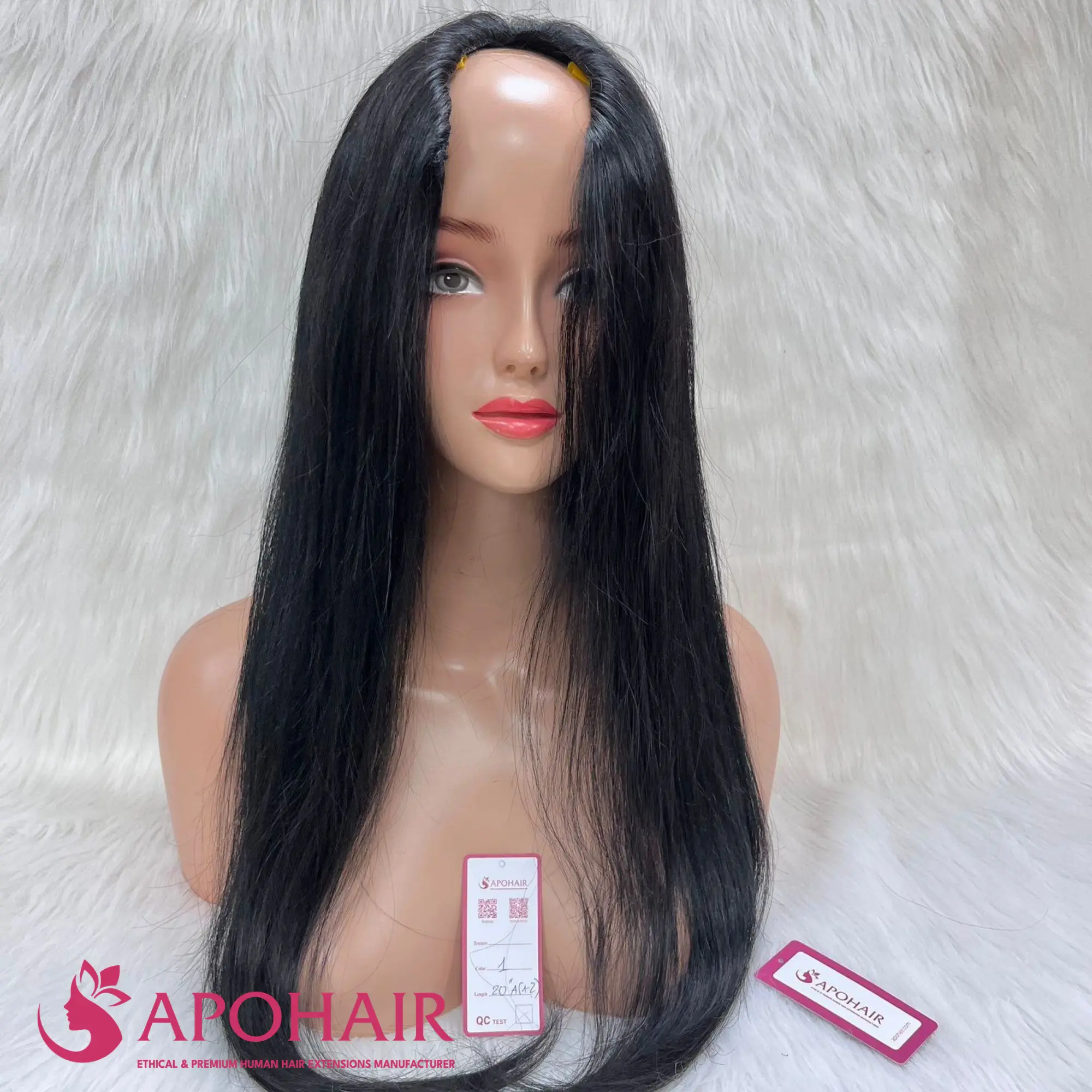
APOHAIR carries both full and partial balayage coloring across its complete extension and wig lineup, all processed from 100% Vietnamese wholesale human hair at APOHAIR’s factory in Vietnam. APOHAIR offers balayage color options across all major attachment types: clip-in, tape-in (invisible, mini, and nano tape variants), weft (machine weft, hand-tied weft, genius weft, flat weft), keratin tip (I-tip, U-tip, flat-tip, nano ring), and human hair wigs (13×4, 13×6, full lace, and closure styles).
Compare APOHAIR’s Factory-Direct Supply Options
Whether you are a salon owner stocking up on ready-to-wear pieces or a stylist needing raw materials, compare our primary product categories to find the exact formats for your business needs.
→ Bulk remy hair extensions — Shop ready-to-install tape-in, clip-in, and pre-bonded formats
→ Bulk human hair bundles — Source raw, cuticle-aligned wefts for custom salon coloring
→ Wigs human hair wholesale — Compare full lace, closure, and frontal wig constructions
APOHAIR’s balayage coloring process begins with sorting and grading the raw Vietnamese hair by color and texture to confirm consistency across bundles. A controlled bleaching step strips pigment uniformly without disrupting cuticle alignment. The balayage tones are then hand-applied to the designated sections. Cuticle alignment is maintained throughout because all raw hair is sorted root-to-tip before any chemical processing begins, which means the lightener penetrates each strand evenly from a uniform starting condition. This is the primary reason factory-processed balayage extensions produce more consistent color than at-home DIY applications.
APOHAIR offers eight distinct differentiators that set its balayage extensions apart from other suppliers:
- 100% Vietnamese Human Hair: Single-donor collection with intact cuticle layer accepts color better than mixed-origin hair.
- Cuticle-Aligned Technology: All cuticles face the same direction, which eliminates tangling and matting.
- Ethical Sourcing: Direct collector network in Vietnamese villages with fair compensation verified.
- Factory-Direct Pricing: No middlemen, wholesale rates 30 to 40% below retail market.
- 20+ Year Track Record: 1,000+ factory workers and 100+ sales staff serving 50+ countries.
- State-of-the-Art Manufacturing: Operates a 33,000 square meter factory in Vietnam with modern production lines.
- Global Distribution: Ships to the US, UK, EU, Australia, Africa, and Asia within 24 hours.
- Quality Guarantee: 7-day warranty with free replacement policy on every order.
APOHAIR transforms authentic Vietnamese hair into premium extensions trusted by salon owners and wholesalers worldwide. Our commitment: global leader in the hair industry through ethical practices, manufacturing excellence, and customer success.
Ready to get your balayage hair extensions? Contact APOHAIR today:
APOHAIR ETHICAL & PREMIUM HUMAN HAIR EXTENSIONS MANUFACTURER
- Address: Building 3A, Lane 82 Duy Tan, Cau Giay, Hanoi, Vietnam
- Factory: Yen Luong Village, Y Yen District, Nam Dinh Province, Vietnam
- Phone number: (+84) 862 132 366
- Email: wholesale@apohair.com
FAQs Related to Full and Partial Balayage
Can You Get Partial Balayage if You Already Have Full Balayage?
Yes. Existing full balayage clients can switch to partial balayage at any follow-up appointment. Many colorists recommend this approach to reduce maintenance frequency as the full balayage grows out.
Can You Do Balayage on Short Hair?
Yes. Both full and partial balayage work on short hair. The colorist focuses placement on the ends and face-framing pieces since there is less length for a mid-to-end sweep. The result tends to show higher contrast due to the limited grow-out distance.
How Do You Keep Balayage From Going Brassy?
Balayage turns brassy when warm underlying pigments in lightened hair oxidize over time. The most effective prevention is using a toning shampoo (purple for blonde, blue for brunette) every 2 to 3 washes and scheduling a professional gloss service every 4 to 8 weeks.
Is Partial Balayage Less Damaging Than Full Balayage?
Partial balayage causes less cumulative damage than full balayage because fewer strands receive bleach per session. A professionally applied full balayage using bond-protecting treatments can be safer than a poorly executed partial.
Conclusion
Full balayage covers all layers for an all-over lighter, brighter transformation that costs an average of $193 USD per session and needs touch-ups every 3 to 4 months. Partial balayage targets only the top layer and face frame for a softer, dimensional refresh at $154 USD per session, with touch-ups every 4 to 6 months. Your best choice depends on the brightness level you want, how often you can visit the salon, your hair’s current health, and your annual color budget.
Both techniques work on every hair type, and APOHAIR offers pre-colored balayage extensions and wigs in both styles, processed from 100% Vietnamese human hair at factory-direct pricing.




 ABOUT US
 Human Hair Extensions
 Wholesale Tape-In Hair Extensions
 Clip-In Hair Extensions
 Wholesale Keratin Hair Extensions
 Weft Hair Extensions
 Human Hair Wigs
 Bulk Human Hair For Braiding
 BEST SELLING PRODUCTS
 Contact Us