









Deep Wave vs Water Wave Hair: Differences, Features and Buying Guide
Deep wave hair has those tight, uniform S-shaped spirals that give you a lot of thick, structured volume. On the flip side, water wave hair has a looser, more irregular curl pattern that flows in different directions for a fuller, chilled-out look. Deep waves are great for women who want sharp curls that stay bouncy all day long. Water wave is a better fit for anyone who wants something easy to deal with for everyday wear and a natural, free-moving finish.
You’ll notice that the water wave looks like it has more volume even if the weight is the same, mostly because those opposing curls make it look wider and airier. Deep waves take a bit more work daily since you have to keep those tight spirals fresh, lock in moisture, and brush through it to keep the frizz away. Water wave works for more situations without having to redo it because the flow makes it easy to switch between ponytails, half-up styles, or even wearing it straight.
This guide gives you the lowdown on curl patterns, volume, how to take care of it, and which one goes best with your face shape. Each part helps you pick the right texture for your daily life, special plans, and your own hair type.

What Is Deep Wave Hair?
Deep wave hair is all about those tight, bouncy curls that look like neat S-shapes from top to bottom. It’s got a lot of thick volume and feels really springy when you touch it. If you pull a strand, it’ll snap right back into place and keep its shape all day long, even if you’re moving around a lot.
Imagine these are like natural curls. They are very clear and rounded with a lot of body. Because the waves are so close together (only about a centimeter apart), they look really full and bold. Most people choose ‘deep wave’ hair for sew-ins, extensions or wigs because the curls stay for a long time. Also, they are great for everyday wear.

What Is Water Wave Hair?
Water wave hair is a looser, more irregular style that mixes curly and wavy patterns. The hair flows in different directions, giving you a natural look that is full of volume but still feels effortless. Since the strands curl in alternating ways, it looks just like the ripples you see on moving water. The texture is really soft and silky, so it has a nice, natural feel to it. It moves around freely and has a relaxed bounce that looks casual rather than stiff or overly done. It is perfect if you want that organic, lived-in look.
This type of hair is very similar to natural Type 2C to 3A curl patterns. It sits right in the middle between straight and super curly with waves that are not too tight. Because the curls flow in opposite directions, the hair looks much fuller without being as tight as a spiral. Most people choose water wave for lace front wigs, closure wigs, or half-up styles. It is a great pick for busy professionals or any woman who wants hair that moves naturally and doesn’t take much work to style every day.

What Is the Difference Between Deep Wave and Water Wave Hair?
The main things that set deep wave and water wave hair apart are how tight the curls are, which way they go, how much volume you get, how much work they take to look good, and the overall vibe they give off. Deep wave is all about a bold, organized look, while water wave is much more about a natural, flowing style. The table below breaks down five specific areas where these two textures are different so you can see them side by side.
| Feature | Deep Wave Hair | Water Wave Hair |
| Wave Pattern | Tight, uniform S-shaped spirals flowing in one direction | Loose, irregular ripples with curls flowing in opposing directions |
| Volume & Density | Dense, stacked volume from tightly compressed spirals | Wider, airier fullness from opposing curl directions |
| Maintenance | Higher daily effort: curl reactivation, moisture sealing, detangling every 1 to 2 days | Lower daily effort: light misting and finger-combing every 3 to 4 days |
| Style Aesthetic | Bold, glamorous, structured, high-impact | Natural, relaxed, effortlessly chic, everyday |
| Best For | Events, photoshoots, formal occasions, bold everyday looks | Daily wear, workplace settings, casual outings, active lifestyles |
Wave Pattern
Deep wave hair has a tight and uniform S-shaped spiral pattern where all the curls flow in the same direction. On the other hand, water wave hair looks looser and more irregular because the curls flow in opposite directions. With deep wave, you get a consistent and tightly coiled spiral where every curl follows the same path from the top to the ends, which gives it a really neat and layered look. Water wave hair looks more like a loose ripple where the strands curve back and forth in different ways, giving it a natural and undone texture.
When you look at them side by side, deep wave strands definitely look tighter and more organized. Water wave strands appear wider and freer with more texture on the surface. If you measure them, the gap between waves in deep wave hair is only about 1 cm, but water wave has a wider gap of around 1.5 to 2 cm. That is exactly why water wave looks much looser and less dense.

Volume & Density
Deep wave hair gets its thick look from those tight curls, but water wave can actually look just as full or even fuller when you go for longer lengths. Deep wave builds up volume with tight spirals that stack on top of each other, giving you a thick, rounded shape, especially at short or medium lengths like 8 to 16 inches.
Water wave is a bit different. It creates volume because the curls go in opposite directions, which pushes the hair strands apart and makes the whole look wider and fuller. If you compare two bundles that both weigh 100 grams, the deep wave will look thicker near the top and middle. However, the water wave will look wider and more “airy” all the way down. Once you get over 20 inches long, water wave actually shows off more volume because the loose curls spread out freely. Deep waves, at that same length, can sometimes pull down into a narrower shape.

Maintenance
Taking care of deep wave hair takes a bit more effort than water wave. Because the curls are tighter, they tend to get tangled or frizzy, and they might lose their shape if you don’t keep them moisturized. For a solid deep wave routine, you should wash it every 7 to 10 days with a sulfate-free shampoo. You’ll need to leave a good conditioner on for about 15 to 20 minutes, then brush through it gently with a wide-tooth comb starting from the ends. Let it air-dry on a wig stand so the curls stay in place.
Water waves are much easier to handle. You only need to wash it every 10 to 14 days with a light conditioner. You can just use your fingers to get any knots out and let it air-dry with very little product. You’ll really see the difference when it’s time to dry and fix up the curls. Deep wave needs some curl cream or a bit of “scrunching” to bring the spirals back to life after a wash, but the water wave pretty much resets itself with just a light spray of water. If it’s humid or you’re out and about, you’ll probably have to touch up a deep wave every day or two. Water waves can easily go 3 or 4 days without you having to do much at all.

Style Aesthetic
Deep wave hair gives you that bold, glamorous look that really stands out. It has a classic, sharp style with thick spirals that look amazing in photos and give off a polished vibe for work or formal parties. Water wave, however, is much more about a natural, chilled-out feel. It has soft ripples that look like you just came from the beach, making you look elegant without looking like you tried too hard.
Deep wave is your best bet for big moments like events or photoshoots where you want to make an impression. Water wave is perfect for the office, hanging out with friends, or any time you just want to look natural. Another cool thing is how they change when they get wet. Deep wave spirals get tighter and look really sleek and shiny, then they puff out into a bouncy, full shape once they dry. Water wave looks pretty much the same whether it’s wet or dry, it just gets a bit softer and flows more as it dries.

Versatility
Water wave hair is great because it works for so many different situations without you having to restyle it much. Deep wave, however, gives you more of a dramatic look if you are willing to put in the time to look after those curls. Deep wave is a solid choice if you love high ponytails, curly buns, half-up styles, or braids. It is really for anyone who likes their hair to look structured and full of volume. Water wave is perfect for sleek ponytails, loose braids, or just a simple everyday look. It really suits people who have a busy life and don’t want to spend ages on their hair.
You will find that water wave moves easily from a casual day out to a nicer event without needing any extra product. Deep wave usually needs some curl cream to keep its shape after you have pulled it back or moved it around. If you want to change things up, you can straighten both types with a flat iron at about 300 to 350°F. Just make sure to use a heat protectant spray first. The best part is that both will go back to their original pattern as soon as you wash them. Deep wave will snap back into those tight spirals, and water wave will return to its loose ripples. As long as you don’t use too much heat too often, the hair will stay in great shape.


Popular Hairstyles with Deep Wave Hair
Deep wave hair keeps those sharp spirals looking good in so many different ways. Here are 15 cool styles that show off what this bold, thick texture can really do:
- Curly high ponytail with lots of bouncy spirals falling from the top, perfect for hanging out or going somewhere nice

- Half-up half-down curls with clear spirals around your face and flowing over your shoulders

- Curly bun updo tied neatly at the top for weddings, parties, or work meetings

- Side-swept deep wave where you brush all your curls to one side for a fancy red-carpet look

- Deep wave bob cut right at the chin for a bold and full style you can wear every day

- Braided side bun which mixes small braids with a curly low bun at the back of your neck

- Space buns using deep wave spirals to make two big, textured buns on top of your head

- Curly middle-part with even volume on both sides to frame your face perfectly

- Wet-look deep wave using a bit of gel for a sleek, shiny finish on those tight spirals

- Deep wave with bangs adding a curly fringe to your long spirals for extra texture around the face

- Low curly ponytail tied at the back of the neck for a neat office look with textured ends

- Curly crown braid where you weave those deep wave strands into a beautiful braid around your head

- Deep wave layered cut with different lengths of spirals to give the hair more movement

- Loose twist-out using deep wave hair to get that natural twist-out look

- Deep wave with headband using a simple fabric or satin headband to pull your curls back when you are in a hurry

Popular Hairstyles with Water Wave Hair
Water wave hair is so easy to work with because those natural, irregular ripples fit right in whether you are just hanging out or going somewhere special. Here are 15 ways to style it that really show off its relaxed beauty:
- Beachy loose waves just left down for a natural, “lived-in” look that stays cool all day long

- Sleek low ponytail with soft ripples tied at the back of your neck for a neat style at work

- Half-up half-down with loose waves flowing at the bottom and a bit of extra height at the top

- Water wave bob cut right above the shoulders for a chic style that is super easy to take care of

- Side-part sweep with a deep part on one side so your waves flow over one shoulder

- Messy top bun with loose wavy strands around your face for a chilled-out vibe when you are out

- Boho braids with the ends left out to get that soft, beachy finish

- Water wave with clips using some cute pins to pull one side back while the rest of your hair falls freely

- Two low buns where the wavy texture gives a fun, relaxed shape to twin buns

- Curtain bangs with waves pairing a soft fringe with long waves to frame your face perfectly

- Wet-look water wave using a little light gel to make it look fresh like you just stepped out of the ocean

- Ponytail with wrap tying your hair back and wrapping a strand around the base for a clean, finished look

- Water wave with scarf tying a silk scarf at the front and letting your waves fall naturally behind it

- Loose French braid using that wavy texture to create a soft, “undone” braid where you can still see the waves

- Water wave layered cut with different lengths to give your hair more body and movement from top to bottom

How to Choose Between Deep Wave and Water Wave Hair Extensions?
Picking between deep wave and water wave extensions really depends on five simple things: Your own style, your face shape, your daily schedule, the event you are going to, and how the hair looks at the length you want. The parts below will go through each point and give you some helpful advice.
Go for a Style That Matches Your Look
The best wave for you is the one that goes well with how you usually dress and present yourself. When you are trying to decide, think about whether you prefer a polished, neat look or something more casual and easy. Deep wave is perfect if your style is all about glamour, confidence, and making an impression. It is a great fit for people who love dressing up, go to lots of events, or just like their hair to look intentional and well-kept.
Water wave, however, is all about being relaxed, approachable, and naturally beautiful. It suits you if you like simple outfits, a minimalist vibe, or just want hair that looks good without any hard work. If your style changes from day to day, water wave is probably the more flexible choice. Its natural texture works for both hanging out or going to a semi-formal dinner without you needing to add any extra products. If you love to stand out and want that big, bold volume, go with deep wave. But if you value comfort and want hair that moves naturally while you go about your day, water wave is the way to go.

Take Your Face Shape Into Account
Deep wave suits round, square, and heart-shaped faces by adding vertical height and definition, while water wave suits oval, long, and diamond-shaped faces by adding soft horizontal movement. Curl tightness and volume add vertical dimension to the face when spirals stack upward, which slims round or square faces. Looser waves spread horizontally, which softens angular features and adds width to longer face shapes.
Deep wave hair is great for round and square faces. This is because the curls create height at the top of your head and make people look up. This makes your face look longer and better. Heart-shaped faces also look good with deep wave hair because the extra hair at the middle and ends helps make a wide forehead look smaller.
Diamond and long oval faces look best with water wave hair. The large, flowing waves add hair to the sides of your face near your cheekbones. For oval faces, which are a very common shape, water wave hair is a safe choice. Its natural movement matches the shape of your face perfectly.

Keep Up with Your Daily Routine
Water wave is the better fit for active and time-limited daily routines, while deep wave suits wearers who can dedicate 5 to 10 extra minutes each morning to curl maintenance. A real morning routine for deep wave involves misting the curls with water, applying a small amount of curl cream or leave-in conditioner, scrunching from ends to roots, and separating any clumped spirals by hand before leaving the house. A real morning routine for water wave involves a light mist of water or leave-in spray, a gentle finger-comb through the strands, and air-drying with no additional products needed on most days.
Deep wave maintenance takes 8 to 12 minutes per day to maintain curl definition. Water wave maintenance takes 3 to 5 minutes. That makes water wave a more practical fit for busy morning schedules. For active lifestyles with gym sessions, outdoor work, or humid tropical climates common in regions like Vietnam and West Africa, water wave holds up better because its looser curl pattern does not collapse or frizz as visibly when exposed to sweat and moisture.

Dress Up for the Right Occasion
Deep wave is the stronger choice for photography, events, and formal occasions, while water wave fits professional workplaces and versatile everyday settings equally well. Curl definition matters differently for photography versus workplace settings. Defined spirals like deep wave capture dramatic texture under lighting and at a distance. Looser textures like water wave read as polished and approachable in face-to-face, professional environments.
Some occasions work equally well for both textures, including semi-formal dinners, casual celebrations, and outdoor events where neither bold definition nor ultra-natural texture is strictly required. If the occasion involves a camera, stage, or formal event, choose deep wave. If the occasion is a workplace setting, client meeting, or casual social event, choose water wave.

Build Up the Volume and Length
Deep wave gives more density at shorter lengths, while water wave delivers more visible volume at longer lengths above 20 inches (50 cm). Deep wave hair looks best when it is 8 to 18 inches (20 to 45 cm) long. At this length, the tight curls stay together to make the hair look very full and round.
Water wave hair is better for longer styles, from 16 to 30 inches (40 to 75 cm). The loose waves spread out naturally and move beautifully. If deep wave hair is longer than 20 inches (50 cm), the weight can pull the curls down and make it look thin. However, water wave hair stays full and wide even when it is very long.
If you have thin hair and want it to look thicker, deep wave hair is a great choice. The tight curls add thickness near the top of your head. If you want long, flowing hair with natural volume, choose water wave.

Blend with Your Natural Hair Texture
Deep wave blends best with Type 3B to 4A natural textures, while water wave blends best with Type 2C to 3A textures and with chemically processed or color-treated natural hair. “Blending” in the context of hair extensions means achieving a seamless visual match between the extension texture and the natural hair at the leave-out or parting so that the two appear to grow from the same source. Curl pattern proximity affects seamlessness because the closer the spiral size and direction, the less visible the transition point.
For deep wave hair, a sew-in weave with a minimal leave-out or a full lace wig installation improves blend quality by reducing the amount of natural hair exposed at the perimeter. For water wave hair, a lace front or closure wig installation improves blend quality because the gentle, forward-flowing wave pattern naturally mimics the movement of loosely textured natural hair at the hairline.
For relaxed, color-treated, or chemically processed natural hair, which typically has a looser, softer texture, water wave blends better because its relaxed curl pattern more closely matches the post-chemical texture of the leave-out hair.

APOHAIR’s Deep Wave and Water Wave Hair Extensions and Wigs
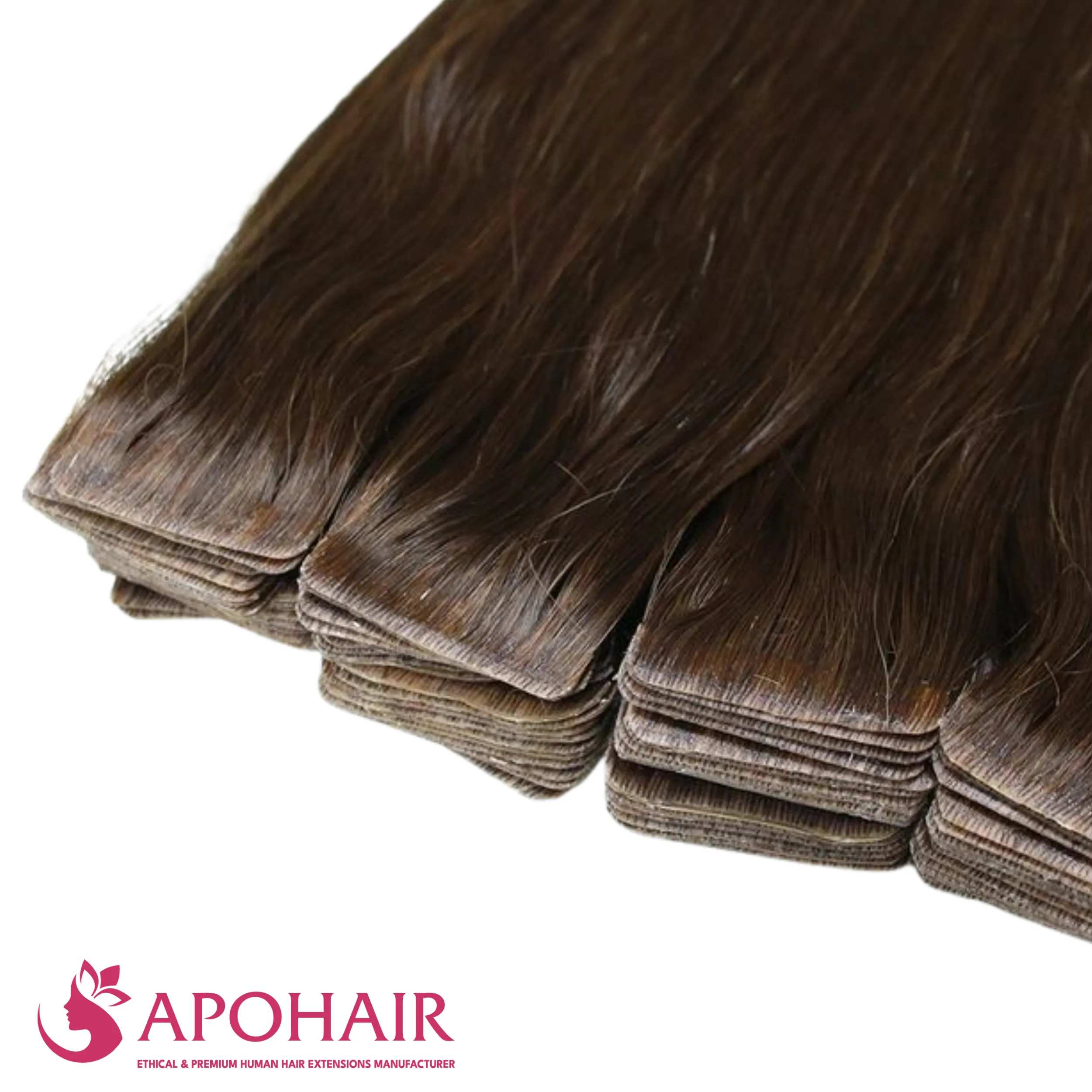
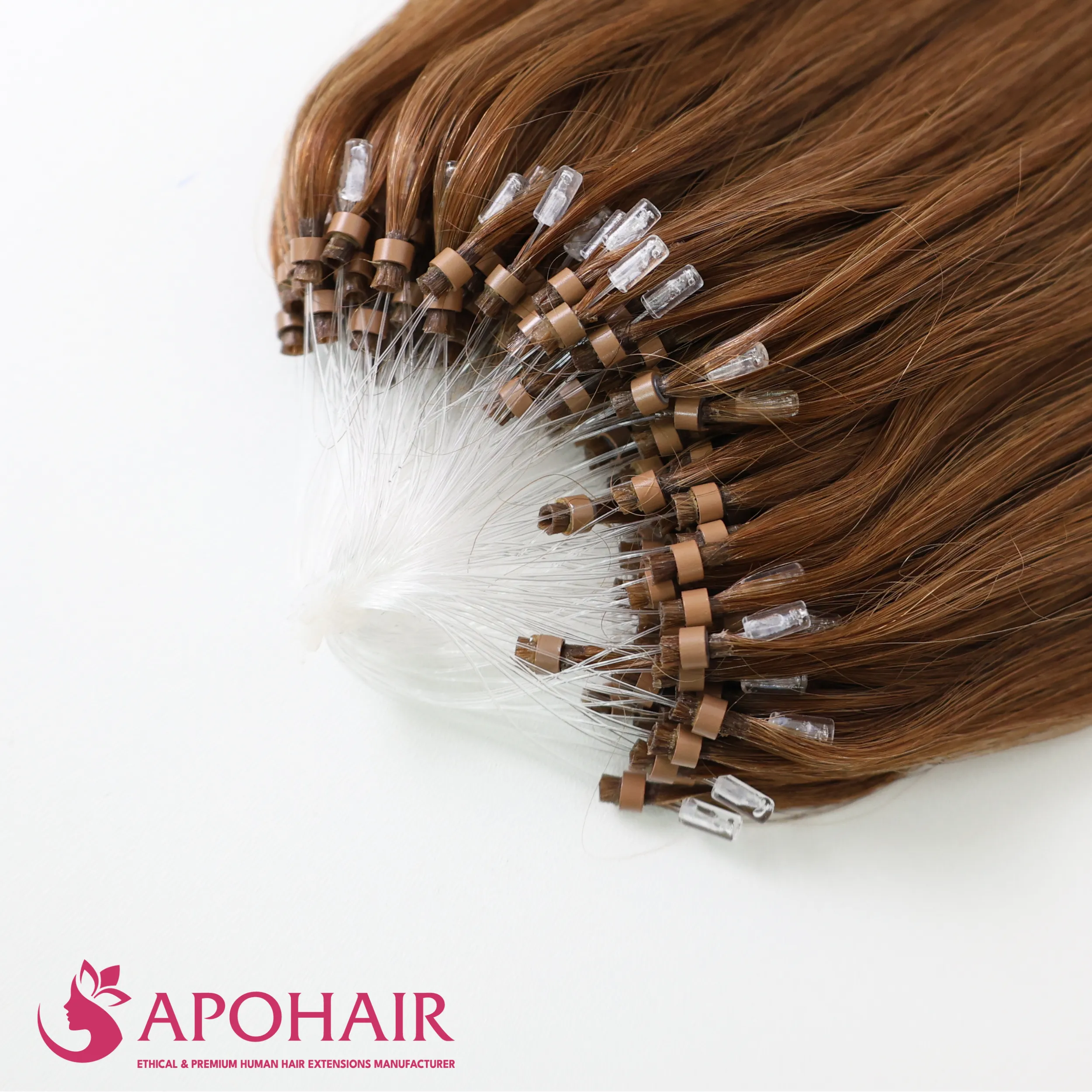
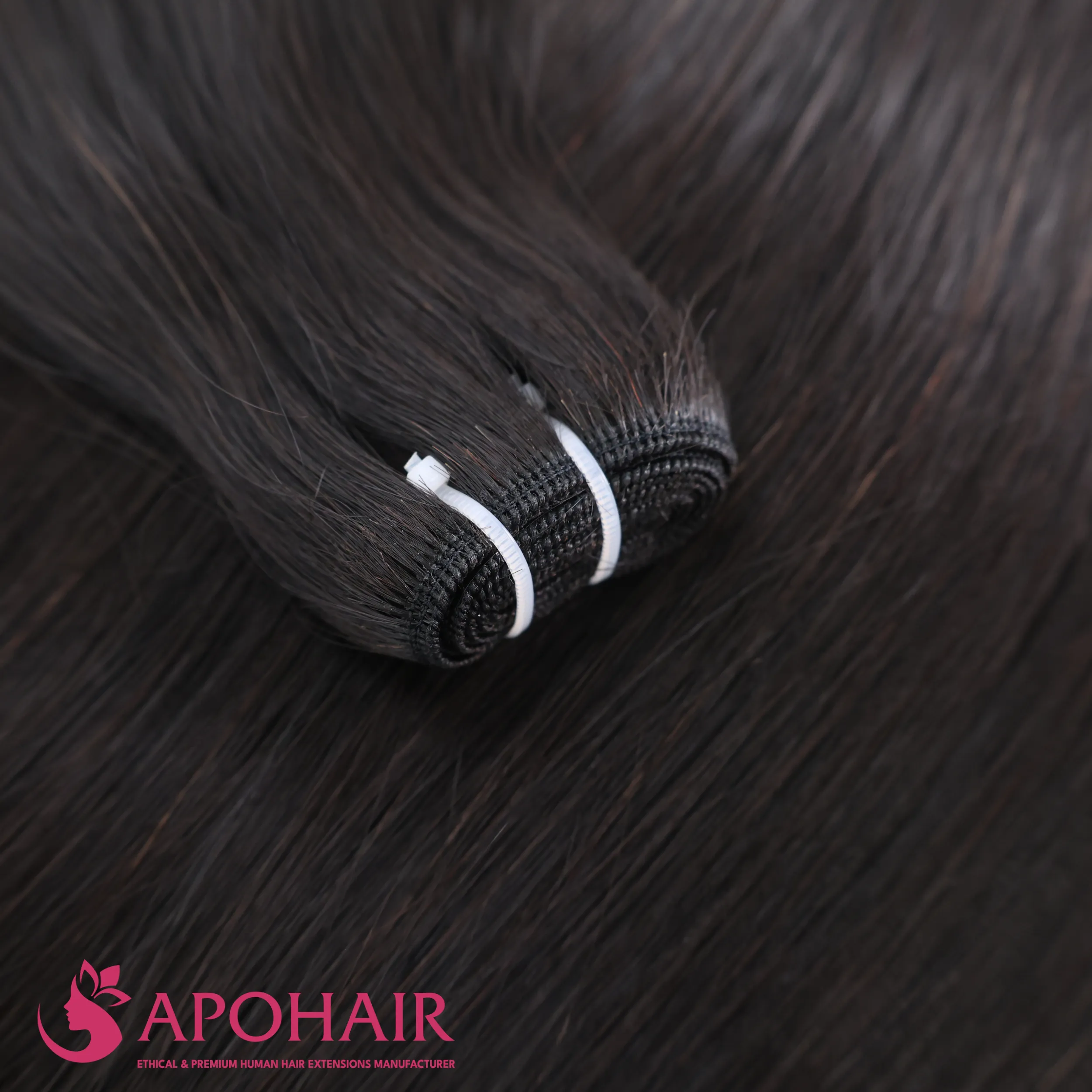
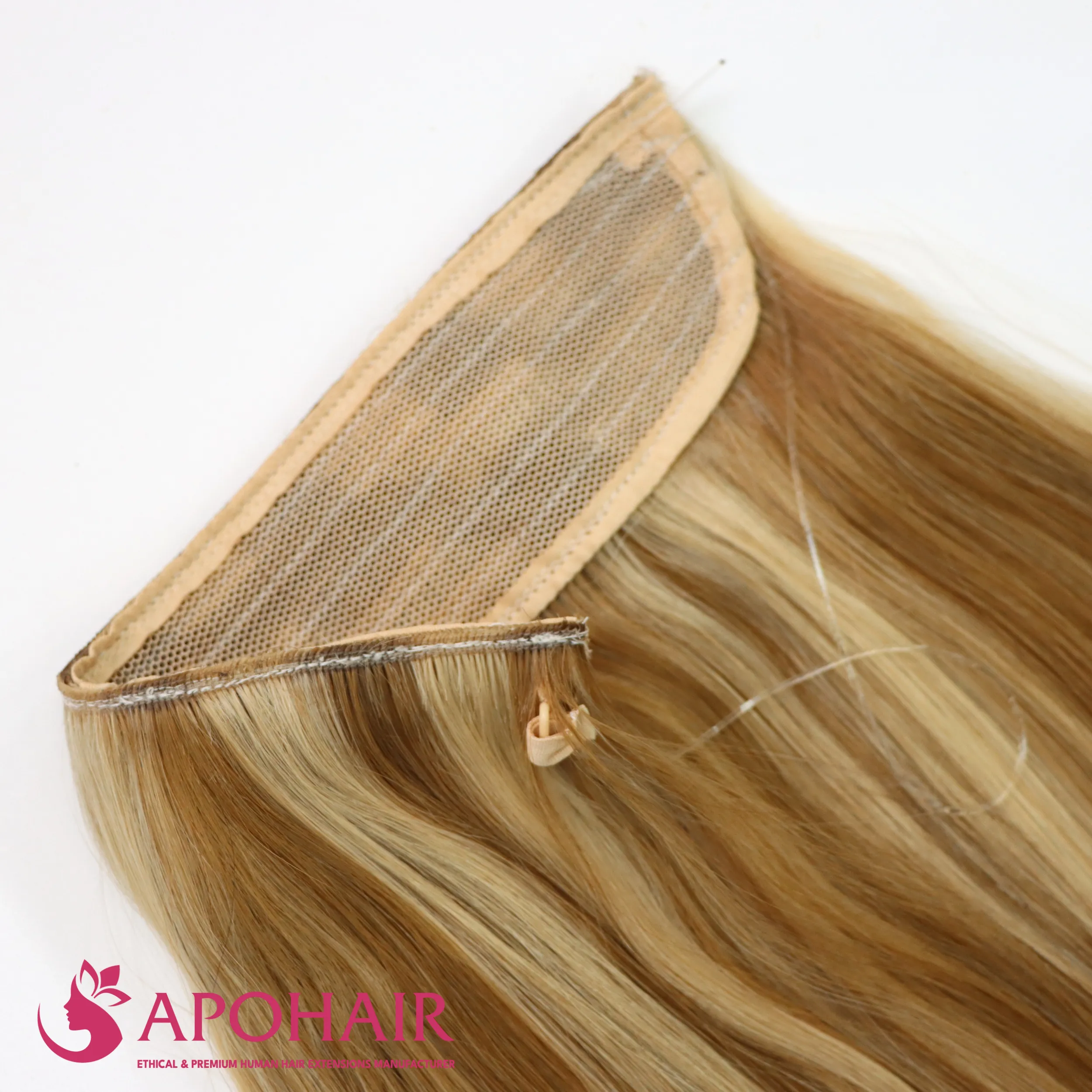
APOHAIR offers both deep wave and water wave textures across its full range of 100% Vietnamese human hair extensions and wigs, available in weft, tape-in, clip-in, keratin tip, lace closure, lace frontal, and full lace wig formats. Every texture is produced from single-donor Vietnamese hair, cuticle-aligned and free from synthetic blending, so the curl pattern holds its shape through months of professional-grade wear.
Choosing the right wave texture for a client builds repeat business and referrals because a properly matched texture performs well between appointments and reflects the salon’s technical judgment.
- 100% Vietnamese Human Hair: Single-donor collection with intact cuticle layer that accepts color better than Indian or Chinese hair sources
- Cuticle-Aligned Technology: All cuticles face the same direction, which prevents tangling and preserves natural shine
- Ethical Sourcing: Direct collector network in Vietnamese villages with fair compensation verified at every collection point
- Factory-Direct Pricing: No middlemen between the factory and the buyer, with wholesale rates 30 to 40% below retail market prices
- 15+ Year Track Record: 700+ well-trained, skilled workers and 100+ sales staff operating from Hanoi and Ninh Binh facilities
- State-of-the-Art Manufacturing: A 33,000 m² factory in Ninh Binh Province featuring modern production lines and quality control
- Global Distribution: Ships to the US, UK, EU, Australia, Africa, and Asia with processing within 24 hours of order confirmation
- Quality Guarantee: 7-day warranty with free replacement policy for any product that does not meet specifications
APOHAIR transforms authentic raw Vietnamese hair into premium extensions trusted by salon owners and wholesalers worldwide. Our commitment: global leader in the hair industry through ethical practices, manufacturing excellence, and customer success.
Ready to stock deep wave or water wave hair for your salon or store? Contact APOHAIR for wholesale pricing, free samples, and OEM/ODM support.
APOHAIR ETHICAL & PREMIUM HUMAN HAIR EXTENSIONS MANUFACTURER
- Address: Building 3A, Lane 82 Duy Tan, Cau Giay, Hanoi, Vietnam
- Factory: Minh Luong, Yen Luong Ward, Ninh Binh, Vietnam
- Phone number: (+84) 862 132 366
- Email: [email protected]

FAQs Related to Deep Wave vs Water Wave Hair
What Is the Difference Between Water Wave and Deep Wave Hair Extensions?
A deep wave hair extension features tight, defined spiral curls that build a full, high-volume silhouette — suited for special occasions and bold daily looks. A water wave hair extension features a looser, flowing ripple pattern that reads naturally effortless, making it the go-to choice for everyday wear, office settings, and low-maintenance routines. Both extension types are available in weft bundles, tape-ins, clip-ins, and keratin tip constructions using 100% human hair.
Which Is Better for Boho Braids, Water Wave or Deep Wave?
Water wave is the more popular choice for boho braids because its looser, flowing texture blends naturally with the unraveled ends of knotless or box braids, creating a soft, beachy finish. Deep wave can also work, but the tighter spirals at the ends create a bolder, more defined look rather than a relaxed one. Choose water wave for a softer finish. Choose deep wave for a wilder, fuller braid-out.
Can Water Wave and Deep Wave Hair Be Used Together in One Style?
Yes, both textures can be layered in the same install when the goal is mixed volume and texture. A common approach uses deep wave bundles at the back and sides for density, with water wave at the crown or perimeter for a softer, more natural-looking finish. For the best result, both should come from the same hair source, matched in origin, draw type, and color, to keep the blend consistent across the full install.
Conclusion
Deep wave and water wave hair each serve a different styling purpose. Deep wave gives you tight, defined spirals with dense volume, bold visual impact, and strong curl retention at shorter lengths. Water wave gives you loose, flowing ripples with natural fullness, low maintenance, and easy adaptability across occasions. The right choice depends on your face shape, daily routine, styling preference, and target length.
Both textures perform at their highest level when sourced from 100% Vietnamese human hair with intact cuticle alignment. APOHAIR manufactures both deep wave and water wave hair extensions and wigs, factory-direct, for salon owners, distributors, and wholesalers across 120+ countries.
APOHAIR – ETHICAL & PREMIUM HUMAN HAIR EXTENSIONS MANUFACTURER
- Address: Building 3A, Lane 82 Duy Tan, Cau Giay, Hanoi, Vietnam
- Factory: Minh Luong, Yen Luong Ward, Ninh Binh, Vietnam
- WhatsApp: +84 862 132 366
- Email: [email protected]
- Website: https://apohair.com/
