









Body Wave vs Deep Wave: Which Hair Is Better For You To Choose?
Body wave hair has soft, loose S-shaped waves that sit between straight and wavy on the texture spectrum, while deep wave hair has tight, defined coils that produce more volume and hold their curl pattern longer. The two textures differ in curl tightness, daily maintenance demand, and styling range. Deep wave hair demands more daily effort, requiring 10 to 15 minutes of moisturizing, finger-detangling, and curl refreshing each morning. Body wave hair needs only 5 to 8 minutes of light combing and serum application to stay clean and defined. Body wave adapts to more styling situations without restyling because it straightens cleanly with a flat iron, curls with a barrel iron, and returns to its wave shape after washing, all without permanent texture change. Deep wave performs best when kept consistently in its natural curl state.
This article breaks down each texture’s wave pattern, volume output, maintenance routine, style aesthetic, and styling range. You will also find face-shape guidance, occasion-matching tips, and hairstyle lists for both textures to help you pick the right one.

What Is Body Wave Hair?
Body wave hair is a hair extension texture with soft, wide S-shaped waves that flow from root to tip, corresponding closely to Type 2B and 2C natural hair and producing a natural, everyday look with moderate volume and easy movement. Each wave arc spans 2 cm to 4 cm (0.8 to 1.6 inches) in width and sits evenly from root to tip without tightening into a coil at any point along the strand. Body wave feels lightweight and smooth to the touch. It moves freely with a gentle bounce when tossed or brushed and sits close to the natural head shape, giving it a relaxed, natural-feeling drape.
In the Andre Walker classification system, body wave hair corresponds most closely to Type 2B and 2C hair, where waves are defined, consistent, and slightly resistant to straightening but do not coil or spiral. The wide wave spacing creates a soft, layered look that adds subtle fullness without the density associated with curly or coily textures. Body wave hair is most commonly used in sew-in weaves, lace front wigs, full lace wigs, clip-in extensions, and hand-tied weft installations where a natural, polished, everyday appearance is the target outcome.
[Image suggestion: Close-up photo showing body wave hair extension laid flat on a white surface, highlighting the soft S-shaped wave pattern from root to tip with visible wave spacing of 2 cm to 4 cm]
What Is Deep Wave Hair?
Deep wave hair is a hair extension texture with tight, defined S-shaped coils that sit close together from root to tip, corresponding closely to Type 3A natural hair and producing a full, bold, high-volume appearance. Each curl loop measures 0.5 cm to 1.5 cm (0.2 to 0.6 inches) in diameter and stacks against adjacent coils to create a dense, layered texture from root to tip. Deep wave feels springy and resilient to the touch. Curls compress when pressed and spring back into shape when released, creating a lively, bouncy movement that reads as energetic rather than flowing.
In the Andre Walker system, deep wave corresponds most closely to Type 3A hair, where curls are defined, springy, have a clear circular shape, and hold their pattern without product on dry hair. The tight curl compression stacks the hair upward and outward, reducing visual length while dramatically increasing perceived width and density. Deep wave hair is most commonly used in full lace wigs, lace front wigs, closure wigs, and sew-in weave installations where clients want bold, curly-textured styles with high visual impact at events, photoshoots, or everyday curly-hair lifestyles.
[Image suggestion: Close-up photo showing deep wave hair extension on a white surface, highlighting the tight coil pattern with visible curl loops of 0.5 cm to 1.5 cm diameter stacked closely together]
What Is the Difference Between Body Wave and Deep Wave Hair?
The main differences between body wave and deep wave hair are curl tightness, volume output, maintenance demands, style aesthetic, and styling versatility. Deep wave produces tighter, fuller, longer-lasting curls, while body wave offers a softer look with simpler daily upkeep and greater styling range. The table below compares these 5 key aspects side by side.
| Feature | Body Wave Hair | Deep Wave Hair |
| Wave Pattern | Wide, open S-curves with 2 cm to 4 cm (0.8 to 1.6 in) between wave peaks | Tight, compact coils with 0.5 cm to 1.5 cm (0.2 to 0.6 in) between curl loops |
| Volume and Density | Moderate fullness; hair falls close to head shape | High fullness; coils stack outward and project beyond head shape |
| Maintenance | 5 to 8 minutes per day; light combing and serum application | 10 to 15 minutes per day; daily moisture, finger-detangling, and curl refreshing |
| Style Aesthetic | Soft, polished, everyday-elegant look | Bold, high-volume, statement aesthetic |
| Best For | Professional settings, travel, bridal looks, everyday wear | Events, photoshoots, editorial looks, curly-hair lifestyles |
Wave Pattern
Body wave hair produces wide, open S-curves with 2 cm to 4 cm (0.8 to 1.6 inches) between each wave peak, while deep wave hair forms tight, compact coils with 0.5 cm to 1.5 cm (0.2 to 0.6 inches) between each curl loop. The measurable gap between wave peaks is the clearest structural difference between the two textures. Body wave forms a broad S-shape along each strand, where the wave arc is wide, open, and smooth. Each curve flows continuously from one direction to the other without tightening or coiling back on itself.
Deep wave forms a tight, spring-like coil structure along each strand. Each loop curls closely around itself and stacks against the next coil, creating a dense, circular pattern that repeats consistently from root to tip. Placed side by side at the same length of 18 inches (46 cm), body wave appears longer and smoother with a flowing silhouette. Deep wave appears shorter in visual length due to curl shrinkage but significantly wider and denser because of the outward curl stacking. This difference directly determines how full each texture appears at the same bundle weight.
[Image suggestion: Side-by-side comparison photo of body wave (left) and deep wave (right) hair bundles at 18 inches, laid on a flat surface to show wave pattern, visual length, and density differences]
Volume and Density
Deep wave hair produces more volume than body wave hair at the same bundle weight because its tight coils stack outward and create greater perceived density. At 100 grams (3.5 oz), a deep wave bundle reads as noticeably fuller than a body wave bundle of the same weight. Deep wave builds volume through curl compression. Tight coils spring away from the scalp, stack against each other, and push the overall hair mass outward, creating a rounded, projected silhouette that expands beyond the natural head shape.
Body wave builds volume through wave movement. Loose S-curves add gentle lift and a soft fullness, but the hair falls closer to the head shape rather than projecting outward, producing a more contained silhouette. At lengths above 20 inches (50 cm), body wave begins to lose some of its volume as strand weight pulls the waves downward and elongates the S-curve. Deep wave at the same length retains more of its fullness because the tight coil structure resists gravitational elongation longer.

Maintenance
Deep wave hair requires more maintenance than body wave hair. A typical deep wave routine takes 10 to 15 minutes per day and includes daily moisture application and careful detangling. Body wave needs only 5 to 8 minutes and can be managed with a simple comb-through and light product application.
A standard deep wave routine includes daily misting with water, applying curl cream or leave-in conditioner to each section, finger-detangling from ends to roots, and scrunching curls to restore their defined shape. A standard body wave routine includes a single pass with a wide-tooth comb from roots to ends, applying a lightweight serum or wave spray to the mid-lengths, and either air-drying or diffusing on low heat.
The effort gap appears most clearly in the detangling step. Deep wave coils interlock at the curl junctions when dry and require conditioned, section-by-section separation to avoid breakage. Body wave waves release knots easily with one combing pass on dry or damp hair. Deep wave requires moisture application at least once daily to prevent frizz and coil shrinkage. Body wave needs product application 2 to 3 times per week to maintain its wave shape and surface shine.

Style Aesthetic
Deep wave hair projects a bold, high-volume, statement aesthetic built on defined curl texture, while body wave hair projects a soft, polished, everyday-elegant look built on flowing wave movement. The two textures serve distinct visual identities and suit different settings.
Deep wave projects a dramatic, expressive aesthetic. Its dense, stacked coils create a rich, layered texture that reads as confident and eye-catching. This makes it well suited to events, editorial work, and personal style statements that call for visual impact. Body wave projects a refined, natural aesthetic. Its loose S-waves create a clean, feminine silhouette that reads as effortless and polished, making it well suited to professional environments, bridal looks, and everyday wear where understated elegance is the goal.
When wet, deep wave tightens slightly and its coils become more sharply defined and compact. Body wave loosens slightly in water and produces a softer, beachier wave. Both textures shift in a flattering direction when exposed to moisture, but they shift in opposite directions.

Versatility
Body wave hair is more versatile than deep wave hair for everyday styling because it straightens cleanly, curls with heat tools, and blends with a wider range of natural hair types. Deep wave performs at its best when worn consistently in its natural curl state.
Body wave supports a wide range of styling options, including silk-straight blowouts, Hollywood curls, beach waves, barrel curls, half-up styles, and its natural S-wave pattern, all achievable without permanently changing the texture. Deep wave supports curly-specific styling options well, including defined coil sets, wet-and-wavy looks, boho-loose curls, voluminous half-up styles, and high ponytails, but its curl pattern is less compatible with straight or loosely styled looks.
Body wave adapts to more situations without restyling because its wave structure responds predictably to heat, product, and air-drying. Deep wave requires consistent moisture and product application to maintain its texture across different environments and weather conditions. Body wave can be straightened with a flat iron and returned to its wave pattern through a wash and air-dry cycle. Deep wave can be straightened but risks permanent curl loosening if heat is applied more than 1 to 2 times per week over an extended period.

Popular Hairstyles with Body Wave Hair
Body wave hair adapts to 15 or more styling approaches, ranging from polished professional looks to relaxed weekend styles. Here are the most popular options.
- Silk-straight blowout: Flat-iron body wave for a sleek, glass-like finish that lasts 3 to 5 days.
- Hollywood glamour waves: Use a large-barrel curling iron to set deep, flowing vintage curls.
- Loose beach waves: Air-dry with sea salt spray for a casual, sun-kissed texture.
- Half-up, half-down: Pin the top section back and let the remaining waves fall across your shoulders.
- Low messy bun: Gather body wave hair at the nape with loose face-framing pieces.
- Side-swept waves: Part deeply to one side and drape the waves over one shoulder.
- Soft ponytail: Pull into a mid-height ponytail and let the S-waves cascade naturally.
- Braided crown: Wrap two loose braids across the top for a romantic, textured updo.
- Classic middle part: Let the waves fall symmetrically for a clean, balanced silhouette.
- Layered bob: Cut body wave hair to chin length for a bouncy, voluminous short style.
- Sleek low ponytail: Smooth the roots with gel and gather the waves into a polished tail.
- Waterfall braid: Weave a single horizontal braid while letting wave sections flow through.
- Pinned-back bangs: Sweep the front section back with a clip for a retro-inspired frame.
- Textured space buns: Divide into two high buns with loose wave pieces left out around the face.
- Scarf wrap: Tie a silk scarf around the hairline and let body wave hair flow from beneath it.

Popular Hairstyles with Deep Wave Hair
Deep wave hair supports 15 or more curly-focused hairstyles that highlight its bold texture and natural density. Here are the most popular options.
- Defined coil-out: Apply curl cream and scrunch to set tight, uniform coils from root to tip.
- Voluminous high ponytail: Gather deep wave curls at the crown for a full, bouncy ponytail.
- Wet-and-wavy look: Apply gel to damp hair and air-dry for a glossy, fresh-from-the-shower style.
- Curly half-up bun: Pull the top section into a bun while the remaining curls frame your face.
- Boho-loose curls: Separate coils gently for a relaxed, free-spirited, textured aesthetic.
- Side-parted cascade: Part deep to one side and let the curly volume fall over one shoulder.
- Pineapple updo: Secure curls at the top of your head for a preserved nighttime or casual style.
- Curly pixie cut: Crop deep wave hair short for a bold, sculptural look with full coil definition.
- Braided side bun: Braid diagonally from the opposite ear, then wrap into a messy curly bun.
- Twist-out curls: Two-strand twist overnight and release for wider, stretched coil definition.
- Layered curtain bangs: Frame the face with shorter curly sections while keeping length at the back.
- Curly shag: Add layers throughout deep wave hair for a textured, rock-inspired silhouette.
- Double Dutch braids with loose ends: Braid two sections tightly, leaving the curly ends free.
- High curly bun: Pile all deep wave curls into a large bun at the crown for formal events.
- Headband tuck: Place a wide headband across the forehead and let curls cascade behind it.

How to Choose Between Body Wave and Deep Wave Hair Extensions?
The choice between body wave and deep wave hair extensions comes down to 5 factors: personal style identity, face shape, daily routine time, occasion type, and natural hair texture. Matching these factors to the right texture prevents regret after purchase.
Go for a Style That Matches Your Look
Body wave hair fits a soft, versatile everyday style identity, while deep wave hair fits a bold, expressive, high-volume identity. The right texture is the one that matches the look you wear most often, not just once. Personal style as a selection criterion means identifying the aesthetic you return to consistently across work, social, and daily settings.
Body wave reinforces a clean, feminine style identity by adding soft movement and polish without visual heaviness. Deep wave reinforces an expressive, textured identity by projecting curl definition and fullness in every setting. Choose body wave if your style changes day to day, because it transitions between straight, wavy, and curled styles without permanent texture loss. Choose deep wave if you wear curly hair consistently and do not need to switch between texture states regularly.

Take Your Face Shape Into Account
Deep wave hair suits round, oblong, and square face shapes by adding outward volume and soft framing, while body wave hair suits heart-shaped, oval, and diamond face shapes by adding length and gentle fullness without widening the upper face. How your hair curls and how much volume it has can change how your face looks. It all depends on your face shape. Tight curls push the hair out, which makes your head look wider. Loose waves fall closer to your face and make it look longer.
If you have a round face, deep waves are a great choice. The volume adds height and makes people look up, which creates the feeling that your face is longer. For heart-shaped or diamond faces, body waves are better. These gentle “S” shapes add volume in the middle and at the ends. This way, you don’t make the top of your face look too wide.
If you have an oval face, you are lucky because your shape is very balanced. Almost any style will work well for you! However, a body wave is a safe place to start. It gives you the right amount of volume to suit your look without making your cheeks or jaw look uneven.

Keep Up with Your Daily Routine
Body wave hair requires 5 to 8 minutes per day to maintain and suits active, time-limited lifestyles, while deep wave hair requires 10 to 15 minutes per day and needs consistent moisture application to stay defined. A realistic morning routine for deep wave includes misting with water, applying curl cream to each section, and finger-detangling from ends to roots, a 10 to 15 minute process that cannot be skipped without risking frizz, coil matting, and visible shrinkage by midday.
A realistic morning routine for body wave includes a single wide-tooth comb pass, a light serum application to the mid-lengths and ends, and either air-drying or brief diffusing, a 5 to 8 minute process that remains manageable even on tight schedules. For active lifestyles that include gym workouts, outdoor work, or humid climates, deep wave holds up better when consistently moisturized. Its tight coil structure revives quickly after sweating or water exposure with a simple scrunch. Body wave may loosen slightly in high humidity and require a curl-refreshing spray to restore its wave definition.

Dress Up for the Right Occasion
Deep wave hair suits events, photoshoots, and bold statement occasions where defined curl texture creates visual impact, while body wave hair suits daily professional wear, travel, and softer social settings where polished elegance is the goal. Curl definition matters differently for photography versus workplace settings because cameras amplify texture contrast and volume. Deep wave coils photograph with strong dimensionality and depth. Body wave photographs as clean, polished, and refined without competing with the subject’s other visual elements.
Both textures work equally well for semi-formal occasions, such as graduation ceremonies, dinner events, cultural celebrations, and family gatherings, where the styling choice comes down to personal preference rather than strict occasion rules. For formal events, weddings, editorial photoshoots, or performances, choose deep wave. For daily office wear, professional meetings, travel, and low-key social settings, choose body wave.

Build Up the Volume and Length
Deep wave hair delivers maximum volume at lengths of 12 inches to 20 inches (30 cm to 50 cm) where its coil structure creates density without needing length, while body wave hair performs at its best between 16 inches and 26 inches (40 cm to 66 cm) where its wave movement is most fully expressed. Deep wave performs at its best in that range because the tight coil structure generates natural fullness without requiring additional length. The curl density alone creates the volume effect.
Body wave performs at its best between 16 inches and 26 inches (40 cm to 66 cm) because the loose S-waves need sufficient strand length to complete their full arc and produce the flowing, layered movement that defines the texture. At lengths above 20 inches (50 cm), deep wave begins to elongate as the weight of longer strands pulls the coil structure downward, gradually reducing curl height and perceived volume. Body wave at the same length continues to flow and adds a sweeping movement across the back and shoulders.
For fine or thin natural hair that needs density, deep wave compensates better because its tight coil structure creates the illusion of greater hair mass at the same bundle weight.

Blend with Your Natural Hair Texture
Deep wave hair blends most naturally with Type 3A to 4A natural hair, while body wave hair blends most naturally with Type 1C to 2C hair. Matching the extension curl pattern to your natural texture is what determines whether the blend looks seamless or visible. Blending means that the extension’s curl pattern, strand diameter, and surface texture match the natural hair closely enough that the boundary between them remains invisible at the leave-out area and perimeter during movement.
Curl pattern proximity between extension and natural hair affects seamlessness. A mismatch, such as pairing deep wave extensions with straight natural hair, creates a visible texture contrast at the leave-out line, particularly when the hair moves during the day. For deep wave extensions, diffusing the leave-out natural hair before installation tightens the natural curl slightly and brings it closer to the deep wave coil pattern.
For relaxed, color-treated, or chemically processed natural hair, which typically sits at Type 1C to 2B after chemical service, body wave extensions blend more naturally because the processed hair’s reduced curl pattern matches the gentle S-wave of body wave far more closely than the tight coil structure of deep wave.

APOHAIR’s Body Wave and Deep Wave Hair Extensions and Wigs
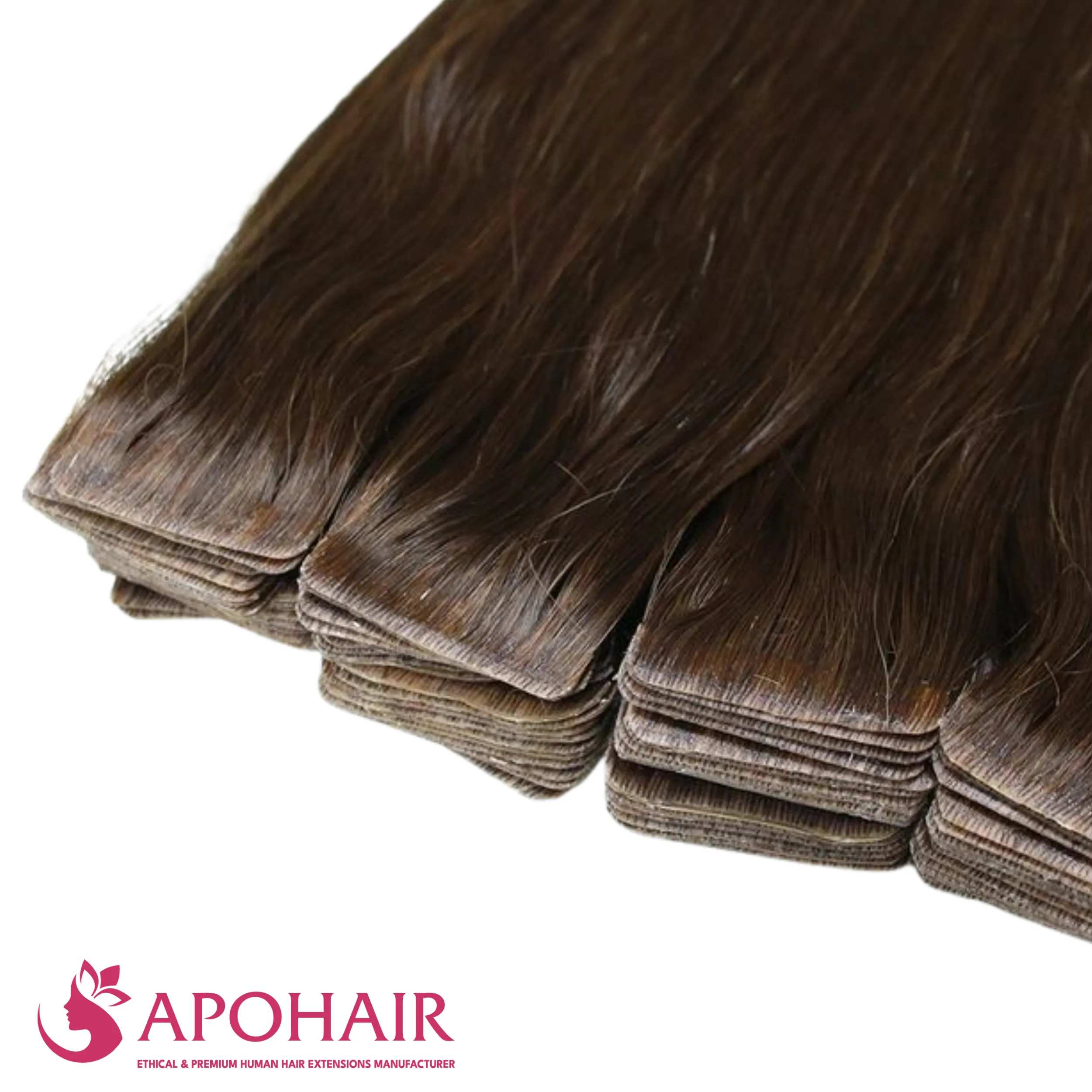
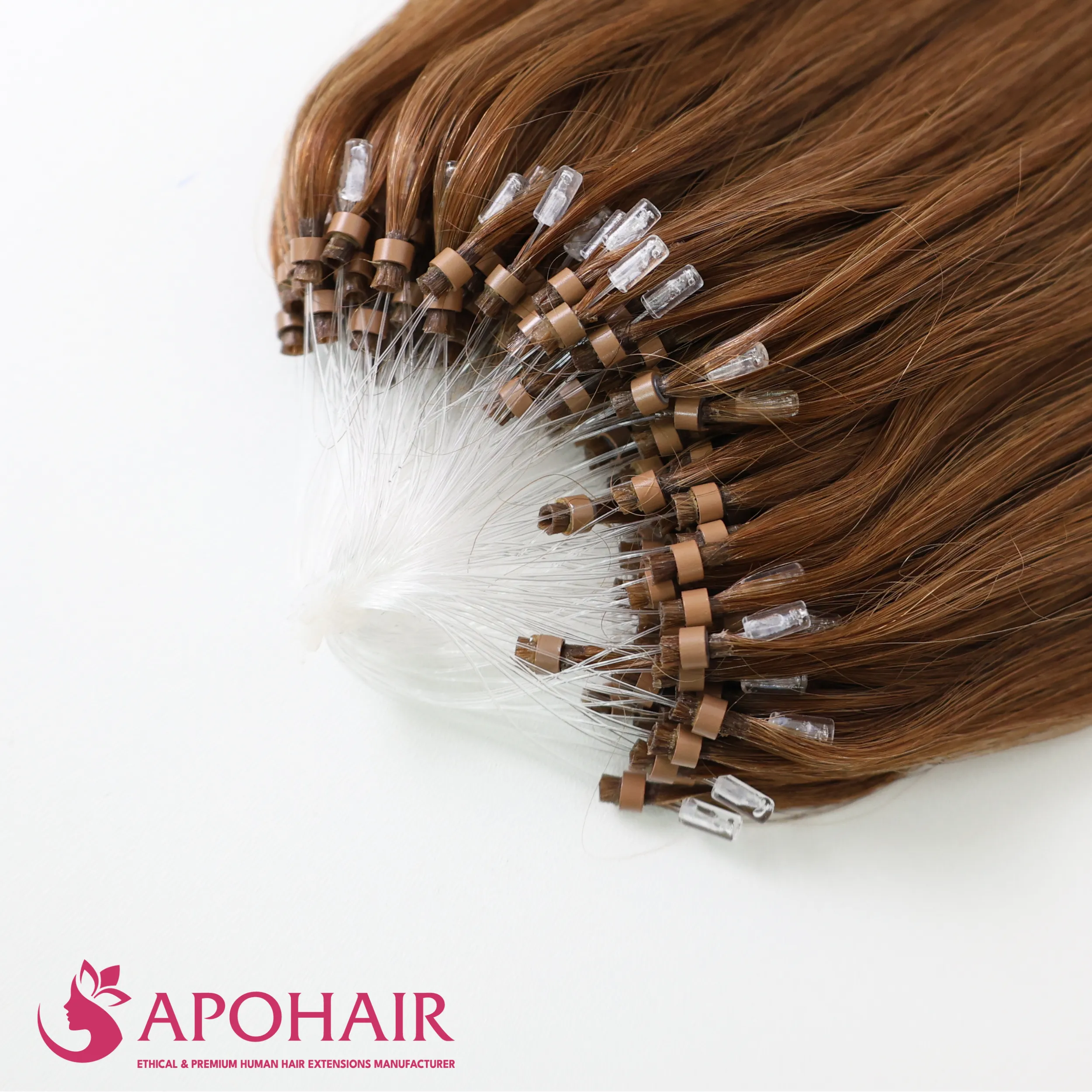
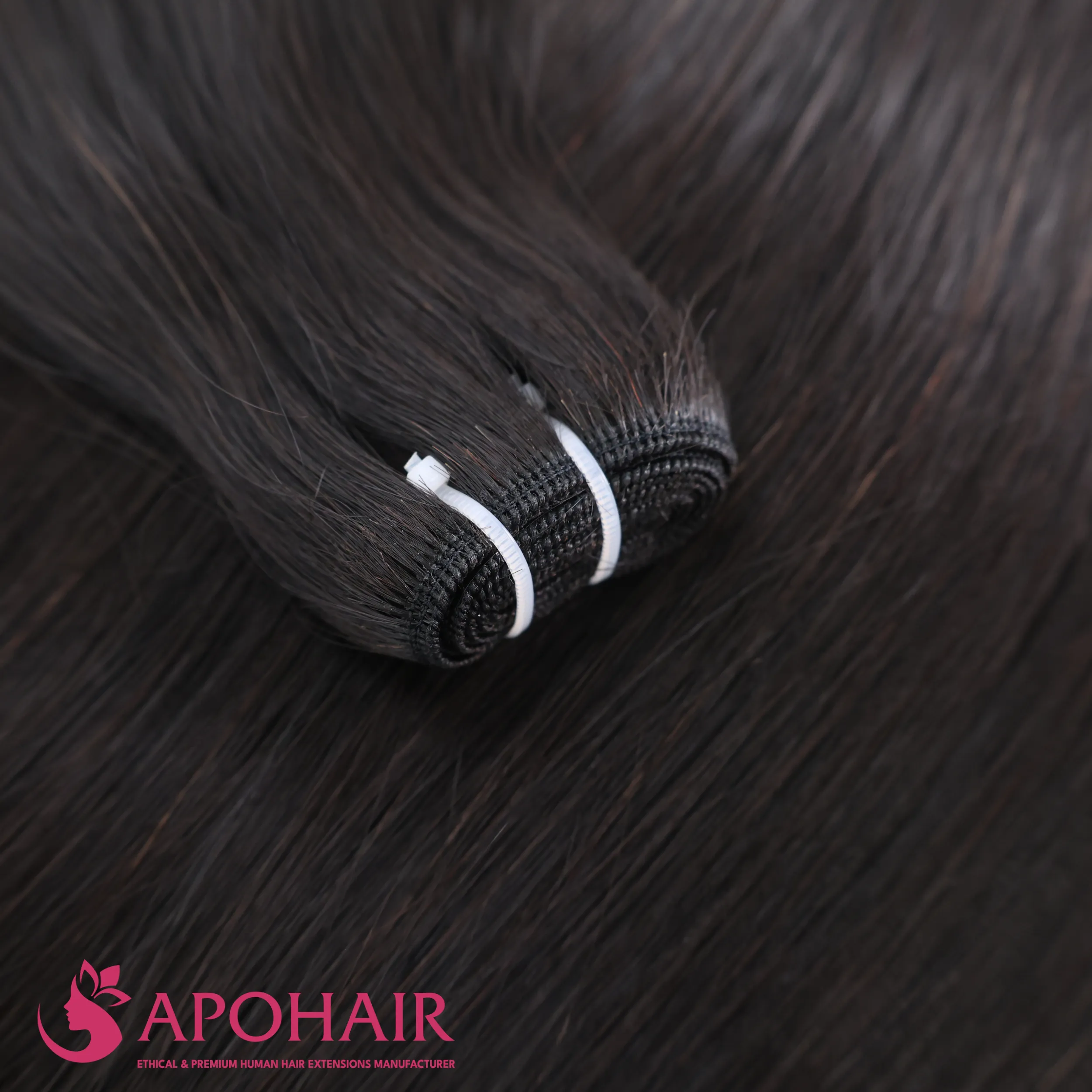
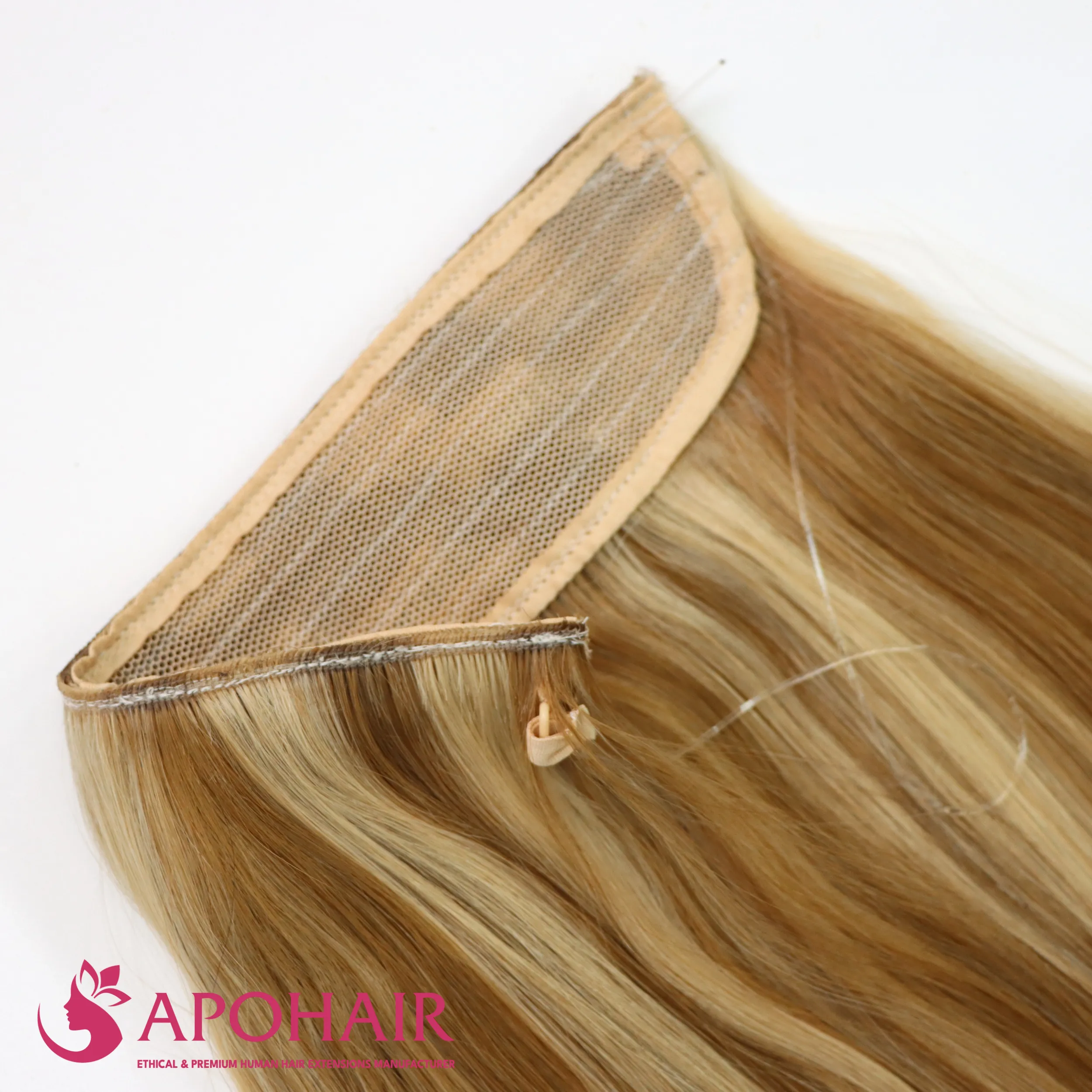
APOHAIR carries both body wave and deep wave textures across hand-tied weft, machine weft, normal clip-in, seamless clip-in, and lace wig formats, all made from 100% Vietnamese human hair with intact cuticle alignment and no synthetic blending. Lace wig options include 5×5 closure wigs, 13×4 lace front wigs, 13×6 lace front wigs, and full lace wigs.
The right wave texture builds client trust and repeat bookings when the hair source is consistent, cuticle-aligned, and ethically sourced from a single origin.
- 100% Vietnamese Human Hair: Single-donor collection from Vietnamese villages gives consistent texture and color across every batch.
- Cuticle-Aligned Technology: All cuticles face the same direction from root to tip, preventing tangling and matting during daily wear.
- Ethical Sourcing: A direct collector network in Vietnamese villages with fair, verified compensation for every donor.
- Factory-Direct Pricing: No middlemen between the factory and your order, with wholesale rates 30% to 40% below retail market.
- 15+ Year Track Record: Over 700+ well-trained, skilled workers and 100+ sales staff serving salons and distributors across 120+ countries.
- 33,000 m² Manufacturing Facility: A modern factory with production lines for wefts, wigs, clip-ins, and tip extensions.
- Global Distribution: Ships to the US, UK, EU, Australia, Africa, and Asia, with orders processed within 24 hours of confirmation.
- Quality Guarantee: 7-day inspection warranty with free replacement for any product that does not meet agreed specifications.
APOHAIR transforms authentic Vietnamese hair into premium extensions trusted by salon owners and wholesalers worldwide. Our commitment: global leadership in the hair industry through ethical practices, manufacturing excellence, and customer success.
Ready to stock body wave or deep wave extensions for your salon or store? Contact APOHAIR for wholesale pricing and free samples.
APOHAIR ETHICAL AND PREMIUM HUMAN HAIR EXTENSIONS MANUFACTURER Address: Building 3A, Lane 82 Duy Tan, Cau Giay, Hanoi, Vietnam Factory: Minh Luong, Yen Luong Ward, Ninh Binh, Vietnam Phone number: (+84) 862 132 366 Email: [email protected]

FAQs Related to Body Wave vs Deep Wave Hair
How Do Body Wave, Deep Wave, and Water Wave Compare to Each Other?
Body wave is the loosest with wide S-curves, water wave sits in the middle with uniform rippled coils, and deep wave is the tightest with compact springy curls that produce the most volume of the three. These three textures sit at distinct points on the curl tightness spectrum, with water wave bridging the gap between body wave’s flowing movement and deep wave’s dense coil structure.
What Is the Difference Between Loose Wave, Loose Deep Wave, and Body Wave Hair?
Loose wave sits between body wave and deep wave on the curl scale, with more definition than body wave but less tightness than deep wave. Loose deep wave is a hybrid texture that combines the open movement of a loose wave with the coil depth of a deep wave, producing a fuller result than either alone. Body wave remains the softest and most flowing of the three.
Which Is Better for Boho Braids, Body Wave or Deep Wave Hair?
Deep wave produces fuller, more textured boho braids because its tight coils create visible volume at the braid ends and throughout the loose, unbraided sections. Body wave produces softer, more flowing boho braids with a relaxed, natural finish. Choose deep wave for statement braids and body wave for a laid-back, breezy aesthetic.
Outro
Body wave and deep wave hair serve different purposes, different lifestyles, and different style identities. Body wave offers soft S-waves, simple 5 to 8 minute daily maintenance, and wide styling range from straight to curled. Deep wave offers tight coils, bold high-volume texture, and strong curl retention that suits events and curly-hair lifestyles. Your choice depends on your face shape, daily routine time, occasion type, and how closely the extension matches your natural hair. Both textures perform at their best when sourced from cuticle-aligned, ethically collected human hair. APOHAIR supplies both body wave and deep wave across all extension and wig formats, made from 100% Vietnamese human hair and shipped to 120+ countries.
APOHAIR – ETHICAL & PREMIUM HUMAN HAIR EXTENSIONS MANUFACTURER
- Address: Building 3A, Lane 82 Duy Tan, Cau Giay, Hanoi, Vietnam
- Factory: Minh Luong, Yen Luong Ward, Ninh Binh, Vietnam
- WhatsApp: +84 862 132 366
- Email: [email protected]
- Website: https://apohair.com
