



18 Best Bangs For Women With A Long Face: Blunt, Curtain And Side-Swept Fringes That Break Up The Length
The best bangs for women with a long face are full blunt bangs at brow level, low-break curtain bangs, and long side-swept bangs. A long face, also called an oblong face, runs clearly longer than it is wide. Its forehead, cheekbones, and jaw sit at close to the same width. The extra length usually lives in a tall forehead or in a long stretch from the nose to the chin. A fringe answers both by drawing a line across that length, and Michelle Villett of The Glow Memo notes that the widening happens where the bangs stop. On a long face, that point is the brow or the cheekbone, never the jaw.
Eighteen fringes pass that test, grouped by the line each one draws. Straight-across bangs shorten the forehead, curtain bangs widen the cheekbones, and side-swept bangs break the vertical. Four filters then narrow the choice to one, and six fringes fail on a long face whatever the hair does.
Best 18 Bangs For Women With A Long Face
Full blunt bangs at brow level, low-break curtain bangs, and long side-swept bangs do the most for a long face, each by drawing a different line across it. The other fifteen follow in the same three groups: straight-across fringes first, then curtain bangs, then side-swept bangs.
1. Full Blunt Bangs At Brow Level
Full blunt bangs at brow level are a dense, straight-across fringe with one solid edge at or just above the eyebrows. On a long face, that edge moves the visible top of the face from the hairline down to the brow. A tall forehead reads shorter, and the face reads wider. It is the strongest fix when the length lives in the forehead.
The section starts high on the crown so the fringe holds enough hair to stay solid. Hair Addict Salon owner Michelle Cleveland warns that thin hair or several cowlicks cause “separation or piecing through the hair line.” Type 1A to 2A hair holds the line best on most women, and a trim lands every 3 to 4 weeks. Past the brow, the fringe turns heavy and adds length back.

Why it works: Moving the visible top of the face down from the hairline to the brow shortens a tall forehead and makes a long face read wider, which is why it is the strongest fix when the length lives in the forehead.
2. Textured Straight-Across Bangs
Textured straight-across bangs keep the brow-level line of a blunt fringe but break up the edge into soft pieces. On a long face, the horizontal still shortens the forehead, while the broken edge keeps it from looking severe. Women with thick hair gain the most, since the texture removes bulk that would otherwise sit like a shelf.
The perimeter goes in straight first. Point-cutting then works into the last half inch, so the line stays readable from across a room. Too much texturizing turns the fringe into strands, and strands on a long face read as short verticals. Medium to thick hair, Type 1B to 2B, shows the balance best. The soft edge also hides growth for longer than a blunt one.

Why it works: The horizontal still cuts a long face’s forehead down, while the broken edge keeps the line from looking severe and removes bulk that would otherwise sit like a shelf on thick hair.
3. Full Wispy Bangs
Full wispy bangs cover the forehead to the brow with a light, see-through finish rather than a solid edge. On a long face, they shorten the forehead like a blunt fringe, only with less weight. That makes them workable for women with fine hair. The word that matters is full, because the fringe needs enough hair to read as one soft line.
Fine hair is also where this fringe goes wrong most often. Villett’s fix for a stringy fringe is “more hair to be cut into the bang from higher on the crown.” Vertical snips then soften the ends without thinning the whole fringe. It grows out more gently than a blunt fringe. A sparse version with gaps is the one that makes a long face look longer.

Why it works: A full but light fringe covers the forehead to the brow like a blunt one with less weight, so women with fine hair can shorten a long face without a heavy edge.
4. Air Bangs
Air bangs are a sheer, short fringe taken from a thin section, light enough that the forehead shows through. On a long face, they only soften the top edge. That makes them right for a forehead that is short or only slightly longer than the rest of the face.
The thin section comes from the very front of the hairline, and vertical snips keep the ends airy. On a tall forehead, the same fringe leaves too much skin showing and adds nothing across the length. Straight hair, Type 1A to 1C, shows the airy finish best on women who want a light look. Oily roots undo it, since clumped strands become the verticals a long face should avoid.

Why it works: A sheer fringe only softens the top edge, which is enough when a long face has a short or just slightly long forehead and the extra length sits lower down.
5. Choppy Brow-Length Bangs
Choppy brow-length bangs sit at the eyebrows with deliberately uneven, point-cut ends. On a long face, the fringe still draws a horizontal at the brow, while the broken edge adds movement across the forehead. That movement is exactly what straight, flat hair lacks. The result shortens the face without the formality of a solid line.
The scissors go vertically into the ends rather than across them. The chop stays within the bottom inch, because carried higher it thins the fringe into stripes of forehead. Those stripes read as extra length. Women with straight hair, Type 1A to 1B, need this texture most, while curly hair already breaks its own edge. The uneven line hides regrowth longer than a blunt edge does.

Why it works: The brow-level horizontal shortens a long face, while the uneven ends add the movement that straight, flat hair lacks, so the line never reads as formal.
6. Layered Bangs
Layered bangs cut the fringe in a few stacked lengths, so the ends fall at slightly different points around the brow. On a long face, the shortest layer covers the forehead while the longer ones carry width toward the cheekbones. It is the natural choice for women whose hair already has long layers.
The shortest layer sits at the brow, and the longest stops at the cheekbone. Layers that run to the jaw draw two long verticals beside the face. Medium to thick density keeps the layers distinct, and Type 1B to 2C hair shows them without much styling. Growth hides well between trims. Layering that starts at the crown is the mistake, because it lifts the top and adds height.

Why it works: The shortest layer covers the forehead while the longer ones carry width toward the cheekbones, giving a long face both a shorter top and a fuller middle.
7. Birkin Bangs
Birkin bangs are a soft, brow-grazing fringe. Renaissance Salon & Spa founder Jennifer Korab describes them as “wispy, slightly longer, and often uneven.” On a long face, the brow is the landmark that matters, and the uneven edge keeps the fringe relaxed. It suits a woman growing out a blunt fringe, since it looks finished at every stage.
The fringe stops at the brow, not at the lashes. Longer than that, it hides the eyes and lays a heavy layer over the upper face. Point-cutting keeps the edge uneven, and medium density covers the forehead without weight. Type 1B to 2B hair takes the lived-in finish most easily. Letting it slip past the brow line is the one failure, because then it adds length.

Why it works: A fringe that grazes the brow gives a long face the landmark it needs, and the uneven edge keeps it relaxed enough to look finished at every stage of growing out.
8. Curly Brow-Length Bangs
Curly brow-length bangs let the natural curl pattern form the fringe, with the curls settling at the brow once dry. On a long face, the curls build a band of width across the forehead that a straight fringe cannot. They shorten the face and widen it in one move. Curly hair, Type 3A to 4A, carries the shape without styling on most women.
A dry cut, curl by curl, builds in shrinkage. A curl cut wet at the brow springs up well above it. Density decides the width: a full section reads as a band, while a thin one breaks into separate coils with forehead between them. Curls hide growth well. Cutting on stretched hair is the failure mode, because the fringe dries short and exposes the forehead.

Why it works: Curls settling at the brow build a band of width across the forehead that a straight fringe cannot, shortening and widening a long face in one move, even on women who never style it.
9. Low-Break Curtain Bangs
Low-break curtain bangs part at the center and open low, with the ends landing on the cheekbones. On a long face, the low break keeps most of the forehead covered while both sides sweep outward where width is needed. Women with narrow cheekbones gain the most, since the ends add fullness at exactly that level.
The break sits around the brow. A high break opens a strip of forehead and adds a vertical. Percy & Reed founder Paul Percival told Vogue that for long faces “it’s all about long, grown-out-looking fringes,” a curtain among them. Type 1B to 2C hair holds the outward sweep, and a curtain needs a trim roughly every 6 to 8 weeks. Ends that drift to the jaw undo the width.

Why it works: The low break keeps most of the forehead covered while both sides sweep outward onto the cheekbones, adding width exactly where a long face needs it.
10. Wide-Opened Curtain Bangs
Wide-opened curtain bangs split the fringe into two panels that sit far apart and sweep toward the temples. On a long face, the wide opening turns the fringe into a horizontal sweep that pushes width outward. Because the panels sit outside the eye area, the fringe works for women in glasses and never crowds the frames.
The panels stay longer at the outer edge and get blow-dried outward from the roots. A narrow opening does the opposite, framing a strip of forehead between two vertical panels. Medium density and Type 1B to 2B hair hold the direction best. Trims follow the usual cycle of 6 to 8 weeks. Panels that collapse inward by midday are a failure, since they draw the vertical that the fringe was meant to break.

Why it works: Panels set far apart sweep toward the temples, turning the fringe into a horizontal that pushes a long face’s width outward.
11. Bardot Bangs
Bardot bangs are a full, soft fringe that parts slightly at the center and falls longer at the sides. Jennifer Korab notes they are “typically longer than traditional bangs, often reaching the cheekbones or even the jawline.” On a long face, the cheekbone is the right endpoint, so the sides add width at mid-face. They suit women whose hair has a natural center part.
The center stays at brow length, and the sides lengthen gradually to the cheekbone. Carried down to the jaw, the sides become two long panels, the pattern Villett lists among the worst choices for this shape. Medium to thick hair, Type 1B to 2C, gives the fullness the style depends on. Cut heavy and left flat, a Bardot pulls the eye down instead of out.

Why it works: A center that stays at brow length with sides that stop at the cheekbones adds width at mid-face, the right endpoint for a long face.
12. Off-Center Curtain Bangs
Off-center curtain bangs move the part slightly to one side, so one panel runs a little longer than the other. On a long face, the uneven split breaks the symmetry that makes a vertical easy to read. It also answers a cowlick at the front hairline, so women can set the part where the swirl already sends the hair.
Issey Cook, a senior stylist at Larry King South Kensington, notes that someone with a pronounced cowlick “may find that a fringe naturally separates.” A part set on the swirl turns that separation into the design. Both panels still end at the cheekbone. Type 1B to 2C hair holds the uneven sweep, and trims follow the curtain cycle. A center part set over a cowlick splits the fringe by midday.

Why it works: Splitting the part to one side breaks the symmetry that makes a long face’s vertical easy to read, and women with a front cowlick can set the part right on the swirl.
13. Feathered Curtain Bangs
Feathered curtain bangs taper each panel into soft, thinned ends that blend into the hair around the face. On a long face, the feathered sweep carries the eye outward across the cheekbones without a hard edge. It is the most practical curtain for women with an oily forehead, since the light ends lift away from the skin.
A razor or slide-cut thins the ends, which also takes weight out of thick hair. Villett notes that “oily foreheads can encourage bangs to clump together faster,” and feathered ends give the oil less to grip. Type 1B to 2B hair shows the feathering best. Trims follow the other curtain fringes. Ends thinned too far leave gaps between the wisps, and those gaps read as extra length.

Why it works: Feathered ends carry the eye outward across the cheekbones without a hard edge, giving a long face width while lifting away from an oily forehead.
14. Cheekbone-Length Grown-Out Bangs
Cheekbone-length grown-out bangs are a long, loose fringe that parts easily and falls to the cheekbones. On a long face, the length carries width to mid-face while the fringe still crosses the upper forehead. Issey Cook calls longer, grown-out bangs “more forgiving,” which makes this the fringe for women with ten-minute mornings.
The ends stop at the cheekbone, not below. Past it, the fringe merges into the rest of the hair and loses the width it was there to add. Light layering lets the pieces fall outward rather than straight down. Most textures and densities carry it, and a finger-dry is often enough. Growing it past the cheekbone is the only real risk.

Why it works: Ending at the cheekbone carries width to mid-face while the fringe still crosses the upper forehead, a forgiving way to break up a long face’s length.
15. Long Side-Swept Bangs
Long side-swept bangs start at a side part and cross the forehead on a diagonal, ending past the eye near the cheekbone. On a long face, the diagonal breaks the vertical without the weight of a full fringe. It is the right choice for women whose length sits between the nose and the chin, where a heavy fringe would lengthen the lower face.
Maxine Salon stylist Raven Hurtado told Glamour that side bangs are “perfect for long faces” because they move attention to the eyes. The part sits deep, and the longest point lands at the cheekbone. Straight to wavy hair, Type 1A to 2B, sweeps easily and moves aside as it grows. A part near the center is the failure mode, since the fringe then falls straight into one more vertical.

Why it works: The diagonal breaks the vertical without the weight of a full fringe, so a long face whose length sits between the nose and chin is not lengthened further.
16. Brow-Length Side-Swept Bangs
Brow-length side-swept bangs take a shorter diagonal across the forehead, ending near the outer end of the brow. On a long face, the angle breaks up the forehead while the eyes stay clear. It is the gentlest option for a woman’s first fringe, since it can sweep further aside, clip back, or grow into a longer sweep.
The diagonal starts from a clear side part, with the shortest point at the inner brow. Cut shorter, the fringe stops high on the forehead and loses its widening effect, which is why Villett rules out side-swept baby bangs for this shape. Fine to medium hair, Type 1A to 1C, lies flat in the sweep. Any lift at the root works against it, since height at the top adds length.

Why it works: The shorter diagonal breaks up a long face’s forehead while keeping the eyes clear, which makes it a gentle first fringe for women trying bangs for the first time.
17. Angled Side Bangs
Angled side bangs follow a steep diagonal from a sharp side part. Perfect Locks recommends them for a long face, describing “a sharp side part, drawing the hair across the forehead and down past the eye.” On a long face, that steep line crosses the whole upper face and finishes near high cheekbones, which pick up the angle.
The fringe gets cut while it lies in its swept position, so the line shows exactly as worn. A shallow angle looks like an uneven blunt fringe and loses the diagonal. Straight hair, Type 1A to 1C, shows a sharp angle most clearly. Growth softens the line, so a trim follows once the longest point passes the cheekbone. A fringe that ends above the eye never reaches the width zone.

Why it works: A steep line crossing the whole upper face ends near the cheekbones, which pick up the angle and add width a long face lacks.
18. Wavy Side-Swept Bangs
Wavy side-swept bangs let a loose wave pattern carry a side fringe across the forehead. On a long face, each bend of the wave pushes the fringe outward as well as sideways. The diagonal gains a width that straight hair cannot supply. Wavy hair, Type 2A to 2C, provides that movement on its own for most women.
The fringe goes in dry and slightly longer than it needs to sit, since waves pull up as they dry. The longest point still finishes past the eye. Medium density keeps the waves grouped into one sweep, and a diffuser protects the pattern. Brushing the waves out straight is the failure mode, because the fringe loses its bend and hangs flat.

Why it works: Each bend of the wave pushes the fringe outward as well as sideways, giving a long face the width a straight diagonal cannot, and wavy hair does most of the work on its own.
How Should Women Choose The Right Bangs For Their Long Face?
Four things decide which fringe works on a woman’s long face: where the length sits, how the hair behaves, how long the rest of the hair is, and how much time the morning allows. The face shape sets the goal, and these four pick the fringe that reaches it. Across all ten common facial profiles, narrowing down bangs for your face shape starts with checking your vertical ratio and widest horizontal line before factoring in forehead height, hair texture, and glasses.
Where The Length Sits Decides How Much Of The Forehead The Fringe Covers
A long face whose length comes from a tall forehead needs coverage down to the brow. Full blunt bangs at brow level and layered bangs lead there, while long curtains and parted styles leave too much forehead showing. When the forehead is short or only slightly long, the length sits between the nose and the chin. A heavy blunt fringe then draws attention to the lower face, so low-break curtain bangs, air bangs, and long side-swept bangs lift it to the eyes instead.
Hair Texture And Cowlicks Decide Which Fringe Stays In Place
Oily or fine, flat hair clumps under a thick blunt fringe and under a thin wispy one. Feathered curtain bangs hold up better, because the light ends lift off the skin and clip back in seconds. Curly or frizz-prone hair should skip any fringe that depends on a sleek finish and take curly brow-length bangs cut to the natural pattern. A cowlick rules out a rigid center part, and off-center curtain bangs set the part on the swirl instead.
Overall Hair Length Decides How The Fringe Blends Into The Cut
On short hair, from a bob to a lob, a light fringe keeps the proportions of the cut. Full wispy bangs with a soft bend or textured straight-across bangs fit that length best. Waist-length hair needs a fringe that connects to the length instead. Cheekbone-length grown-out bangs and low-break curtain bangs curled into a soft C carry width outward, so the length never pulls the whole shape down. Pairing the right fringe with short bobs, medium lobs, or layered cuts among 37 hairstyles for long faces builds extra width at the cheekbones so the overall silhouette stays balanced.
Styling Time Decides Between Low-Effort And Blow-Dried Fringes
A few spare minutes suit cheekbone-length grown-out bangs or long side-swept bangs. One pass of the dryer or a claw clip sets them. New York City hairstylist Dan Williams notes that curtain bangs are “much easier to maintain due to the length of the style.” A routine with a round brush opens up air bangs and full blunt bangs blown into a soft curve. Trims split the same way: a blunt fringe every 3 to 4 weeks, and a curtain roughly every 6 to 8 weeks.
Bangs Women Should Avoid With A Long Face
The bangs to avoid on a long face are the ones that stop too high to add width, carry too little hair to hold a line, or run past the cheekbones into a vertical. Each fails because of where it ends or how thin it is, so no styling rescues it:
- Micro and baby bangs with nothing framing the sides. A fringe cut well above the brows sits “too high on the face to have the desired widening action,” in Villett’s words.
- Short choppy bangs over short crown layers. The fringe sits high while the layers lift the crown, so the top gains height and a strip of forehead stays exposed.
- Heavy blunt bangs hanging past the brow. A dense fringe that reaches the lashes turns the upper face into one solid block and moves attention down to the nose and chin.
- Sparse, stringy bangs from a shallow section. Too little hair separates into strands, and strands read as short vertical lines on a long forehead.
- Long curtain bangs that end at the jaw. Two panels framing the full length add verticals, while Villett wants a fringe to end “somewhere around the middle of the face, instead of down around the chin.”
- Bottleneck bangs. Short at the center and long at the sides, running down toward the jaw, the shape draws two lines down the cheeks and stretches a face that already runs long.

Frequently Asked Questions
Even with a fringe picked out, two questions still divide the experts, and some long faces bring a second feature into play.
Are Blunt Bangs Or Curtain Bangs Better For A Long Face?
Blunt bangs are better when the length sits in a tall forehead, and curtain bangs are better when it sits in the lower half. The sources split on this point. Wella calls blunt bangs a risk that “can pay off on longer face shapes,” while Paul Percival favors grown-out fringes, curtain or side-swept. Each suits a different long face: a blunt fringe shortens a tall forehead, and a curtain lifts attention off a long chin.
Do Wispy Bangs Make A Long Face Look Longer?
Wispy bangs make a long face look longer only when they are sparse. Michelle Villett warns that “anything thin and wispy is only going to accentuate a long face.” Full wispy styles, by contrast, rank among the most recommended fringes for this shape. The difference is how much hair goes into the fringe. A full one reads as a soft horizontal, while a thin one breaks into short verticals. When a client lacks the natural density to keep a fringe full, salons can order 100% Vietnamese human hair extensions and toppers wholesale from Apohair, a hair extensions factory in Vietnam.
What Bangs Suit An Oblong Face?
An oblong face suits the same bangs as a long face, because both names describe the same proportions. The face runs longer than it is wide, with the forehead, cheekbones, and jaw at similar widths. Full blunt bangs at brow level, low-break curtain bangs, and long side-swept bangs lead the options. Each draws a line across the length and stops at the brow or the cheekbone, never the jaw.
What Bangs Suit A Long Face Over 50?
Soft, moving fringes serve women with a long face over 50 best, especially cheekbone-length grown-out bangs, feathered curtain bangs, and long side-swept bangs. Hair often turns finer with age, and a fine fringe cut blunt tends to separate. A light sweep holds up better than a dense edge. The landmark rule stays the same at any age: the fringe stops at the brow or the cheekbone. For clients whose hair is too fine to hold a fringe, a salon can stock full lace, lace front, or U part wholesale human hair wigs.
What Bangs Suit A Long Face With A Big Nose?
Long side-swept bangs and low-break curtain bangs suit a long face with a big nose best. Both draw the eye outward along a diagonal or a sweep, away from the center line of the face where the nose sits. A heavy blunt fringe does the opposite. It ends in a straight line just above the nose and frames it like a box.
How Should Bangs Be Cut For A Long Face?
A fringe for a long face starts from a section deep enough to hold a line and gets cut dry. It follows a landmark rather than a length: the brow for a straight fringe, the cheekbone for curtain and side-swept styles. A shallow section produces the stringy fringe that lengthens the face. A curtain that reaches the jaw adds two verticals, so the cut stops at the cheekbone.
Conclusion
For women, every good fringe for a long face does one job: it draws a line across the length and stops before adding any more. Straight-across bangs shorten a tall forehead at the brow, and curtain bangs push width out at the cheekbones. Side-swept bangs cut the vertical on a diagonal. Where the length sits decides which group leads, and texture, hair length, and styling time narrow the eighteen down to one.
If you run a salon or source hair for a shop, our team can send samples along with factory-direct pricing on texture-matched wefts, bulk hair, and clip-in sets. They build fullness beside a fringe, where a long face needs its width. We manufacture 100% Vietnamese Human Hair in our own facility, which lets you match density and texture to each female client in front of you rather than to whatever a middleman had in stock.
Wholesale Human Hair Supply for Salons and Resellers: Salons and resellers helping clients balance a long face with blunt, curtain, or side-swept fringes can stock 100% Vietnamese human hair directly from our factory.
Extensions: Salons serving clients who pair feathered curtain bangs with fuller lengths can source 100% Vietnamese human hair extensions wholesale in tape-in, clip-in, and weft formats.
Bundles: For clients wearing curly brow-length bangs or wavy side-swept fringes, distributors can stock wholesale bundles of human hair in 100g packs from silky straight to kinky curly.
Tape in: Ordering wholesale tape in hair extensions across four variants, including Normal and Invisible, helps salon owners supply clients whose fine hair accompanies full wispy bangs.
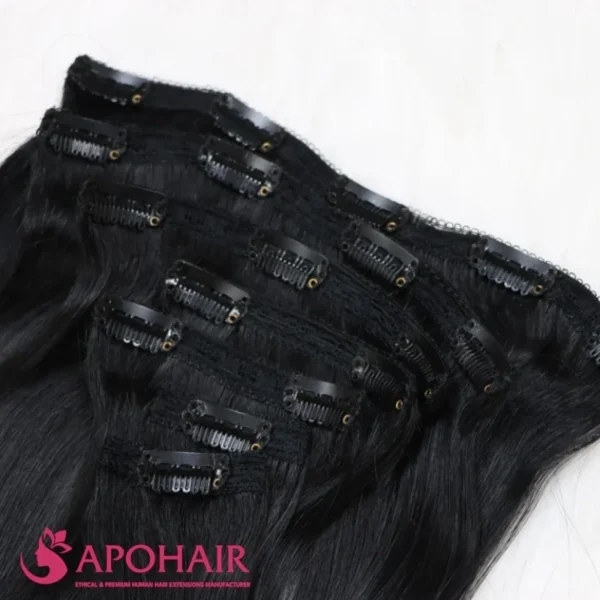
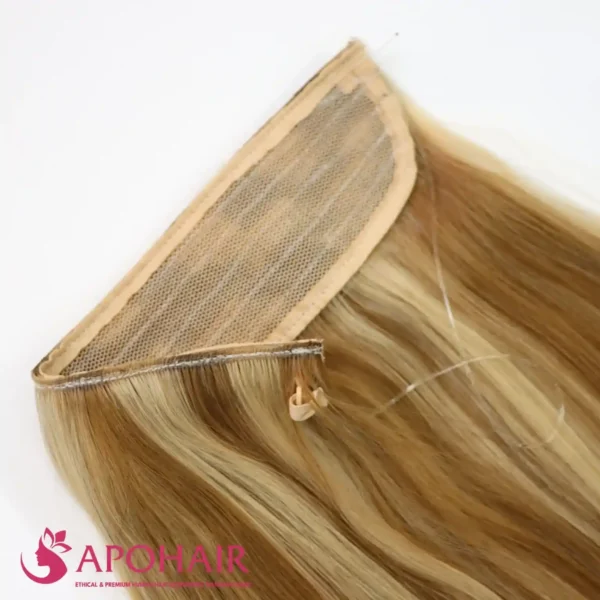
Clip in: Resellers catering to clients who favor low-effort grown-out bangs can order remy clip in hair extensions wholesale starting from 200g in Normal, Seamless, and Halo styles.
Weft: When clients pair low-break curtain bangs with waist-length cuts, shop owners can buy human hair extensions weft wholesale in 100g packs across eight weft types.
