








22 Bob Hairstyles for Long and Oblong Faces: Blunt Cuts, Layers, Bangs & Waves
Top bob hairstyles for long (Oblong) faces that add width to the sides and visually shorten the length are the chin-length blunt bob with wispy fringe and a C-shaped bend, the layered bob with cheekbone layers, and the bob with blunt bangs. All three keep the bob’s line level and high. A long or oblong face needs its length interrupted, and a bob does that through its perimeter, which reads as a horizontal wherever it lands. Four decisions then separate one bob from another: where the perimeter falls, what the fringe covers, how the hair moves, and how much of it there is. Bobs fail when the line drops too low, splits into straight panels, or sits under a lifted crown.
A long face runs noticeably longer than it is wide. An oblong face shares that proportion but adds a straighter, more angular jaw. Both read shorter whenever a horizontal line crosses them, and a bob perimeter is exactly that. The family of bob matters less than the line itself. What counts is how high the line sits, how level it runs, and whether a fringe adds a second line above it. Twenty-two bobs hold up under those conditions, from blunt chin-length cuts to beach-wave shapes.
Best Bob Hairstyles for Long Faces
The chin-length blunt bob with wispy fringe and C-shaped bend, the layered bob with cheekbone layers, and the bob with blunt bangs do the most for a long face, each keeping the line level and high. The long bob, the most requested of the 22, works only with blunt ends and cheekbone layers.
1. Chin-Length Blunt Bob With Wispy Fringe & C-Shaped Bend
The chin-length blunt bob with wispy fringe and C-shaped bend is the reference bob for a long face, finished at both ends. Every strand falls to one level at the chin, so the weight line runs dead horizontal across the face’s length. The fringe trims visible height from the top, and the bend rolls the ends toward the jaw to round out the base.
Zero elevation stacks the weight right at the line. The bend is styled rather than cut, with one pass of a flat iron or round brush turning only the last inch under. The line needs checking from the side too. A bob that tilts down toward the front becomes an A-line and points a diagonal down the face. The fringe is point-cut to the brow and kept dense enough to cover the forehead without gaps. Blunt ends suit fine hair especially well, since a heavy edge reads denser than the strands really are. Recutting every 6 to 8 weeks keeps the line, with a fringe trim every 4 weeks. A bend pushed higher than the last inch rounds the whole outline and softens the level line the cut depends on.

Why it works: The blunt, level edge sits high at the chin and reads as one solid horizontal line, so a long face’s extra length breaks right where the line falls instead of running past it.
2. Long Bob (Lob) for a Long Face
The long bob carries the bob line down to the collarbone, and on a long face that makes it the riskiest bob of all. Length below the jaw adds a vertical run. It works only under two conditions. The ends stay blunt, so the perimeter still reads as a line, and layers at the cheekbone put back the width the length removes.
The collarbone is a hard stop. Below it, the lob behaves like long hair and hangs as a single vertical sheet. Layering stays at the cheekbone and never runs to the ends, since layers carried all the way down split the lob into two curtains. Medium to thick density holds the shape best. It grows out gently, needing a trim about every 10 weeks.

Why it works: The lob’s length below the jaw adds a vertical run on a long face, so it only holds up here because the ends stay blunt and layering stays at the cheekbone instead of running the full length. Alexa Chung is one of the few actresses who keeps reinventing her bob, and just wait until you see how many different ways she wears one throughout this article!
3. Layered Bob With Cheekbone Layers
A layered bob with cheekbone layers splits the cut into two zones: a solid base at the chin and a layered band around the cheekbones. On a long face, the base does the shortening and the band does the widening. Each zone handles one problem, which is why the combination works so reliably.
Both edges of the layered band need a clear stop. If the band starts too close to the crown, it adds lift; if it runs down into the perimeter, it thins the line. Wavy hair, Type 2A to 2C, shows the band without heat styling. Thick hair carries the layering without collapsing it. The layers lose their definition first, usually around the 8 weeks mark.

Why it works: The chin-level base shortens the face while the cheekbone band adds width at the sides, so the two zones split the correction a long face needs into two separate jobs.
4. Textured Short Bob With Side-Swept Bangs
A textured short bob with side-swept bangs sets its line above the chin, breaks up the ends with light texture, and lays a brow-length fringe across the forehead from a side part. On a long face, the height of the line works like a dial. Raise it an inch and the face reads an inch shorter, while the angled fringe cuts the forehead on a diagonal.
Texture stays in the last inch of the ends. They separate and push outward, while the perimeter still reads as level. The fringe stops at the brow and falls toward the outer corner of the opposite eye. That leaves the cheekbone clear for the bob’s width. Nearly any texture or density can carry it, which makes it the most adaptable short bob for a long face. A trim every 6 to 8 weeks keeps the height where it was set, and the fringe needs one every 4 weeks. A bob that angles toward the front pulls the line back down at the chin and cancels the dial.

Why it works: Raising the perimeter above the chin trims visible length off a long face, and the diagonal fringe adds a second, non-vertical line across the forehead instead of repeating the face’s own direction.
5. Bob With Blunt Bangs
A bob with blunt bangs builds the cut around two parallel lines, a heavy fringe at the brow and a level perimeter at the chin. On a long face, the visible face becomes the band between them, and that band is far shorter than the full length.
The two lines need matching weight. A dense bob with a thin fringe looks bottom-heavy. A dense fringe over a thin bob looks top-heavy. Either way, the imbalance pulls the eye back into the face’s length, so both lines share the same density. Where the front hairline has a strong cowlick, the fringe stays slightly heavier so it lies flat. A fringe trim every 3 to 4 weeks keeps the top line crisp.

Why it works: Two matching horizontal lines, one at the brow and one at the chin, box in the visible part of a long face so only the shorter band between them ever shows.
6. Bob With Curtain Bangs
A bob with curtain bangs connects its fringe to its sides, so the fringe opens from the center and flows straight into the bob’s front edge. On a long face, the eye travels one unbroken curve from mid-forehead down to the jaw. That curve widens the face along its whole height instead of at a single point.
The join is where this cut succeeds or fails. The fringe’s outer ends meet the bob’s front perimeter at the cheekbone with no step between them, so the curve never breaks. A visible gap turns one curve into two separate pieces. Hair between Type 1B and 2C keeps the curve’s direction through the day. It stays low-maintenance, with a trim roughly every 6 weeks.

Why it works: The unbroken curve from mid-forehead to jaw widens a long face along its whole height rather than at a single point, which a flat perimeter alone cannot do.
7. Bob With Side-Swept Bangs
A bob with side-swept bangs lays a long diagonal across the top of an otherwise level bob. The fringe starts at a deep side part and crosses the forehead toward the opposite cheekbone. On a long face, that diagonal covers the upper forehead and adds a second direction to a frame built from horizontals.
Part depth sets the angle. A part near the center gives a fringe that falls almost straight and reads as another vertical, whereas a deep part gives the diagonal the shape needs. The fringe’s longest point finishes where the bob’s width begins, at the cheekbone. On curly hair, the fringe is left longer so the spring does not lift it too high. It gets a trim about once a month to stay out of the eyes.

Why it works: The deep-set diagonal covers the upper forehead and cuts across the face at an angle, giving a long face a second direction to counter its built-in verticals.
8. Curly Bob With Micro Bangs
A curly bob with micro bangs lets natural curls build the width at the sides and cuts a short, springy fringe high on the forehead. On a long face, the curls expand sideways as they dry, so the fullest part of the shape lands at the cheeks and jaw. The curly fringe sits as a thick band across the upper forehead rather than a thin line.
Both parts are cut dry, curl by curl, with shrinkage built in. Cut wet, the fringe springs up far shorter than planned. Stretched, it reaches the brow, and it springs up to mid-forehead once it curls. Curls also pile up at the bottom if left alone, so shaping inside the cut keeps the width at cheek level instead of in a triangle below the jaw. Type 3A to 4A curls suit it best. The fringe suits a forehead that is tall but not extreme. It needs a trim every 2 to 3 weeks, while the bob holds for 8 to 10 weeks. A micro fringe cut on straightened hair is the failure mode, since it lifts into a sliver the moment the curls return.

Why it works: The curls put their fullest point at cheek and jaw level rather than at the crown, so a long face gains width low down instead of extra height up top.
9. Bob With Wispy Fringe
A bob with a wispy fringe softens the top edge of the frame with a thin, airy fringe. On a long face with a forehead that is only slightly tall, it trims a little visible height without adding weight. It suits a finer bob, where a solid fringe would take too much hair away from the perimeter.
The fringe is point-cut from a narrow triangle of hair at the front, leaving the crown untouched. A wider triangle thins the crown and flattens the bob. Fine hair gains the most, because every strand kept in the perimeter helps the line look solid. The fringe fills in quickly, so a trim about every 4 weeks keeps it airy.

Why it works: A thin fringe trims a little visible height without adding weight, which suits a long face whose forehead is only slightly tall rather than extreme.
10. Jaw-Length Beach-Wave Bob With Curtain Bangs
A jaw-length beach-wave bob with curtain bangs sets its line level with the jaw angle, runs loose waves through the lower half, and opens a center-parted fringe onto the cheekbones. On a long face, the curtain widens the face at cheekbone height and the waves widen it again at the jaw. The jaw, often the narrowest point below the cheekbones, reads broader as a result.
The waves start just below the curtain’s ends, so the fringe keeps its clean sweep. Light graduation at the nape steers weight toward the jaw angles. Hair from straight to loosely wavy, Type 1B to 2B, takes the waves from a flat iron or a braid set. The bob holds its shape for roughly 6 to 8 weeks, with a curtain trim about every 6 weeks. Waves pushed up into the curtain blur it into the bob, and the cheekbone width the fringe supplied disappears.

Why it works: The curtain adds width at cheekbone height and the waves add it again at the jaw, so the narrowest point below the cheekbones on a long face reads broader on both counts.
11. French-Style Ear-Length Micro Bob With Full Blunt Bangs
A French-style ear-length micro bob with full blunt bangs cuts its perimeter at the earlobe and drops a heavy, straight fringe to the brow. On a long face, it turns the height dial as far as it goes and adds a second hard line above it. With lines at the brow and the earlobe, the face reads markedly shorter.
The edge is cut blunt with no inward bevel, which keeps it graphic and horizontal. The fringe stops at the brow, since any lower it hides the eyes and turns heavy. Thick hair needs heavy interior thinning at this length, or the shape rounds out into a helmet. Fine and medium hair hold the crisp edge best. Everything depends on the two lines, so upkeep is high, a recut every 4 to 5 weeks and a fringe trim every 3 to 4 weeks. A soft, point-cut finish is the failure mode for this cut, because the graphic lines are the whole mechanism.

Why it works: Lines at both the brow and the earlobe push the height correction as far as a bob can take it, which is why a long face reads markedly shorter under this cut.
12. C-Shaped Rounded Bob
A C-shaped bob bends its entire outline into a curve, with the ends turning under between the cheekbones and the jaw. On a long face, the curve wraps fullness around the lower half and gives the face a softer, broader base. A flat perimeter can shorten a face, but only a curved one can round it out.
The curve comes from the cut, not from styling afterward. The hair underneath the perimeter is taken slightly shorter than the top layer, which lets the ends roll under without help. Straight hair keeps the C best, while curls tend to push it open. Too much curl turns the shape stiff and dome-like. A recut every 6 to 8 weeks keeps the roll working.

Why it works: The curve wraps fullness around the lower half of a long face, rounding out proportions that a flat, straight perimeter can only shorten, not soften.
13. Flipped-In Bob
A flipped-in bob curls only its last inch or two toward the chin, giving a retro turn that fills out the lower face. It differs from the C-shaped bob in scale, since the C runs through the whole outline while this bob curves only at the tips. On a long face, that inward flip adds weight right at chin level.
The flip comes from a round brush on a blunt perimeter. Straight, medium-density hair holds it longest. On fine hair, humidity drops the flip within hours, so the shape suits drier climates or anyone willing to set it each morning. The bob underneath needs recutting every 6 to 8 weeks.

Why it works: The inward flip adds weight right at chin level, a smaller-scale version of the C-shaped curve that still rounds out the base of a long face.
14. Italian Bob
An Italian bob sits at chin length and wears its volume wide rather than tall. The perimeter is heavy and the lengths move in loose, rounded waves, so the bob looks generous from the front. On a long face, that sideways fullness is precisely the correction the proportions call for.
Its fullness comes from the hair’s own body, so the cut suits medium to thick density and leaves fine hair looking flat. The edge is cut heavy and even, while internal layering stays loose enough to let the waves form. A blow-dry with a large round brush brings out the shape. Expect a recut about every 7 weeks.

Why it works: The bob wears its volume wide instead of tall, so the sideways fullness is the exact correction a long face’s proportions call for.
15. French Bob
A French bob grazes the jaw, comes with a fringe at the brow, and finishes with a soft, undone texture. On a long face it combines two lines in one relaxed shape, a fringe at the top and a perimeter at the bottom, without looking severe.
The ends are point-cut for the lived-in finish, and the edge is beveled slightly so it tucks toward the jaw. The fringe sits at the brow and blends into the sides. Fine to medium hair gets the best result. A recut every 5 to 6 weeks keeps fringe and perimeter in proportion.

Why it works: Combining a fringe at the top with a perimeter at the bottom gives a long face two correcting lines in one relaxed shape, without looking severe.
16. Graduated Bob
A graduated bob angles upward at the nape and builds a rounded shelf of weight at the back, while the front stays level. From the front, that shelf makes the head look fuller behind the face. On a long face, the extra breadth at the back offsets some of the face’s length.
Keeping the graduation low is non-negotiable. Built high, the shelf climbs toward the crown and adds height, which is the usual way a bob ends up lengthening a long face. Graduation fakes density, so it flatters finer hair more than thick hair. On thick hair, the nape is thinned before any angle goes in. The shelf loses shape quickly, which means a recut every 6 weeks.

Why it works: The shelf adds breadth to the back of the head while the front line stays level, which offsets some of the length a long face carries without lifting the crown.
17. Textured Choppy Bob
A textured choppy bob roughs up its perimeter so the ends break apart and kick outward instead of hanging in a single sheet. On a long face, every kicked end pushes the outline a little wider. The broken edge also stops the eye from running straight down the sides.
The ends are cut with the scissors held vertically, taking out small notches so the edge separates. That notching gives straight hair a movement it would never make alone. On curly hair the effect is lost, since curls already break up the edge. Because the perimeter has no hard line to grow out of, the shape holds for 8 to 10 weeks.

Why it works: Each kicked-out end pushes the outline a little wider, which stops the eye from running straight down the sides of a long face.
18. Shaggy Bob
A shaggy bob runs soft, even layers through the whole shape and finishes with a feathered edge. On a long face, those layers spread fullness evenly around the sides, so the width reads the same from cheekbone to jaw.
Layering begins at the cheekbone and leaves the crown long. A shag started at the crown builds height before it builds width, which reverses the effect on a long face. Wavy hair, Type 2B to 3A, gets the most from it, and thick hair gives the fullest result. It needs little attention, with a trim about every 10 weeks.

Why it works: The layers spread fullness evenly around the sides, so the width on a long face reads the same from cheekbone down to jaw instead of tapering.
19. Wolf Bob
A wolf bob sets choppy, disconnected layers over a bob-length base, so a full upper section sits above wispy ends. On a long face, the upper fullness has to live at the sides rather than on top. Positioned there, the cut widens the cheekbones instead of stretching the crown.
Most wolf bobs build their volume at the crown, and that version makes a long face longer. The fix is to leave the top layers long and heavy so the choppy section sits lower, around the cheekbones. Fine hair cannot hold that full-over-wispy split, which rules it out. A reshape every 8 to 10 weeks keeps the layers in place.

Why it works: Keeping the fullness at the sides rather than the crown widens the cheekbones on a long face instead of adding the height a crown-heavy wolf cut would.
20. Face-Framing Bob
A face-framing bob cuts its front pieces shorter than the rest of the perimeter, so they curve around the face. On a long face, where those pieces land decides the outcome. Framing that stops at the cheekbone adds width, and framing that falls past the chin adds two more verticals.
The shortest front piece sits at the cheekbone and blends down into the bob’s edge. Front pieces left long and straight past the chin are one of the shapes a long face should skip. Wavy hair shows the framing best, and medium to thick density keeps the pieces from merging into the perimeter. A recut every 8 weeks keeps the framing at the right height.
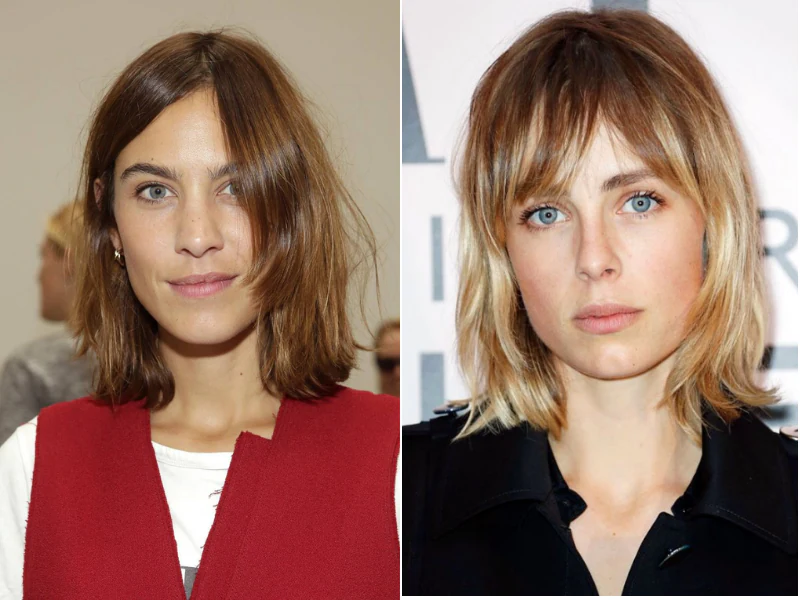
Why it works: Framing that stops at the cheekbone adds width right where a long face needs it, while pieces left long past the chin would only add two more verticals.
21. Shoulder-Length Blunt Bob With Face-Framing Layers And Curtain Bangs
A shoulder-length blunt bob with face-framing layers and curtain bangs sits right at the shoulders, and on a long face it succeeds only because three parts act together. The blunt ends touch the shoulders and flip outward. The framing layers start at the cheekbone, and the curtain bangs open from the center into them. Together they break the long fall of the hair into short, angled pieces around the face.
The ends stay blunt so the flip has weight behind it, and the length stops at the shoulder. Past it, the flip disappears and the hair hangs straight down. The curtain is cut to meet the shortest framing layer at the cheekbone, so fringe and layers read as one outward sweep. Medium to thick hair flips most reliably and keeps the framing from looking thin. The bob asks little, needing a trim about every 10 weeks, while the curtain needs one every 6 weeks. Dropping any one of the three parts leaves a long, straight panel on each side, which is the shape a long face should avoid.

Why it works: The three parts break the long fall of the hair into short, angled pieces around the face, so a long face avoids the straight panel a plain shoulder-length cut would leave on each side.
22. Beach-Wave Bob
A beach-wave bob runs loose waves through the mid-lengths and ends of a chin-to-jaw bob. On a long face, each bend of the wave pushes the outline outward, so the bob widens across the cheeks and jaw.
The waves stay out of the roots, since waving the crown adds lift and lift adds length. Underneath, the cut is a blunt or lightly layered bob that keeps its line when the waves drop out. Type 1B to 2B hair takes the waves easily. A recut every 8 weeks keeps the base shape intact.
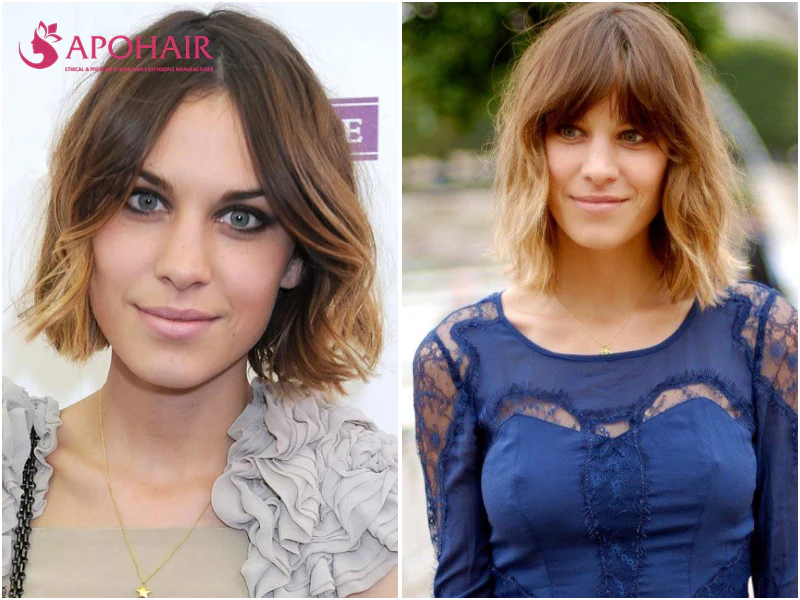
Why it works: Each bend of the wave pushes the outline outward at the cheeks and jaw, widening a long face at its base while the flat roots avoid adding any extra lift.
What the 22 have in common is a level line sitting high, with the width kept at the sides. The hair itself decides which one fits.
How to Choose a Bob for a Long Face
Choosing a bob for a long face comes down to four decisions: where the perimeter falls, what the fringe covers, how the hair moves, and how much of it there is. The face shape fixes the goal, and these four decide which bob gets there.
Choose by Where the Perimeter Falls
On a long face, the height of the perimeter controls how short the face reads. Ear-length and chin-length bobs give the strongest correction, and a jaw-length bob adds width where the lower face narrows. A lob at the collarbone corrects the least, and it needs blunt ends plus cheekbone layers to work at all. Below the collarbone, a bob stops helping.

Choose by Fringe Type and Forehead Height
A tall forehead is often the main reason a long face reads long, and a fringe adds a second line above the bob to shorten it. A blunt fringe corrects the most. Curtain and side-swept fringes cover less, but they pull the eye outward. Micro bangs suit a moderately tall forehead only, and they need curls or framing at the sides to supply the width. With an average forehead, a bob can skip the fringe as long as its line sits at the chin or higher.

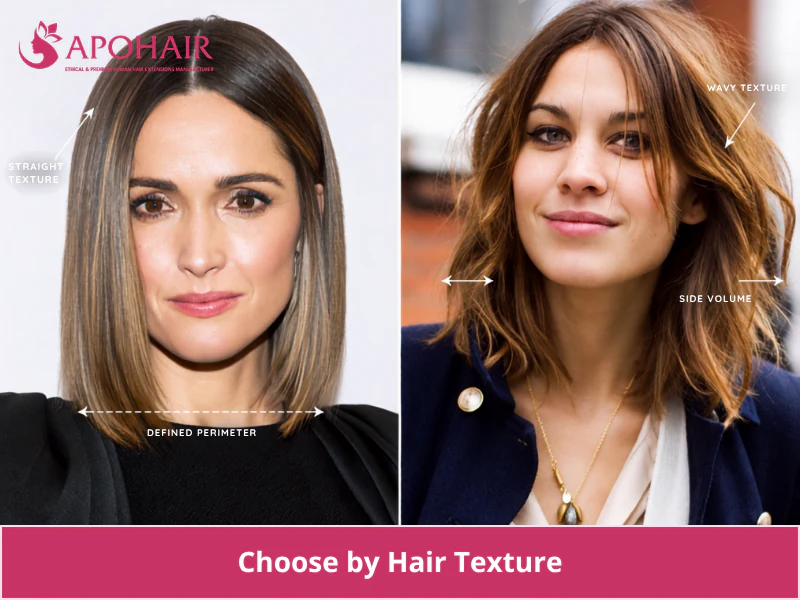
Choose by Hair Texture
Wavy and curly hair widen a bob on their own, so Type 2A to 4A textures suit shaggy and curly bobs. Straight hair, Type 1A to 1B, relies on the cut for width, through a blunt edge, a C-shaped curve, or a flipped-in end. A sleek, straight finish with none of those turns the bob into two flat panels, which a long face should avoid.
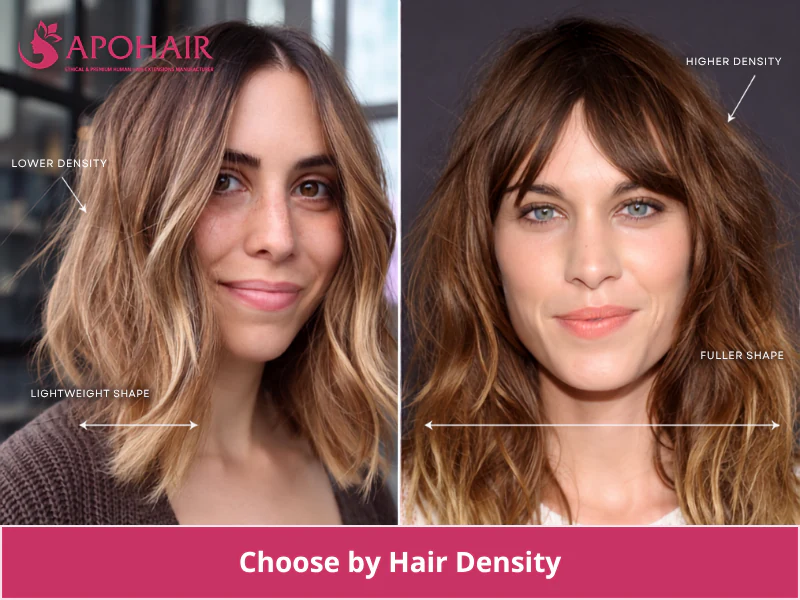
Choose by Hair Density
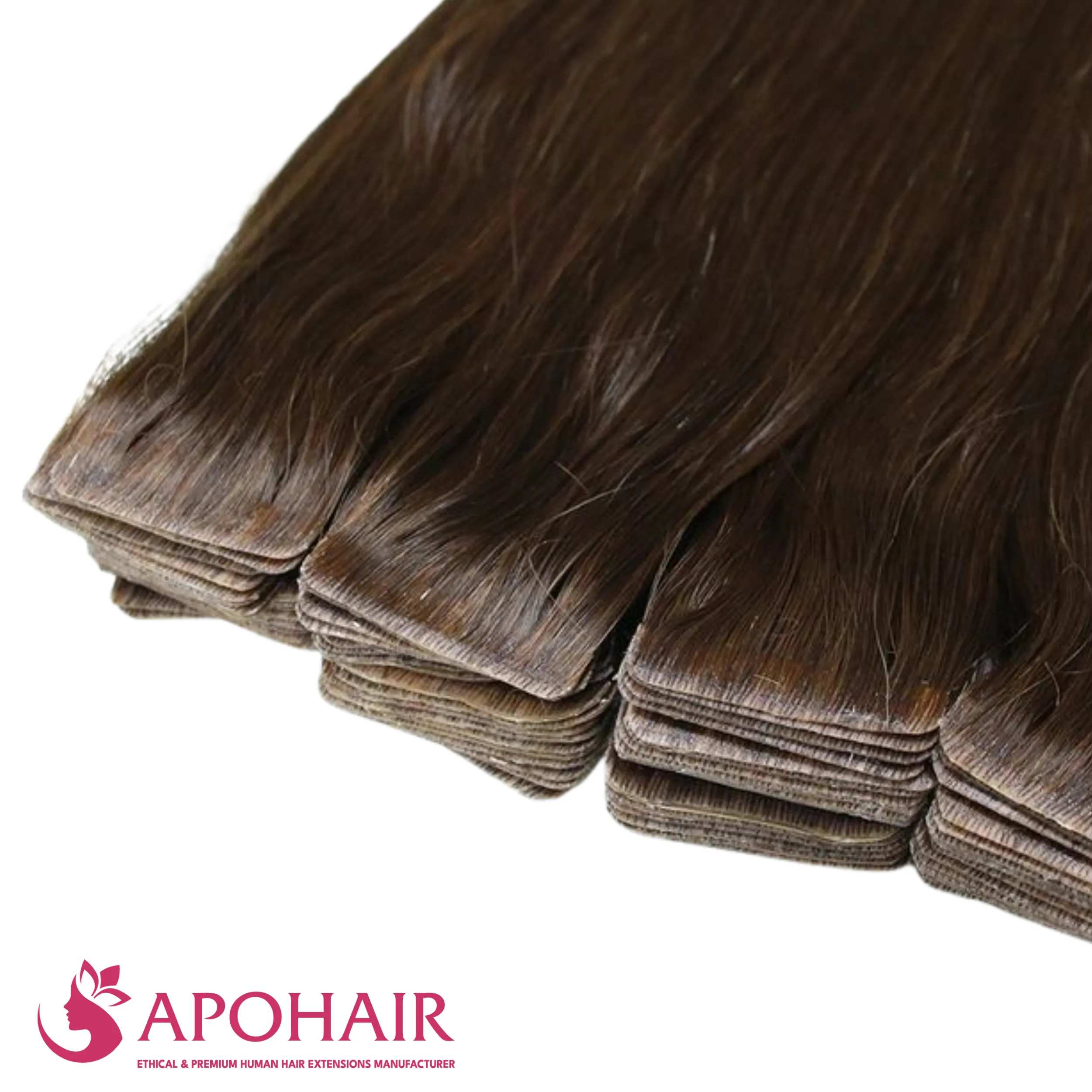
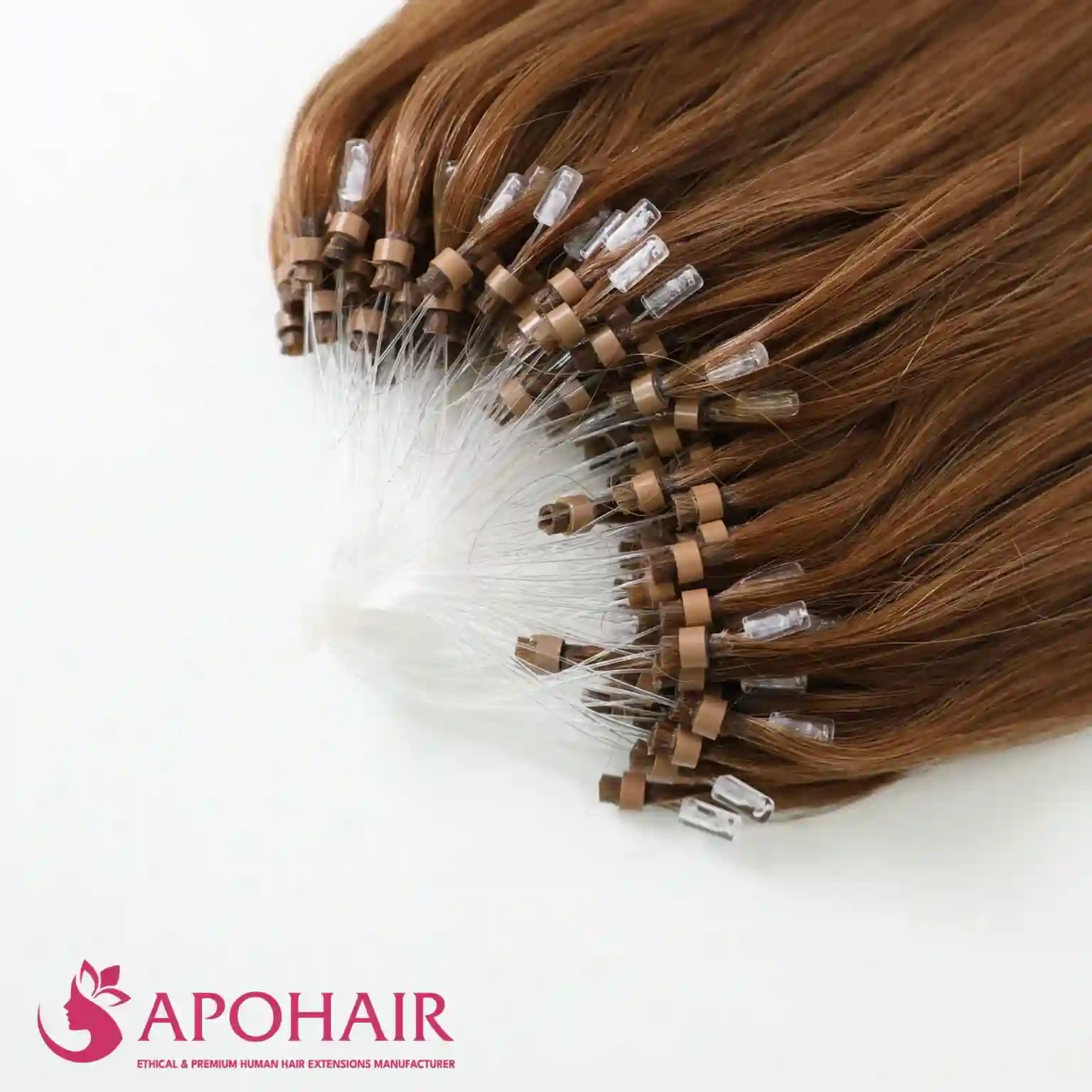
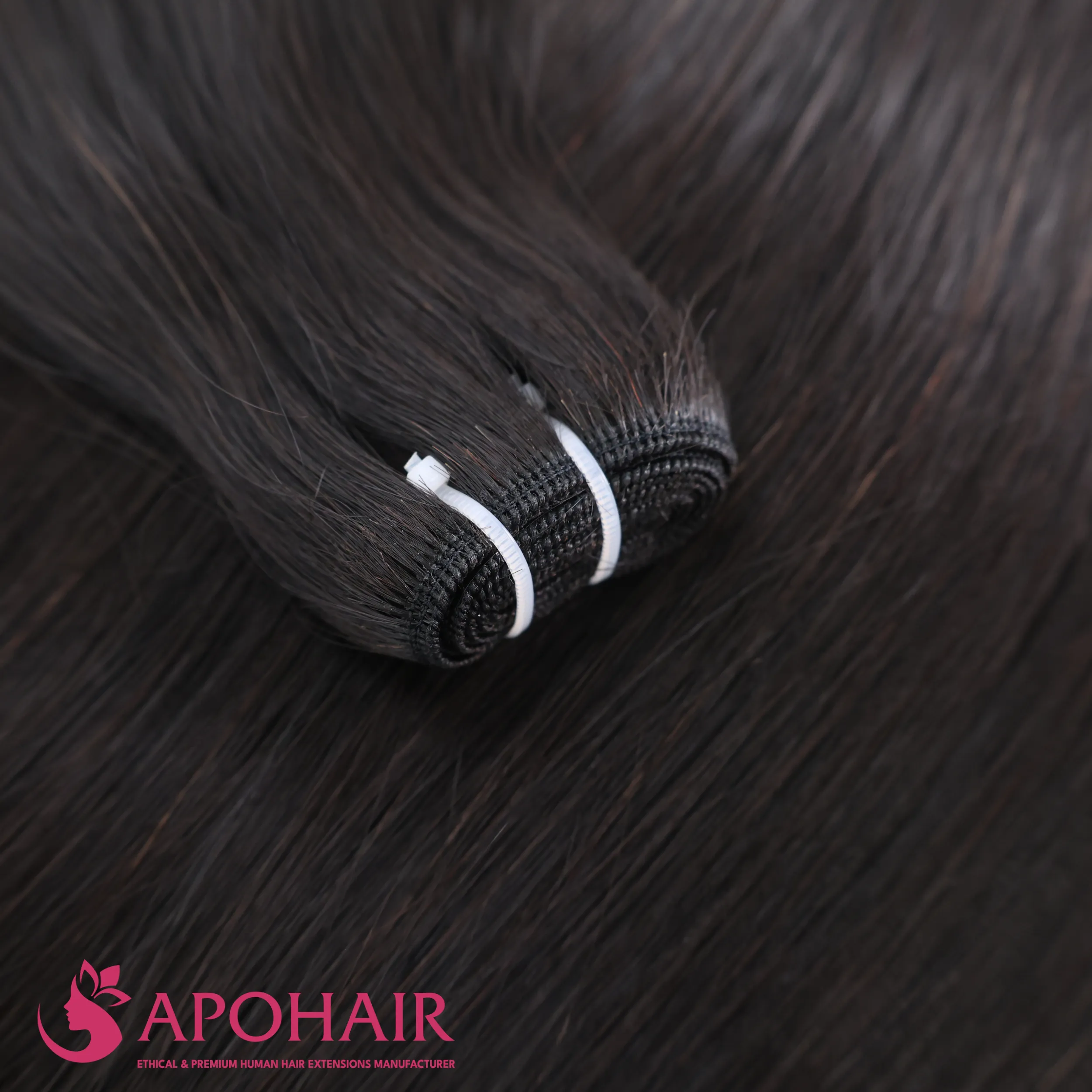
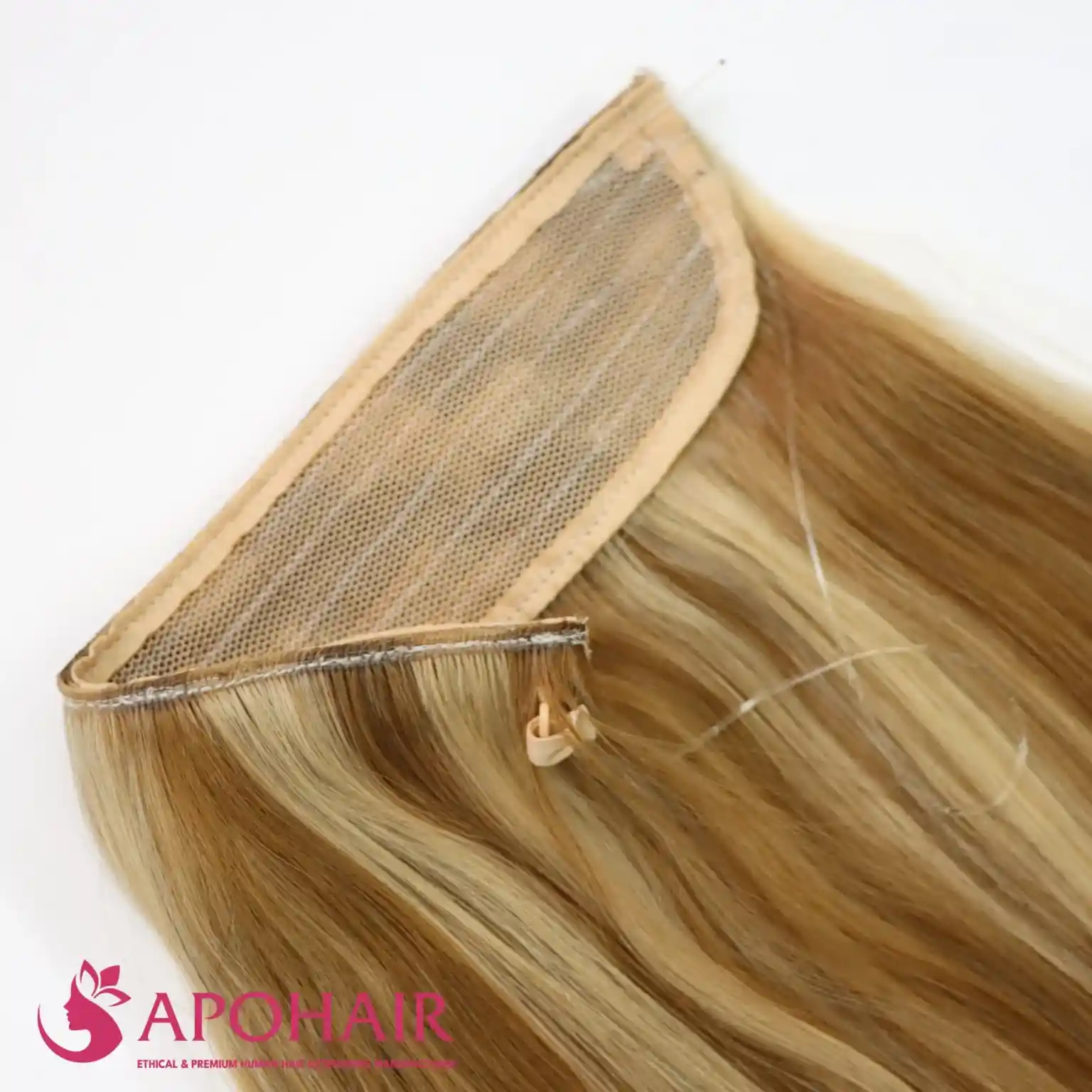
Fine hair looks fullest with a blunt, one-length edge. A chin-length blunt bob outperforms a heavily layered shape for that reason, and a graduated bob fakes extra density at the back. Thick hair needs interior weight removed, or the bob spreads into a triangle below the jaw. Where the sides look thin, a few clip-in wefts at the temples add the width a layered bob relies on. They come out at the end of the day.
Which Bob Styles Should You Avoid With a Long Face?
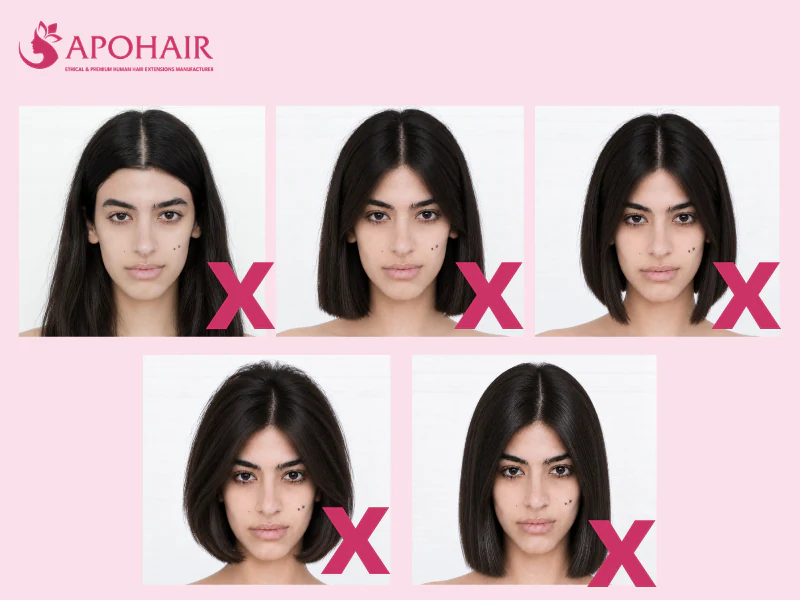
The bob styles to avoid on a long face are the ones that drop below the collarbone, split into straight panels from a center part, or lift the crown. Each of those adds length to a face that already has plenty. The common thread is a line that turns vertical:
- A one-length lob past the collarbone. Below the collarbone the lob stops acting like a bob. It hangs as one long vertical sheet that stretches the face rather than crossing it.
- A center-parted straight bob with no layers. Parting dead center and cutting without layers leaves two flat sheets on either side of the face. Nothing in the cut moves outward, so the eye runs straight down both sides.
- A bob with long front pieces and no fringe. Front pieces that fall past the chin add two verticals beside the face. With no fringe, the forehead keeps its full height on show at the same time.
- A bob with a high crown blowout. Lift at the roots adds inches at the top, which cancels the length the bob line removed at the bottom.
- A sleek glass lob. A mirror-smooth finish lays every strand flat. The bob adds nothing sideways, and its full length reads as one unbroken vertical.
Frequently Asked Questions
Is a Bob Good for a Long Face?
A bob is one of the best cuts for a long face, because its perimeter reads as a horizontal line that shortens the face. The key is keeping that line level and at or above the chin. A chin-length blunt bob with a wispy fringe, a layered bob with cheekbone layers, or a bob with blunt bangs breaks up the face’s length where it matters most.
What Length Should a Bob Be for a Long Face?
A bob for a long face works best between the earlobe and the chin. The higher the line sits, the shorter the face reads, so ear-length and chin-length bobs give the strongest effect. A jaw-length bob adds width to the lower face. A lob at the collarbone is the longest that still works, and only with blunt ends and cheekbone layers.
Is a Long Bob (Lob) Good for a Long Face?
A long bob can work on a long face, but it is the riskiest bob length. The extra length adds a vertical run, so it needs blunt ends to keep the perimeter reading as a line, plus layers at the cheekbone for width. Past the collarbone, a lob hangs like long hair and lengthens the face.
Should a Long Face Get a Bob With Bangs?
Bangs are one of the strongest additions to a bob on a long face, since a fringe adds a second horizontal above the perimeter. A blunt fringe covers the most forehead and makes the biggest correction. Curtain and side-swept fringes add width through their sweep, while micro bangs suit only a moderately tall forehead.
Is a Blunt Bob Good for a Long Face?
A blunt bob is one of the best options for a long face. Its one-length edge draws the strongest horizontal any bob can make, and the full weight at the line makes the lower face read wider. It works best cut level at the chin or jaw, since a blunt bob angled toward the front loses the effect.
What Bob Suits an Oblong Face?
An oblong face suits the same bobs as a long face: a chin-length blunt bob, a jaw-length beach-wave bob, or a bob with blunt or curtain bangs. Its straighter jaw also benefits from a C-shaped or flipped-in bob. The curve softens the jaw’s angles, while the bob line still shortens the face.
What Bob Suits a Long Face With a Big Nose?
A chin-length bob with a fringe suits a long face with a prominent nose. It spreads visual weight across the face instead of drawing a line down the center. Curtain bangs or a side-swept fringe keep the eye moving sideways, whereas straight panels from a center part frame the nose as the focal point.
What Bob Suits a Long Face Over 50?
A chin-length bob with curtain bangs or a layered bob with cheekbone layers tends to work best after 50. Both add width without daily heat styling, and a fringe softens a forehead that can look taller as the hairline shifts. Since hair often thins at the temples with age, a bob that keeps fullness at the sides matters even more.
Conclusion
Everything on a long or oblong face comes down to the bob’s line. A level edge set high shortens the face, while a line that drops, angles forward, or hangs in straight panels stretches it. A fringe adds a second line above, the width stays at the cheekbones and jaw, and the crown stays flat. Proportions fix the goal; density and texture pick the bob that meets it.
If you run a salon or source hair for a shop and need texture-matched wefts, bulk hair, or clip-in sets to add fullness at the sides of a long face, our team can send samples and factory-direct pricing. Because we manufacture 100% Vietnamese Human Hair in our own facility, you can match density and texture to each client rather than relying on whatever a middleman had in stock.
APOHAIR — ETHICAL & PREMIUM HUMAN HAIR EXTENSIONS AND WIGS MANUFACTURER
- Address: Building 3A, Lane 82 Duy Tan, Cau Giay, Hanoi, Vietnam
- Factory: Minh Luong, Yen Luong Ward, Ninh Binh, Vietnam
- WhatsApp: +84 862 132 366
- Email: [email protected]
- Website: https://apohair.com
