









24 Best Short Hairstyles for Women With Round Faces and Double Chins
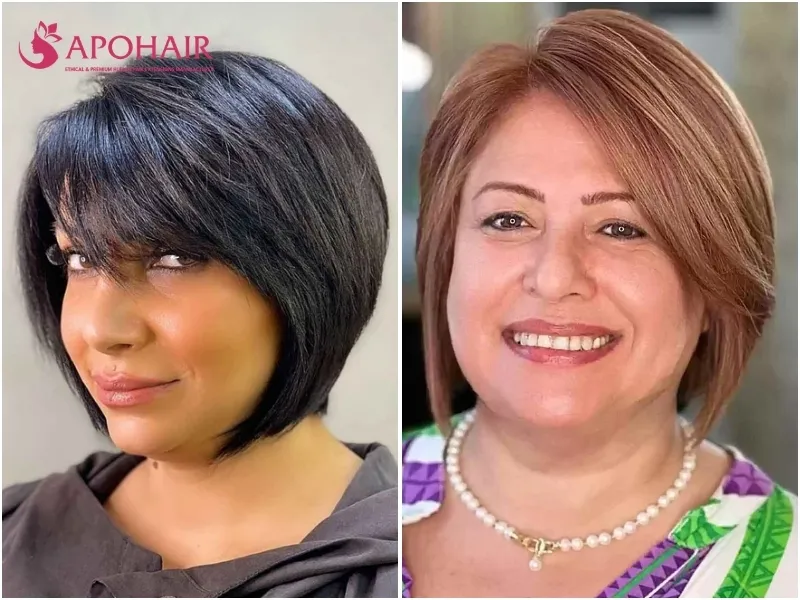
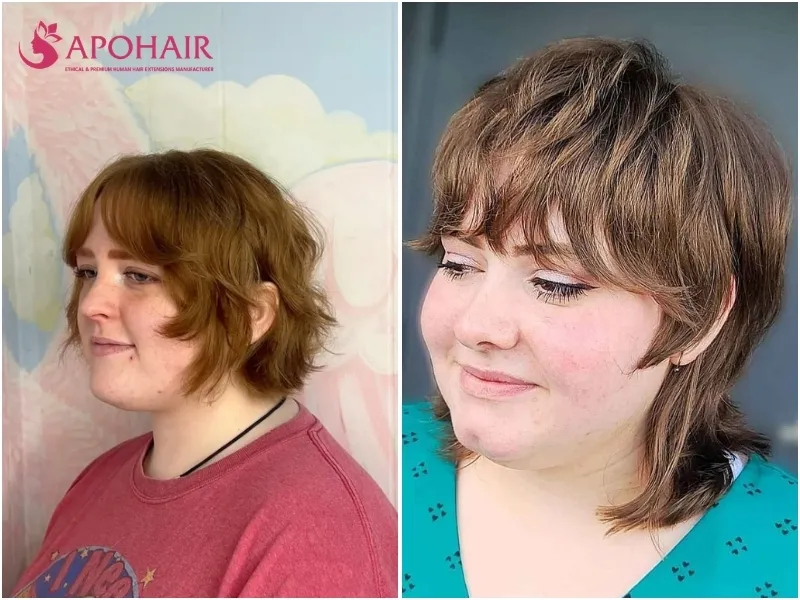
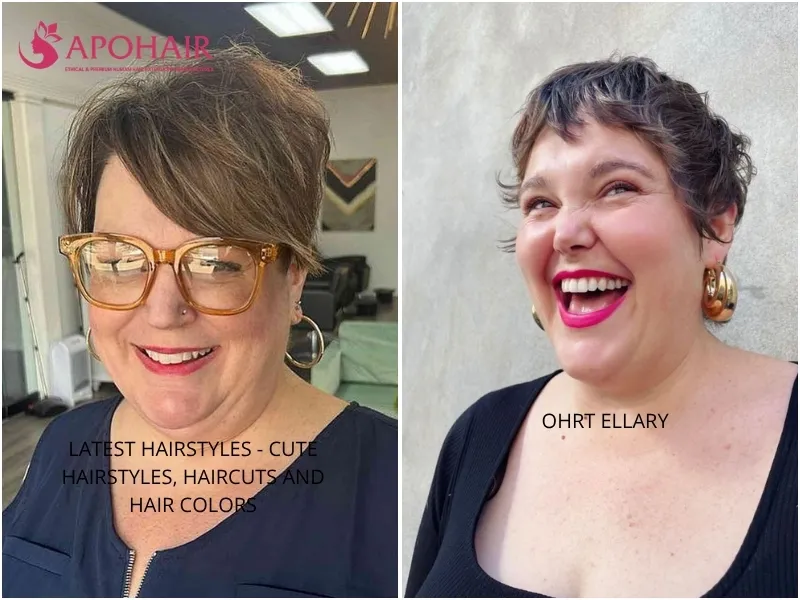
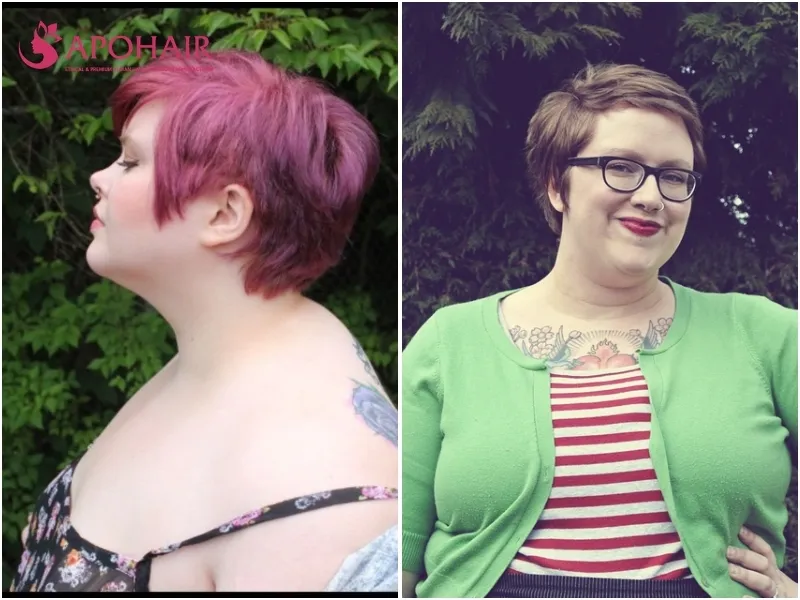
The best short hairstyles for women with a round face and a double chin are an asymmetrical lob with a deep side part, a textured pixie with crown height, and a shaggy bob with face-framing pieces below the chin. These cuts create vertical or diagonal lines, move volume above the cheekbones, and avoid placing a blunt perimeter directly across the jaw-to-neck area.
A round face carries its widest point high across the cheeks, and softness under the chin removes the shadow that normally ends the face at the jawline. The two run together into one continuous shape from cheekbone to neck. Every cut that works breaks that continuity, whether by a diagonal from a deep parting, height built at the crown, or weight taken from the inside rather than off the ends. The 24 cuts below are grouped by how they treat that line, and each one carries the cutting notes that decide whether the shape lands on real hair.
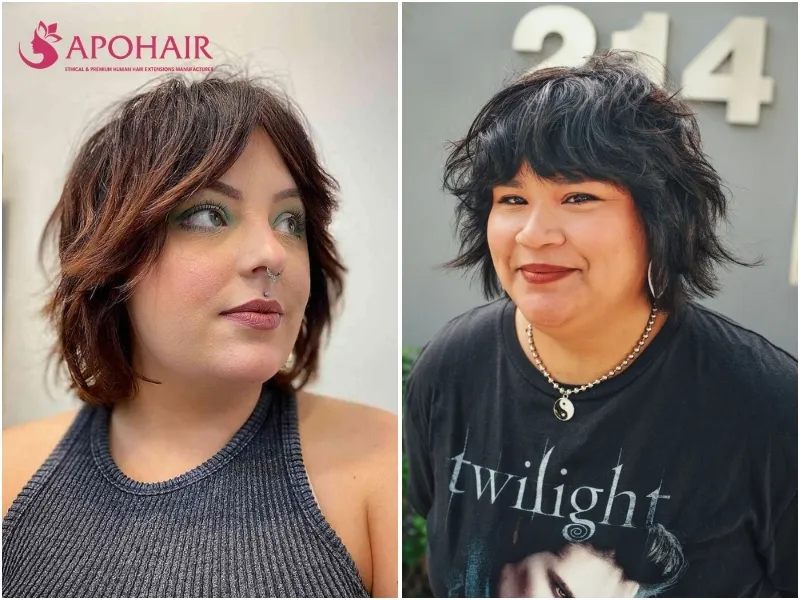
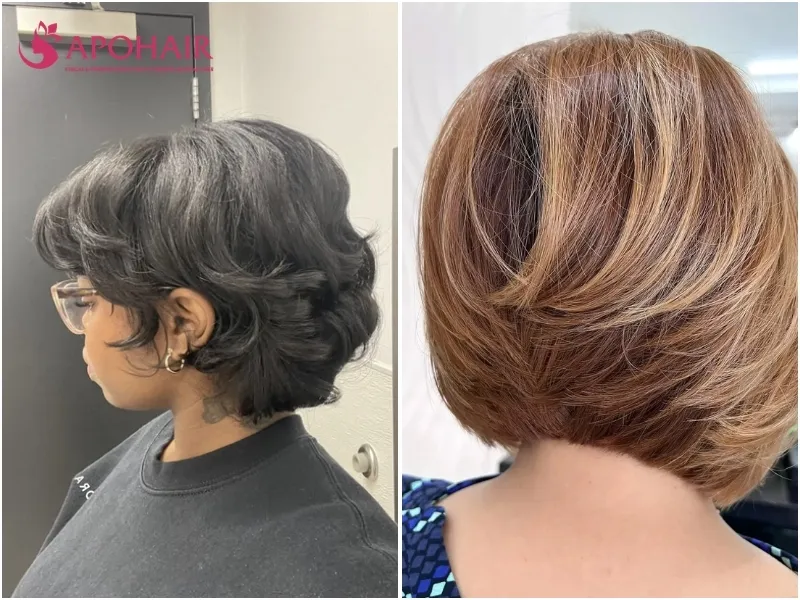

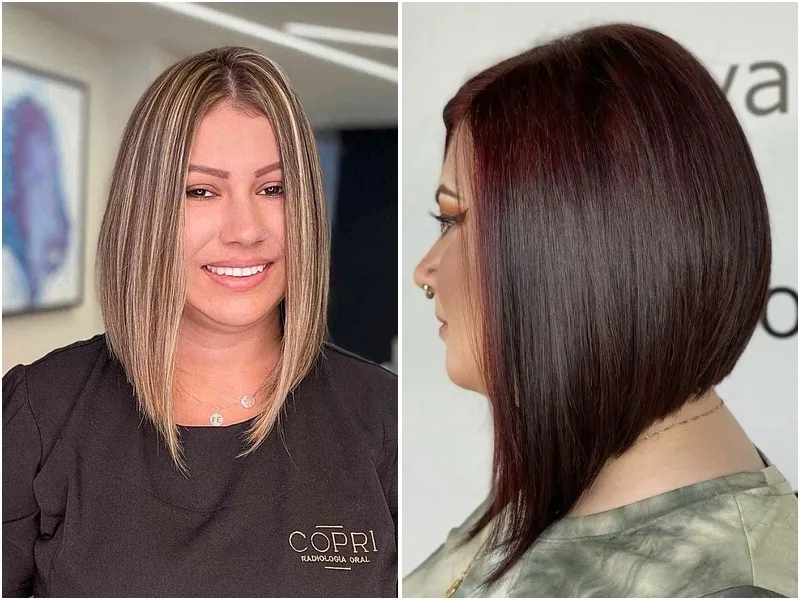
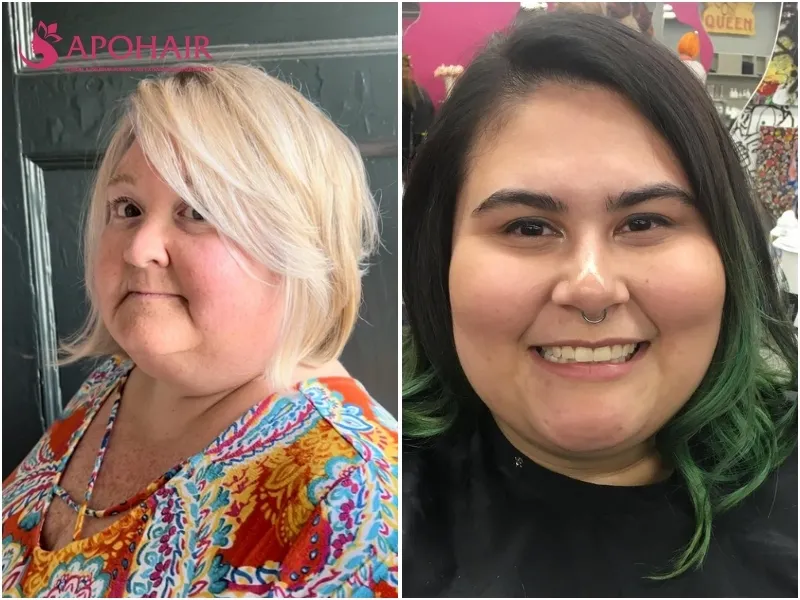
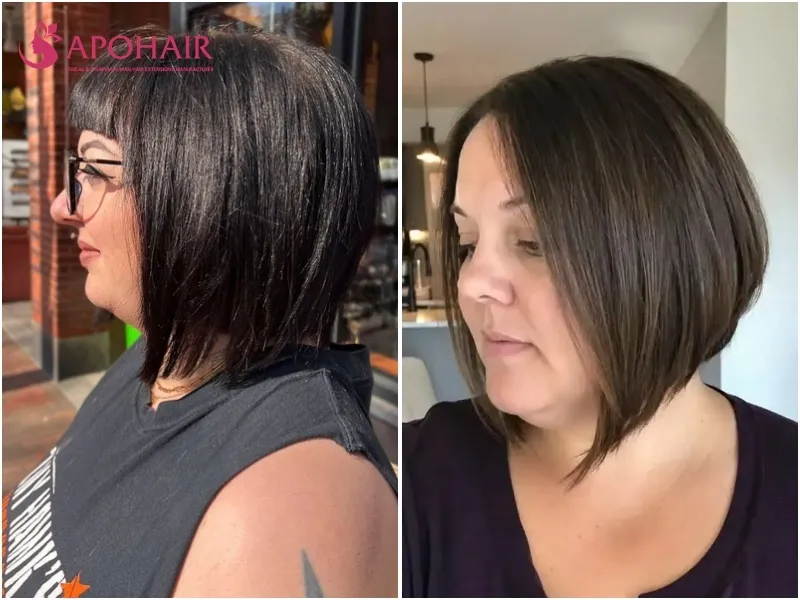
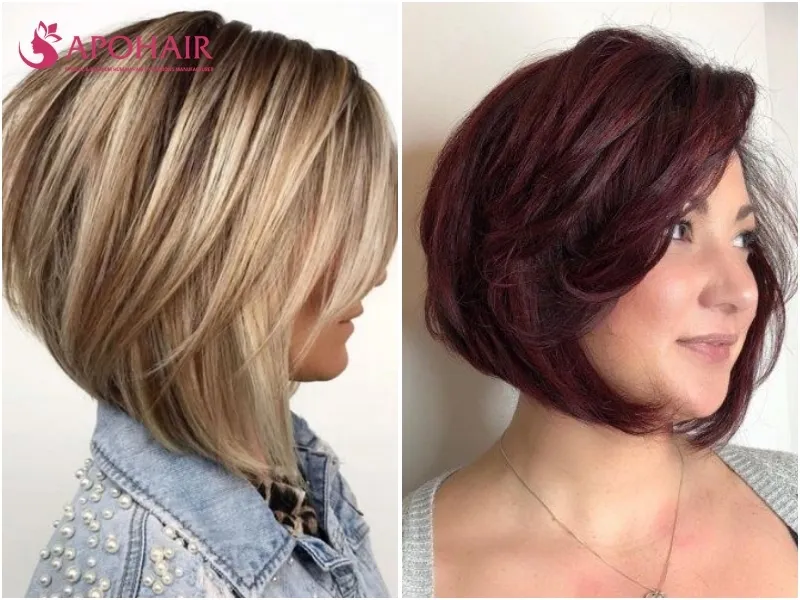
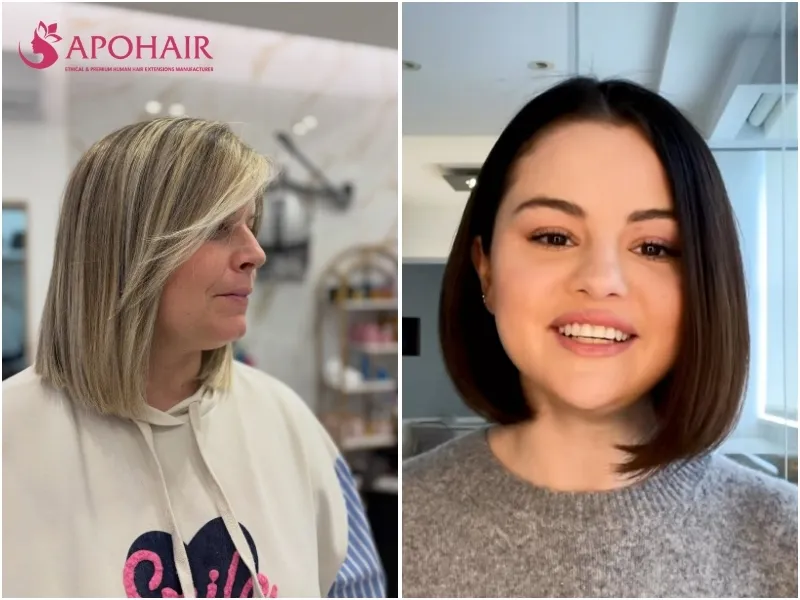
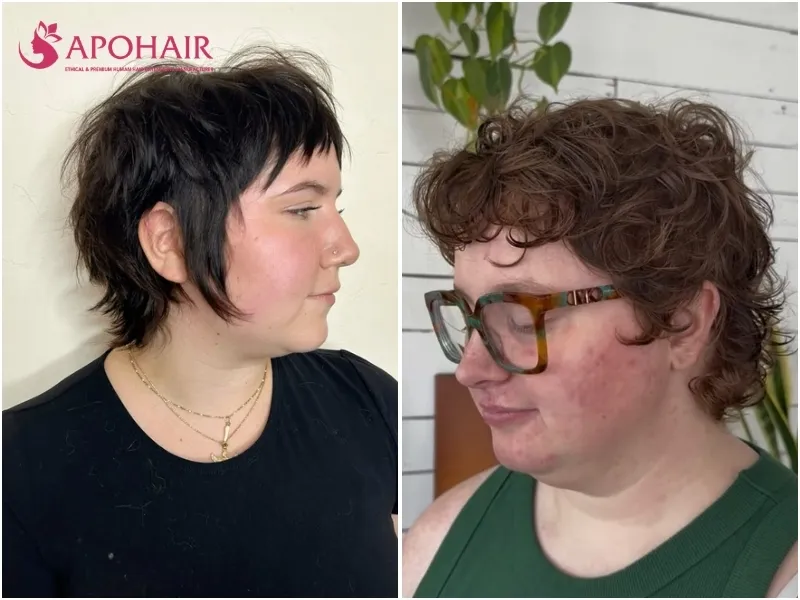
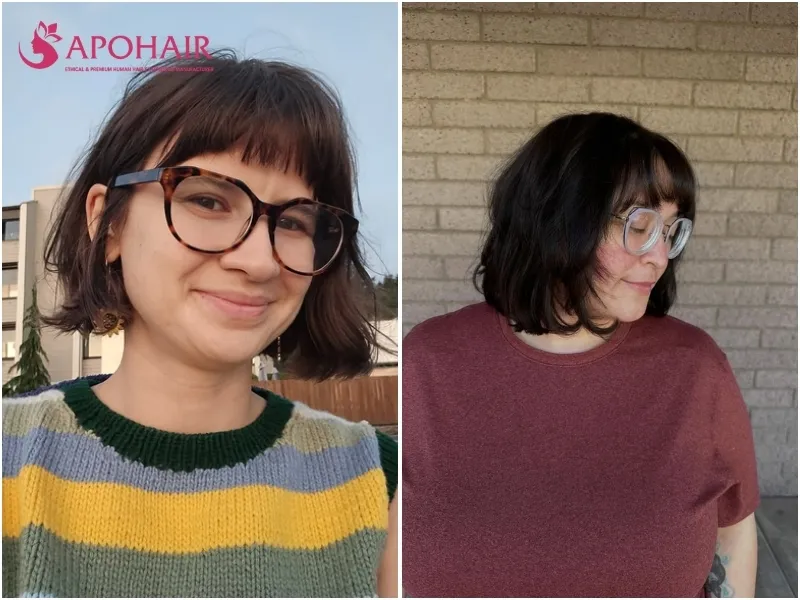
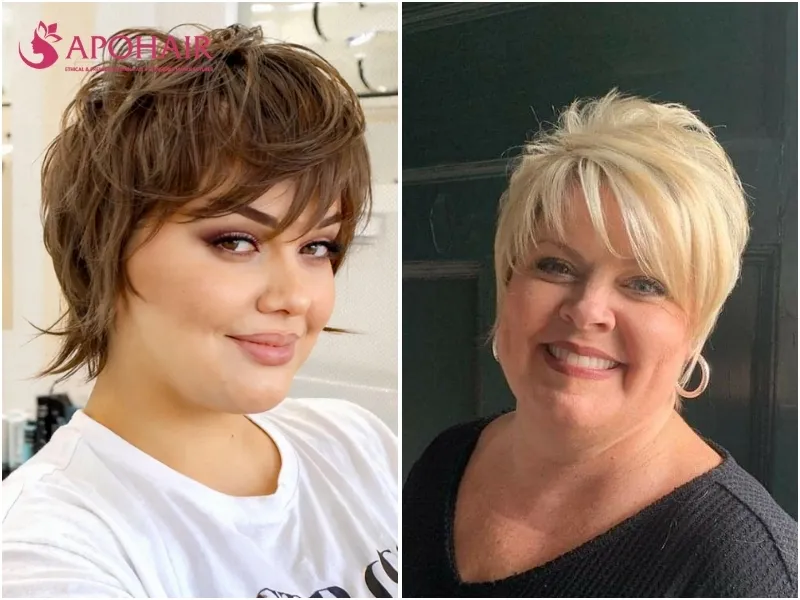
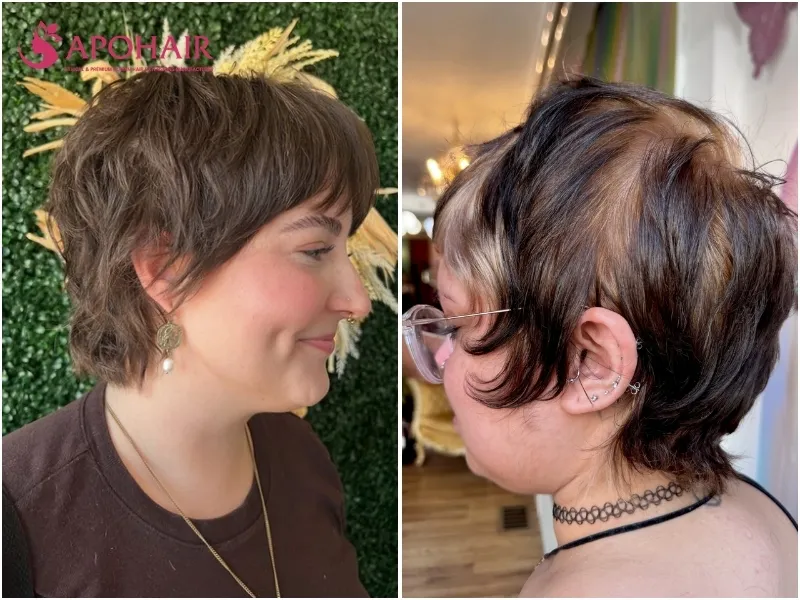
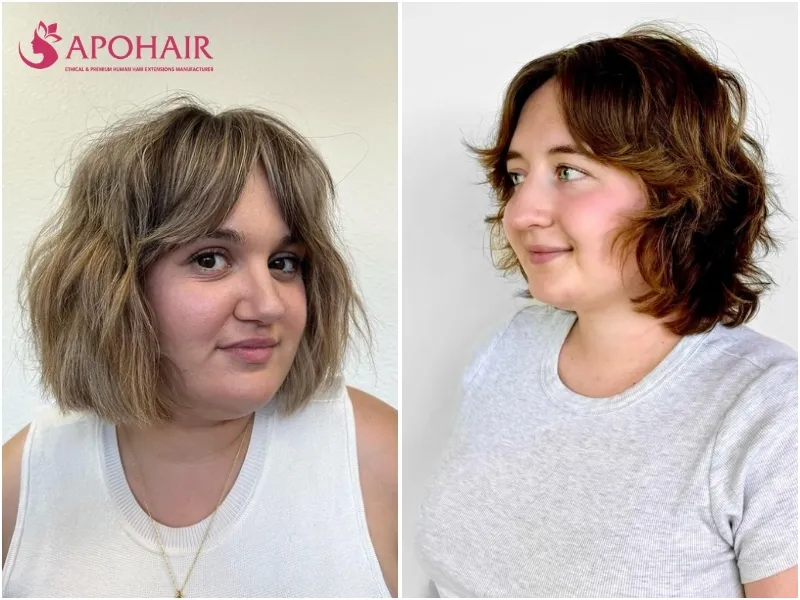
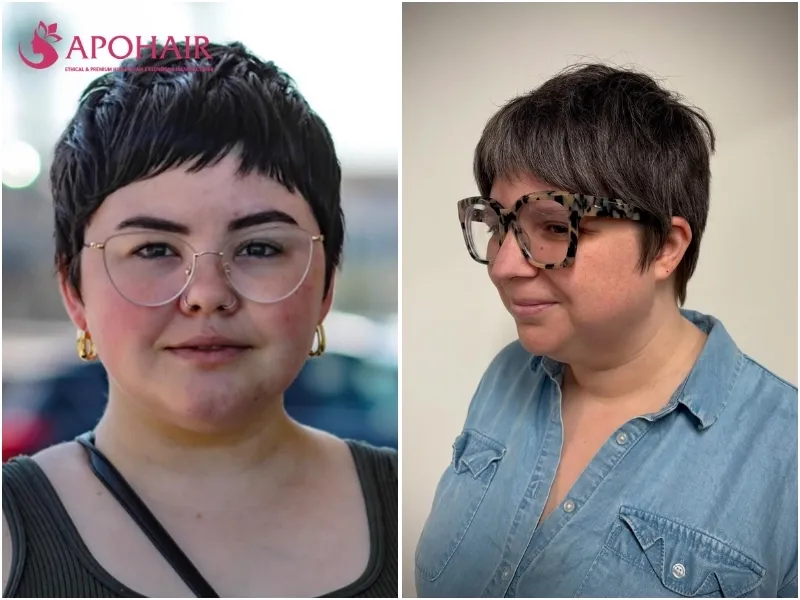
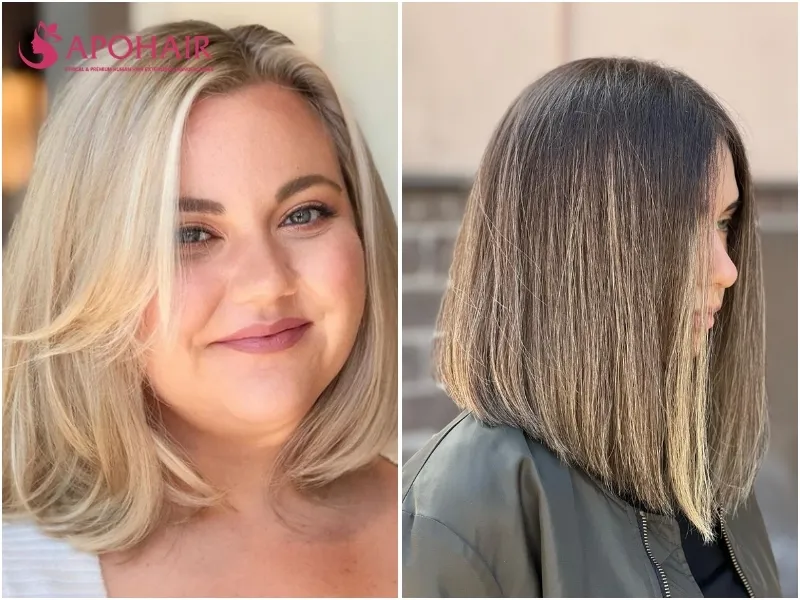
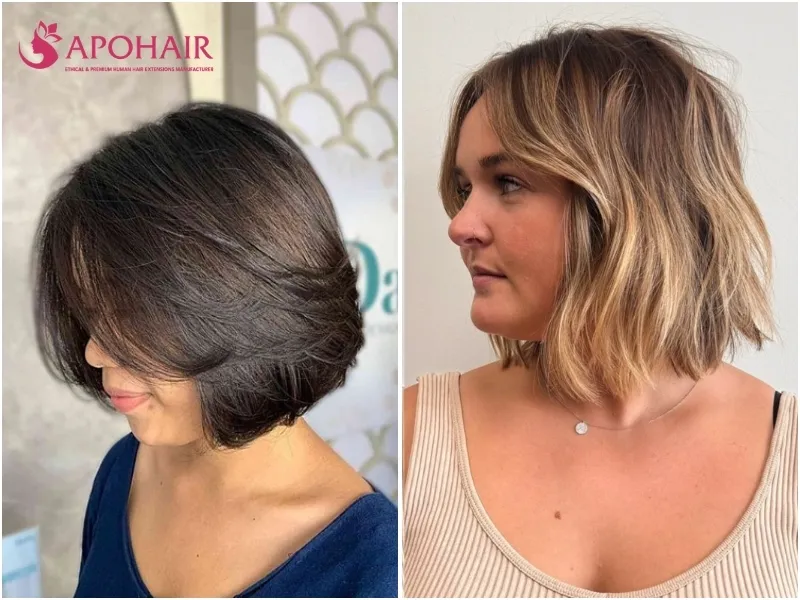
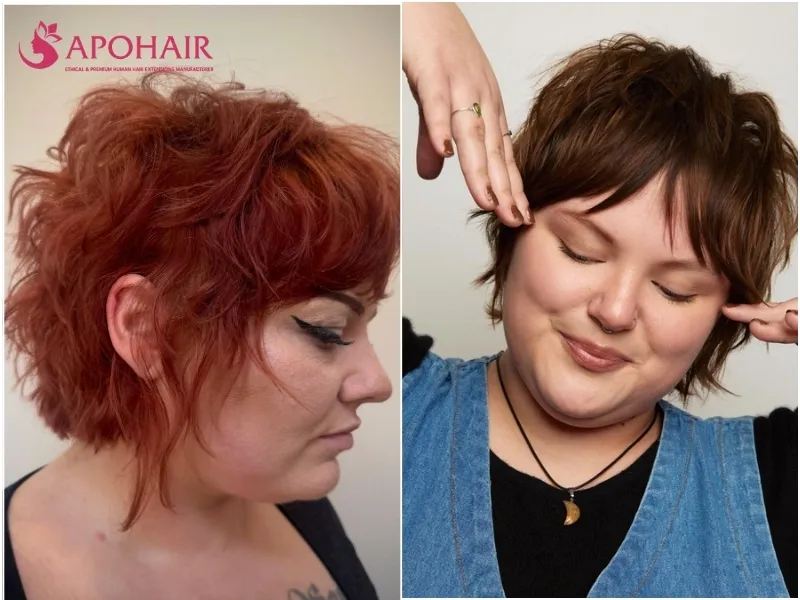
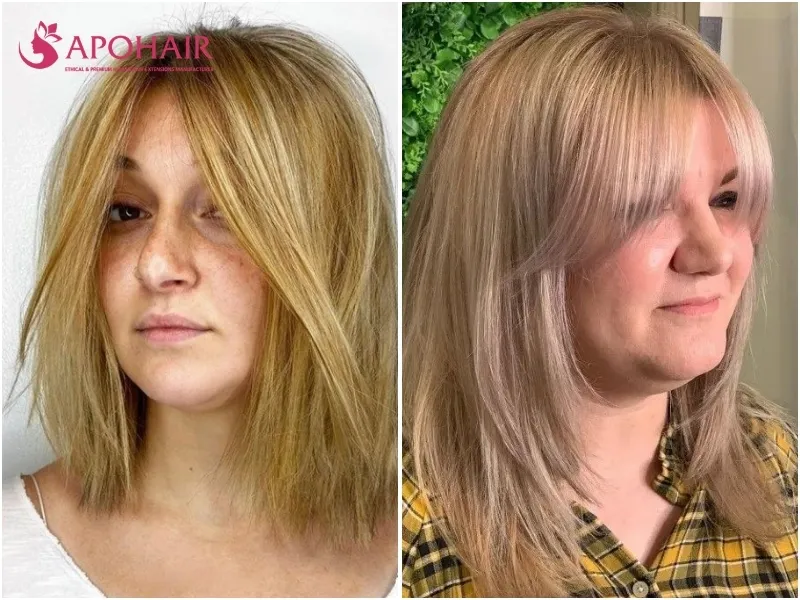
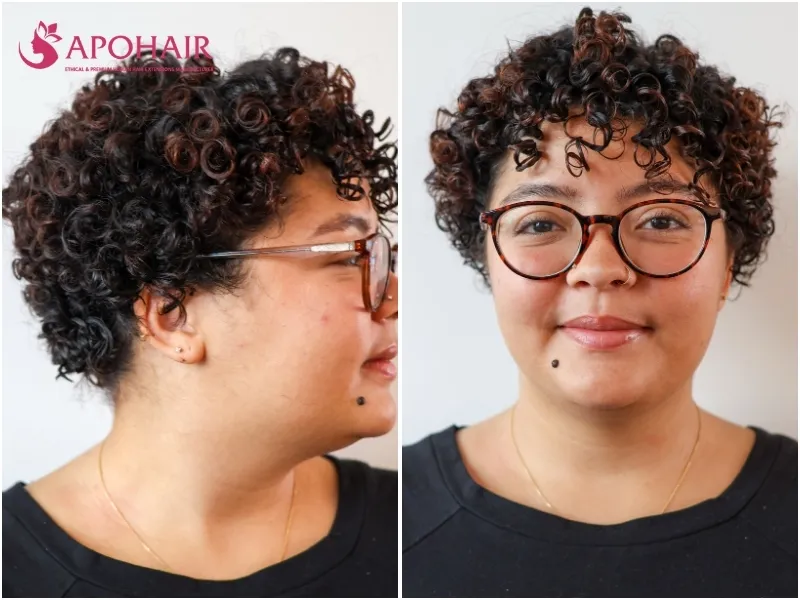
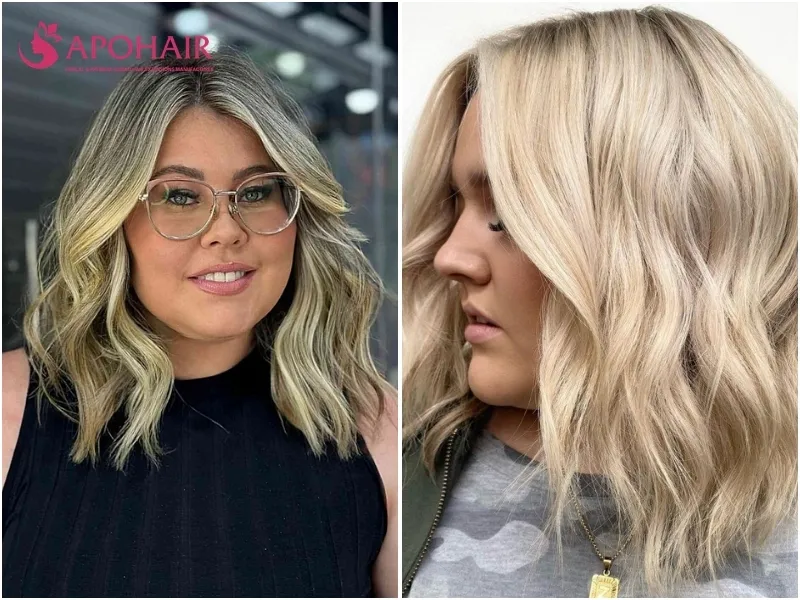
Best Short Hairstyles for a Round Face With a Double Chin
The asymmetrical lob with a deep side part, the textured pixie with height at the crown, and the face-framing shaggy bob handle this combination better than anything else, each by a different route. The 24 cuts below are grouped by how they treat the jaw-to-neck line, starting with the diagonal cuts and finishing with the texture-specific options.
1. Asymmetrical Lob With a Deep Side Part
The asymmetrical lob sits at the long end of the short bracket, falling at or just below the collarbone. One side runs noticeably longer than the other, worn off a deep side part. That parting sends a diagonal across the forehead, and the uneven perimeter carries the angle past the chin, so the eye never completes a circle around a round face. The same diagonal is what answers the double chin: the ends clear the jaw-to-neck junction entirely, so no horizontal line lands on the softness underneath.
The parting goes in before any length comes off, since the whole shape measures from it. Reset it afterwards and the longer side drops on the wrong shoulder. A difference of about 2 inches (5 cm) between the two sides reads as deliberate, while a gap under 1 inch (2.5 cm) can resemble an uneven trim. Medium to thick density carries the longer side without collapsing; on fine hair the asymmetry survives only if the ends stay blunt instead of layered. The two lengths drift back toward each other as they grow, so the shape holds for about 8 to 10 weeks before it needs recutting.
Why it works: The deep side part creates a diagonal across the forehead, while the longer side extends below the chin. Together, they interrupt round symmetry and keep the perimeter from landing on the jaw-to-neck area.
2. Angled A-Line Bob
An A-line bob runs shorter at the back and gradually longer toward the front, with the front pieces finishing below the chin. The forward slope keeps the perimeter moving, which is what a round face needs from a short cut, since a level line only repeats the curve of the cheeks. It also straddles the double chin rather than crossing it. The shortest point sits high on the neck, above the junction, while the longest drops past the jaw, and nothing stops in between.
The angle is what makes or breaks this one. A shallow slope reads as a slightly uneven bob, while a steep slope past the chin gives the vertical the face is short of. It works best on straight to loosely wavy hair, roughly Type 1A to 2B, where a clean line stays visible. Medium density holds the shape as cut; thick hair needs internal weight removed first, or the bottom corners flare out and rebuild width at cheek level. The angle softens fast as it grows, so recutting lands every 6 to 8 weeks.
Why it works: The forward angle moves from a short nape to below-chin front pieces, creating a diagonal instead of a level jaw line. That slope lengthens a round face and keeps the cut from widening the double-chin area.
3. Long Inverted Bob
Despite the name, the inverted bob stays inside the short bracket, adding graduation at the back that stacks and lifts the nape while the front stays long. The stacked back lifts the eye upward, away from the widest part of a round face, and the long front draws a vertical past the chin. Where the jawline has softened, that lift matters most. Hair resting on the neck removes what little shadow is left there, while a stacked nape leaves the junction open and lets it keep its own edge.
The graduation should remain concentrated through the nape and back while the front stays long enough to finish below the chin. Fine and medium hair can use a controlled stack to create visible fullness, while thick or coarse hair needs internal weight removed to prevent the back from forming a bulky wedge. Because the graduated section loses its angle as it grows, the cut usually needs reshaping every 6 weeks.
Why it works: The stacked back lifts the profile while the longer front draws the eye below the chin. This combination adds height behind the head and vertical length beside the face without placing bulk on the neck.
4. Textured Pixie With Height at the Crown
A textured pixie is the shortest cut on this list, keeping the sides and nape cropped close while the top stays long enough to be point-cut into separated pieces. All the volume sits above eye level, which lengthens a round face instead of widening it. The double chin is handled by subtraction rather than cover. With the neck fully exposed, the jawline reads as a defined edge again rather than a soft slope running down into the neck.
Crown height is the whole mechanism. The top needs enough length to stand on its own rather than lean on product, and medium-to-thick density delivers that separation. Fine hair flattens by midday unless you leave the interior heavier than usual. It is also one of the most flattering options on a fuller face, since the vertical lift lengthens the entire silhouette. The trade is frequency. Sides and nape lose their outline within 4 to 5 weeks.
Why it works: Crown height pulls the eye upward, and close-cut sides keep volume away from the cheeks. Exposing the neck also prevents a short perimeter from sitting directly on the softened jawline.
5. Long Pixie With Volume on Top
A long pixie is still a short cut, leaving more length through the top while the sides skim past the ear instead of sitting above it. The height on top supplies the vertical a round face is short of, without the width a fuller side section would bring. For a double chin it works by moving the balance point. With the heaviest volume above the eyeline, the eye settles on the crown long before it reaches the jaw.
Tapered sides follow the shape of the head, where a blunt line shelves out above the ear. It handles Type 2A to 3A textures particularly well, since a little natural bend helps the top hold its height without setting. A long pixie suits women who want crown height without exposing as much of the sides as a cropped pixie. It usually needs reshaping every 6 weeks.
Why it works: Extra length on top builds vertical height, while tapered sides keep the silhouette narrow. The higher balance point directs attention above the cheeks and jaw without requiring the fully exposed sides of a cropped pixie.
6. Tapered Pixie With a Neat Nape
A tapered pixie graduates the nape so the hair gets progressively shorter until it disappears into the hairline. Nothing sits level with the cheeks, which is what keeps a round face from reading wider than it is. Its answer to the softness under the chin is the simplest of any cut on this list. There is no perimeter at the back at all, so no line exists to land on the junction, and the whole neck column stays visible even in profile.
Profile matters here, since a soft jaw shows most from the side and least head-on. A taper needs no bulk to look right, so fine and medium density suit it better than thick hair. Thick hair usually needs the interior removed before the nape will lie close. The taper is also the first thing to grow out. Once it does, the shape starts to sit on the neck again, which puts a clipper or scissor-over-comb refresh on a 4 week cycle.
Why it works: The tapered nape removes the horizontal back line that can sit against the neck, while the close sides avoid cheek-level width. A lightly lifted crown completes the longer, narrower silhouette.
7. Bixie (Pixie Bob)
The bixie sits between a pixie and a bob, short enough to clear the jaw, with pixie-style layering through the crown and length reaching the middle of the ear. The layering keeps volume high rather than level with the cheeks, which is where a round face carries its width. For a double chin the stopping point is the whole argument. The ends should finish about 1 inch (2.5 cm) above the jaw-to-neck area at the time of cutting so they do not grow directly into it within a few weeks.
The back stays above the nape at the point of cutting. Left longer, it creeps into the soft area within a couple of months and quietly becomes the thing the cut was meant to avoid. It works with most textures, from straight to curly, and medium density suits it best, since too little hair blurs the line between crown layering and perimeter. It also grows out well, which makes it the usual landing point for anyone moving between a pixie and a bob in either direction. Upkeep is medium, every 6 to 8 weeks.
Why it works: Pixie-style crown layers add height, and the short bob perimeter finishes above the jaw-to-neck area. Clearing that junction prevents the growing ends from drawing a line across the fullest part of the lower face.
8. Nape-Length Pixie
A nape-length pixie is the longest cut in the pixie family and still comfortably short. The back reaches the top of the neck, with the sides cut close and the top layered for movement. Close sides keep width off the cheek line of a round face. Where the jaw runs into the neck, this cut separates the two planes. The exposed neck column reads as its own shape, so the face stops running continuously into it.
A level head gives the true length. A lifted chin shortens the neck in the mirror, and the cut ends up longer than intended once the head drops back. Fine and medium hair hold the close outline easily, while thick hair needs internal weight removed so the back does not push outward. On a shorter neck, the nape should remain close and slightly lifted; a heavy back section can visually shorten the neck instead of lengthening it. The cut usually needs reshaping every 6 weeks.
Why it works: Close sides keep width away from the cheeks, while the layered top adds controlled height. The nape-length back separates the face from the neck instead of covering both with one heavy perimeter.
9. Face-Framing Shaggy Bob
A short shaggy bob layers from the cheekbone down and finishes with soft, piecey ends that fall past the jawline. The face-framing pieces cut two verticals beside a round face while the layering keeps weight off the cheeks. The broken perimeter is what handles the double chin. Instead of one continuous line stopping near the junction, a series of separated ends passes it, so there is no edge for the eye to follow across the softness.
Ends are point-cut rather than razored on fine hair, since a razor removes too much and the separation turns into thinness. Wavy hair, Type 2B to 3A, gets the most out of the shape, since natural movement does half the separating. Thick hair carries the layering better than fine hair does. The broken perimeter is also why this is the most forgiving cut on the list: it grows out without a visible line and holds its shape for 10 to 12 weeks. Upkeep is low.
Why it works: Below-chin face-framing pieces create two vertical lines, while the broken ends prevent a solid horizontal edge near the jaw. The layered movement softens fullness without adding compact side volume.
10. Short Shag
A short shag builds heavy layers from around the cheekbone with shattered ends and a soft fringe. Those layers break the outline of a round face that a solid perimeter would trace. Weight distribution supports the jaw-to-neck junction here. With the bulk sitting high and the ends staying light, the visual center lifts upward. The heaviest part of the silhouette ends up nowhere near the jaw.
The layering rebuilds height on a flat crown, which is the one condition where this cut outperforms every other shape on the shortlist. It needs texture to read properly, so Type 2A to 3B hair is ideal, while stick-straight hair needs styling support to show the shattered ends at all. Thick density gives the best result, since the layers need enough hair to separate cleanly. Growth works in its favor rather than against it, keeping upkeep low, roughly every 10 weeks.
Why it works: Short crown layers lift the visual center above the cheeks, while shattered ends break up the lower outline. This top-heavy distribution lengthens a round face and keeps weight away from the double-chin area.
11. Wolf Bob
The wolf bob mixes shag layering through the top with a short bob-length perimeter, giving heavy volume at the crown and thin, wispy ends. A full top and a light bottom shift the widest part of the silhouette above the cheekbones, which is exactly where a round face wants it. That contrast also stops the eye before it reaches the double chin, since attention settles on the fullest part of the shape rather than traveling down to the jaw.
The volume ratio between top and ends is the whole cut, and it takes a practiced hand. Layering that stops too low turns the shape shapeless rather than contrasted. Medium to thick hair across most textures carries it; fine hair ends up sparse at the ends and loses the contrast entirely, which rules it out. This is a deliberate shape rather than a quiet one, so it suits anyone comfortable with a cut that reads as a choice. Upkeep is low to medium, about every 8 to 10 weeks.
Why it works: The fuller crown shifts volume above the cheekbones, and the wispy bob-length ends keep the lower silhouette light. That contrast adds height without forming a dense perimeter around the jaw and neck.
12. Textured Crop With a Deep Side Part
A textured crop runs short on the sides and back with the top left long enough to sweep across from a deep side part. The part creates a strong diagonal and the cropped sides keep every bit of width away from the cheek line of a round face. It handles the junction by removal. With no hair at all at jaw level, there is nothing left to cover the soft area, weigh on it, or draw a line across it.
The swept side clears the frames when glasses are part of the picture. That check happens with the glasses on, never by estimate afterward. Medium to thick hair holds the sweep without product, while fine hair needs the top left a little longer for weight or the sweep collapses flat. Because the crop sits so close, it loses its outline quickly and upkeep runs medium to high, every 4 to 6 weeks.
Why it works: A deep side part creates a strong diagonal, while the cropped sides remove cheek-level width. Because no perimeter reaches the jaw, the cut keeps attention on the textured top rather than the double-chin area.
13. Long Bob (Lob)
The classic lob is the longest of the short cuts, finishing at or just below the collarbone with a soft, slightly textured perimeter. That length pulls a vertical through a round face where a shorter blunt line would widen it. It solves the double chin by distance alone. The ends sit well below the junction, so the one horizontal the cut does draw falls across the shoulders rather than the neck, where it does no harm at all.
The perimeter decides how well the length performs. Blunt ends read as fuller and suit fine hair, while a lightly textured perimeter suits medium and thick hair that would otherwise sit heavy. It works on nearly every texture, though Type 1B to 2C hair shows the shape most clearly, and medium density is the natural fit. This is the safest cut on the list and the easiest to grow into, with recutting every 8 to 10 weeks.
Why it works: The collarbone length carries the perimeter well below the chin, creating a longer vertical outline. Its softly controlled ends avoid the cheek-level flare that can widen a round face.
14. Layered Lob
A layered lob keeps the short bracket’s maximum length at the collarbone but removes weight through the interior, so the hair falls closer to the head at cheek level. Length alone is not enough if the cut then flares at the widest part of a round face. That interior layering also holds the shape close through the jaw zone. It matters most where the jawline runs soft into the neck, since a perimeter swinging outward there widens the very area it should be narrowing.
Layers sit inside the shape rather than in the perimeter, which keeps the outline clean while the bulk comes out from underneath. Thick or coarse hair is the main candidate, since it builds width as it grows. It is also the fix for a lob that has started to look triangular. On fine hair, the same technique thins the length too far, so the plain lob is the better call there. Upkeep is medium, every 8 weeks.
Why it works: Interior layers remove bulk beside the cheeks and jaw while the outer perimeter remains long and clean. This lets thick hair sit closer to the face without sacrificing the below-chin line that creates length.
15. Face-Framing Lob
A face-framing lob adds front pieces that start below the chin and fall through the length, cut separately from the short perimeter. Those pieces create two soft verticals beside the face, and vertical lines are exactly what a round shape lacks. They also flank the double chin. With a line falling on each side of the jaw, the horizontal softness between them reads as narrower than it does uninterrupted.
The shortest framing piece starts at least an inch below the chin. Higher than that and the weight lands back at the jaw, which reverses the whole point of the framing. The technique works on all textures, though it shows best on hair with a little movement. Medium to thick density keeps the pieces separated instead of merging back into the perimeter. It changes the shape of the cut without shortening it, which suits anyone who wants a difference without losing length. Upkeep is medium, every 8 weeks.
Why it works: Front layers beginning below the chin form vertical lines on both sides of the lower face. They narrow the visible central area while the longer lob perimeter avoids a blunt edge at jaw level.
16. Collarbone Lob
A collarbone lob follows a specific landmark rather than a general length, sitting exactly where the collarbone sits. It is the longest cut that still reads as short, and that length draws the vertical a round face needs. It also gives the double chin more clearance than anything else on this list. The further the ends sit from the junction, the less the eye connects the two, and no cut on this list puts them further apart.
Very curly hair needs shrinkage built into the cut. Skip that, and the length lands short once it dries and springs, which on a cut defined by a landmark, is the whole difference.Most textures can support the length, but density determines whether the perimeter should remain blunt, receive light texturizing, or lose internal weight. It is also the gentlest change for anyone hesitant about going shorter, since the visible difference is small while the geometric gain is not. Upkeep is low, every 10 to 12 weeks.
Why it works: The collarbone endpoint places the cut’s baseline far below the jaw-to-neck area. That distance separates the hairstyle from the double chin and gives a round face a longer, uninterrupted outline.
17. Butterfly Bob
A butterfly bob combines shorter face-framing layers with a longer bottom section. For a round face, the shorter layers should create movement without building the widest point directly beside the cheeks. Keep the crown lightly lifted, control side volume, and let the longer section finish below the chin. The shortest visible layer should finish above the jaw or below the fullest part of the cheek rather than directly at the widest facial point.
The short layer stops above the jaw, never at it, since a layer that lands on the jaw creates exactly the horizontal the cut exists to avoid. The two lengths separate cleanly only on medium to thick hair, and Type 2A to 3A waves show the split best. Fine hair blurs the two sections into one, which loses the effect without losing the cutting time. Upkeep is medium, every 8 weeks.
Why it works: The shorter layers create movement above or below the widest part of the cheeks, while the longer base continues past the chin. Separating the two lengths prevents one heavy line from widening the lower face.
18. Stacked Bob With Long Front Pieces
A stacked bob stays short at the back, building tight graduation there while the front pieces are left noticeably longer. The contrast between back and front breaks the symmetry a round face reads as width. For a double chin the graduation earns its place. Stacking adds visible height at the back of the neck, which is the part of the profile that looks shortest once the jawline has softened.
The stacked section loses its shape first, which is why this cut needs recutting sooner than anything else at 5 to 6 weeks. Straight to wavy hair shows the stacking most clearly and medium to thick density supports it, since graduation on sparse hair reads as a gap rather than a lift. It suits a shorter neck particularly well, because the stacked back adds visible height in the space where there is least of it. Upkeep is high.
Why it works: The graduated back adds lift through the nape, while the longer front pieces create downward lines beside the face. This back-to-front contrast breaks round symmetry and keeps the perimeter from stopping at the jaw.
19. Graduated Bob With a Lifted Nape
A graduated bob angles the hair so it is shortest at the nape and gradually longer toward the front, with the nape cut close enough to lift away from the neck entirely. The forward angle keeps the perimeter moving rather than circling a round face. That lift is what a softened jawline needs. Hair resting on the neck adds bulk where the cut should lighten it, while a lifted nape keeps the space underneath clear.
Graduation creates the illusion of density where there is little. That makes fine and medium hair the best candidates, and it puts this cut ahead of a heavily layered shag on hair that cannot spare the weight. Thick hair needs weight removed at the nape before graduating, or the back builds out instead of lifting. Graduation loses its shape faster than any other technique here, so upkeep runs high, every 6 weeks.
Why it works: A lifted nape clears weight from the neck, and the forward graduation carries the eye toward longer front sections. The resulting diagonal adds structure to a round face without building bulk beneath the jaw.
20. Bob With Side-Swept Bangs
Side-swept bangs cross the forehead at an angle and blend into the length of a short bob beside the face. The diagonal breaks the symmetry of a round shape at the top, where a blunt fringe would double it instead. Against a double chin, the fringe works on attention rather than geometry. The eye enters the face at the forehead and travels along the sweep, so it reads the upper half first and the jaw last.
The fringe goes dry and on a diagonal, so the angle shows against the face instead of surfacing later once it dries. Straight and wavy hair takes it without much effort, while curly hair needs the fringe cut longer to allow for spring. This is the most useful fringe on the list, and it suits the widest range of faces. The cost is frequency. A fringe trim every 3 to 4 weeks keeps the angle from growing into the eyeline. Upkeep is medium.
Why it works: Side-swept bangs cut diagonally across the forehead and draw attention toward the eyes. Because the fringe blends into one side of the bob, it disrupts round symmetry without adding another blunt horizontal line.
21. Bob With Curtain Bangs
Curtain bangs work best when they stay light, extend toward the cheekbones or below, and open through a narrow center or slightly off-center split. A wide, symmetrical opening can reinforce the face’s roundness, while longer outer edges create vertical framing beside the cheeks.
The fringe comes from a shallow section rather than a deep one. That matters most on fine hair, where a deep section borrows volume the rest of the top cannot spare. Type 1B to 2C hair suits the shape especially well, since the sweep needs a little weight to hold its direction. Curtain bangs are the most forgiving fringe as they grow, blending into the length instead of hanging in the eyeline. Upkeep stays low to medium, with a trim every 6 weeks.
Why it works: The narrow opening preserves vertical space through the forehead, while the longer outer edges frame the cheeks. Keeping the fringe light prevents the top of the face from becoming short and horizontally compressed.
22. Bob With Wispy Fringe
A wispy fringe stays light and see-through, sitting somewhere between brow and lash on a short bob without covering the forehead completely. It adds interest at the top of a round face without the weight that would flatten the shape. That softness is also what keeps it safe with a double chin. A face already carrying one soft horizontal at the neck cannot afford a second at the brow, and a solid fringe supplies exactly that.
Point-cutting is the only correct technique for this fringe. A blunt cut turns it solid immediately, and once it is solid it works against the face rather than for it. Fine hair suits it best, since a heavier fringe would use up too much of the available density. Medium hair works too, as long as the section stays shallow. It thickens visibly as it grows, so a trim every 4 weeks keeps it in wispy territory. Upkeep is medium.
Why it works: A light, see-through fringe leaves the forehead visible and avoids the solid brow line created by blunt bangs. The separated ends add softness at the top without shortening the face between the fringe and jaw.
23. Curly Pixie With Height at the Crown
A curly pixie keeps the sides and nape short while leaving the crown long enough for the curl pattern to build its own volume. Curly hair reaches the height that straight hair needs product to fake, and that height lengthens a round face for free. The close sides serve the junction at the same time, leaving the jaw-to-neck area open the whole way round, so the lift above and the clearance below work together.
The crown goes curl by curl and dry rather than wet, since wet curls stretch and the shape lands uneven once it dries and springs back. Natural Type 3A to 4A curls are the target, and the sides need cutting with the curl pattern in mind rather than to a straight guideline. Day-to-day upkeep is low, which is the appeal, though the close sides still need a shape-up every 5 to 6 weeks to keep the crown-to-side ratio right.
Why it works: Natural curl height at the crown lengthens the silhouette, while the cropped sides and nape keep width away from the cheeks. The open neckline also stops the hair from adding weight around the double chin.
24. Sleek Straight Lob With a Deep Side Part
For hair that is genuinely straight and will not hold a bend, a sleek lob at the top of the short range is the practical answer. The deep parting line supplies the diagonal a wave would otherwise create, which is how a round face gets its vertical out of straight hair. The length then handles the junction on its own, dropping past the jaw-to-neck line so the smooth, unbroken surface never draws an edge anywhere near it.
Ends stay blunt, since a smooth finish on layered ends reads thin rather than sleek. Type 1A to 1B hair is the natural fit. It also wants medium to thick density, since sleek styling flattens fine hair further and strips the volume the shape depends on. A heat protectant spray belongs in the routine every time the length goes smooth, given how often that finish comes back around. Upkeep is medium, with a recut every 8 weeks.
Why it works: The deep side part adds a diagonal to otherwise straight hair, and the blunt lob perimeter extends below the chin. Together, they create direction and length without placing a smooth horizontal edge across the jaw.
Which Short Cuts Work Best for a Fuller Face and a Double Chin?
The five strongest options are an asymmetrical lob, layered lob, face-framing shaggy bob, textured pixie, and long pixie. The right choice depends on whether the wearer prioritizes below-chin framing, crown height, side coverage, or low maintenance.
| Hairstyle | Best When | Main Trade-Off |
| Asymmetrical lob | The wearer wants below-chin length and a strong diagonal | The two sides need reshaping every 8–10 weeks |
| Layered lob | Thick hair needs less internal bulk without losing length | Excessive layering can thin fine ends |
| Face-framing shaggy bob | Wavy or thick hair needs a low-maintenance shape | The result looks softer and less structured |
| Textured pixie | The wearer wants maximum crown height and no shoulder-level bulk | The cut exposes the jaw and requires trims every 4–5 weeks |
| Long pixie | The wearer wants crown lift with more side coverage | It creates less vertical height than a cropped pixie |
How to Choose a Short Hairstyle for Women With Round Faces and Double Chins
Four decisions separate one cut from another: where it ends against the jaw-to-neck line, what happens at the front, how much hair there is to work with, and how that hair moves on its own. The face shape has already set the goal, so these four factors determine which cut reaches it.
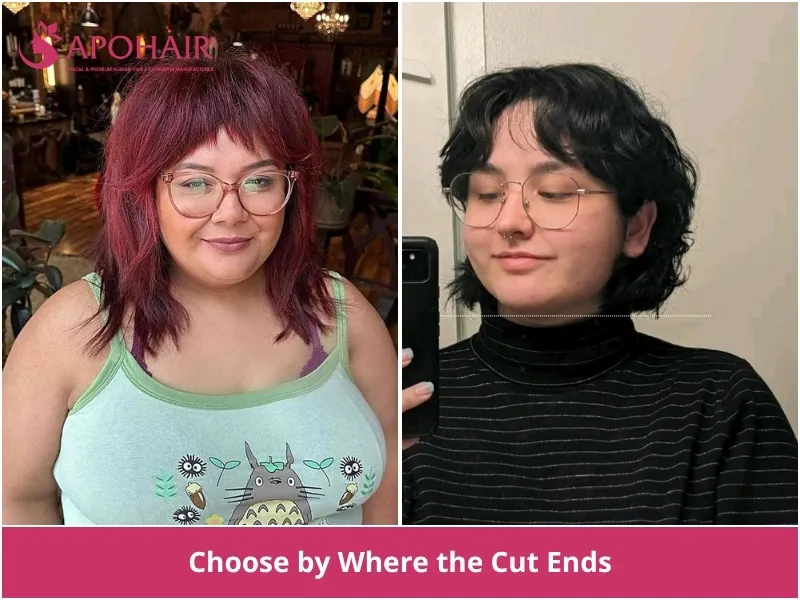
Choose by Where the Cut Ends
Check the length from the side while the head rests in a natural position. The safest short cuts finish clearly above the jawline or below the chin. Pixies, bixies, and tapered crops expose the neck and avoid adding a perimeter near the lower face, while angled bobs and lobs carry their front lines beyond the chin.
A chin-length cut can still work when the perimeter is strongly angled, asymmetrical, or broken into face-framing pieces. Avoid a blunt, level baseline that stops at the widest part of the jaw.
Choose by Fringe Type and Parting
A deep or off-center side part creates a diagonal that interrupts the circular symmetry of a round face. Side-swept bangs, long curtain bangs, and light wispy fringes preserve visible forehead space and direct attention toward the eyes or cheekbones.
Avoid combining a short bob with heavy straight-across bangs. The solid fringe shortens the visible face and adds a second horizontal line above the jaw. Women who wear glasses should have the fringe checked with their frames on so the ends do not compete with the top of the lenses.

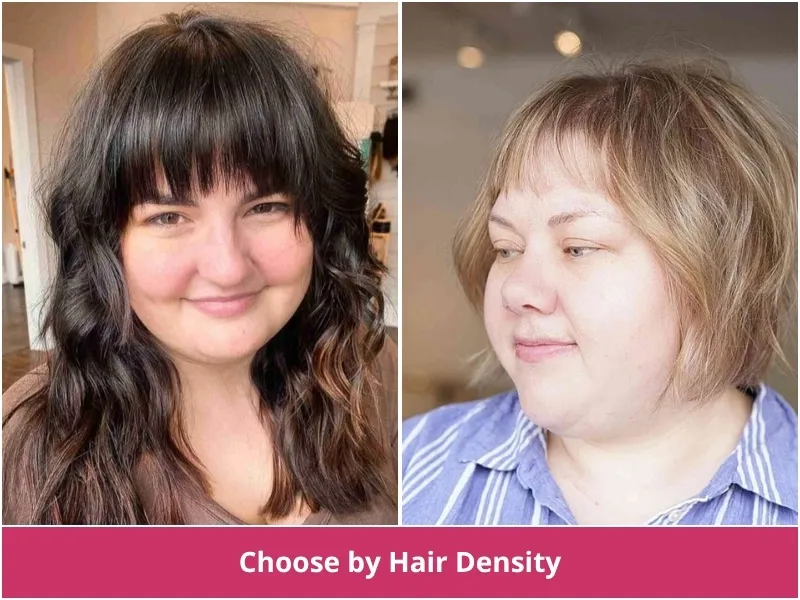
Choose by Hair Density
Fine hair benefits from solid perimeters, subtle graduation, and limited layering. Graduated bobs, blunt lobs, and softly tapered pixies retain more visible density than heavily layered shags.
Thick hair needs controlled internal weight removal so the sides do not expand beside the cheeks or jaw. Layered lobs, shaggy bobs, and stacked shapes work when the stylist removes bulk internally while preserving a defined outer line.
Choose by Hair Texture
Straight hair, approximately Types 1A–1C, depends on the haircut to create its angles. Deep side parts, asymmetrical lengths, and A-line perimeters provide the movement that the natural texture does not.
Wavy hair, approximately Types 2A–2C, supports shags, layered lobs, and piecey bobs because the natural bends separate the layers. Curly and coily hair should be assessed in its dry state so the stylist can account for shrinkage and preserve crown height without building excessive side volume.

Which Short Hairstyles Should Women Avoid With a Round Face and a Double Chin?
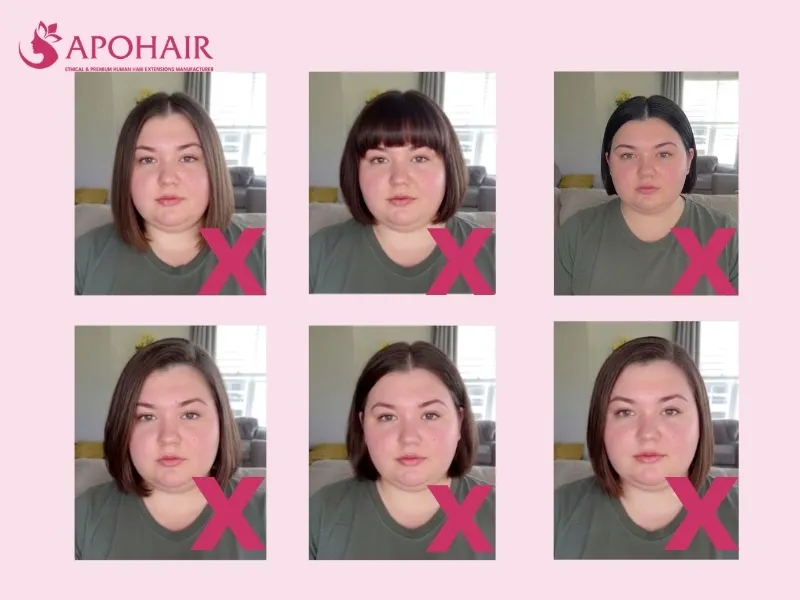
Women with round faces and double chins should avoid short cuts that combine a blunt chin-level perimeter, heavy side volume, and a flat crown. Most of the following styles can be adapted by changing their length, parting, or weight distribution:
- Blunt chin-length bob: A level perimeter at the chin emphasizes the widest part of the lower face. Extend the front below the chin or convert the baseline into an A-line angle.
- Short bob with heavy straight-across bangs: The solid fringe reduces visible forehead height and creates another horizontal line. Replace it with side-swept, curtain, or wispy bangs.
- One-length bob with curled-under ends: Inward-curled ends point toward the jaw and concentrate volume around it. Use straighter ends, outward movement, or a longer perimeter.
- Short bob tucked behind both ears: Tucking both sides removes face-framing lines and exposes the full width of the cheeks. Leave one side loose or use an asymmetrical tuck.
- Center-parted ear-length bob: Equal lengths on both sides can reinforce round symmetry. Shift the part off-center, add crown lift, or extend the front pieces.
- Flat-rooted sleek bob: A low, flat silhouette places visual weight near the jaw. Add controlled root lift or choose a longer sleek lob with a deep side part.
Frequently Asked Questions
Does Short Hair Hide a Double Chin?
No. Short hair does not physically hide a double chin, but it can redirect attention by adding height, creating diagonal lines, and keeping the perimeter away from the fullest part of the jaw. Pixies expose the neck and lift attention upward, while angled bobs and lobs frame the face below the chin.
What Is the Lowest-Maintenance Short Cut for a Double Chin?
A face-framing shaggy bob or collarbone lob is usually the lowest-maintenance option. Their broken or longer perimeters grow out without losing the intended shape and commonly allow 10–12 weeks between trims. Tapered pixies require less daily styling but need more frequent salon visits.
What Short Cut Works for a Fuller Figure With a Double Chin?
An asymmetrical lob, layered lob, or textured pixie with crown height works well for a fuller figure. These cuts create vertical or diagonal movement without adding excessive width at the cheeks or shoulders. Avoid dense, one-length ends that flare outward.
Do Bangs Help or Hurt a Double Chin?
Bangs help when they remain light or run diagonally across the forehead. Side-swept, curtain, and wispy bangs direct attention toward the eyes and upper face. Heavy straight-across bangs can shorten the visible face and reinforce horizontal width.
What Short Hairstyle Suits Women With Double Chins and Glasses?
A textured crop with a deep side part, long pixie with crown volume, or side-parted lob works well with glasses. The fringe should finish above or beside the frames instead of resting directly across them. Have the stylist check the fringe while the glasses are being worn.
What Short Hairstyle Suits Women Over 50 With Round Faces and Double Chins?
A layered lob, graduated bob, or softly textured bixie suits many women over 50 because these cuts preserve movement without requiring heavy daily styling. Fine hair benefits from a fuller perimeter, while thicker hair needs internal layers to control side volume.
What Short Hairstyle Suits Women Over 60 With Round Faces and Double Chins?
A softly tapered pixie, graduated bob, or collarbone lob works well for women over 60. The best choice depends more on current density and texture than age. Keep the crown lightly lifted, preserve fullness in fine ends, and avoid dense side volume beside the cheeks.
Are Medium-Short Hairstyles Suitable for Round Faces and Double Chins?
Yes. A below-chin lob, collarbone bob, or neck-skimming shag creates more vertical length than a chin-level bob while remaining shorter than traditional medium hair. Keep the shortest face-framing layers below the chin and control width at the sides.
Which Wedding Hairstyles Suit Short Hair, a Round Face, and a Double Chin?
A side-parted wavy lob, crown-lifted textured pixie, or softly pinned bixie suits this combination. Keep volume above the ears, preserve light face-framing pieces, and avoid pulling every section tightly and symmetrically away from the face.
Conclusion
Choosing among short hairstyles for women with a round face and a double chin should end with a practical shortlist rather than one universal “best” cut. Eliminate styles that do not suit your natural texture, density, or maintenance routine, then compare the remaining options by how they look from both the front and side.
Bring two or three reference photos to your stylist and discuss how each cut will grow between appointments. The right hairstyle is the one that maintains its intended shape, works with your natural hair, and remains manageable beyond the first day of styling.
For salon owners and hair professionals who need additional density for face-framing short styles, APOHAIR supplies Vietnamese human hair wefts, bulk hair, and clip-in extensions in multiple textures and lengths. Contact our team for samples, texture matching, and factory-direct wholesale information.
