




18 Best Bob Hairstyles for Round Faces: Lobs, A-Lines & Layered Cuts
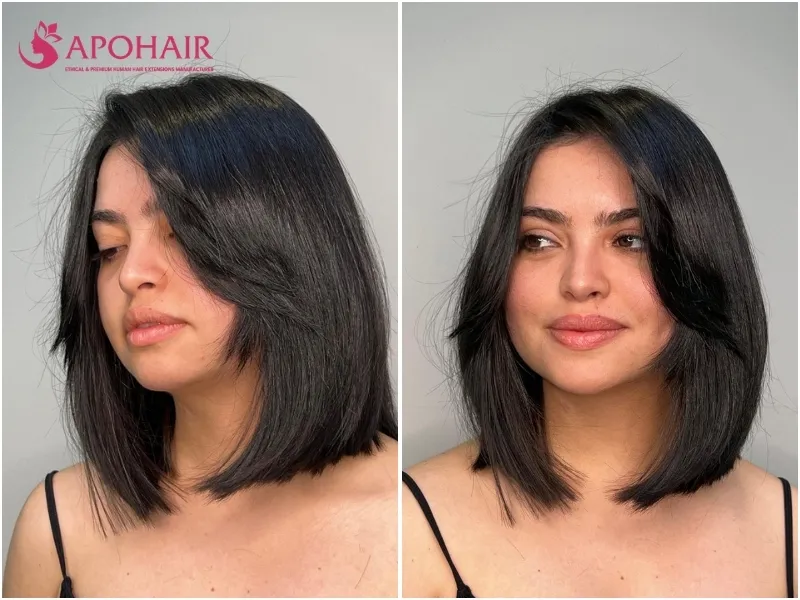
The best bob hairstyles for round faces are the long bob (lob), the angled A-line bob, and the long inverted bob. Each places the perimeter below the chin or sends it downward at an angle, creating vertical or diagonal lines beside the cheeks instead of concentrating width at their fullest point. A round face is nearly as wide as it is long, with soft cheekbones and a gently curved jawline, so the most flattering bobs keep the crown lightly lifted, the sides controlled, and the front longer than the jaw.
When choosing among the 18 bob hairstyles for round faces below, focus on five details: finished length, perimeter angle, part placement, layer height, and fringe weight. Hair texture and density determine how well each shape holds: fine hair often benefits from a blunt lob, thick hair from internal layers, wavy hair from below-chin texture, and curly hair from crown-focused shaping. The styles that require more care are rounded-under bobs, cuts with volume concentrated at cheek level, and short bobs paired with heavy straight-across bangs.
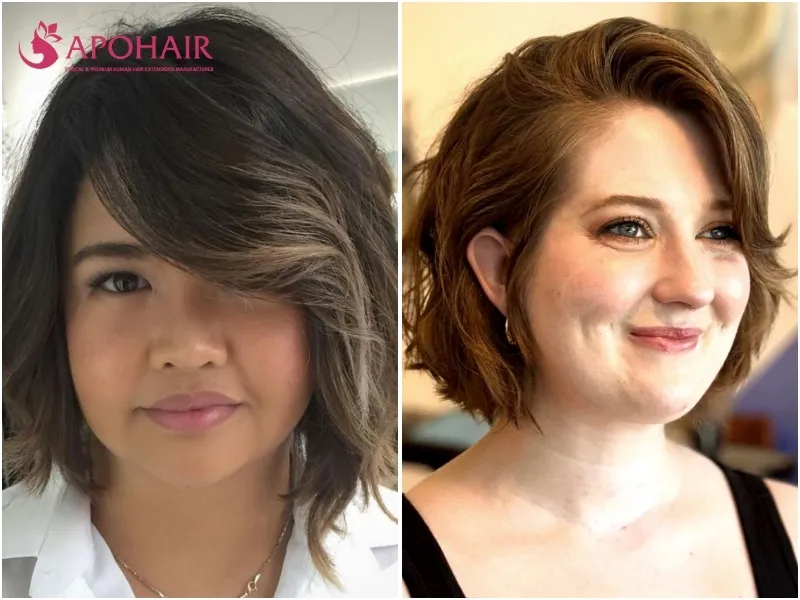
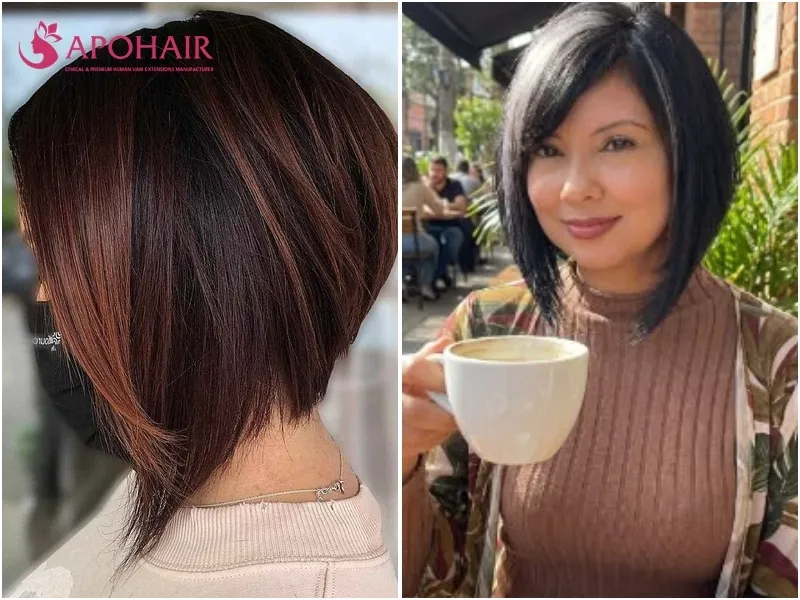
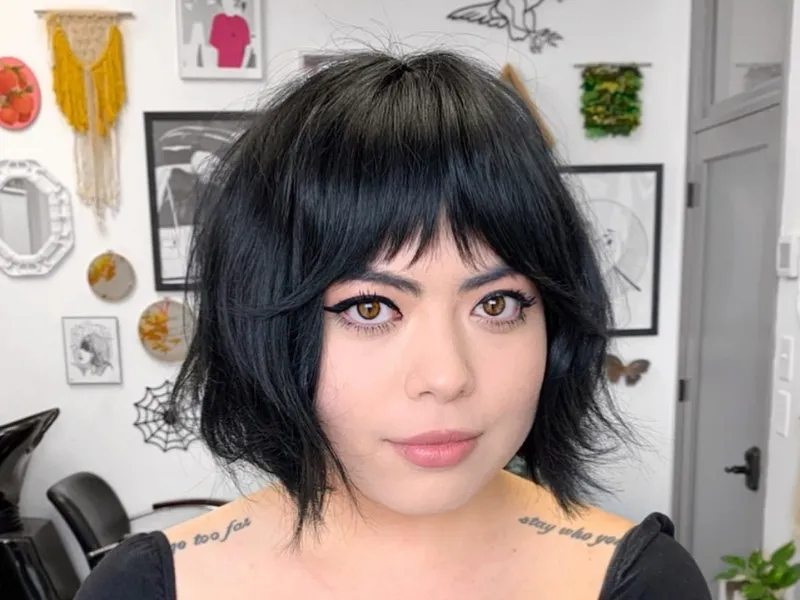
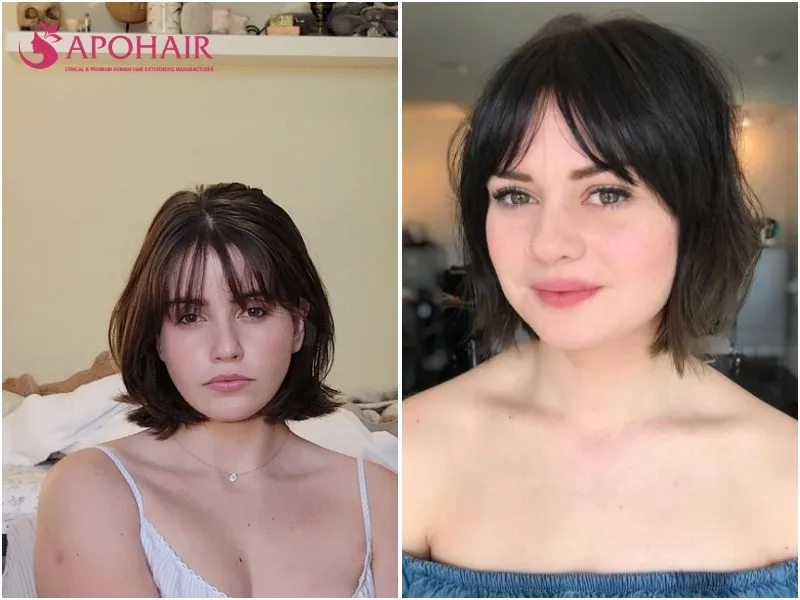
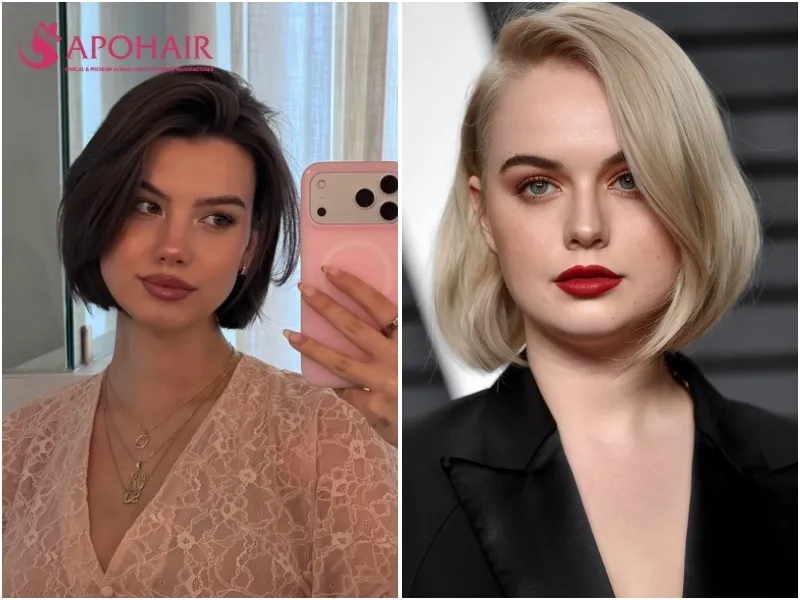
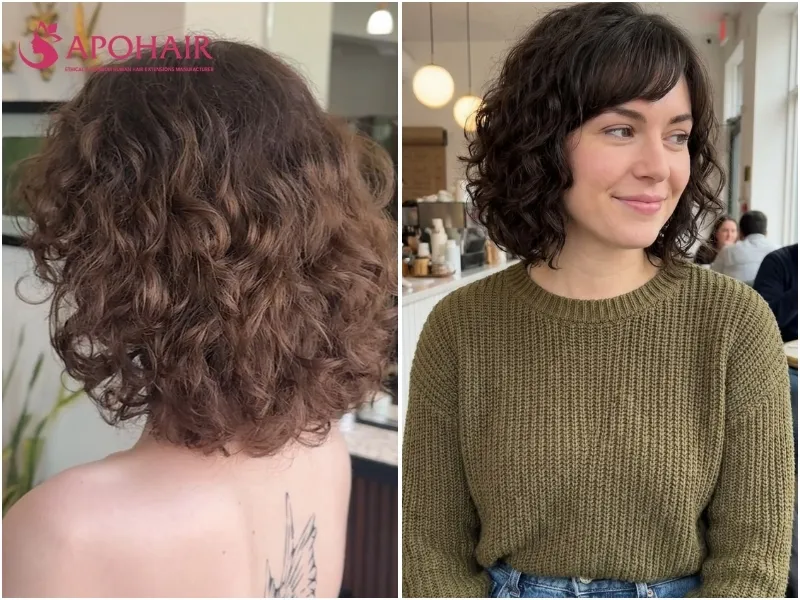
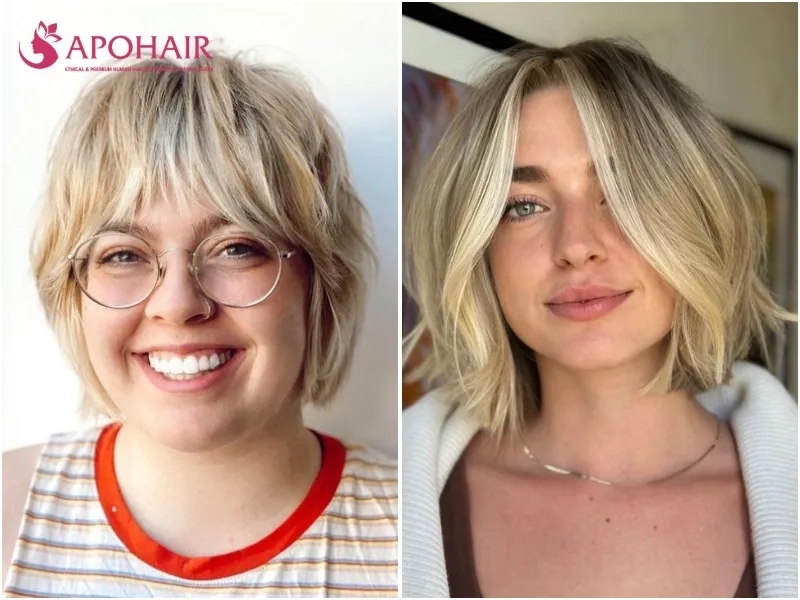
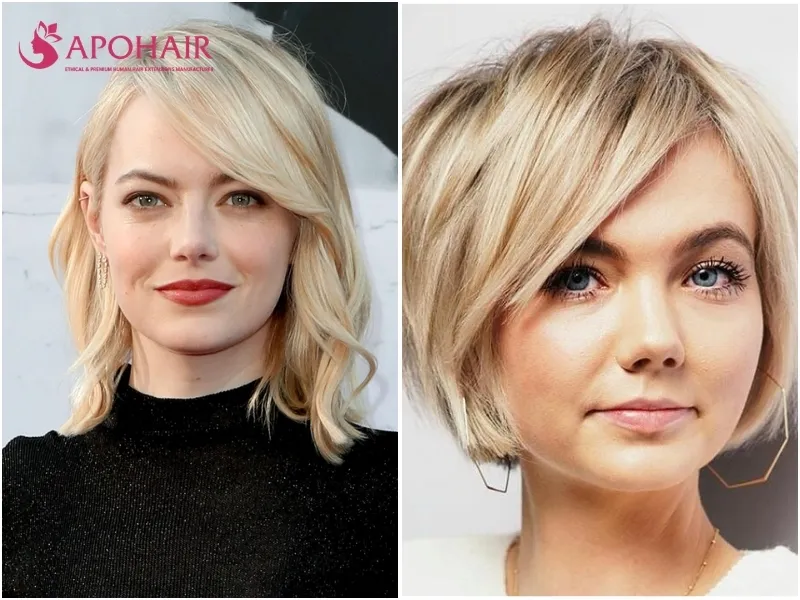
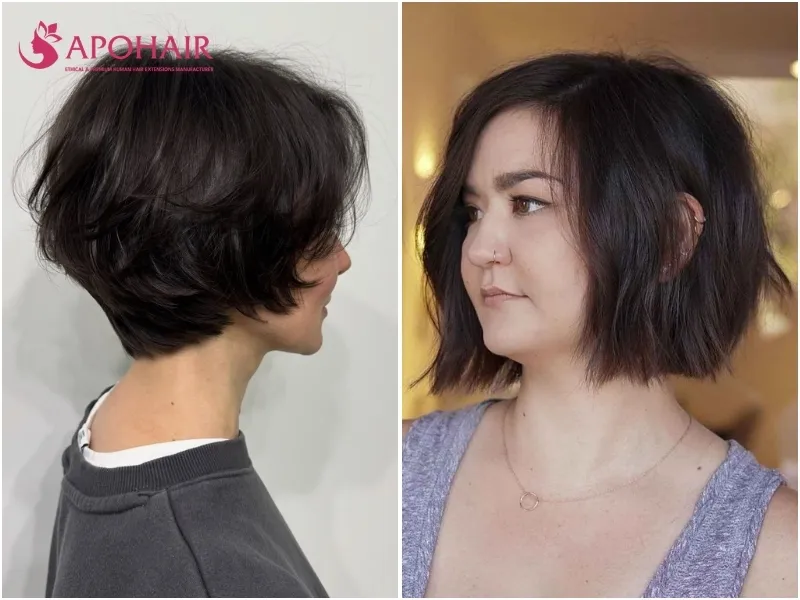
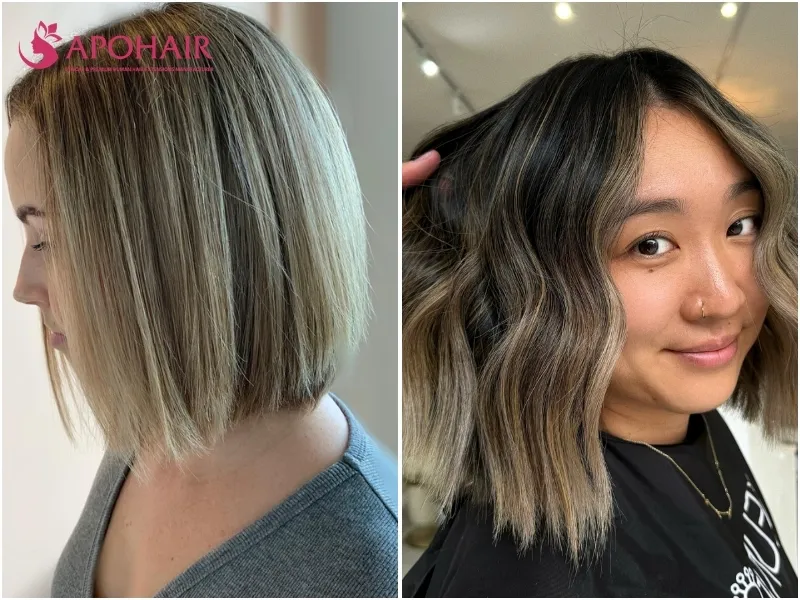
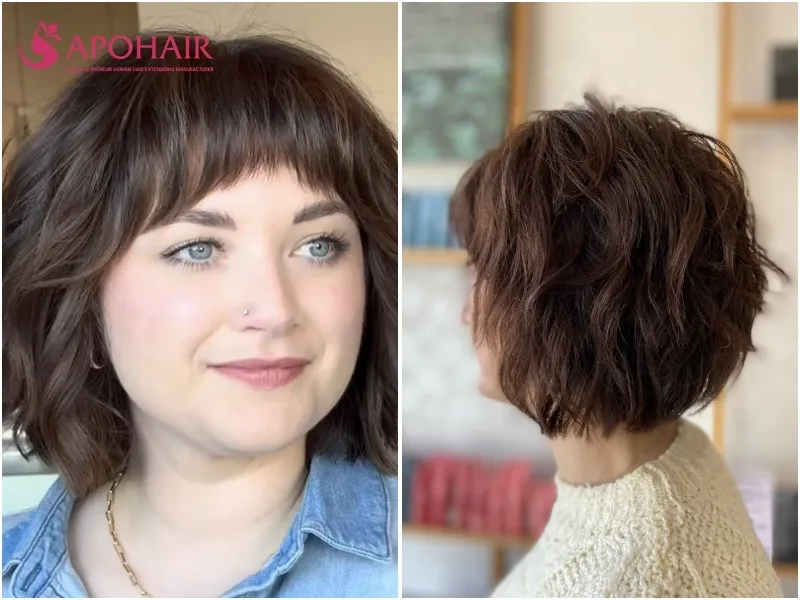
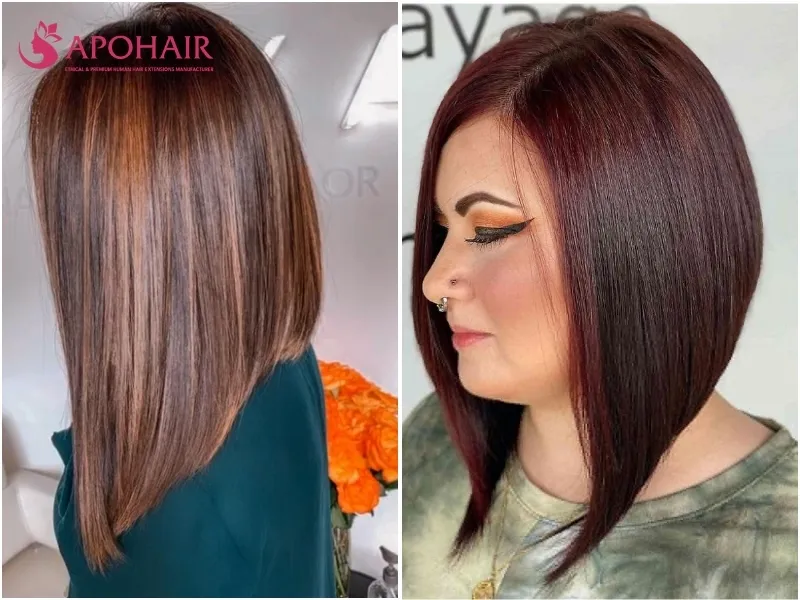
Best Bob Hairstyles for Round Faces
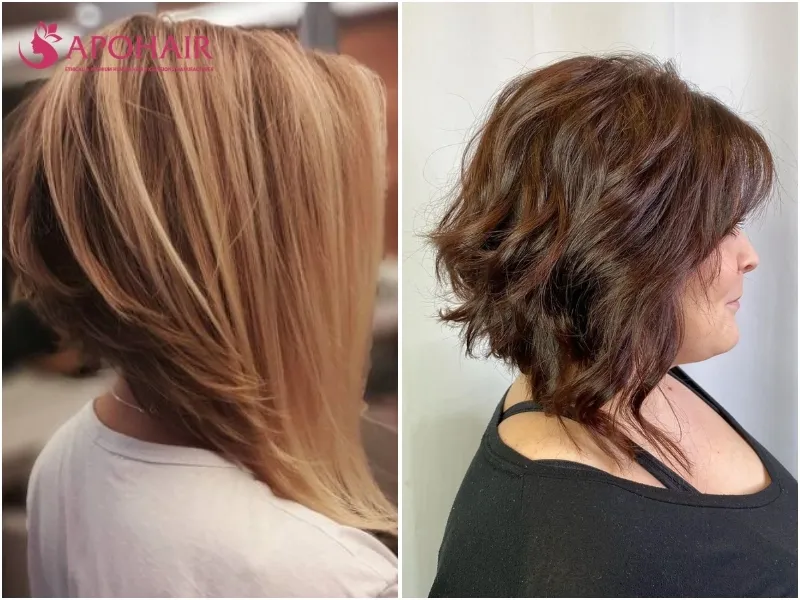
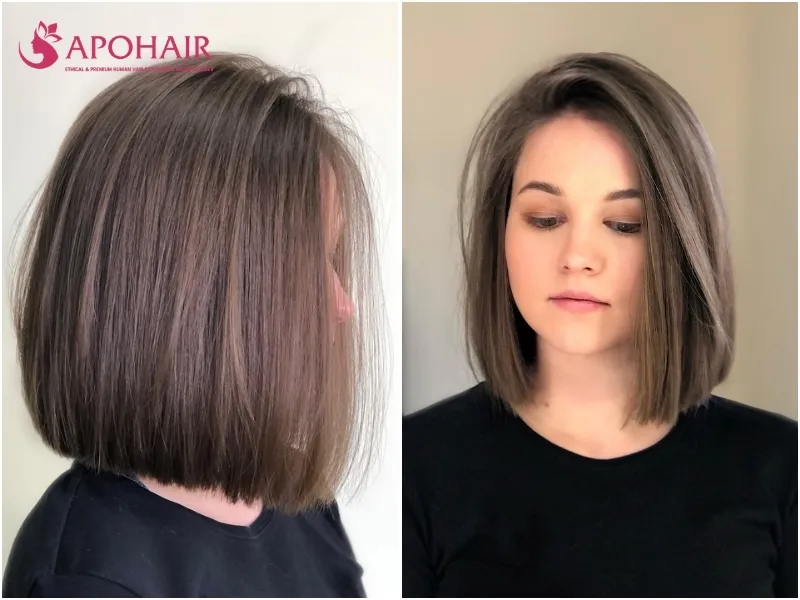
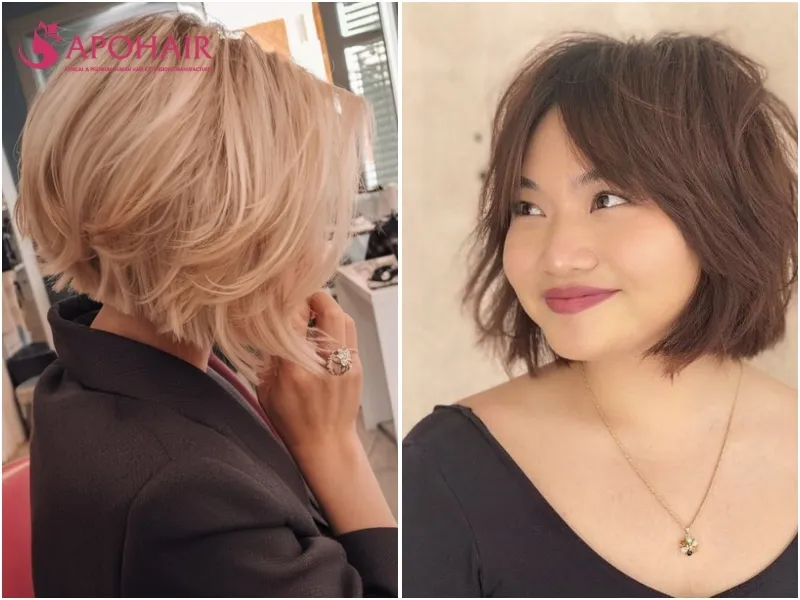
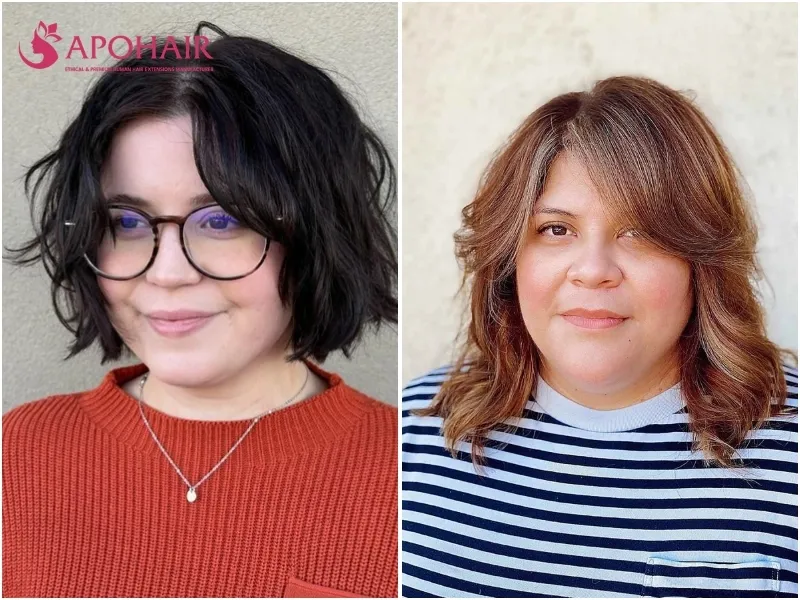
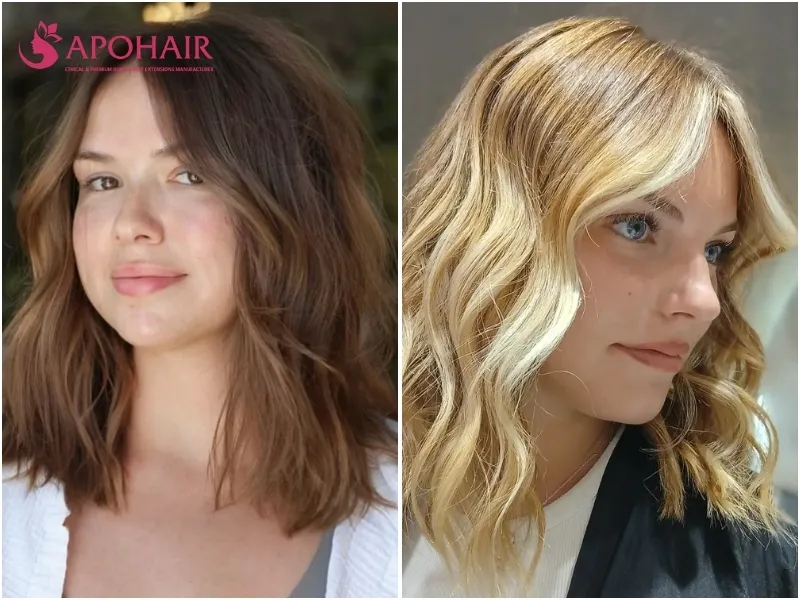
The long bob, the angled A-line bob, and the long inverted bob suit a round face best, each carrying its line below the chin or angling it toward the front. The other fifteen add a diagonal through the part, the fringe, or asymmetry, or break the outline with texture and curl.
1. Long Bob (Lob)
A long bob, or lob, ends anywhere from just below the chin to the collarbone, with the most flattering versions for a round face finishing several inches below the jaw. That placement creates two vertical lines beside the cheeks instead of closing around them. A shoulder-length lob is therefore one of the most versatile bob hairstyles for round faces.
Leaving the front about half an inch longer than the back gives the perimeter a subtle forward direction. Soft, point-cut ends keep the length moving without making fine hair appear thinner. Straight to loose-wavy textures, Types 1B to 2B, hold this shape easily, while curlier hair may need longer internal layers to control width. Plan trims every 10 to 12 weeks.
Why it works: The below-chin perimeter creates two vertical lines beside the cheeks, while the slightly longer front keeps the eye moving downward instead of outward.
2. Angled A-Line Bob
Built on a slope, the angled A-line bob carries graduation at the back and gains length toward the face until the front ends past the chin. For a round face, the slope does what a level line cannot, pointing the eye down and forward along the jaw. A steeper slope reads longer, up to the point where it turns dramatic.
Keep the front points about 1 to 2 inches below the jawline so the angle remains visible beside the cheeks. The back may sit around the nape or just below it, depending on how dramatic the slope should be. Thick, straight hair can support a steeper angle, while fine hair usually looks fuller with a softer difference between the back and front. Keep the front corners straight rather than curled under, and recut the shape every 6 to 8 weeks.
Why it works: The shorter back adds lift while the front extends below the jaw, creating a downward diagonal that lengthens the outline without adding width beside the cheeks.
3. Long Inverted Bob
A long inverted bob lifts the back into a short, stacked curve and lets the front drop two or three inches below the chin. On a round face, the lifted back adds height to the profile, while the long front hangs straight beside the cheeks. The cut pairs a pixie’s lift at the back with a lob’s length at the front.
The stack stays low, under the bony ridge at the back of the skull, and blends into the front without a visible step. Stacking carried up toward the crown builds a round ball behind it. Thick or coarse hair supports the graduation, while fine hair needs a softer stack so the scalp does not show. The back outgrows its shape first and goes back for a recut after about 6 weeks.
Why it works: A low stack raises the back of the profile while the long front panels fall straight beside the cheeks, combining controlled height with below-chin length.
4. Asymmetrical Bob
An asymmetrical bob sets one side higher than the other, so the bob’s line tilts across the face. On a round face, the tilt interrupts the symmetry that makes a round shape obvious, and the lower side falls past the chin beside one cheek. Attention travels along the tilt instead of around the curve.
The lower side works best where the natural part leaves more hair, which lets it lie flat against the cheek. The higher side can stop at the jaw but no higher, since a line at cheek level uncovers the widest part of the face. Straight hair makes the difference sharpest, and waves soften it into a gentle slope. Both sides go back for a trim every 6 to 8 weeks.
Why it works: The uneven lengths break circular symmetry and direct the eye diagonally toward the longer below-chin side, so the outline reads longer and less uniformly rounded.
5. Layered Bob
A layered bob hides long layers inside a bob that ends past the chin, so the length moves instead of sitting as a solid block. On a round face, where those layers begin decides everything. Layers that start below the cheekbones slim the face, while layers that start at the cheekbones widen it, and low layers also keep the bob from rounding under.
The shortest layer falls around the corner of the mouth, and each layer below it steps down toward the ends. Leaving the crown section long lets a blow-dry raise it at the root. Denser hair shows each layer clearly, while fine hair carries two or three long ones at most. Refreshing the layers every 8 weeks keeps their placement.
Why it works: Layers beginning below the cheekbones create movement without building bulk at the widest part of the face, while the longer perimeter preserves vertical length.
6. Bob With Side-Swept Bangs
A bob with side-swept bangs pairs a below-chin bob with a fringe brushed diagonally from a deep part. On a round face, the fringe cuts across the rounded hairline at an angle and hides part of the forehead’s curve. The upper half then reads less circular, and the longer bob adds a vertical at the sides.
At the part, the fringe starts around brow length and reaches toward the far cheekbone, so it lies across the forehead instead of falling forward. A blow-dryer aimed across the brow trains thick or coarse hair to hold the angle, while fine hair sweeps with little effort. Once the tip slips below the cheekbone, usually within 4 to 5 weeks, the fringe needs a trim.
Why it works: The diagonal fringe interrupts the curve of the forehead and leads the eye toward the longer bob, adding asymmetry through the upper half of the face.
7. Bob With Wispy Fringe
A bob with a wispy fringe lays a see-through fringe along the brow line, paired with a below-chin bob. On a round face, that light fringe softens the forehead without drawing the heavy horizontal that a solid fringe lays across a wide face. Skin showing through the strands keeps the face open.
The fringe comes from a thin, shallow slice of hair at the very front, and point-cutting tapers every strand to a fine tip. A slight split at the center lets the two halves angle out toward the temples. The look comes most easily on fine hair, which borrows very little from the bob to make it. As the fringe grows, usually within about 4 weeks, it loses its light separation and begins to sit more heavily across the forehead. A light trim and point-cutting restore the see-through finish.
Why it works: The see-through fringe softens the hairline without forming a heavy horizontal band, while the below-chin base keeps the face open and visually longer.
8. Short Textured Bob Ending Below the Chin
A short textured bob ending below the chin stops about an inch past it and breaks its ends into choppy pieces that point in different directions. On a round face, that texture is what makes a shorter bob work, because the broken edge never forms the smooth curve that echoes the cheeks. Light lift at the crown adds height above it.
A razor or deep point-cutting separates the last inch, and a matte paste defines the pieces on straight hair. The inch past the chin matters, since a short bob that ends at the chin itself lays a horizontal across the lower face. Straight and wavy hair both hold the texture. The pieces blur and need recutting after 6 weeks or so.
Why it works: Ending the cut below the chin moves its baseline past the lower face, while the broken ends prevent a smooth rounded perimeter from echoing the cheeks.
9. Chin-Length Bob With a Deep Side Part
A chin-length bob with a deep side part ends at the chin but shifts most of the hair toward one side. This asymmetry makes an exact chin-length perimeter more flattering on a round face than a centered, evenly balanced version. The heavier side travels diagonally across the forehead and past one cheek, while straight, uncurled ends prevent the lower edge from forming a rounded outline.
The part lines up with the outer arch of one eyebrow, and the heavy side carries slightly more length so it drapes forward. Straight, uncurled ends keep the line from rounding. Straight hair holds the sweep best, and a root-lift spray at the part adds height. A trim every 6 weeks holds the line at the chin.
Why it works: The deep side part shifts visual weight off-center and creates a diagonal sweep across the forehead, counteracting the exact chin-length line and the face’s symmetry.
10. Shaggy Bob
A shaggy bob runs choppy, feathered pieces through a bob that falls past the chin, shortest at the crown and wispy near the ends. On a round face, the crown pieces lift the top and the wispy ends thin out beside the cheeks, so the shag adds height without adding width. The broken edges also stop the outline from reading as a smooth circle.
The side pieces stay longer than the crown pieces, because a shag cut short at cheek level puffs out into the very shape the cut avoids. A razor softens the ends on straight hair, and a texture spray keeps the pieces apart. Loose waves build the shag with the least styling. It needs reshaping at 8 to 10 weeks.
Why it works: Short crown layers add controlled height while the longer wispy side pieces keep volume away from the cheeks and break up the rounded outer shape.
11. Jaw-Length French Bob With Close Sides
A jaw-length French bob with close sides adapts the usually fuller French bob by lowering its perimeter, removing bulk beside the cheeks, and using a light rather than solid fringe. On a round face, the flatter sides keep the shape compact while the textured ends prevent the jaw-length line from forming one smooth curve. The fringe should remain wispy and slightly longer at the outer edges so it opens rather than closes the forehead.
Slide-cutting takes bulk out of the sides, and the ends stay straight and point-cut rather than beveled under. That combination separates it from the full, rounded French bob that widens a round face. Fine, straight hair gives the undone finish most easily. Fringe and line both return for a trim every 5 to 6 weeks.
Why it works: The close sides limit width at cheek level, while the light fringe and point-cut perimeter break what would otherwise be a solid curve around the jaw.
12. Bobcat Haircut
A bobcat haircut is a short bob with choppy, feathered layers and a messy fringe, finished in a compact, textured shape. On a round face, the choppy layers at the crown add lift, and the messy fringe breaks the rounded hairline into uneven pieces. It suits a round face best with the length taken just past the chin, which keeps the compact shape from sitting at cheek level.
Feathered layers through the perimeter remove bulk while keeping texture, and the fringe breaks into separate, uneven pieces rather than a solid band. The sides taper close near the cheekbones. Wavy hair and straight hair with some body both suit it, and a texture spray keeps the pieces apart. The choppy layers lose their shape after 6 to 8 weeks.
Why it works: Crown texture draws the eye upward, while the tapered sides and irregular fringe interrupt the circular outline without expanding the middle of the face.
13. Stacked Bob With Long Front Pieces
A stacked bob with long front pieces builds tight tiers at the nape and leaves the front falling well below the chin line. On a round face, the long front pieces lie flat beside the cheeks like two vertical panels, while the stacked back adds height to the profile. The face gains length from the front and from the side.
The tiers stay under the widest point of the skull, since stacking that climbs higher adds a round bulge behind the crown. Around 2 inches past the chin is enough length for the front, and point-cutting keeps it falling straight. Coarse hair shows every tier, and a shallow stack suits fine hair better. A tidy-up at the back every 5 to 6 weeks keeps the tiers sharp.
Why it works: The low stack lifts the back without creating crown bulk, while the long front pieces form two vertical panels that continue past the chin.
14. Face-Framing Bob
A face-framing bob shapes shorter, angled pieces at the front that begin under the cheekbones and slope past the chin, with the remaining length left intact. On a round face, those pieces run down and in along the cheeks and add narrow diagonals beside the full cheeks. Framing that starts higher, at the cheekbone, does the opposite.
The shortest piece sits around the mouth, and the pieces lengthen step by step into the perimeter. A flat iron bends the pieces slightly toward the face on straight hair. Denser hair keeps the pieces visible against the outer length. Trimming at 6 to 8 weeks holds the shortest piece near the mouth.
Why it works: Front layers beginning below the cheekbones create narrow downward diagonals across the lower face instead of adding width at the fullest point of the cheeks.
The bob above uses front layers beginning below the cheekbones; other hairstyles that frame the face use bangs, tendrils, and longer side layers to direct attention toward different facial features.
15. Blunt Lob for Fine or Thin Hair
A blunt lob for fine or thin hair keeps a one-length edge just above the shoulders, with no layers to thin it. On a round face with fine hair, the heavy edge makes the ends look fuller and pulls the eye down past the chin. Layered cuts would instead leave sparse ends near the cheeks.
On fine hair, the blunt edge reads as density rather than bulk. The perimeter stays blunt, and only the top layer takes light texture for movement. A side part adds a diagonal and lifts the root, and a root-lift spray gives the crown height without teasing. Trims every 8 to 10 weeks keep the edge dense.
Why it works: The dense below-chin baseline makes fine ends appear fuller while keeping their weight beneath the cheeks, and the side part adds a lengthening diagonal.
16. Wavy Textured Lob
A wavy textured lob runs loose waves through a lob that ends near the collarbone. On a round face, the waves begin below the chin, so the movement sits well under the cheeks while the smooth top keeps width off the face. The length supplies the vertical, and the waves stop it from looking flat.
Waving only from the chin down leaves the roots and upper sides smooth. Light layers through the ends let each wave separate. Hair with a natural wave, Type 2A to 2C, forms the bends on its own, and straighter hair holds a bend from a large barrel iron. The lob underneath needs a trim about every 10 weeks.
Why it works: Smooth upper sides keep the cheek area controlled, while waves beginning below the chin place movement lower and preserve the lob’s vertical length.
17. Curly Layered Bob
A curly layered bob uses layers to control where natural curls sit, with the longest curls falling past the chin and the crown curls cut shorter. On a round face, the shorter crown curls lift the top and the longer curls hang lower at the sides. The layers stop the bob from spreading into a wide triangle at cheek level and turn it into a taller shape.
Shaping each curl dry shows where it settles once it springs, so the layers land at the planned height. Curls left at one length stack at the ends and widen the bottom of the face. Patterns from Type 3A to 4A carry it, with a diffuser at the roots for lift. The layers hold their placement for 8 to 10 weeks before a reshape.
Why it works: Shorter crown curls add height and longer curls beside the jaw pull the shape downward, preventing the bob from spreading into a wide triangle.
18. Sleek Side-Parted Lob
A sleek side-parted lob pairs a smooth, polished lob just above the shoulders with a part set well off center. On a round face, the smooth finish keeps the sides flat against the cheeks, and the side part lays a diagonal across the top of the head. It suits straight hair that holds a clean line.
A flat iron smooths the lengths, while a neutral or slightly outward finish at the ends keeps them from clinging to the neck without curling the perimeter back toward the jaw. The part sits above the arch of one eyebrow, and root lift at the part adds height. Naturally straight hair, Type 1A to 1C, holds the gloss best. Trims every 8 to 10 weeks keep the ends even.
Why it works: The flat sides reduce width beside the cheeks, while the deep side part and smooth below-chin perimeter create diagonal and vertical lines around the face.
The same bob can produce a different outline depending on where its perimeter, layers, and volume sit. Use the next section to match those details to your face fullness, hair texture, and density rather than choosing by the hairstyle name alone.
For readers comparing cropped shapes beyond the bob family, short hairstyles for round faces also include pixies, bixies, crops, and shags that use crown height, tapered sides, and diagonal lines to control facial width.
How to Choose a Bob Hairstyle for a Round Face
Five decisions determine which bob hairstyle will suit a round face: finished length, perimeter angle, part placement, layer and fringe position, and the hair’s natural texture and density. The goal is not simply to choose the longest bob, but to build a shape that stays controlled beside the cheeks and maintains its intended line between salon visits.
- Choose the finished length: A perimeter ending from one inch below the chin to the collarbone creates a longer line beside the cheeks. An exact chin-length bob needs asymmetry, a deep side part, or broken texture to prevent the edge from emphasizing width.
- Choose the perimeter angle: An A-line or inverted bob becomes longer toward the front, while an asymmetrical bob lowers one side. A level perimeter is most reliable when it finishes clearly below the chin.
- Choose the part placement: A deep or off-center part adds a diagonal and can create lift at the crown. A center part can still work on a longer lob when the sides remain smooth and the perimeter falls well below the jaw.
- Place layers and fringe carefully: Begin face-framing layers below the cheekbones and keep side-swept, curtain, or wispy bangs light. Short cheek-level layers and heavy straight-across bangs concentrate width in the upper and middle face.
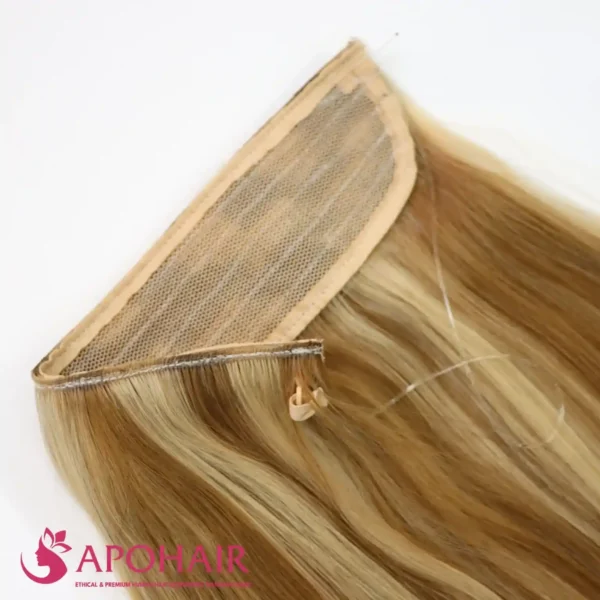
- Match the cut to texture and density: Fine hair retains more fullness in a blunt lob, while thick hair benefits from internal weight removal. Wavy hair looks most balanced when movement begins below the chin. Curly and coily bobs need controlled crown height and longer curls at the sides. Texture-matched clip-in hair extensions can add density beneath a lob or blunt perimeter without requiring additional layers.
When fine ends need more density than a blunt cut can show, adding hair is another route. The post on weave styles for round face lists a long bob, shoulder-length layers, and wavy mid-length hair among its medium-length options and explains how to achieve each look with different types of hair extensions.
Which Bob Is Best for a Round Face With Fuller Cheeks?
The best bobs for a round face with fuller cheeks are the long bob, the angled A-line bob, the asymmetrical bob, the face-framing bob, the bob with side-swept bangs, and the wavy textured lob.
Fuller cheeks carry most of their width in the middle of the face, from the cheekbones down to the corners of the mouth. A bob that suits them keeps its own fullness out of that zone and places its line either below it or across it at an angle. Each of the six does that in its own way:
- Long Bob (Lob). Its ends sit several inches below the fullest part of the cheeks, so no edge or curl lands in that zone.
- Angled A-Line Bob. The front pieces hang lower than the back and lie against the cheeks, covering their outer curve with a straight line.
- Asymmetrical Bob. The longer side veils one full cheek completely, so the face no longer reads as two matching curves.
- Face-Framing Bob. Pieces that start below the cheekbones slope inward across the fullest point instead of framing it from outside.
- Bob With Side-Swept Bangs. The diagonal fringe pulls the eye up and across the forehead, away from the middle of the face.
- Wavy Textured Lob. The waves start under the cheeks, so movement adds interest lower down while the smooth top lies flat beside the fullness.
Full cheeks and a double chin create different styling constraints. When fullness continues below the jaw into the neck, double chin short hairstyles for round faces compare cuts by how their perimeters clear, cross, or extend beyond the jaw-to-neck line.

Which Bob Styles to Avoid for Round Faces?
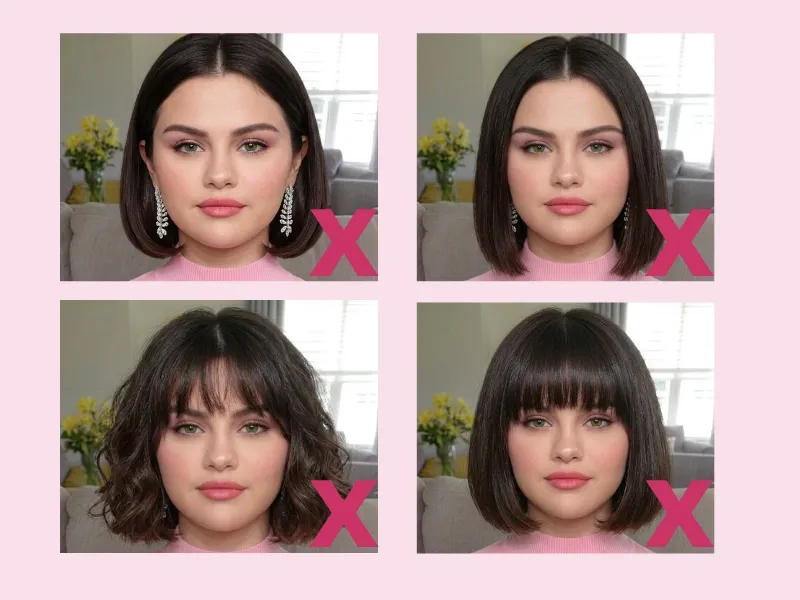
The bob styles to avoid for round faces are the ones that curve under at the chin, split evenly at a center part, puff out at the sides, or sit under heavy straight bangs. Each draws a curve or a horizontal around a face that needs a vertical:
- A rounded chin-length bob. Ends that curve under at the chin trace the lower half of a circle directly beneath full cheeks.
- A blunt one-length bob with a center part. Two equal panels and a flat edge frame the face as wide as it is long, with no diagonal to break it.
- A French bob with full volume at the sides. Volume at lip and cheek level pushes the outline out at the widest part of the face.
- Heavy straight bangs with a short bob. The fringe closes the top of the face while the short line closes the bottom, which leaves a short, wide shape between them.
A bob that fails on a round face is not automatically a problem on an oval one. Because an oval face has balanced proportions that leave a bob nothing to correct, the 26 bob hairstyles for oval faces choose a perimeter by which feature it should highlight instead, from the cheekbones to the jaw, neck, or collarbone.
Frequently Asked Questions
Can a Round Face Wear a Short Bob?
A round face can wear a short bob when the line ends about an inch past the chin and the ends carry texture or a deep side part. A short textured bob or a bobcat haircut keeps the edge broken and adds lift at the crown. The short bobs to skip end at the chin with curled-under ends or sit under heavy straight bangs.
Is a Long Bob Good for a Round Face?
A long bob is one of the best bobs for a round face, because its line falls well below the cheeks. It draws a vertical on each side of the face. Soft, point-cut ends keep the length moving, and a side part adds a diagonal. On fine hair, a blunt lob works better, since the heavy edge makes the ends look fuller.
What Bob Is Best for Thin Hair and a Round Face?
A blunt lob for fine or thin hair suits a round face best, because a one-length edge makes the ends look dense and pulls the eye below the chin. A long inverted bob with a soft stack also works, since the graduation adds fullness at the back. Heavily layered or shaggy bobs thin out the ends and leave them sparse near the cheeks.
Are Bangs or Fringe Good With a Bob for a Round Face?
Side-swept and wispy bangs for round faces work well with a bob because they add movement without closing the forehead. A side-swept fringe creates a diagonal across the upper face, while a wispy fringe softens the hairline without adding visual weight. Heavy straight-across bangs shorten the visible face and combine with the bob’s perimeter to frame it between two horizontal lines.
Can a Chin-Length Bob Suit a Round Face?
A chin-length bob can suit a round face when a deep side part and straight, uncurled ends break the line. The deep part sends the heavier side across the forehead and past one cheek, so the face reads less symmetrical. A chin-length bob with a center part or ends curled under does the opposite and frames the face as a circle.
Which Bob Hairstyles Suit Round Faces Over 50?
The most flattering bob hairstyles for round faces over 50 include a collarbone lob, a softly angled A-line bob, a long layered bob, and a side-parted wavy lob. Age does not determine the cut as much as hair density, texture, and maintenance preference do. Fine hair generally looks fuller with a blunt or lightly layered perimeter, while thick hair benefits from internal layers that control width beside the cheeks. A bob does not automatically make someone look older or younger; the placement of its volume and fringe has a greater effect.
Which Bob Cut Suits an Asian Round Face?
A sleek lob, angled A-line bob, long layered bob, or asymmetrical bob can suit an Asian round face particularly well when the hair is naturally straight and dense. Straight hair holds a clean below-chin perimeter and visible front angle, while internal layers can remove excess side weight without thinning the ends. However, ethnicity alone should not determine the cut; the stylist should adjust the bob to the individual hair texture, density, growth pattern, and preferred maintenance level.
Conclusion
Choosing among these 18 bob hairstyles for round faces is ultimately about finding a shape that your natural hair can maintain. A lob offers the most flexible length, an A-line or asymmetrical bob creates a sharper outline, and layered, wavy, or curly bobs provide movement when their volume is placed carefully. If the bob silhouette does not suit your texture, density, or maintenance preference, the broader guide to hairstyles for round faces compares long layers, pixies, shags, pulled-back styles, and special-occasion options.
Before the haircut, agree with your stylist on three details: where the perimeter will finish, where the shortest layer will begin, and how the part or fringe will sit. These decisions are more useful than copying a reference image exactly because they allow the bob to be adapted to your cheeks, jawline, texture, and density.
Sourcing for clients who wear a bob: A bob holds its line only when the ends look dense, so a buyer who serves bob clients can plan stock around fine ends, thick hair that needs controlled bulk, and textures from straight to curly.
Extensions: A salon owner stocking for lob and blunt-perimeter clients can buy human hair extensions wholesale across clip-in, tape-in, keratin tip, and weft formats and keep a single supplier for all of them.
Bundles: For clients who wear a wavy textured lob or a curly layered bob, a human hair bundles supplier that covers silky straight through kinky curly in about 100g bundles lets a reseller match each client’s natural pattern.
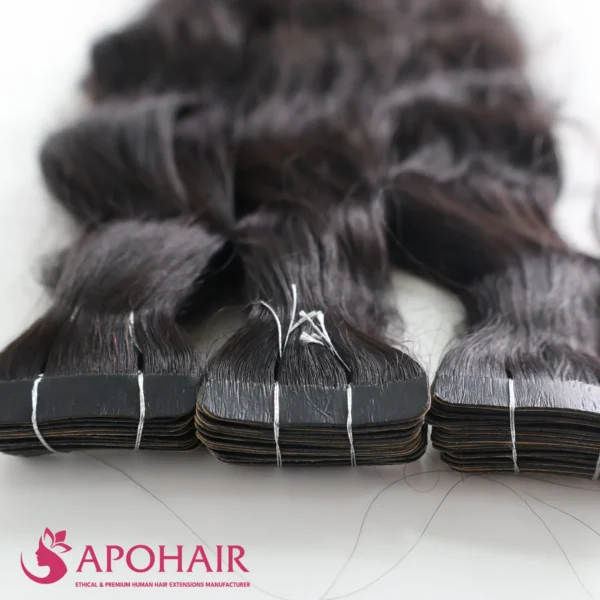
Tape-in: Fine-haired clients who choose a blunt lob need dense ends, and natural color tape hair extensions wholesale suit them, with an Invisible variant made for fine to medium hair and orders from 200g.
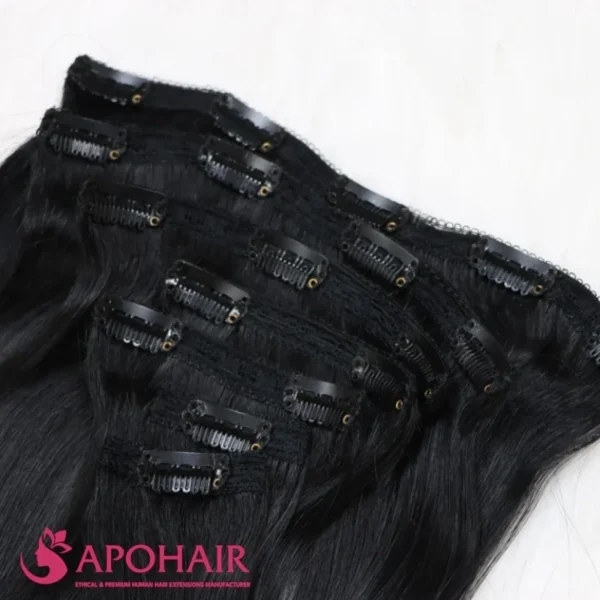
Clip-in: Clients who want a blunt perimeter to look fuller only on some days can be offered clip-ins, and a clip in extensions supplier takes orders from 200g.
Weft: A salon group serving both fine and thick hair can choose among eight weft types through wholesale weave hair extensions, from genius weft for fine to medium hair to machine weft for medium to thick hair.
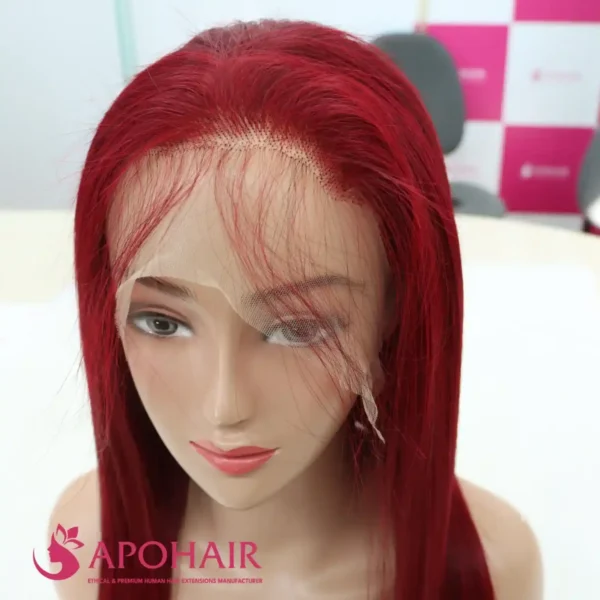
For salon clients who need additional density to support a lob or blunt perimeter, texture-matched clip-in wefts can add fullness without introducing more layers. APOHAIR supplies factory-direct 100% Vietnamese Human Hair from a hair extensions wigs factory in Vietnam, with samples available for matching the client’s color, length, density, and texture before placing a larger order. Salons whose clients want a bob without cutting their own hair can also buy human hair wigs wholesale, since a human hair wig can be cut into a bob and styled like natural hair.
