









26 Short Hairstyles for Long Faces Female That Add Width And Balance Vertical Lines
Short hairstyles for long-faced female that add width & balance vertical lines are the chin-length blunt bob with a C-shaped bend and wispy fringe, the textured bixie, and the overgrown pixie with full sides. All three follow one rule. A long face needs width at the cheekbones and less visible length, so a short cut has to draw horizontal lines and keep height off the crown. Four decisions then separate one cut from another: forehead coverage, where the width belongs, how the hair moves, and how much of it there is. Cuts fail when they lift the crown, flatten the sides, or leave a tall forehead bare.
A long face, also called an oblong face, runs noticeably longer than it is wide, with forehead, cheekbones, and jaw at roughly the same width. Every vertical line the hair draws adds to that length. Every horizontal line takes some away. That reverses most of the advice written for round faces, since blunt perimeters, full fringes, and weight at the sides become the tools rather than the risks. Twenty-six short cuts meet that test, from blunt bobs to curly bixies, and each comes with the cutting notes that decide whether the shape lands on real hair.
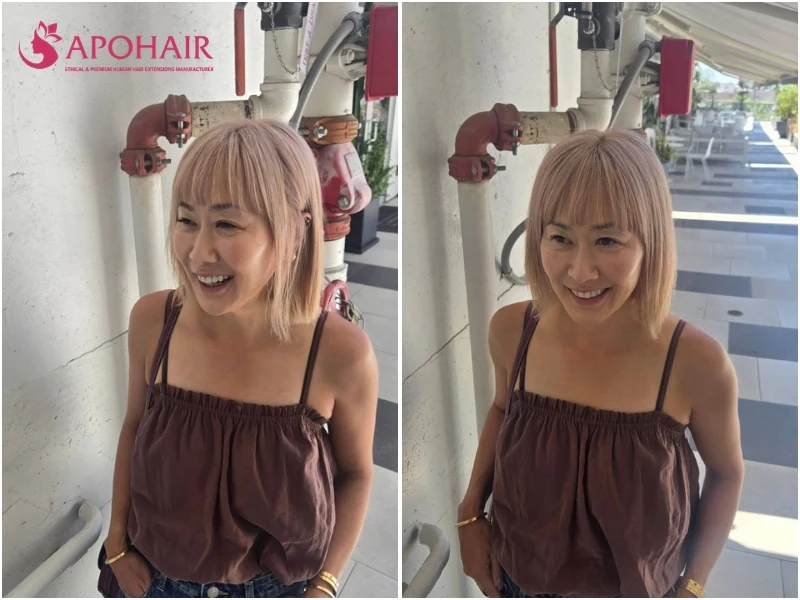
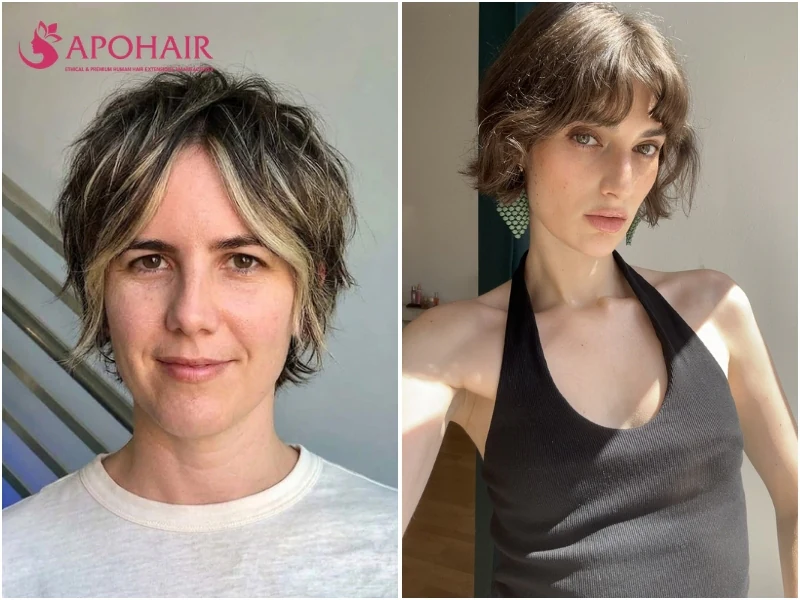



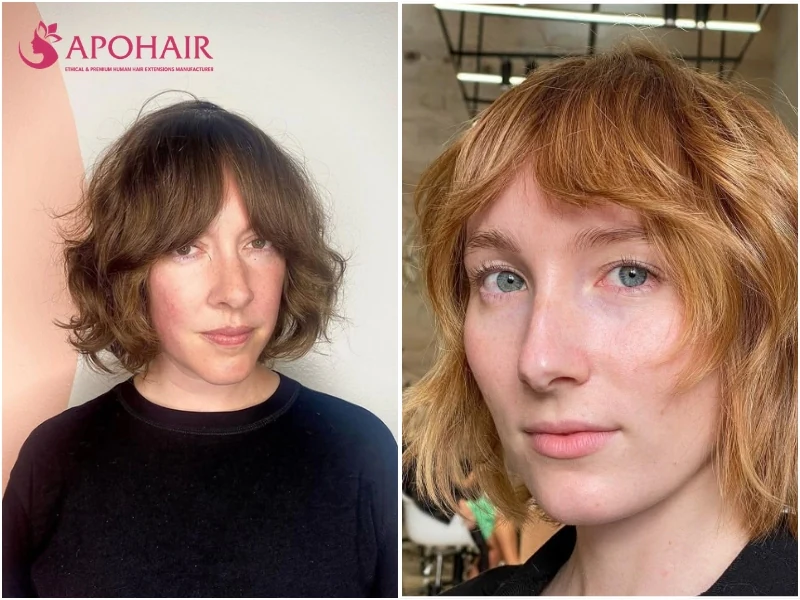
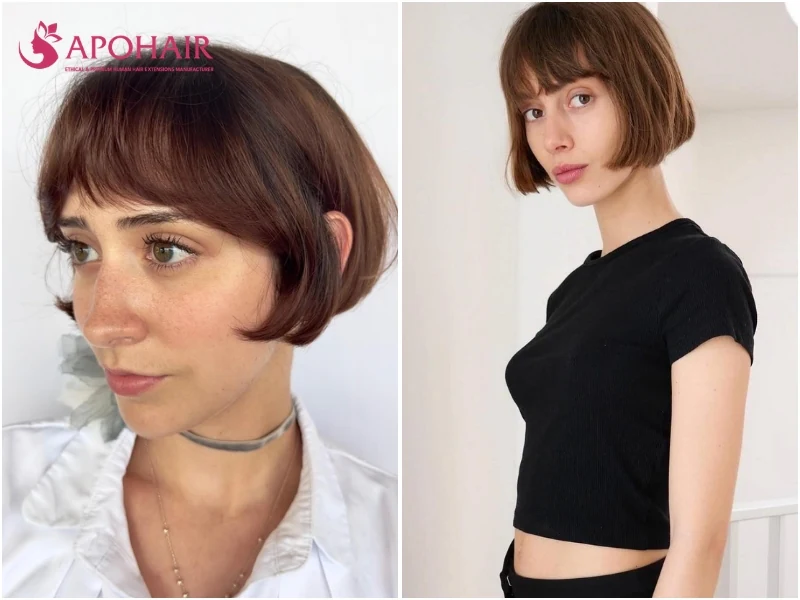
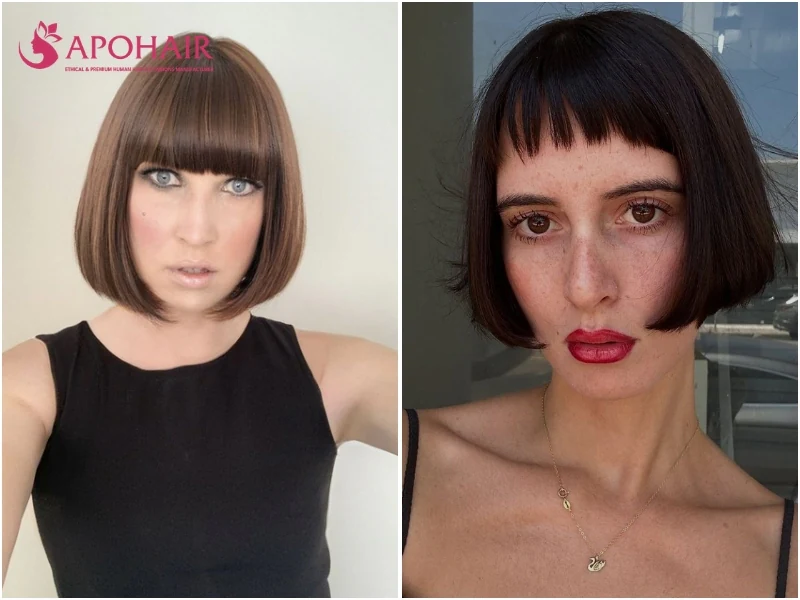

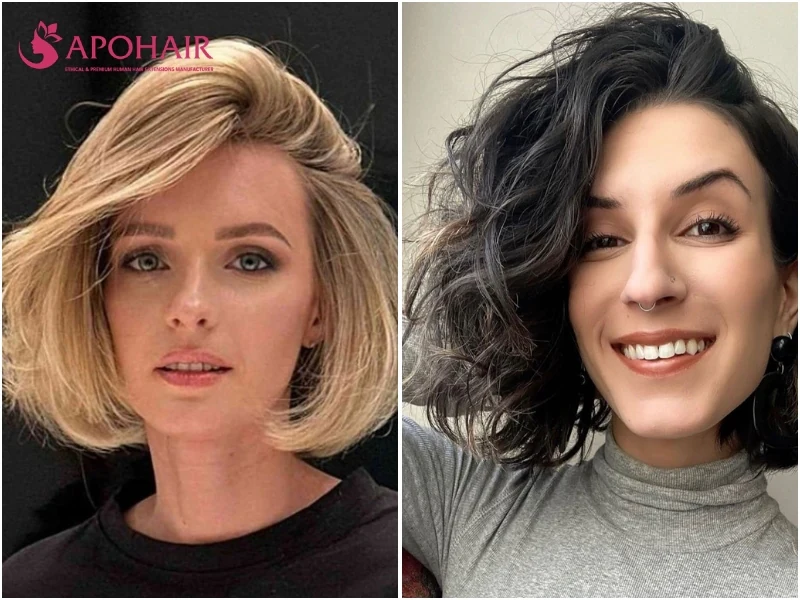

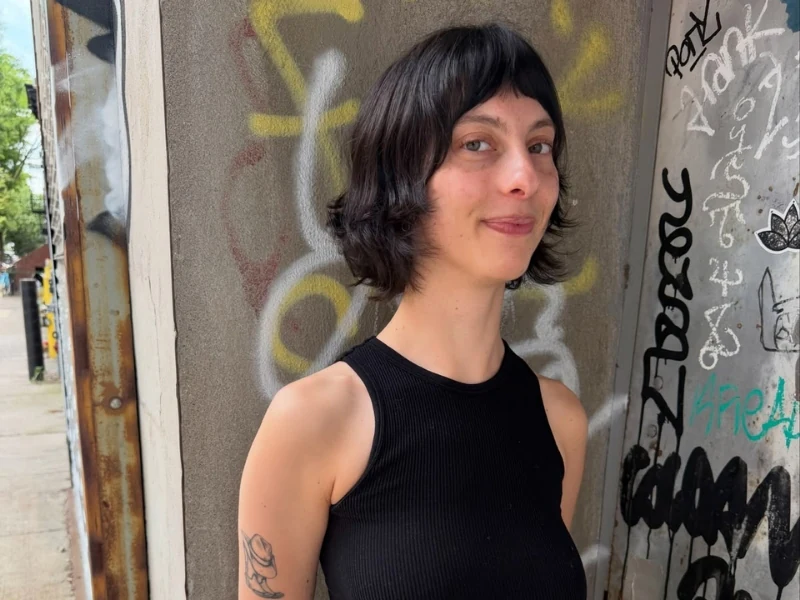
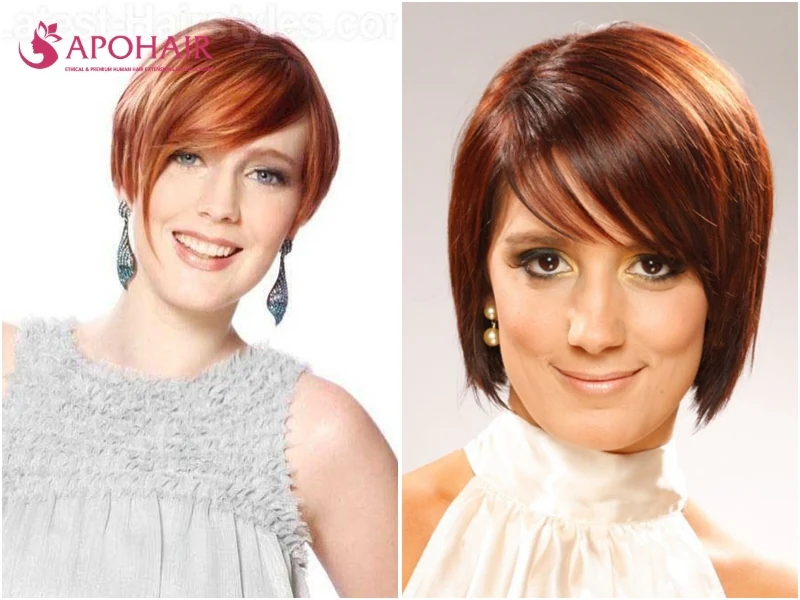

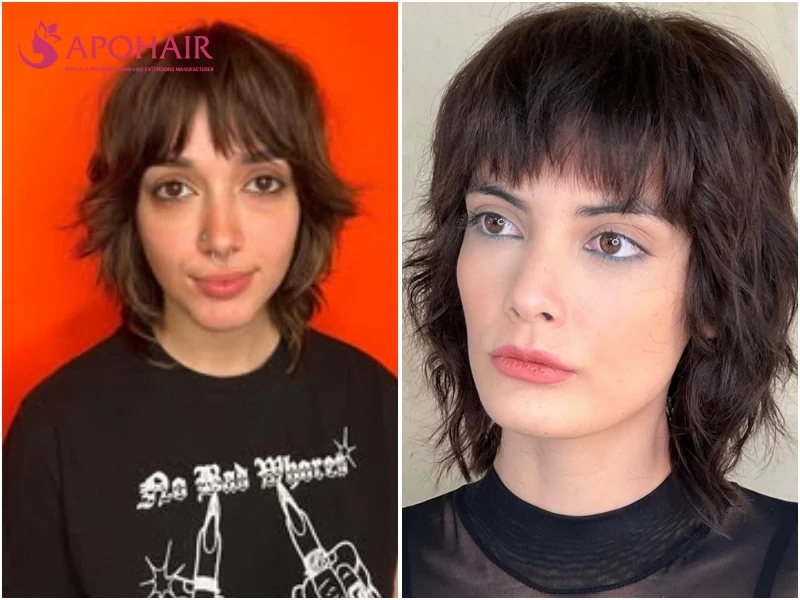
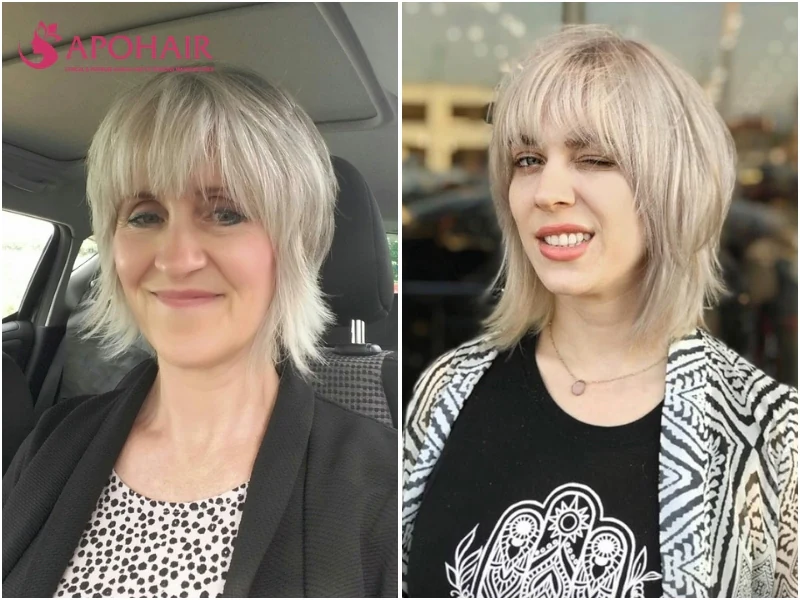
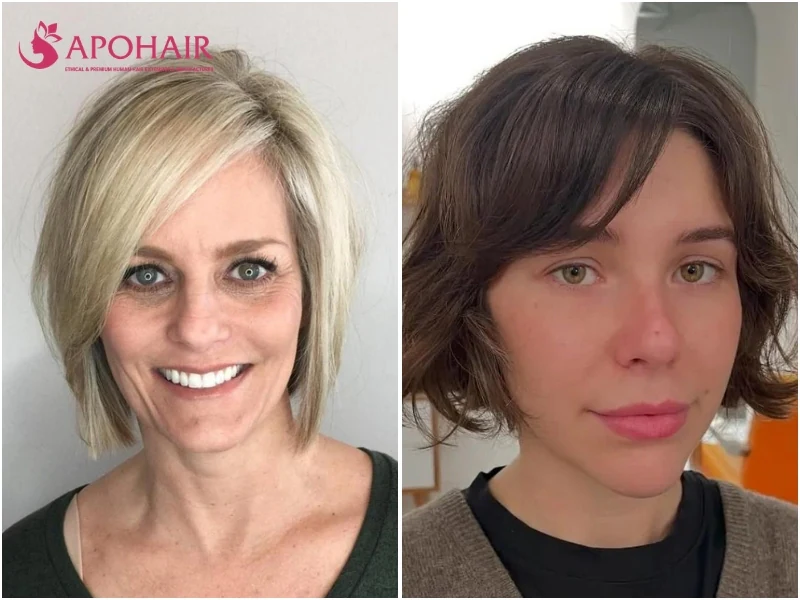
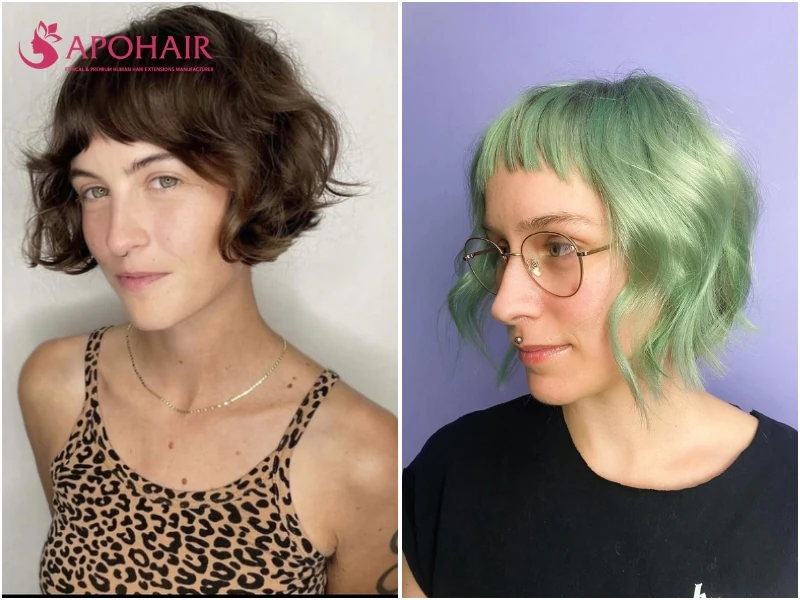
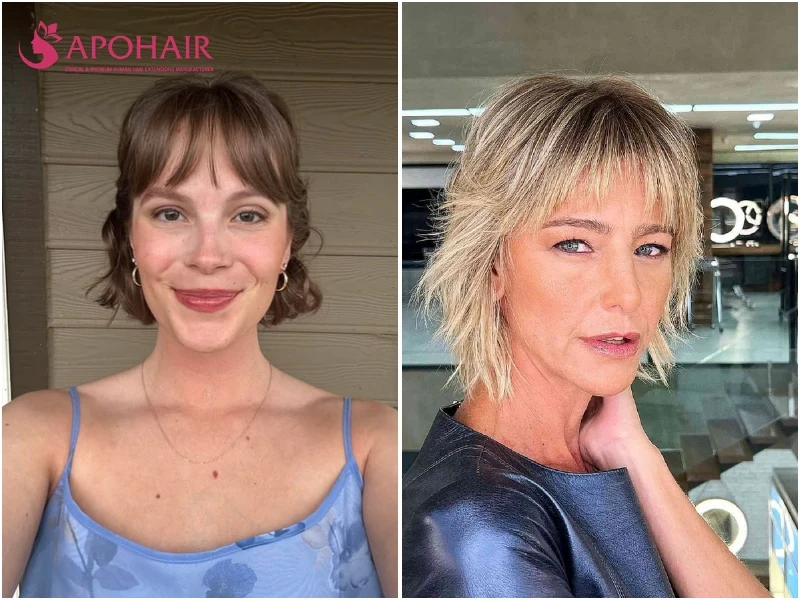
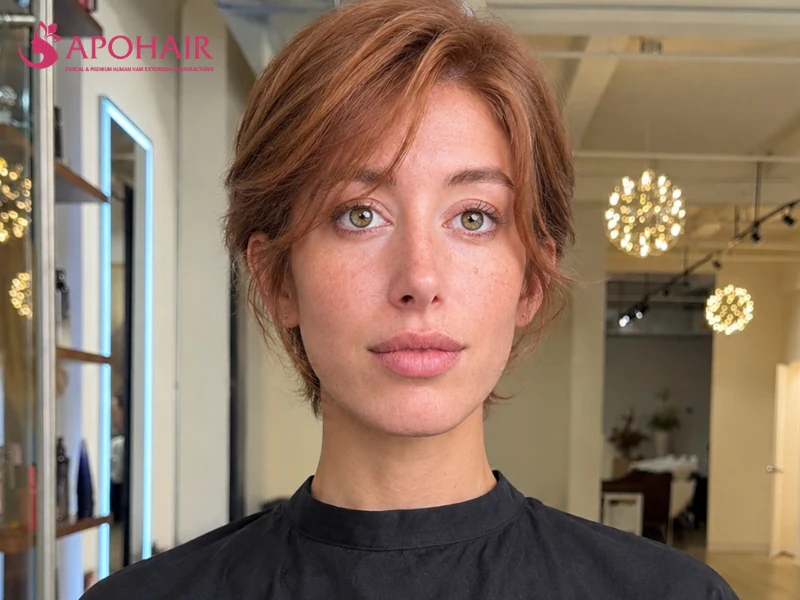
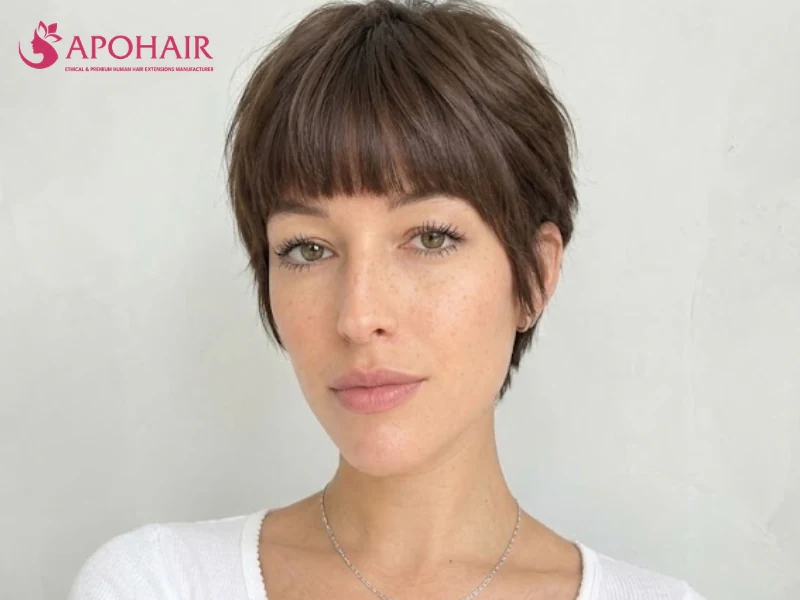
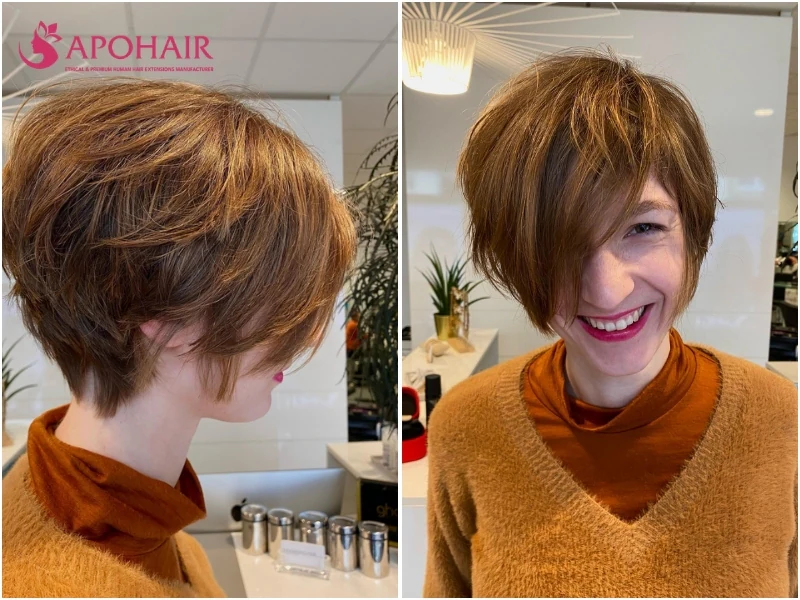
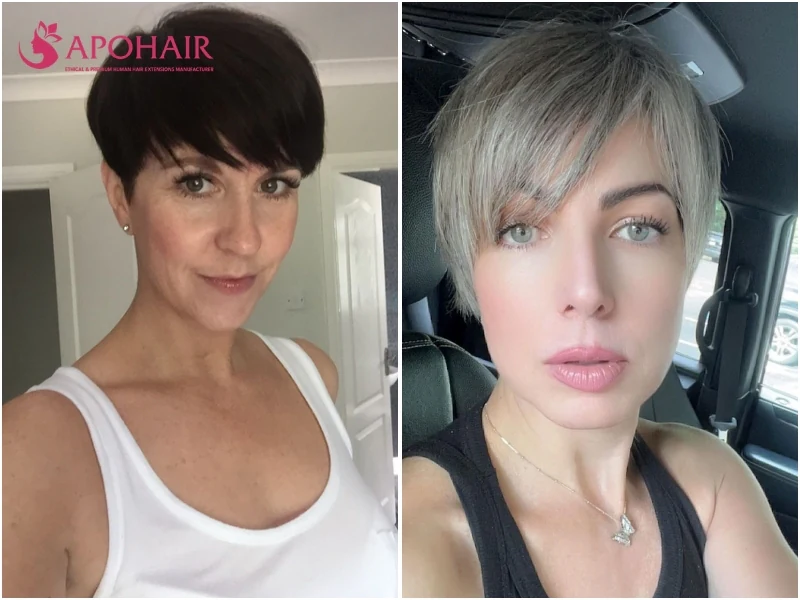
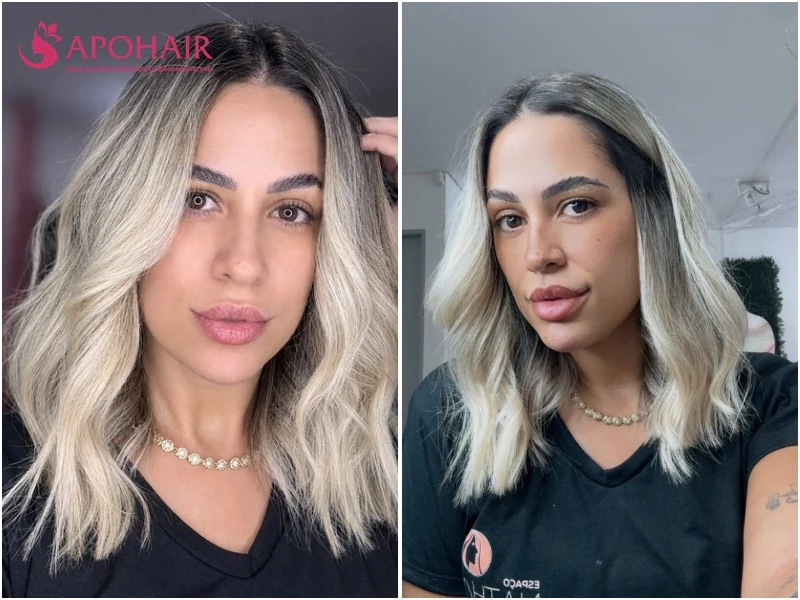
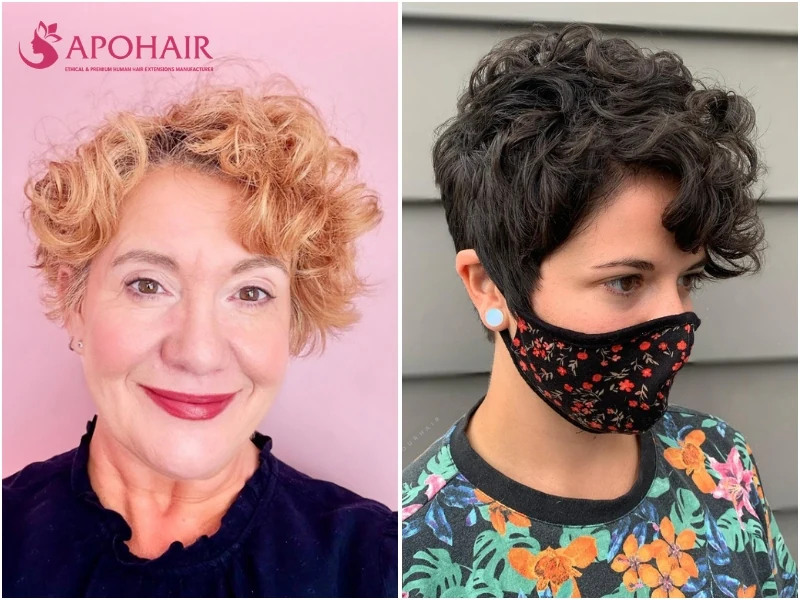
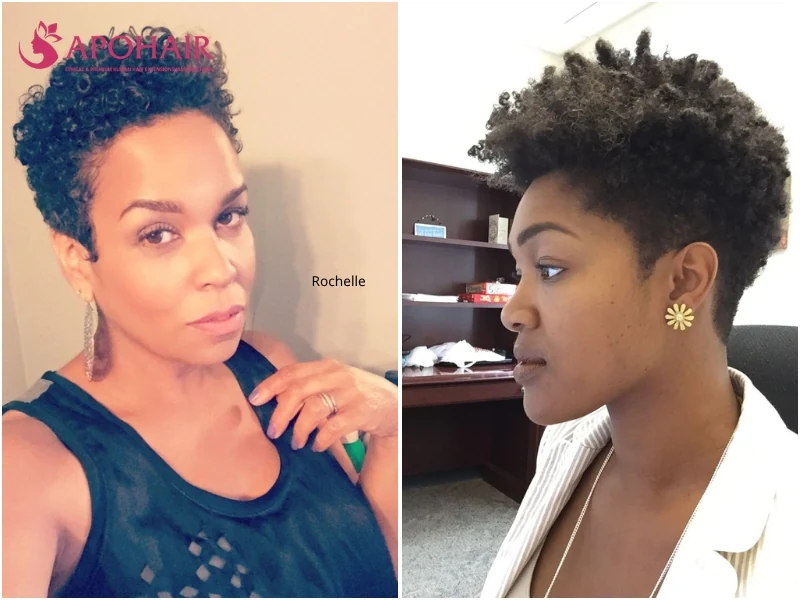
26 Short Hairstyles for Women with Long Faces
The chin-length blunt bob with a C-shaped bend and wispy fringe, the textured bixie, and the overgrown pixie with full sides do the most for women with a long face, each putting width in a different place. The rest follow the same principle, placing that width anywhere from the jaw up to the temples.
1. Chin-Length Blunt Bob With C-Shaped Bend And Wispy Fringe
A chin-length blunt bob with a C-shaped bend and wispy fringe ends in one level line at the chin, turns its last inch under, and adds a light fringe at the brow. On a woman’s long face, each part works on a different zone. The blunt line crosses the lower face and splits its length in two. The bend pushes fullness toward the jaw, while the fringe lowers the top edge of a tall forehead.
The line lands at the chin or just above it, since two inches lower the same cut starts adding length. Only the ends curve, so the perimeter still reads as straight from the front. The fringe needs more hair than its airy finish suggests. Point-cut to the brow from a section deep enough to cover the forehead evenly, it softens a tall forehead without leaving gaps. Fine hair suits the pairing, because a blunt edge makes thin ends look dense. The bob holds for 6 to 8 weeks, and the fringe needs a trim every 4 weeks. On a tall forehead, a sparse fringe is the failure mode, since separated strands read as short verticals and leave too much skin showing.
Why it works: The level line crosses the lower face and the wispy fringe lowers the top edge of the forehead, so a long face gains jaw width and loses visible length in the same cut.
2. Textured Bixie
A textured bixie blends a pixie and a bob into one short shape, with point-cut layers sitting around the cheekbones and ears. That placement is the reason it suits women with a long face. The fullest part of the cut sits exactly where a narrow face needs width, while the length stays well above the jaw.
Layering concentrates at the sides, and the short crown layers lie flat rather than stacking. A bixie stacked high at the top turns into a long-face mistake within one styling session, because the height undoes everything the sides were built to do. Wavy and loosely curly hair, Type 2A to 3A, show the texture best, since natural movement separates the pieces without product. Medium density carries the shape cleanly. Upkeep runs medium, with a reshape every 6 to 8 weeks.
Why it works: Right at the cheekbones is exactly where a long face needs width, and that’s where the fullest layers land, while the flat crown keeps the cut from adding extra height.
3. Overgrown Pixie With Full Sides
An overgrown pixie is a short cut left to grow past a classic crop, with the sides reaching the ear or just below while the top stays flat. On a long face, that extra length at the sides fills the temple-to-cheek zone that a tight pixie would leave bare. A woman’s face gets width without the cut gaining any height.
The discipline is leaving the sides alone while the top stays trimmed and flat. The instinct at every trim is to clean the sides back to a classic pixie, and that one decision removes the whole benefit. The top gets texture but no lift. Medium to thick density fills the sides without looking thin. Because the shape is built to be grown out, it asks less than any other pixie, with a tidy-up every 8 to 10 weeks.
Why it works: Filling the temple-to-cheek zone that a tight pixie would leave bare is what the extra length at the sides does here, adding width to a long face without the cut gaining any height.
4. Bob With Blunt Bangs
A bob with blunt bangs pairs a short, chin-to-jaw perimeter with a heavy, straight-across fringe. On a long face, the fringe takes inches off the visible length at the top, and the bob’s edge does the same at the bottom. Two horizontal lines frame the face into a shorter, wider box, which is exactly the proportion a long-faced woman lacks.
The fringe sits at the brow and needs enough weight to read as a solid line. Cutting it dry shows where the hairline pulls, since a cowlick at the front can split a blunt fringe within hours. Straight to slightly wavy hair holds the line best. Very curly hair shrinks too much for a precise blunt fringe. The bob length holds for 6 to 8 weeks, but the fringe needs a trim every 3 to 4 weeks.
Why it works: Two horizontal lines, one from the fringe and one from the bob’s edge, frame a long face into a shorter, wider box, the exact proportion it lacks on its own.
5. Bob With Curtain Bangs
A short bob with curtain bangs splits a center-parted fringe into two halves that curve out to the cheekbones, above a bob line at the chin or higher. For a woman with a long face, the two curves push the eye sideways and cover the top of a tall forehead. Unlike a flat center part, the curtain opens outward rather than falling in two straight panels.
Each side reaches its longest point at the cheekbone, where it merges with the front of the bob. A quick blow-dry with the ends turned outward sets the curve. Straight and slightly wavy hair keep that curve all day. It grows out gently and needs a trim about every 6 weeks.
Why it works: Alexa Chung’s face runs long, and the curtain’s two curves push the eye sideways while covering the top of her forehead, building exactly the cheekbone width that shape needs.
6. Jaw-Length Bob With Soft Curtain Bangs
A jaw-length bob with soft curtain bangs ends at the corner of the jaw and opens a short, center-parted fringe that sweeps out to the cheekbones. On a long face, the cut builds width at two heights. The curtain ends land on the cheekbones, and the perimeter lands at the jaw angle, where the lower face starts to taper.
Light graduation at the back pushes fullness outward at the jaw, while the front still reads as one clean line. The curtain is point-cut rather than blunt, so it bends outward after a single pass with a round brush. Straight to wavy hair at medium density keeps both lines crisp. The bob holds for 6 to 8 weeks, and the curtain needs a trim every 6 weeks to stay at the cheekbone. Left to grow to the jaw, the curtain merges with the perimeter into one long panel on each side, and a woman’s face reads longer than before the cut.
Why it works: Width builds at two heights here, the cheekbones and the jaw, which happen to be the two levels a long face most needs widened.
7. Classic French Bob With Eyebrow-Grazing Full Fringe
A classic French bob with an eyebrow-grazing full fringe ends between the cheekbone and the jaw and carries a dense fringe that just touches the brows. On a long face, an inward bevel tucks the ends toward the cheeks. The fullest point of the cut then sits level with the cheekbones, the zone a long-faced woman most needs to widen. Above it, the fringe covers the forehead down to the brow without drawing a hard line across it.
Cutting the fringe full and breaking it lightly at the edge lets it rest on the brow hairs instead of sitting above them. The finish stays undone, air-dried or rough-dried rather than polished. That keeps the short length from looking severe. Fine to medium hair suits it best; thick hair puffs out at this length unless the interior is thinned. The bob needs a recut every 5 to 6 weeks, and the fringe a trim every 3 to 4 weeks. A fringe left to drop past the brow turns heavy and hides the eyes, and the cut then reads as a helmet rather than a frame.
Why it works: Level with the cheekbones is where this bob’s fullest point sits, and the fringe covers the forehead to the brow above it, widening a long face at the top and the middle together.
8. C-Shaped Rounded Bob
A C-shaped bob is a short cut whose ends curve inward, so the outline forms a soft C from cheekbone to jaw. On a long face, that rounded outline builds a curve across the lower half, which makes a woman’s face read wider and softer in the middle.
An internal bevel at the perimeter pushes the ends under on their own. Straight hair holds the C shape best. Curly hair fights it. The failure mode is over-curling, which turns the shape into a helmet that sits on the head instead of framing the face. Upkeep is medium, with a recut every 6 to 8 weeks.
Why it works: That rounded outline builds a curve across the lower half of the face, which is what makes a long face read wider and softer through the middle.
9. Italian Bob
An Italian bob is a full, chin-length short cut with a heavy perimeter and soft, rounded movement through the lengths. Its volume sits out at the sides rather than on top, which is the distribution women with a long face need. The result reads generous and wide at exactly the level where a narrow face falls short.
A thick, blunt perimeter carries the weight, and soft internal layers let it move without collapsing. Medium to thick density is required, since the shape depends on volume the hair has to supply itself. Fine hair loses the fullness that defines the cut. Upkeep sits at medium, every 6 to 8 weeks.
Why it works: Volume sits out at the sides here rather than on top, giving a long face the generous width it otherwise falls short of at cheekbone level.
10. Volumized Short Bob With Deep Side Part
A volumized short bob with a deep side part ends between the earlobe and the chin, with lift at the sides and a part above the outer arch of one eyebrow. On a long face, the deep part sends a thick sweep of hair diagonally across the forehead. No straight center line runs down the face. The side volume then widens a woman’s head at cheekbone level.
Volume comes from a round brush worked under the sides at the roots, with the crown left flat. A part set closer to the center lets the sweep fall straight, where it reads as one more vertical. With no fringe cut, the swept length alone covers part of the forehead, which suits a forehead that is tall but not extreme. It works on most textures, and medium to thick density holds the lift longest. Upkeep is medium, every 6 to 8 weeks. Lift that migrates to the crown is the failure mode, because height on top adds the very length the side volume is there to offset.
Why it works: Because the part sits deep rather than center, the straight vertical of a center part turns into a diagonal sweep, and the side volume beneath it widens a long face at cheekbone level.
11. Cheek-Width Rounded Layered Bob
A cheek-width rounded layered bob is a short cut layered into a round outline whose widest point sits exactly level with the cheekbones. On a long face, the outline swells at mid-face and curves back in toward the chin and the crown. The eye then reads a circle instead of a column, a favorite trick for female faces on the longer side.
Curved layers follow a guide cut along the cheekbone line, so the maximum width lands at one height and the outline tapers above and below it. The width target is modest. The outline sits just outside the cheekbones, not far past them, or the shape tips into a triangle. Layers started higher add crown height and cancel the effect. Medium to thick hair carries the round shape, and fine hair works when the layering stays light. Upkeep is medium, every 8 weeks. Once the layers grow out, the widest point slips down to the jaw and the circle turns into a pear.
Why it works: Chloë Sevigny’s face runs long, and setting the bob’s widest point at the cheekbones turns that length into a circle instead of a column, the reversal a long face depends on.
12. Layered Short Cut With Cheekbone Layers
A layered short cut with cheekbone layers starts its shortest layers at the cheekbone. The fullest part of the whole cut then sits level with the widest point a long-faced woman can offer. The layering puts width where it belongs and nowhere else.
Where the layering begins is the entire technique. Layers that start at the crown build height; layers that start at the cheekbone build width, and on a long face those two outcomes sit at opposite ends. Wavy hair, Type 2A to 2C, shows the layers without heat styling. Thick hair suits it well. Upkeep is low to medium, around every 8 weeks.
Why it works: Starting the shortest layers at the cheekbone instead of the crown builds width instead of height, putting the cut’s fullest part level with the widest point a long face can offer.
13. Graduated Bob With Cheekbone Volume & Side-Swept Fringe
A graduated bob with cheekbone volume and a side-swept fringe stacks weight low at the nape, carries it forward into full sides at the cheekbones, and sweeps a fringe diagonally from a side part. On a long face, the fringe and the side volume join into one arc from the brow out across the cheekbone. The arc cuts across the forehead first, then widens a woman’s face at mid-height.
Graduation stays low. Stacked high, it turns into crown height, the most common way a short cut makes a long face longer. The front pieces stay long enough to reach the cheekbone, and the fringe sweeps into them rather than stopping short. Fine and medium hair benefit most, since graduation creates the look of density, while thick hair needs weight taken out of the nape first. Upkeep is high, every 6 weeks, because graduation loses its shape fast. A fringe that stops short of the side volume leaves a gap at the temple, and the arc breaks back into separate vertical pieces.
Why it works: Fringe and side volume join into a single arc across the forehead and cheekbone, and because graduation stays low, away from the crown, the width lands at mid-height on a long face instead of up top.
14. Textured Choppy Bob
A textured choppy bob is a short cut with point-cut, uneven ends that flick outward instead of hanging straight. On a long face, those broken ends push the outline sideways and interrupt the vertical fall a sleek bob would draw down a woman’s features.
Point-cutting or slide-cutting through the ends creates the separation. Straight hair benefits most, since the texture fakes the movement it cannot make on its own. Curly hair already has that movement and gains little. The choppy finish grows out without a visible line, so upkeep is low to medium, around every 8 to 10 weeks.
Why it works: Broken ends push the outline sideways instead of down, interrupting the vertical fall a sleek bob would otherwise draw the length of a long face.
15. Short Shag With a Heavy Fringe
A short shag with a heavy fringe layers from the cheekbone down and adds a full fringe across the forehead. The two parts split the job for women with a long face: the fringe shortens the forehead, and the shag’s widest layers sit right at the cheekbones.
The fringe stays heavy rather than wispy, since a light fringe shows too much forehead to shorten it. Shag layering starts at the cheekbone and avoids the crown. Wavy hair, Type 2B to 3A, gets the most from the shape. Thick density gives the best result. The fringe needs a trim every 4 weeks, while the shag itself holds for 10 weeks.
Why it works: One job goes to the fringe, shortening the forehead, and the other to the shag’s widest layers, sitting right at the cheekbones, splitting exactly what a long face needs done.
16. Horizontally-Expanded Wolf Bob With Shaggy Bangs
A horizontally-expanded wolf bob with shaggy bangs keeps the wolf cut’s choppy layering but moves its volume to the sides, then blends a piece-y fringe into those side layers. On a long face, the choppy width sits between the temples and the jaw, while the crown stays heavy and flat. The shaggy bangs break up the forehead and lead straight into the sides.
The standard wolf cut carries its volume at the crown, which adds length and works directly against a woman’s long face. In this version, the shortest layers sit at ear level, and the top stays long so the crown has nothing to lift it. The bangs are cut in a shallow arc, shortest at the center and longer toward the temples, so they merge with the side layers. Medium to thick hair across most textures carries it. Scrunching the sides while they dry pushes the width further. Upkeep is low to medium, every 8 to 10 weeks. Fine hair is where it fails, because thin layers lose the contrast between full and wispy and the width never builds.
Why it works: Since the volume moves from the crown to the sides here, width lands between the temples and jaw on a long face instead of adding height on top.
17. Bob With Side-Swept Bangs
A short bob with side-swept bangs starts from a part set well off center and lets a long fringe fall diagonally over the upper forehead toward one cheekbone. For a woman with a long face, the slant hides part of a tall forehead and interrupts the face’s length at the top, doing a fringe’s job without a blunt fringe’s weight. The short bob underneath keeps the lower line high.
The fringe starts short at the part and lengthens toward the cheekbone, which lets it lie across the forehead instead of dropping straight. Checking the angle on dry hair shows where it really falls. Most textures take it well, and curly hair takes a longer fringe to allow for shrinkage. A trim roughly once a month keeps the tip off the lashes.
Why it works: Hiding part of a tall forehead and interrupting the face’s length at the top, without a blunt fringe’s added weight, is what that diagonal slant does.
18. Messy Shaggy Bob With Face-Framing Micro Bangs
A messy shaggy bob with face-framing micro bangs pairs a very short fringe above the brow with framing pieces that curve out at the cheekbones, all on a tousled, layered bob. On a long face, the two parts divide the work. The micro fringe lowers the visible hairline and shortens the forehead. The framing pieces supply the width that a fringe cut this high cannot give on its own.
The framing pieces are what make micro bangs viable on a woman’s long face. On its own, a micro fringe sits too high on the face to widen it, so the pieces start at the cheekbone and flick outward. The shag layering stays at the sides and keeps the crown flat. The fringe suits a moderately tall forehead, while a very high forehead gets more from a full fringe that reaches the brow. Wavy hair, Type 2A to 2C, holds the messy finish without heat, and a front hairline free of strong cowlicks matters at this length. Micro bangs lose their shape fastest of any fringe, so a trim lands every 2 to 3 weeks. Dropping the framing pieces is the failure mode, since the micro fringe then leaves the face as long and narrow as before.
Why it works: Shortening the visible forehead is the micro fringe’s job, while the framing pieces underneath supply the cheekbone width the fringe alone cannot give a long face.
19. Bob With Wispy Fringe
A short bob with a wispy fringe puts a few airy strands over the brows and keeps the bob line at the chin or higher. On a long face, the strands take a little height off the forehead, and the high bob line shortens a woman’s face from below. It suits a forehead that runs a little tall, where a full fringe would feel heavy.
Point-cutting a small wedge at the front hairline keeps the fringe sparse, and the rest of the top stays full. Fine and medium hair carry it, since the fringe borrows very little from the perimeter. The strands thicken within about 4 weeks, when they need thinning to stay airy.
Why it works: A little height comes off the forehead from the wispy strands, and the high bob line shortens a long face from below, all without a full fringe’s heaviness.
20. Flat-Top Long Pixie With Ear-Volume Wisps
A flat-top long pixie with ear-volume wisps keeps a long top that lies flat and falls forward, and leaves soft wisps around the ears that flick outward. On a long face, the flat top holds the height down, and the wisps add width at ear level, across the middle of a woman’s face. The top length also covers part of a tall forehead without any fringe being cut.
Cutting the top to fall forward and drying it flat with the fingers keeps the crown down. Around the ears, the hair stays long and is point-cut into separate wisps, which a little texture paste pushes outward. It suits most textures, with Type 1B to 2B showing the forward fall most cleanly. Upkeep is medium, with a recut about every 6 weeks. Lift at the roots is the failure mode, since a top styled up and back adds exactly the height a long face should avoid.
Why it works: Holding height down at the crown falls to the flat top, and adding width across the middle of a long face falls to the ear-level wisps, doing both jobs without cutting a fringe.
21. Pixie With a Full Blunt Fringe
A pixie with a full blunt fringe keeps the back and sides short while a heavy fringe covers the forehead. On a long face, the fringe is the most effective shortener a pixie can offer women, since it drops the visible top edge of the face to the brow.
The sides stay fuller than in a classic pixie, so the head does not look narrow beneath the fringe. The fringe is cut heavy and level with the brow. Straight and slightly wavy hair hold it best. The pixie holds for 5 to 6 weeks, while the fringe needs attention every 3 to 4 weeks.
Why it works: Dropping the visible top edge of the face to the brow is what this fringe does, and that makes it the most effective shortener a pixie can carry on a long face.
22. Side-Swept Pixie With Wide Sides
A side-swept pixie with wide sides sweeps the top across the forehead and leaves the sides longer than a standard pixie. On a woman’s long face, the sweep adds a diagonal across the forehead and the sides keep width at the temples, so the short cut gains breadth without height.
The top is cut long enough to sweep, and the sides are left at ear length rather than tapered close. A tight taper at the sides is the one change that ruins it. Medium density holds the sweep in place. Upkeep is medium, with a recut every 5 to 6 weeks.
Why it works: Width comes from two places at once: the diagonal sweep across the forehead and the untapered sides at the temples, so the cut gains breadth without adding height.
23. Textured Bowl Pixie With Rounded Side-Fringe
A textured bowl pixie with a rounded side-fringe is a short, rounded cut whose fringe curves down at the temples and runs into the sides at ear level. On a long face, that one curved line wraps the head from brow to ear. It adds width to the upper face and closes off a tall forehead in a single stroke. It is one of the few cuts where a long-faced woman holds the advantage.
The fringe runs level across the center and a little longer at the temples, so it bends around the corners of the forehead instead of stopping at them. Point-cutting through the edge keeps the line soft, which stops the bowl from reading severe. Thick, straight hair holds the shape best, and fine hair can look sparse through the rounded top. The line needs to stay crisp to work, so upkeep is medium to high, every 4 to 6 weeks. A fringe cut square at the temples breaks the curve into corners, and the rounded width the cut depends on disappears.
Why it works: Wrapping the head from brow to ear in a single curved line adds width to the upper face and closes off a tall forehead in one stroke.
24. Textured Lob With Blunt Ends
A textured lob with blunt ends is the longest length still counted as short, stopping at the collarbone. On a long face, a lob sits at the edge of what works for women, since any vertical length risks stretching the face. Blunt ends and texture through the mid-lengths keep it on the right side of that edge by holding weight low and wide.
It stops at the collarbone and never goes longer. Light layers start at the cheekbone and texture the mid-lengths, pushing width out at jaw level; the ends stay blunt so the length looks full rather than stringy. Medium to thick density suits it. Upkeep is low, around every 10 weeks.
Why it works: Weight stays low and wide thanks to the blunt ends and texture through the mid-lengths, which is why this longest of the short lengths still lands on the right side of a long face’s limit.
25. Curly Bixie With a Long Side-Swept Fringe
A curly bixie with a long side-swept fringe is a short cut that uses natural curl to build width at the sides of a long, female face. Curly hair expands outward on its own, so the volume lands at the cheekbones without any styling. The long fringe covers the forehead and adds a diagonal on top.
The shape is cut dry, curl by curl, because wet curls stretch and the cut lands uneven once they spring back. The fringe needs extra length to allow for that spring. Type 3A to 3C curls suit it best. Day-to-day upkeep is low, with a reshape every 8 weeks.
Why it works: Because curly hair builds its own volume at the cheekbones, a long face gets side width without any styling beyond the cut itself.
26. Tapered Natural Cut With Temple Width
A tapered natural cut with temple width is a short cut for coily hair, tapered at the nape but left full at the temples and sides. On a long face, the fullness at the temples adds the width a woman’s face lacks, while the taper keeps the back neat.
The shape stays rounded rather than tall. Many tapered cuts are shaped high on top, and on a long face that height is the failure mode. Type 4A to 4C hair holds the rounded shape without product. The taper at the nape needs a refresh every 3 to 4 weeks.
Why it works: The width a long face lacks comes from the fullness kept at the temples, and the neat taper at the back keeps the overall shape rounded rather than tall.
All 26 share one principle: width at the sides, weight kept off the crown. Which version fits comes down to the hair itself.
How to Choose a Short Hairstyle for Women with a Long Face?
Four decisions separate one short cut from another for women with a long face: forehead coverage, where the width belongs, how the hair moves, and how much of it there is. The face shape has already set the goal, so these four decide which cut reaches it.
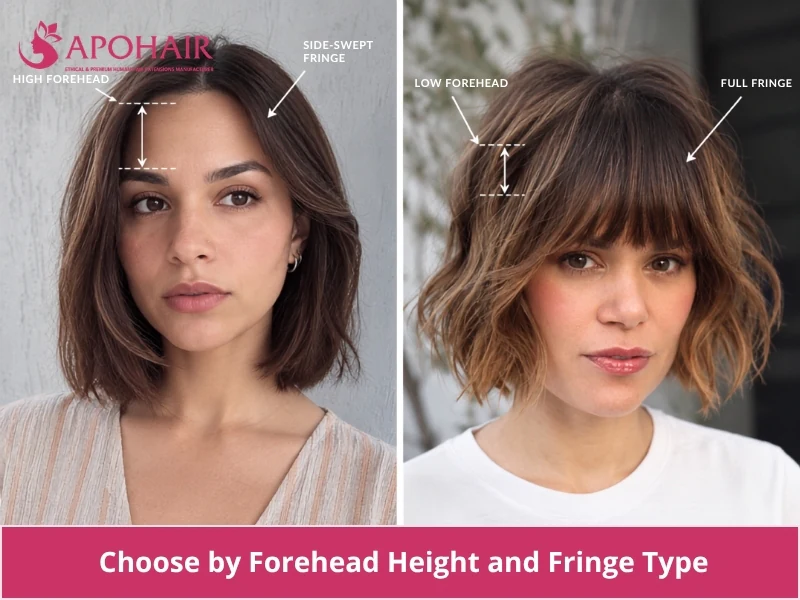
Choose by Forehead Height and Fringe Type
A tall forehead is often what makes a woman’s long face read long, and a fringe is the fastest way to reduce it. A blunt fringe does the most, covering the forehead to the brow. Curtain and side-swept fringes cover less but add width through their sweep. Micro bangs suit a moderately tall forehead, not a very high one, and they need framing pieces at the cheekbones to supply the width. Where the forehead is average or only slightly tall, a wispy fringe or no fringe at all keeps the look lighter.
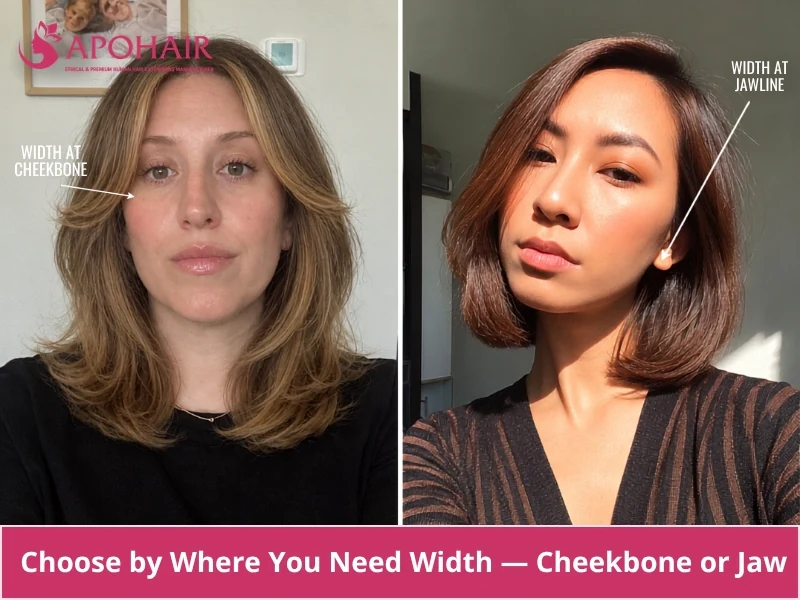
Choose by Where a Woman Needs Width: Cheekbone or Jaw
Some long faces narrow most at the cheekbones, others at the jaw. A narrow cheekbone area calls for a bixie, cheekbone layers, or a classic French bob, all of which place their fullest point level with the cheeks. A narrow jaw calls for a chin-length or jaw-length bob, where the perimeter supplies the width. Checking which zone looks narrower in a straight-on photo settles the choice faster than a mirror does.
Choose by Hair Texture
Wavy and curly hair add width on their own, which gives women with this face shape an advantage. Type 2A to 3C textures suit shags, bixies, and layered bobs, since movement pushes the outline outward. Straight hair, Type 1A to 1B, needs the cut to supply width through a blunt perimeter or a rounded C shape. Coily hair, Type 4A to 4C, holds a rounded shape without product, as long as the top stays low.

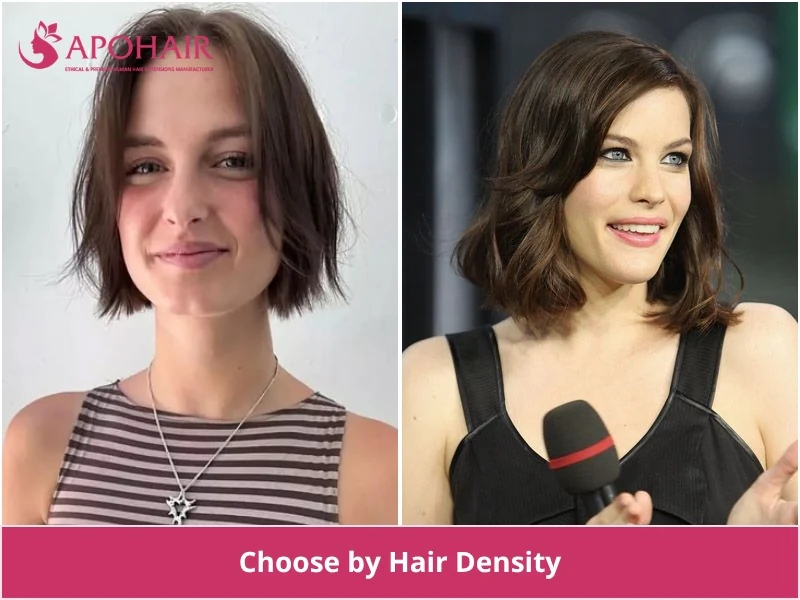
Choose by Hair Density
Fine hair looks fuller with blunt ends, so a chin-length blunt bob outperforms a heavily layered shag on fine-haired women. Thick hair needs weight removed from the interior, or a bob spreads into a triangle below the jaw. Where density is low at the sides, a few clip-in wefts placed at the temples restore the width a textured bixie depends on. They come out at the end of the day.
Which Short Hairstyles Should Women With a Long Face Avoid?
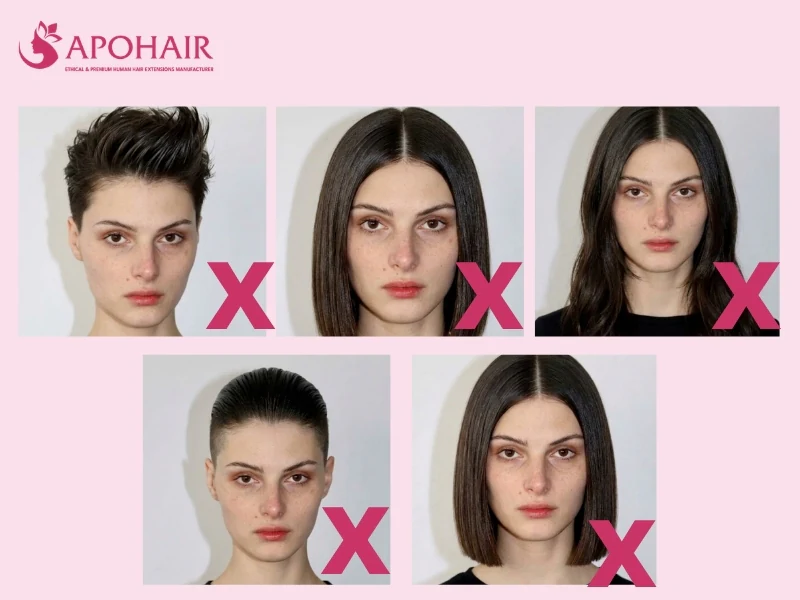
The short hairstyles women with a long face should avoid are the ones that add height at the crown, pull the sides flat, or leave a tall forehead fully exposed. Any one of those stretches the face further in the direction it already runs. Each failure comes down to length being added where width is missing:
- A spiked or quiffed crop. Lifting the top adds inches to the face at the one point where it is already longest, which is the quickest way to make a long face look longer.
- A sleek straight bob with a center part. A flat center part draws two parallel verticals down each side of the face, and a smooth finish adds nothing sideways to offset them.
- Long face-framing pieces with no fringe. Pieces that fall straight down beside the face add vertical lines, while the bare forehead keeps its full height on show.
- An undercut with tight cropped sides. Removing hair at the temples takes away the side width a short cut depends on, leaving the crown as the widest point.
- A one-length collarbone lob with no layers. A heavy, straight lob hangs as a single vertical sheet, and at collarbone length it adds length rather than breaking it.
Frequently Asked Questions
Does Short Hair Suit Women With a Long Face?
Short hair suits women with a long face well, as long as the cut adds width rather than height. A chin-length bob, a textured bixie, or a pixie with full sides draws the horizontal lines a long face needs. Short cuts fail when they stack volume on the crown or leave the sides flat, since both stretch the face further.
Should Women With a Long Face Get Bangs?
Bangs are one of the most useful additions for women with a long face, because a fringe shortens the visible length at the top. A blunt fringe covers the most forehead, while curtain and side-swept fringes add width through their sweep. The only fringe that does little is a very short micro fringe on a very high forehead, since too much remains exposed.
Is a Pixie Cut Good for a Woman With a Long Face?
A pixie cut works on a long face when the top stays flat and the sides stay full. A flat-top long pixie, an overgrown pixie, or a pixie with a full fringe all keep height off the crown. The pixies women with this face shape should skip are the ones styled up at the top or tapered tight at the sides, since both add length.
What Short Hairstyle Suits Women With a Long Face Over 50?
A chin-length bob with curtain bangs or a cheek-width rounded layered bob tends to serve women best after 50. Both add width with minimal daily styling, and the fringe softens a forehead that can read taller as the hairline shifts. Hair often thins at the temples with age, so cuts that keep fullness at the sides matter more, not less.
Can a Woman With a Long Face Wear Short Curly Hair?
Short curly hair suits women with a long face particularly well, since curls expand outward and add width without any styling. A curly bixie with a long side-swept fringe keeps the volume at the sides. The one adjustment is keeping the crown from building height, which curly hair does naturally when the top is left longest.
What Is a Bixie and Why Does It Suit Women With a Long Face?
A bixie is a short cut that blends a pixie and a bob, with a short, pixie-length top and bob length at the sides. It suits women with this face shape because its fullest point sits around the cheekbones and ears, the zone where a narrow face needs width. The length stays well above the jaw, so it never adds vertical.
What Short Cut Works for a Woman With a Long Face and a Big Nose?
A chin-length bob with a fringe works well, because it spreads visual weight across the face rather than drawing a vertical line down the center. Curtain bangs or a side-swept fringe keep the focus moving sideways. Cuts that pull everything back and away from the face leave the nose as the main focal point, so a framed style is the better choice for these women.
Final Thought!
The whole decision for a woman with a long face comes down to direction. A short cut either adds width at the cheekbones and jaw, or it adds length, and the ones that fail are the ones that add length. Horizontal perimeters, fringes that cover a tall forehead, and fullness held at the sides are what separate the cuts that flatter a long face from the ones that stretch it. Proportions set the goal, and density and texture narrow the 26 down to the one that works.
If you run a salon or source hair for a shop and need texture-matched wefts, bulk hair, or clip-in sets to add width at the sides of a long face, our team can send samples and factory-direct pricing. We manufacture 100% Vietnamese Human Hair in our own facility, so you can match density and texture to the client in front of you rather than working with whatever a middleman had in stock.
APOHAIR — ETHICAL & PREMIUM HUMAN HAIR EXTENSIONS AND WIGS MANUFACTURER
- Address: Building 3A, Lane 82 Duy Tan, Cau Giay, Hanoi, Vietnam
- Factory: Minh Luong, Yen Luong Ward, Ninh Binh, Vietnam
- WhatsApp: +84 862 132 366
- Email: [email protected]
- Website: https://apohair.com
