








Top 20 Pixie Cuts for Women With Long Faces: Long Pixies, Fringes, Wide Sides & Soft Layers
The best pixie cuts for long faces are the long pixie, the pixie with a full blunt fringe, and the overgrown pixie with full sides. All three keep the crown flat and the sides full. A pixie has no perimeter line to shorten a long face the way a bob does.
It relies on two other levers instead: Weight held at the sides and a fringe across the forehead. Four decisions then separate one pixie from another: crown height, fringe type, texture and density, and the length of the neck. Pixies fail when they lift the crown, crop the sides tight, or pull every hair off the forehead.
A long face runs noticeably longer than it is wide, and women choosing a pixie feel that proportion more than with any other length, because nothing below the ears interrupts it. That exposure is also the pixie’s advantage. With so little length to manage, every decision about the top, the sides, and the fringe shows immediately.
Twenty pixie cuts make those decisions in a long face’s favor, from long, forward-falling shapes to coily tapers with fullness at the temples.
Best Pixie Cuts for Long Faces
The long pixie, the pixie with a full blunt fringe, and the overgrown pixie with full sides do the most for a long face, each by keeping the crown flat and the sides full. The rest adjust that same balance, trading a little fringe for texture or a little side length for a cleaner nape.
1. Long Pixie
A long pixie leaves the top several inches long and lets that length fall forward across the forehead. On a long face, the direction of the top decides the result more than its length. Falling forward, the long top becomes a fringe that shortens the face, while the sides keep enough length to soften the temples.
Direction comes from the cut, not from product. The top is cut with a forward lean so it wants to fall toward the brow, which keeps it from standing up on its own. Root lift is what turns a flattering long pixie into a long-face mistake for women trying to soften the shape. Type 1B to 2B hair falls forward most naturally, and the shape needs recutting roughly every 6 weeks.
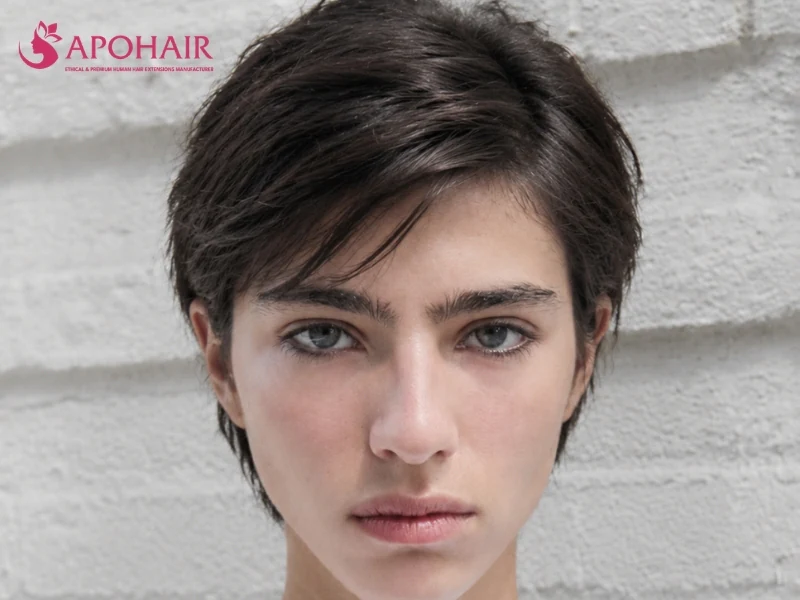
Why it works: The forward-falling top acts as a fringe that shortens a long face, while the sides keep enough length to soften the temples without adding any height at the crown.
2. Long Pixie Bob (Bixie)
A long pixie bob, often called a bixie, keeps pixie layering at the crown but lets the sides grow toward bob length. On a long face, it sits at the top of the pixie range and gives the most side coverage of any pixie. The extra length at the sides adds width from the temples down to the ears.
The crown layers stay short enough to lie flat, while the sides are left long and full rather than tapered. Cutting the sides back too far turns it into an ordinary pixie and loses the width. Medium density fills the longer sides without looking stringy. The bixie grows out gracefully, needing a reshape every 8 weeks or so.
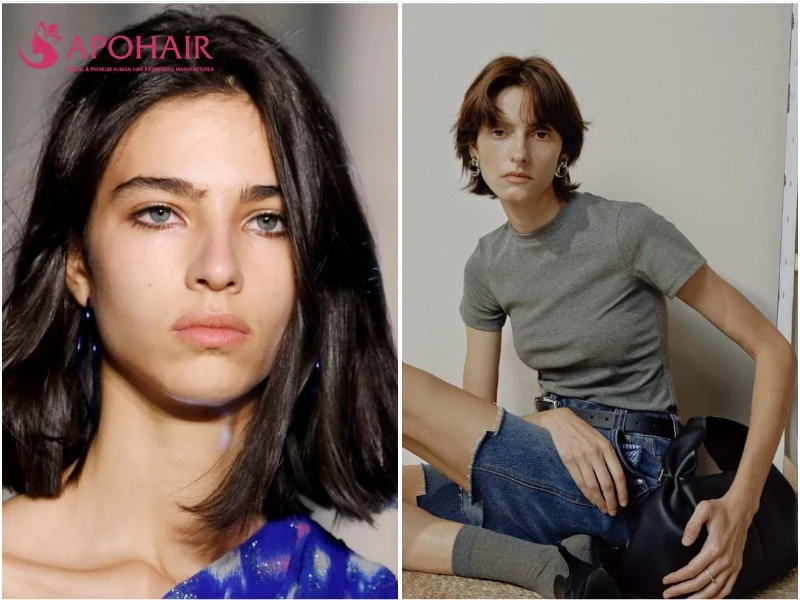
Why it works: The bixie sits at the top of the pixie range for side coverage, so the extra length at the sides adds width from the temples down to the ears on a long face.
3. Pixie With a Full Blunt Fringe
A pixie with a full blunt fringe cuts everything short except the front, where a heavy fringe drops all the way to the brow. For a long face, that fringe is the strongest shortener a pixie has, because it hides the full height of the forehead. It also hands the pixie something a crop normally lacks: one clear horizontal line.
The fringe needs genuine weight, which means a deep section cut straight across at brow height. Around it, the side sections stay a little longer than a classic pixie allows, which keeps the head from looking pinched under so much fringe. Straight to slightly wavy hair lies flattest on most women. The short sections want a tidy-up every 5 to 6 weeks, and the fringe every 3 to 4 weeks.
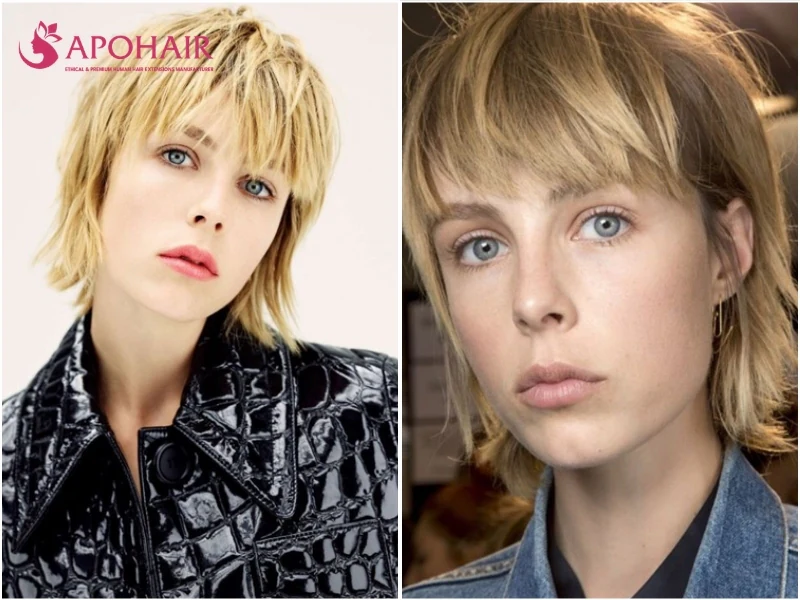
Why it works: The heavy fringe hides the full height of the forehead, giving the pixie the one clear horizontal line a crop normally lacks to shorten a long face.
4. Pixie With a Long Sweeping Fringe
A pixie with a long sweeping fringe grows the front section past the brow and sweeps it diagonally toward one cheekbone. On a long face, the sweep covers most of the forehead and replaces a vertical face with a diagonal one. It is the softest way for a pixie to shorten a long face.
The fringe is left long enough to reach the cheekbone when swept, with its shortest point over the parting side. That graduated length is what lets it lie across rather than hang down. Fine to medium hair sweeps most easily. The fringe grows into the eyes within a few weeks, so it needs attention every 4 weeks.
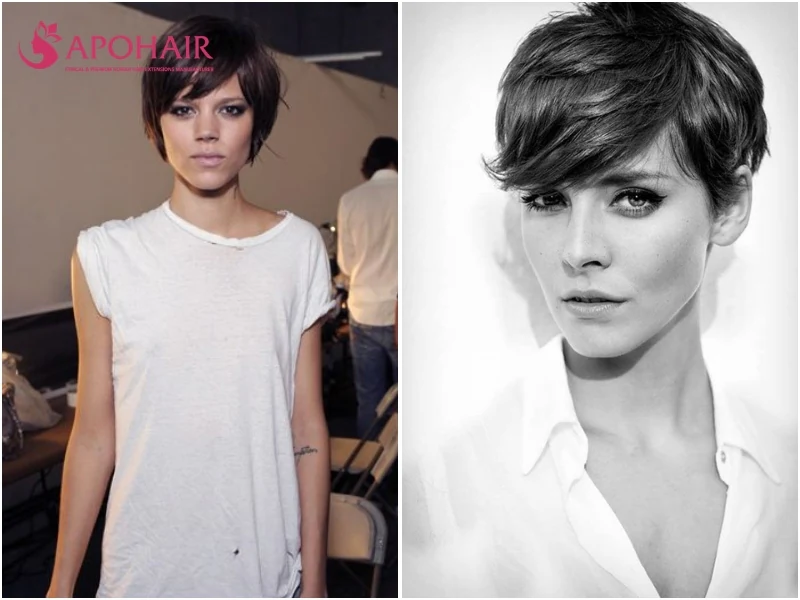
Why it works: The sweep covers most of the forehead and replaces a vertical face with a diagonal one, the softest way a pixie can shorten a long face.
5. Pixie With Curtain Bangs
A pixie with curtain bangs parts the fringe at the center and lets each half sweep outward toward the temples. On a long face, the two sweeps add width at the top of the face while still covering part of a tall forehead. The pixie gains breadth in the one zone where it usually has the least.
The fringe needs enough length for each side to reach the temple, which means leaving the front longer than on a standard pixie. Cut too short, curtain bangs on a pixie stick straight out instead of sweeping. Type 1B to 2B hair holds the direction best. A trim every 5 weeks keeps both halves even.
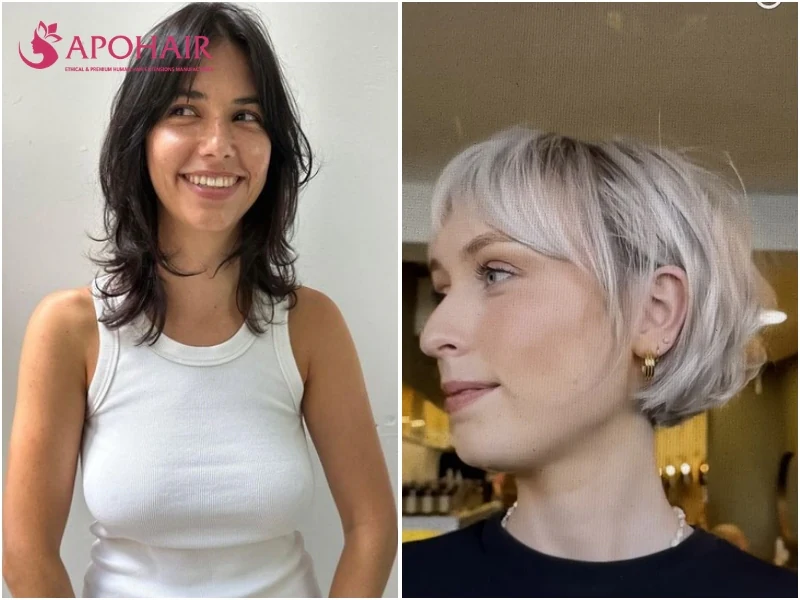
Why it works: The two sweeps add width at the top of the face while still covering part of a tall forehead, gaining breadth in the zone a pixie usually lacks it most.
6. Pixie With Micro Bangs
A pixie with micro bangs pairs a short cut with a very short, straight fringe well above the brow. On a long face, the fringe replaces the hairline as the top edge the eye reads, which trims some visible height. It is a bold, graphic look that works best on a forehead that is tall but not extreme.
A very high forehead shows too much skin below a micro fringe, and a full fringe does more there for women with that concern. Cowlicks at the front are the main risk, since hair this short cannot be weighed down. Straight hair holds the line most reliably. Micro bangs lose their shape faster than any other fringe, so they need a trim every 2 to 3 weeks.
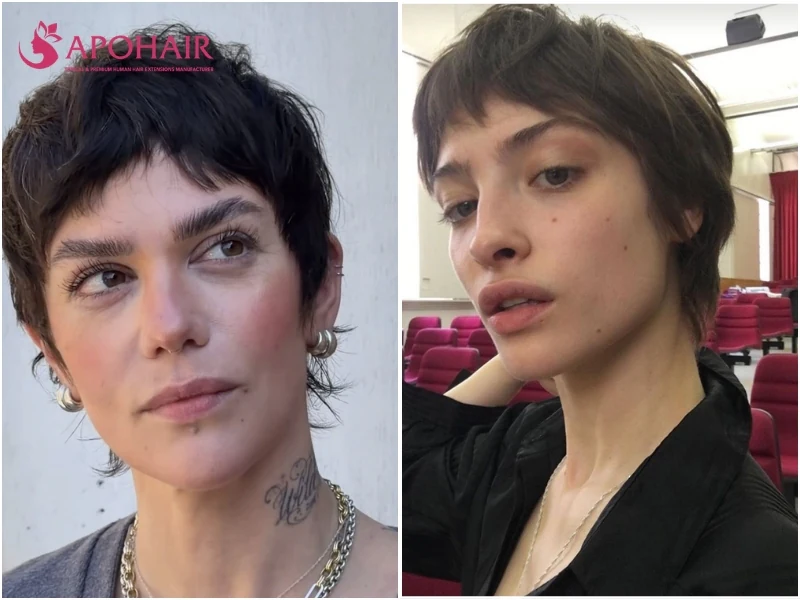
Why it works: Replacing the hairline with the fringe as the top edge trims some visible height, though the look works best on a forehead that is tall but not extreme.
7. Pixie With Wispy Fringe
A pixie with a wispy fringe adds a thin, see-through fringe to a short cut. On a long face with a forehead that is only slightly tall, it softens the top edge without turning the pixie heavy. It suits fine hair, where a dense fringe would leave the crown looking bare.
Only a small wedge of hair at the front goes into the fringe, so the crown behind it keeps its coverage. A larger wedge borrows hair the top cannot spare. The look is airy by design, and it fills in quickly as it grows, needing a trim about every 4 weeks.
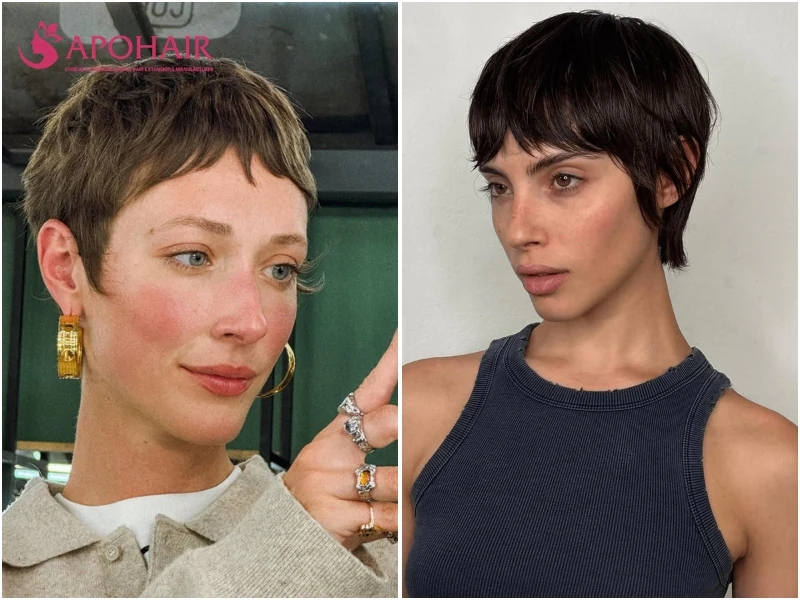
Why it works: It softens the top edge without turning the pixie heavy, suited to a long face whose forehead is only slightly tall rather than extreme.
8. Side-Swept Pixie With Wide Sides
A side-swept pixie with wide sides pairs a diagonal top with side sections that cover the ears. For a long face, the two parts divide the work: the swept top slants across a tall forehead, while the ear-covering sides keep the head from narrowing at the temple line. None of it adds height.
Side length is what sets this apart from an ordinary side-swept pixie. Most pixies taper the sides close to the head, and on a long face that single edit undoes the whole shape for women who need the extra width. Keeping the hair over the ears preserves the breadth. Medium-density hair holds the sweep without product, and the shape needs recutting every 5 to 6 weeks.
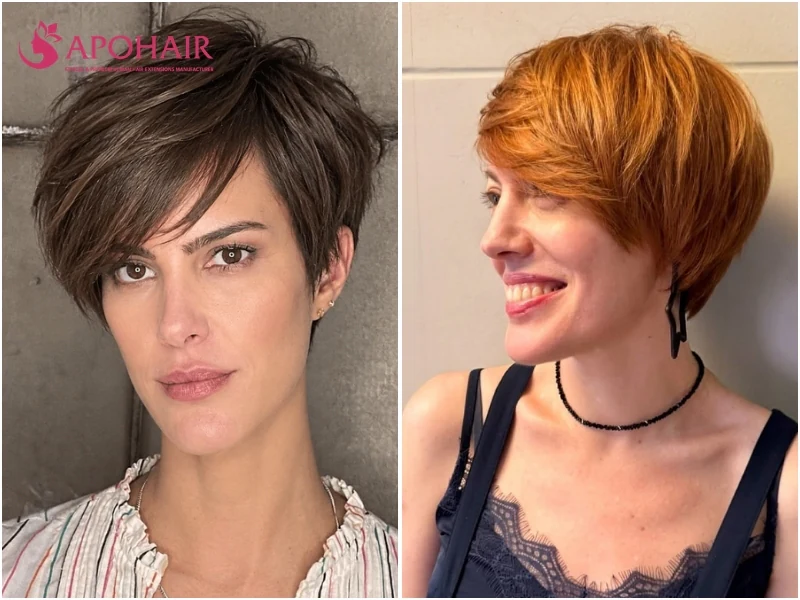
Why it works: The swept top slants across a tall forehead while the ear-covering sides keep the head from narrowing at the temple line, with none of it adding height.
9. Textured Pixie With a Flat Crown
A textured pixie with a flat crown point-cuts the top for movement but keeps it lying close to the head. On a long face, texture usually tempts a stylist to push the top up, and this cut does the opposite. The movement goes sideways and forward, never upward.
The top is point-cut shallow, which separates the hair without creating lift at the roots. Deep point-cutting at the crown stands the hair up, so the depth of each cut matters. Medium to thick density gives the texture something to work with. The shape holds for about 6 weeks.
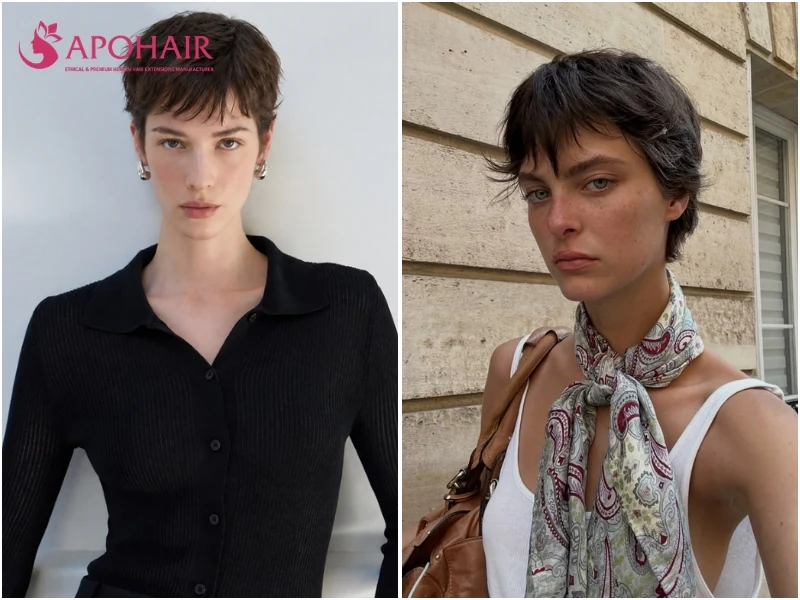
Why it works: Texture usually tempts a stylist to push the top up, and this cut sends the movement sideways and forward instead, so the crown never adds height to a long face.
10. Layered Feathered Pixie
A layered feathered pixie builds soft, overlapping layers that taper to fine, wispy ends around the face. On a long face, those feathered ends spread outward at the temples and ears, which adds width in the zone a narrow face lacks. The overall shape stays low and rounded rather than tall.
Layering runs across the head rather than up it, so each layer lies over the one below instead of stacking toward the crown. Feathering comes from slide-cutting the ends. Fine and medium hair show the feathered edge best on most women, since thick hair can look bulky at the temples. A reshape every 6 weeks keeps the ends soft.
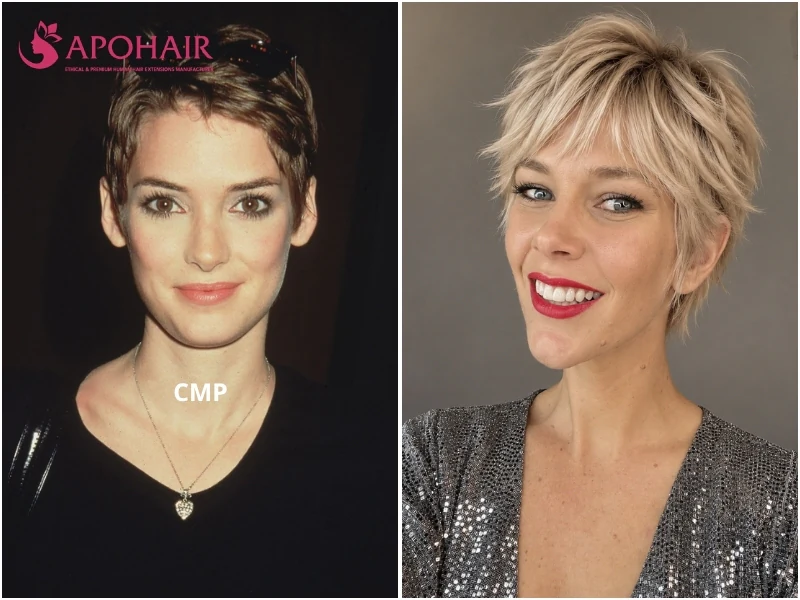
Why it works: The feathered ends spread outward at the temples and ears, adding width in the zone a narrow face lacks while the overall shape stays low and rounded.
11. Rounded Pixie
A rounded pixie follows the curve of the head and keeps its outline soft and circular rather than angular. On a long face, a rounded outline adds width at the sides and softens the verticals of a longer head shape. It is the least severe of the short crops.
The rounding comes from even elevation all the way around, so no single zone stands higher than another. Any peak at the crown breaks the round and adds length. Straight and wavy hair both hold the shape. Upkeep is medium, with a recut every 5 to 6 weeks.
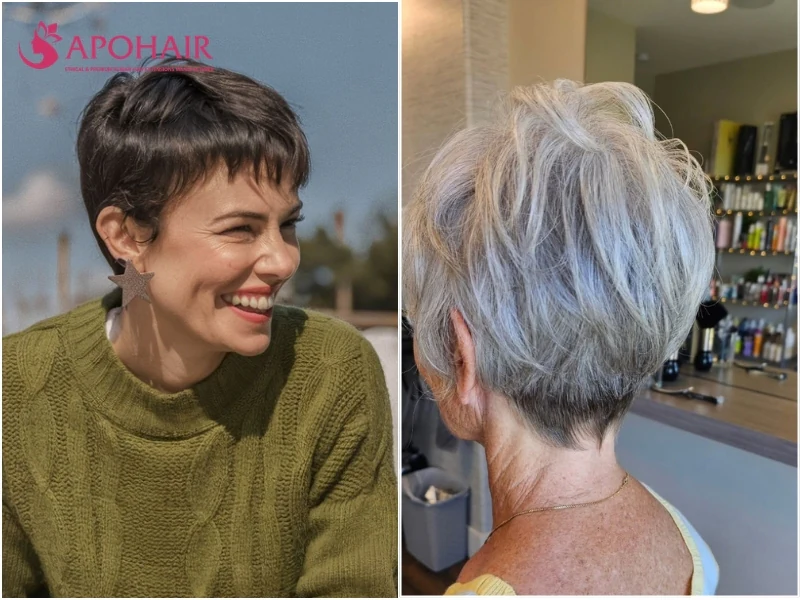
Why it works: A rounded outline adds width at the sides and softens the verticals of a longer head shape, making it the least severe of the short crops for a long face.
12. Bowl Pixie
A bowl pixie sets one continuous line around the head, running just above the brows in front and over the ears at the sides. On a long face, it is the only pixie that draws a real horizontal line the whole way around. The curved top also widens the upper face.
Today’s bowl pixie breaks the line up with texture, since a hard, glossy edge looks severe. The shape wants thick, straight hair; fine hair can show scalp through the curved crown. Everything rests on that line, so it goes back in the chair every 4 to 6 weeks.
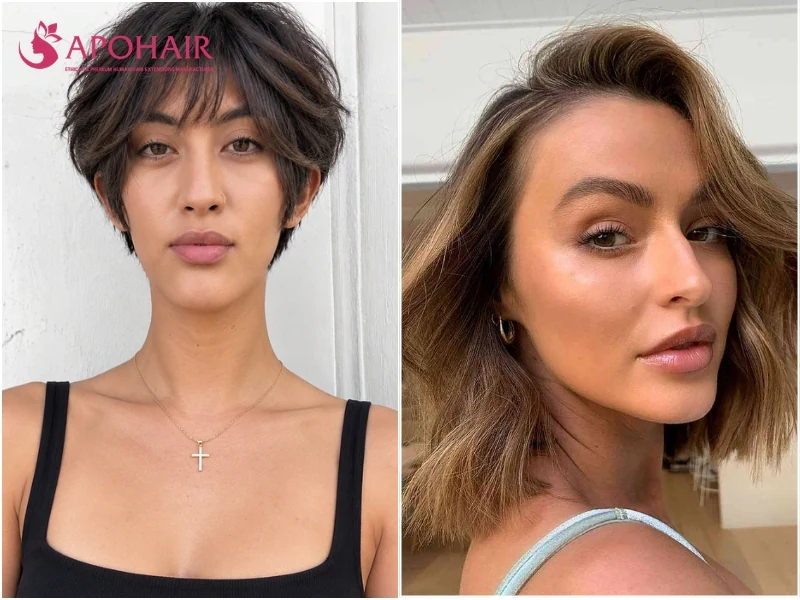
Why it works: It is the only pixie that draws a real horizontal line the whole way around, and the curved top also widens the upper face.
13. Overgrown Pixie With Full Sides
An overgrown pixie with full sides is a pixie allowed to grow out at the sides while the crown stays trimmed and flat. On a long face, the grown-out sides cover the temples and reach toward the cheekbones. That coverage gives the face width that a freshly cut pixie removes.
The work happens at the crown, not the sides. Each trim takes a little off the top to keep it flat and leaves the sides almost untouched, which is the reverse of a normal pixie trim. Medium to thick hair gives the sides enough body to read full. For busy women it is the easiest pixie to live with, needing only a tidy-up about every two months.
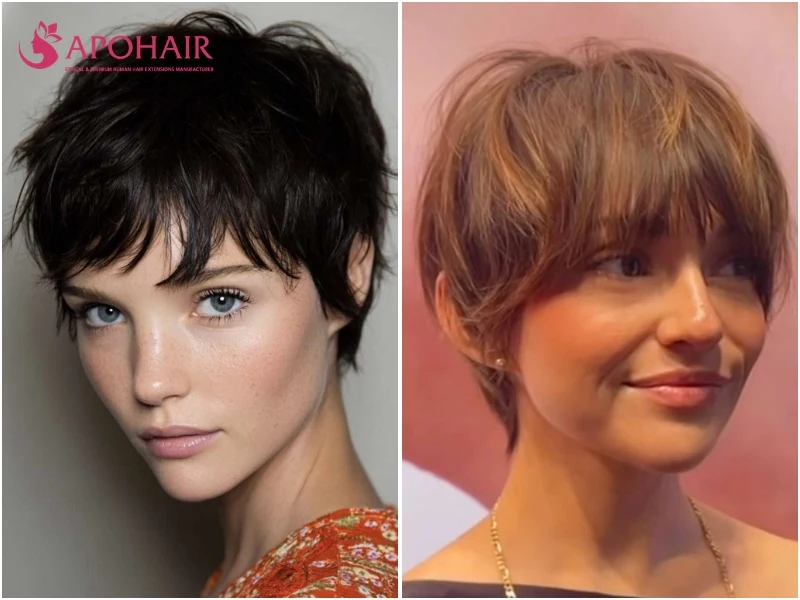
Why it works: The grown-out sides cover the temples and reach toward the cheekbones, giving the face width that a freshly cut pixie removes.
14. Tapered Pixie
A tapered pixie grades the hair shorter toward the nape and behind the ears while leaving length on top. On a long face, the taper keeps the back neat, but the top length does the real work when it falls forward instead of up. It is the classic low-maintenance pixie.
The taper stays at the nape and behind the ears, never above the temples, since tapering the sides removes the width a long face needs. The top is cut to fall toward the brow. Most textures suit it. The nape grows out first and needs a clean-up every 4 weeks.
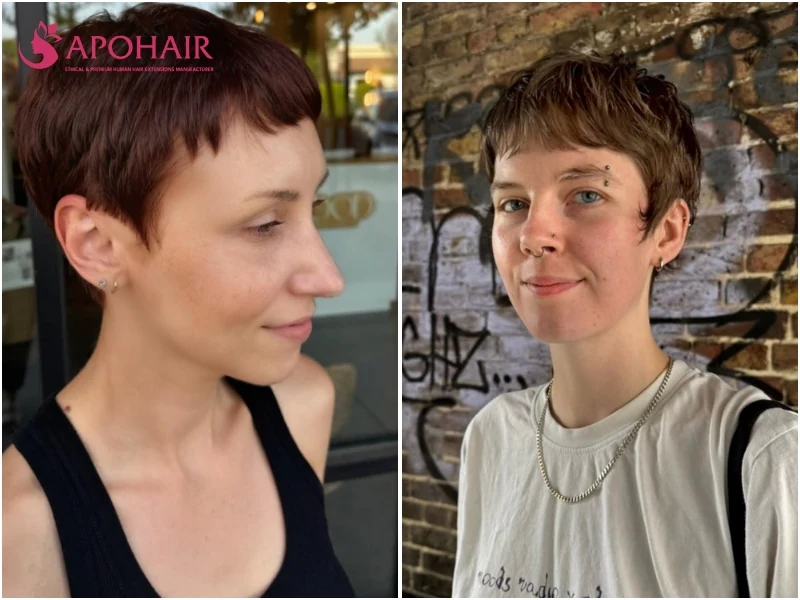
Why it works: Keeping the taper below the temples preserves the width a long face needs, while the top length does the real work when it falls forward instead of up.
15. Shaggy Pixie
A shaggy pixie layers the whole cut with choppy, uneven pieces that give it a loose, lived-in outline. On a long face, the choppy pieces push out at the sides and around the ears, widening a short shape. The looseness also keeps the pixie from reading tight or severe.
The choppy layers belong at the sides and back, with the crown layers left longer so the shag does not climb upward. Wavy hair, Type 2A to 2C, shows the shaggy texture best on women with movement to spare. Thick hair gives it the most body. It grows out loosely, needing a reshape about every 7 to 8 weeks.
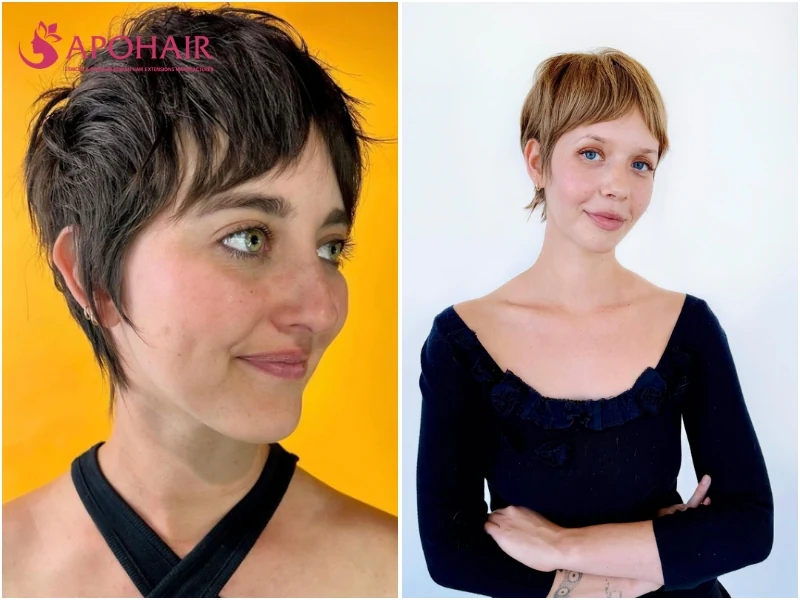
Why it works: The choppy pieces push out at the sides and around the ears, widening a short shape while the looseness keeps it from reading tight or severe.
16. Pixie Mullet
A pixie mullet keeps the top and sides short but leaves the nape longer, trailing toward the neck. On a long face, the longer back adds weight low on the head instead of high, which keeps the shape from reading tall. The sides still need enough length to hold width.
The contrast between short front and longer nape is the look, so the nape is left at least a few inches longer than the sides. The top stays flat. On a long neck, the trailing nape also shortens the visible neckline. Straight to wavy hair suits it, with a recut every 6 weeks to keep the contrast sharp.
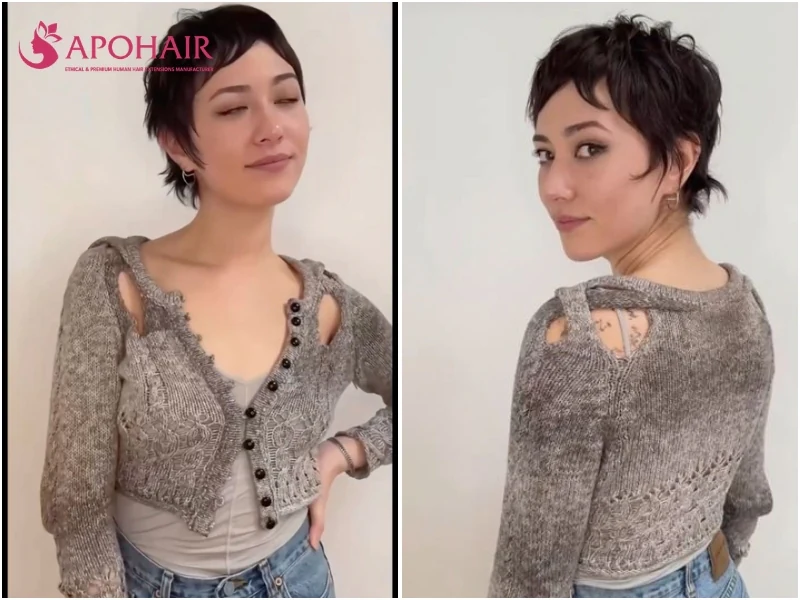
Why it works: The longer back adds weight low on the head instead of high, keeping the shape from reading tall, and on a long neck the trailing nape also shortens the visible neckline.
17. Asymmetrical Pixie
An asymmetrical pixie cuts one side longer than the other, with the longer side often sweeping past the ear. On a long face, the uneven outline adds a diagonal that breaks up the face’s vertical run. The longer side also carries width at one temple.
The difference between sides has to look intentional, usually at least an inch, or it reads as an uneven trim. The asymmetry stays gentle on a long face, since a steep diagonal can pull the eye downward. Straight hair shows the line most clearly. A recut every 5 to 6 weeks keeps the contrast from blurring.
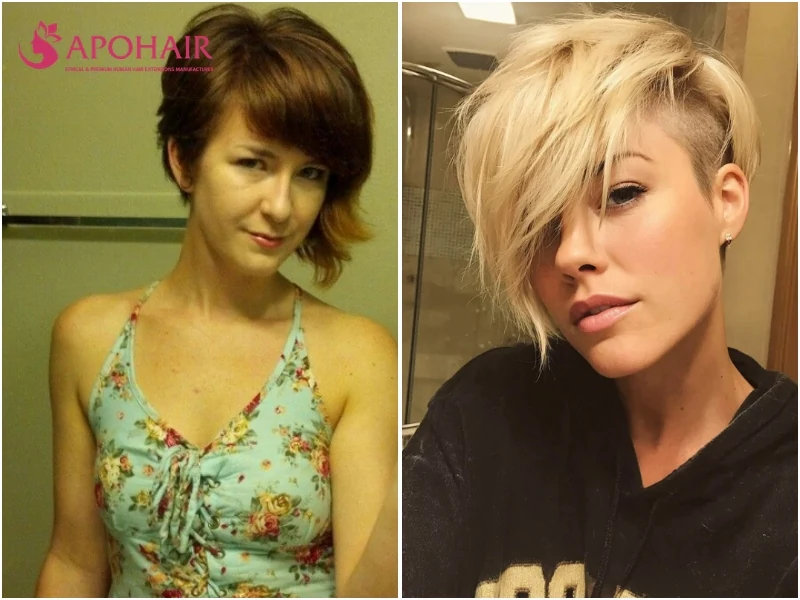
Why it works: The uneven outline adds a diagonal that breaks up the face’s vertical run, and the longer side also carries width at one temple.
18. Short Pixie With Wide Sides
A short pixie with wide sides keeps the whole cut close but leaves the hair over the ears a little longer than usual. On a long face, those slightly longer sides stop a short crop from narrowing the head. It is the shortest pixie that still suits a long face.
The trick is restraint at the sides. A standard short pixie clippers the sides tight, and that tightness makes a long face look longer, a common frustration for women who want short hair without extra length. Fine to medium hair suits it, and the short length needs a recut every 4 to 5 weeks.
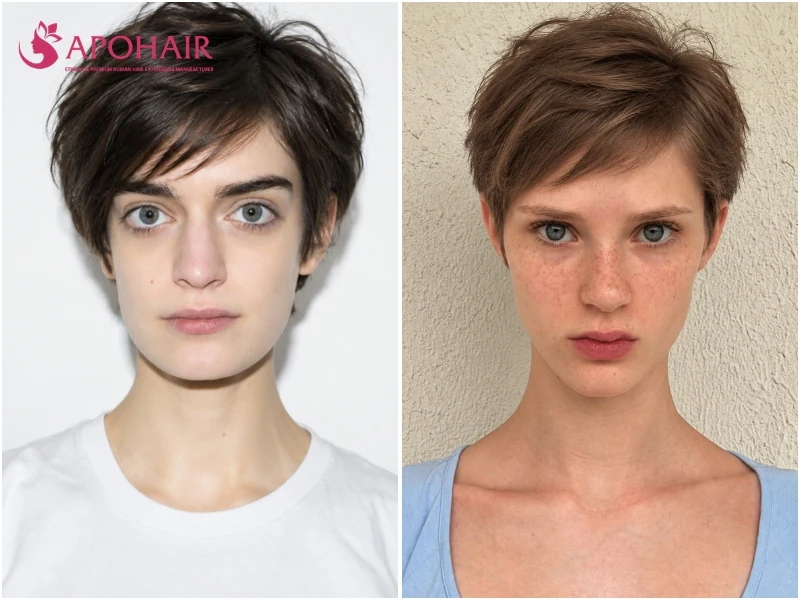
Why it works: Leaving even half an inch more over the ears keeps the width that a standard tight-sided short pixie would remove, making it the shortest pixie that still suits a long face.
19. Curly Pixie With Side Volume
A curly pixie with side volume lets natural curls expand outward around the ears and temples. On a long face, curls add width without any styling, since they grow sideways as much as down. The shape stays short but reads full at the sides.
The cut is done dry, curl by curl, with the sides left fuller than the crown. Cutting the crown too long lets curls stack upward and add height. Type 3A to 3C curls suit it best. Day-to-day upkeep is low, with a reshape roughly every 6 to 8 weeks.
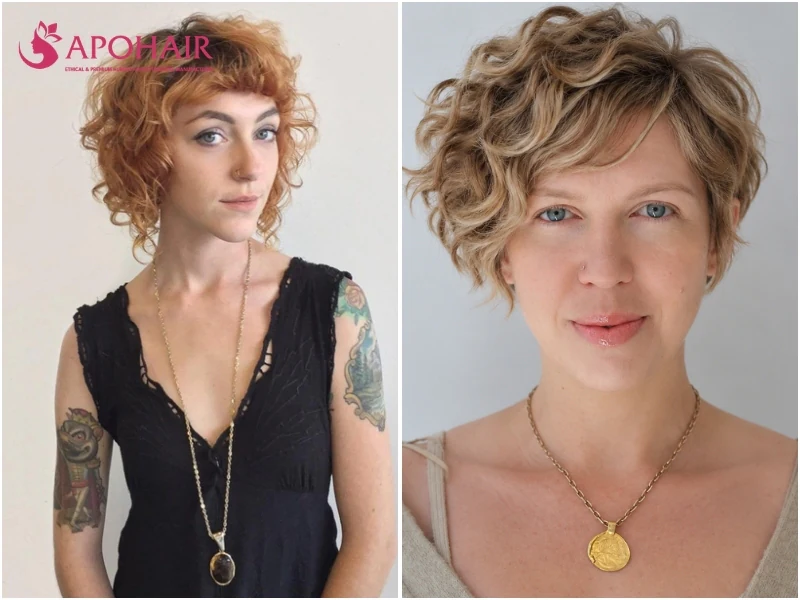
Why it works: Curls add width without any styling, since they grow sideways as much as down, so the shape stays short but reads full at the sides.
20. Coily Tapered Pixie With Temple Width
A coily tapered pixie with temple width works with Type 4 hair’s natural spring, keeping the nape close while the coils around the temples stay full. On a long face, the temple zone is where coils do the most good, adding breadth right beside the forehead. The overall silhouette stays low and wide.
Coils rise as they grow, so the crown is shaped slightly shorter than the temples to keep the top from building height. The nape is tapered for neatness. Shaping happens on dry, stretched-out coils to see the true outline, a step many female clients appreciate seeing before commitment. Type 4A to 4C textures suit it, and the nape taper needs attention every 3 to 4 weeks.
Each of the 20 works for the same reason: a flat crown, full sides, and nothing lifting the top. Texture, density, and neck length decide which one fits.
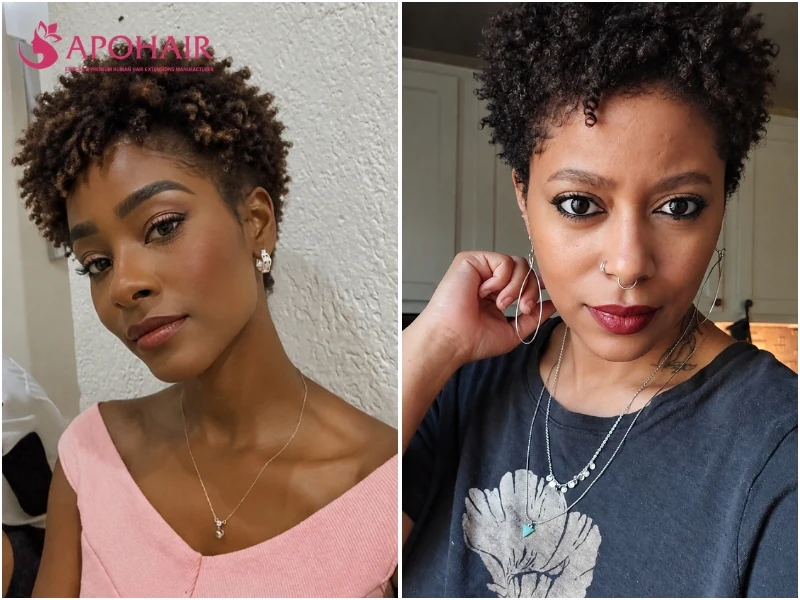
Why it works: The temple zone is where coils do the most good, adding breadth right beside the forehead while the crown is shaped slightly shorter to keep the top from building height.
How to Choose a Pixie Cut for a Long Face?
Choosing a pixie for a long face comes down to crown height, fringe type, texture and density, and the length of the neck. Each one narrows the 20 toward the pixie that suits both the face and the hair.
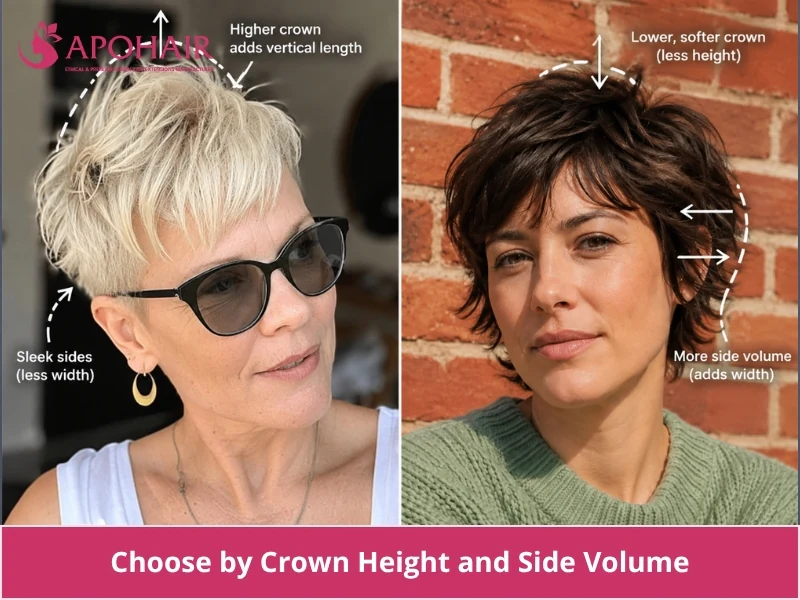
Choose by Crown Height and Side Volume
On a long face, every inch of crown height adds an inch to the face, so the flattest crowns flatter most women. A long pixie worn forward, a textured pixie with a flat crown, or a rounded pixie all keep the top low. The sides then carry the width, and the longer they stay, the wider the face reads. A pixie that is flat on top and full at the sides is the target.
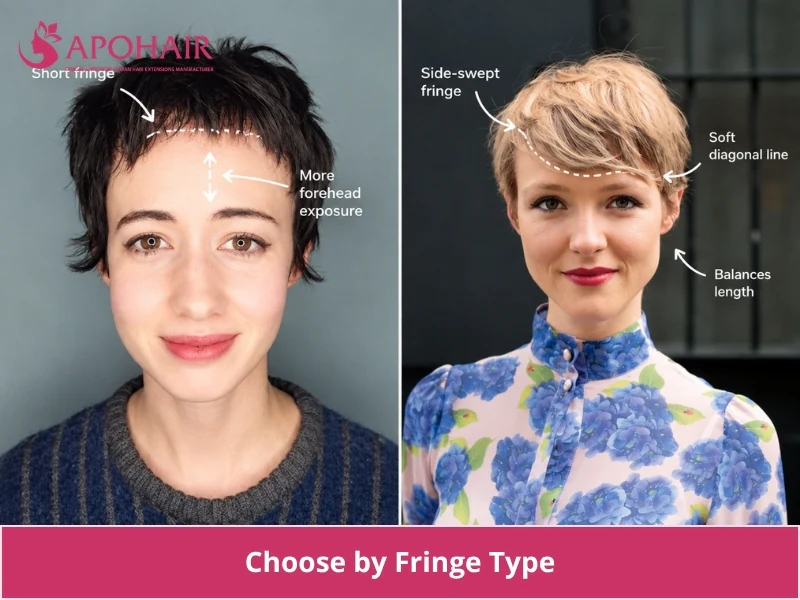
Choose by Fringe Type
The fringe decides how much of a tall forehead stays visible. A full blunt fringe covers the most, a long sweeping fringe covers it at an angle, and curtain bangs cover less while adding width at the temples. Micro bangs suit only a forehead that is tall but not extreme. Where the forehead is average or only slightly tall, a wispy fringe keeps the look light.
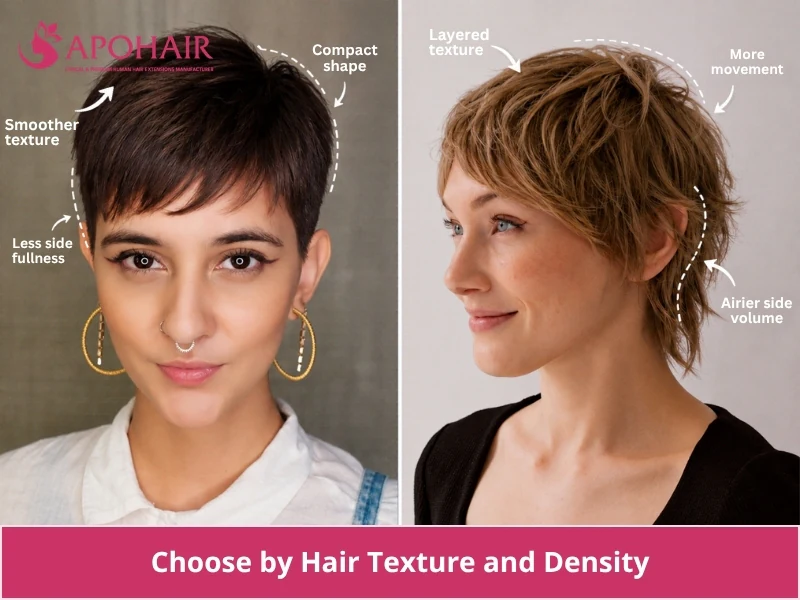
Choose by Hair Texture and Density
Curly and coily hair add side volume on their own, which makes Type 3A to 4C textures natural fits for a long face. Straight hair needs the cut to create width, so side length matters more on Type 1A to 1B. Fine hair suits wispy fringes and feathered layers that do not borrow density from the crown. Thick hair suits shaggy and bowl shapes that can carry weight at the sides.
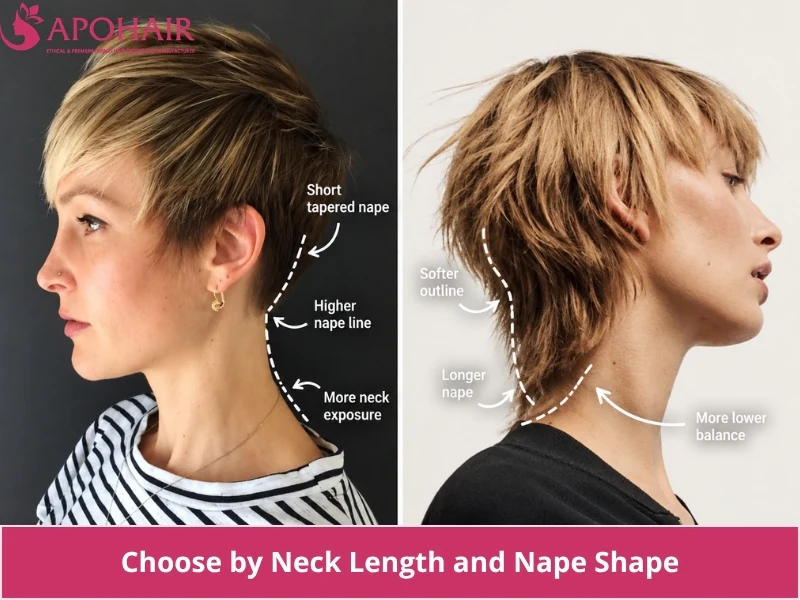
Choose by Neck Length and Nape Shape
Neck length varies from woman to woman, and a pixie shows the whole neck. A pixie mullet leaves length at the nape, which shortens the visible neckline. A very short tapered nape does the opposite and lengthens it. Where the neck is short or average, a tapered or rounded nape stays neat without that trade-off.
Which Pixie Cuts Should You Avoid With a Long Face?
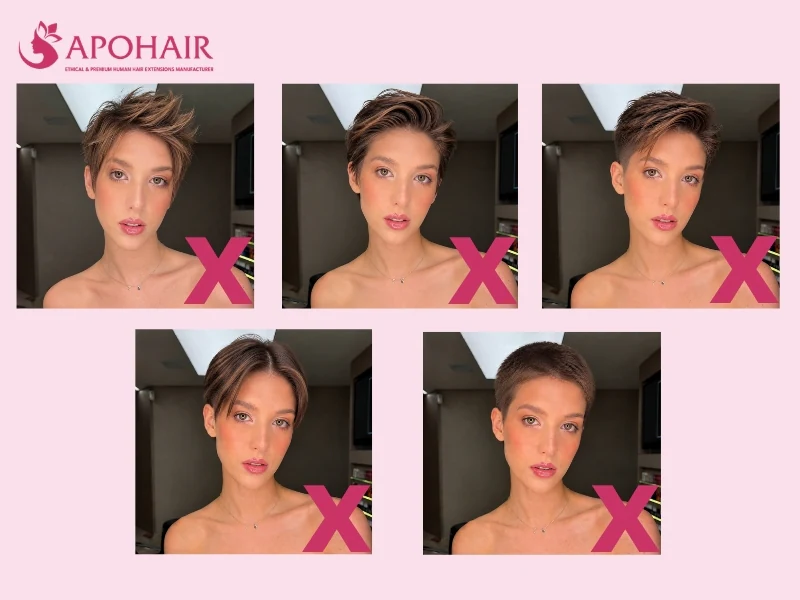
The pixie cuts to avoid on a long face are the ones that lift the crown, strip the sides, or pull the forehead bare. Each adds length to a face that already has plenty. Every one of them trades width for height, and a long face has no height to spare:
- A quiffed or spiky pixie. Styling the top upward adds height at the one point where a long face is already longest. It turns a flattering short cut into a taller one.
- A slicked-back pixie with no fringe. Pulling every hair back exposes the full height of the forehead and leaves nothing to interrupt the face’s length.
- An undercut pixie with tight sides. Shaving or clippering the sides removes the only width a pixie can give a long face, which leaves the crown as the widest point.
- A severe center-parted pixie. A hard center part splits a short cut into two flat halves, drawing a vertical straight down the middle of the face.
- A micro buzz crop with no fringe. At buzz length there is no side volume and no fringe, so the long face stands fully exposed with nothing to shorten it.
Frequently Asked Questions
Does a Pixie Cut Suit a Long Face?
A pixie cut suits a long face when the crown stays flat and the sides stay full. A long pixie worn forward, a pixie with a full blunt fringe, or an overgrown pixie all add width without height. Pixies go wrong when styling lifts the top or clippers crop the sides tight, since both make the face look longer.
Is a Long Pixie Better Than a Short Pixie for a Long Face?
A long pixie usually suits a long face better than a short one. Its extra length on top can fall forward as a fringe, and its longer sides cover the temples. A short pixie works too, but only when the sides stay a little longer than usual, because a tight crop narrows the head and lengthens the face.
Should a Long Face Get a Pixie With Bangs?
A fringe is one of the best additions to a pixie on a long face. A full blunt fringe covers the most forehead and lowers the top edge of the face. Curtain bangs and a long sweeping fringe cover less but add width. Micro bangs work only when the forehead is tall but not extreme.
What Is the Lowest-Maintenance Pixie for a Long Face?
An overgrown pixie with full sides is the easiest to keep. It grows out by design, so it needs only a tidy-up about every two months, and the flat crown needs no styling. A long pixie bob is a close second. Short crops and bowl pixies need recutting far more often to stay sharp.
Does a Pixie Cut Make a Long Face Look Longer?
A pixie makes a long face look longer only when it adds height or strips the sides. With a flat crown, full sides, and a fringe, a pixie makes the same face look shorter and wider. The risk comes from quiffs, spiky tops, and tight undercuts, all of which stretch the face upward.
What Pixie Suits a Long Face Over 50?
A long pixie with a soft fringe or an overgrown pixie with full sides tends to suit women with long faces best after 50. Both add width without daily styling, and a fringe softens a forehead that can read taller as the hairline shifts. Keeping the sides full matters more with age, since hair often thins at the temples first.
Can a Long Face With Curly Hair Wear a Pixie?
A long face with curly hair suits a pixie well, because curls add side volume on their own. A curly pixie with side volume keeps the width at the ears and temples. The one adjustment is keeping the crown a little shorter than the sides, so the curls do not stack upward and add height.
What Pixie Suits an Oblong Face?
An oblong face suits the same pixies as a long face: a long pixie worn forward, a pixie with a full blunt fringe, or an overgrown pixie with full sides. Its straighter jaw also benefits from a rounded or feathered pixie, since the soft outline takes the edge off the jaw while the full sides add width.
Conclusion
A pixie on a long face lives or dies by its balance between top and sides, whether the woman wearing it wants a bold crop or something easy to grow out. A flat crown and full sides make the face read shorter and wider, while a lifted top or tight sides stretch it. A fringe over a tall forehead finishes the correction. The face shape decides the direction, and texture, density, and neck length decide which of the 20 carries it out.
If you run a salon or source hair for a shop, clients growing out a pixie are often the ones who ask about extensions next. Our team can send samples and factory-direct pricing on texture-matched wefts, tape-ins, and clip-in sets. Because we manufacture 100% Vietnamese Human Hair in our own facility, you can match density and texture to each client rather than relying on whatever a middleman had in stock.
