








Top 24 Pixie Cuts For Women With Oval Faces: Long Pixies, Classic Crops, Textures & Fringes
The best pixie cuts for oval faces are the long pixie, the classic pixie, and the feminine soft pixie. An oval face needs no correcting, since its forehead, cheekbones, and jaw already sit in balance. That changes what a pixie is for. Instead of fixing a proportion, the cut decides which feature to show off: The eyes, the cheekbones, the jaw, or the neck.
Four decisions then narrow the choice: How long to go, what the fringe does, how the hair behaves, and how long the neck is. Pixies go wrong on an oval face only when a heavy fringe, piled height, a nape cropped too short on a long neck, or a shapeless grow-out tips that balance.
An oval face is about one and a half times as long as it is wide, with a gently rounded jaw and a forehead a little broader than the chin. Stylists often call it the most adaptable face shape for women, because nearly any length or line sits comfortably on it. A pixie tests that claim harder than any other cut, since nothing hides the face.
Twenty-four pixie cuts pass the test, from long, versatile shapes to buzz-short crops and coily tapers.
Best Pixie Cuts for Oval Faces
The long pixie, the classic pixie, and the feminine soft pixie suit an oval face best, each by showing off its balance in a different way. The rest trade on emphasis, putting the eyes, the cheekbones, or the jawline at the center of the look.
1. Long Pixie
A long pixie keeps several inches on top and lets the sides fall softly over the tops of the ears. On an oval face, that top length has no job to do, so it can be worn forward, swept to one side, or pushed back without upsetting the proportions. That freedom is why the long pixie is the most requested pixie for this face shape.
The top needs enough length to move in more than one direction. The sides stay soft rather than clippered, so the shape never looks severe on women who want versatility. Type 1A to 2B hair handles the widest range of styling. The long top holds its shape for about 6 to 8 weeks before the sides need tidying.
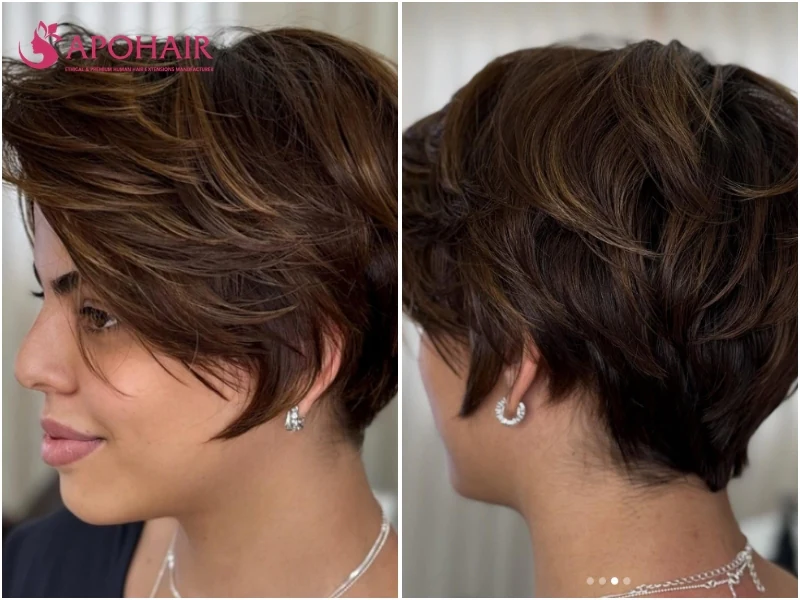
Why it works: On an oval face that top length has no job to do, so it can be worn in any direction without upsetting the already-balanced proportions, which is why it is the most requested pixie for this face shape.
2. Classic Pixie
A classic pixie cuts the nape and sides close and leaves just enough on top to style. On an oval face, it works as a benchmark cut, since the even proportions show without any help from the hair. The face itself becomes the focal point.
The close sides blend into a slightly longer top with no hard line between them. That blend is what keeps the classic pixie soft rather than military. Fine to medium hair suits it best, since thick hair can puff out at the sides. The close sections need a tidy-up every 4 to 6 weeks.
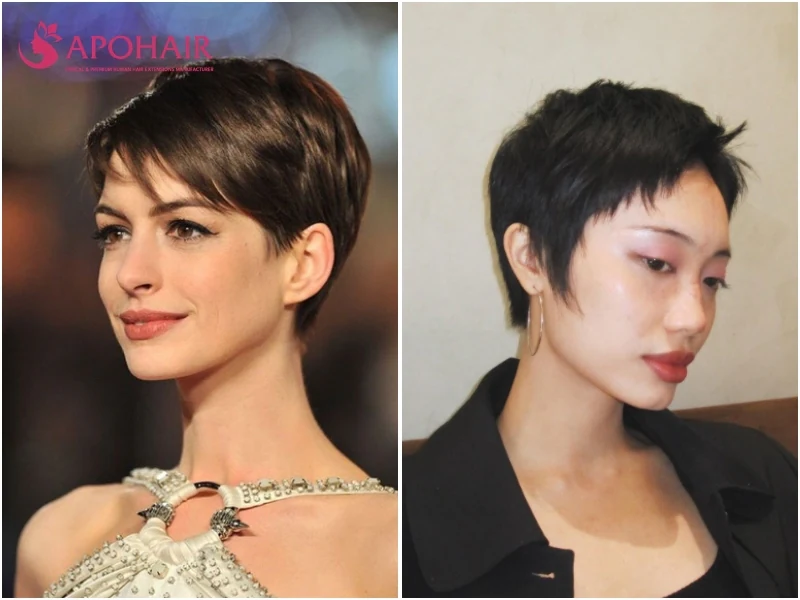
Why it works: It works as a benchmark cut on an oval face, since the already-even proportions show through without any help from the hair, letting the face itself become the focal point.
3. Feminine Soft Pixie
A feminine soft pixie keeps its edges wispy and leaves a little extra length at the sideburns, the nape, and the fringe. On an oval face, those soft pieces draw attention to the eyes and cheekbones, where the balanced proportions show best. It reads gentle rather than sharp.
Softness comes from the perimeter. Instead of clippered or blunt edges, the perimeter uses point-cutting and slide-cutting, so every edge tapers to fine ends. The longer sideburn pieces sit in front of the ears and frame the cheekbones, a detail many female clients ask for by name. Fine and medium hair gives the most delicate result, and a reshape every 5 to 6 weeks keeps the edges soft.
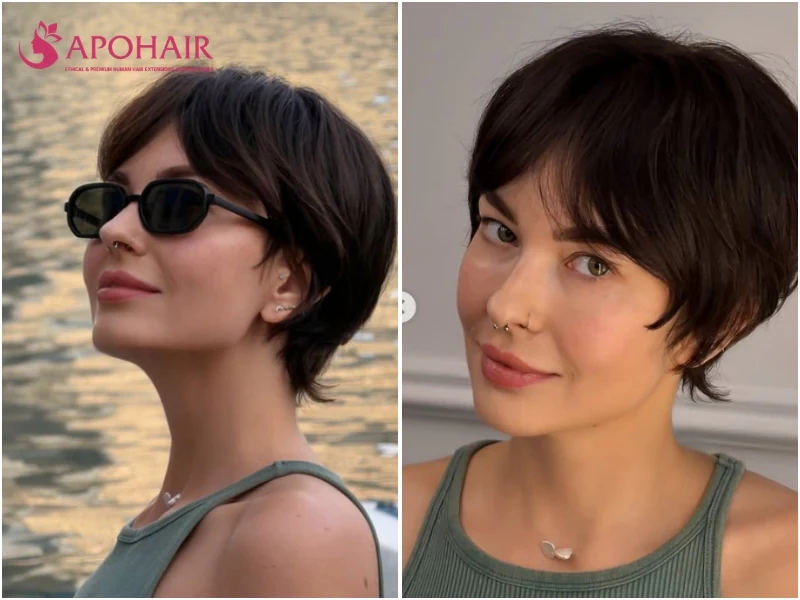
Why it works: The soft pieces draw attention to the eyes and cheekbones, exactly where an oval face’s balanced proportions show best, giving the cut a gentle rather than sharp read.
4. Softly Textured Pixie
A softly textured pixie adds gentle movement through the top without creating height or hard separation. On an oval face, texture only has to add interest, not fix a proportion, so it can stay subtle. The result looks relaxed and natural rather than styled.
The texture comes from light, shallow point-cutting across the top, which loosens the hair without standing it up. Deeper cuts would add lift, which a softly textured pixie does not need. Type 1B to 2B hair shows the movement best. It holds its shape for about 6 weeks.
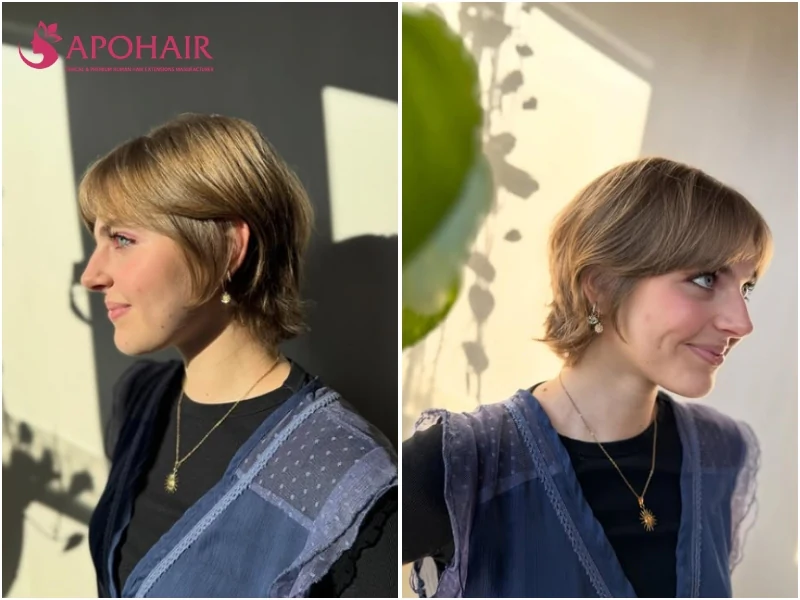
Why it works: Texture only has to add interest rather than fix a proportion on an oval face, so it can stay subtle and still look relaxed and natural instead of overly styled.
5. Short (Cropped) Pixie
A short cropped pixie takes the hair close all over, leaving only a little length on top. On an oval face with an average neck, a crop this short exposes everything, and balanced proportions are exactly what can carry that exposure. It puts the cheekbones, eyes, and jawline on full view.
The crop depends on head shape as much as face shape, since there is no hair left to disguise a flat crown or a bump at the back. A slightly longer top keeps it from reading severe, which is why many women test this length with a longer top first. Fine to medium hair lies closest. At this length, shape disappears fast, so a recut every 4 weeks keeps it crisp.
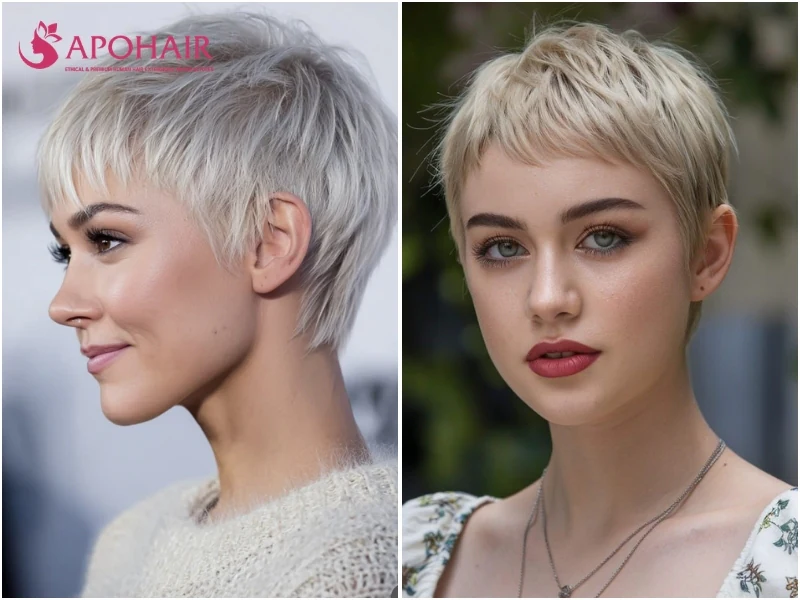
Why it works: This length exposes everything, and an oval face’s balanced proportions are exactly what can carry that exposure, putting the cheekbones, eyes, and jawline on full view.
6. Piecey Textured Pixie
A piecey textured pixie separates the top into defined, individual pieces that point in different directions. On an oval face, the pieces add movement and a little edge without disturbing the balance underneath. It sits between a soft pixie and a choppy one.
The pieces come from point-cutting deep enough to separate strands but not so deep that they stand straight up. A small amount of paste defines them. Medium to thick hair holds the separation best, since fine hair tends to clump. A recut every 5 to 6 weeks keeps the pieces defined.
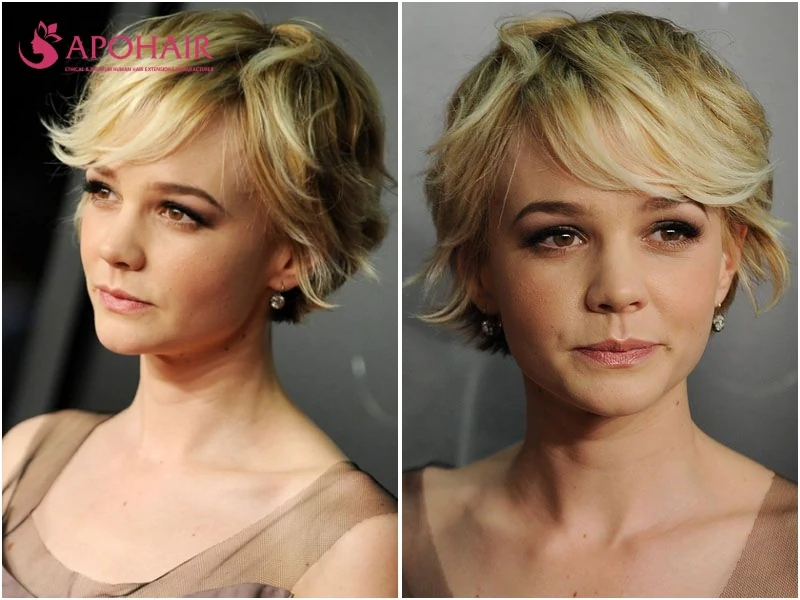
Why it works: The pieces add movement and a little edge without disturbing the balance underneath, since an oval face’s proportions keep the look from tipping into disorder.
7. Layered Feathered Pixie
A layered feathered pixie stacks thin layers loosely over one another, each finishing in a fine, wispy tip. On an oval face, the feathering blurs the hairline and softens the temples, so the whole look turns light and airy. Because the proportions are already even, the layers can sit at the same depth all the way around.
The wispy tips come from sliding the scissors down each section rather than cutting across it. Each layer covers the one beneath at an even depth from crown to nape. Finer textures reveal the feathering most clearly, while dense hair can hide it. Every 6 weeks or so, the tips need thinning again before they turn blunt.
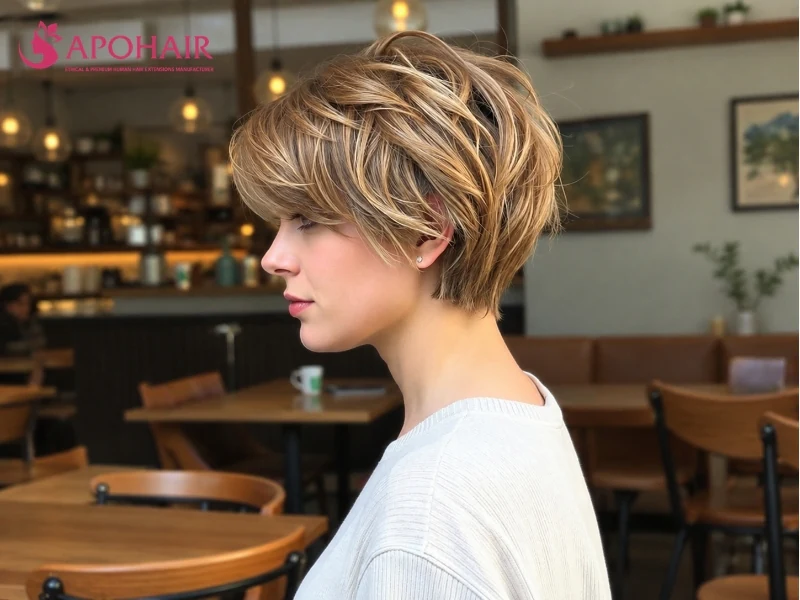
Why it works: The feathering blurs the hairline and softens the temples, and because the proportions are already even, the layers can sit at the same depth all the way around.
8. Choppy Pixie
A choppy pixie cuts the top into blunt, uneven chunks of different lengths for a rougher, more deliberate texture. On an oval face, the proportions keep that roughness from looking chaotic, because the face underneath stays calm and even. The contrast gives the cut its attitude.
The chunks come from cutting into the hair at varied depths, then leaving the ends blunt rather than softening them. That blunt finish is the difference between choppy and piecey. Thick hair shows the chunks best on most women, while fine hair can look patchy. A recut every 5 to 6 weeks keeps the lengths distinct.
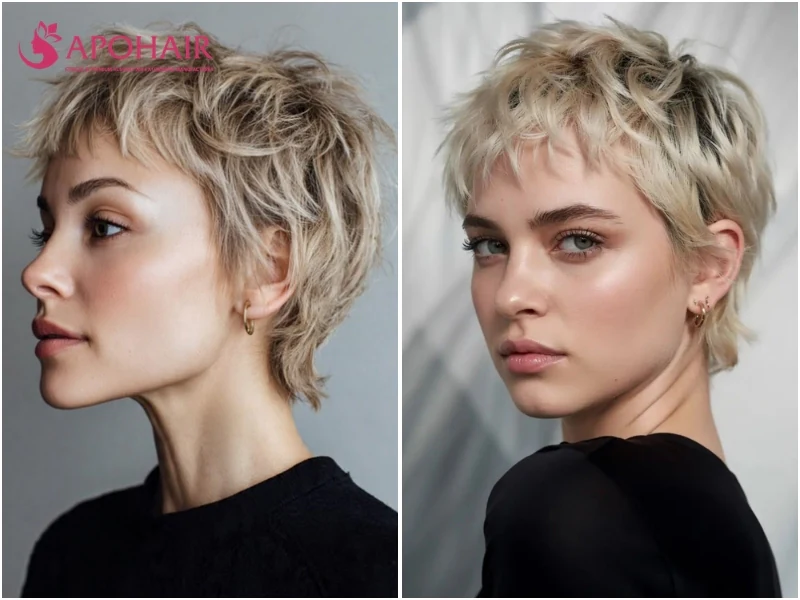
Why it works: The proportions keep the roughness from looking chaotic, because the face underneath stays calm and even, so the contrast gives the cut its attitude instead of disorder.
9. Wispy Pixie
A wispy pixie finishes every edge in fine, feathery wisps, especially around the hairline and nape. On an oval face, those wisps soften the frame without hiding the features, which suits anyone who wants a pixie that looks delicate. The face stays fully visible through the light edges.
The wisps come from thinning the perimeter heavily so the hair tapers almost to nothing at the edges. The top stays a little fuller to balance the thin edges. Fine hair suits it naturally, since the wisps form with little effort. The wisps thicken as they grow, so they need thinning every 5 weeks again.
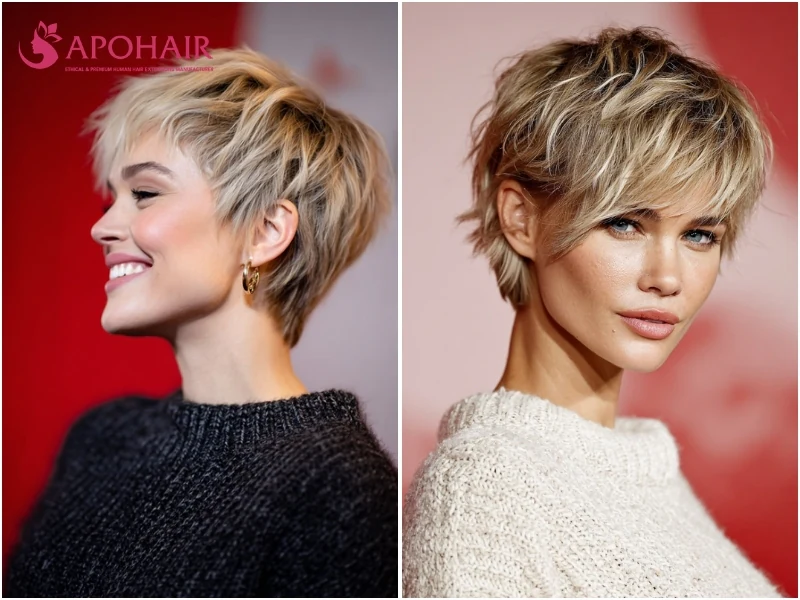
Why it works: Those wisps soften the frame without hiding the features, keeping the face fully visible through the light edges for anyone who wants a pixie that looks delicate.
10. Shaggy Pixie
A shaggy pixie cuts rough, uneven layers all over the head, giving it a tousled outline with no hard edges. On an oval face, that volume can sit anywhere short of a piled crown, since no zone needs building up or taking down. It is one of the most relaxed shapes an oval face can wear.
The layers stay the same depth from crown to nape, spreading the volume around the head rather than piling it in one spot. Crown height is the single thing to keep in check, because too much tips an oval face out of balance for women chasing a relaxed look. Loose waves bring out the shag best, and the shape needs reshaping roughly every two months.
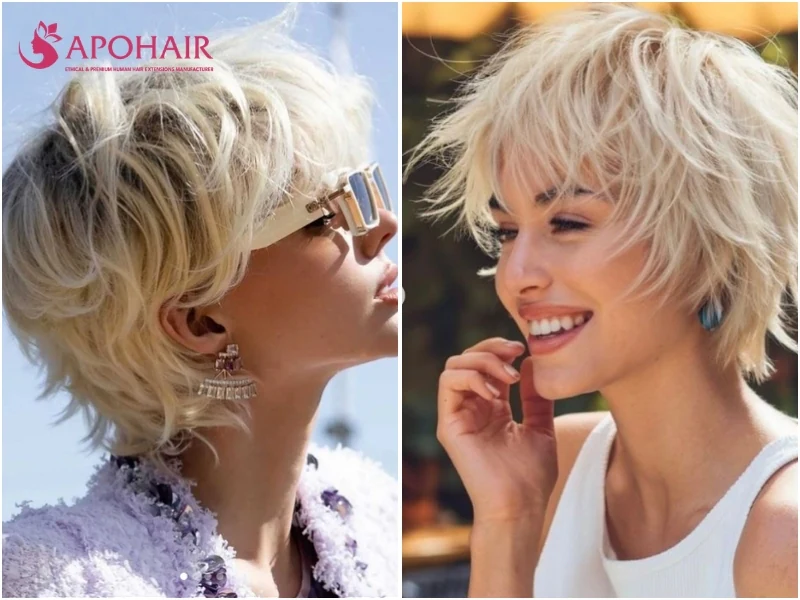
Why it works: That volume can sit anywhere short of a piled crown on an oval face, since no zone needs building up or taking down, making it one of the most relaxed shapes to wear.
11. Asymmetrical Pixie
An asymmetrical pixie leaves one side clearly longer than the other, with the long side curving toward the jaw. On an oval face, the imbalance is pure style rather than correction, so it can go as far as the wearer wants. The longer side spotlights a single cheekbone.
The gap between the two sides needs to be obvious, since a small one looks like a mistake. Placing the long side on the natural parting helps it lie flat. The contrast reads sharpest on straight hair. Both lengths blur together as they grow, so the shape goes back for a recut after 5 to 6 weeks.
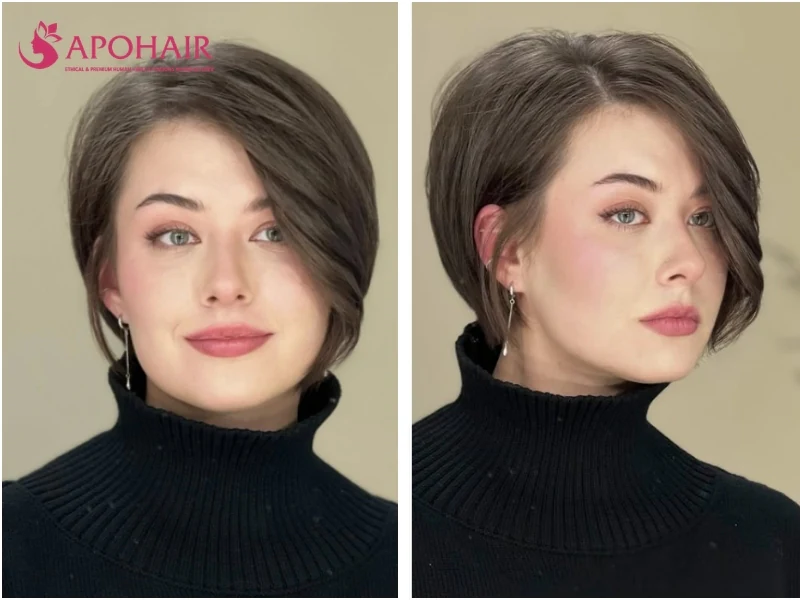
Why it works: The imbalance is pure style rather than correction on an oval face, so it can go as far as the wearer wants, with the longer side spotlighting a single cheekbone.
12. Undercut Pixie
An undercut pixie clippers the hair very short underneath, usually at the sides and nape, while leaving a longer layer on top that can cover it or show it. On an oval face with an average neck, the balanced jaw and neck can carry the exposure an undercut creates. It gives a pixie a sharper, more graphic edge.
The undercut sits below the occipital bone and above the ears, so the top layer can fall over it when a softer look is wanted, giving women the option to hide or reveal the shave as they like. Thick hair benefits most, since removing weight underneath makes a dense pixie easier to manage. The clippered section grows out fast and needs a refresh every 3 to 4 weeks.
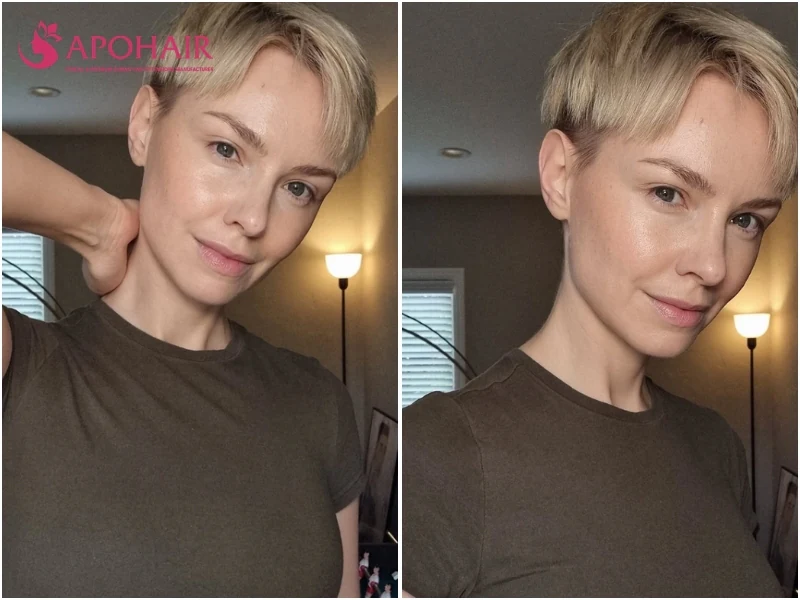
Why it works: The balanced jaw and neck of an oval face can carry the exposure an undercut creates, giving the pixie a sharper, more graphic edge without losing proportion.
13. Sleek Sculpted Pixie
A sleek sculpted pixie sits close to the head with a polished, glossy finish. On an oval face, it shows the face shape with nothing softening it, which only works because the proportions are already balanced. Few face shapes can wear a pixie this exposed.
Precision matters more than texture on a cut this smooth, since every line shows. Straight hair holds the sleek finish best. Curly hair needs heat to lie this flat, which adds daily work. The clean lines need a recut every 4 to 5 weeks.
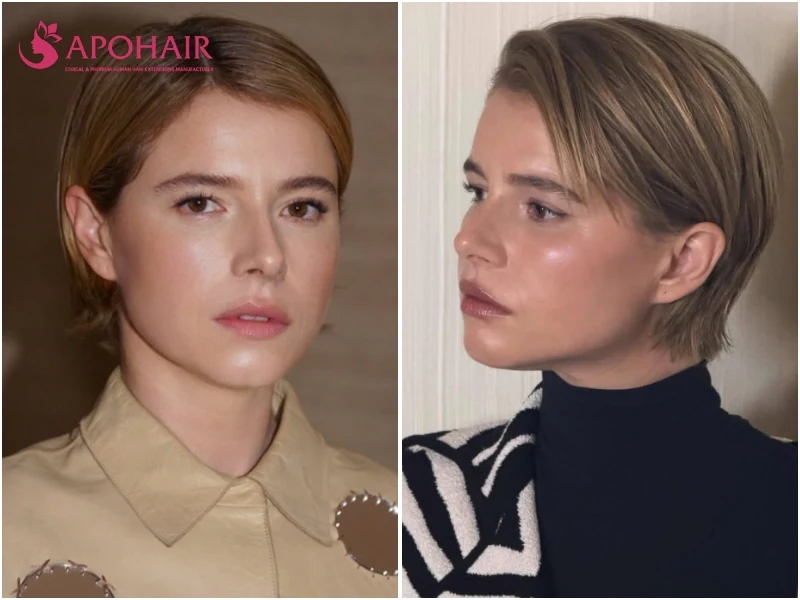
Why it works: It shows the face shape with nothing softening it, which only works because an oval face’s proportions are already balanced enough to carry that exposure.
14. Bowl Pixie
A bowl pixie traces one rounded line around the head, resting a little above the brows at the front. On an oval face, the line is safest when it stays light and textured, because a heavy, solid bowl turns into the thick blunt fringe that throws an oval face out of balance. Kept light, it adds a playful, vintage frame.
Point-cutting breaks the edge up so it never forms a solid band. The rounded shape needs thick, straight hair, since thinner strands let the scalp show through the top. The line has to stay neat, so it needs recutting every 4 to 6 weeks.
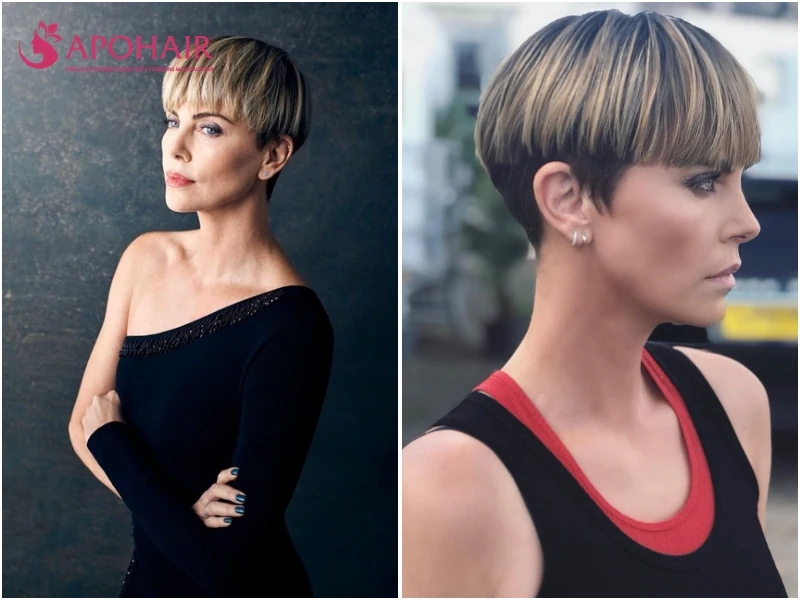
Why it works: Kept light and textured, the rounded line adds a playful, vintage frame, since a heavy solid bowl would turn into the thick blunt fringe that throws an oval face out of balance.
15. Quiffed Pixie
A quiffed pixie sweeps the front up and back into a soft wave of height above the forehead. On an oval face, a moderate quiff adds drama without harm, but it has a limit, since too much height starts to lengthen an oval face and push it out of balance. Kept to a modest lift, it suits the shape well.
The front section stays longer, with a cut that encourages lift, while the sides stay short but soft, so the height never reads as piled. The quiff needs a little product and a blow-dry to stand. Thick, straight hair holds the lift best. A recut every 5 to 6 weeks keeps the front length in proportion.
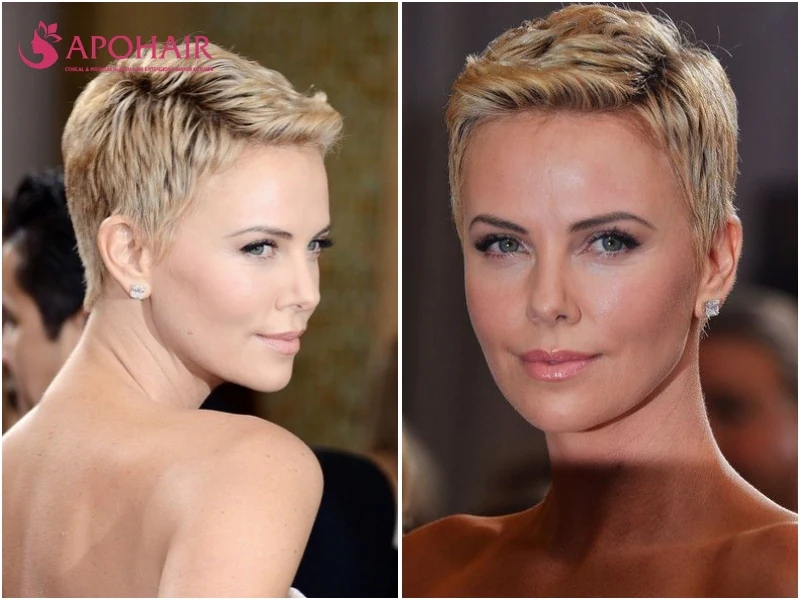
Why it works: A moderate quiff adds drama without harm on an oval face, but it has a limit, since too much height starts to lengthen the face and push it out of balance.
16. Pixie Mullet
A pixie mullet crops the front and sides while the nape grows longer, trailing down onto the neck. On an oval face, the proportions make the contrast look intentional rather than awkward. The longer back also frames the neck, which helps when the neck is long.
The back grows out to a length that clearly outlasts the sides, with a soft blend so the step never looks harsh. Wavy hair makes the longer back look relaxed rather than severe, a combination that suits women easing into a bolder cut. The front and sides need a trim every 5 to 6 weeks so the contrast stays clear.
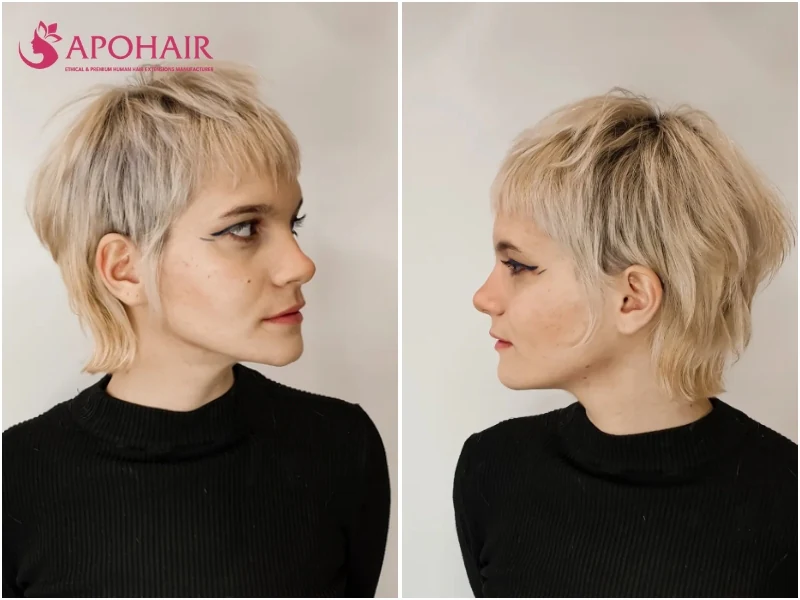
Why it works: The balanced proportions of an oval face make the contrast look intentional rather than awkward, and the longer back also frames the neck when it runs long.
17. Bixie (Pixie Bob)
The bixie blends a pixie crown with bob-length sides that reach the jaw. On an oval face, it frames the jawline instead of exposing it, which makes it the natural choice for trying short hair without going all the way to a crop. The balanced proportions carry both the pixie top and the longer sides.
The crown gets pixie layering while the sides keep bob length. That split is what lets the bixie grow out into a bob or trim back into a pixie. Medium density suits it best. A reshape every 7 to 8 weeks keeps the two sections in proportion.
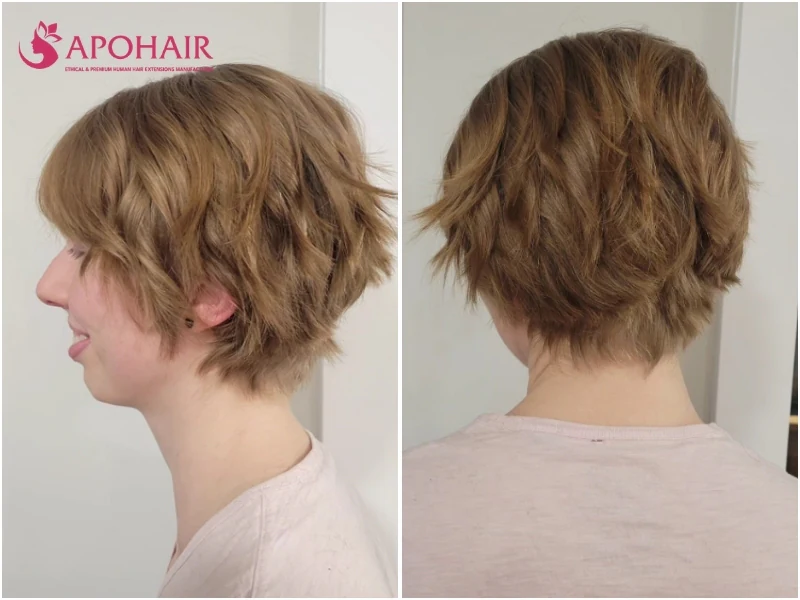
Why it works: It frames the jawline instead of exposing it, making it the natural choice for trying short hair without going all the way to a crop, since the balance carries both sections.
18. Grown-Out Pixie
A grown-out pixie is a pixie in the in-between stage, longer all over but still shaped around the head. On an oval face, the awkward grow-out phase looks far less awkward, because balanced proportions carry uneven lengths better than most face shapes. It can be a style in its own right.
Growing out successfully means shaping, not just waiting. Trimming the sides and nape to follow the head while the top catches up stops the cut from turning into a helmet. Most textures suit it. A light shaping every 6 to 8 weeks keeps the grow-out looking deliberate.
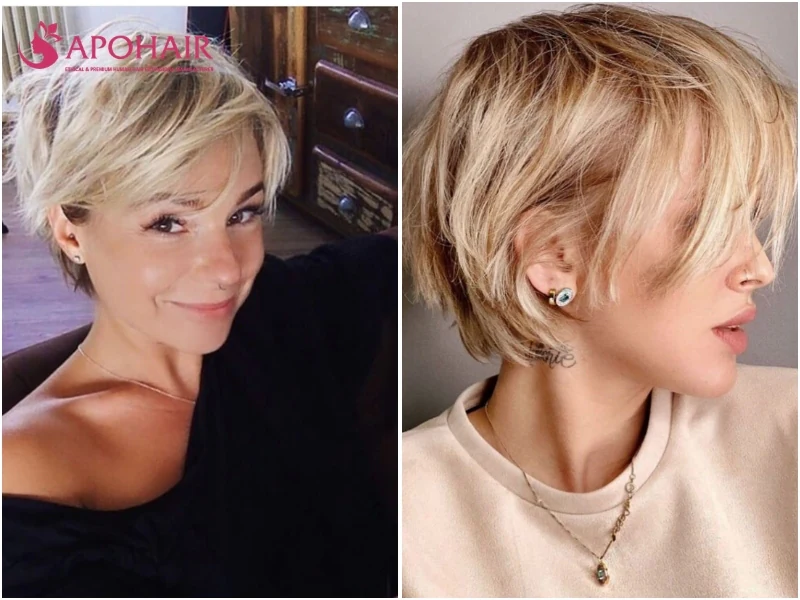
Why it works: The awkward grow-out phase looks far less awkward on an oval face, because balanced proportions carry uneven lengths better than most face shapes.
19. Micro Pixie (Buzz Crop)
A micro pixie, or buzz crop, takes the hair to just a fraction of an inch all over. On an oval face with an average neck, it is the most daring pixie of all, yet the balanced proportions carry it easily. The eyes and cheekbones become the whole focus.
A clipper guard sets the length, often with a slightly longer top blended in. Head shape matters as much as face shape at this length, since the skull is on full view, which is why some women trial the length with a longer guard first. Every texture works, including coily hair. The length changes quickly, so a buzz needs refreshing every 2 to 3 weeks.
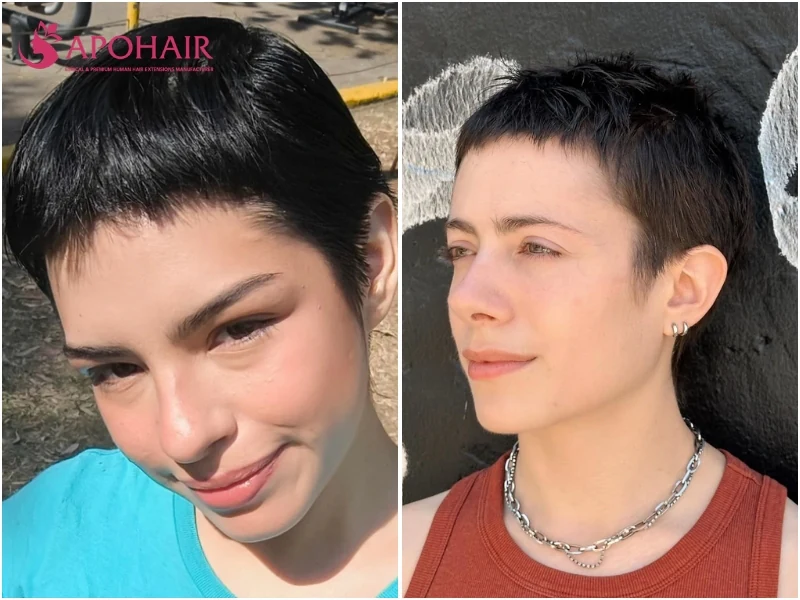
Why it works: It is the most daring pixie of all, yet an oval face’s balanced proportions carry it easily, turning the eyes and cheekbones into the whole focus.
20. Pixie With Side-Swept Bangs
A pixie with side-swept bangs grows the front long enough to sweep across the forehead from a side part. On an oval face with a high forehead, the sweep covers part of that height without closing off the face. It also draws attention straight to the eyes.
The fringe takes a diagonal line, shortest near the parting and longest at the far temple. Straight and wavy hair both sweep easily. The fringe grows into the eyes within weeks, so it needs a trim every 4 weeks.
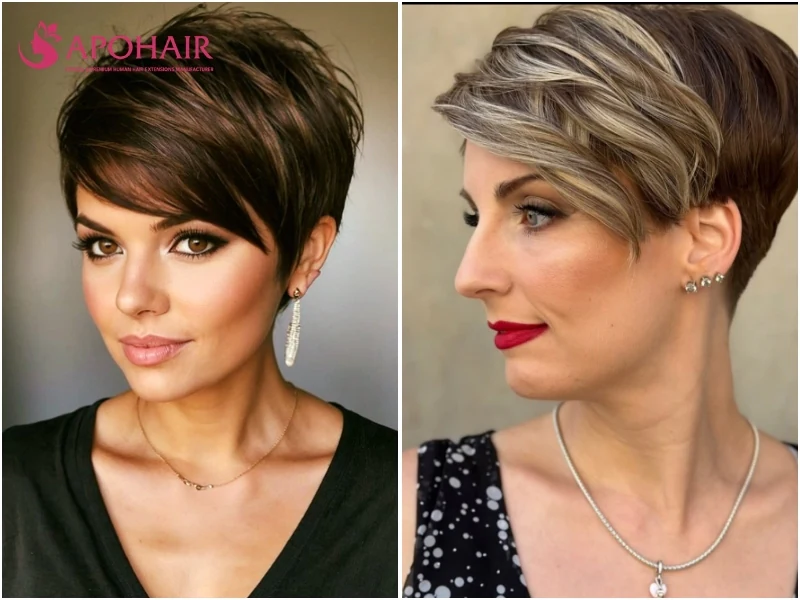
Why it works: The sweep covers part of a high forehead without closing off the face, and it draws attention straight to the eyes.
21. Pixie With Curtain Bangs
A pixie with curtain bangs splits the fringe down the middle and sweeps each side out to the temples. On an oval face, the curtain frames the eyes and cheekbones, and it covers a high forehead without closing it off. The open center keeps the face visible.
Each half of the fringe reaches the cheekbone at its longest point, which gives the curtain its sweep. On a pixie, that means the front stays noticeably longer than the rest of the cut. Straight to loosely wavy hair keeps the curve through the day. Both halves stay matched with a trim every 5 to 6 weeks.
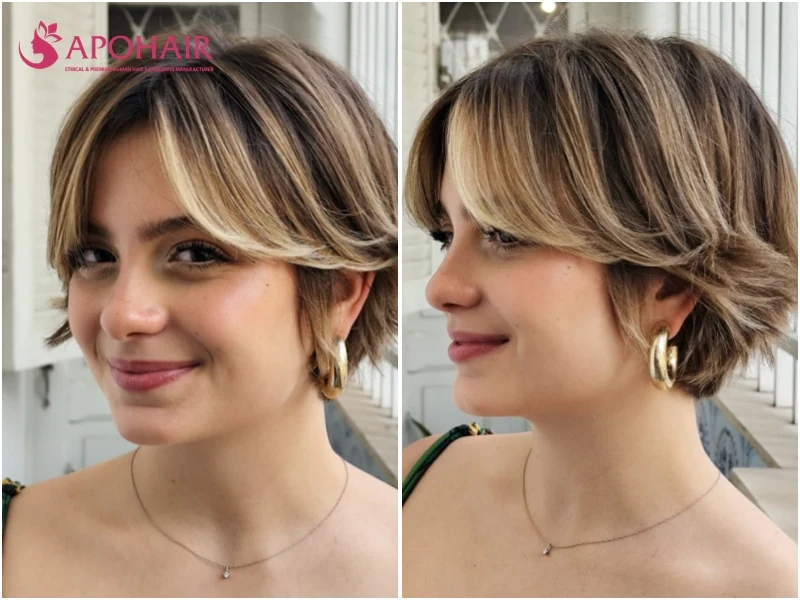
Why it works: The curtain frames the eyes and cheekbones and covers a high forehead without closing it off, keeping the face visible through the open center.
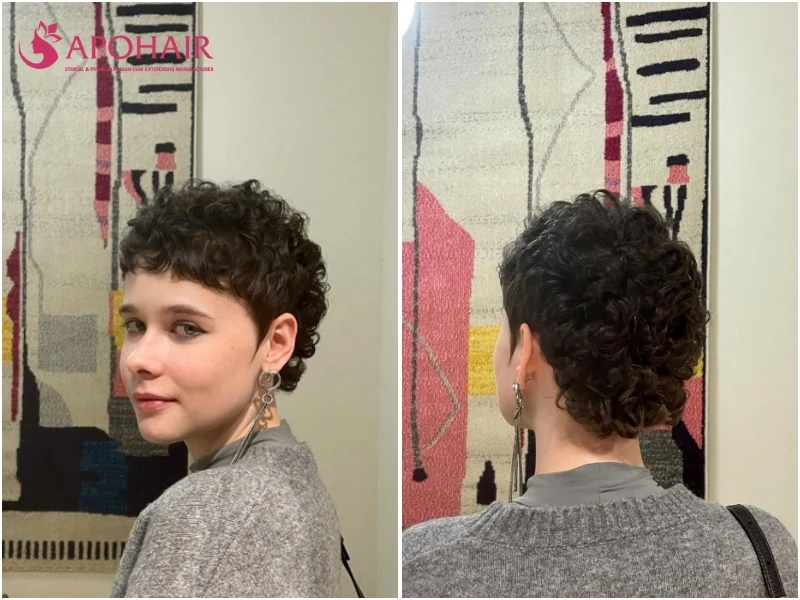
22. Curly Pixie
A curly pixie keeps the curl pattern intact and lets it build volume evenly across the head. On an oval face, that volume can sit anywhere below the crown, so the curls are free to do what they naturally do. It is one of the easiest pixies for an oval face to wear.
Dry cutting, one curl at a time, shows where each curl will actually land. Crown height is the one thing to watch, since tight curls stack upward quickly on many women with dense curl patterns. Type 3A to 3C curls suit it best. Day-to-day styling is minimal, with a reshape every 6 to 8 weeks.
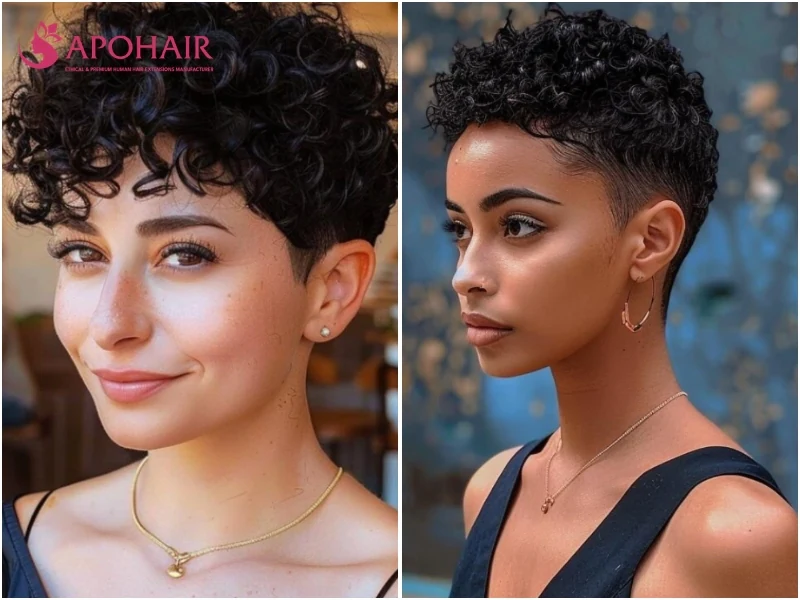
Why it works: That volume can sit anywhere below the crown on an oval face, letting the curls do what they naturally do, which makes it one of the easiest pixies to wear.
23. Wavy Textured Pixie
A wavy textured pixie lets a natural wave run through a slightly longer pixie, giving it soft, bending movement. On an oval face, the waves add character without changing any proportion. The result looks natural, since the hair does most of the work.
The top needs enough length for the wave to form, a little more than a classic pixie carries. Point-cutting removes weight so the waves can move. Type 2A to 2C hair suits it. A reshape every 6 to 7 weeks keeps the waves from dropping.
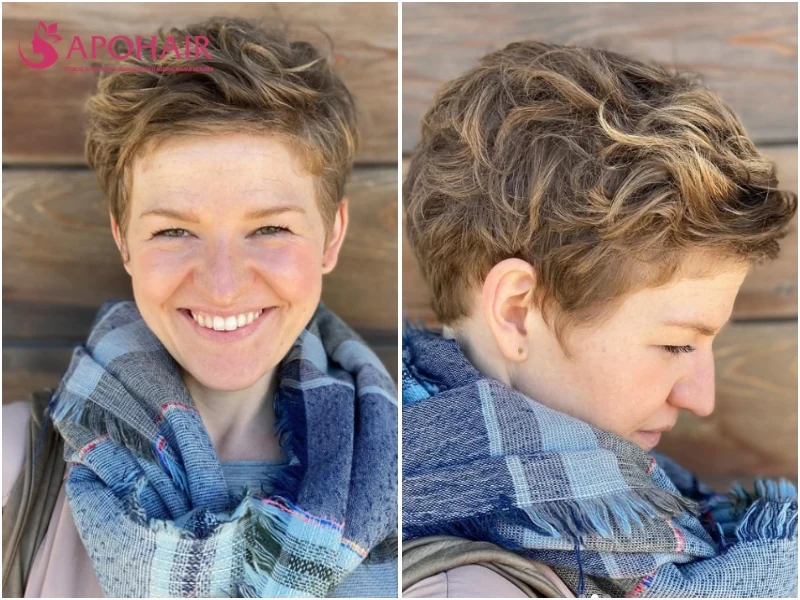
Why it works: The waves add character without changing any proportion, so the result looks natural on an oval face since the hair does most of the work.
24. Coily Tapered Pixie
A coily tapered pixie shapes Type 4 hair short at the nape and sides while keeping a rounded crown. On an oval face, the rounded shape follows the balanced proportions and shows off the head’s natural outline. It is low-fuss and graphic at the same time.
The taper grades evenly from nape to crown, and shaping the top on dry coils avoids any surprise from shrinkage. Type 4A to 4C hair holds the rounded shape without product. The taper needs a clean-up every 3 to 4 weeks.
Why it works: The rounded shape follows an oval face’s balanced proportions and shows off the head’s natural outline, staying low-fuss and graphic at the same time.
Each of the 24 works on an oval face for the same reason: balanced proportions leave the choice to taste. The hair decides which one lasts.
How to Choose a Pixie Cut for an Oval Face?
Choosing a pixie for an oval face comes down to four decisions: how long to go, what the fringe does, how the hair behaves, and how long the neck is. With the face shape already balanced, these decide the look rather than fix a flaw.
Choose by Length: Long Pixie or Cropped Pixie
An oval face can wear both ends of the pixie range, so length is a question of lifestyle and taste rather than correction for most women. A long pixie gives the most styling options and grows out gently. A cropped pixie or a buzz shows the face most boldly but needs a recut every few weeks. The bixie and the grown-out pixie sit between the two.
Choose by Forehead Height and Fringe
A high forehead is the one feature of an oval face that a pixie sometimes needs to address. Side-swept and curtain bangs cover part of it while keeping the face open. A heavy, straight-across fringe covers too much and shortens an oval face, so a lighter fringe does the job better. With an average forehead, a pixie can skip the fringe entirely.
Choose by Hair Texture and Density
Curly and coily hair gives a pixie natural volume, and on an oval face that volume can sit anywhere below the crown. Straight hair suits sleek, sculpted, and classic pixies, since it holds clean lines. Fine hair looks best in feathered, wispy, and soft pixies, where thin ends become part of the design. Thick hair suits choppy, undercut, and shaggy shapes that can take weight out.
Choose by Neck Length and Nape Shape
Neck length varies from one woman to the next, and a pixie shows it in full. A very short, cropped nape lengthens a long neck further, while a pixie mullet or a grown-out nape softens it. On a short or average neck, a tapered nape looks neat and lifts the silhouette. Checking the neck in profile settles the nape length faster than a front view.
Which Pixie Cuts Should You Avoid With an Oval Face?
The pixie cuts to avoid on an oval face are the ones that tip its balance with a heavy fringe, piled height, or a nape cropped too far. Oval faces have very few true mistakes. Each of these fails by pushing a balanced face in a single direction:
- A heavy straight-across blunt fringe. A thick fringe draws a bar across the forehead and shortens an oval face, turning its balance into a squat, top-heavy shape.
- Piled crown volume with flat sides. Height stacked on top with nothing at the sides stretches an oval face upward and makes it read long.
- A severely cropped nape on a long neck. Clippering the nape very short exposes the full length of a long neck, which makes the whole silhouette look stretched.
- A one-length grown-out pixie with no shape. A pixie left to grow out without shaping settles into one even length all around, which turns into a helmet that hides the face’s balance.
Frequently Asked Questions
Does a Pixie Cut Suit an Oval Face?
A pixie cut suits an oval face better than almost any other face shape. Balanced proportions mean nothing needs hiding, so every pixie from a long, soft shape to a buzz crop can work. The only pixies to avoid are the ones that tip that balance, such as a heavy blunt fringe or piled crown height.
Is a Long Pixie the Best Pixie for an Oval Face?
A long pixie is the most versatile pixie for an oval face, which is why it is the most requested. Its longer top can be worn forward, to the side, or back, and it grows out gently. It is not the only good choice, since an oval face can also carry classic, cropped, and buzz-short pixies.
What Makes a Pixie Cut Look Feminine on an Oval Face?
Soft edges make a pixie look feminine on an oval face. Wispy sideburns, a longer nape, and a fringe that falls toward the eyes all soften the frame. Point-cut or feathered perimeters read softer than clippered edges. A little extra length on top also gives the shape more movement around the face.
Can an Oval Face Wear Any Pixie Cut?
An oval face can wear nearly any pixie cut, which is why it is often called the most adaptable face shape. The exceptions are pixies that tip its balance, such as a heavy straight-across fringe that shortens it or piled crown height that lengthens it. Everything else comes down to taste and hair type.
What Pixie Suits an Oval Face With Fine Hair?
A feathered, wispy, or feminine soft pixie suits an oval face with fine hair. These cuts turn thin ends into part of the design instead of fighting them. A classic pixie also works, since short sides make fine hair look denser. Heavy, choppy, or bowl shapes need more hair than fine strands can supply.
Can an Oval Face With Curly Hair Wear a Pixie?
An oval face with curly hair suits a pixie very well, because curls add volume that an oval face can wear anywhere below the crown. Cutting the curls dry, one at a time, keeps the shape even. The one thing to watch is crown height, since tight curls stack upward and can lengthen the face.
What Pixie Works With Glasses?
A pixie with side-swept bangs or a long pixie works well with glasses. The swept fringe sits above the frames instead of tangling with them, and the longer top keeps the balance above the eyes. Very short, cropped sides can make heavy frames look larger, so a softer side length usually suits glasses better.
What Pixie Suits an Oval Face Over 50?
A soft, feathered pixie or a long pixie tends to suit women with oval faces best after 50. Both keep a gentle frame around the face without daily heat styling. A side-swept fringe softens the forehead, and a slightly longer nape flatters the neck. Soft edges usually look more current than sharp, clippered lines.
Conclusion
An oval face turns the pixie from a correction into a choice for women considering the cut. With balanced proportions already in place, it decides what to show off, whether that is the eyes, the cheekbones, the jaw, or the neck. The only real risks are a heavy fringe, piled height, a nape cropped too short on a long neck, and a shapeless grow-out, all of which tip the balance. Texture, density, and neck length then pick which of the 24 fits best.
If you run a salon or source hair for a shop, pixie clients are often the first to try clip-in lengths or a wig for a change of look between cuts. Our team can send samples and factory-direct pricing on texture-matched clip-in sets and human hair wigs. Because we manufacture 100% Vietnamese Human Hair in our own facility, you can match density and texture to each client rather than relying on whatever a middleman had in stock.
