








15 Hairstyles for Women With a Small Face That Keep Your Features in Proportion
A small face measures shorter and narrower than average across four landmarks: forehead width, cheekbone width, jaw width, and total face length. Small is a matter of size rather than shape, so a small face can also be round, oval, or square. The problem it creates is one of ratio. A full head of hair easily outgrows the face it surrounds and swallows the features instead of framing them.
The guide gathers 15 hairstyles for women across three lengths, each explaining what it does to the ratio between hair and face. The sections that follow cover how to choose, including how height, shoulder width, and neck length change the answer, and which shapes overwhelm small features.
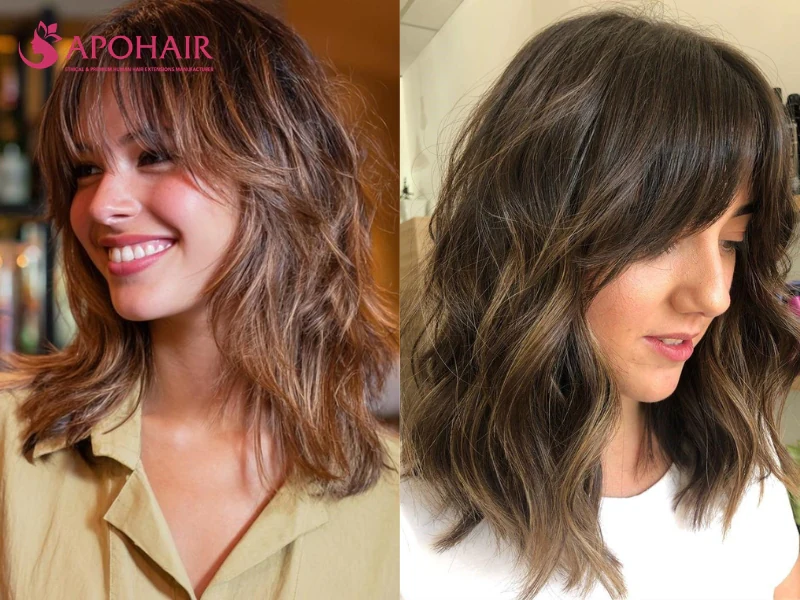
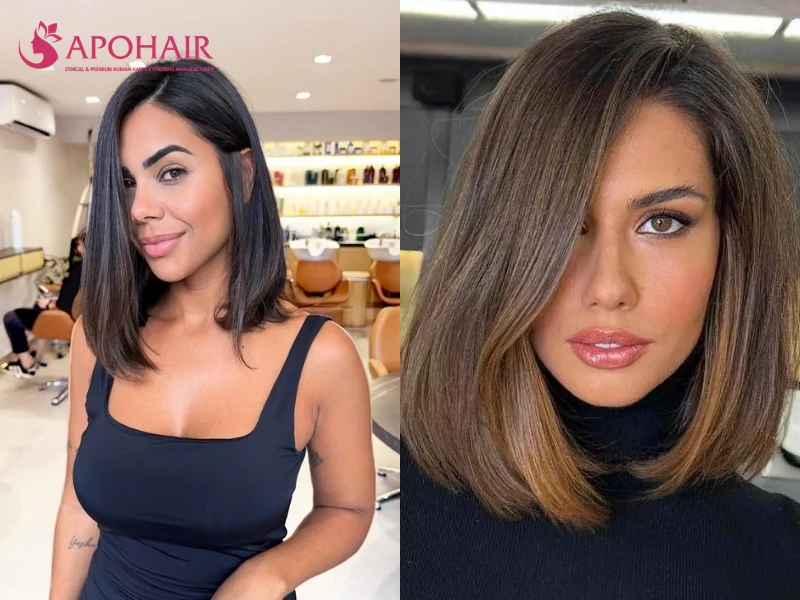
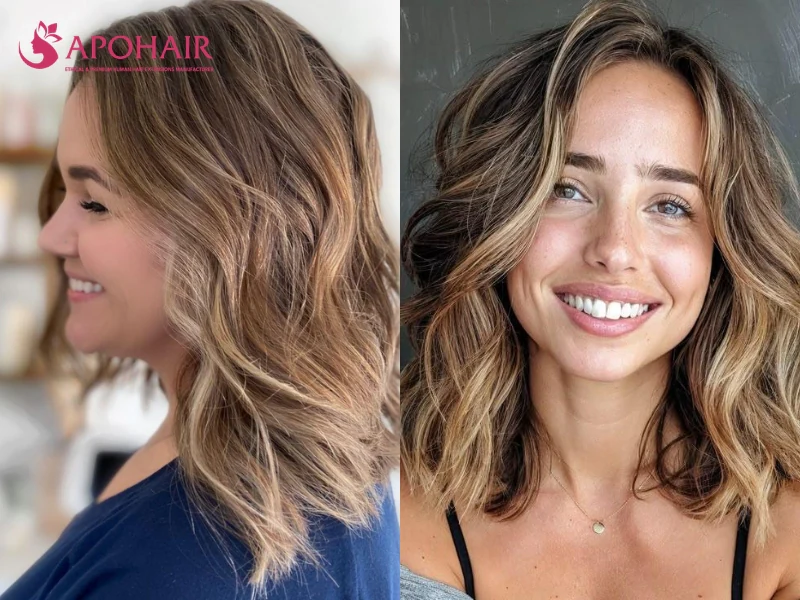
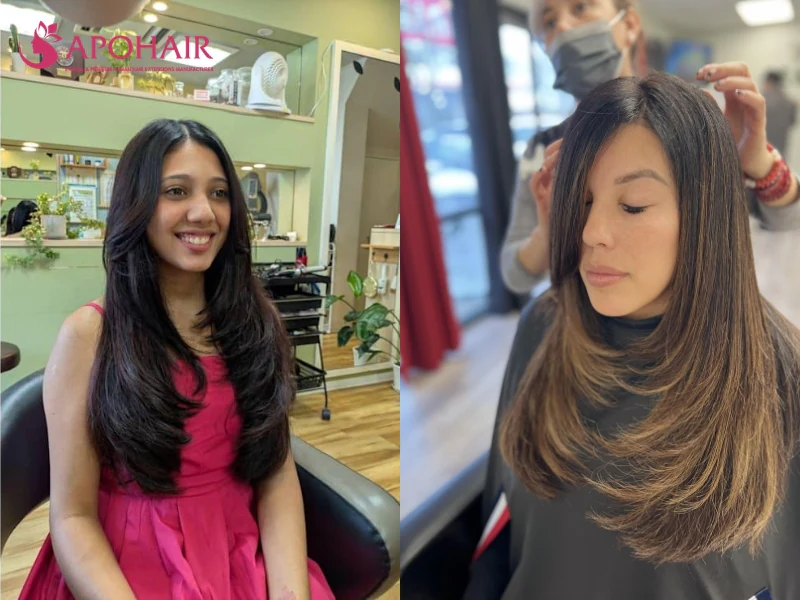
Short Hairstyles for a Small Face That Keep the Head Balanced
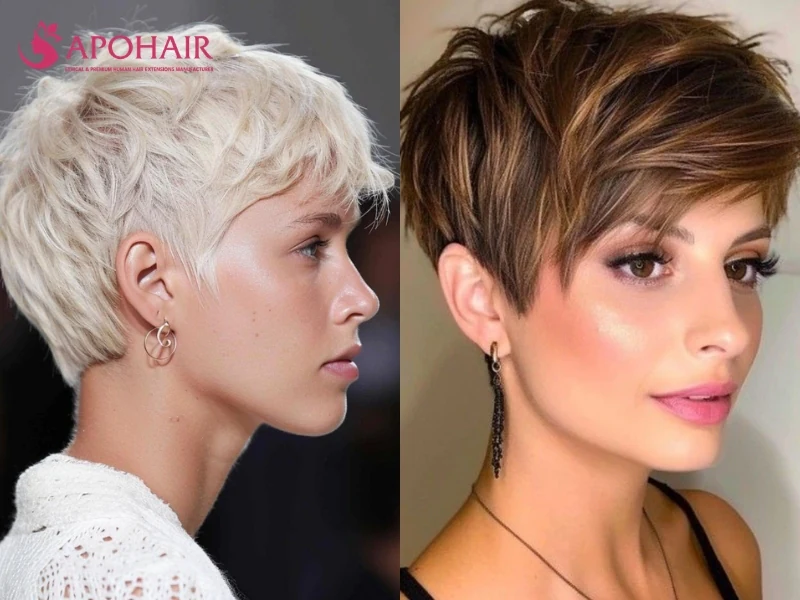
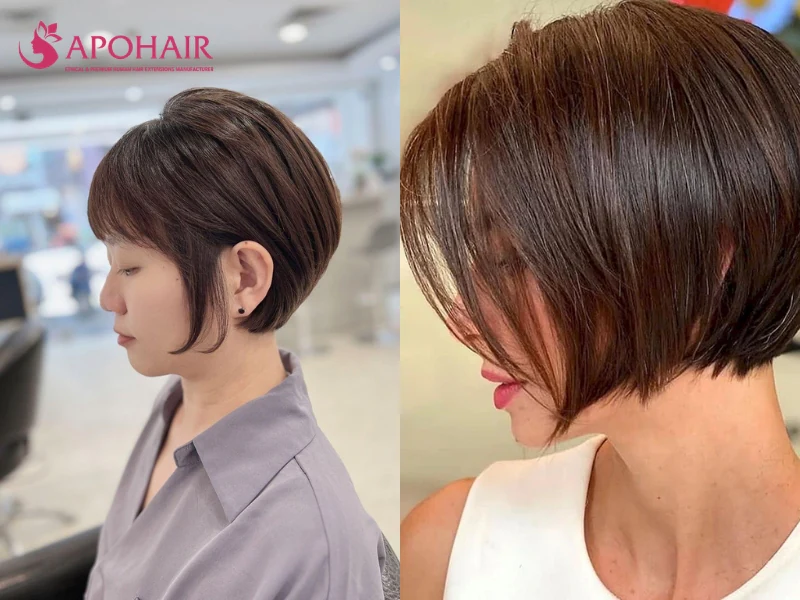
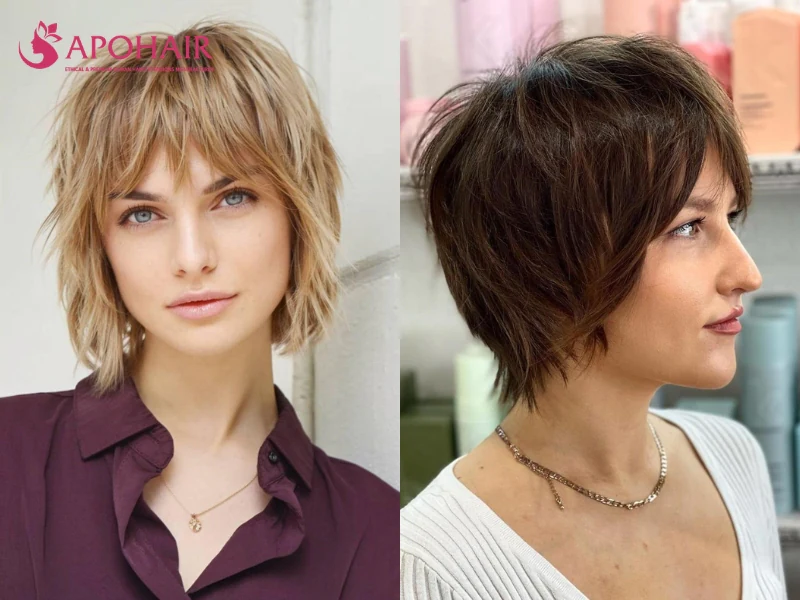
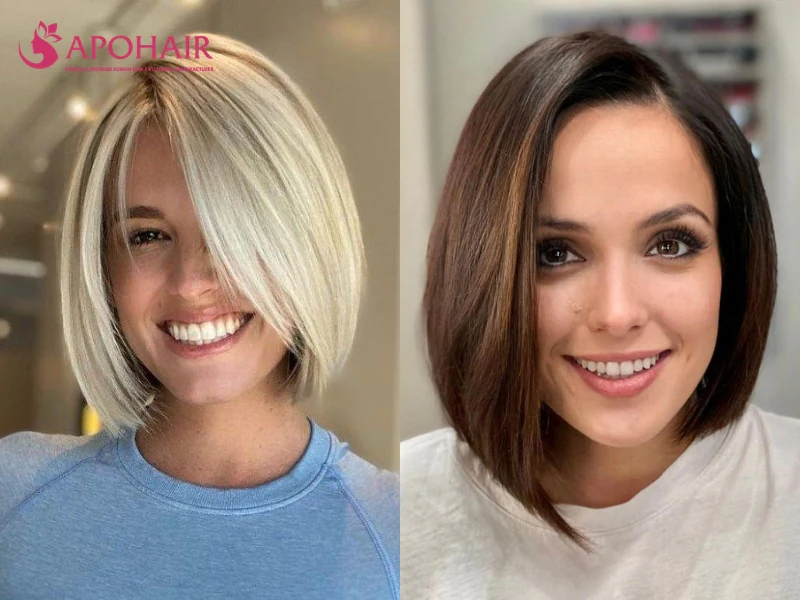
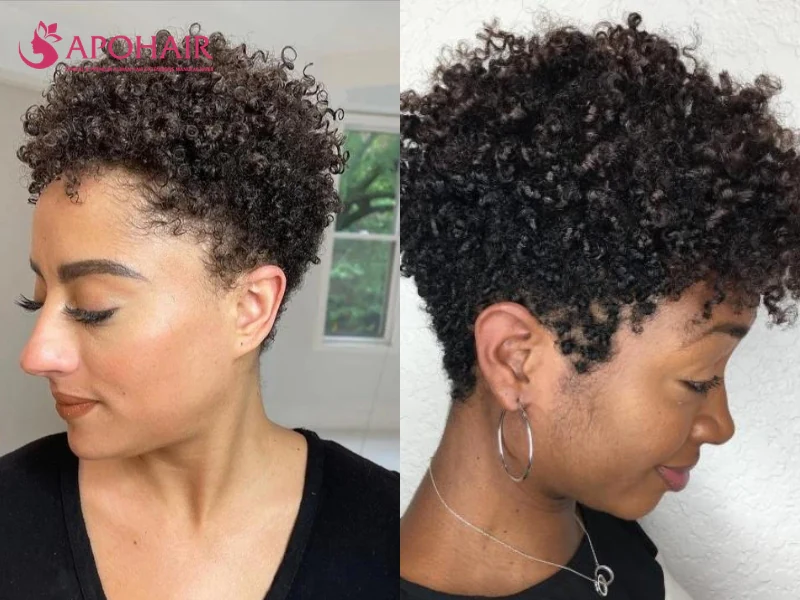
Short cuts remove bulk fastest, which makes them the safest group for small features. A textured pixie keeps soft volume on top and an ear-length bob tapers its sides. A short shag finishes in wispy ends, a chin-grazing bob takes a side part, and a cropped curly cut shapes close at the temples. Each one keeps the head’s silhouette close to the face’s own scale.
1. Textured Pixie With Soft Volume on Top
A textured pixie cuts the sides and back close while leaving two or three inches on top, cut into separated pieces rather than one solid block. Almost no hair sits beside the face, so nothing competes with small features for attention. The soft height on top lifts the head’s outline just above the crown. Type 2 and Type 3 hair separates into pieces naturally, while Type 1 hair needs point-cutting to avoid a helmet. Fine density suits it especially well, since a pixie needs no bulk to hold its shape.
Height on a petite frame stays modest, since a tall crown on a small head reads as top-heavy. Taller women with broad shoulders take more height, which keeps the head from looking undersized against the body. Trims run every four to six weeks, since the shape lives on the balance between short sides and longer top. A common mistake is leaving the sides too full, which widens the head at ear level.
Why it works: With almost no hair beside the face, nothing competes with the features of a small face, and the soft height on top lifts the outline just above the crown without adding bulk, which suits women with fine hair.
2. Ear-Length Bob With Tapered Sides
An ear-length bob finishes above the jaw with the sides tapered so the perimeter follows the head rather than flaring away from it. Ending the hair above the jaw leaves the entire lower face uncovered, which keeps small features visible instead of buried under length. The tapered sides matter more than the length, since they stop a bob widening exactly where the cheeks are. Type 1 and Type 2 hair holds the taper cleanly, and medium density gives it enough weight to sit flat.
Women with a short neck do better with this length than with a chin-length version. Ending above the jaw leaves neck visible and stops the head merging into the shoulders. Very long necks pair better with slightly more length. Thick hair needs weight removed under the taper or the sides puff out. Trims run every six weeks. A common mistake is cutting the taper too high at the nape, which exposes so much neck that the head shrinks against the shoulders.
Why it works: Ending above the jaw keeps the lower face in view, and the tapered sides stop the bob from widening at the cheeks, so a small face stays the focal point instead of getting buried under length.
3. Short Shag With Wispy Ends
A short shag layers throughout and finishes in fine, wispy ends rather than a blunt perimeter. Wispy ends carry less visual weight than a solid line, so the hair reads as light around a small face instead of forming a heavy border. The layers concentrate movement at the crown, which is the one place added height helps without crowding the features. Type 2 and Type 3 hair suits it best, since the layers need natural bend to separate. Fine hair gains the illusion of density.
The wispy finish suits women with narrow shoulders, where a heavier perimeter would look too wide for the frame. Broader shoulders can carry a fuller version with more density left at the ends. Curly hair needs the layers cut dry so each one lands where intended once it springs up. Upkeep is moderate at eight weeks, since a grown-out shag still reads as intentional. A common mistake is thinning the ends on already fine hair, which leaves them see-through rather than soft.
Why it works: Wispy ends carry less visual weight than a blunt line, so the hair reads as light around a small face, and the movement sits at the crown where extra height does no harm.
4. Chin-Grazing Bob With a Side Part
A chin-grazing bob ends at the chin and takes a side part, so one side falls heavier and crosses the forehead on a diagonal. The diagonal breaks the symmetry that makes a small face look doll-like. The chin ending marks the lower boundary of the face, which keeps the visible hair area close to the face’s own size. Type 1 to Type 2C hair holds the line best, and fine to medium density supports a blunt perimeter.
Women of average to tall height carry this length comfortably. A very petite frame does better with the ear-length version, since chin length plus a small body reads as hair-dominant. A short neck needs the part deeper for a vertical break. Trims run every six to eight weeks. A common mistake is a middle part here, which frames a small face with two identical curtains and flattens it.
Why it works: The diagonal part breaks the symmetry that can make a small face look doll-like, while the chin-level ending keeps the visible hair close to the face’s own size.
5. Cropped Curly Cut Shaped Close at the Temples
A cropped curly cut keeps curls short and removes bulk at the temples, so the widest part of the curl pattern sits above the ears rather than beside the cheeks. Curls expand as they dry, which is how a small face ends up dwarfed by its own hair. Volume stays at the crown, where it adds height rather than width. Type 3A to Type 4C hair is the texture this applies to, and high density needs the most removal.
A petite frame needs the crown height kept low, since a tall curl stack on a small body exaggerates the difference. Taller women can keep more height for balance. Each curl is cut dry in its natural clump, because stretching it while cutting drops the finished length by inches. Trims run every ten to twelve weeks. A common mistake is cutting curly hair to a straight wet guideline, which produces a triangle widest at the cheeks.
Why it works: Removing bulk at the temples stops the curls expanding beside the cheeks, which is how a small face ends up dwarfed by its own hair, and it leaves the volume where it adds height instead.
Medium Hairstyles for a Small Face That Add Length Without Bulk
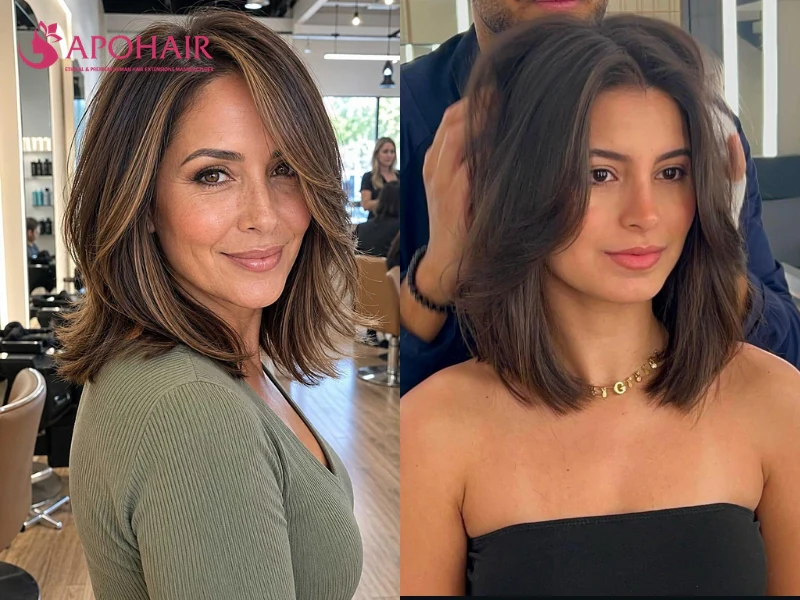
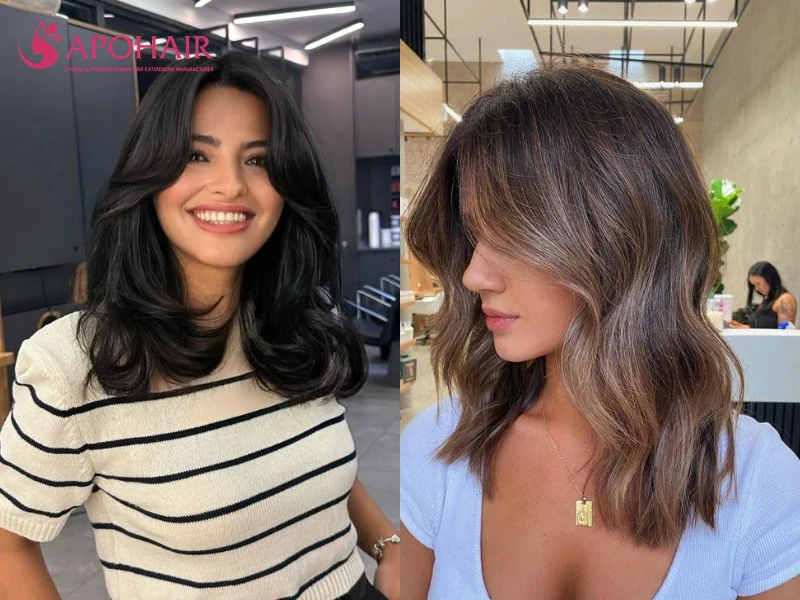
Medium lengths lengthen the look without adding mass. A collarbone lob softens at the ends, a shoulder-length cut takes long curtain bangs, a mid-length shag thins its layers, a straight lob parts deeply, and shoulder-length waves bend away from the face. The rule through this group is that added length sits below the jaw, never beside it.
6. Collarbone Lob With Soft Ends
A collarbone lob stops at the collarbone with softened rather than blunt ends. The length passes the jaw and finishes on bone, which draws the eye downward and stretches the vertical line without adding a single inch of width at the cheeks. Soft ends keep the perimeter light, so the hair does not form a solid block around a small face. Type 1 to Type 3 hair carries it, and medium density gives the ends enough substance to look deliberate rather than sparse.
The collarbone landmark works well on average and taller frames. Women with a short neck do better with the ends an inch above it, since hair landing on a short neck closes the gap that keeps the head distinct from the shoulders. Thick hair needs internal weight removed so the lob does not pyramid. Trims come every eight to ten weeks. A common mistake is a heavy blunt perimeter on this length, which creates a shelf of hair wider than the face above it.
Why it works: Passing the jaw and finishing on bone stretches the vertical line without adding width at the cheeks, a safe way for women with a small face to gain length.
7. Shoulder-Length Cut With Long Curtain Bangs
A shoulder-length cut with long curtain bangs pairs a simple perimeter with a fringe that splits at the middle and lengthens to the cheekbone or below. Long bangs frame the forehead and fill the upper third of the face with a soft edge, which matters on small features where a hard hairline can look severe. The bangs stay long precisely so they do not cut the face horizontally in half. Type 1 to Type 2C hair sweeps most easily, and fine to medium density suits the narrow fringe section.
This length suits women with narrow shoulders well, since shoulder-length hair matches the frame instead of overhanging it. Broader shoulders can go longer. The curtain needs a round brush directing it outward on damp roots or it falls flat over the eyes. Bangs need trimming every six weeks even when the length does not. A common mistake is cutting the bangs short enough to sit at the brow, which shortens the face vertically and makes small features look crowded.
Why it works: Long bangs give the upper third of a small face a soft edge, and because they stay long they never cut the face in half horizontally.
8. Mid-Length Shag With Thin Layers
A mid-length shag layers from the jaw down and keeps each layer thin, so the shape carries movement without mass. Thin layers let light through the hair, which stops the silhouette reading as a solid block around a face that is already small in scale. The height concentrates at the crown while the sides stay narrow. Type 2 and Type 3 hair separates the layers naturally, and medium density holds the shape; very fine hair loses too much through thin layering.
A petite frame does best with the shortest layer no higher than the jaw, since layers starting above it stack volume beside the cheeks and crowd small features. Taller women can start them a little higher. Curly hair takes the style with each layer cut longer for shrinkage. Trims run every eight weeks. A common mistake is layering the sides more heavily than the back, which pushes width out at exactly the point where a small face needs it least.
Why it works: Thin layers let light through the hair, so the silhouette stops reading as a solid block around a face that is already small in scale.
9. Straight Lob With a Deep Side Part
A straight lob with a deep side part combines a clean one-length perimeter around the shoulders with a part set well off middle. The asymmetry is doing the work, because two even curtains shrink small features while a diagonal sweep adds an angle that reads as deliberate. The straight perimeter keeps the outline narrow, so no width appears beside the cheeks. Type 1 and Type 2 hair suits the sleek finish, and fine to medium density supports the blunt line.
Height and shoulder width decide how blunt the perimeter should be, since a heavy straight line across narrow shoulders can look boxy while broader shoulders carry it. Women with a short neck benefit from the deep part, which creates a vertical break that lengthens the whole head and neck line. Fine hair holds the lob better than longer lengths. Trims run every eight weeks. A common mistake is flat-ironing the roots as well as the lengths, which presses the crown flat against a small head and leaves the lob looking limp.
Why it works: The straight perimeter keeps the outline narrow, and the off-center part adds the deliberate angle that two even curtains would flatten on a small face, with women who have fine hair holding the shape best.
10. Shoulder-Length Waves Bent Away From the Face
Shoulder-length waves set with the front sections bending outward keep the hair from closing in around small features. An outward bend opens the space between the hair and the cheeks, while an inward curl wraps the face and visually shrinks it further. The wave pattern also breaks up the perimeter so the shape does not read as a solid mass. Type 1 to Type 2C hair holds the set longest, and medium density gives the waves body without bulk.
A petite frame does better with a looser wave, since tight waves add apparent volume that competes with a small head. Taller or broader frames can take a fuller set. Ladies with fine hair need texture spray before heat so the bend survives past midday. The set lasts a day or two. A common mistake is curling the front sections toward the face, which drapes hair over the cheeks and reduces the visible face further.
Why it works: An outward bend opens space between the hair and the cheeks, where an inward curl would wrap the face and shrink a small face even further.
Long Hairstyles for a Small Face That Stay Proportional
Long hair works when the weight sits below the jaw and the roots stay flat. The options are long layers starting below the chin, a middle part over flat roots, a high ponytail with face-framing pieces, long waves with volume below the jaw, and a sleek low bun exposing the hairline.
11. Long Layers Starting Below the Chin
Long layers beginning below the chin leave the entire length beside the face untouched, with all movement built into the lower half. Keeping the shortest layer below the chin means no volume lands next to small features, so the face stays the widest visible thing rather than competing with a cloud of hair. The layers still remove weight, which stops long hair pyramiding at the ends. Type 1 to Type 3 hair carries them, and thick density benefits most.
Taller women carry long layers most easily, since length is read against the whole body rather than the face alone. A petite frame does better with the layers starting right at the chin line, to avoid an overwhelming drop of hair. Curly hair needs the layers cut dry and placed curl by curl. Upkeep is low at ten to twelve weeks. A common mistake is starting layers at the cheekbone on very long hair, which pushes volume up beside the face and buries small features.
Why it works: Starting the layers below the chin keeps all the movement in the lower half, so no volume lands next to the features and a small face stays the widest thing in view.
12. Long Hair With a Middle Part and Flat Roots
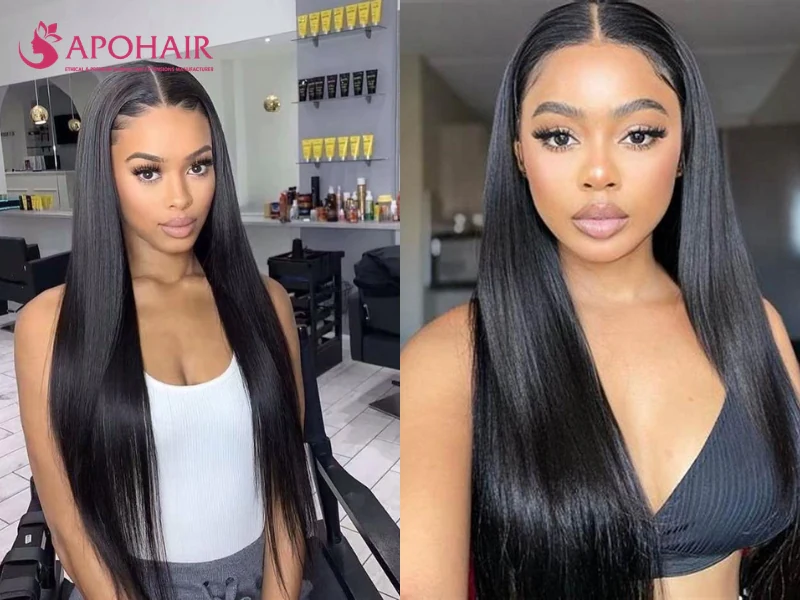
Long hair worn with a middle part and deliberately flat roots creates two clean vertical lines running past the face. The flat root is the mechanism, since lift at the crown on a small head makes the hair mass look larger relative to the face. Two straight vertical lines beside the face also narrow the silhouette rather than widening it. Type 1 and Type 2 hair falls flat naturally, and any density works as long as the crown stays smooth.
This one asks the most of body proportion, because very long hair on a petite frame drags the whole visual line down and shortens the appearance of height. Taller women with longer necks carry it best. Thick hair needs weight removed through the mid-lengths to stop the triangle shape forming. Trims for the ends run every ten weeks. A common mistake is adding root volume to balance the length, which enlarges the hair mass at precisely the point where a small face needs it contained.
Why it works: Flat roots stop the hair mass growing larger relative to a small face, and two straight vertical lines narrow the silhouette instead of widening it, which is why taller women with longer necks carry it best.
13. High Ponytail With Face-Framing Pieces
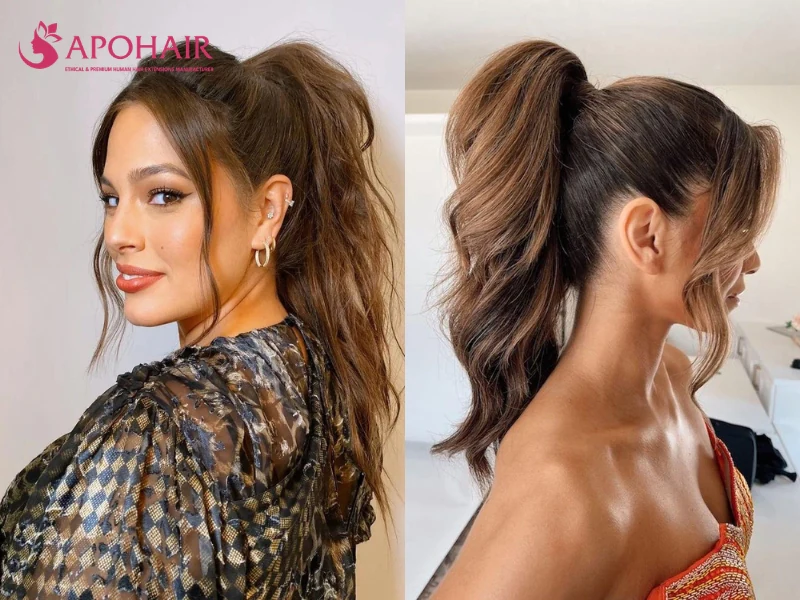
A high ponytail gathers the length at the crown and leaves two pieces loose beside the face. Pulling the mass up and back removes hair from around the cheeks, which lets small features sit at full visible size. The loose front pieces stop the exposed outline looking severe, and the height adds to the head’s vertical line. Every texture works, and Type 3 and Type 4 hair gives the fullest tail.
Women with a short neck gain the most here, since lifting the hair off the nape separates the head from the shoulders. A very petite frame keeps the tail at mid-height rather than the crown. The anchor point shifts between wears, because the American Academy of Dermatology links tightly pulled ponytails to traction alopecia. A common mistake is leaving the front pieces so thick that they cover the cheeks and cancel the benefit.
Why it works: Pulling the mass up and back clears hair from around the cheeks, so the features of a small face sit at full visible size, and the loose front pieces keep the outline from looking severe.
14. Long Waves With Volume Kept Below the Jaw
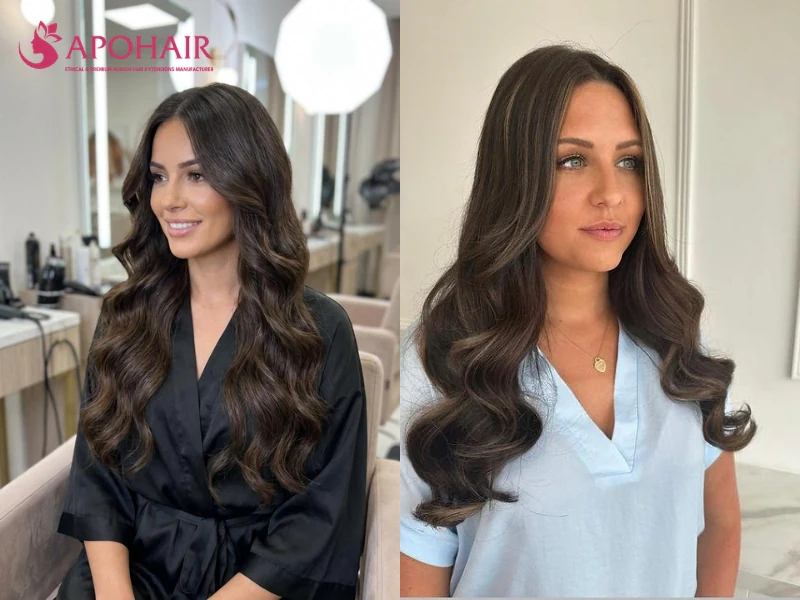
Long waves set to begin below the jaw keep the top section smooth and place all the movement in the lower half. Volume below the jaw sits away from the face, so the widest part of the silhouette falls near the shoulders rather than at the cheeks. The smooth upper section keeps the hair in scale with small features. Type 1 to Type 2C hair holds this set, and medium to thick density gives the waves body.
Broad shoulders carry low volume well, since the widest point of the hair matches the widest point of the frame. Women with narrow shoulders need a looser wave so the hair does not overhang the body. Fine hair needs the waves set on a larger barrel to avoid tight curls that add bulk. The set lasts two days. A common mistake is starting the wave at the ear, which puts volume directly beside the face and reverses the entire effect.
Why it works: Keeping the waves below the jaw puts the widest part of the silhouette near the shoulders instead of the cheeks, so the hair stays in scale with a small face.
15. Sleek Low Bun That Exposes the Hairline
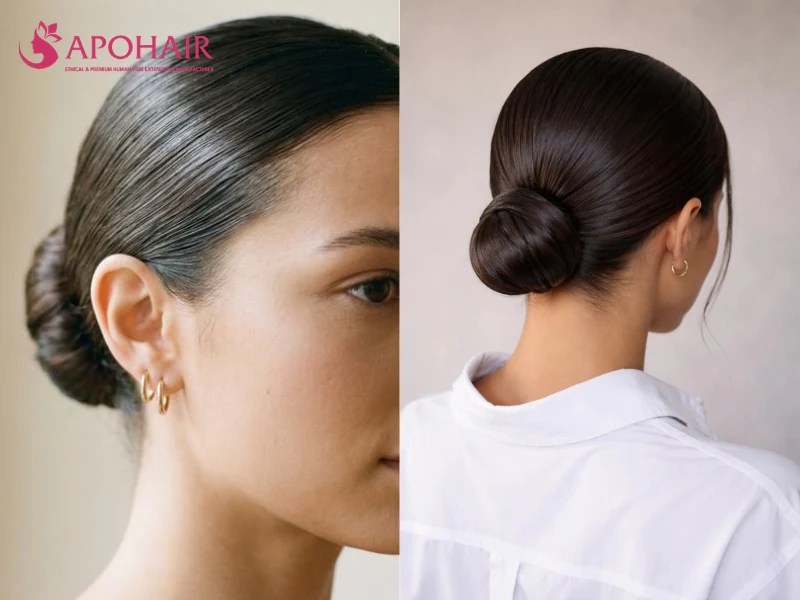
A sleek low bun smooths all the hair back from the hairline and coils it at the nape, leaving the face and forehead fully uncovered. Exposing the hairline shows the true size of the features rather than hiding their edges, and small faces often gain definition from that clarity. A low placement keeps the head’s outline compact instead of adding height. Every texture works, and fine hair benefits from the polish the style gives.
This style suits women with long necks most, since a low bun sits against the nape and fills the space between head and shoulders. A short neck does better with the bun raised slightly, which avoids merging the head into the shoulder line. Smoothing cream and a fine comb set the hairline. Lower anchors spread tension better than crown anchors for repeat wear. A common mistake is pulling the hairline so tight that it stretches the features, which exaggerates rather than balances small proportions.
Why it works: A smooth hairline shows the true size of the features and the low placement keeps the outline compact, which is why a small face often gains definition from this style, especially on women with long necks.
How Should Women Choose a Hairstyle for a Small Face?
To choose a hairstyle for a small face, weigh six decisions: the ratio of hair to face, the ratio to the body, texture, density, forehead height, and daily upkeep. Ratio decides first, since every other factor only adjusts a shape that is already the right size.
- The ratio of hair to face is the main rule. The hair mass stays close to the scale of the face it surrounds, which means bulk sits above the crown or below the jaw, never beside the cheeks.
- The ratio to the body changes the answer completely. Very long, heavy hair overwhelms a petite frame, while a tall or broad-shouldered frame makes a very short cut look undersized. A short neck needs the length to stop above the collarbone, so the head stays distinct from the shoulders.
- Texture decides where volume lands on its own. Curly and coily hair expands at the temples unless shaped close there, and every curl is cut dry so the finished length lands as planned.
- Density decides how much weight to remove. Thick hair needs internal weight taken out or it pyramids around a small face. Fine hair keeps blunt perimeters that would overwhelm thicker hair.
- Forehead height guides the fringe decision. A small forehead suits long curtain bangs or no fringe, since a short blunt fringe compresses the upper face.
- Daily upkeep decides what survives. Pixies need a trim every four to six weeks to hold their proportion, while shags, lobs, and long layers tolerate eight to twelve.
Hairstyles Women Should Avoid With a Small Face
These shapes fail on scale rather than taste, because each one puts hair mass where it competes with the features instead of framing them.
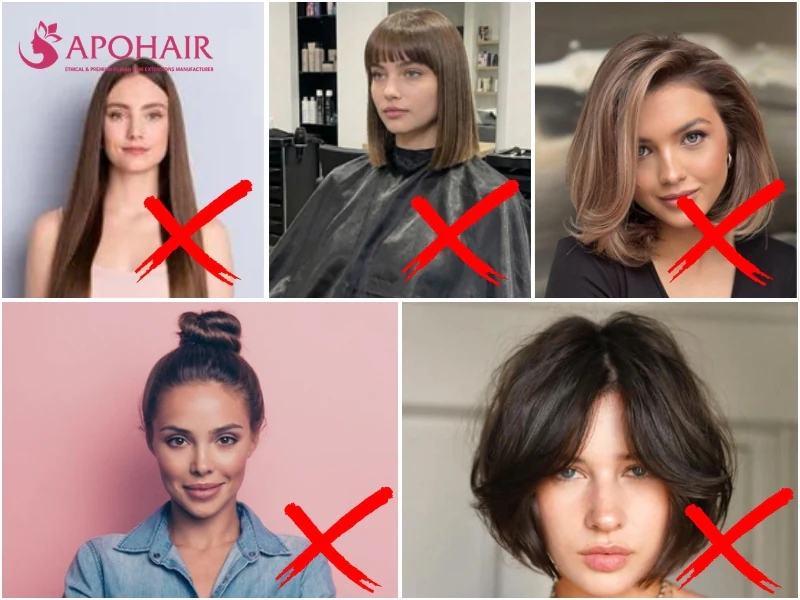
- Very long, one-length hair with no layers. A solid curtain from crown to waist is a larger visual mass than the face it surrounds, and it drags the whole proportion downward.
- A heavy blunt fringe cut at the brow. It removes the forehead from view and compresses the face into its lower two-thirds.
- Volume concentrated at ear level. Any shape widest beside the cheeks makes the face the narrowest point of the head instead of the focal one.
- A large, high topknot on a petite frame. The bun adds a second head-sized mass above a small head, which exaggerates the difference rather than balancing it.
- Two symmetrical curtains from a middle part on short hair. Matching panels either side of small features flatten the face and leave nothing to break the symmetry.
Frequently Asked Questions
What Hair Length Is Best for a Small Face?
Lengths that finish above the jaw or from the collarbone down work best, because both keep bulk away from the cheeks. Ear-length bobs and pixies suit petite women, while collarbone lobs suit taller ones. The length to approach carefully is chin to jaw on thick hair, where the perimeter can end up wider than the face.
Does Short Hair Make a Small Face Look Bigger?
Short hair makes small features look proportionally larger, since less hair surrounds them and the face occupies more of the head’s outline. The effect depends on where bulk sits. Close sides with height on top enlarge the apparent face, while short hair left full at the ears widens the head and shrinks the face by comparison.
Do Bangs Suit a Small Face?
Long curtain bangs and wispy side-swept fringes suit small faces, since both keep part of the forehead visible. Short blunt fringes cut at the brow cover the upper third entirely, which compresses small features into the remaining space. The rule is that the fringe reveals rather than hides the forehead.
What Is the Difference Between a Small Face and a Round Face?
Small describes size, while round describes shape. A small face measures shorter and narrower across all four landmarks, and it can be round, oval, or square at the same time. A round face is as wide as it is long at any size. A cut for it targets width, while a cut for a small face targets total hair volume.
Conclusion
For women, hairstyles for a small face come down to a single ratio, judged twice. First against the face, where bulk belongs above the crown or below the jaw. Then against the body, where height, shoulder width, and neck length decide how much length the frame carries. Texture and density then adjust the execution of a shape that is already correctly sized.
If you run a salon or supply one, small-scale proportions on female clients make density matching harder than length matching. A few extra grams beside the face change the whole ratio. Our team can send samples and factory-direct pricing on straight, wavy, and curly human hair wefts, tapes, and bulk hair. Because we manufacture 100% Vietnamese Human Hair in our own facility, you can match density and texture to each client rather than relying on whatever a middleman had in stock.
