








14 Best Women’s Short Hairstyles for Round Faces: Add Height and Vertical Lines
The best short hairstyles for round faces are the pixie cut, the asymmetrical bob, and the textured long bob (lob). A round face measures nearly as wide across the cheeks as it runs from hairline to chin. A short cut suits it when the cut adds height or a vertical line and keeps extra width away from the cheeks. Four decisions then narrow the choice: how full the face is, how dense the hair is, how the hair moves, and what the bangs and face-framing do. Short cuts fail on a round face when they end in a rounded line at the chin, sit under a heavy fringe, or push volume out at the sides.
A round face has soft, curved contours, full cheeks, and a jaw with no strong angle, and its widest point sits at the cheekbones. Short hair shows that shape more than long hair does, because less length falls past the jaw to break the circle. The same shortness also gives the cut direct control over the outline. Height at the crown, a diagonal part, and ends that finish below the chin all stretch the face toward a longer oval. The fourteen women’s short hairstyles below use those tools, from pixies and bixies to angled bobs, shags, and tapered natural cuts.




Best Short Hairstyles for Women With Round Faces
The textured pixie, angled A-line bob, and textured lob are the best starting points for women with round faces, each adding a vertical or a diagonal that the face lacks. The other eleven work on the same idea through angled lines, choppy layers, side-swept bangs, or natural curls.
1. Pixie Cut
A pixie cut keeps the back and sides close to the head and leaves a few inches on top to lift or sweep. On a round face, that combination moves the fullest part of the silhouette up to the crown, so the head reads taller and the cheeks read narrower. Close sides also stop the cut from adding any width at cheekbone level.
The top carries about 2 to 3 inches, point-cut so it lifts with a little paste instead of lying flat. The sides stay tight over the ears but taper softly at the sideburns, since a hard clipper line beside full cheeks draws attention to them. Fine to medium hair, Type 1A to 2B, holds the lift most easily, while thick hair needs the top thinned so it stands rather than puffs. A pixie loses its proportions fast and needs a recut every 4 to 6 weeks. A flat top is the failure mode, because it turns the whole head into the same circle as the face.
Why it works: The 2-to-3-inch top creates a taller axis above the forehead, while the close sides prevent the silhouette from expanding at the cheekbones.
2. Asymmetrical Bob
An asymmetrical bob gives its two sides different lengths, so the perimeter slopes down from a jaw-length half to a half that falls below the chin. On a round face, that slope lays a diagonal across the lower half, and a diagonal is the one line a circle does not have. The longer side also falls beside one cheek and narrows it.
Roughly 1.5 to 2 inches of difference reads as a deliberate choice, while a smaller gap looks accidental. A deep part above the shorter half sends most of the length toward the longer half and strengthens the slope. Straight and loosely wavy hair show the line best, and medium density keeps the long side from looking thin. The ends soften as they grow, and a recut at around 6 weeks brings the slope back.
Why it works: The 1.5-to-2-inch length difference converts a horizontal bob line into a diagonal, interrupting facial symmetry and extending one side below the chin.
3. Textured Long Bob (Lob)
A textured long bob, or lob, sits between the chin and the collarbone and breaks its ends into soft, separated pieces. On a round face, that length carries the outline well below the fullest part of the cheeks, which draws a longer vertical than a bob that stops at the jaw. The texture keeps the length from hanging as a heavy, rounded curtain.
Point-cutting through the last two inches separates the ends, and long layers starting below the chin add movement without building width at the cheeks. A side part adds a diagonal at the top. Most textures carry it, and Type 1B to 2B waves show the texture without much product. Layers that start at cheekbone height are the one change to skip, since they stack volume on the widest part of the face. A trim every 8 to 10 weeks keeps the ends piecey.
Why it works: The below-chin perimeter continues the eye downward, while layers beginning beneath the chin keep textured movement away from the widest part of the cheeks.
4. Short Shag
A short shag layers the hair all over in choppy, feathered pieces, with shorter layers at the crown and wispy ends around the jaw. On a round face, those crown layers add lift, and the broken outline replaces a smooth curve with an uneven edge that no longer echoes the face. The wispy ends keep weight off the cheeks.
The crown layers carry the height, so they stay shorter than the layers at the sides. Heavy layering at cheek level turns the shag into a ball of volume, which is the version a round face does without. Wavy hair in the Type 2A to 2C range builds the shag with little styling, and straight hair needs a texture spray. It grows out loosely and needs reshaping about every 8 weeks.
Why it works: Short crown layers shift the cut’s volume upward, while feathered ends break the smooth side curve that would otherwise repeat the face’s rounded outline.
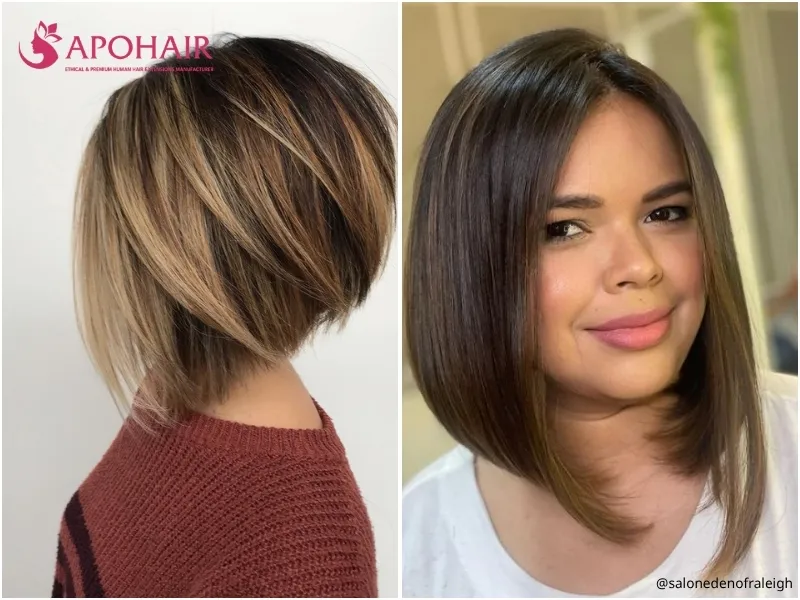
5. Angled A-Line Bob
An angled A-line bob climbs from a short, close back to longer front pieces that finish an inch or two past the chin. On a round face, the long front pieces hang beside the cheeks and draw two soft verticals down past the jaw. The face reads longer and narrower between them, and the short back lifts the profile.
The front sits about 2 to 3 inches lower than the back, enough for the front to clear the chin without turning severe. Point-cutting the front corners lets them fall straight rather than curving in toward the cheeks. Straight and slightly wavy hair show the angle cleanly, while thick hair needs interior thinning so the front does not flare. Growth at the back gradually flattens the angle, so the shape goes back for a cut every 6 to 8 weeks.
Why it works: The raised back adds lift, and the front’s 2-to-3-inch descent creates two uninterrupted lines that carry the eye past the cheeks and jaw.
6. Layered Bob
A layered bob adds soft layers to a bob that ends just below the chin, breaking one solid shape into pieces that move. On a round face, those layers belong below the cheekbones and around the jaw, where they add movement without widening the face. A little lift at the crown gives the cut some height.
The shortest layer lands near the mouth, and the top stays long enough to lift at the root. Starting a layer at the cheekbone pushes volume onto the fullest part of the face. Thick hair makes the layering visible, while fine hair takes only two or three long layers so the perimeter stays full. After about 8 weeks the layers start to blend and need refreshing.
Why it works: Layers placed below the cheekbones redistribute weight around the jaw, while the intact perimeter and lifted roots preserve fullness without adding cheek-level width.
7. Jaw-Length French Bob With Wispy Curtain Bangs
A jaw-length French bob with wispy curtain bangs keeps the French bob’s undone texture but drops the line to the jaw and adds a sheer, center-parted fringe. On a round face, that lower line keeps the ends clear of the fullest part of the cheeks. The two halves of the fringe curve out toward the cheekbones, opening the middle of the forehead instead of laying a band across it.
Point-cutting keeps the edge soft, and the fringe stays thin enough to show skin so it never reads as a heavy bar. Each half ends just past the outer corner of the eye, which angles it away from the cheeks. Ends that flip outward at cheek level undo the effect, since they add width exactly where the face is full. Finer, straighter textures give the most relaxed finish. The fringe needs a trim every 4 weeks, and the line every 6.
Why it works: The sheer center split preserves visible forehead height, and the outward-curving fringe offsets the jaw-length perimeter with two light diagonal lines.
8. Bixie (Pixie Bob)
A bixie combines a layered pixie top with longer, softer sides that fall past the ears toward the jaw. On a round face, the pixie layers lift the crown, while the long side sections lie flat along the cheeks instead of standing out from them. The face narrows from both directions at once, which suits anyone who wants a pixie’s height without its close sides.
The crown layers stay short enough to stand up, while point-cutting tapers the sides so they lie flat against the face. Bulk left in the sides turns the bixie into a helmet at cheek level. Fine to medium hair with some natural bend, Type 1B to 2B, gives the easiest shape. Reshaping the crown every 6 to 8 weeks keeps it taller than the sides.
Why it works: Short pixie layers build height through the crown, while the longer point-cut sides taper toward the jaw and stay close to the cheeks.
9. Short Bob With Side-Swept Bangs
A short bob with side-swept bangs pairs a bob that ends just past the chin with a long fringe that crosses the forehead at an angle. On a round face, the fringe draws a diagonal from the part down toward one cheekbone, which breaks the symmetry of the circle. The bob’s length below the chin adds a little vertical at the bottom.
The fringe runs from a deep side part and grows longer toward the far cheekbone, which lets it lie across the forehead instead of dropping straight down. A blunt, straight-across fringe on the same bob would add a horizontal and shorten the face. Straight and wavy hair sweep easily, and curly hair needs extra fringe length for shrinkage. The short end of the fringe drops toward the eyes within 4 to 5 weeks, when it needs a trim.
Why it works: The side-swept fringe breaks the forehead’s symmetry with a diagonal, and the bob’s below-chin edge prevents a horizontal stop at cheek level.
10. Asymmetrical Curly Pixie With Volume on Top
An asymmetrical curly pixie with volume on top leaves the curls longest at the crown, sweeps a longer section of curls to one side, and keeps the other side trimmed close. On a round face, the crown volume adds height, while the uneven sides set a diagonal across the top of the head. Together they turn the round outline into a taller, off-center shape.
Dry shaping shows how much height the top holds after shrinkage. The longer section sweeps from the natural part toward the far temple, and the short side tapers close, since curls left full at ear level spread outward and widen the face. It works on curl patterns from Type 3A to 3C, with a curl cream to define the top. Shaping it again at 6 to 8 weeks keeps the top taller than the sides and the two sides clearly different.
Why it works: Concentrating curls at the crown extends the outline upward, while the swept top and closely tapered side create asymmetry without adding ear-level width.
11. Wavy Textured Bob
A wavy textured bob runs loose, uneven waves through a bob that ends a little below the chin. On a round face, the waves break the smooth outline that makes a straight bob look round, and they carry movement down past the jaw rather than out at the cheeks. The roots stay smooth, so any width sits low.
The waves start below the cheekbones, since waves that begin near the roots push volume out at the widest part of the face. Light layering through the ends lets each wave separate. Type 2A to 2C hair waves on its own, and straighter hair holds a bend from a flat iron for a day or two. The bob underneath needs a trim every 8 weeks.
Why it works: Smooth roots keep the upper sides narrow, while waves beginning below the cheekbones move visual weight toward the jaw and lower perimeter.
12. Curly Shag
A curly shag cuts short, layered curls that stack at the crown and loosen into longer curls around the jaw. On a round face, the crown curls add the height the face needs. The longer curls at the sides narrow the cheeks rather than framing them with volume, and the layering stops the curls from pooling into a round mass.
Cutting curl by curl on dry hair puts each layer where the curl actually settles. Side layers taken too short make the curls bounce up to cheek height, which widens the face. Type 3A to 3C curls suit it best, and a diffuser at the roots lifts the crown. A reshape every 8 to 10 weeks keeps the height on top.
Why it works: Dry-cut crown layers stack curl volume above the face, while longer side curls carry fullness below the cheekbones instead of forming a round mass around them.
13. Graduated Bob for Thin or Fine Hair
A graduated bob for thin or fine hair stacks weight low at the back and angles the front down to just past the chin. On a round face, the stacked back lifts the profile and the longer front draws a vertical beside the cheeks. For fine hair, the graduation also makes the back look fuller than the strands are.
Low elevation builds the graduation near the nape, and blunt front ends make thin hair read dense. Graduation built too high forms a bulky shelf behind the ears, which widens the outline of the head. A root-lift spray gives the crown a little height without teasing. Graduation softens quickly, so it needs a recut every 6 weeks.
Why it works: Low graduation concentrates density near the nape without building an ear-level shelf, and the longer blunt fronts extend the outline below the chin.
14. Tapered Natural Cut With Soft Sideburns and Height on Top
A tapered natural cut with soft sideburns and height on top grades Type 4 coils close around the ears and neck and leaves the most length at the crown. On a round face, the height on top stretches the face vertically, and the taper keeps width off the cheeks. Softened sideburns stop a hard clipper line from outlining the full cheeks.
Clippers blend the lower sides and the back of the neck, and a lighter pass leaves each sideburn tapered to a soft point rather than cut square. Shears shape the top on dry coils, since shrinkage can take inches off the wet length. Keeping the crown a little higher than the front adds lift without closing the forehead. Type 4A to 4C hair holds the shape with a light leave-in. The clippered edges need cleaning every 2 to 3 weeks, while the top can wait about 8.
Why it works: Crown length lets Type 4 coils build vertical height, while the close ear-and-nape taper removes side width and the pointed sideburns avoid a square cheek-level boundary.
All 14 short hairstyles use at least two face-lengthening mechanisms: height at the crown, reduced volume beside the cheeks, or a vertical or diagonal line. Women should choose among them based on hair density, natural texture, facial fullness, and the amount of styling required to preserve the intended shape. These 14 cuts focus on short lengths; the broader guide to hairstyles for round faces also compares long, medium-length, pulled-back, and special-occasion styles using the same balancing principles.
How to Choose a Short Hairstyle for Women with a Round Face
Four decisions choose a short hairstyle for a round face: how full the face is, how dense the hair is, how the hair moves, and what the bangs and face-framing do. The round shape sets the goal of adding length, and these four decide which cut gets there.
Choose by Facial Fullness and a Double Chin
Short hairstyles for fuller round faces and double chins should finish clearly below the chin or well above the jaw. A textured lob and angled A-line bob extend the perimeter below the fullest area, while a lifted pixie clears the jaw and redirects attention toward the crown. Avoid rounded ends that stop at the chin because they create a horizontal line across the softest part of the face.

Choose by Hair Density
Fine hair looks fullest on a round face in a graduated bob or a lob with blunt ends, since both keep weight where the strands are thinnest. Thick hair suits a short shag or a pixie with a thinned top, because layering removes the bulk that would otherwise spread at the cheeks. Medium density carries nearly every cut. Where fine ends look sparse below the chin, clip-in hair extensions placed beneath the crown add the fullness that a structured lob requires.

Choose by Hair Texture
Hair texture determines whether a short hairstyle can retain crown height and controlled sides without daily styling. Curly and coily hair from Type 3A to 4C naturally supports asymmetrical pixies, curly shags, and tapered cuts with height on top. Wavy hair suits textured bobs and short shags, while straight hair from Type 1A to 1C needs point-cut layers, a structured perimeter, or root-lifting products to prevent the cut from lying flat.

Choose by Bangs and Face-Framing
The most suitable bangs for round faces run diagonally across the forehead or remain light enough to preserve visible forehead height. Side-swept bangs create an angle, while wispy curtain bangs add movement without forming a dense horizontal line. Heavy straight-across bangs shorten the visible face and make it appear wider.
Hairstyles that frame the face suit a round shape when the shortest pieces extend below the cheeks and direct attention toward the chin. Pieces that stop at cheekbone level place movement at the face’s widest point and make the outline appear broader.

Which Short Hairstyles Should Women With Round Faces Avoid?
The short hairstyles to avoid on a round face are the ones that repeat the face’s curve, add a horizontal line, or push volume out at the cheeks. Each one makes the face read wider and shorter, whatever the hair type:
- A center-parted blunt chin-length bob. The center part splits the hair into two equal halves, and the flat edge at the chin frames a face as wide as it is long.
- A rounded one-length bob with curled-under ends. Ends that curl under trace the curve of the cheeks and jaw, so the cut repeats the round outline instead of breaking it.
- A short bob with heavy straight-across bangs. A dense fringe shortens the face from the top while the short line does the same from the bottom, leaving a wide, compressed shape.
- A bowl cut with full side volume. The bowl draws one rounded line around the head, and full sides push that circle out at cheek level, where a round face is already widest.

Frequently Asked Questions About Short Hairstyles for Round Faces
Does Short Hair Suit Women With Round Faces?
Yes, short hair suits women with round faces when the cut adds crown height, creates a vertical or diagonal line, and keeps excess volume away from the cheeks. A pixie with lift on top, an asymmetrical bob, or a lob that ends below the chin all lengthen the face. The short cuts that fail end in a rounded line at the chin, carry heavy straight bangs, or puff out at the sides.
Does a Pixie Cut Suit a Round Face?
A pixie cut suits a round face when it keeps height on top and close, soft sides. The lift moves the fullest point of the outline to the crown, so the cheeks read narrower. A flat pixie with no lift does the opposite and turns the head into the same round shape as the face. A side-swept fringe on the pixie adds a diagonal as well.
Is a Bob Good for a Round Face?
The most suitable bob hairstyles for round faces use an angled perimeter, asymmetry, or a finish below the chin. An asymmetrical bob, an angled A-line bob, and a textured lob create diagonal or vertical lines that make the face appear longer. A blunt, one-length bob with curled-under ends has the opposite effect because it repeats the face’s curved outline.
Can Curly Short Hair Suit a Round Face?
Curly short hair suits a round face when the curls sit higher on top than at the sides. An asymmetrical curly pixie or a curly shag lets the crown curls add height, while closer sides keep volume away from the cheeks. Curls left the same length all over spread into a round shape, so layering and dry cutting matter more than the curl type.
What Short Hairstyles Suit Asian Women With Round Faces?
Asian women with round faces can choose textured pixies, angled A-line bobs, graduated bobs, or collarbone-grazing lobs based on their individual texture and density. Straight, dense hair holds the perimeter of an angled bob clearly, while fine straight hair gains visible fullness from a graduated bob. Wavy or curly hair suits layered shags and lifted pixies when the sides remain controlled. Ethnicity does not determine the cut; strand thickness, density, growth direction, and facial proportions do.
What Short Hairstyles Suit Women Over 50 or 60 With Round Faces?
Textured lobs, graduated bobs, side-swept pixies, and softly layered shags suit women over 50 or 60 with round faces.</strong> These cuts create crown height or diagonal movement while preserving visible density. Women experiencing crown thinning should retain a stronger perimeter, use fewer short layers, and create lift with lightweight root products instead of heavy teasing.
What Short Hairstyle Suits a Round Face With Glasses?
A pixie with lift on top or an asymmetrical bob with a deep side part suits a round face with glasses. The height and the diagonal balance the horizontal line that frames draw across the face. A heavy straight fringe resting on the frames is the one to skip, because it stacks two horizontals and makes the face read shorter and wider.
Is a Side Part or Middle Part Better for a Round Face?
A side part is usually better for a round face, because it lays a diagonal across the top of the head and breaks the face’s symmetry. A deep side part works best with a bob, a lob, or a pixie with a long top. A middle part can work on a lob that ends well below the chin, but on a chin-length bob it frames the face as a circle.
Conclusion
No single short hairstyle suits every woman with a round face; the best choice is the cut that retains its intended shape on her natural texture and density. Choose a pixie or tapered cut when the hair can hold crown lift, an angled bob or lob when a longer perimeter feels more flattering, and a layered shag when the hair needs movement and weight removal. Before cutting, bring reference photos that match your texture and ask the stylist to assess the finished length, side volume, and maintenance schedule.
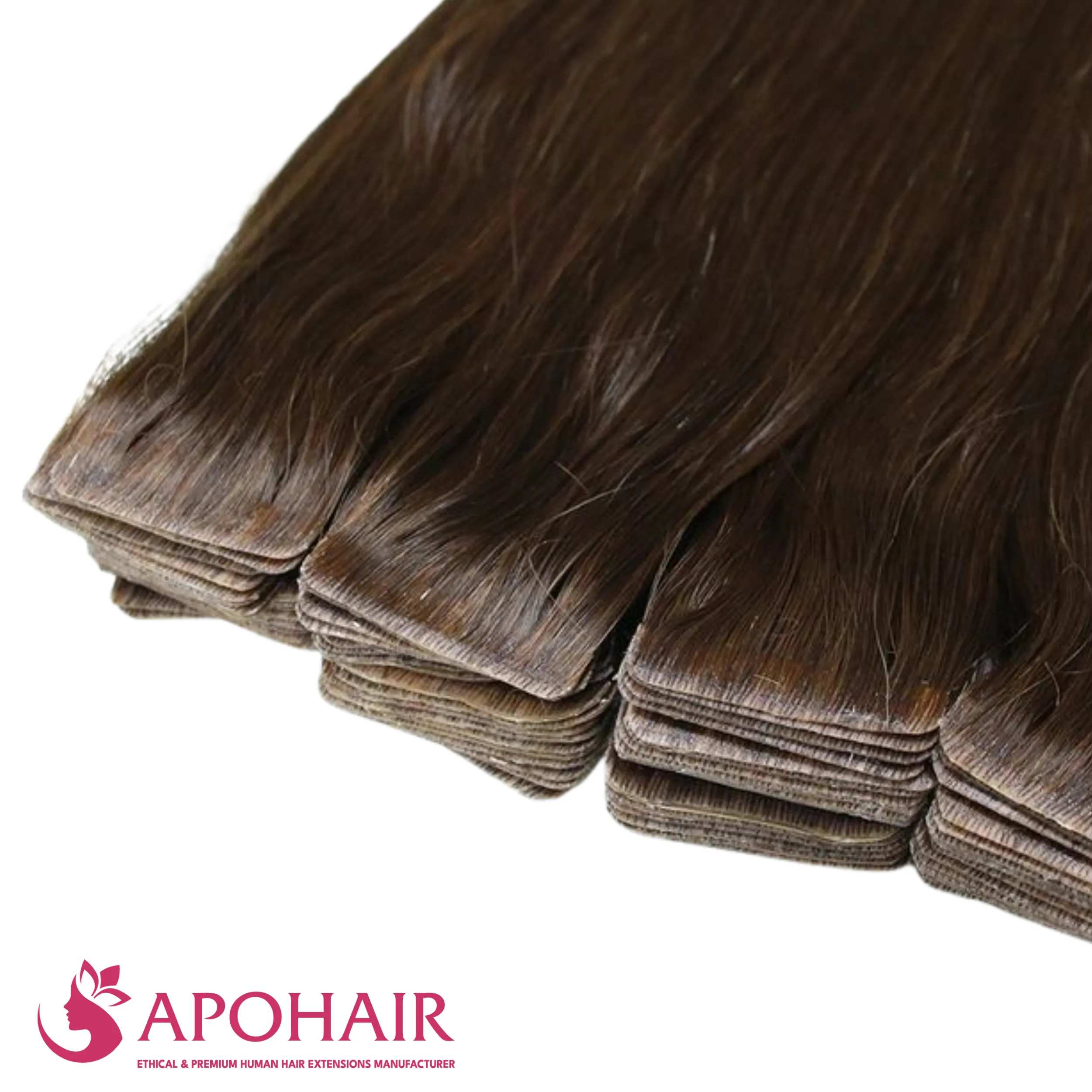
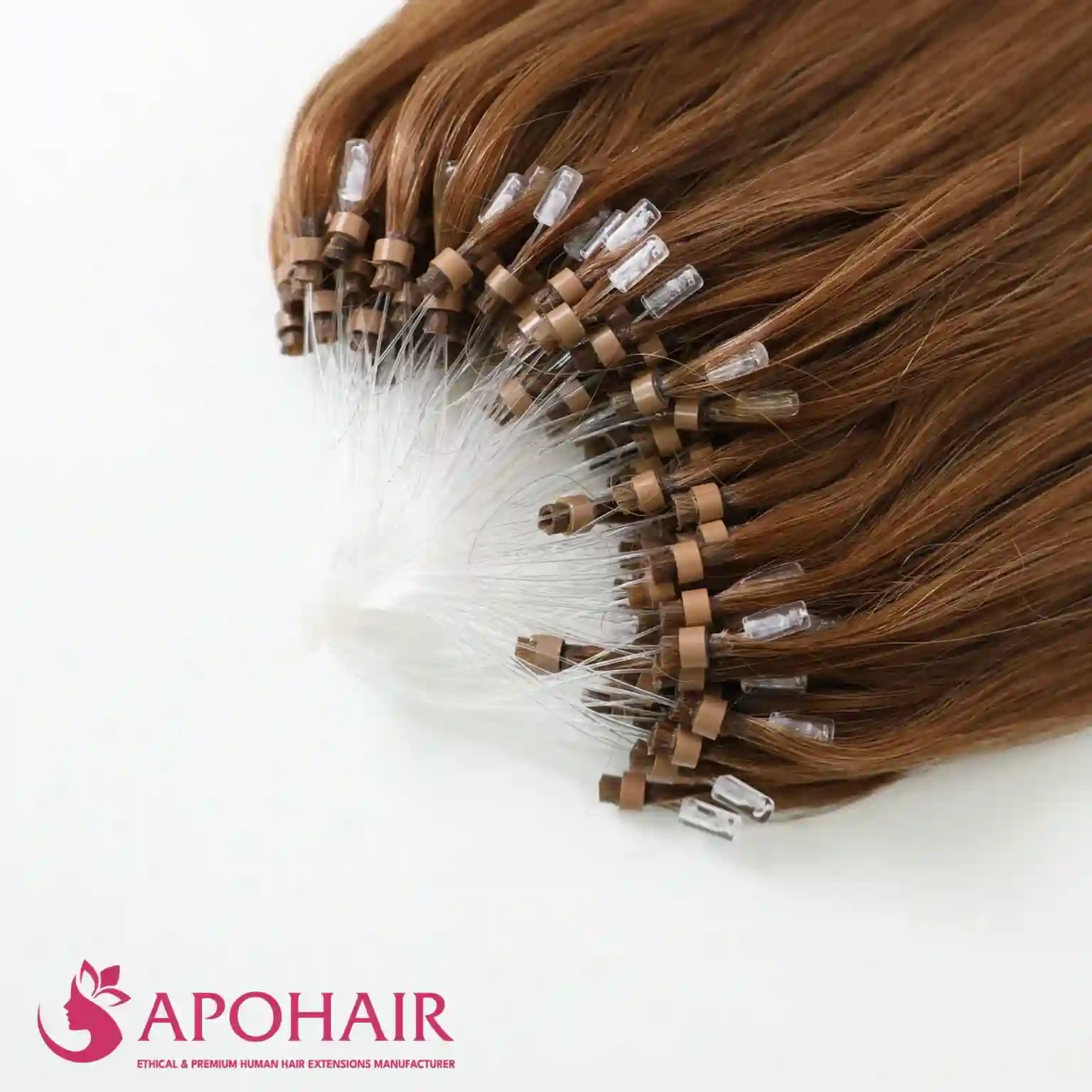
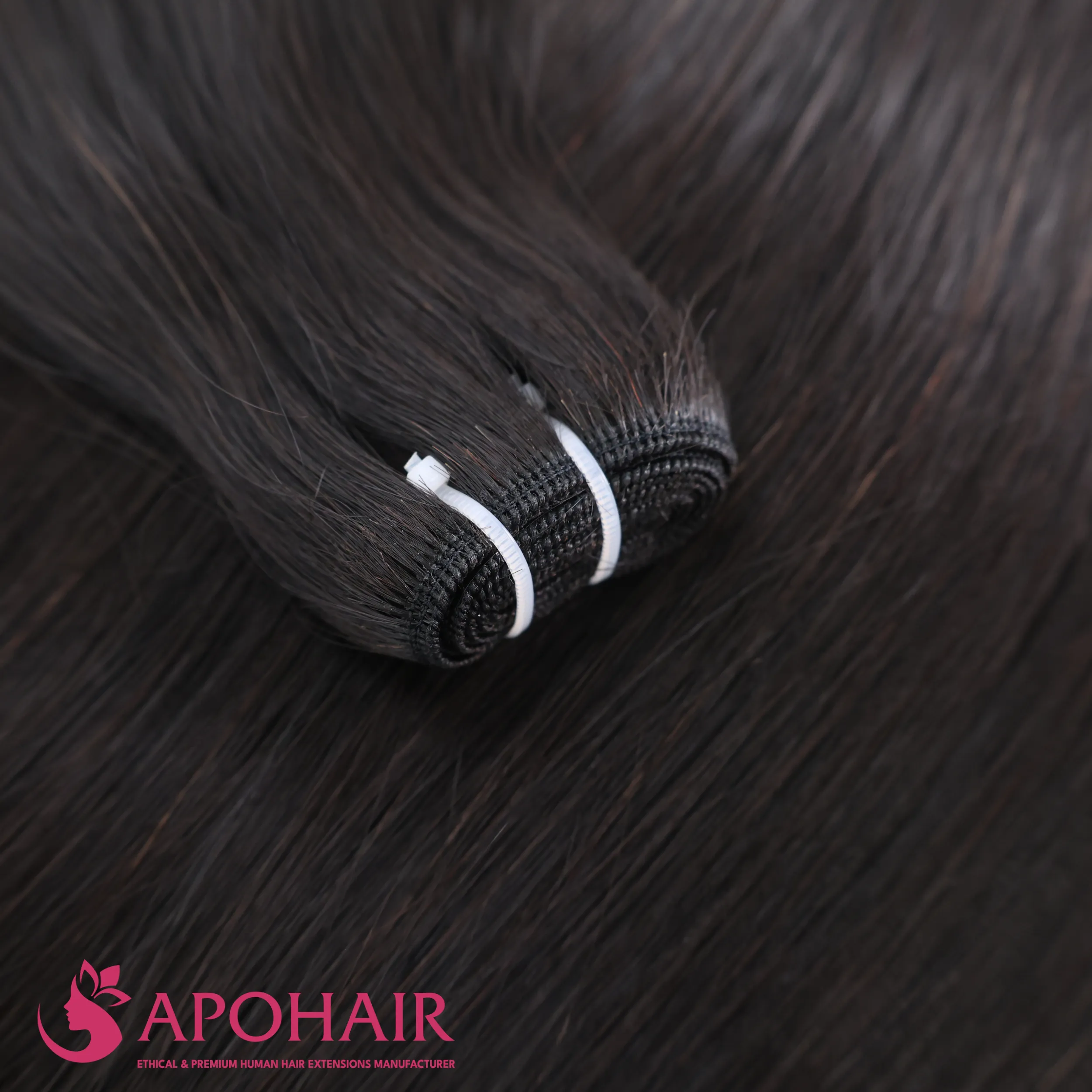
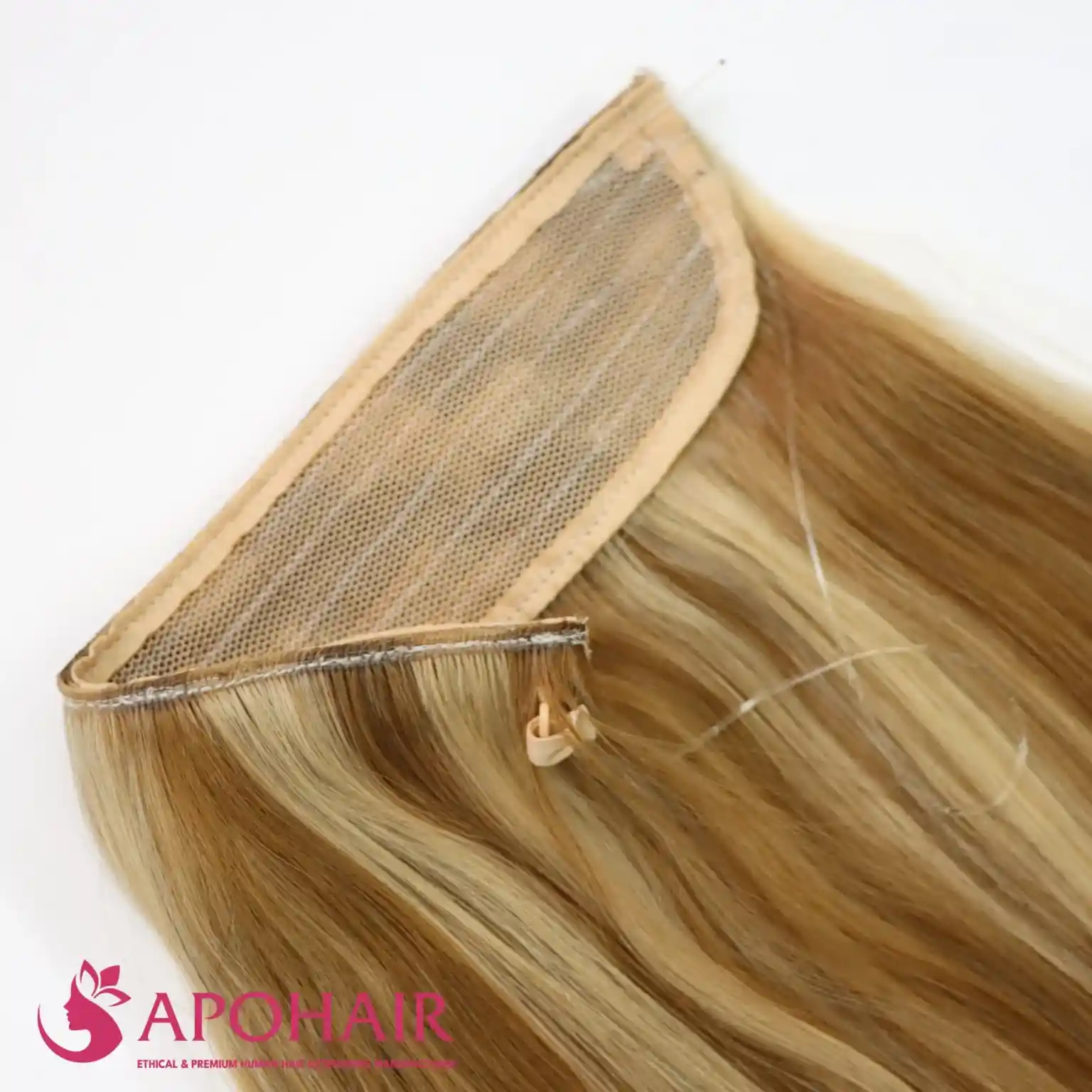
For salons serving women with round faces, fine or low-density hair may need added fullness to support a structured lob or lifted crown. APOHAIR supplies wholesale human hair extensions in clip-in, tape-in, and weft formats that stylists can use to adjust length and density while preserving the selected haircut’s proportions.
APOHAIR – ETHICAL & PREMIUM HUMAN HAIR EXTENSIONS MANUFACTURER
- Address: Building 3A, Lane 82 Duy Tan, Cau Giay, Hanoi, Vietnam
- Factory: Yen Luong Village, Y Yen District, Nam Dinh Province, Vietnam
- WhatsApp: +84 862 132 366
- Email: [email protected]
- Website: https://apohair.com
