








37 Hairstyles for Square Faces: Short, Medium & Long Cuts for Women
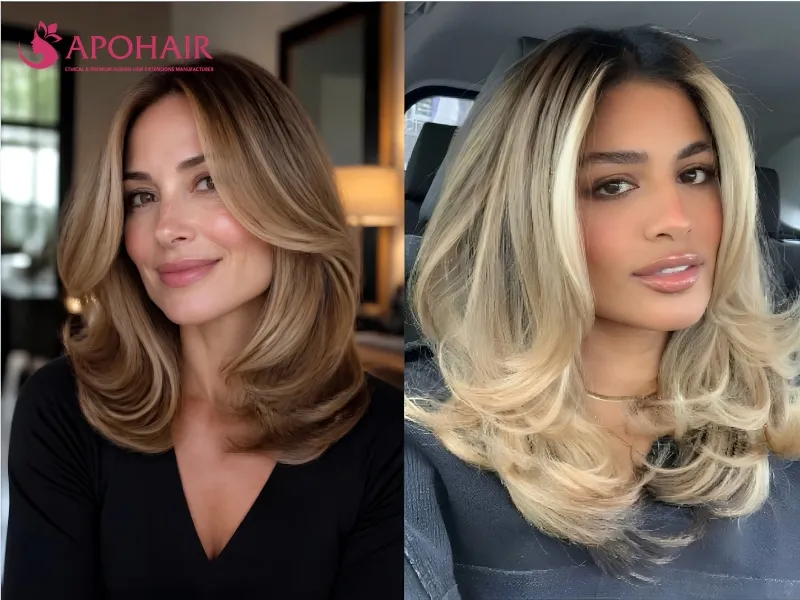
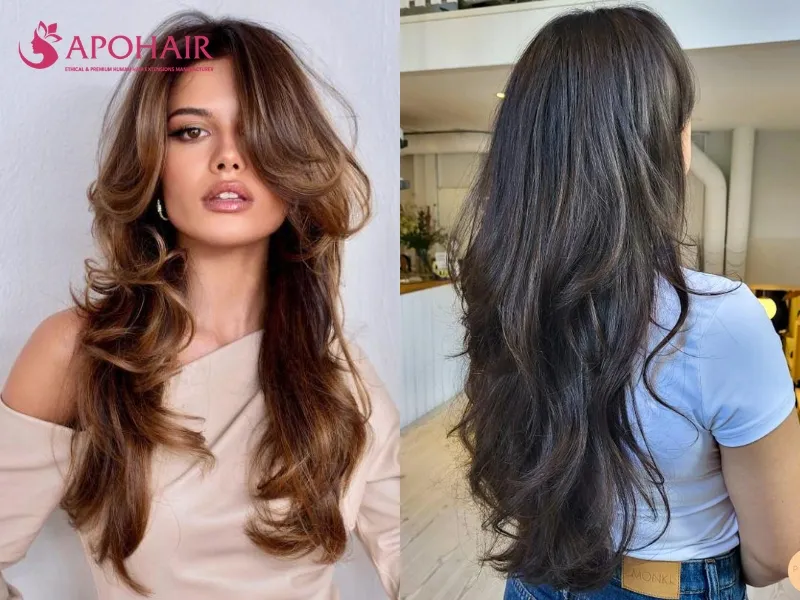
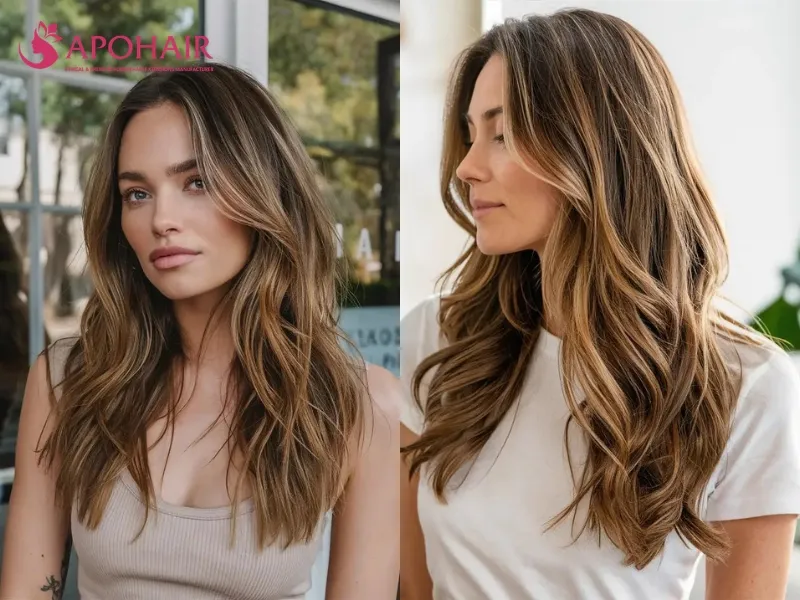
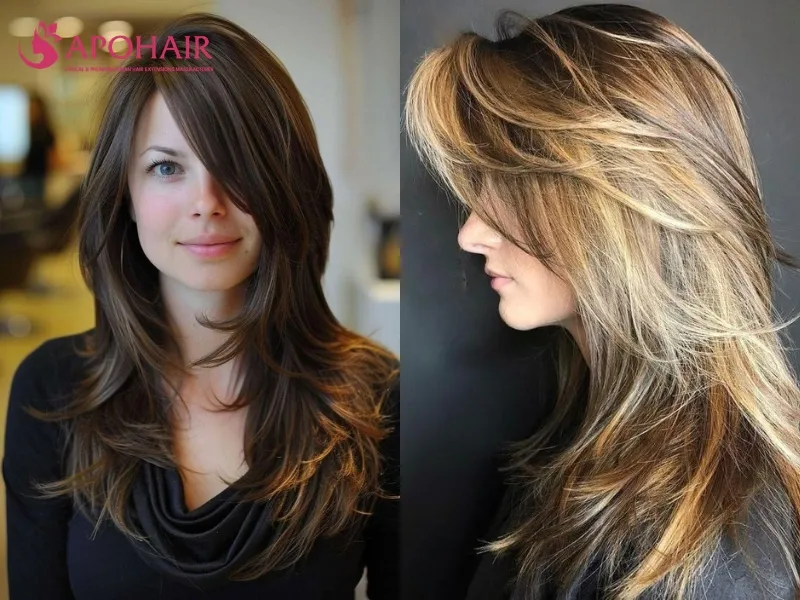
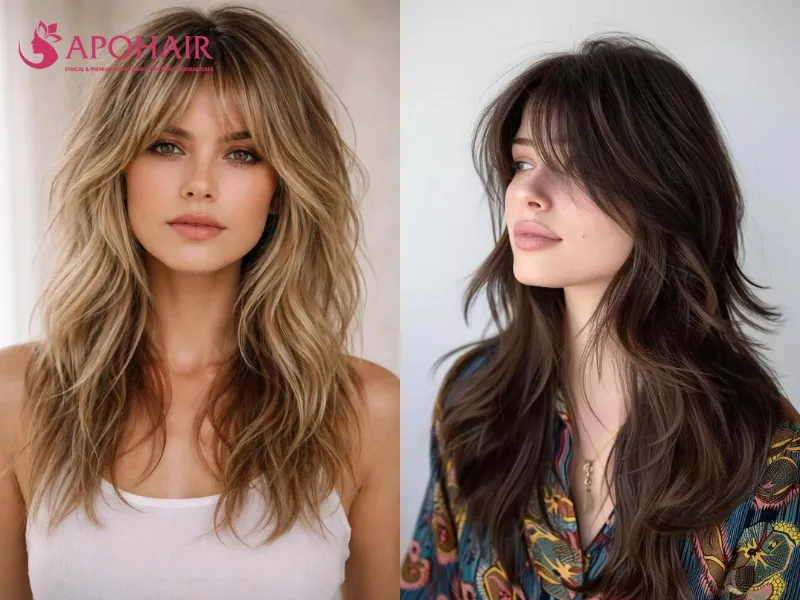
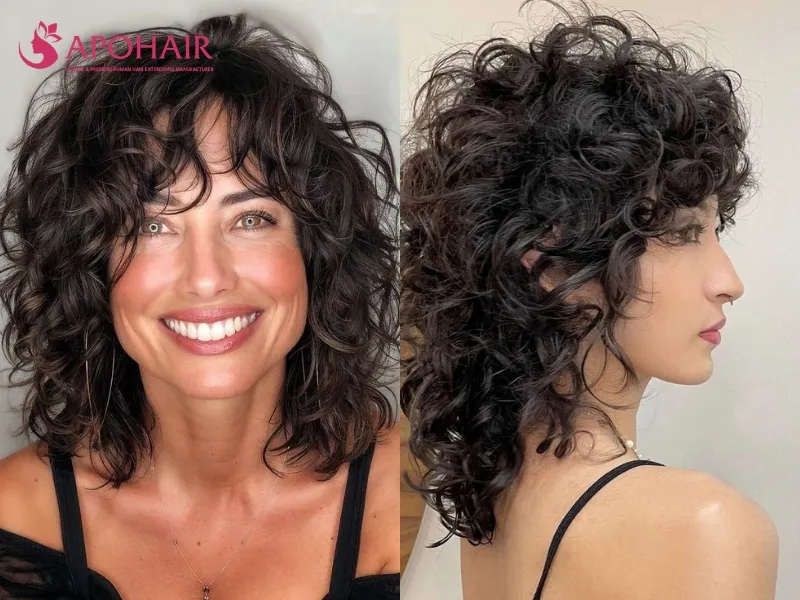
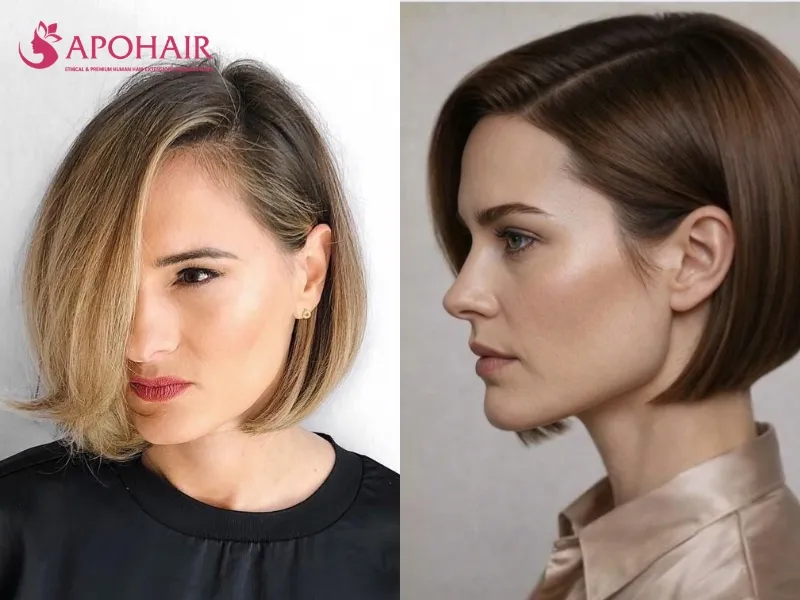
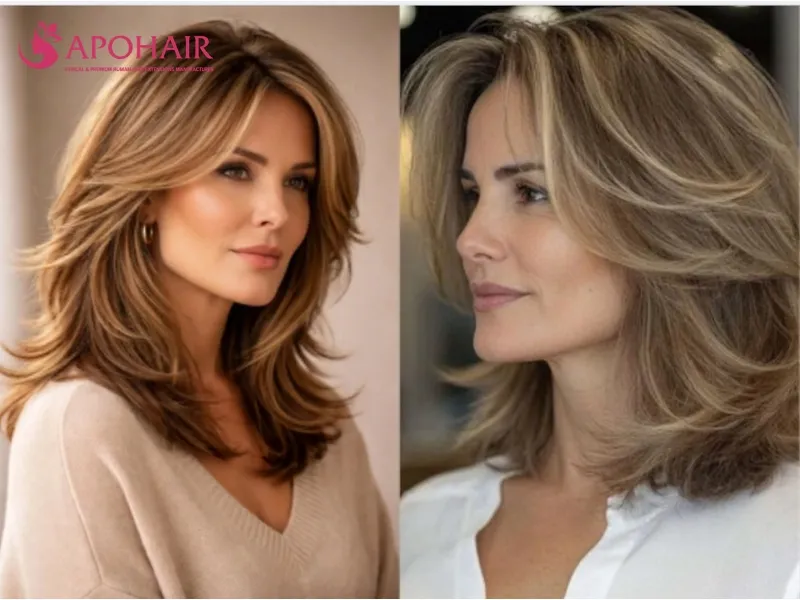
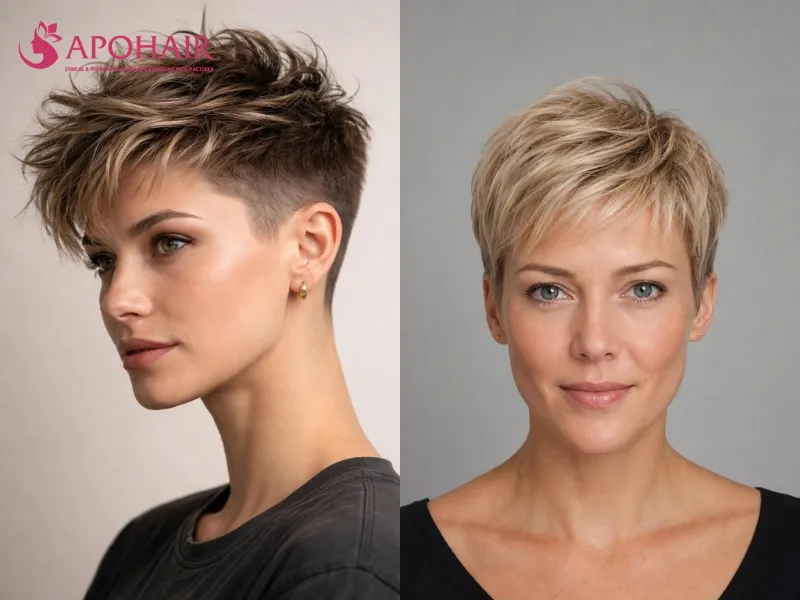
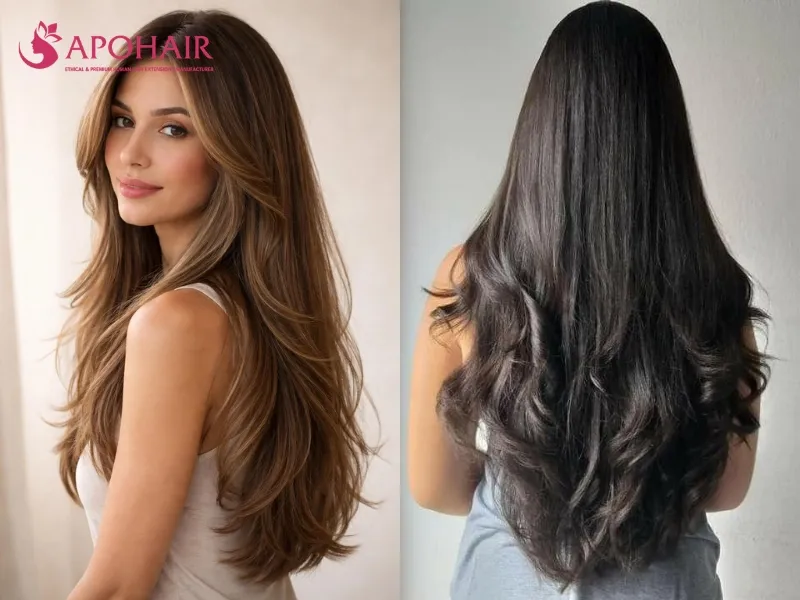
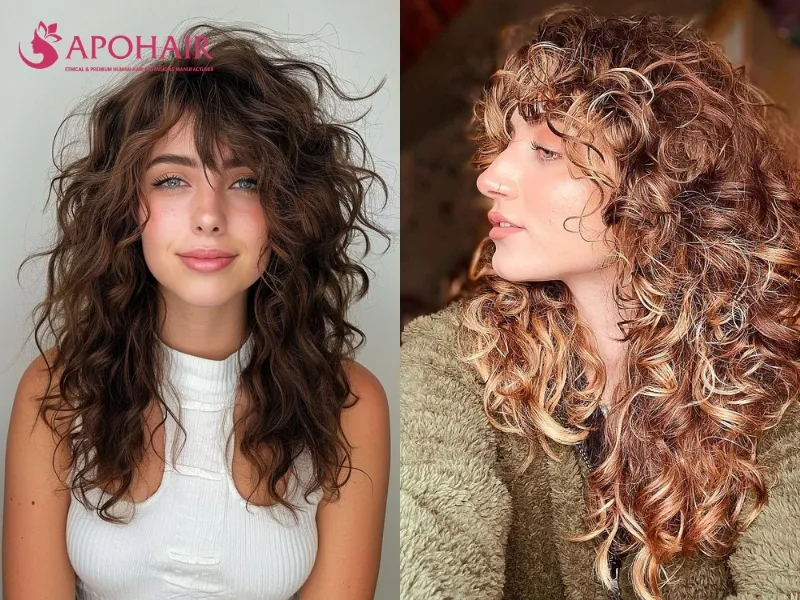
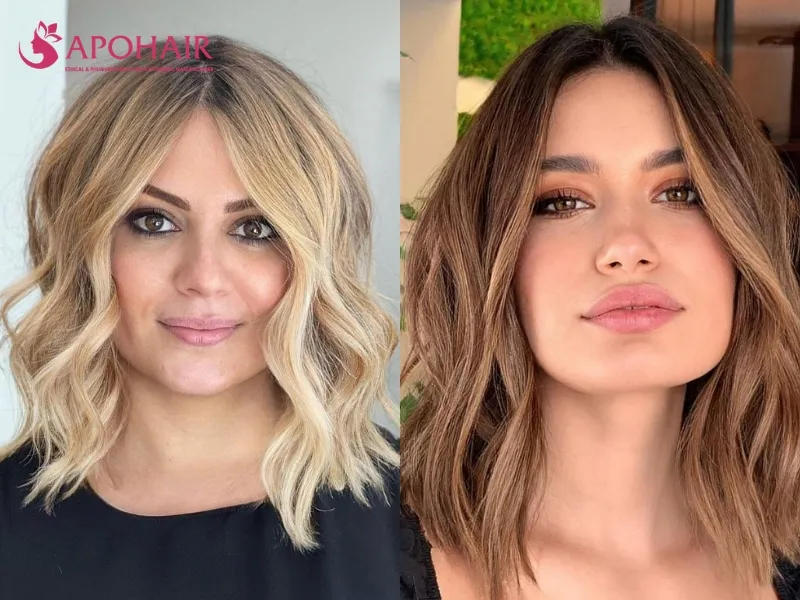
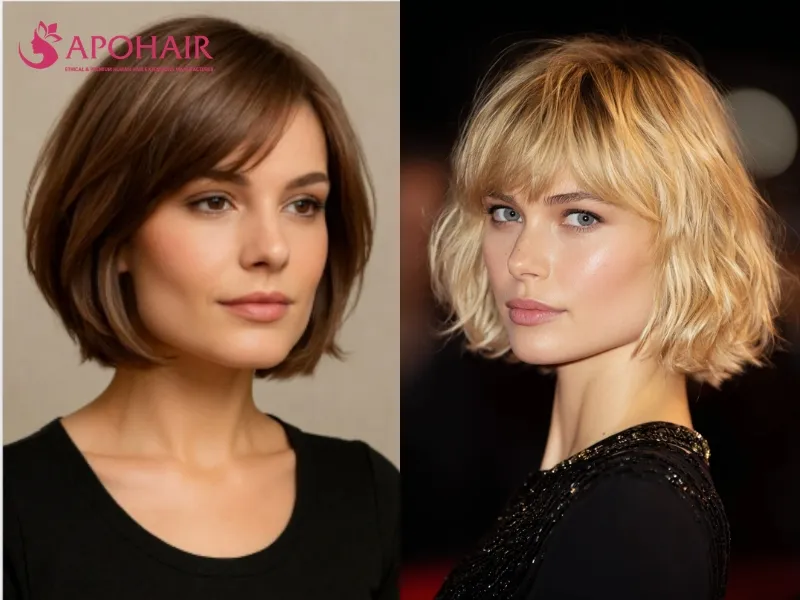
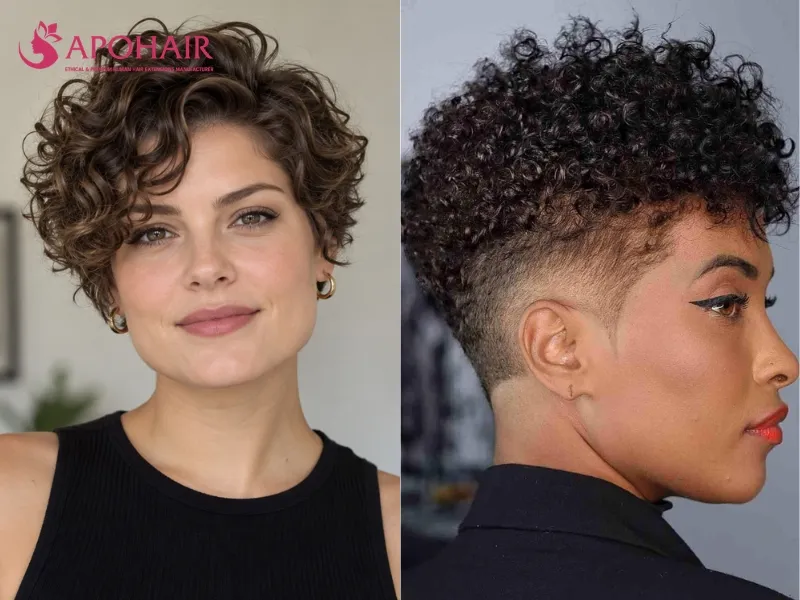
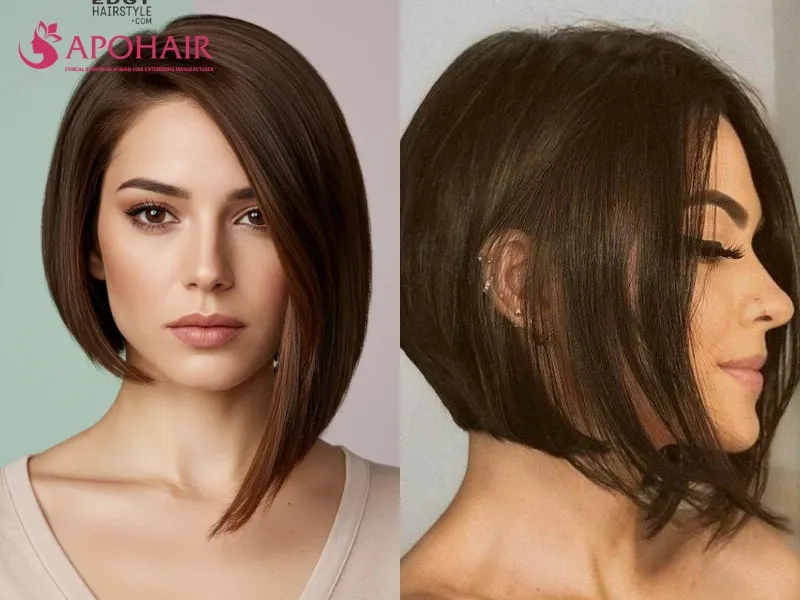
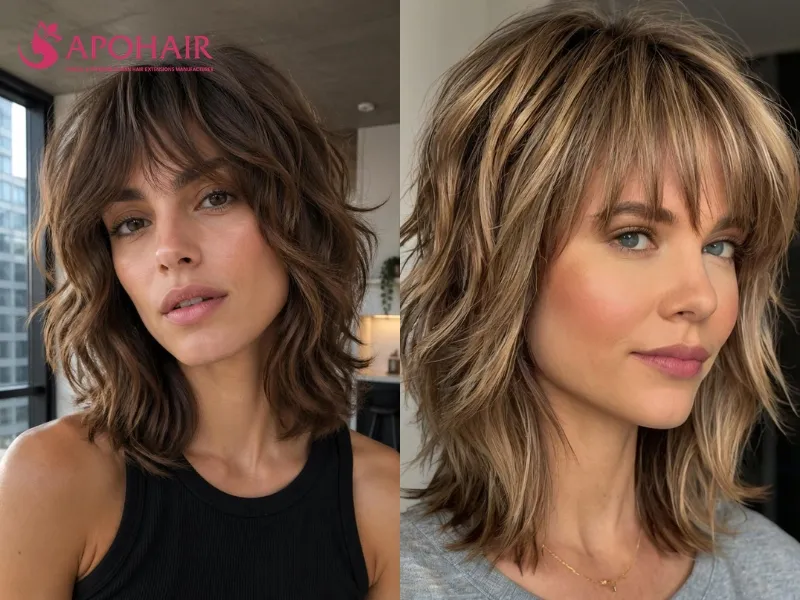
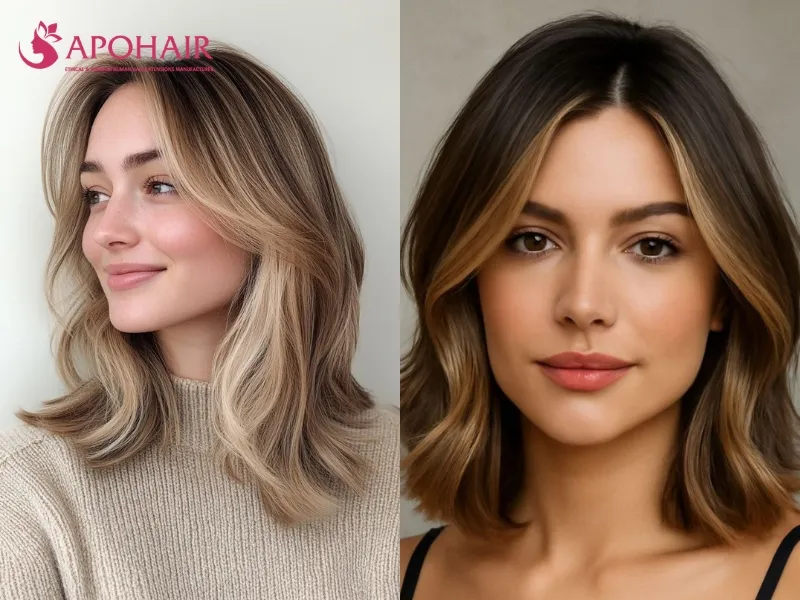
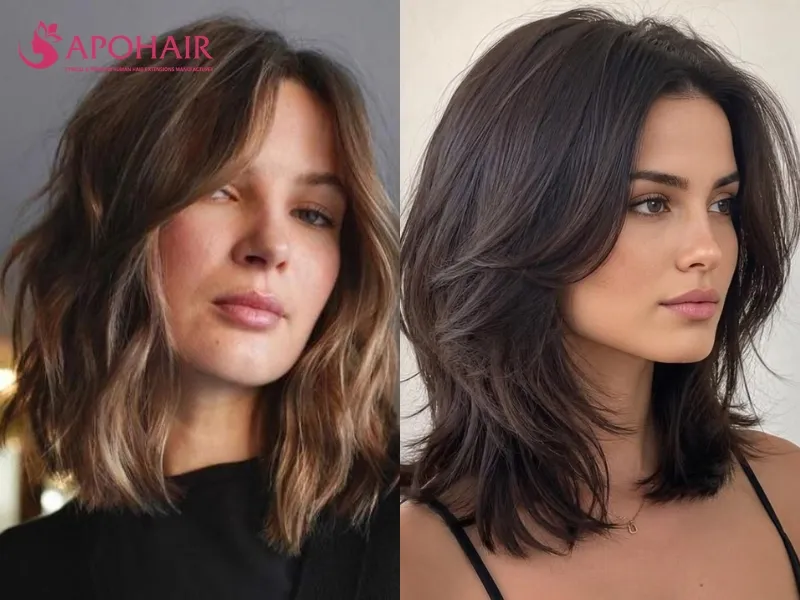
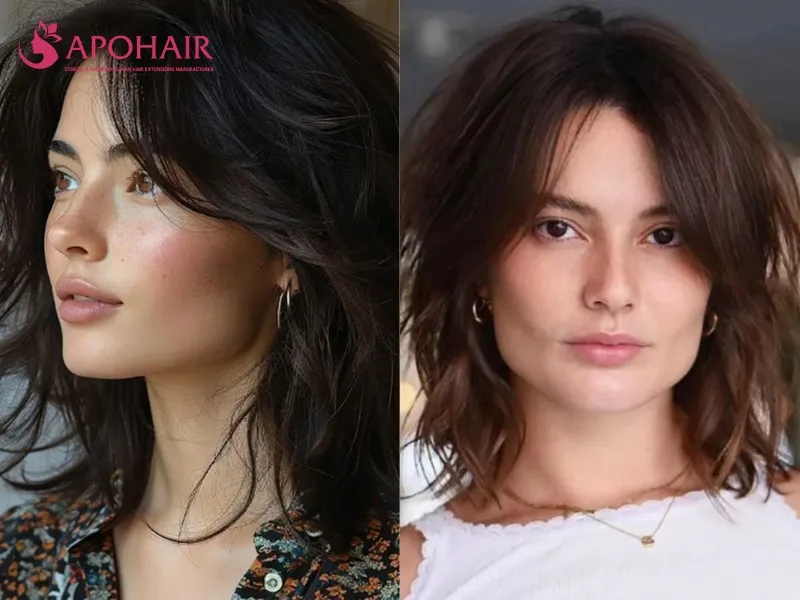
The most flattering hairstyles for women with a square face include soft layered cuts, wavy collarbone lobs, long layers with side-swept bangs, textured pixies, and curly shags. These styles use curves, diagonals, controlled crown volume, and ends that finish above or below the jaw rather than directly across its corners.
A square face has similar widths across the forehead, cheekbones, and jaw, with a visibly angular lower face. A haircut does not need to hide that structure. When the goal is to soften it, layers can break up hard edges, side-swept details can interrupt symmetry, and moderate lift at the crown can direct attention upward without adding width beside the jaw.
This guide covers 37 hairstyles for square faces: 10 short cuts, 10 medium-length cuts, 10 long styles, four pulled-back options, and three special-occasion looks. Each recommendation explains the suitable texture, density, cutting technique, and maintenance level. The guide focuses on women’s hairstyles rather than men’s fades, quiffs, or facial-hair combinations.
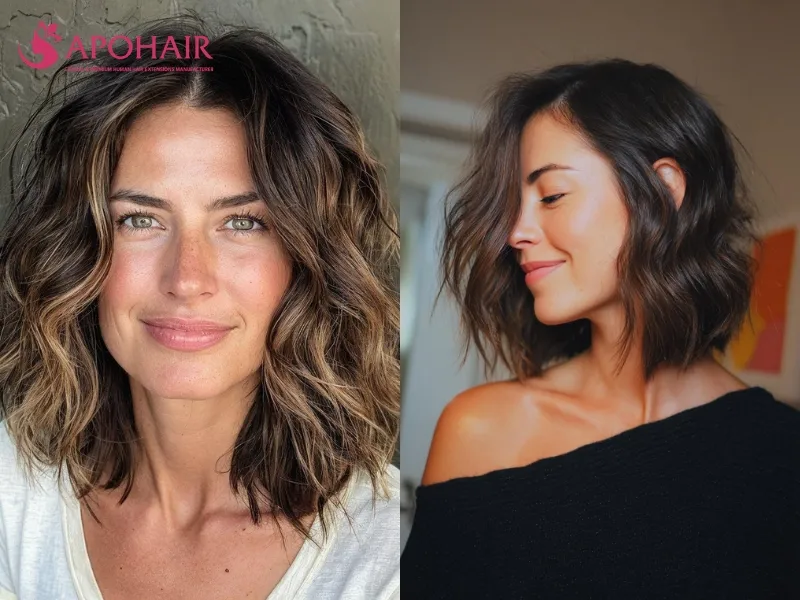
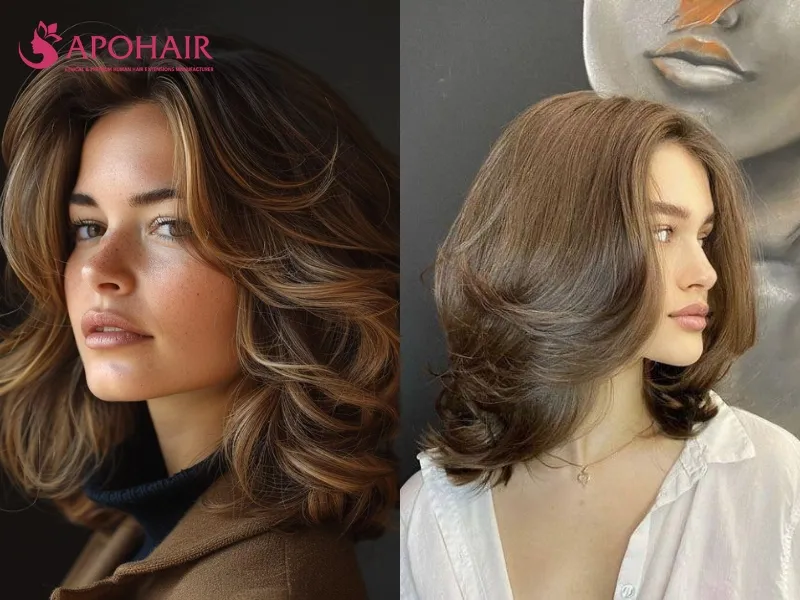
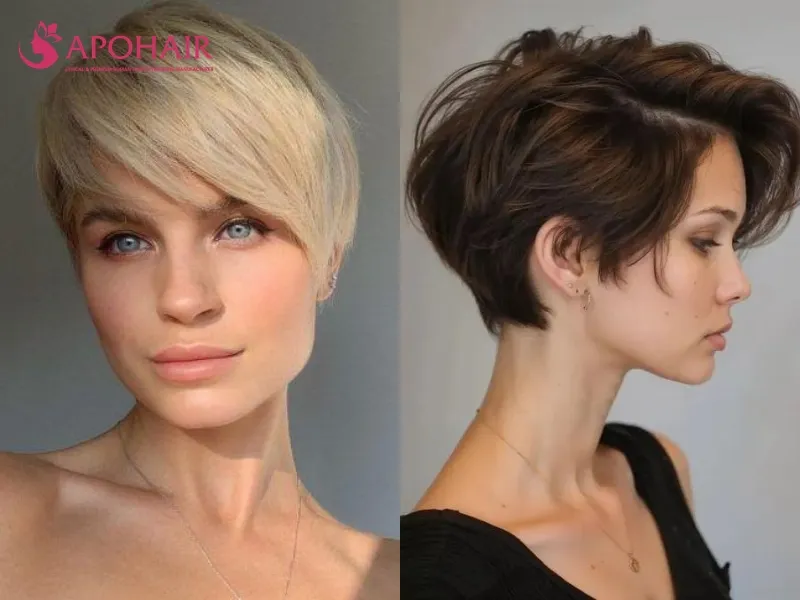
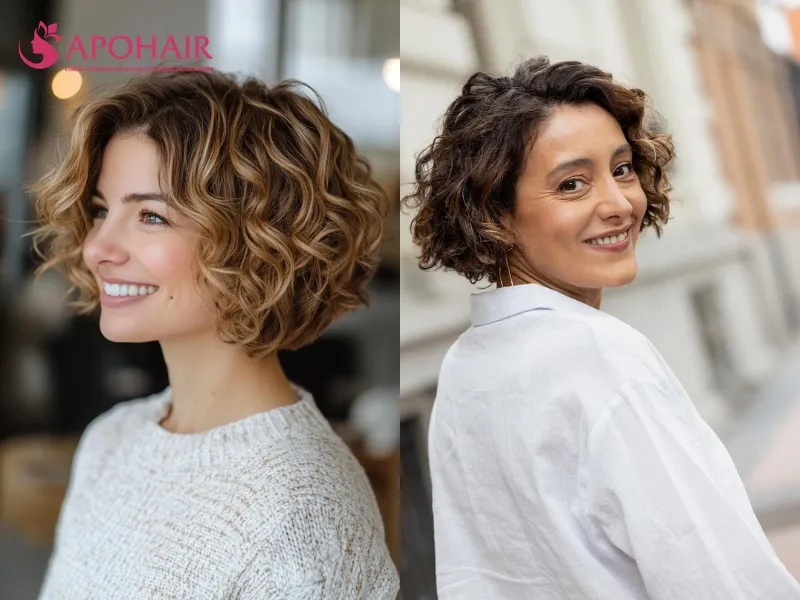
What Makes a Hairstyle Flattering for a Square Face?
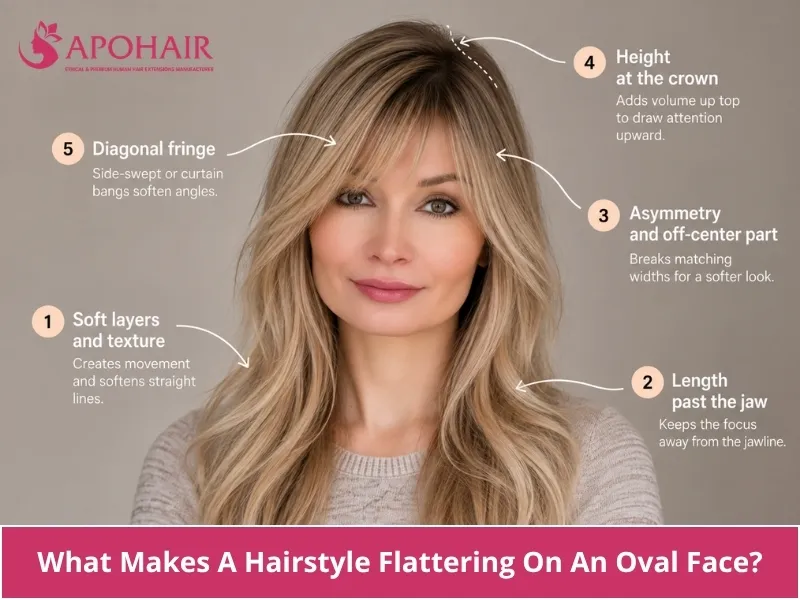
A hairstyle flatters a square face when it softens or redirects the straight lines around the forehead and jaw without hiding the facial structure. The most effective cuts combine two or more of the following elements:
- Soft layers, waves, or curls. Curved movement prevents the hair from forming rigid lines beside the face and reduces the visual emphasis on angular jaw corners.
- An endpoint above or below the jaw. A short cut should finish clearly above the jaw, while a bob or lob should extend below it. A perimeter ending directly at the corners can repeat their horizontal line.
- Side-swept or off-center details. A deep side part, sweeping fringe, or asymmetrical perimeter adds a diagonal that interrupts the face’s even left-to-right proportions.
- Controlled crown volume. Moderate lift above the forehead can lengthen the overall silhouette, but excessive height paired with flat sides can make the style look disconnected from the face.
- Light, blended fringe. Curtain bangs, Birkin bangs, wispy fringes, and side-swept bangs soften the forehead when their outer edges blend into the remaining haircut.
A square and round face can share a similar length-to-width relationship, but their contours require different emphasis. Round-face styling usually adds vertical structure and limits side volume, while square-face styling relies more on soft texture, curved edges, and diagonals that contrast with an angular jaw.
If your measurements do not clearly match the square-face characteristics above, use our guide to hairstyles for different face shapes to identify your face shape before choosing a cut.
Short Hairstyles for Square Faces
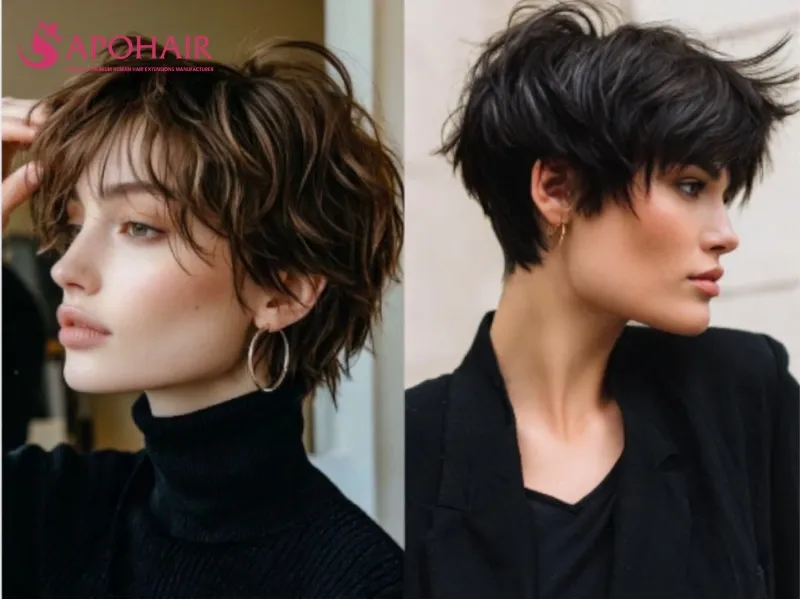
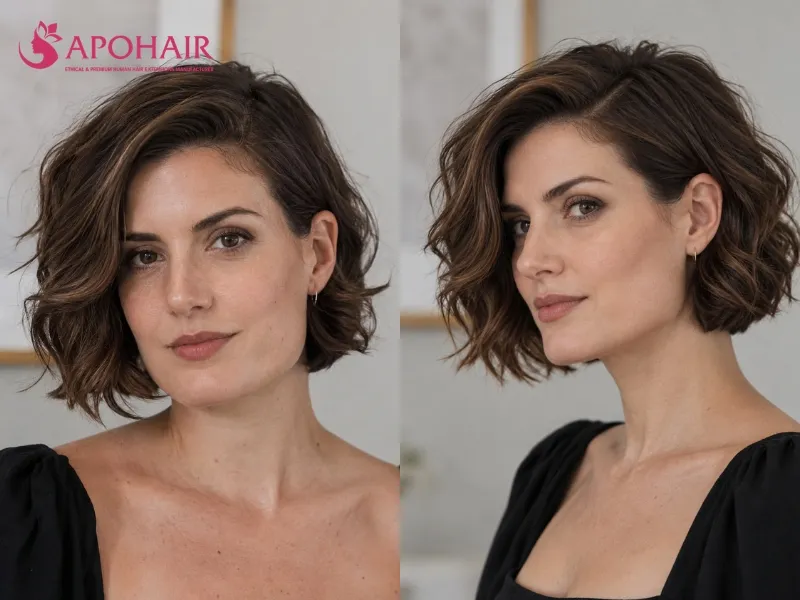
Short cuts can work here, but only when they finish clear of the jaw and carry texture or asymmetry, since a blunt short cut landing at the jawline traces the exact line the whole guide is trying to break. The pixies and textured crop build height above the corners; the asymmetrical, A-line and rounded bobs use a curved or angled perimeter; the wavy bob and curly cuts soften through texture; and the layered lob sits at the top of the bracket for anyone not ready to go shorter.
1. Textured Pixie Cut
A short cut with piecey uneven top layers over closely cropped sides and nape. The multi-directional texture on top pulls the eye up and away from the lower third, and the cut ends well above the jaw so it never traces it.
- Best on: a strong jaw and a long neck to balance it.
- Texture: Type 1A to 1C (fine to coarse straight).
- Density: fine to medium.
- Stylist note: Point-cut the top for visible separation and use a lightweight paste that preserves the piecey texture without flattening the upper layers.
- Upkeep: medium, trim every 4 to 6 weeks.
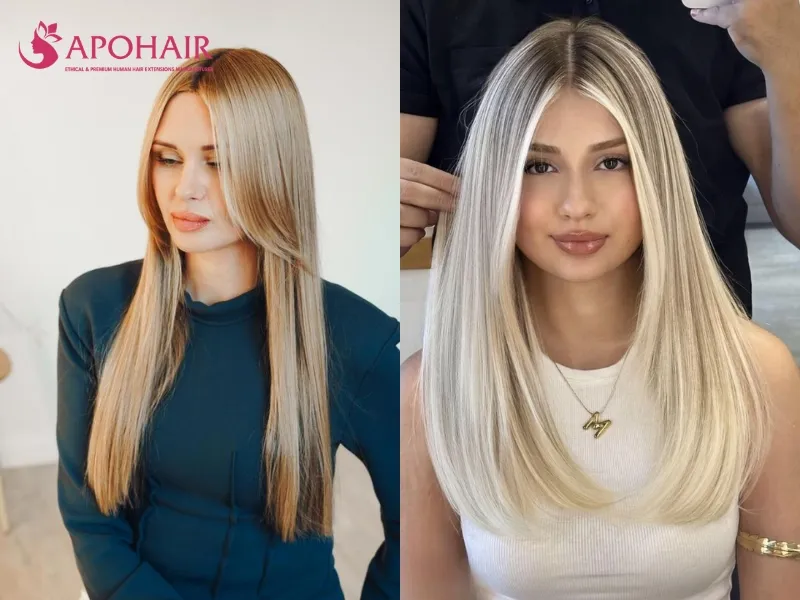
Why it works: A textured pixie moves visual weight above a square jaw through piecey crown height, while its cropped sides end before the jaw corners can be outlined.
2. Side-Swept Pixie
A pixie with a deep side part and a longer fringe sweeping diagonally across the forehead. The sweep interrupts facial symmetry and directs attention toward the eyes, while the short sides keep the haircut clear of the jaw corners.
- Best on: a wide, flat forehead above the jaw.
- Texture: Type 1A to 2A (fine straight to loose wave).
- Density: fine to medium.
- Stylist note: Slice the fringe diagonally rather than cutting it straight and sweeping it afterward.
- Upkeep: low, a quick fringe style each morning.
Why it works: A side-swept pixie breaks facial symmetry with a diagonal fringe and keeps the sides short enough to avoid adding width beside the jaw.
3. Shaggy Pixie With A Curtain Fringe
A short layered pixie with a soft center-split fringe falling to the cheekbones. The curtain keeps a piece of softness at the widest part of the face while the layering holds the height, which makes it the gentlest short option here.
- Best on: anyone who wants short hair without a sharp finish.
- Texture: Type 1B to 2B (straight to defined wave).
- Density: medium.
- Stylist note: Keep the curtain long enough to graze the cheekbone. Cut short it becomes a blunt fringe and hardens the look.
- Upkeep: low, a texturizing spray.
Why it works: A shaggy pixie with a curtain fringe adds rounded movement at the cheekbones and controlled lift above, softening the transition from forehead to jaw.
For more cropped ideas with different lengths, fringes, and textures, see our complete list of pixie hairstyles for square faces.
4. Asymmetrical Bob
A bob cut visibly longer on one side, creating a diagonal between the two endpoints. Because that line runs against rather than parallel to the jaw, it interrupts the face’s symmetry instead of repeating its lower edge.
- Best on: a jaw that reads evenly square from both sides.
- Texture: Type 1A to 2A (straight to loose wave).
- Density: medium.
- Stylist note: Cut the diagonal cleanly and keep the transition smooth. A choppy asymmetric bob reads as a mistake.
- Upkeep: medium, round-brush the edges.
Why it works: An asymmetrical bob replaces a jaw-parallel baseline with uneven endpoints, so the eye follows a diagonal instead of the face’s square lower edge.
5. Curved A-Line Bob
A bob shorter at the back and longer at the front, with the perimeter cut on a curve rather than a straight angle. The curve softens where a standard A-line would draw a hard forward line, and the front points finish below the jaw.
- Best on: a square jaw wanting a bob without the hard edge.
- Texture: Type 1A to 1B (fine to medium straight).
- Density: fine to medium.
- Stylist note: Over-direct backward while cutting the perimeter, then soften the front points with a vertical point-cut.
- Upkeep: medium, blow-dry to hold the curve.
Why it works: A curved A-line bob places its longest pieces below the jaw and softens the forward angle, preventing the perimeter from repeating the jaw corners.
6. Soft Rounded Bob With Wispy Ends
A chin-clearing bob with a rounded perimeter and lightly texturized ends. Round is the direct opposite of square, and building the shape into the hem is the simplest way to state that contrast.
- Best on: fine hair that a blunt bob would make look severe.
- Texture: Type 1A to 1C (fine to coarse straight).
- Density: fine to medium.
- Stylist note: Place the perimeter at least 1 inch (2.5 cm) above or below the jaw corner rather than directly across it, then texturize only the final inch of the ends.
- Upkeep: medium, trim every 6 weeks.
Why it works: A soft rounded bob contrasts with the jaw’s straight lower edge, while wispy ends remove the heavy baseline that would emphasize its corners.
7. Short Wavy Bob With A Side Part
A jaw-clearing bob worn wavy from an off-center part. The wave supplies the curve, the side part supplies the asymmetry, and the length keeps the hem off the corners.
- Best on: natural wave that fights a blunt finish.
- Texture: Type 2A to 2C (loose to strong wave).
- Density: medium.
- Stylist note: Cut with a slight graduation so the wave has room to sit, and part it off-center while cutting.
- Upkeep: low, sea salt spray and scrunch.
Why it works: A short wavy bob uses curved texture and an off-center part to break straight facial lines, while its endpoint stays clear of the jaw corners.
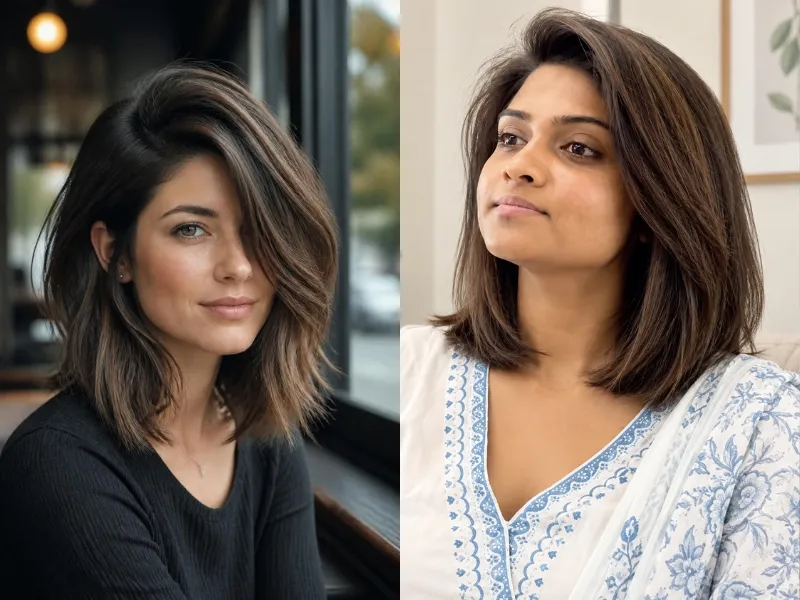
8. Layered Lob With A Deep Part
A long bob sitting just below the jaw, layered through the interior and worn from a deep side part. It is the safest entry point into shorter hair on this shape, since it keeps length past the corners while still reading as a short cut.
- Best on: anyone moving from long hair toward a bob for the first time.
- Texture: Type 1A to 2B (straight to defined wave).
- Density: medium to thick.
- Stylist note: Remove interior weight but keep the perimeter intact, and set the part before cutting the front sections.
- Upkeep: low, air-dry or a quick wand.
Why it works: A layered lob carries the perimeter below the jaw, while its deep part and interior movement prevent the sides from forming a rigid frame.
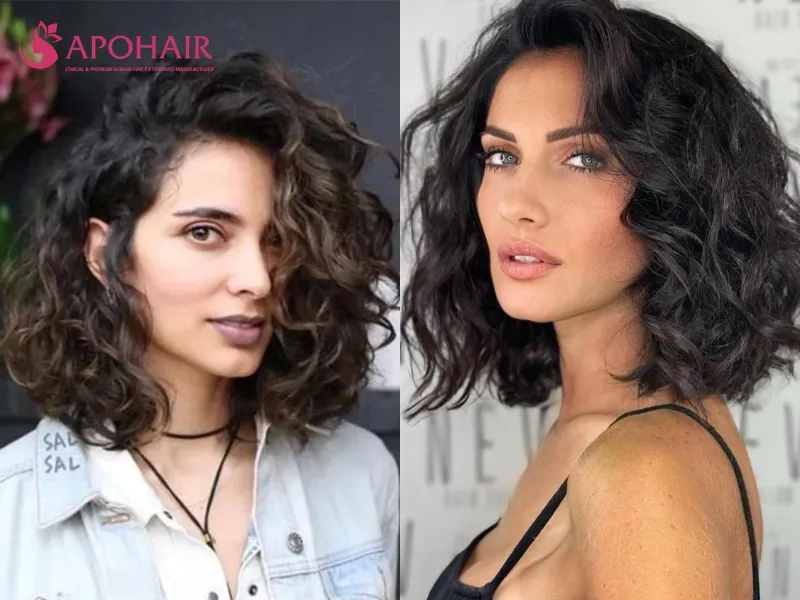
9. Soft-Layered Curly Bob
A short curly bob with an irregular perimeter finishing slightly below the chin and soft internal layers controlling the lower volume. The curls replace a hard baseline with rounded movement, while the added length prevents the main endpoint from sitting directly across the jaw corners.
- Best on: natural curls that need a short shape without a compact jaw-level perimeter.
- Texture: Type 2C to 3B (strong wave to springy curl).
- Density: medium to thick.
- Stylist note: Cut dry, allow the longest curls to clear the jaw by 1–2 inches (2.5–5 cm), and remove internal bulk without thinning the outer perimeter.
- Upkeep: medium, curl cream or light gel on wash days.
Why it works: A soft-layered curly bob replaces a solid jaw-level edge with rounded movement and lets its longest curls continue below the jaw corners.
If you like these bob variations but want more choices, browse our list of bob hairstyles for square faces, including angled, layered, wavy, curly, and asymmetrical cuts.
10. Tapered Curly Cut
A short curly cut tapered through the sides and nape with the curl mass kept on top. The taper narrows the outline exactly at the jaw while the crown volume lifts the weight upward, which is the pairing tightly curled hair needs on this shape.
- Best on: coily hair that widens at the jaw before it lifts.
- Texture: Type 3C to 4C (tight corkscrew to densely packed coil).
- Density: medium to thick.
- Stylist note: Taper progressively from the temple down and cut dry so the finished silhouette is visible as you work.
- Upkeep: low, refresh spray, trim every 6 to 8 weeks.
Why it works: A tapered curly cut reduces width through the sides and concentrates curl volume at the crown, creating a longer, more balanced silhouette.
If none of these ten cuts matches your hair texture, density, or maintenance routine, see our broader list of short hairstyles for square faces for more pixies, bobs, shags, curly crops, and low-maintenance options.
Medium-Length Hairstyles for Square Faces
Medium length is the strongest bracket here because the hem falls past the jaw, clearing the corners entirely before the cut has done anything else. The classic shag, wolf cut and feathered midi work through broken texture; the collarbone lob and beach waves replace straight lines with curves; the two curly cuts let the pattern do the softening; and the face-framing layers, curtain-bang lob and side-parted curly lob all work the front sections. The shared rule is that the hem clears the jaw, never lands on it.
11. Classic Shag
A heavily layered mid-length cut with choppy ends and a piecey fringe. Multi-directional texture never settles into a straight line, so nothing runs parallel to the jaw for the eye to pick up.
- Best on: a jaw with sharp, visible corners.
- Texture: Type 1B to 2C (straight to strong wave).
- Density: medium to thick.
- Stylist note: Layer through the interior rather than the perimeter so the ends break up without losing the shape.
- Upkeep: low, sea salt spray and air-dry.
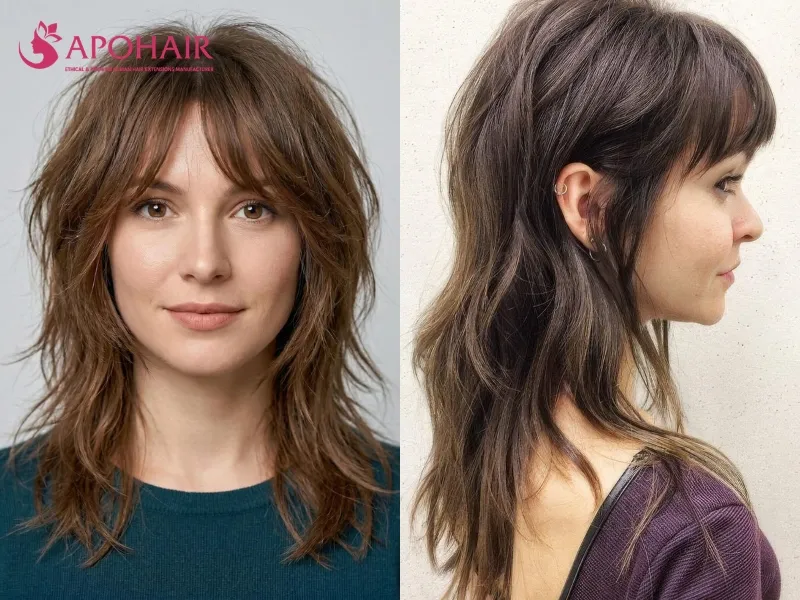
Why it works: A classic shag breaks the hair into multiple directions, so no single horizontal or vertical line reinforces the square outline of the face.
12. Wavy Collarbone Lob
A collarbone-length lob styled with loose waves and soft front pieces. The endpoint carries the eye below the jaw, while alternating bends keep the sides from forming two straight lines beside it. The adaptable perimeter can work with straight, wavy, or loosely curled hair.
- Best on: anyone unsure where to start with a square jaw.
- Texture: Type 1B to 2C (straight to strong wave).
- Density: any.
- Stylist note: Use a large-barrel wand and alternate the curl direction so the wave reads natural rather than set.
- Upkeep: low, trim every 8 weeks.
Why it works: A wavy collarbone lob places the hem below the jaw and uses alternating bends to keep the sides from falling in two straight lines.
13. Layered Lob With Curtain Bangs
A collarbone-length lob with soft interior layers and curtain bangs opening toward the cheekbones. The fringe introduces curved diagonals across the forehead, while the layers prevent the sides from falling in rigid lines beside the jaw.
- Best on: a high, wide forehead sitting above the jaw.
- Texture: Type 1A to 2B (straight to defined wave).
- Density: any.
- Stylist note: Set the split at the center or slightly off-center according to the natural growth pattern, and extend the outer edges toward the cheekbones so the fringe blends into the haircut.
- Upkeep: medium, a daily round-brush for the fringe.
Why it works: A layered lob with curtain bangs creates curved diagonals across the forehead and carries soft movement past the jaw instead of tracing it.
14. Face-Framing Layers
Mid-length hair with layers cut to fall softly around the face from cheekbone to collarbone. The layers curve inward past the jaw corners, covering the widest point of the outline without hiding the face.
- Best on: corners that read hardest from a three-quarter angle.
- Texture: Type 1A to 2B (straight to defined wave).
- Density: medium.
- Stylist note: Slide-cut so the layers curve rather than step, and start them at the cheekbone.
- Upkeep: medium, a round brush to hold the inward curve.
Why it works: Face-framing layers cross the jaw corners on a curve, which interrupts both the straight sides and the horizontal lower edge of a square face.
For more cuts that soften the jaw without hiding the face, see our list of hairstyles that frame the face, from cheekbone-length layers to longer front pieces.
15. Off-Center Part With Beach Waves
Shoulder-length hair waved from a part set well off the middle. The part supplies the asymmetry and the waves supply the curves, which covers two mechanisms in a single styling decision.
- Best on: very symmetrical features that read static.
- Texture: Type 1B to 2B (straight to defined wave).
- Density: any.
- Stylist note: Cut with the hair fallen into the finished part so the face-framing pieces sit right once it moves.
- Upkeep: low, a wand or overnight braids.
Why it works: An off-center part shifts the visual axis away from the middle, while beach waves add curves along the cheeks and below the jaw.
16. Shoulder-Length Cut With Controlled Crown Volume
A shoulder-grazing cut with moderate lift at the crown and subtle layers through the sides. The elevated top directs attention upward, while the shoulder-length endpoint carries the outline below the jaw without adding concentrated width beside it.
- Best on: straight or slightly wavy hair that sits flat through the upper section.
- Texture: Type 1A to 2A (straight to loose wave).
- Density: medium to thick.
- Stylist note: Build controlled lift through the crown, keep the side volume soft, and turn the ends away from the jaw rather than curling them tightly underneath.
- Upkeep: high, a round-brush blow-dry after each wash.
Why it works: A shoulder-length cut with controlled crown volume adds vertical balance above the face and places the perimeter safely below the jaw corners.
17. Mid-Length Wolf Cut
A wolf cut combines shorter upper layers with longer, lighter ends. On a square face, the upper layers should create moderate lift and side movement rather than a narrow vertical stack, while the textured perimeter prevents the hairstyle from ending in one heavy line.
- Best on: a creative workplace and a taste for a visible haircut.
- Texture: Type 2A to 2C (loose to strong wave).
- Density: thick.
- Stylist note: Keep the upper layers visibly shorter but blend their outer edges into the sides. Excessive disconnection can create a top-heavy shape instead of softening the jaw.
- Upkeep: low, styling cream and nothing else.
Why it works: A mid-length wolf cut separates the upper layers from the lighter ends, breaking up the solid rectangular mass that can echo a square face.
18. Feathered Midi Cut
A mid-length cut with soft front layers feathered away from the face. The outward movement directs attention toward the eyes and cheekbones, while the light ends prevent the sides from forming a solid frame around the jaw.
- Best on: straight or loosely wavy hair that can hold an outward bend.
- Texture: Type 1B to 2A (straight to loose wave).
- Density: medium to thick.
- Stylist note: Feather the front sections starting around the nose so they flip back naturally.
- Upkeep: high, blow-dry backward every wash.
Why it works: A feathered midi cut turns the front layers away from the jaw, directing attention toward the cheekbones and keeping the lower face visually open.
19. Side-Parted Curly Lob
A collarbone-length curly cut worn from a deep side part. The part introduces a diagonal across the forehead, while graduated layers distribute the curls from the cheekbones through the area below the jaw instead of concentrating the widest point directly beside its corners.
- Best on: curl that sits flat at the roots and wide at the ends.
- Texture: Type 2C to 3C (strong wave to tight corkscrew).
- Density: medium to thick.
- Stylist note: Cut the curls dry, preserve enough length for the perimeter to clear the jaw, and remove interior weight where the curl pattern begins to widen.
- Upkeep: medium, curl cream and a diffuser.
Why it works: A side-parted curly lob combines a diagonal across the forehead with rounded volume that continues below, rather than directly beside, the jaw.
20. Curly Shag With Ringlet Bangs
A layered mid-length curly cut with a soft ringlet fringe. The rounded curl pattern contrasts with the straight edges of a square face, while the broken fringe and layered sides keep the hairstyle from forming hard horizontal or vertical lines.
- Best on: a square jaw on naturally curly hair.
- Texture: Type 3A to 3C (loose curl to tight corkscrew).
- Density: medium to thick.
- Stylist note: Cut the fringe dry and leave it long, since curl shrinkage will take an inch or more once it dries.
- Upkeep: low, mousse and air-dry.
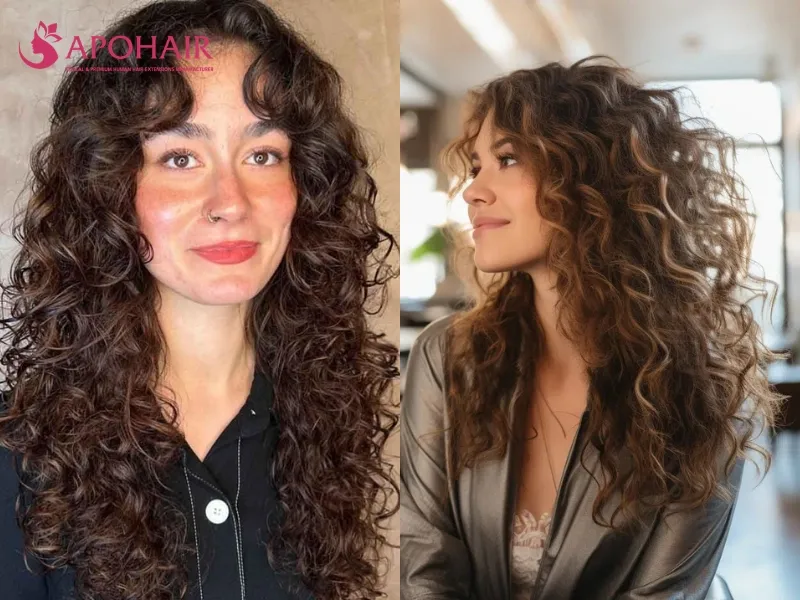
Why it works: A curly shag with ringlet bangs surrounds the face with broken curves, preventing the fringe and sides from repeating its strongest straight lines.
Going longer trades the direct jaw coverage for a different mechanism, and for many people it is the more comfortable one.
Long Hairstyles for Square Faces
Long hair works here by putting distance between the eye and the jaw, though length alone does nothing: one-length hair hanging past a square jaw simply frames the corners with two straight lines. The cascading waves, curly shag and U-cut soften through texture; the V-cut, butterfly and blowout shape the perimeter; the side bangs, deep side part and wispy fringe attack the symmetry; and the long wolf cut supplies the height. All ten need either movement or a diagonal to earn their length.
21. Long Cascading Waves
Long hair set in soft waves that fall from the cheekbone down. Continuous curves run the length of the face and past the jaw, so there is no straight edge anywhere near the corners.
- Best on: a strong jaw on hair long enough to hold a wave pattern.
- Texture: Type 1B to 2C (straight to strong wave).
- Density: medium to thick.
- Stylist note: Add long invisible layers so the waves stack without the ends going heavy.
- Upkeep: medium, a curling wand every second wash.
Why it works: Long cascading waves create continuous curves from the cheekbones downward, so no straight section remains beside the angular jaw corners.
22. Long Layers With Side Bangs
Long layered hair with a sweeping side fringe. The fringe lays a diagonal across the forehead while the layers break the vertical fall, and the combination softens the top and sides in one cut.
- Best on: a wide forehead matching a wide jaw.
- Texture: Type 1A to 2B (straight to defined wave).
- Density: medium.
- Stylist note: Cut the side fringe long enough to blend into the face-framing layers rather than sitting separately.
- Upkeep: medium, fringe trim every 4 to 6 weeks.
Why it works: Long layers with side bangs place a diagonal across the forehead and break the vertical lengths that could otherwise outline a square jaw.
23. V-Cut Long Layers
Long hair with the back cut to a point and layers starting below the jaw. The V draws the eye downward to a soft point rather than outward to two hard corners, which redirects the whole silhouette.
- Best on: thick hair that goes heavy and boxy at the ends.
- Texture: Type 1A to 2B (straight to defined wave).
- Density: thick, the V tail goes stringy on fine hair.
- Stylist note: Point-cut the V from the center outward so the perimeter stays soft.
- Upkeep: low, trim every 10 to 12 weeks.
Why it works: V-cut long layers direct the eye toward a central point below the face, reducing the visual pull toward the jaw’s outer corners.
24. Long Butterfly Cut With Cheekbone Layers
Short face-framing layers cut to cheekbone level, disconnected from long layers below the shoulders. The top tier curves in around the cheek while the bottom tier carries the length, so the jaw sits between two pieces of movement rather than being outlined by one.
- Best on: thick hair needing weight removed without losing length.
- Texture: Type 1B to 2B (straight to defined wave).
- Density: thick.
- Stylist note: Keep the tiers genuinely disconnected and set the top tier at the cheekbone, not the chin.
- Upkeep: high, a round brush for the top tier.
Why it works: A long butterfly cut places one layer near the cheekbones and another below the shoulders, leaving the jaw between two areas of movement.
25. Long Side-Parted Hair With Face-Framing Highlights
Long straight hair from a deep side part, with lighter pieces placed around the face. The brightness pulls attention to the cheekbones, which is a way of shifting focus off the jaw without cutting anything.
- Best on: anyone who wants softening without losing length.
- Texture: Type 1A to 1C (fine to coarse straight).
- Density: any.
- Stylist note: Place the lightest pieces at cheekbone height and keep them off the jawline, since brightness at the jaw draws the eye straight back to it.
- Upkeep: medium, a toner refresh every 6 to 8 weeks.
Why it works: Long side-parted hair uses asymmetry to break facial balance, while cheekbone-level highlights shift the focal point above the jaw.
26. Long U-Cut For Curls
Long curly hair with the back perimeter rounded into a U and shorter curls framing at cheekbone level. The rounded hem is a curve set directly against the squared outline, and the framing curls cover the corners.
- Best on: curl dense enough to hold a rounded perimeter.
- Texture: Type 3A to 3C (loose curl to tight corkscrew).
- Density: thick.
- Stylist note: Finger-coil individual curls while damp so the U reads as a shape rather than a blunt line.
- Upkeep: medium, curl products and a diffuser.
Why it works: A long U-cut gives curly hair a rounded outer boundary, while shorter framing curls carry soft movement across and below the jaw corners.
27. Voluminous Curly Shag
A long curly shag with shorter upper layers and gradually longer curls through the sides. Moderate crown lift moves the visual weight upward, while the rounded curl pattern and tapered face-framing pieces soften the transition from cheekbones to jaw.
- Best on: a square jaw on coily or tightly curled hair.
- Texture: Type 3B to 4A (springy curl to soft coil).
- Density: thick.
- Stylist note: Shape the curls dry, keep the crown broad rather than narrowly stacked, and allow the front layers to continue below the jaw corners.
- Upkeep: low, mousse and a diffuser.
Why it works: A voluminous curly shag lifts part of the visual weight toward the crown and uses tapered curls to soften the path from cheekbones to jaw.
28. Long Wolf Cut
A long wolf cut combines short textured upper layers with substantially longer lengths. The difference between the two sections breaks up a heavy outline, while moderate crown movement and tapered ends prevent the long hair from forming a rectangular block around the face.
- Best on: thick hair and a lived-in aesthetic.
- Texture: Type 1B to 2C (straight to strong wave).
- Density: thick.
- Stylist note: Rough-dry with fingers for natural texture and skip the round brush entirely.
- Upkeep: low, air-dry and a texture spray.
Why it works: A long wolf cut breaks one heavy block of hair into separated layers, preventing the lengths from creating a rectangular frame around the face.
29. Long Shag With A Wispy Fringe
Long hair with light shag layering and a shallow, see-through fringe. The fringe softens the forehead without creating a solid horizontal line, while restrained layers add movement through the sides without removing excessive density from the ends.
- Best on: fine to medium hair that needs movement while retaining a full perimeter.
- Texture: Type 1A to 2B (straight to defined wave).
- Density: fine to medium.
- Stylist note: Keep the fringe section shallow, limit the shortest interior layers, and preserve visible weight along the bottom edge.
- Upkeep: low, fringe trim every 3 to 4 weeks.
Why it works: A long shag with a wispy fringe softens the forehead without adding a solid horizontal line and introduces light movement beside the jaw.
30. Long Blowout With Flipped-Out Ends
Long hair with rounded layers and the ends turned outward at the shoulders. The flip moves the widest point of the silhouette below the jaw, so the jaw stops being the widest thing in view.
- Best on: a jaw that reads widest in a straight-on photograph.
- Texture: Type 1B to 1C (medium to coarse straight).
- Density: medium to thick.
- Stylist note: Cut blended layers with rounded ends. Choppy layers will not hold the outward flip.
- Upkeep: high, a round brush every wash.
Why it works: A long blowout with flipped-out ends moves the hairstyle’s widest point below the shoulders, so the jaw no longer defines the broadest part of the silhouette.
Cutting above the jaw is the one thing this shape is usually warned away from, and the warning is only half right.
4 Pulled-Back Hairstyles for Square Faces
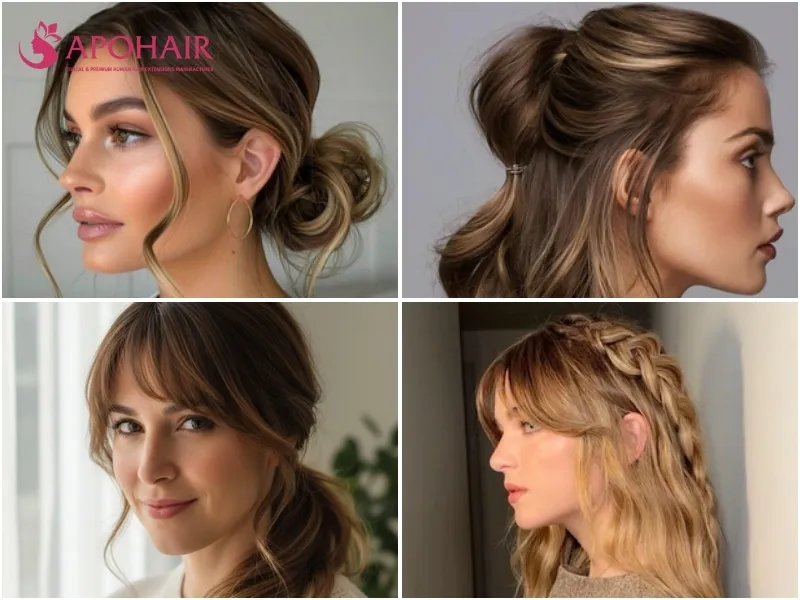
Pulled-back hairstyles expose the forehead, cheekbones, and jaw instead of automatically making a square face more or less flattering. When the goal is a softer result, use low or side placement, loosen the outer silhouette, and leave face-framing pieces long enough to continue below the jaw corners.
- Soft low bun with long tendrils. Place a loose knot at the nape and leave two curved pieces extending below the jaw rather than stopping directly beside it.
- Half-up waves. Secure only the upper section so the remaining waves continue framing the cheeks and jaw.
- Side-swept low ponytail. Gather the hair low and slightly to one side to create a diagonal rather than a centered vertical line.
- Loose braided half-up style. Use a soft braid across the upper section while leaving the remaining lengths down around the lower face.
A tight high ponytail can intentionally emphasize a strong jaw. If the goal is to soften it, add controlled crown lift, avoid a rigid center part, and release light pieces around the face.
Why it works: These pulled-back hairstyles use low or side placement and retain movement around the face, preventing the exposed jaw from becoming the only focal point.
If you prefer practical styles that leave your eyes and cheeks clear, browse more hairstyles that keep hair out of the face, including buns, braids, ponytails, and half-up styles.
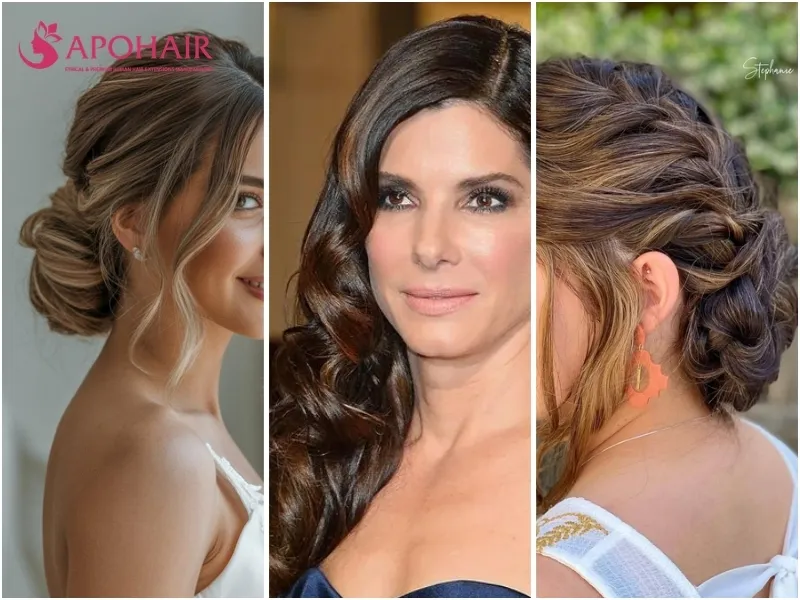
3 Special-Occasion Hairstyles for Square Faces
Special-occasion hairstyles work best when their hold, accessory placement, and face-framing remain consistent from the front and profile. Low placement and curved texture create a softer result, while side-swept styling introduces the diagonal that a centered formal style lacks.
- Romantic chignon with curled tendrils. A soft knot at the nape with curved pieces extending around or below the jaw.
- Side-swept Hollywood waves. Full waves gathered to one side, leaving curved movement across the forehead and along one side of the face.
- Braided updo with soft edges. A loosely constructed braid or twist with an irregular outline rather than a tight geometric crown.
Rounded combs, floral pins, pearls, and organic accessory shapes reinforce a softer finish. Square clips and geometric ornaments can instead be used when the intention is to echo and emphasize the jaw’s structure.
Why it works: These special-occasion hairstyles combine curved texture, asymmetrical direction, and soft edges, so the formal structure does not repeat the face’s angular outline.
How To Choose The Right Hairstyle For Your Square Face?
The face shape sets the goal and the length bracket sets the frame, but which of these 37 looks holds on your head depends on your hair, your age and what else you wear on your face. Work through the five questions below in order. The first two narrow the list fastest, and the last three decide how much of the result you will keep up with.
What Hairstyles Suit Women Over 50 With a Square Face?
Hair density, texture, and styling preference matter more than age alone. A feathered midi can add movement to straight or wavy hair, a softly layered lob can retain a fuller perimeter, and a textured crop can create definition without requiring long styling sessions. Long hair remains suitable when the ends stay dense and the layering does not remove more weight than the hair can support.
What Hairstyles Suit a Square Face With Curly or Wavy Hair?
Curly and wavy hair already supplies the rounded movement that contrasts with an angular jaw. Use dry or curl-aware cutting to place the fullest sections below the cheekbones, prevent excess width directly beside the jaw, and maintain controlled lift through the upper section. A curly shag, side-parted curly lob, and long U-cut all apply this principle at different lengths.
What Hairstyles Suit a Square Face With Fine Hair?
Fine hair benefits from a solid perimeter placed away from the jaw and light layering near the face. A wavy collarbone lob, softly rounded bob, or shoulder-length cut with controlled crown volume can preserve density while adding movement. Avoid heavy internal layering that leaves the ends transparent; bluntness itself is not the problem when the endpoint sits below the jaw and the front sections remain soft.
What Hairstyles Suit a Square Face With Glasses?
Choose the hairstyle according to both the face and the visible lines of the frames. A side-swept fringe, off-center part, or cheekbone-level layer can add movement around rectangular frames, while rounded frames already supply some contrast with the jaw. Keep a fringe above the frames or blend it around their outer edges so it does not form one heavy line directly across them.
What Hairstyles Suit A Square Face With A Short Neck?
Use a haircut endpoint that leaves the jaw-to-shoulder area open or carries the eye beyond it. A pixie or short bob finishing clearly above the jaw exposes the neck, while a lob extending past the collarbone avoids placing a horizontal edge inside the shortest visible area. Avoid a dense perimeter that stops halfway between the jaw and shoulder.
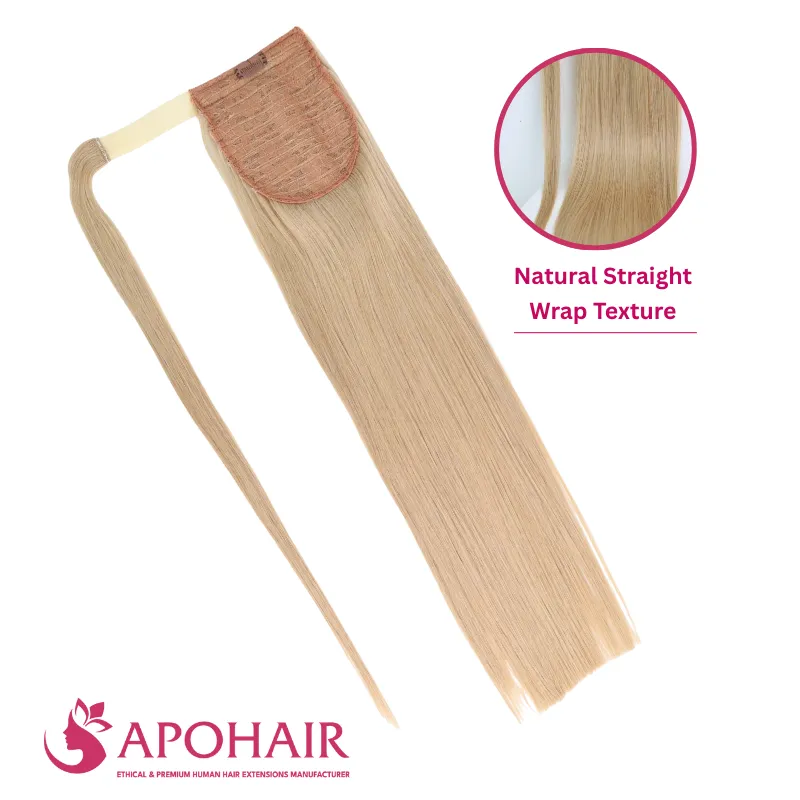
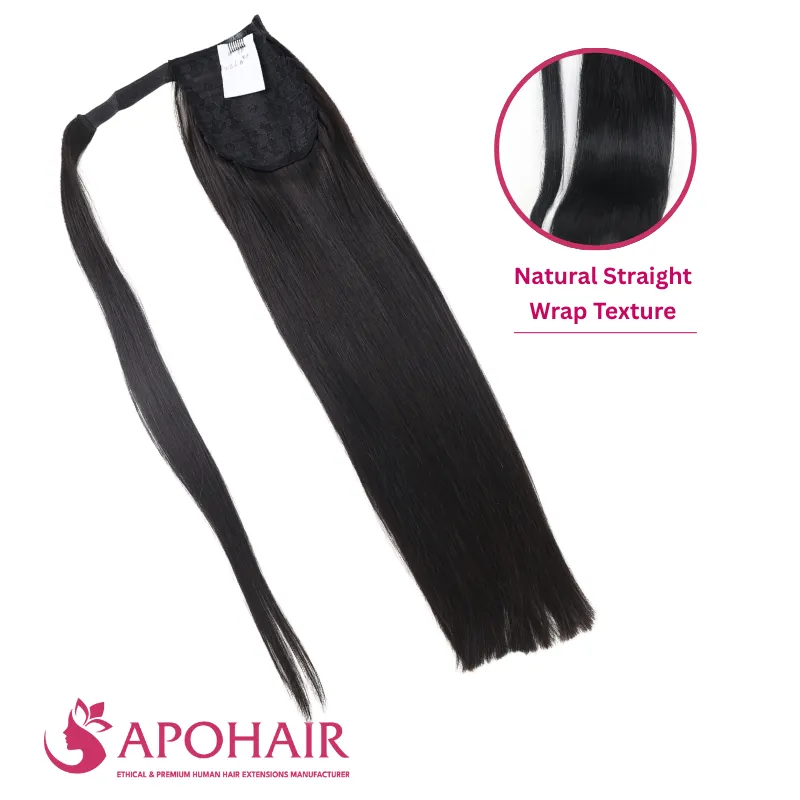
If your hair lacks the length or density required for a voluminous shoulder cut or long layered style, texture-matched clip-in wefts can add body without permanently changing the haircut.
Hairstyles to Avoid for Square Faces
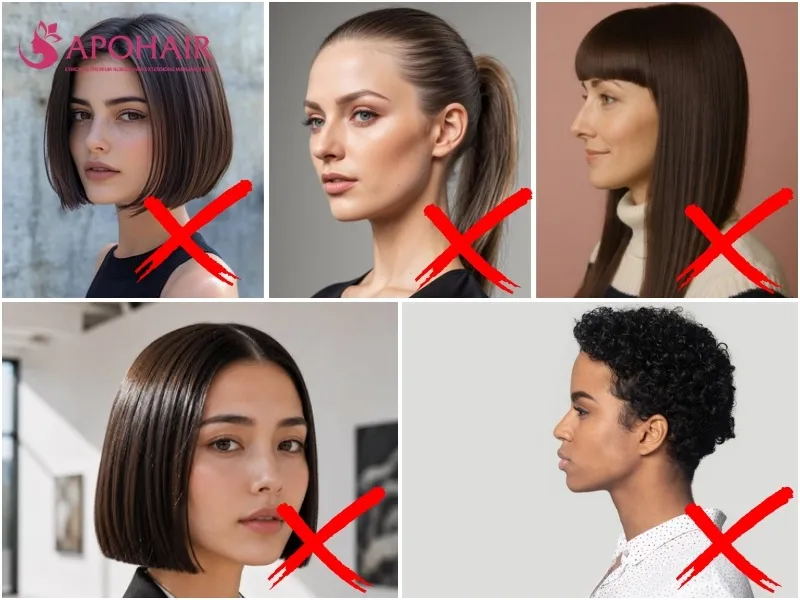
The following hairstyles can make a square face appear more angular when the styling goal is to soften the jaw:
- A blunt bob ending directly at the jaw. The perimeter creates a horizontal line parallel to the lower face and places the haircut’s strongest edge at the jaw corners.
- Heavy straight-across bangs. A deep, solid fringe adds another horizontal line across the forehead and frames the face between two rigid edges.
- Flat one-length hair with no movement. Straight sections hanging beside the face can repeat its vertical edges, while the lack of layers leaves nothing directing attention toward the eyes or cheekbones.
- A severely slicked-back style with no lift or framing. Removing all surrounding texture exposes the full angular outline. This may be intentional, but it does not create a softer result.
- Side volume concentrated at the jaw with a flat crown. This makes the lower face the widest point of the combined silhouette. Shift part of the volume upward or continue the fullest sections below the jaw.
Frequently Asked Questions About Hairstyles for Square Faces
Do square faces look better with bangs or no bangs?
Square faces can suit both options. Curtain bangs, side-swept bangs, Birkin bangs, and wispy fringes add curves or diagonals around the forehead, while no bangs leave the facial structure fully visible. Avoid a deep straight-across fringe when the goal is to soften the jaw because it adds another strong horizontal line.
If you are still choosing between curtain, side-swept, wispy, and fuller fringe styles, see our list of bangs for a square face shape to find an option that suits your forehead and styling routine.
Do square faces look better with long or short hair?
Both lengths can work. Long hair should include layers, waves, curls, or side-swept details so it does not hang in two straight sections beside the jaw. Short hair works when it finishes clearly above or below the jaw and includes texture, asymmetry, or controlled crown volume. Medium-length cuts remain the easiest option because their endpoints naturally clear the jaw.
What hairstyles make a square face look longer or narrower?
Cuts with controlled crown lift, deep side parts, below-jaw face-framing pieces, and long diagonal fringes create the strongest lengthening effect. A layered lob, side-parted long waves, and textured pixie apply these techniques at different lengths. Avoid concentrating the widest part of the hairstyle directly beside the jaw.
What is the difference between hairstyles for square and round faces?
A square face has angular jaw corners, while a round face has curved contours and fuller cheeks. Square-face hairstyles usually emphasize soft texture, curved layers, and diagonals; round-face hairstyles emphasize vertical lines, crown height, and controlled side volume. Both shapes can use off-center parts and below-chin layers, but they use them for different structural reasons.
If your face has similar width and length but a curved jaw and fuller cheeks instead of defined corners, see our list of hairstyles for round faces for more suitable recommendations.
Can hair extensions or wigs soften a square face?
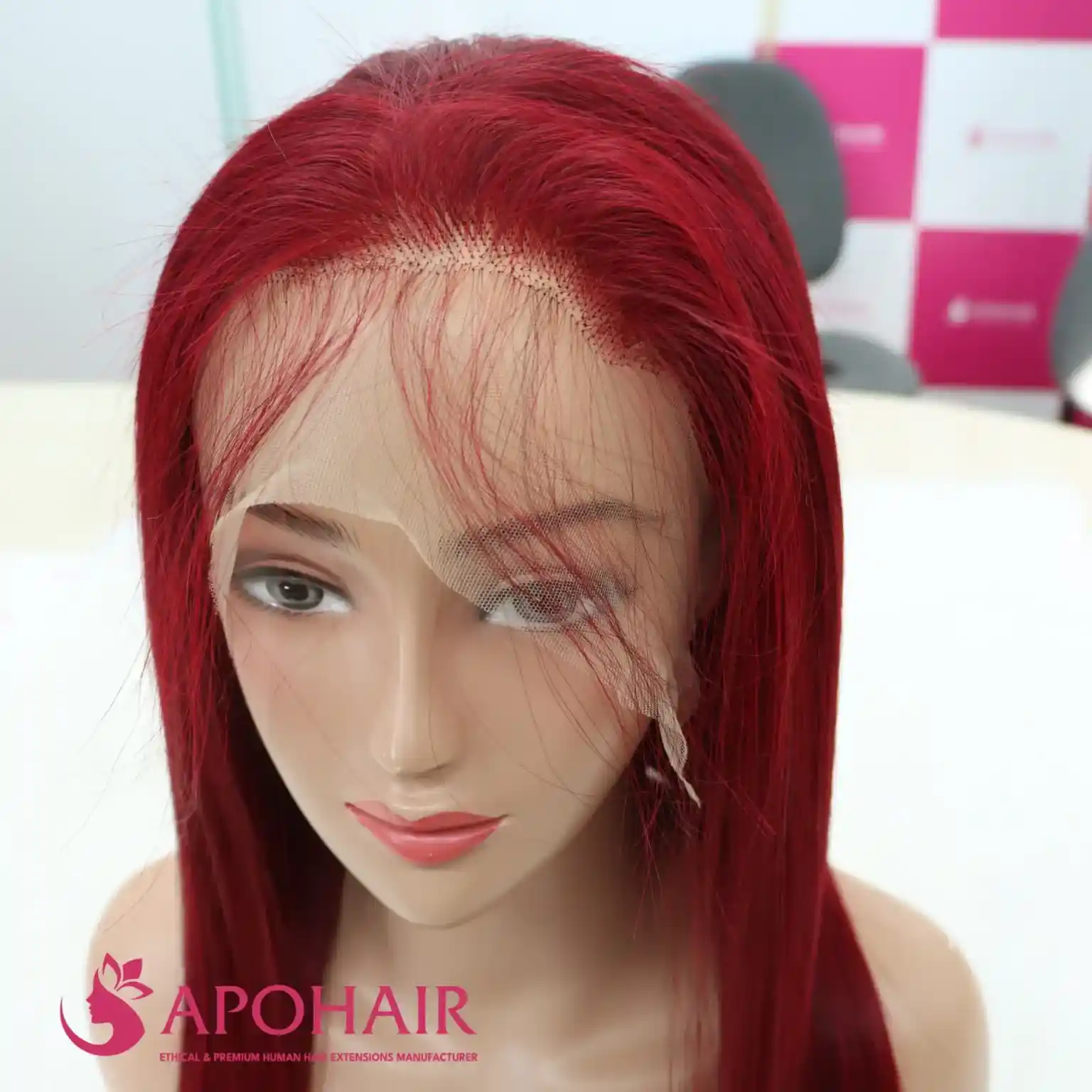
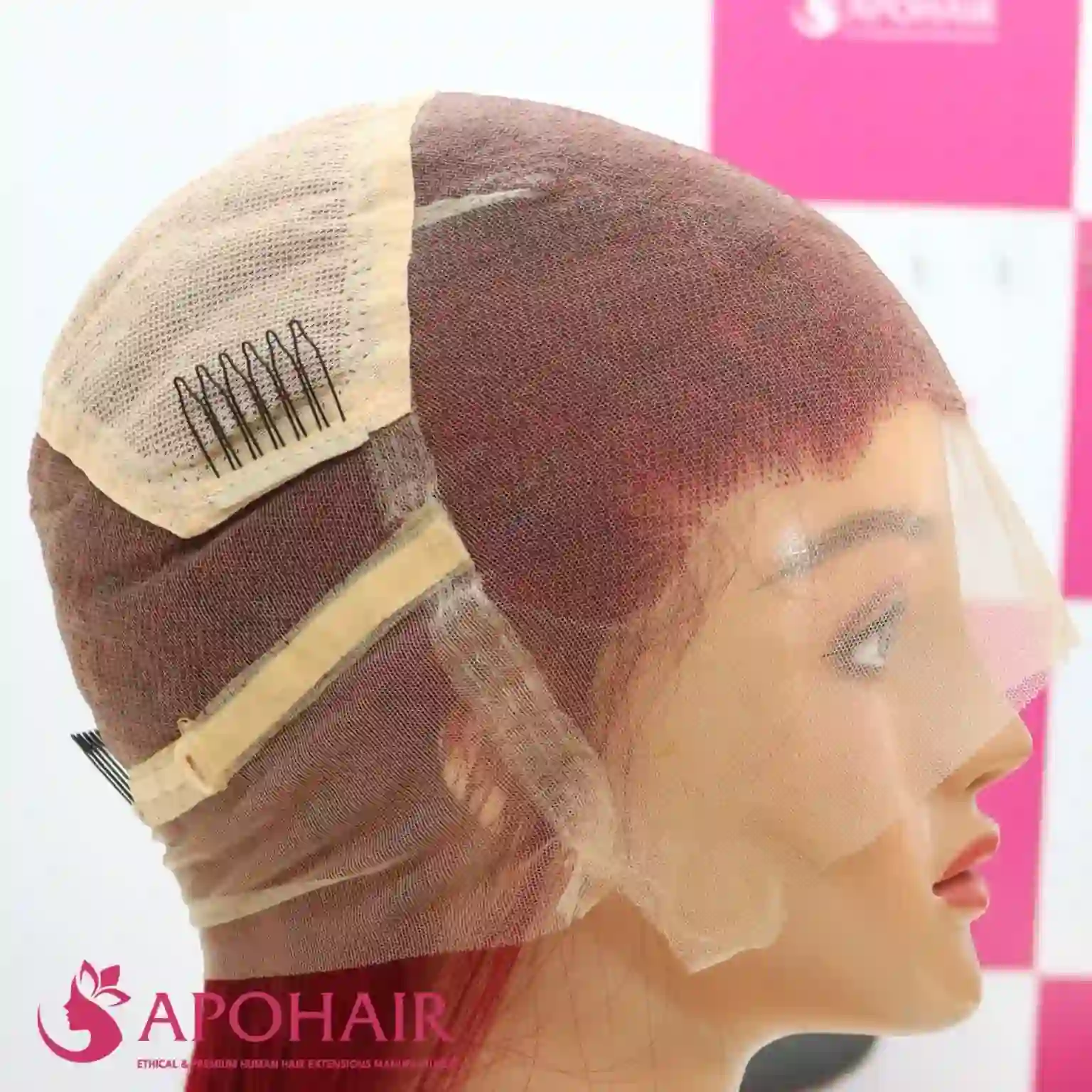
Yes. Clip-in wefts can extend the perimeter below the jaw and add enough density for face-framing layers, waves, or a side-swept finish. A layered wig can provide the same effect when its shortest pieces curve around the cheekbones and continue past the jaw corners. Match the added hair to the natural texture so the blend does not create a visible straight line beside the face.
If you want to recreate the longer, fuller styles in this list without changing your current haircut, clip-in hair extensions add temporary length and volume for layers, waves, and side-swept finishes.
Conclusion
Use these 37 hairstyles for square faces to shortlist cuts that match your natural texture, preferred length, and realistic styling routine. A flattering result does not require hiding a strong jaw; it requires deciding whether the haircut should soften that structure with waves and layers or display it through a cleaner, more exposed silhouette.
Before the salon appointment, confirm four details with your stylist: where the final perimeter will end, where the shortest face-framing layer will sit, which direction the fringe or part will follow, and how much crown lift the finished style needs. These decisions determine the result more reliably than copying a reference image without adapting it to your density and growth pattern.
When additional length or density is needed, texture-matched clip-in wefts can support a layered lob, long waves, or a fuller special-occasion style without permanently changing the natural haircut. APOHAIR supplies factory-direct 100% Vietnamese Human Hair, with texture and shade matching available before salon or wholesale orders.
