



Wavy Hair Texture Guide with Different Types Styling and Care Tips
Wavy hair texture defined by that classic S-shaped pattern that can start anywhere from your roots to the middle of your hair. It’s usually broken down into three subtypes: 2A, 2B, and 2C. The main differences are how tight the waves are, how thick your strands feel, and exactly where the waving starts. Type 2C is the most intense version. It’s thick, full of volume, and the waves start right at the scalp, sometimes even turning into loose curls at the ends. At APOHAIR, our body wave and natural wave extensions sit right in that 2A to 2B range, which is great if you want to match a lighter or more classic wavy look.
This guide breaks down every wavy subtype, how to spot your own pattern, and the best hairstyles for your texture. We also included a daily routine to keep those waves looking perfect. Keep reading to find the right products, styling tricks, and extension options for your specific vibe.

What is Wavy Hair Texture?
Wavy hair is what we call Type 2 whose “S” shapes show up anywhere from your roots to the middle of your hair. You get these waves because your hair follicles are a bit oval or tilted, which makes the hair bend instead of growing bone-straight or into tight curls. This natural bend gives your hair a lot of body and volume, so it usually looks way thicker and more textured than straight hair without you even having to try.
One thing to keep in mind is that the natural oils from your scalp have a harder time traveling down wavy hair than straight hair. Those “S” curves act like little speed bumps, so your ends often end up feeling pretty dry while your roots stay oily. Because of that, you’ll want to focus your moisturizer on the middle and ends of your hair. Also, waves can be a bit picky with the weather. Type 2A usually stays pretty chill, but Type 2C tends to get super frizzy the second it gets humid outside.

Three Subtypes of Wavy Hair Texture
Wavy hair actually breaks down into three different types: 2A, 2B, and 2C. It all depends on how tight the waves are, how thick your hair strands feel, and exactly where the waving starts on your head.
All three types have that classic “S” shape, they all tend to get a bit frizzy when it’s humid, and they all have that natural volume you just can’t get with straight hair unless you use a curling iron. The main thing that sets 2A apart from 2C is the thickness and where the wave kicks in. Type 2A is usually pretty fine with loose bends starting halfway down, while 2C is thick and has strong waves starting right at the roots.
Type 2A Hair
Type 2A is the most chill wavy type which is made of fine strands that form loose, soft “S” shapes, mostly from the middle of your hair down to the ends. When you let it air-dry, it has that effortless, tousled look. The waves are pretty subtle and stay fairly flat instead of popping into tight patterns. You’ll see this type a lot with people who have naturally fine hair. It’s super common among those with Northern European or East Asian backgrounds, though it really just comes down to your follicle shape.
The best part about 2A hair is how easy it is to style. Since the waves are so fine and loose, they take to a straightener or a curling iron super fast. If you want to keep the waves looking good, stick to lightweight stuff like mousses or sea salt sprays. You definitely want to avoid heavy products because they’ll just weigh your hair down and make the waves disappear.

Type 2B Hair
Type 2B hair is that perfect middle ground that has a medium texture with “S” waves that are much more defined than 2A. The waves usually start closer to your roots and get even stronger as they get toward the ends. If you look closely, you’ll see it has thicker strands and a lot more texture, so the wave pattern actually stays put even after you brush it out. It’s probably the most common wavy type since it’s right in between those loose 2A bends and the super thick 2C volume.
One of the best things about 2B hair is that it holds a curl really well. Because the strands have some decent thickness and structure, you can use a curling iron and expect the style to last for hours. It’s super versatile, so you can go for anything from bouncy curls to relaxed beach waves. To keep it looking its best, try using some anti-frizz serum or a medium-hold gel. These will give you great definition without making your hair feel stiff or crunchy.

Type 2C Hair
Type 2C is the boldest of the wavy types. It’s got thick strands and strong “S” waves that start right at your roots, sometimes even turning into loose spirals at the ends. When you let it air-dry, it looks super full and textured. In fact, it’s so defined from top to bottom that it almost looks curly. It sits right on the edge of the curly spectrum, so it actually has a lot in common with Type 3A curls because the hair is coarser and the waves are so tight near the scalp.
The tricky part is that 2C hair and humidity do not get along. Since the strands are thick and soak up moisture fast, the air can totally mess with your wave pattern and make your hair puff out. On the bright side, because your hair is thicker, it holds a style way longer than finer hair types. Once you style it, it’s not going anywhere. To keep things under control, you’ll definitely want to make deep conditioners and anti-humidity creams part of your daily routine.

Type 2C already shares a lot with Type 3A, where the pattern stops bending and starts spiraling. Past that point, the curly hair textures from 3A to 3C are sorted by curl size and by how much each one shrinks as it dries.
How to Identify Your Wavy Hair Texture Subtype?
To figure out your specific wavy type, just wash your hair and let it air-dry completely without touching it. You’ll want to see where the waves start and how tight that “S” shape looks. It’s super important to start with a fresh wash to get rid of any old product buildup like creams or dry shampoo, since those can weigh your hair down and hide your real pattern.
- If you air-dry with zero product and see loose bends that only show up halfway down, you’re likely a 2A.
- If you see clear “S” shapes in the middle, that’s 2B.
- If you’ve got strong waves starting right at the roots, you’re looking at 2C.
You can also do a quick strand test to be sure. Take one hair and put it against a white piece of paper. If you can barely see it, you’re probably 2A. If it’s easy to see but still feels somewhat fine, that’s 2B. If it feels thick or coarse between your fingers, you’re definitely 2C. A hair texture chart sorts strand thickness into fine, medium, and coarse on its own scale, which is worth checking alongside the 2A to 2C result when the strand test and the wave pattern disagree. Don’t worry if you see different patterns in different spots, like 2A on top and 2C at the back of your neck. That’s totally normal since your follicles can vary all over your head.

Popular Hairstyles for Wavy Hair Texture
Wavy hair is awesome because it has that natural bounce and body that works with so many different looks. Here are 15 styles that really make those Type 2 “S” waves pop.
- Beach waves: Those loose, messy waves you get with a little salt spray for a super chill vibe.
- Half-up, half-down: Keeps the hair out of your face while letting your waves flow in the back.
- Messy bun: An easy updo that uses your natural volume to make the bun look full and textured.
- Side-swept waves: Just brush your waves to one side for a fancy, red-carpet feel.
- Layered lob: A shoulder-length cut with layers that really help your waves move.
- Waterfall braid: A pretty, flowing braid where wavy strands “drop” through the twists.

- Low ponytail with texture: A soft pony at the base of your neck that keeps your wave pattern looking good.
- Curtain bangs with waves: These face-framing bangs blend perfectly into wavy hair.
- French twist with loose pieces: A classic look but with wavy strands left out to frame your face.
- Fishtail braid: This detailed braid looks amazing because it shows off the texture in every strand.
- Shag haircut: A choppy, layered cut with bangs that adds tons of life and movement.
- Loose chignon: A low, relaxed bun that looks soft and romantic thanks to your waves.

- Braided crown: Two braids wrapped around your head, showing off your hair’s volume on the sides.
- Textured pixie: A short style that uses your natural waves to add depth and keep things interesting.
- Twisted half-up: Just twist two sections back and pin them, leaving the rest of your waves free.

Choosing which of these looks to build with extensions often starts with texture, and body wave vs deep wave sets the loose S-waves of body wave against the tight, defined coils of deep wave, with a hairstyle list for each.
Wavy clients ask about products, braids, thickness and changing texture, and the answers below match each question to an extension format.
Which products make 2A waves disappear?
Heavy products do, because they weigh the hair down, which is why 2A is best kept to lightweight mousses or sea salt sprays. When a client with fine strands wants more body without loading the hair with product, clip in remy human hair extensions wholesale give it, since the clips hold the set in place and the added hair carries the volume.
Which wavy type is the most common?
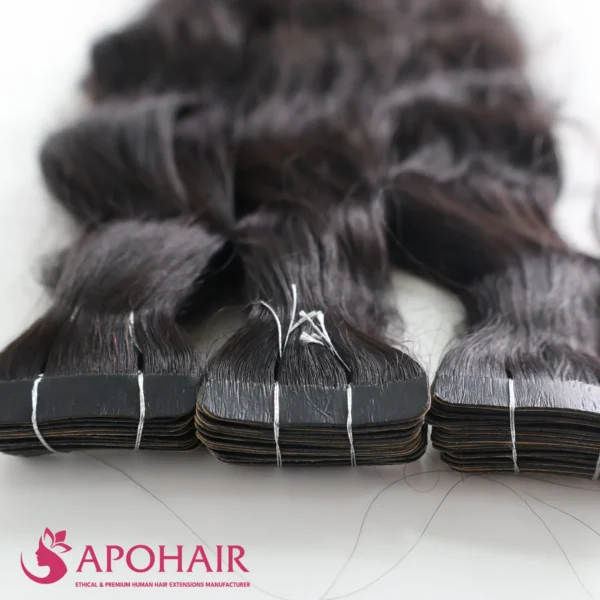
2B is probably the most common wavy type, sitting right between the loose bends of 2A and the thick volume of 2C. Salons that serve mostly 2B clients can plan around one flat, semi-permanent format, and wholesale tape in human hair extensions come in four constructions, Normal, Invisible, Long and Double Tabs, so a single tape range covers different client requests.
Which wavy style shows the texture of every strand?
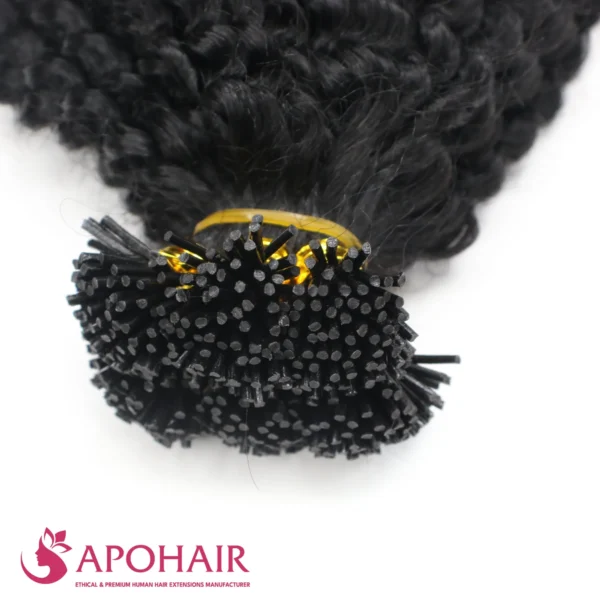
The fishtail braid does, because its detailed weave shows off the texture in every strand. When every strand is visible, the way hair is added matters, so a stylist can place each pre-tipped strand of keratin hair extensions wholesale individually instead of leaving a weft track to show through the braid.
Which weft thickness suits thick 2C waves?
A thicker construction suits 2C, because its strands are thick and its waves strong from the roots, and it holds a style much longer than finer hair. A buyer supplying those clients can choose that thickness from wholesale remy weft hair extensions, which range from thinner to thicker constructions.
Is wavy hair the same as curly hair?
No, wavy hair forms loose to medium S-shaped patterns while curly hair makes tighter spirals or coils, and the difference is the degree of bend each follicle produces. Matching a bend by name is simple with wholesale i tip hair extensions, which are made in 12 textures, so a buyer can offer a wave and a curl as separate lines and not as one in-between texture.
Can wavy hair become straighter with age?
Yes, wavy hair can become straighter over time through hormonal changes, aging or shifts in overall health, including pregnancy, menopause, thyroid conditions and significant weight changes. When a client’s pattern is drifting, a set of u tip hair extensions wholesale can be refitted at the next visit with the hair re-tipped, and swapped for a texture that suits the new wave.
What does 2A hair look like when it air-dries?
It dries with an effortless, tousled look, and the waves are subtle and stay fairly flat. Under loose waves like that, a wholesale hand tied weft human hair extensions supplier keeps the weft line low, with ultra-thin hand-knotted strips.
How to Care for Wavy Hair Texture?
Taking care of wavy hair is all about finding that sweet spot between keeping it hydrated and keeping it light. You want to control frizz and be gentle so your waves don’t lose their shape or get weighed down. Unlike straight hair that you can wash every day, wavy hair is better off with a wash or a “co-wash” just 2 to 3 times a week. Since those “S” curves slow down your natural oils, your ends can get dry pretty fast if you overdo it. Just follow these three basic steps to keep your waves looking healthy and sharp.
- Cleanse: Stick to a sulfate-free shampoo so you don’t strip away the good oils. Just focus on your scalp to get rid of any gunk.
- Condition: Use a moisturizing conditioner every time you wash. Just make sure it’s a lightweight formula so your waves stay bouncy and don’t go flat.
- Clarify: Every 4 or 5 washes, use a clarifying shampoo. This hits the reset button by removing product buildup so your waves stay light.
These rules also work perfectly for wavy human hair extensions. Since 100% human hair extensions have the same structure as your own hair, they react the same way to moisture and heat. Using sulfate-free products, conditioning regularly, and letting them air-dry will keep the wave pattern looking fresh and make your extensions last way longer.

Wash frequency is where wavy and straight care differ most, since straight hair can be washed daily while wavy hair does better with 2 to 3 washes a week. Straight hair texture covers the 1A, 1B, and 1C subtypes and a care routine of its own.
Wavy Hair Texture Extensions from APOHAIR
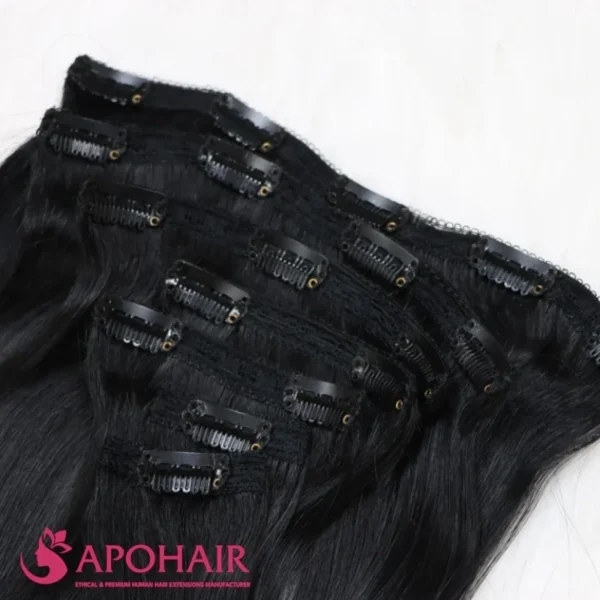
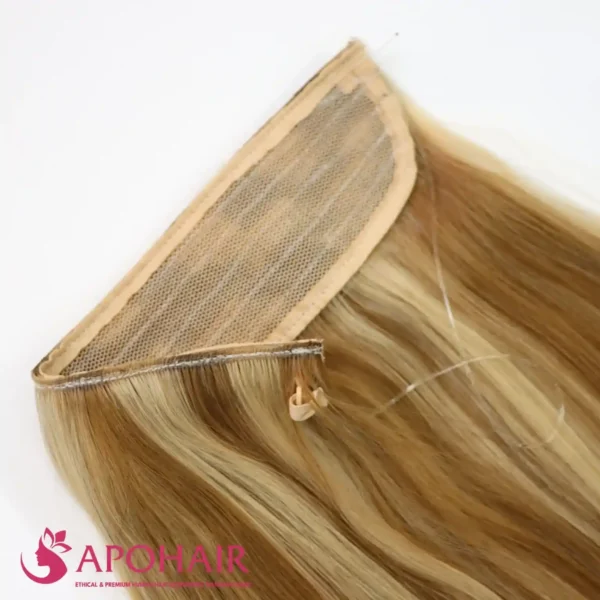
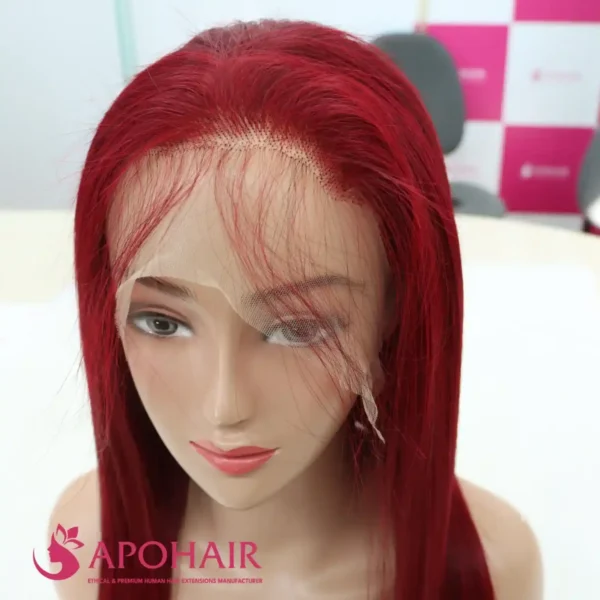
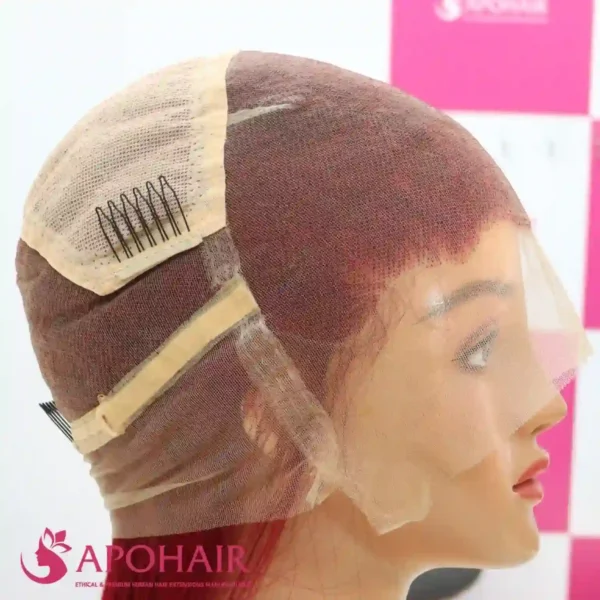
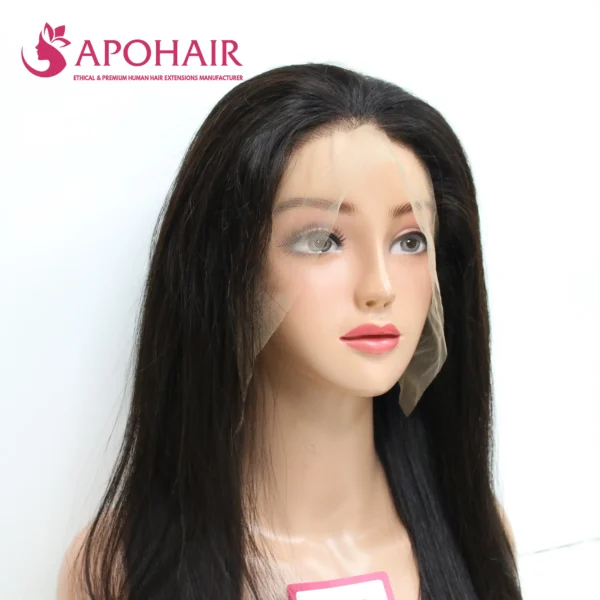
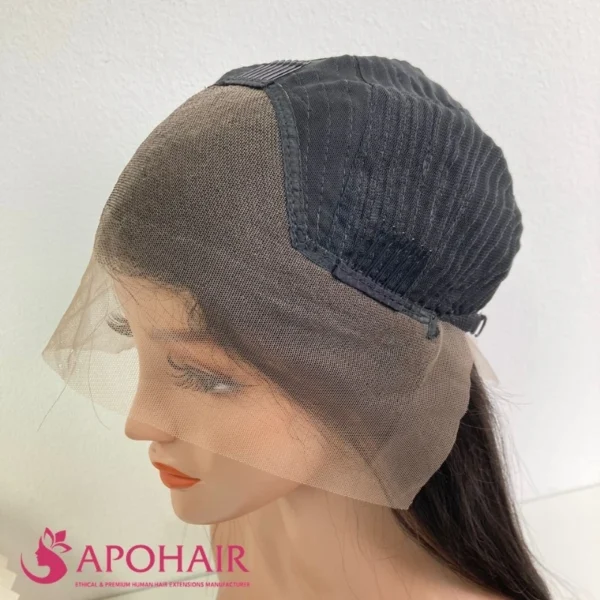
APOHAIR has a great selection of wavy extensions and wigs made from 100% Vietnamese human hair that keeps its natural wave beautifully. You can pick between body wave and natural wave textures, which fit right into that 2A to 2B range. This gives you plenty of options whether you want a soft, light bend or a more defined wave. You can find these wavy textures in all the popular styles like hand-tied wefts, seamless clip-ins, tape-ins, and lace wigs. This makes it easy for salon owners and wholesalers to get exactly what their clients need.
Choosing the right extensions is a big deal because it’s how you build trust and keep clients coming back. Our hair is high quality with all the cuticles lined up, and we never use any synthetic stuff. APOHAIR uses ethically sourced Vietnamese hair that goes through a strict check at our factory. Salons can count on us for anything from wedding hair and photoshoots to a simple, fresh new look for a client.
APOHAIR really stands out from other manufacturers. Here is why wholesale buyers love working with us.
- 100% Vietnamese Human Hair: Single-donor collection ensures consistency in texture and color, and accepts dyeing better than Indian or Chinese hair due to its intact cuticle layer.
- Cuticle-Aligned Technology: All cuticles face the same direction, which eliminates tangling and matting during daily wear.
- Ethical Sourcing: Direct collector network in Vietnamese villages with fair compensation verified at every stage.
- Factory-Direct Pricing: No middlemen in the supply chain, resulting in wholesale rates 30% to 40% below retail market.
- 20+ Year Track Record: 700+ well-trained, skilled workers and 100+ sales staff supporting production and global fulfillment.
- State-of-the-Art Manufacturing: Operates a 33,000 m² (355,209 sq ft) factory in Ninh Binh, Vietnam, featuring modern production lines.
- Global Distribution: Ships to the US, UK, EU, Australia, Africa, and Asia within 24 hours of order confirmation.
- Quality Guarantee: 7-day warranty with a free replacement policy on every order.
APOHAIR turns real Vietnamese hair into top-tier extensions that salons and wholesalers around the globe trust. Our goal is to be a world leader in the hair industry by doing things the right way, making great products, and helping our customers succeed.
Ready to source wavy hair extensions at wholesale pricing? Contact APOHAIR today.
Turning a 2A to 2B match into an order: Body wave and natural wave textures come in more than one format, so the install method decides which APOHAIR category to start from.
Sew-in stock: The human hair bundles wholesale range sells weft bundles of about 100 grams, in textures from silky straight to kinky curly, with lace closure and frontal sets for full-head installs.
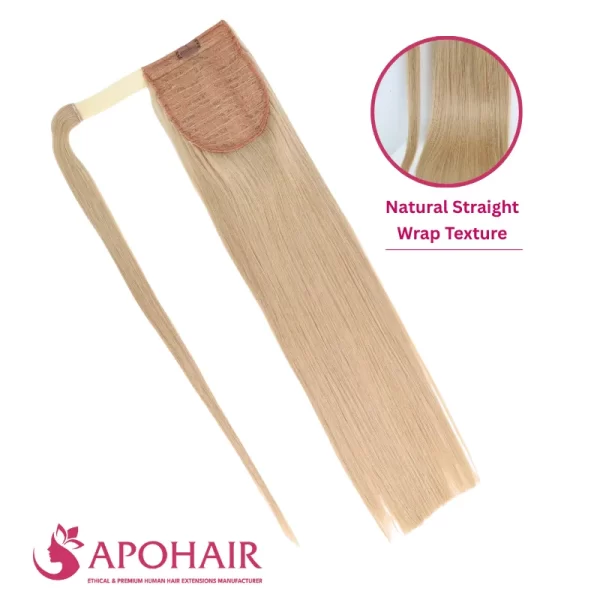
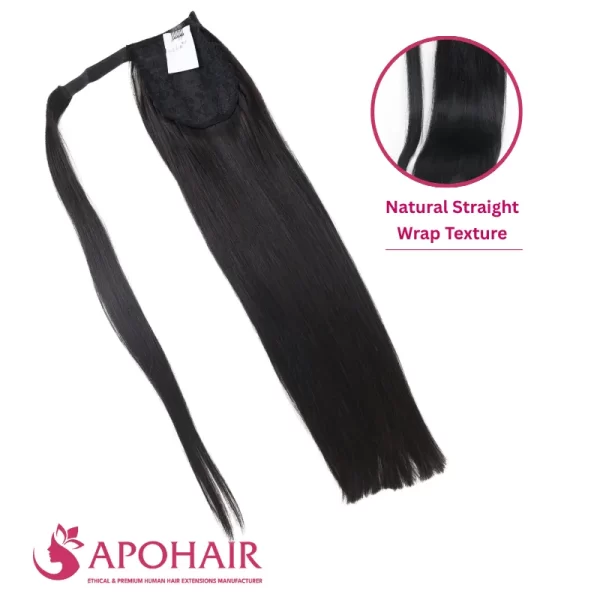
Method-by-method range: The wholesale remy human hair extensions range is where the tape-ins, clip-ins, and wefts mentioned above are listed, along with keratin tips and ponytails.
Wefts matched to client hair: Salons and wholesalers can order wholesale weft hair extensions by client type, from machine wefts for medium-to-thick hair to hand-tied tracks for fine or weak hair, and textures, colors, and lengths can be mixed inside one order that starts at 200g per weft type.
APOHAIR ETHICAL & PREMIUM HUMAN HAIR EXTENSIONS MANUFACTURER
- Address: Building 3A, Lane 82 Duy Tan, Cau Giay, Hanoi, Vietnam
- Factory: Minh Luong, Yen Luong Ward, Ninh Binh, Vietnam
- Phone number: (+84) 862 132 366
- Email: [email protected]
FAQ Related to Wavy Hair Texture
Is wavy hair the same as curly hair?
No, wavy hair and curly hair are different hair types. Wavy hair (Type 2) forms loose to medium S-shaped patterns, while curly hair (Type 3) creates tighter spirals or coils. The difference comes from the degree of bend produced by each follicle’s shape. Follicle shape is only the first of several points in a wavy vs curly hair comparison, which also weighs water retention, strand thickness, frizz, and shine.
Can wavy hair become straight with age?
Yes, wavy hair can become straighter over time due to hormonal changes, aging, or shifts in overall health. Pregnancy, menopause, thyroid conditions, and significant weight changes are common factors that alter natural wave patterns in adults.
Does wavy hair need a diffuser?
Wavy hair benefits from a diffuser because it distributes heat evenly without disrupting the wave pattern. Direct airflow from a standard blow dryer separates waves, causes frizz, and reduces definition, while a diffuser keeps the S-shapes intact during drying.
Outro
Wavy hair, or Type 2, ranges from loose “S” bends (2A) to thick, bold waves (2C). To find your match, just wash, air-dry, and see where the wave starts and how tight it looks. Keeping it fresh is all about sulfate-free washing and lightweight moisture to beat frizz. These same rules go for our wavy extensions. APOHAIR is one of the hair manufacturers in Vietnam that offer body wave and natural wave textures in wefts, clip-ins, tape-ins, and wigs, all made from 100% ethical Vietnamese hair at factory-direct prices.
APOHAIR ETHICAL & PREMIUM HUMAN HAIR EXTENSIONS MANUFACTURER
- Address: Building 3A, Lane 82 Duy Tan, Cau Giay, Hanoi, Vietnam
- Factory: Minh Luong, Yen Luong Ward, Ninh Binh, Vietnam
- Phone number: (+84) 862 132 366
- Email: [email protected]
