









Wavy vs Curly Hair: Differences in Texture, Pattern and Styling Guide
Wavy hair has loose “S” shapes that stay close to your head. However, curly hair grows in clear circles or “ringlets” that bounce away from your skin. These two hair types are different in five main ways: the shape of the hair follicle (where the hair grows from), how they hold water, their thickness, frizz, and shine.
Wavy hair grows from a follicle that is shaped like an oval. This creates a gentle bend. On the other hand, curly hair grows from a hook-shaped follicle. This turns every hair into a tight coil.
Curly hair usually gets frizzy more often. This is because the tight coils make it easier for the hair to soak up wet air (humidity). Wavy hair is better at spreading natural oils because the gentle shape helps the oil move down the hair. Also, curly hair naturally looks like it has more volume. The springy shape lifts the hair at the roots and makes it look much fuller.
This guide helps you understand things like follicle shape, oil distribution, volume, frizz, and shine for both wavy and curly hair. You will also find some good tips on how to change up your texture, how to pick the best pattern for your daily life, and how to find extensions that look just like your natural hair.

What Are the Differences Between Wavy Hair and Curly Hair?
So, what’s the real deal with wavy vs. curly hair? Wavy hair has those loose S-shaped bends that stay close to your head, but curly hair grows in clear spirals or ringlets that bounce away from the scalp. These two textures are different when it comes to follicle shape, how moisture moves, volume, frizz, and shine. This table breaks down all five areas side by side so you can see the difference.
| Aspect | Wavy Hair (Type 2) | Curly Hair (Type 3) |
| Hair Structure and Follicle Shape | Grows from a moderately oval follicle; strand bends into loose S-shapes | Grows from a highly asymmetrical, hook-shaped follicle; strand coils into spirals or ringlets |
| Oil and Moisture Distribution | Sebum travels freely along the gentle S-bend; mid-lengths and ends stay moisturized | Tight spiral pattern slows sebum movement; ends often remain dry |
| Volume | Moderate body; strands fall closer to the head | High natural volume; coil structure lifts roots and expands outward |
| Frizz | Moderate frizz; cuticle lies flatter along the gentle bend | High frizz; cuticle lifts at each coil point, absorbing more atmospheric moisture |
| Shine | Higher shine; flatter strand surface reflects light uniformly | Lower shine; coiled structure scatters light in multiple directions |

Hair Structure and Follicle Shape
The shape of your follicles is what really decides your hair texture. Wavy hair grows from a follicle that is just a bit oval, which makes that gentle bend you see. Curly hair, however, comes from a follicle that is more lopsided and shaped like a hook, which forces each strand to turn into a spiral or a ringlet.
Since the wavy follicle is only slightly curved, it makes strands that form loose S-shapes instead of laying totally flat. Curly hair comes out of a very asymmetrical opening, and that is why the hair coils into clear spirals from the roots all the way to the tips.
The follicle shape controls your texture by changing how the hair leaves your scalp. The more lopsided the follicle opening is, the tighter your curls will be. A follicle with a stronger curve also makes the hair strand flatter, like a ribbon. This can make your hair feel a bit coarser, even if the strands themselves aren’t that thick.

Oil and Moisture Distribution
Wavy hair does a better job of spreading natural oils down the strands compared to curly hair. This happens because the gentle bends let the oils travel further down the hair without much trouble. Since the S-bends are so gradual, there is very little friction, so the oils move freely. In contrast, the tight spirals in curly hair slow everything down, which often leaves the ends feeling pretty dry.
The wavy hair stays moisturized more consistently because the oil actually reaches the middle and the ends of the hair. With curly hair, those tight coils physically stop the oils from getting past the middle part of your hair, leaving the bottom section without any natural protection.

Volume
Curly hair naturally has more volume than wavy hair because those springy coils give you a lift at the roots. Instead of just sitting close to your head, the hair expands outward. Curly strands look fuller even without any product because the tight spirals and ringlets stack on top of each other and push away from the scalp, which makes the hair look thick and lifted. Your pattern really affects your volume because it determines how far the hair moves away from your head.
A tighter coil creates a lot of outward expansion, while a gentle wave tends to stay closer to the scalp. Wavy hair can definitely get that same look if you use the right volumizing products and a diffuser, though it usually takes a bit more work to get that same natural lift.

Frizz
Curly hair tends to frizz up much more than wavy hair. This is because the tighter coils create way more spots along the hair where the cuticle layer can lift and soak up moisture from the air. When it’s humid out, curly strands frizz even more because all those bends and coils create extra surface area for the hair to absorb moisture and swell. In wavy hair, frizz usually happens when the cuticle layer lifts along the S-bends as the humidity messes with your wave pattern.
For curly hair, however, the frizz comes from the cuticle lifting at every single coil point, which happens a lot more often because of the spiral shape. The cuticle layer on wavy hair stays flatter since the bends are much gentler, which helps it resist frizz a bit better. In contrast, the cuticle on curly hair is raised more often because the hair is constantly changing direction.

Shine
Wavy hair actually shines more than curly hair because the flatter surface of the strands lets light bounce off more directly and evenly. Since the S-shaped strands are relatively flat, they catch the light at a consistent angle, which helps the cuticle reflect it in a more organized way. The way your cuticles are aligned really matters here. Wavy hair has a smoother surface and doesn’t change direction as much, so it reflects light uniformly.
In contrast, the coiled shape of curly hair scatters light in all different directions, which makes it look less shiny. Curly hair can still get that same level of shine, though. You just need to apply some hair oils or creams to smooth down the raised cuticle layer, which stops the light from scattering and helps the surface reflect better.

Can You Change Wavy Hair to Curly Hair?
Changing wavy hair to curly permanently is difficult to do with just one treatment. However, a chemical perm can give you curls that last for a long time. These curls will look natural until your hair grows out.
You can use chemical perms, which change the bonds in your hair to hold a curl. You can also try temporary methods, such as twist-outs or diffusing with curl products. A chemical perm changes the hair you have now, but it doesn’t change how your hair grows from the roots. Your new hair will still be wavy.
A perm can sometimes cause damage, especially if you already dye your hair or use other chemicals. This happens because the perm solution breaks down the protein in your hair.
A professional perm usually takes about 2 to 4 hours at a salon. This depends on how long or thick your hair is and the size of the curls you want. Your hair will only go back to being wavy as new hair grows in. The permed parts will stay curly until you cut them off or until the heat slowly loosens the pattern.

Which Hair Type Is Right for You: Wavy or Curly?
Picking between wavy and curly hair really depends on how much work you want to put in, where you live, your face shape, and how much time you have for styling each day. Wavy hair is usually easier to take care of, but curly hair gives you that natural volume and clear definition. Think about these 5 things before you decide:
- Face shape: Oval and heart-shaped faces look great with wavy hair because the soft S-shapes add some width at your temples without taking over your features. If you have a round or square face, you might like the vertical volume and lift that curly hair provides.
- Climate: If you live somewhere with high humidity, your curly hair will frizz up more and you’ll need to use more products to keep it under control. In dry climates, curly hair loses moisture pretty fast, so you have to keep it hydrated.
- Daily maintenance: Wavy hair doesn’t need as many layers of product, it dries a lot faster, and it’s easier to style in different ways without messing up your natural texture.
- Active lifestyle: Wavy hair is great if you’re always on the go. It dries quickly after a wash, stays looking good with very little effort, and holds its shape after a workout without needing a whole new styling session.
- Hair density: If you have fine hair, wavy textures usually work better. They add plenty of volume without being too heavy for thin or fragile strands.

Wavy vs Curly Hair Extensions: Which One Should You Choose?
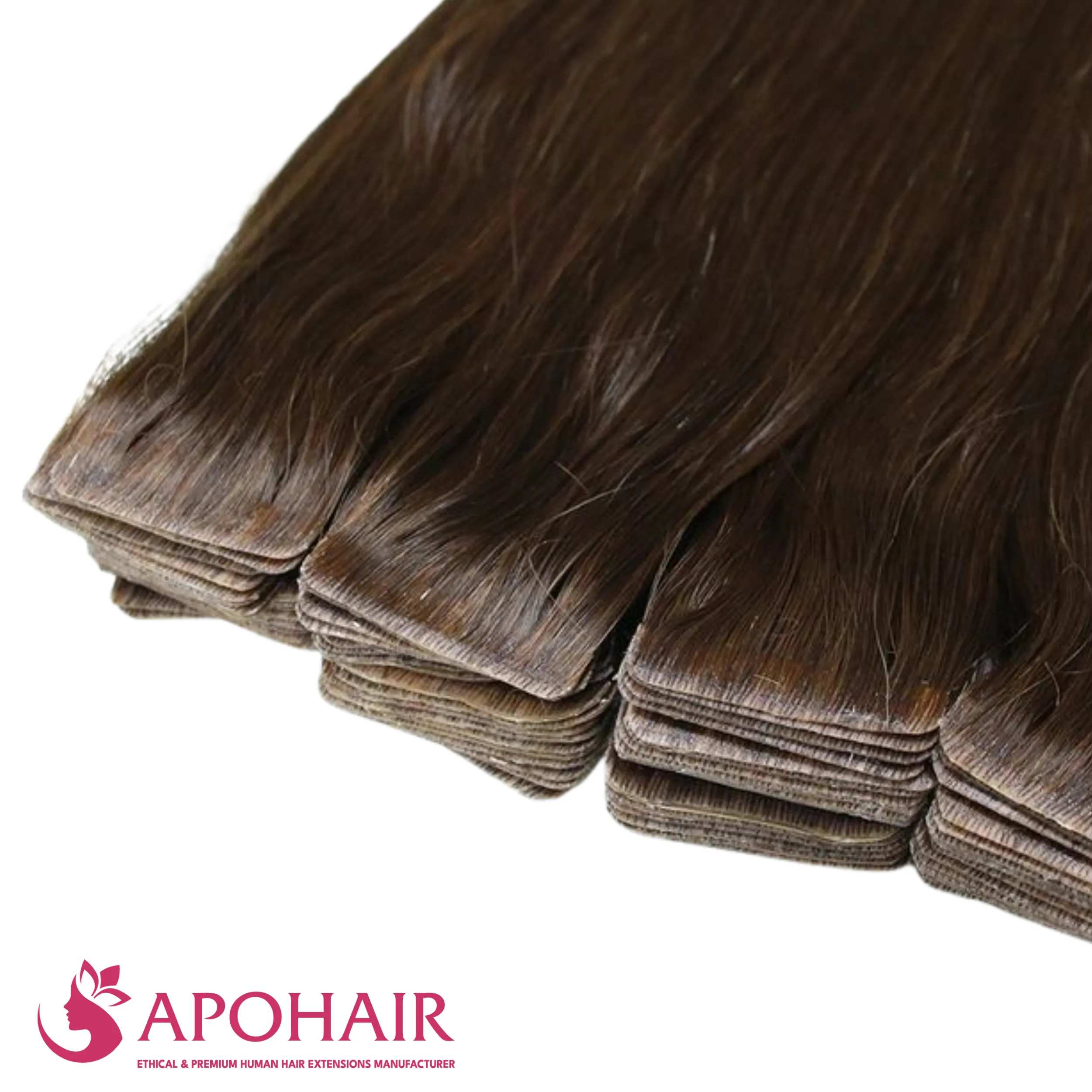
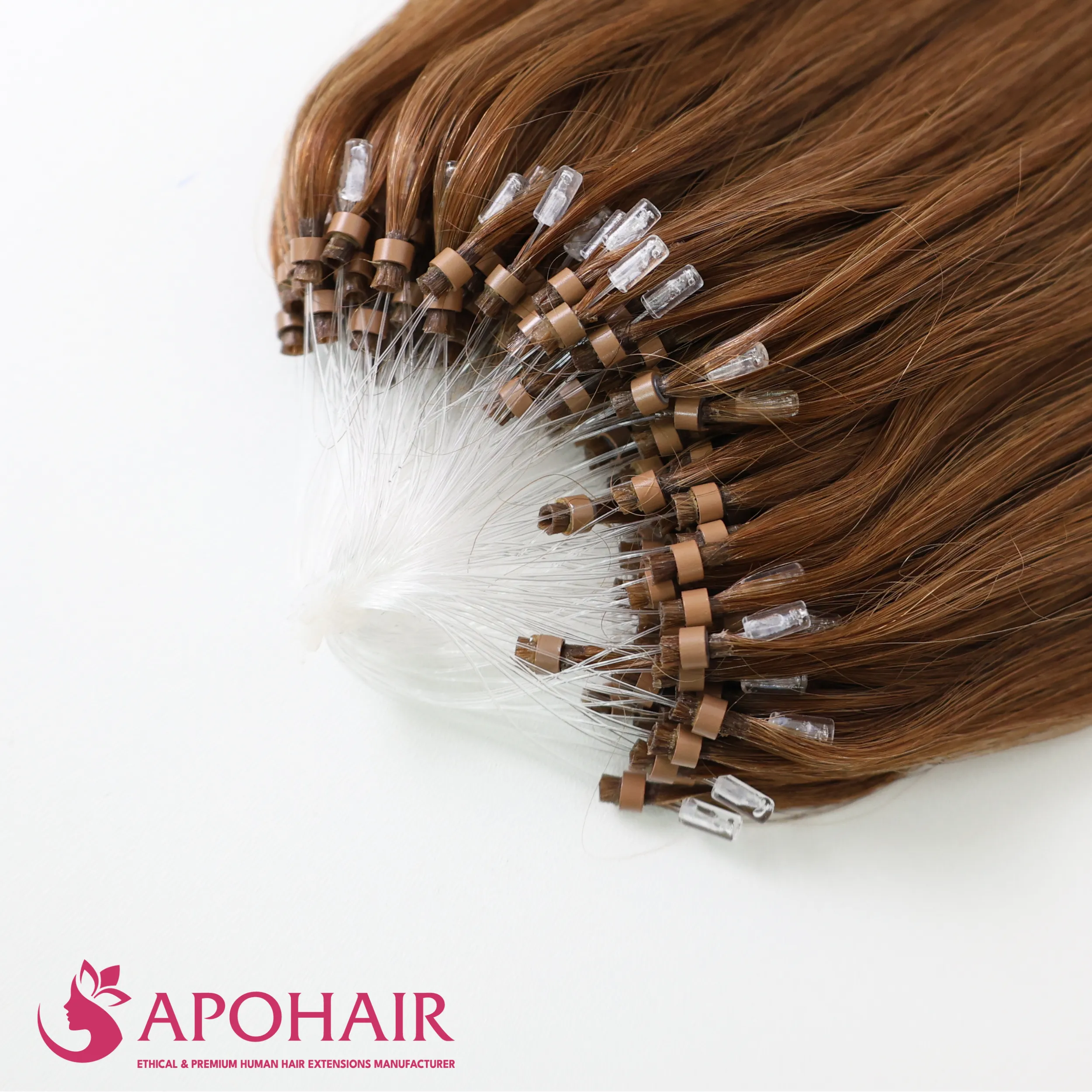
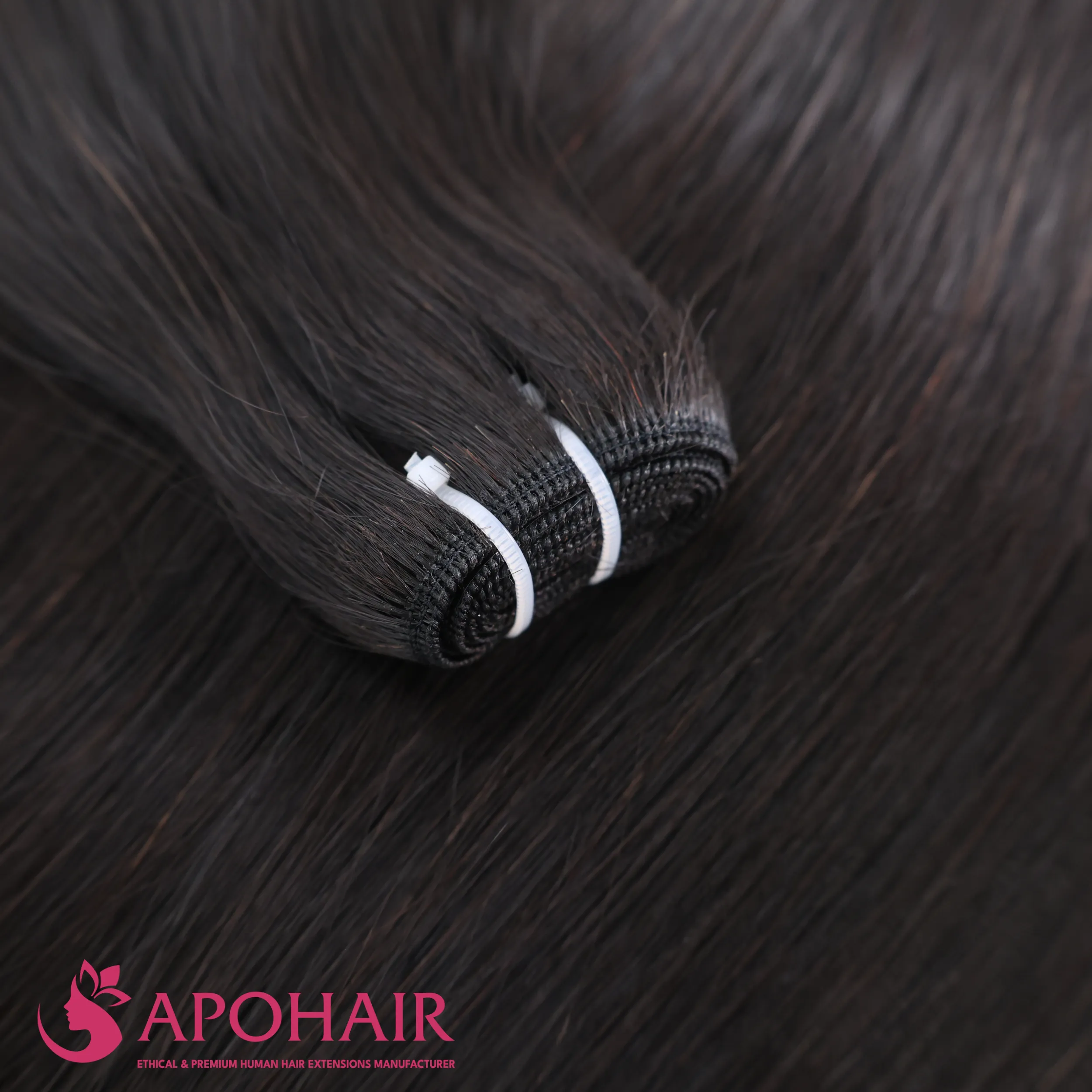
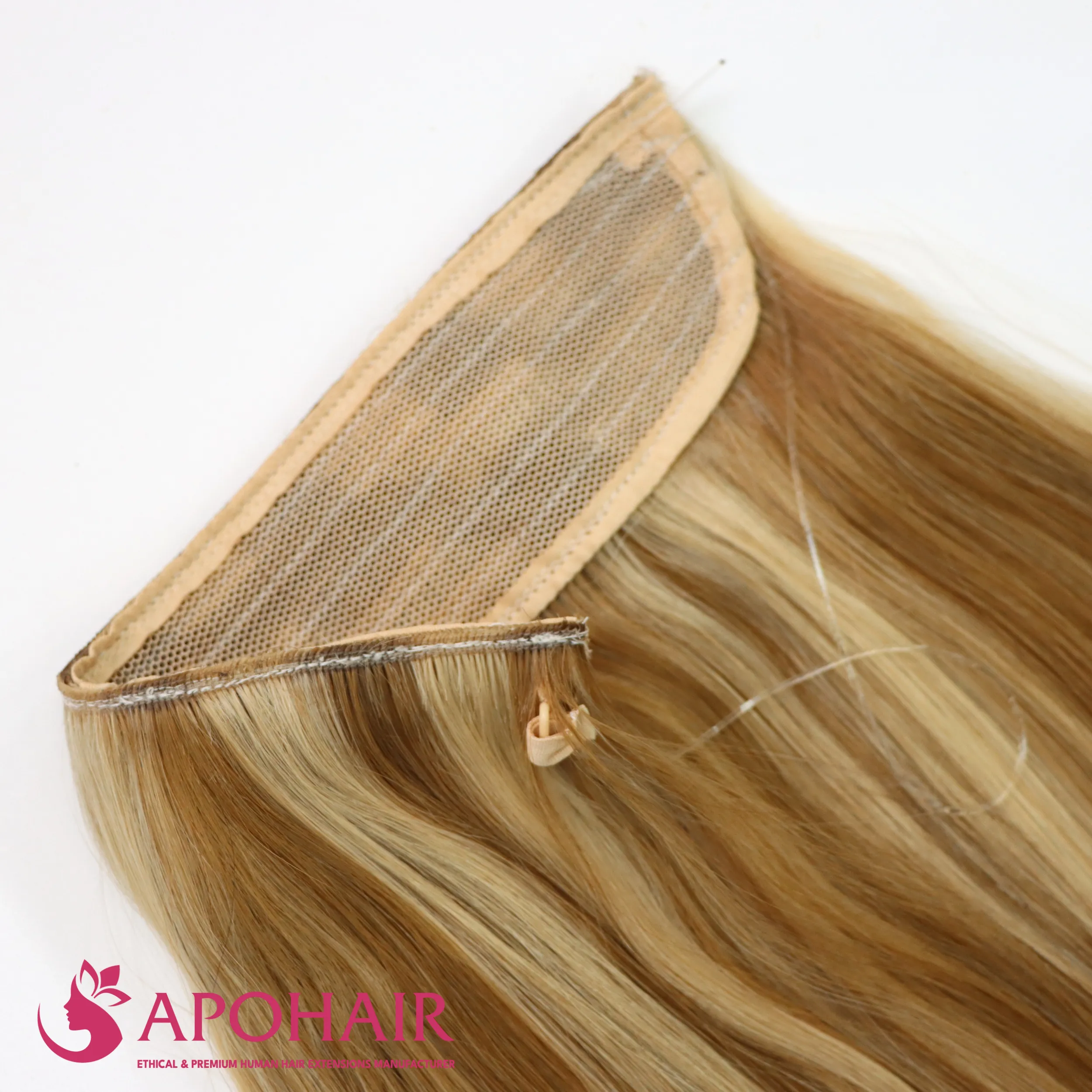
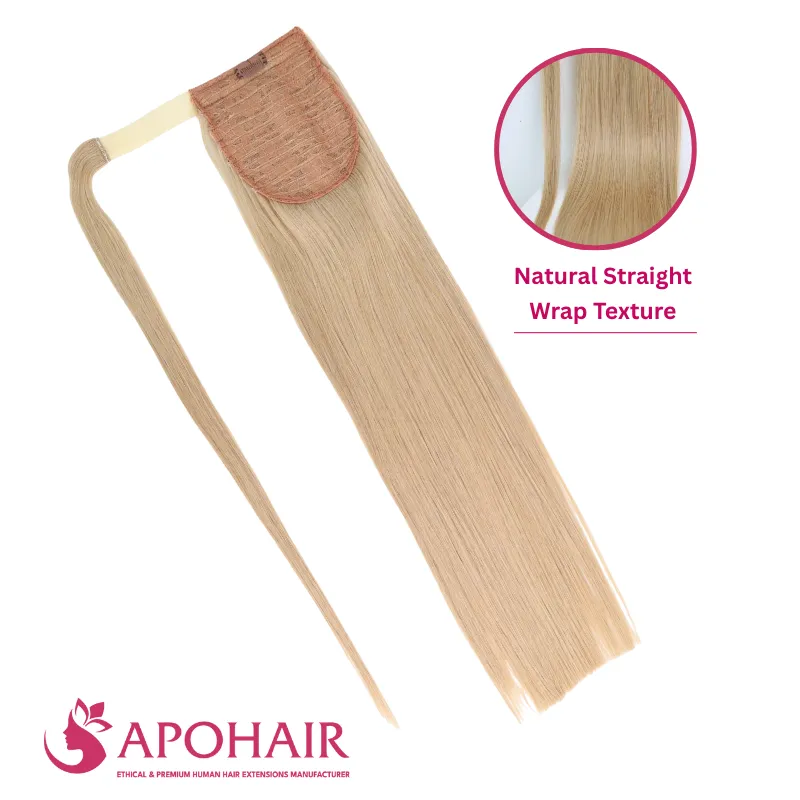
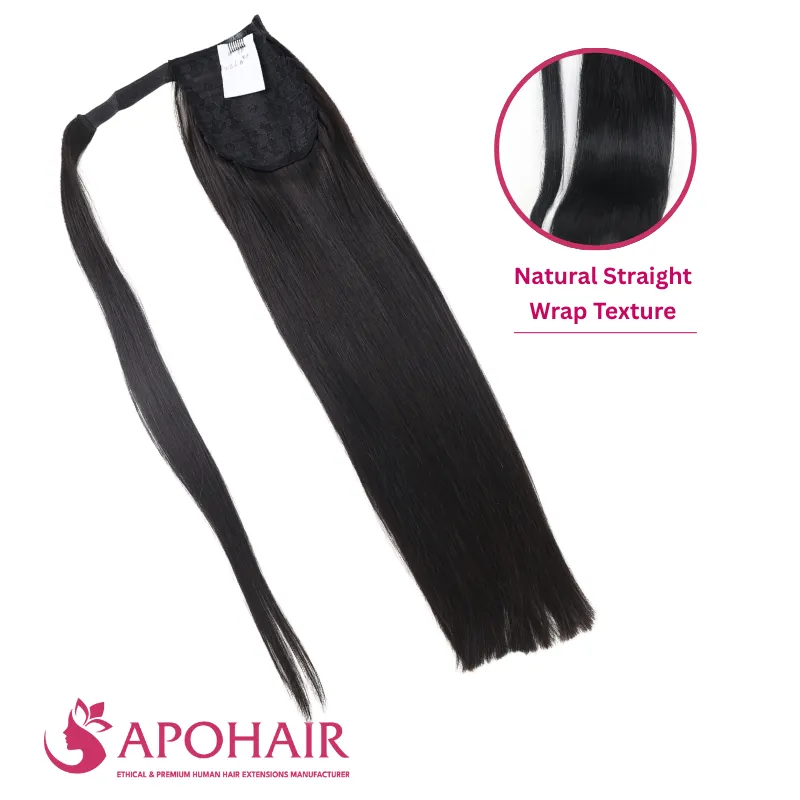
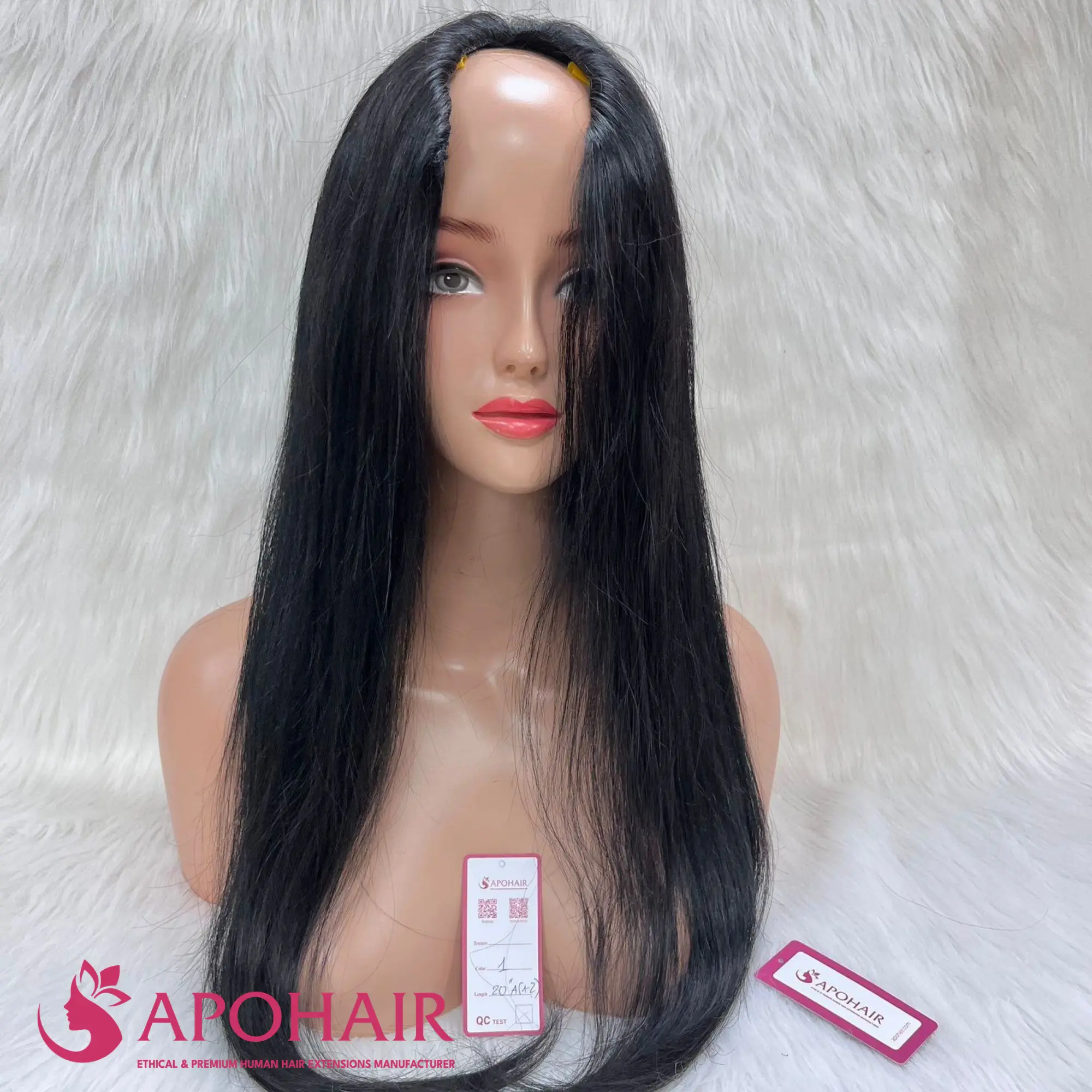
Wavy extensions are great because they blend easily with many different hair types. Curly extensions, however, are the way to go if you want the most volume and a very clear texture. You’ll find that wavy extensions don’t need to be moisturized as often, they are much quicker to detangle, and they keep their shape without you having to constantly fix them with products. Curly extensions often have a shorter lifespan even if you take good care of them. This is because the tight coils cause more friction and need a lot of moisture to keep from getting dry or frizzy.
Helping your clients pick the right texture is a great way to build trust and keep them coming back to your salon. APOHAIR’s Vietnamese human hair extensions provide salons with a reliable supply of both wavy and curly textures that you can easily customize for any look.
- 100% Vietnamese Human Hair: Single-donor collection with intact cuticle layer accepts color better than Indian or Chinese hair sources.
- Cuticle-Aligned Technology: All cuticles face the same direction, which eliminates tangling during wear and washing.
- Ethical Sourcing: Direct collector network in Vietnamese villages with fair compensation verified at every step.
- Factory-Direct Pricing: No middlemen, with wholesale rates 30% to 40% below retail market.
- 15+ Year Track Record: 700+ well-trained, skilled workers and 100+ sales staff supporting global orders.
- State-of-the-Art Manufacturing: Operates a 33,000 m² factory in Vietnam with modern production lines for consistent output.
- Global Distribution: Ships to US, UK, EU, Australia, Africa, and Asia within 24 hours of order confirmation.
- Quality Guarantee: 7-day warranty with free replacement policy on every order.
APOHAIR transforms authentic Vietnamese hair into premium extensions trusted by salon owners and wholesalers worldwide. Our commitment: global leader in the hair industry through ethical practices, manufacturing excellence, and customer success.
Ready to stock wavy or curly human hair extensions for your salon or business? Contact APOHAIR for wholesale pricing and samples.
APOHAIR ETHICAL & PREMIUM HUMAN HAIR EXTENSIONS MANUFACTURER
- Address: Building 3A, Lane 82 Duy Tan, Cau Giay, Hanoi, Vietnam
- Factory: Minh Luong, Yen Luong Ward, Ninh Binh, Vietnam
- Phone number: (+84) 862 132 366
- Email: [email protected]

FAQ Related to Wavy Hair vs Curly Hair
Can Wavy Hair Become Curly Hair Naturally?
Wavy hair does not become fully curly naturally in most cases. Some people notice their wave pattern tightening over time due to hormonal changes, aging, pregnancy, or shifts in scalp health. This is not a permanent transformation to true curly hair but a gradual shift within the wave-to-curl spectrum.
Is Curly Hair Harder to Maintain Than Wavy Hair?
Yes, curly hair is generally harder to maintain than wavy hair. It requires more frequent deep conditioning, more careful detangling, and more layered styling products to control frizz and retain moisture. Wavy hair responds to lighter routines and dries faster without significant loss of texture.
Can You Get Curly Extensions If Your Hair Is Naturally Wavy?
Yes, you can use curly extensions on naturally wavy hair. APOHAIR’s curly options blend well with wavy base hair when the curl pattern sits one step tighter than your natural wave. A diffuser or curl cream on the root area helps the two textures meet naturally at the blend line.
Outro
Wavy and curly hair differ in follicle shape, oil distribution, volume, frizz, and shine. Wavy hair lies closer to the head with moderate frizz and higher shine. Curly hair springs outward with more volume but needs extra moisture and frizz control. Your face shape, climate, daily routine, and hair density all affect which texture suits you.
APOHAIR offers both wavy and curly extensions in 100% Vietnamese human hair with cuticle alignment, ethical sourcing, and factory-direct wholesale pricing for salons and distributors across 120+ countries.
APOHAIR ETHICAL & PREMIUM HUMAN HAIR EXTENSIONS MANUFACTURER
- Address: Building 3A, Lane 82 Duy Tan, Cau Giay, Hanoi, Vietnam
- Factory: Minh Luong, Yen Luong Ward, Ninh Binh, Vietnam
- Phone number: (+84) 862 132 366
- Email: [email protected]
