









How To Sleep With Hair Extensions: Your Ultimate Guide To Comfort
You can sleep with hair extensions and wake up with beautiful, tangle-free strands by following a few simple nighttime practices. The key lies in proper preparation, like brushing, securing your hair in loose styles, and using silk or satin materials to reduce friction while you rest. Different extension types require specific care at night: tape-ins need dry hair to prevent adhesive slippage, keratin bonds demand gentle handling to protect attachments, and weft extensions benefit from loose braiding to maintain their shine.
Avoid sleeping with wet hair, tight hairstyles, or heavy styling products that weigh down your extensions. Clip-in extensions must always come out before bed. APOHAIR shares the complete guide below to help you protect your investment and maintain gorgeous hair day after day.

Can I Sleep With Hair Extensions?
Yes, you can sleep with hair extensions when you follow proper care routines. Sleeping with extensions requires extra attention to prevent tangling, matting, and discomfort throughout the night. Modern extension methods feature secure attachments designed for comfortable overnight wear.
Tape-in, weft, and keratin extensions are made to be slept in safely with the right preparation. The one exception: clip-in extensions must be removed before bed to prevent tugging on your natural hair.

How to sleep with hair extensions at night?
To protect your hair extensions while sleeping, focus on reducing friction and tangling. Always brush your hair gently before bed. Secure the extensions in a loose braid or low ponytail. Importantly, sleep on a silk or satin pillowcase to reduce rubbing and prevent matting. Ensure your hair is completely dry before lying down to keep your style and extend the extensions’ life.
Here are five stages that you should follow to sleep with hair extensions:
Brush Your Extensions Before Bed
Start at the ends and work toward your roots with a soft-bristle or boar bristle brush to remove daily tangles. Section your hair while brushing to avoid pulling on bonds or attachment points. Brush two to three times daily, with your final session right before bed. Follow brushing with a loose braid or bun, and avoid vigorous strokes near where extensions connect to your natural hair.

Braid your hair loosely
A loose braid offers an easy, damage-free way to sleep with extensions overnight. Braiding keeps strands organized and prevents tangles from forming as you move during sleep. The gentle style minimizes friction between hair and pillow. Choose a single loose braid, two side braids, or a relaxed French braid based on your preference. Secure the end with a soft scrunchie or fabric hair tie.

Sleep with your hair tied in a bun
A soft sleep bun works well if you prefer not to braid or want to preserve blowouts and waves. Flip your head and gather hair at the top in pineapple style, keeping tension minimal. Secure with a silk scrunchie or soft fabric tie rather than tight elastics. The goal is a gentle, loose style that protects without creating stress at roots or bond points.

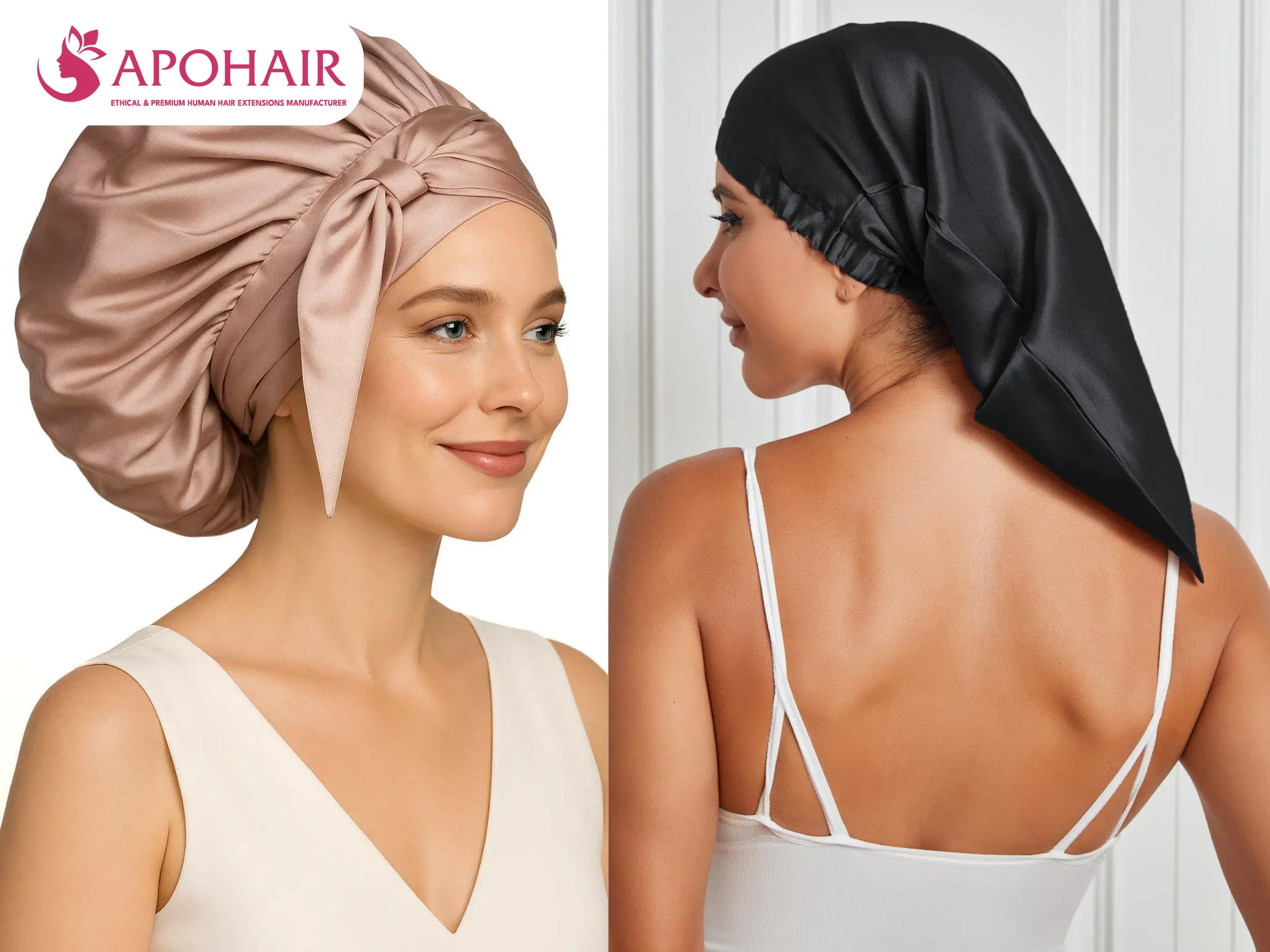
Wear a silk cap at night
A silk sleep cap or turban holds braids and buns in place throughout the night. This accessory minimizes friction better than a pillowcase alone, making it ideal for active sleepers who toss and turn. Silk allows natural hair oils to redistribute along your strands, which nourishes hair and reduces greasiness at the roots. Your hairstyle stays preserved and protected from overnight damage.
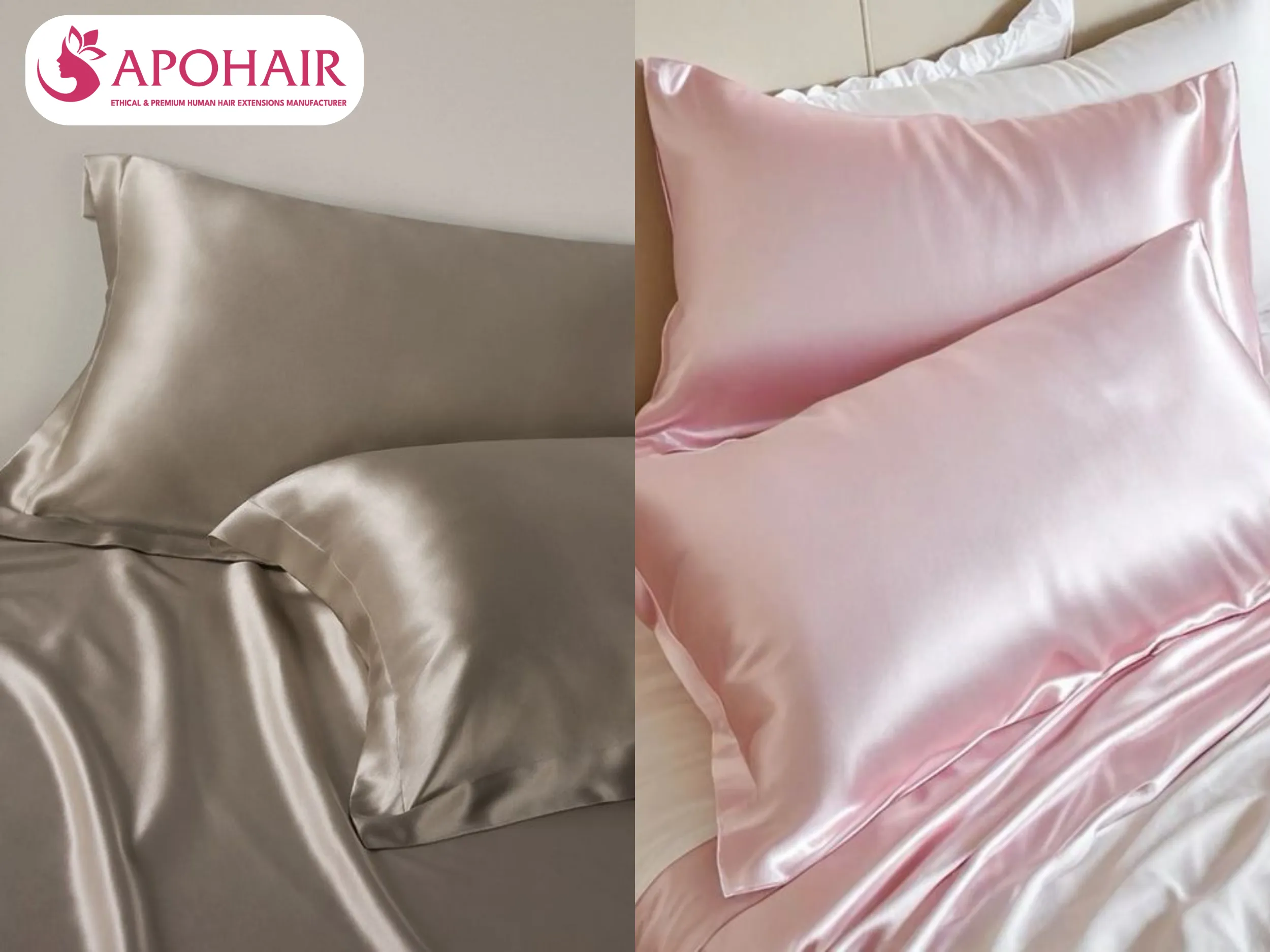
Use silk or satin pillowcase
Replace cotton pillowcases with silk or satin to transform your sleep environment. Cotton fabric creates friction that leads to frizz, dryness, and tangling during the night. Silk and satin surfaces let hair glide smoothly, helping maintain your style while protecting extensions from unnecessary wear. This simple switch delivers noticeable results from your first night.
Tips to sleep with specific extensions
Each extension type has unique characteristics that call for tailored nighttime care. The five methods below address the specific needs of tape-ins, keratin bonds, wefts, clip-ins, and ponytail extensions. Understanding these differences helps you maximize the lifespan and appearance of your particular extension style.
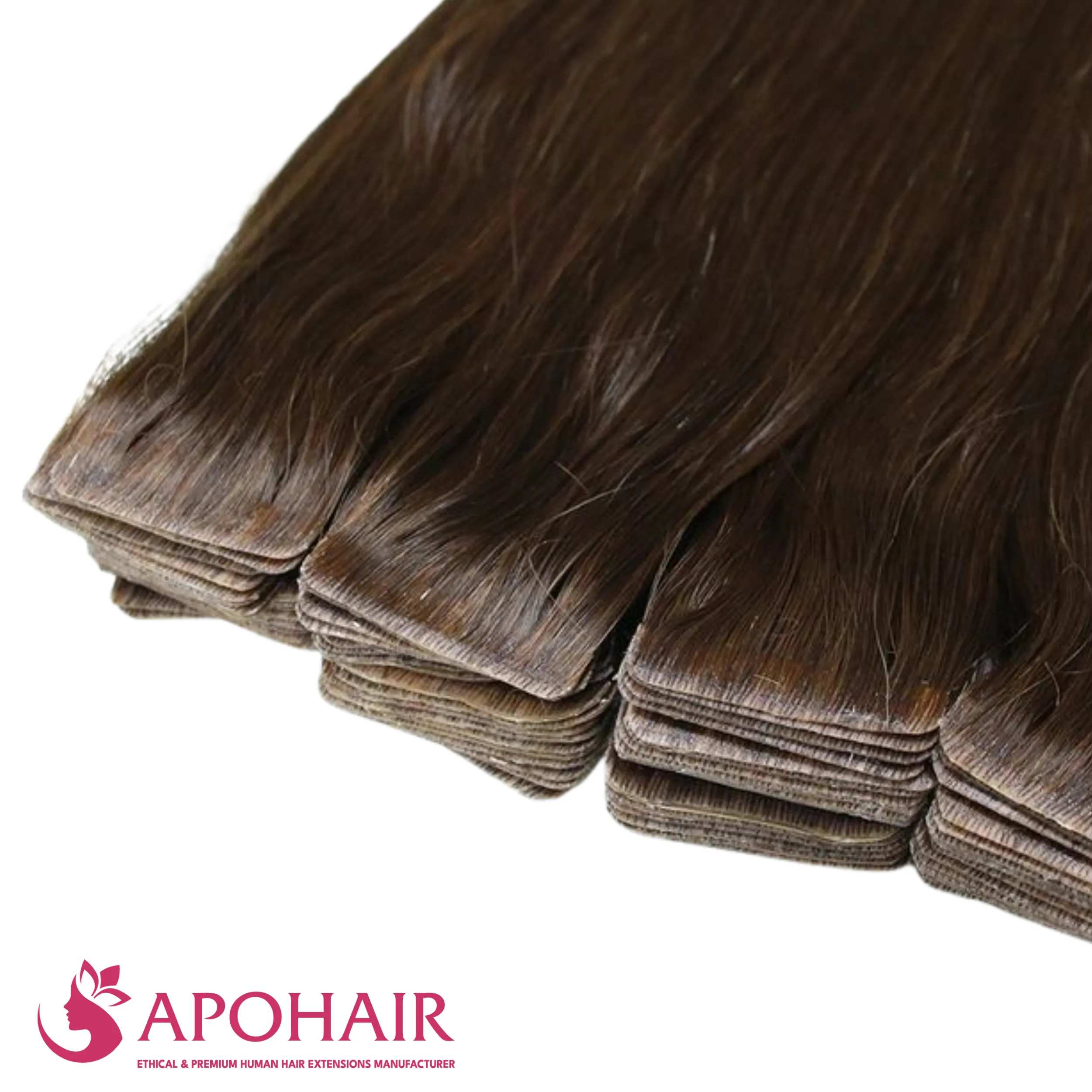
Tape-in hair extension
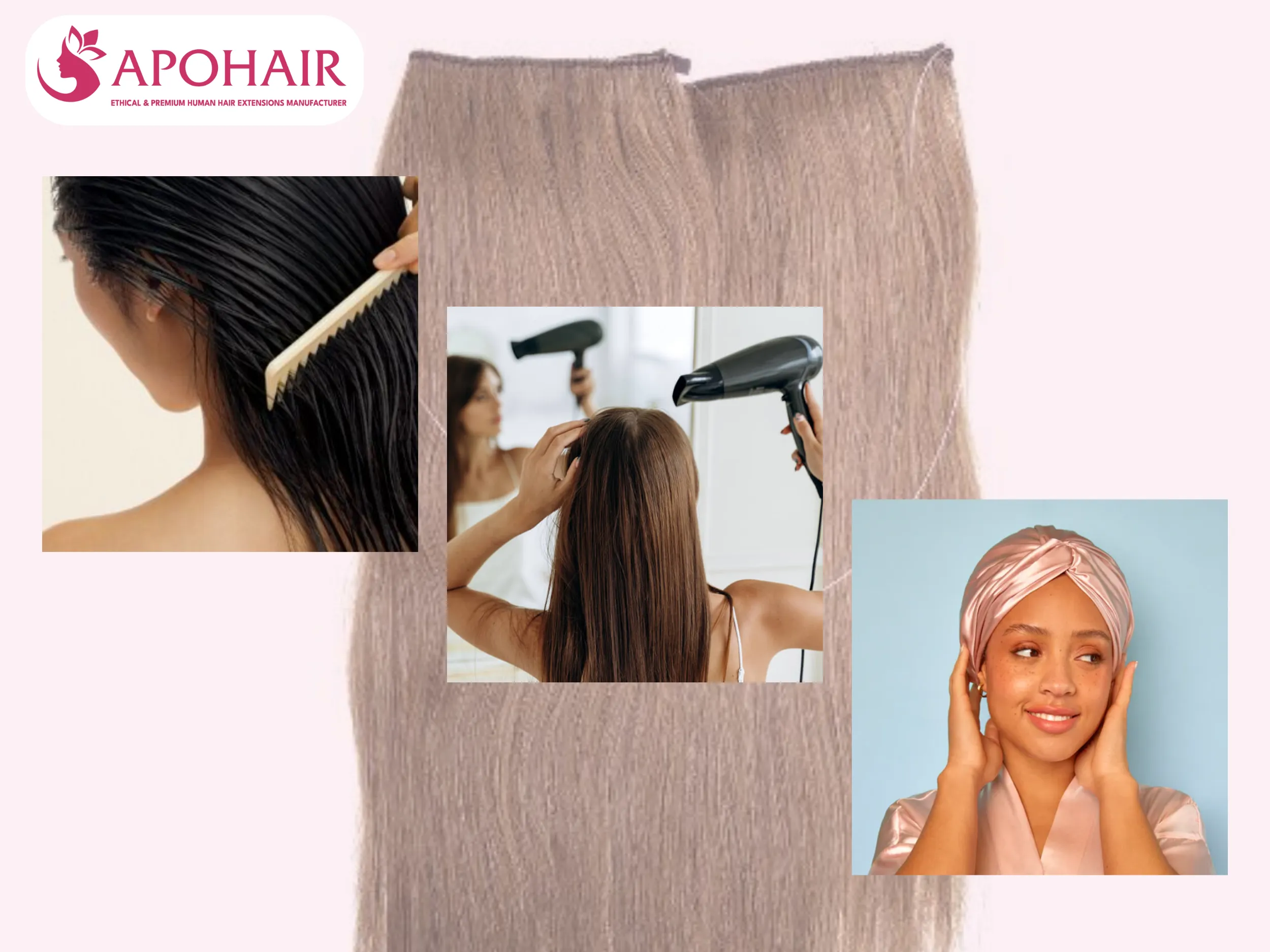
Dry your tape-in extensions completely before bed to prevent adhesive slippage and matting. After towel-drying with microfiber, use a blow dryer on low heat until hair is fully dry.
Style into a loose low ponytail or braid secured with a silk scrunchie to minimize friction on tape panels. Sleep on a silk pillowcase or wrap hair in a silk scarf to reduce rubbing that can loosen adhesive bonds over time.

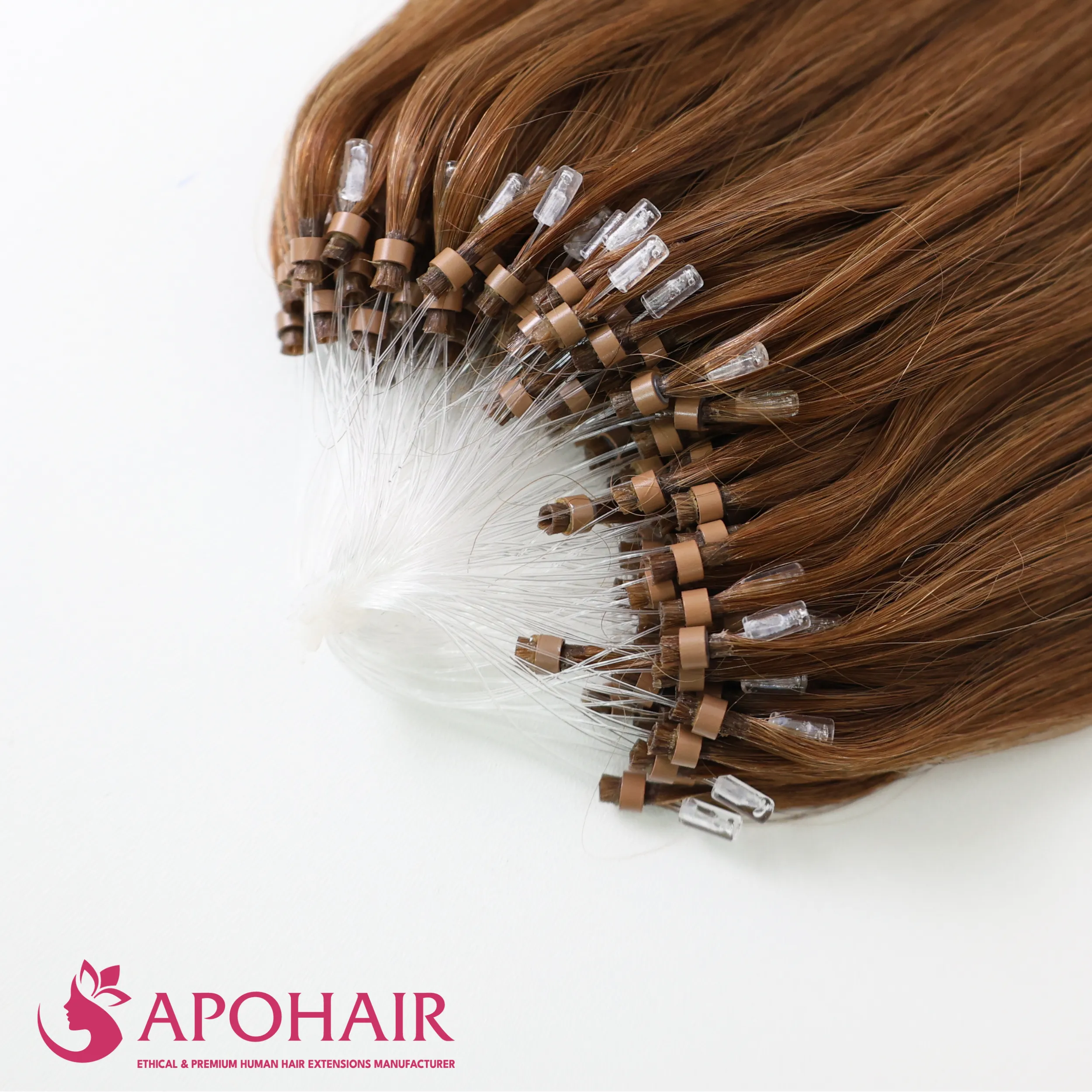
Keratin/ Prebonded Hair Extensions
Brush from ends to roots with a detangling brush before bed, holding bonds gently to avoid stressing the keratin attachments. Take your time and work through sections.
Secure hair in loose braids or a low ponytail positioned opposite your preferred sleep side. Skip tight styles that pull on keratin tips. Use a silk bonnet or pillowcase to shield bonds from friction during movement.

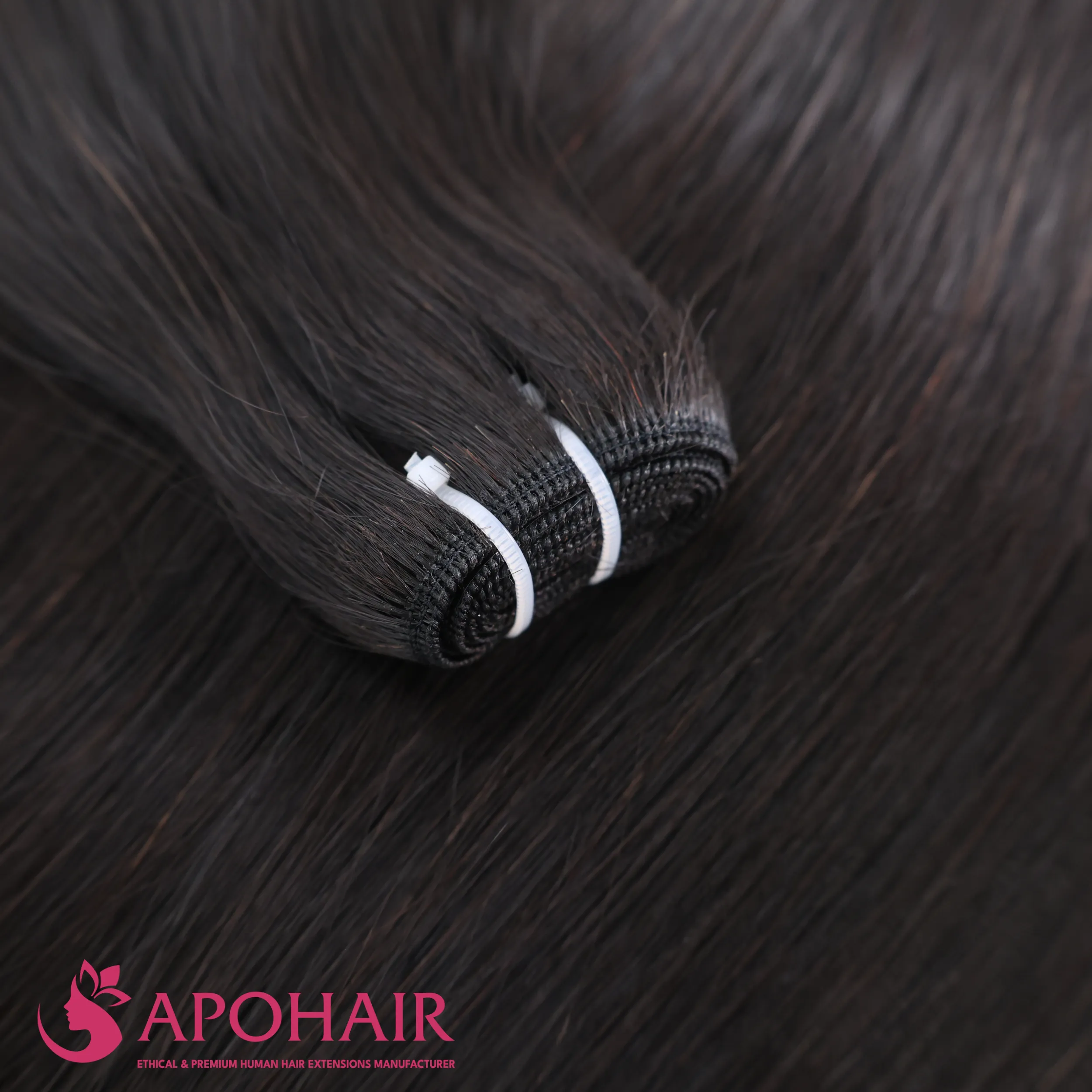
Weft / Weave Hair Extensions
Detangle your weft extensions before bed and apply leave-in conditioner if needed. A loose braid allows overnight conditioning treatment to penetrate strands and maintain natural shine.
Use a silk turban or style two loose buns at the top of your head to keep wefts contained without pressure on tracks. Allow hair to dry completely before sleeping—wet wefts mat quickly and become difficult to manage.
Clip-In Hair Extensions
Remove clip-in extensions before sleeping, including short naps, to prevent tugging, breakage, and tangling in your natural hair. Clips create pressure points unsuitable for overnight wear.
Brush extensions gently after removal and store them dry in a cool location, laid flat or in their original case. Keep them away from heat sources. Sleeping in clip-ins damages both the extensions and your own strands.

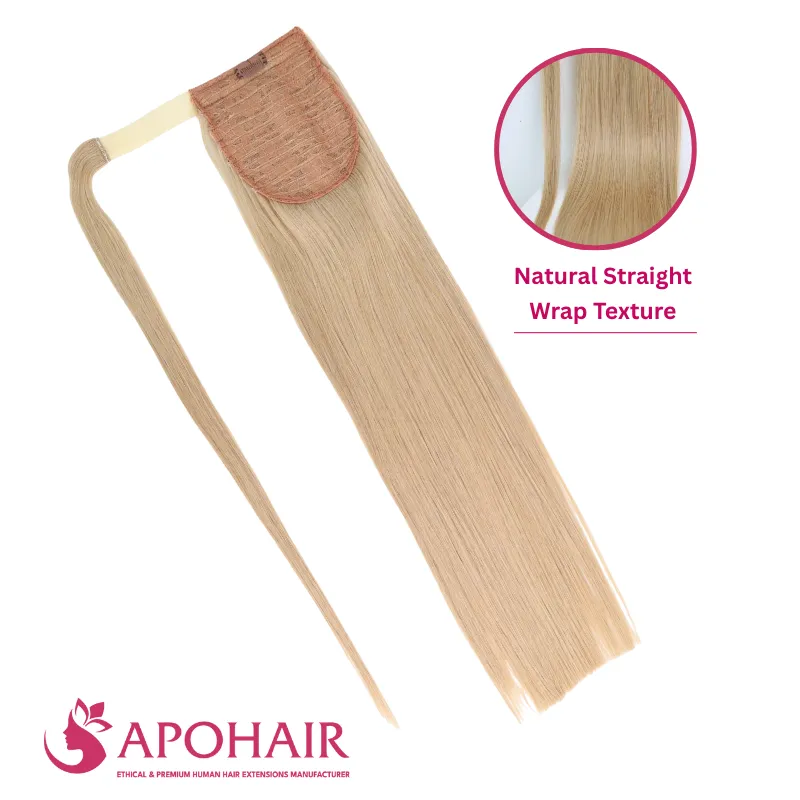
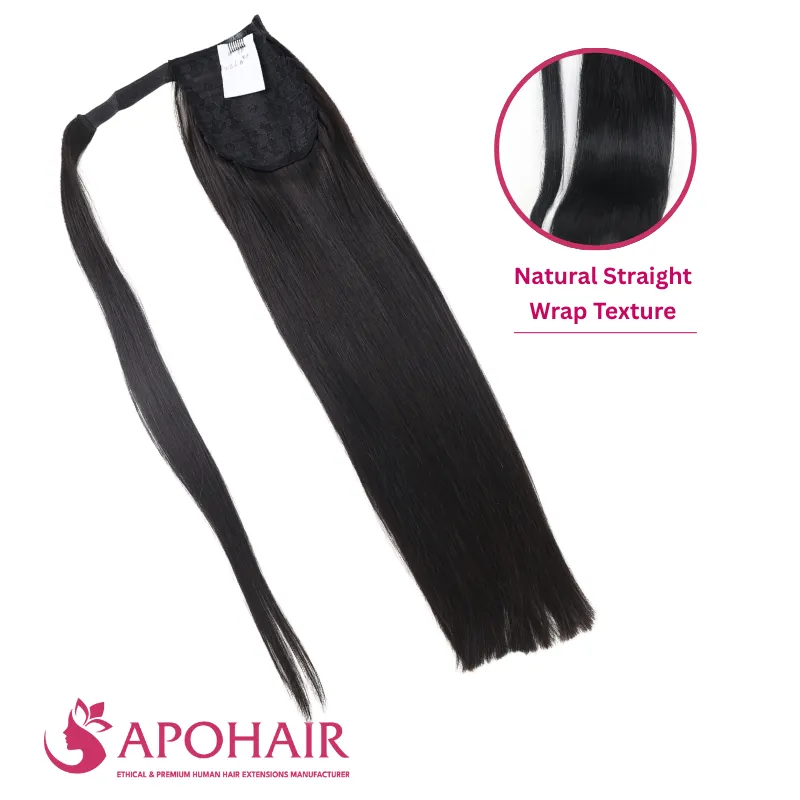
Ponytail Extensions
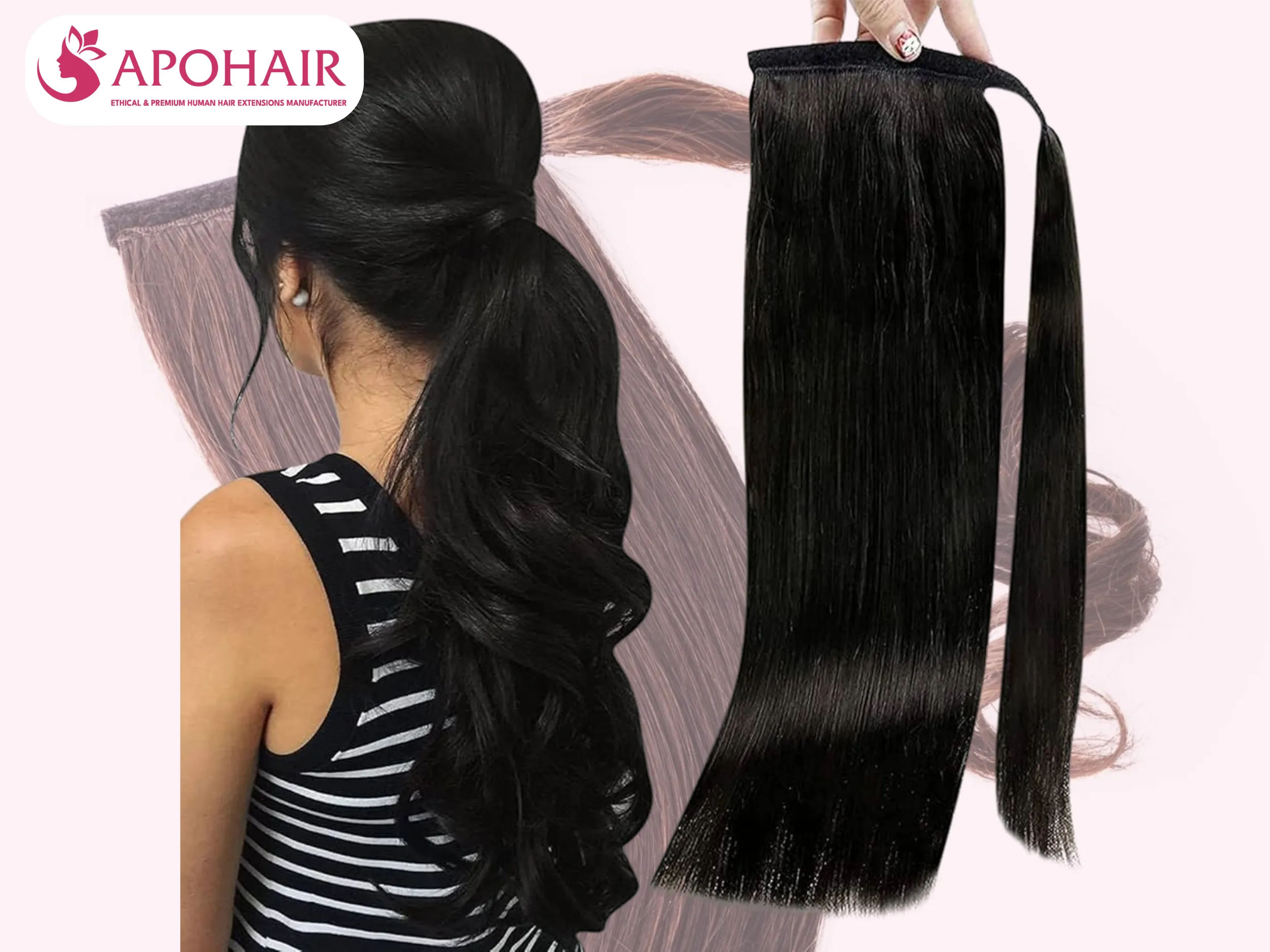
Take out clip-on or temporary ponytail extensions before bed to avoid pulling at roots or having clips snag on hair. Your scalp needs rest from attachment points overnight.
Brush out any tangles and store the ponytail flat or in its original packaging to maintain shape. Treat ponytail extensions like clip-ins: no overnight wear protects both the hairpiece and your natural hair health.
Common Mistakes To Avoid When Sleeping with Hair Extensions
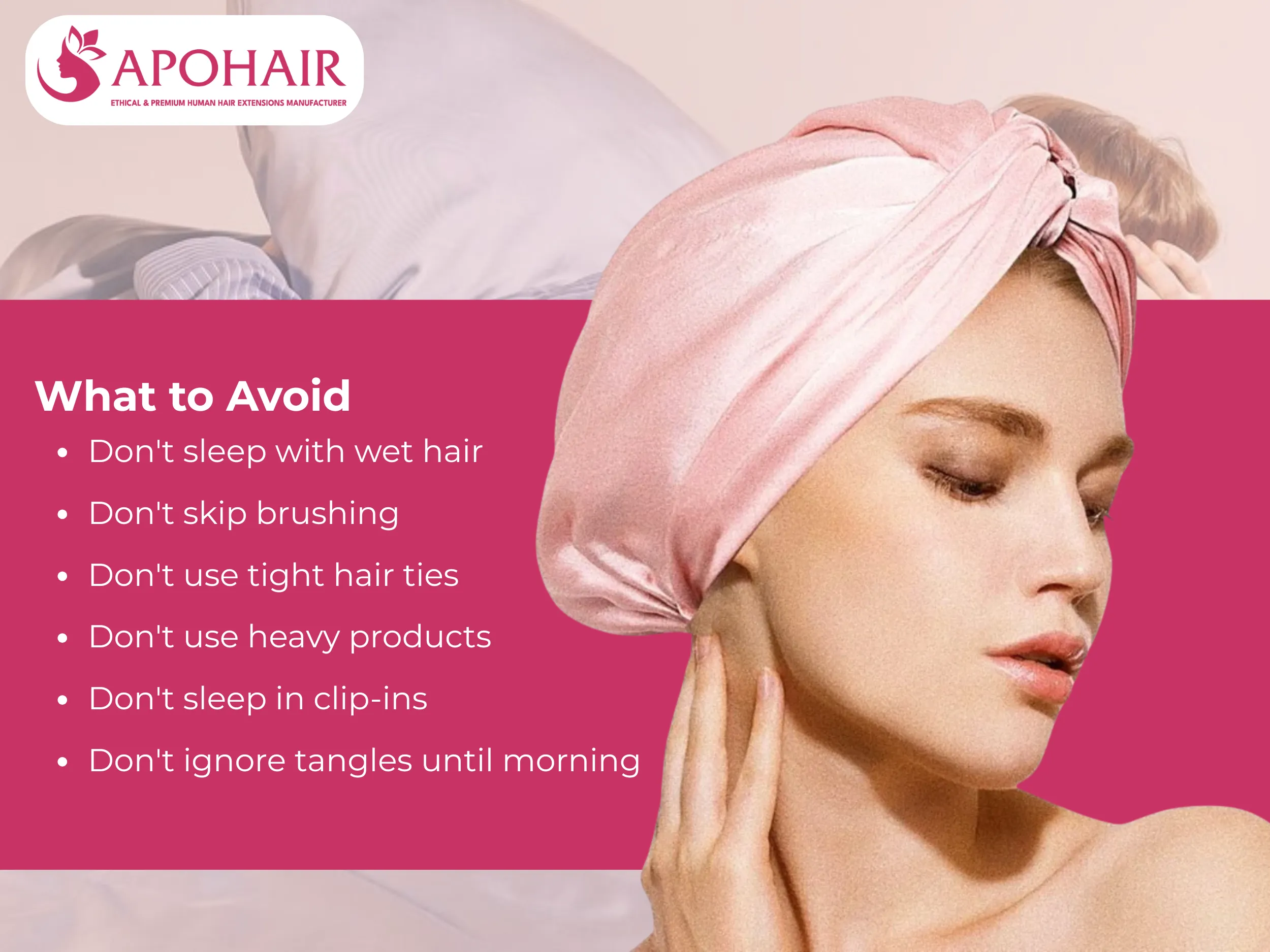
Six common mistakes can damage your extensions and cause unnecessary tangling or breakage. Avoiding these pitfalls protects your investment and keeps your hair looking fresh each morning.
Sleeping With Wet Extensions
Sleeping with wet extensions is a recipe for disaster, often resulting in weakened bonds and permanent cuticle damage. Since damp hair is highly elastic and prone to snapping, achieving a bone-dry finish is a non-negotiable step in your nightly routine. This simple habit not only prevents tangles but also ensures your extensions stay smooth, strong, and ready for styling the next morning.
Skip Brushing
Neglecting to detangle your hair before sleep is a primary cause of morning matting and structural damage. To preserve the seamless quality of your human hair extensions, we recommend a thorough, gentle brushing session using a dedicated extension brush or a wide-tooth comb. This essential nighttime ritual ensures your strands remain aligned and smooth, significantly reducing friction-induced tangles throughout the night.
Tight ponytails, messy buns, or aggressive updos
Avoid using tight rubber bands that can pinch and pull at your extension attachment points. This avoidable stress causes unnecessary breakage and bond damage over time. Instead, keep your hair secure yet relaxed with gentle silk scrunchies. Making this simple switch in your nighttime routine is vital for protecting your hair investment and ensuring maximum comfort throughout the night.
Heavy products
While hydration is key, applying heavy oils, thick creams, or butter-based products directly to your roots is a recipe for disaster. These substances create a dense, greasy buildup at the attachment points, which is notoriously difficult to wash away. For those with tape-ins or keratin bonds, these heavy formulas act as lubricants, causing the adhesives to break down and leading to premature “slippage.” To keep your extensions lightweight and bouncy, always apply oils and leave-in conditioners from the mid-shaft down to the ends, keeping the bonds clean and residue-free.
Sleep In Clip In Hair Extensions
Sleeping in clip-in extensions is a leading cause of root damage and premature shedding. Because these extensions are designed for daily wear rather than overnight use, the weight and clips can tug on your scalp as you toss and turn. To avoid ‘tension spots’ and ensure a comfortable night, make it a rule to remove your clip-ins as part of your evening routine. Proper nighttime storage is the key to ensuring your extensions stay in pristine, salon-quality condition for every wear.
Check your bonds or tapes regularly
Regular maintenance is vital for maintaining the integrity of tape-ins, keratin bonds, and micro-rings. Before heading to bed, perform a quick tactile check to ensure every attachment remains firmly in place. If you detect any sign of slippage or shifting, take a moment to secure the strands properly to mitigate further movement overnight. Proactive bond management not only prevents painful tension on your natural scalp but also significantly extends the lifespan of your professional installation.
FAQs related to sleeping with hair extensions
Why do my hair extensions hurt when I lay down?
Some initial tightness or “helmet head” feeling is normal for the first night or two as your scalp adjusts to new weight and volume. Sharp pain, extreme tugging, or constant soreness indicates extensions may be installed too tightly—contact your stylist immediately. Pain can also result from sleeping in styles that are too tight, so always keep overnight hairstyles loose.
Do I have to wear a bonnet every night with extensions?
A bonnet is not mandatory but highly recommended, especially for active sleepers who move frequently at night. Silk bonnets and turbans provide the most complete friction protection. If you choose not to wear one, you must use a silk or satin pillowcase and secure hair in a loose braid or bun.
Can a satin pillowcase replace a bonnet?
Yes, a satin pillowcase serves as a suitable alternative for most people. Both reduce friction on hair strands effectively. A pillowcase protects all areas touching the pillow, while a bonnet encases all hair for more complete coverage. For active sleepers or those preserving specific styles, a bonnet offers superior protection. A silk pillowcase combined with a loose braid works well for most extension wearers.
Sleeping with hair extensions requires attention to a few key practices that protect your investment and maintain beautiful results. Brush gently before bed, secure hair in loose braids or buns, and upgrade to silk or satin materials to reduce friction. Each extension type, such as tape-in, keratin, weft, clip-in, or ponytail, needs specific care for optimal results. Avoid wet hair, tight styles, and heavy products at night. APOHAIR a leading wholesale hair company in Vietnam, offers premium Vietnamese hair extensions designed for comfort and longevity when you follow these simple nighttime routines




 ABOUT US
 Human Hair Extensions
 Wholesale Tape-In Hair Extensions
 Clip-In Hair Extensions
 Wholesale Keratin Hair Extensions
 Weft Hair Extensions
 Human Hair Wigs
 Bulk Human Hair For Braiding
 BEST SELLING PRODUCTS
 Contact Us