

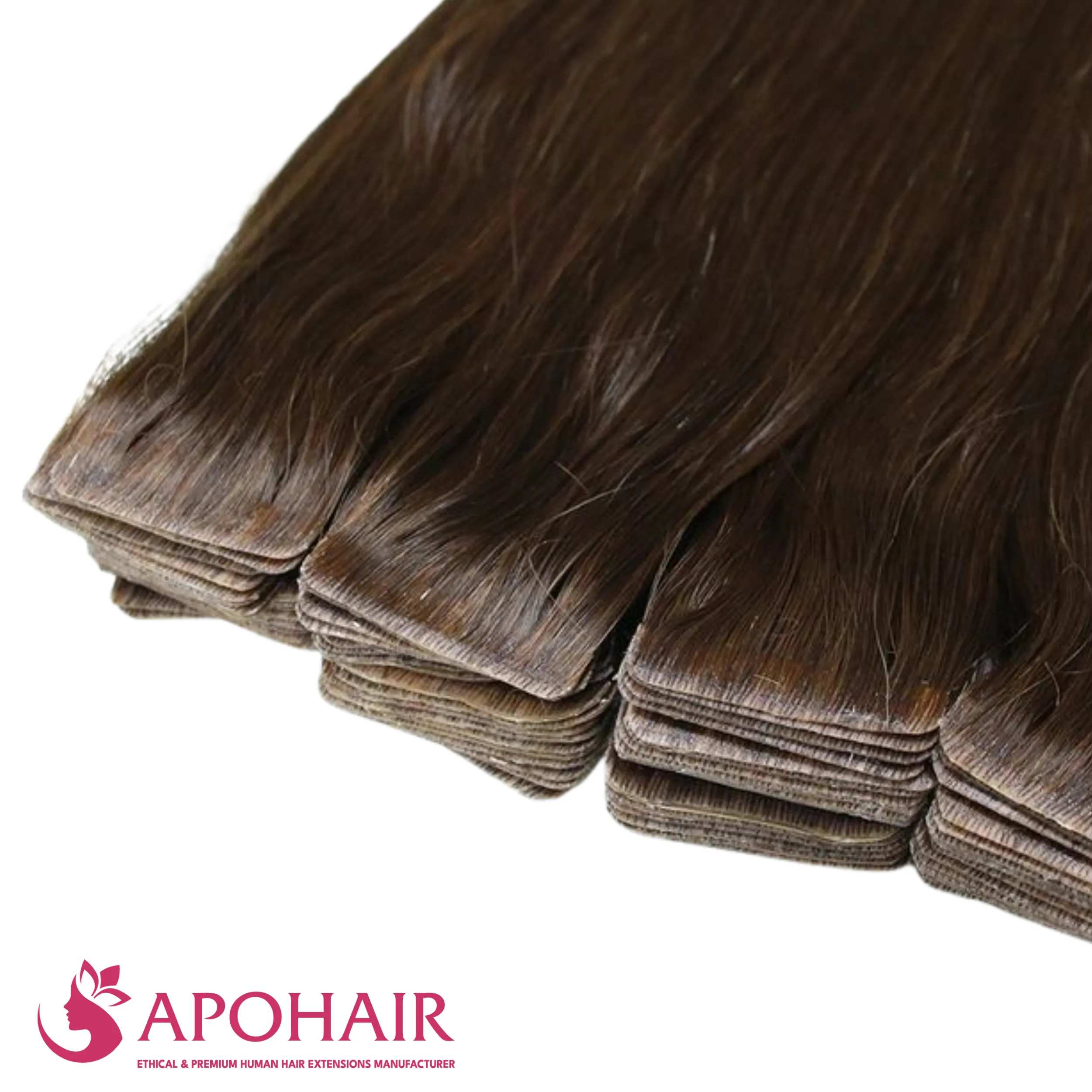

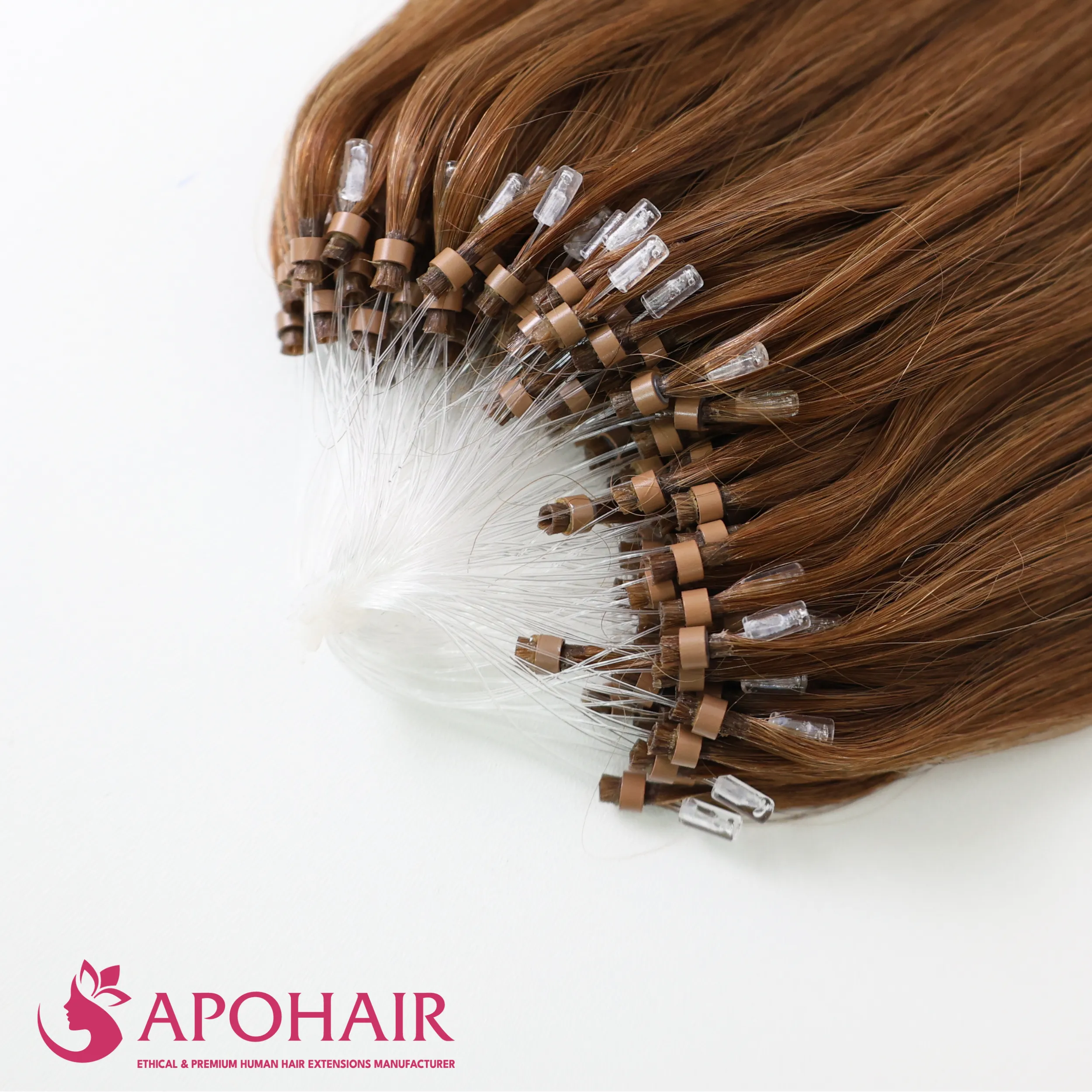

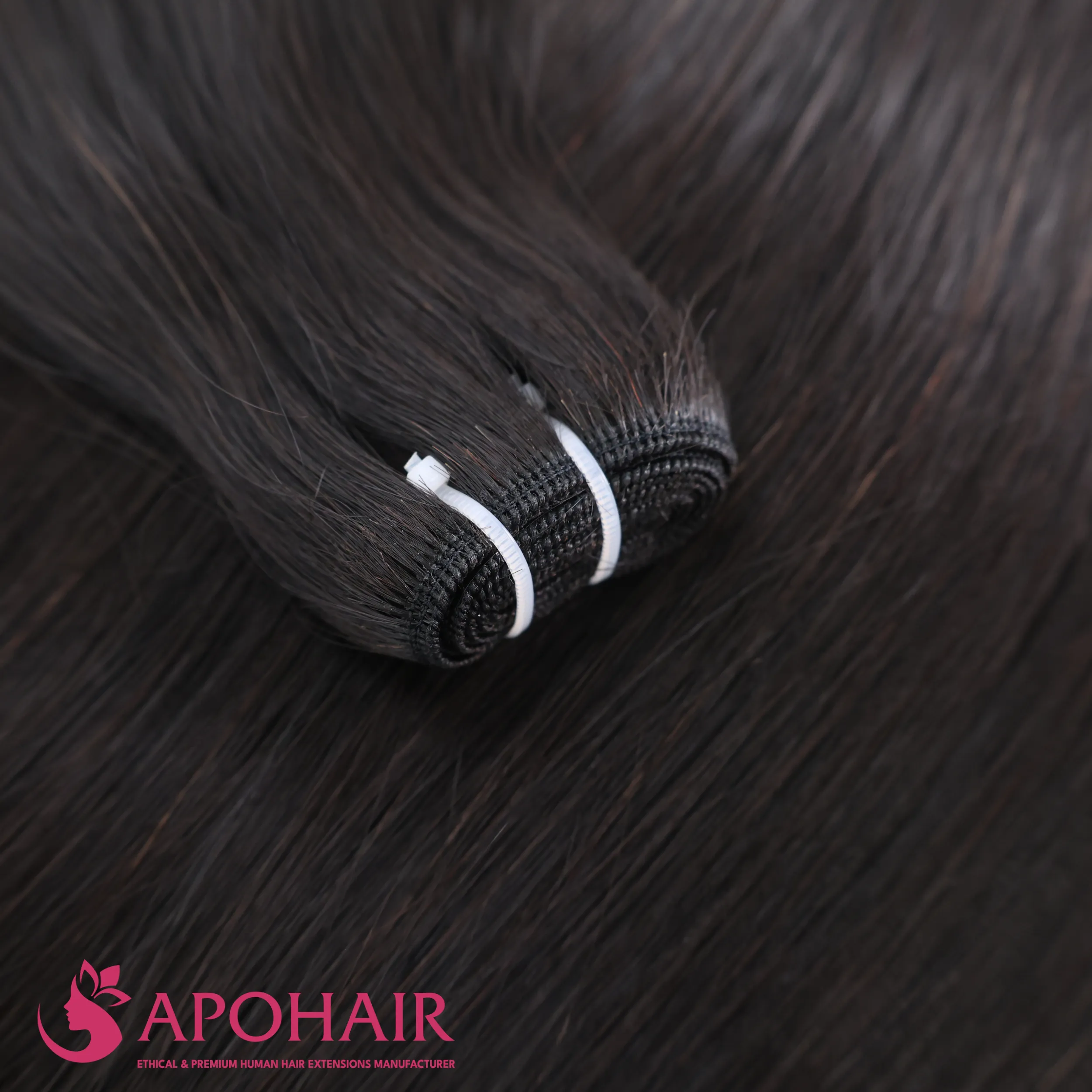


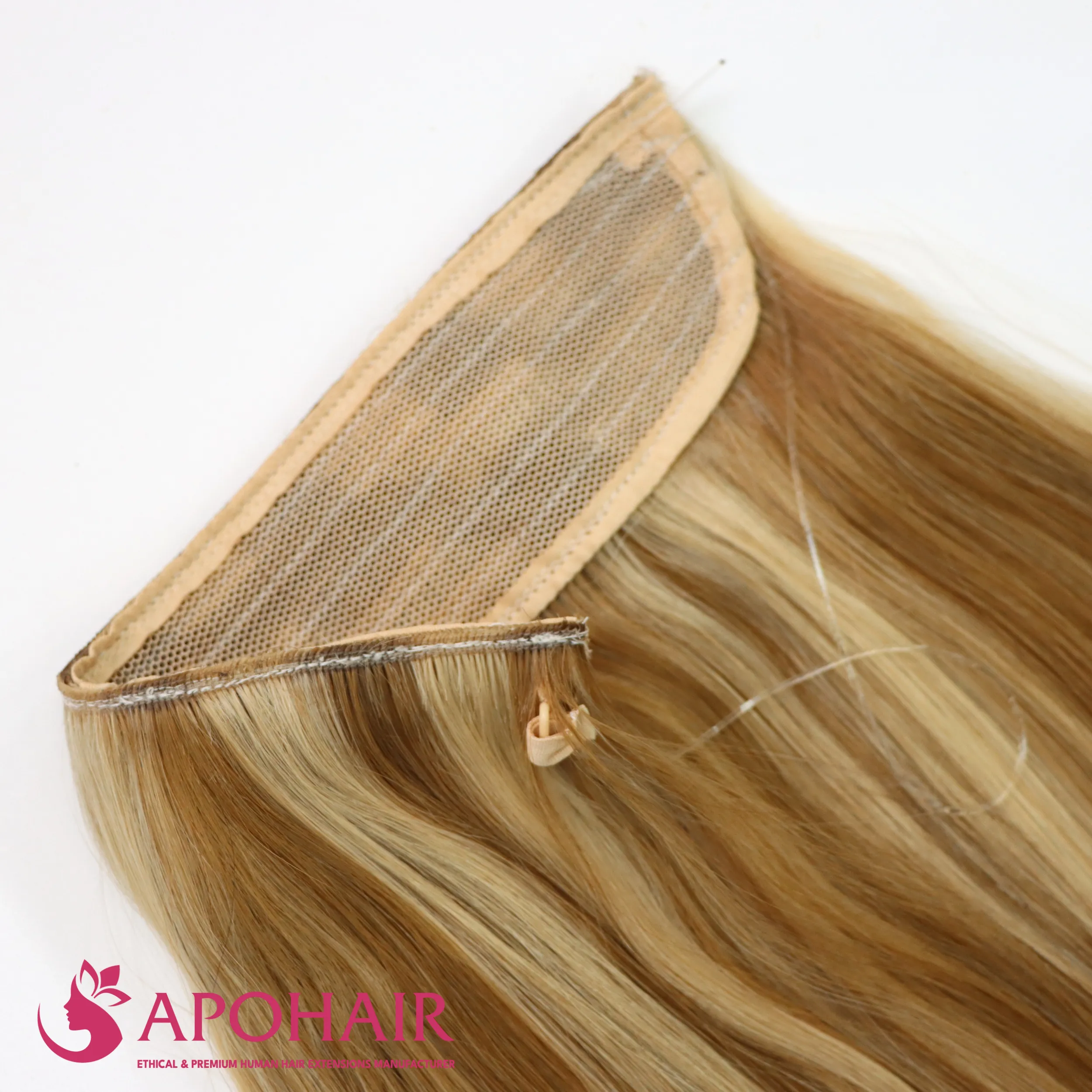
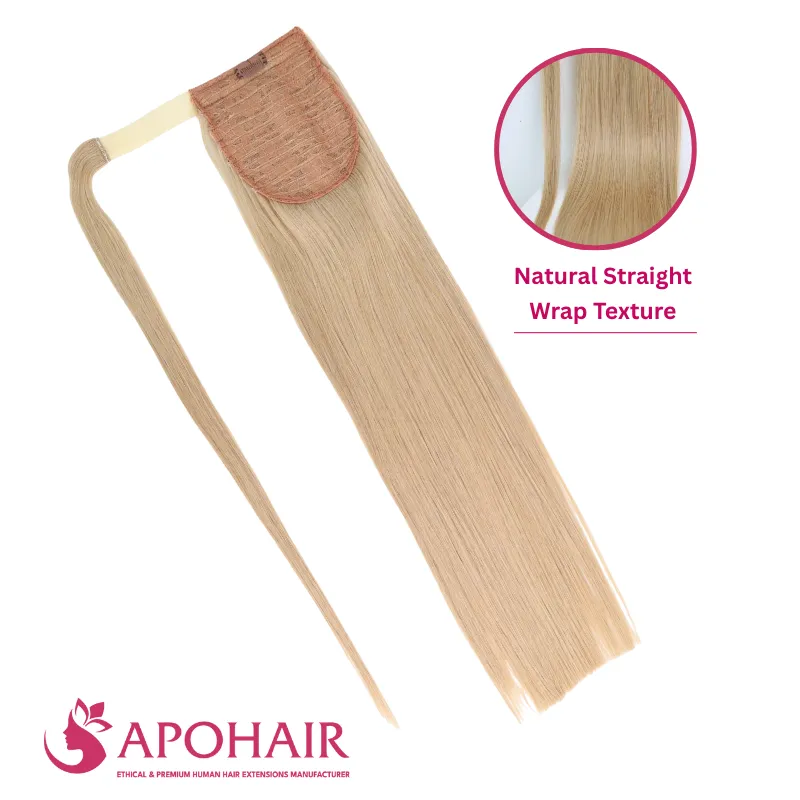
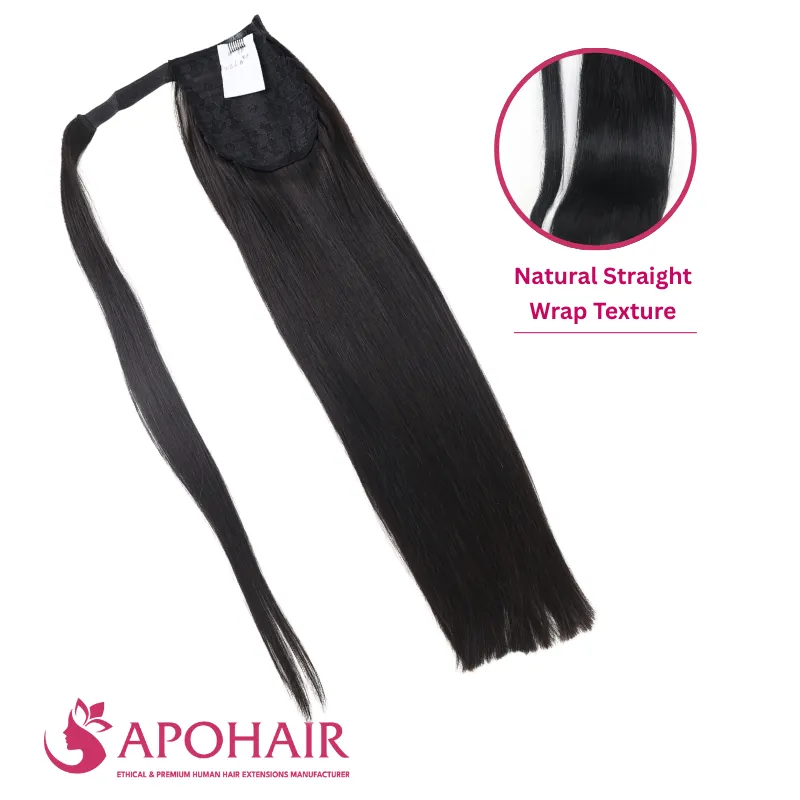

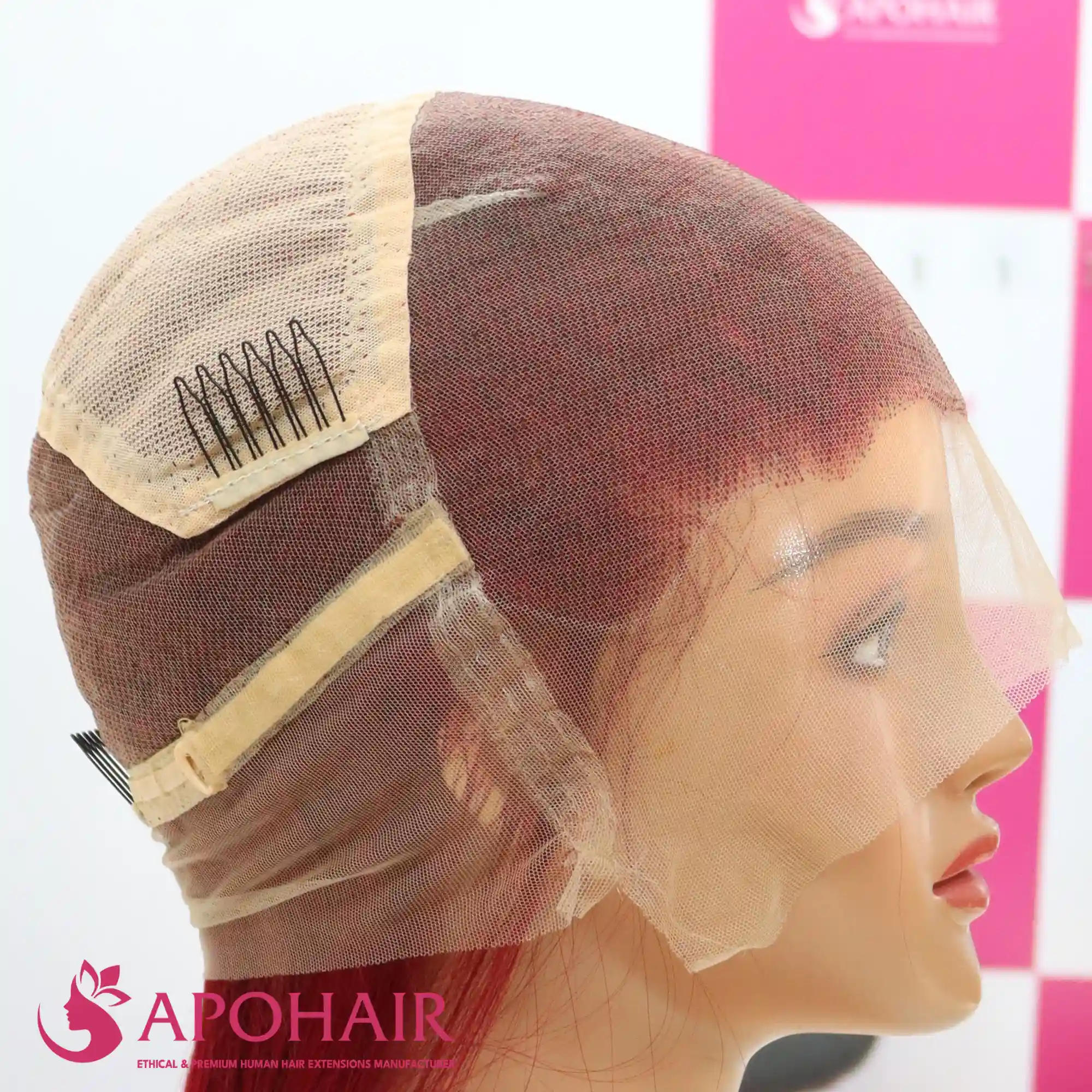


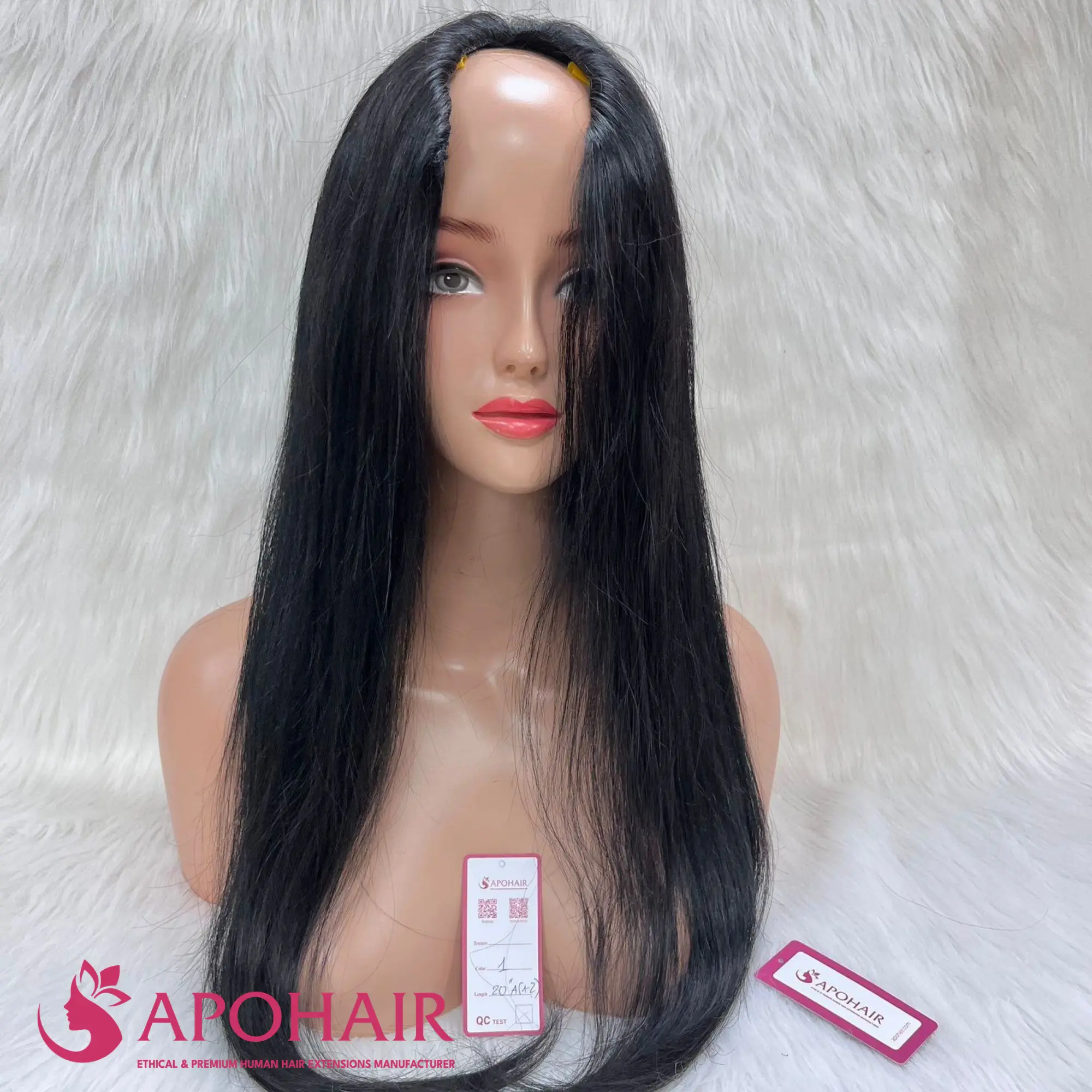

Remy Hair: Definition, Collection Process, and Buyer Guide
Pick up three boxes of hair extensions from any beauty supply shelf and you’ll likely see three different labels at the same price point: “Human Hair,” “Remy Hair,” “100% Remy Human Hair.” Same packaging design. Very different structural quality. After 20+ years of manufacturing Remy extensions and wigs in Vietnam, the first thing our quality control team checks on every incoming batch is one detail: Whether root-to-tip orientation is intact throughout the bundle.
This guide covers what Remy hair actually is, how it’s collected, how it compares to generic human hair across five procurement-relevant attributes, how to read label claims accurately, and what wholesale buyers need to verify before placing a bulk order.
What is Remy Hair?
Remy hair is 100% human hair where every strand’s cuticle stays intact and aligned root-to-tip, from collection through production. It is the standard raw material grade used by manufacturers to produce hair extensions and wigs that hold their quality after repeated washing, heat styling, and long-term wear.
Three characteristics define Remy grade at factory intake. First, all strands come from real human donors, with no synthetic or animal fiber blended in. Second, the cuticle layer of each strand is undamaged and present. The cuticle is the outermost protective layer of the hair shaft: its condition determines whether a finished extension stays tangle-free or starts matting after a few washes. Third, all strands run the same root-to-tip direction. That alignment is what separates Remy from standard human hair and from non-Remy blends. When strands run in mixed directions, the cuticle scales on adjacent strands catch and interlock during wear. When all strands face the same way, they slide past each other freely.
Why do factories specifically require Remy-grade raw material? Cuticle-intact strands hold quality through acid-free washing, drawing, wefting, and construction stages. They accept coloring and heat processing more predictably. Non-Remy material can’t sustain those production stages without silicone coating applied to compensate for a stripped cuticle layer. That coating is a temporary fix, not a structural one.
A dry-strand field check makes this clear. Pull a strand between two fingers in both directions: root-to-tip, then tip-to-root. Intact cuticle alignment produces noticeably more resistance tip-to-root than root-to-tip. A strand that slides both ways equally has been coated. No lab equipment needed. Two seconds and trained hands tell you everything.
How Is Remy Hair Collected?
Remy hair is collected by cutting a donor’s hair in a single pass at the scalp level while it’s still gathered into a ponytail or braid, then labeling the bundle root-end up immediately so root-to-tip orientation is preserved from that moment through every production stage that follows.
That point matters. Collection isn’t a preliminary step before the real work starts. It’s where the Remy standard is either created or lost. Every stage after collection, including washing, sorting, drawing, and wefting, only maintains the orientation that was set at the source.
Donor qualification happens before scissors reach the hair. At APOHAIR, collectors interview each donor about chemical treatments within the past 18 months: Color, bleach, perm, and relaxer. Donors with treated hair are declined at this stage. That single filter removes roughly 15 – 20% of potential donors per session. Most distributors never see that number because it happens upstream of the factory floor. What it means for buyers: The rejection decisions made at collection directly determine the cuticle integrity of every bundle that reaches production.
Here’s the full collection sequence:
- Donor interview on chemical treatment history. Treated donors declined.
- Hair gathered into a tight ponytail or braid, cut at scalp level in one clean pass.
- Bundle labeled root-end up immediately at the collection point.
- Field cuticle test: A small bundle drawn through folded fine-grit paper in both directions. Cuticle-intact hair produces more resistance tip-to-root. Hair that slides both ways equally is rejected on the spot.
- Approved bundles transported to the factory with root-end orientation maintained throughout.
Non-Remy collection works differently. Hair is gathered from salon floors and brush collections, with no directional control. At the factory, manufacturers strip the mixed-direction cuticle layer in an acid bath, then apply silicone coating to restore a smooth surface feel. That coating passes the in-store touch test. It washes away within 2–5 shampoo cycles, leaving bare strands with no protective layer and no alignment to recover.
What Are The Differences Between Remy Hair And Human Hair?
All Remy hair is human hair. The reverse isn’t true. A “human hair” label on an extension or wig confirms real origin and nothing else. It says nothing about cuticle condition, alignment, or how the hair was processed.
The two grades diverge across five attributes: source, cuticle alignment, processing method, lifespan, and cost per year. The table below gives a side-by-side overview before each attribute is covered in detail.
| Attribute | Remy Hair | Human Hair (Non-Remy) |
| Source | Single donor or small qualified group | Multi-source mixed batch, no traceability |
| Cuticle status | Intact, aligned root-to-tip throughout production | Stripped in an acid bath, replaced with silicone |
| Processing | Acid-free, sulfate-free, no artificial coating | Acid bath plus silicone application |
| Lifespan | 6–12 months (Cuticle Remy: 9–12+ months) | 1–3 months, limited by silicone degradation |
| Annual cost (example) | ~$150 | ~$520 |
Source
Remy hair is sourced from a single donor or a small group of carefully qualified donors. Each donor’s hair is collected in one pass, with root-to-tip orientation documented from the moment of cutting. That single-source traceability is what makes guaranteed full cuticle alignment throughout a bundle possible.
Human hair (non-Remy), by contrast, is gathered from multiple uncontrolled sources: salon floor sweepings, brush collections, and mixed-batch purchases with no donor documentation. Because strands come from different heads cut at different times, root-to-tip orientation is random across the batch. There’s no traceability at the source level.
Cuticle Alignment
Remy hair enters the factory with cuticles intact and all strands running root-to-tip. Through washing, drawing, and wefting, that orientation is maintained at every stage. The result is a finished extension or wig where strands move in one direction, with no mechanical friction between strands and no tangling from directional conflict during wear.
Human hair (non-Remy), on the other hand, arrives at the factory in a mixed-direction batch. To address the tangling that mixed cuticles cause, manufacturers strip the cuticle layer entirely in an acid bath, then apply a silicone coating to restore a smooth surface feel. That silicone is what makes non-Remy feel acceptable in-store. It washes away within 2–5 shampoo cycles, leaving bare strands with no protection layer remaining.
Processing
Remy hair goes through acid-free washing with sulfate-free formulas, sorting by length and color, drawing to remove short strands, and wefting, all while root-to-tip orientation stays intact. At APOHAIR, each stage uses non-stripping cleaning agents specifically to preserve the cuticle layer that arrived from the collection point. No artificial coating is applied because none is needed.
Human hair (non-Remy), however, requires a fundamentally different processing path. The mixed-direction batch goes through an acid bath to forcibly remove all cuticle scales, creating a uniform bare surface across all strands. Silicone is then applied to give the hair a smooth feel and acceptable appearance. This process makes non-Remy presentable at the point of sale but eliminates all natural structural protection in the process.
Lifespan
Remy hair extensions and wigs last 6–12 months under normal salon use. Cuticle Remy-grade products, where 85%+ of the cuticle layer is retained even after processing like coloring or steam treatment, extend that range to 9–12+ months. At APOHAIR, the defect rate on long tape-in extensions sits at 0.5%, while all other extension and wig types hold at 2%, reflecting the structural consistency that intact cuticle alignment produces across production batches.
Human hair (non-Remy), in comparison, typically lasts 1–3 months. That ceiling isn’t set by the hair itself. It’s set by when the silicone coating wears away. Once that coating is gone, the bare strands have no cuticle protection and no alignment. Rapid tangling and matting follow, and no conditioning or detangling product reverses that structural condition.
Cost
A Remy hair set carries a higher per-pack price point, typically around $150 for a full set at the retail tier. Over a 12-month period with proper care, that set stays the only purchase. The per-year cost stays at the purchase price. For salon owners, the math translates directly into fewer replacement orders, fewer client complaints, and a more defensible price point on the installation service.
A non-Remy set, by contrast, runs roughly $60 at the retail tier. Most clients need a replacement within 4–6 weeks once the silicone wears off. Over 12 months, that replacement cycle adds up to approximately $520, more than three times the cost of a single Remy set. For vendors stocking non-Remy inventory, the lower per-unit cost generates more returns, more client friction, and a narrower margin on each transaction.
Is Remy Hair Worth the Higher Price?
Remy hair costs more per pack. Over 12 months, it costs less. A $60 non-Remy set replaced every 4–6 weeks runs approximately $520 per year. A $150 Remy set that lasts those same 12 months costs $150 for the same period.
The wholesale clients who’ve switched from non-Remy to verified Remy consistently report two outcomes: return rates drop, and clients stop asking why their extensions matted. Both trace back to the same reason: structural quality that holds well after the silicone on lower-grade hair has washed away.
Lifespan depends on how the product is cared for once it leaves your hands. These four points are worth passing on to your clients as standard vendor guidance:
- Sulfate-free shampoo only. Sulfate breaks down cuticle integrity per wash cycle, even on genuine Remy.
- Brush tip-to-root, always. Start at the ends and work upward. Dragging a brush root-to-tip through dry extensions causes preventable mechanical damage.
- Heat protectant every time. Remy handles heat well, but repeated unprotected heat sessions accelerate cuticle wear. Keep styling tools below 230°C (446°F) for standard Remy.
- Protect at night. A silk pillowcase or loose braid before sleep cuts friction-related tangling significantly. It’s the most underestimated factor in premature extension wear.
Knowing that Remy holds its value is one thing. Knowing whether the product you’re sourcing actually meets the Remy standard is something different.
What Does “100% Remy Hair” Mean on a Label?
“100% Remy Hair” should mean every strand in the product is cuticle-aligned and intact. In practice, no regulatory body enforces that definition.
“Remy” is an industry term with no certification or enforcement authority behind it. Any brand can print it on packaging. The distinction worth knowing: “Remy Hair Extensions” allows for partial Remy content, while “100% Remy Human Hair Extensions” should mean fully cuticle-intact throughout. Should. After reviewing competitor samples bought from wholesale platforms, fewer than 40% passed a basic cuticle-alignment touch test. Partial-Remy blends, where only the outermost visible layer of each weft contains aligned strands, are standard practice in this market.
Above standard Remy sits a tier called Cuticle Remy, referring to hair with 85%+ cuticle retention intact even after processing such as coloring or steam treatment. Lifespan runs 9–12+ months, compared to standard Remy’s 6–9 months. APOHAIR’s Vietnamese hair operates at this tier because the disqualification step at collection removes hair that would otherwise lose cuticle retention during dyeing. That quality decision happens upstream, not at the factory coating stage.
Before placing a bulk order, check three things:
- Ask about single-donor sourcing. Multi-source batches make it harder to guarantee full cuticle alignment throughout the product.
- Request silicone coating disclosure. Genuine Remy doesn’t need silicone to feel smooth.
- Run the touch test. Fingers root-to-tip: smooth. Tip-to-root: slight resistance. Equally slippery both ways? That’s silicone-coated non-Remy.
Sourcing Remy Hair Extensions and Wigs: What Wholesale Buyers Need to Verify?
Real Remy verification happens at the supply chain level, not on the packaging. Every middleman layer between a buyer and the factory is a point where lower-grade hair can enter the chain without buyer visibility.
Four signals indicate a credible Remy supplier:
- Single-donor traceability documented in writing, not just stated in a sales pitch. If a supplier can’t produce batch documentation, the sourcing claim is unverifiable.
- No silicone coating in processing records. Request the product spec sheet. Legitimate Remy manufacturers don’t need to coat their product.
- Factory-direct supply. Each distributor layer added between the buyer and the factory is a quality control gap. Factory-direct pricing also cuts the margin loss that comes with middleman markups.
- Sample order before bulk order. Order 5 units to your exact spec before committing to 50+. A factory with genuine production consistency ships the same product at both volumes. A distributor sourcing through intermediaries often can’t.
APOHAIR sources exclusively from carefully vetted donors with documented low chemical treatment histories, so hair arrives at our 33,000 m² (355,000 sq ft) facility in Ninh Binh Province, Vietnam with high natural cuticle integrity from the start. Our production capacity runs up to 20 metric tons (44,000 lbs) per month, with 250+ skilled workers across the facility. We’ve been manufacturing Remy extensions and wigs for 20+ years, support OEM/ODM for private-label salon brands, and provide a physical color ring for accurate bulk color matching before you commit to a large order. Every order ships factory-direct, with full traceability from donor to delivery.
If your current supplier can’t tell you where the hair comes from, or ships inconsistently between sample and bulk volumes, that’s worth addressing before your next restock. Contact our wholesale team at wholesale@apohair.com or visit our website: apohair.com to request samples or a bulk price quote.
If you are a salon owner or distributor ready to invest, comparing the different product formats available will help you find the exact match for your business model and your clientele’s needs.
→ Remy hair extensions supplier — Browse ready-to-wear extensions in various lengths and styles
→ Human hair bundles wholesale — Stock up on premium wefted bundles for sew-ins and custom wigs
→ Bulk hair extensions wholesale — Purchase loose hair ideal for braiding and professional knotting
Frequently Asked Questions About Remy Hair
These are the questions buyers and salon professionals ask most often when purchasing or sourcing Remy hair for the first time.
Remy hair is always real human hair. But real human hair isn’t always Remy. “Real” and “Remy” describe different attributes. “Real” confirms human origin. “Remy” describes cuticle condition and alignment through the manufacturing process. A product can be 100% real human hair and still be non-Remy if the cuticles were stripped in an acid bath and replaced with silicone coating.
Remy and Virgin sit on two separate axes. Remy describes cuticle alignment, a process-based attribute maintained through collection and production. Virgin describes chemical processing history, meaning a strand that’s never been bleached, dyed, permed, or relaxer-treated. A strand can be both at once, and the combination is called Raw Hair: cuticle-intact and chemically unprocessed, the highest quality tier in the market.
A Remy strand that’s been color-processed is still Remy but no longer virgin. Virgin Remy is the only tier where a full bleach lift to Level 9–10 gives predictable, consistent results. Standard Remy that’s gone through even one color process has weakened protein bonds at the dye sites. It accepts lift, but the result won’t be uniform across the bundle.
Remy hair is real human hair with intact cuticles, a cortex holding natural pigment and structural strength, and a protective outer layer.
Synthetic hair is manufactured from polymer fibers. It has none of that biological structure. Synthetic fibers can’t be heat-styled above 150°C (302°F) without permanent damage, can’t be colored, and can’t blend at the cuticle level with natural hair. Remy extensions blend naturally because the strand structure is biologically identical to a wearer’s own hair. Synthetic pieces can’t replicate that at any processing stage.
Three signals matter at the supply chain level: single-donor documentation in writing, silicone-free processing records, and factory-direct traceability. A supplier who can’t provide written documentation for all three isn’t a verified Remy source, regardless of what the label says.
Add one more: Order 5 units before 50. Consistency at both volumes is the clearest test a factory can give you. A distributor sourcing through multiple intermediaries typically can’t guarantee the same product at scale that they shipped as a sample.
Conclusion
Remy hair is human hair with every cuticle intact and aligned root-to-tip. That structural difference is what separates a set that lasts a year from one that lasts a month. Would you be ready to shop? Explore APOHAIR’s 100% Vietnamese Remy human hair extensions and wigs in straight, body wave, and deep wave textures with HD lace and glueless options.
APOHAIR — ETHICAL & PREMIUM HUMAN HAIR EXTENSIONS AND WIGS MANUFACTURER
- Address: Building 3A, Lane 82 Duy Tan, Cau Giay, Hanoi, Vietnam
- Factory: Minh Luong, Yen Luong Ward, Ninh Binh, Vietnam
- WhatsApp: (+84) 862 132 366
- Email: wholesale@apohair.com
- Website: https://apohair.com/
