








23 Cornrow Hairstyles for Women: Straight-Back, Feed-In, Updos & Designs
Cornrow hairstyles braid the hair close to the scalp in continuous raised rows, using an underhand three-strand braid that can run straight back, sweep to one side, or trace a design.
Cornrows rank among the oldest recorded hairstyles, with rock paintings on the Tassili plateau of the Sahara showing braided rows from around 3000 B.C. The English name recalls the rows of corn and sugarcane in fields across the Americas and the Caribbean.
Cornrows remain a form of Black self-expression, especially among African Americans, and their popularity in the United States surged again in the 1990s and 2000s, when stars such as Allen Iverson wore them. Beyond the look, the rows keep natural hair neat with little daily styling, protect the ends for weeks, and work with or without extensions.
Beads, shells, cuffs, and curved or heart-shaped parts turn each set into a personal design. Most cornrows last about two to eight weeks.
The guide gathers 23 cornrow hairstyles in five groups: classic cornrows, popular named braid styles, cornrows with braids, curls, and extensions, ponytails, buns, and updos, and designs and patterns.
Each style covers the hair it suits, whether it needs added hair, the tension to watch, install and wear time, and a common mistake. The sections that follow explain how to choose a cornrow hairstyle, how long cornrows last, and how to care for them.
Cornrows sit inside a wider family of braided hairstyles for black women, so a client torn between a full head of rows and a looser braided look can weigh both against each other before booking.
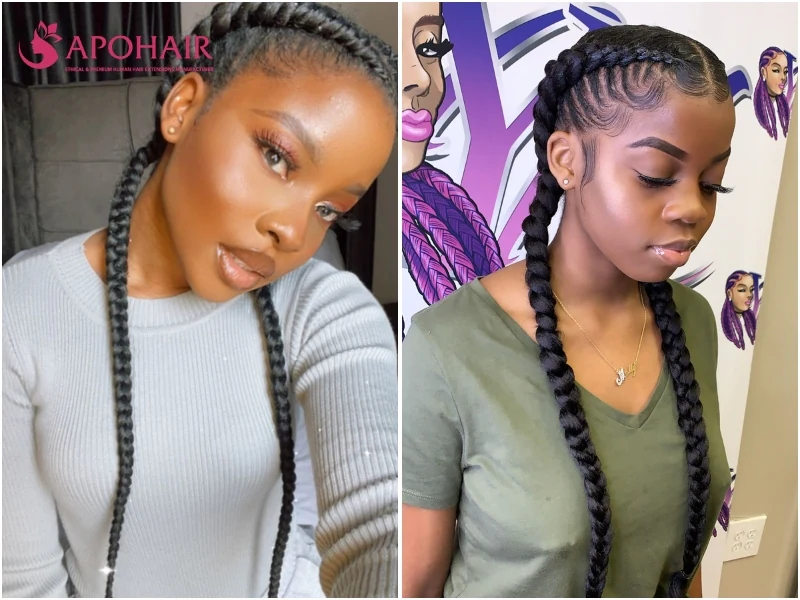
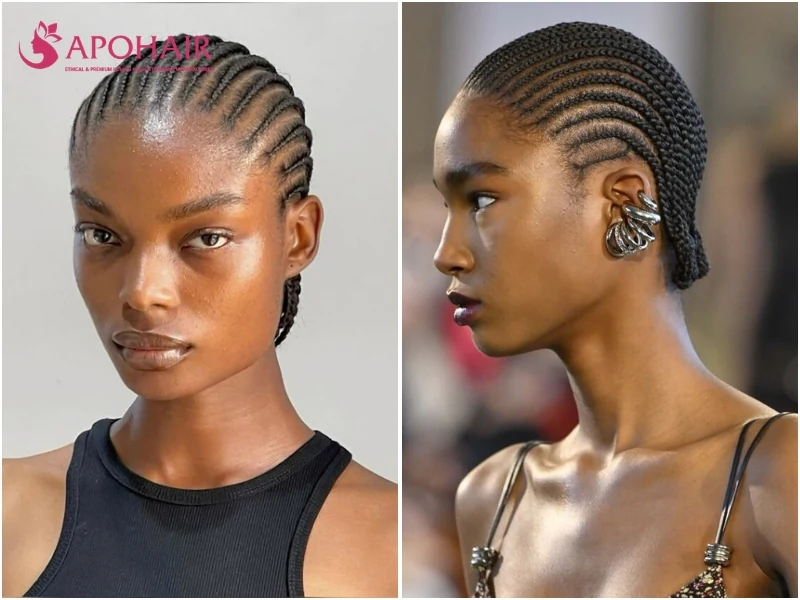
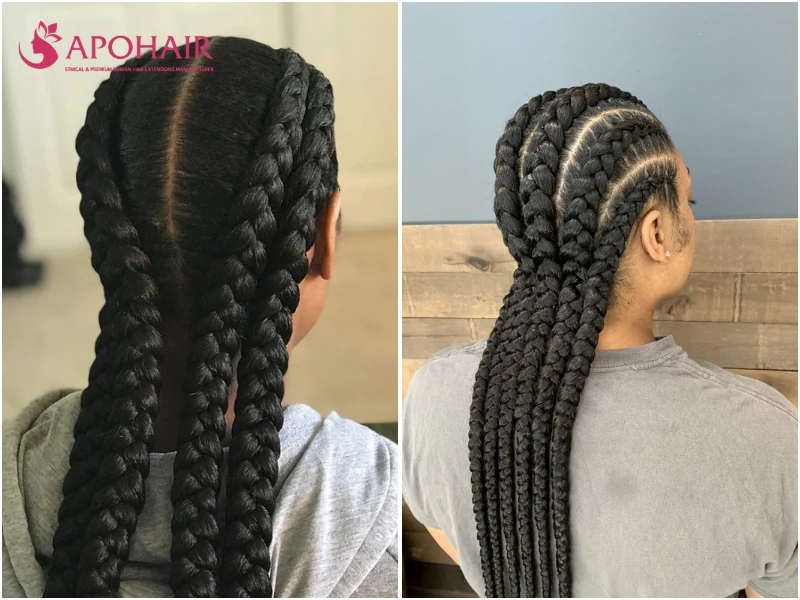
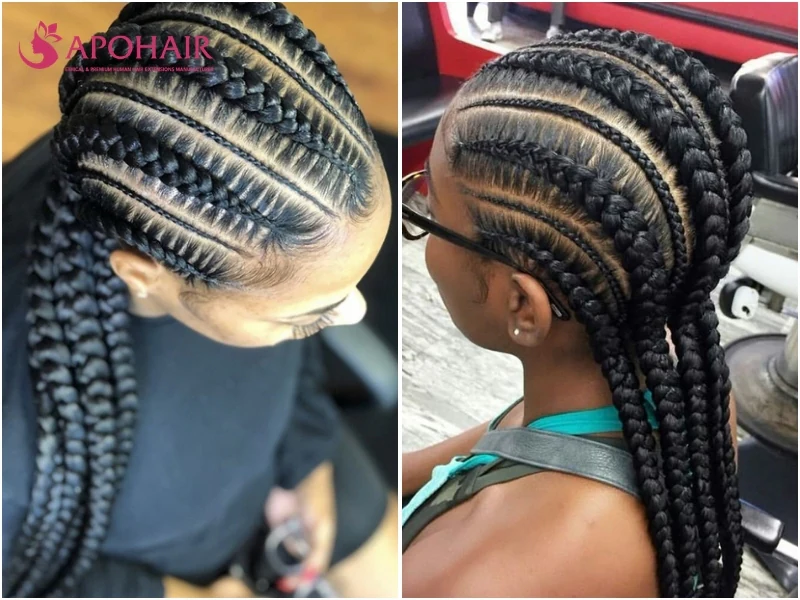
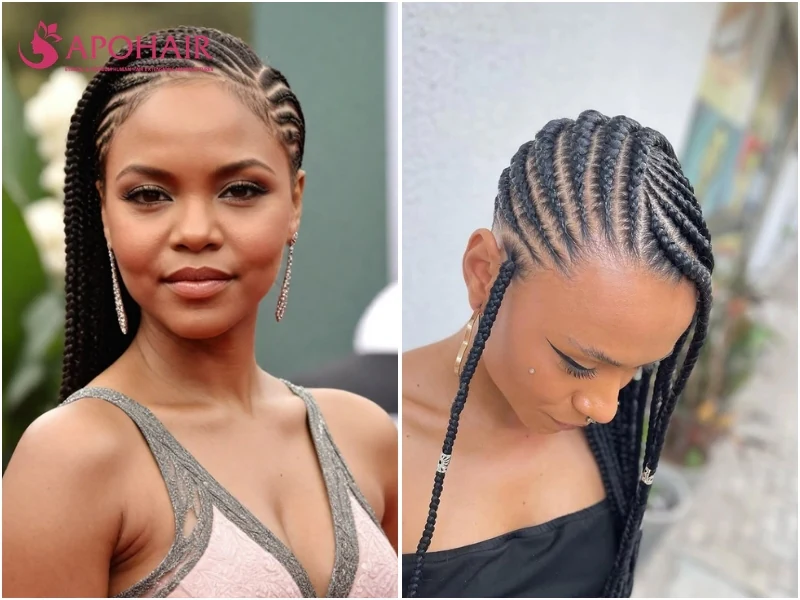
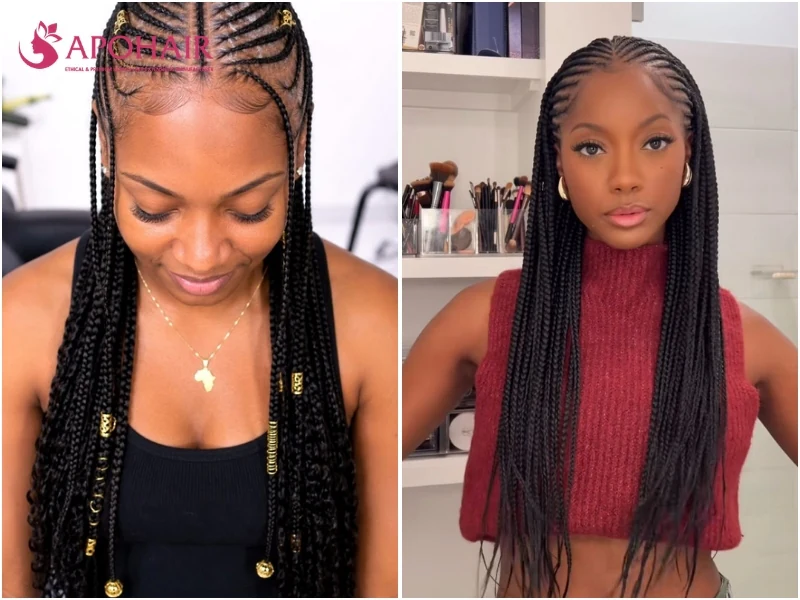
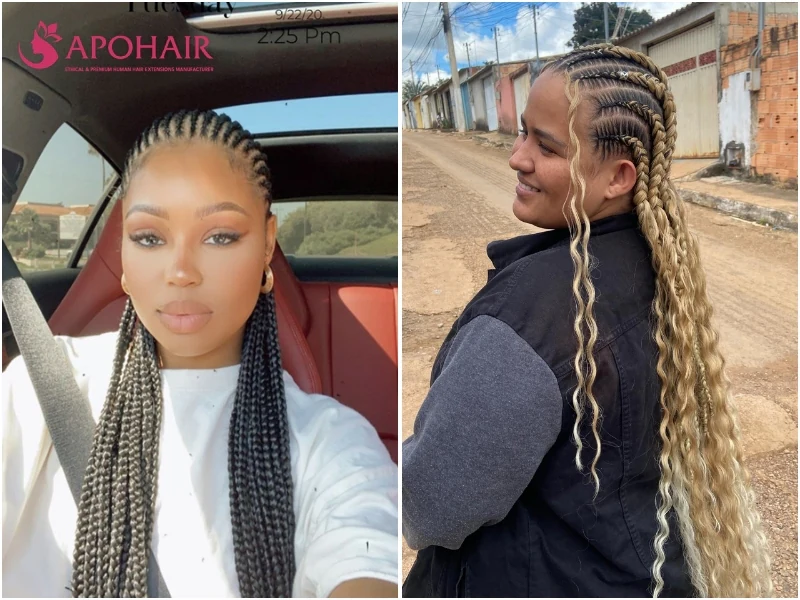
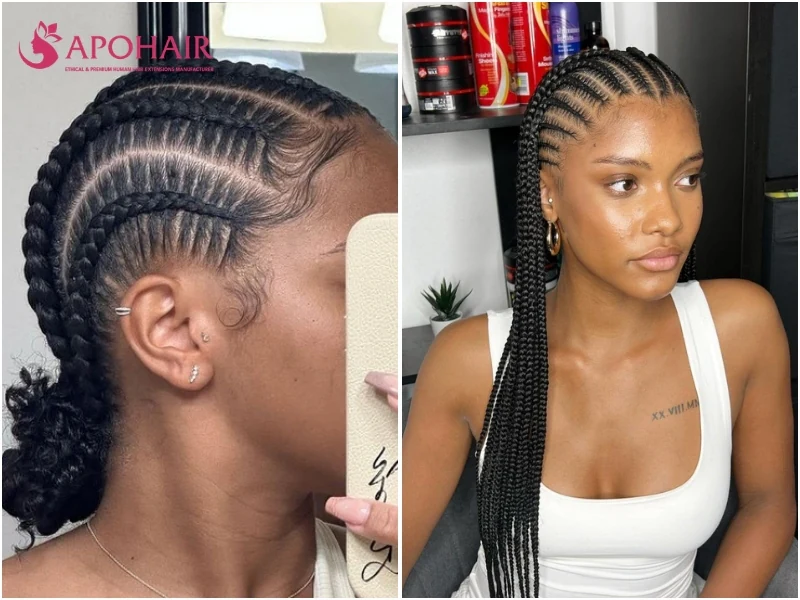
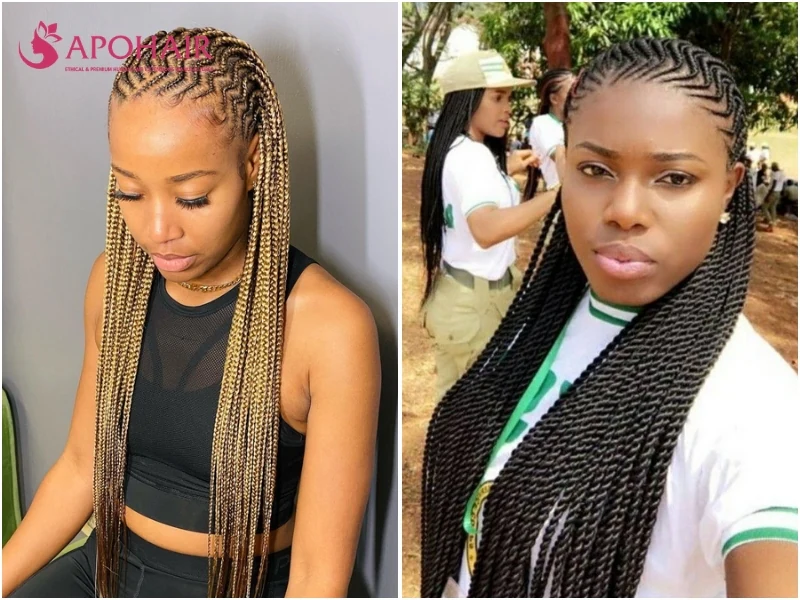
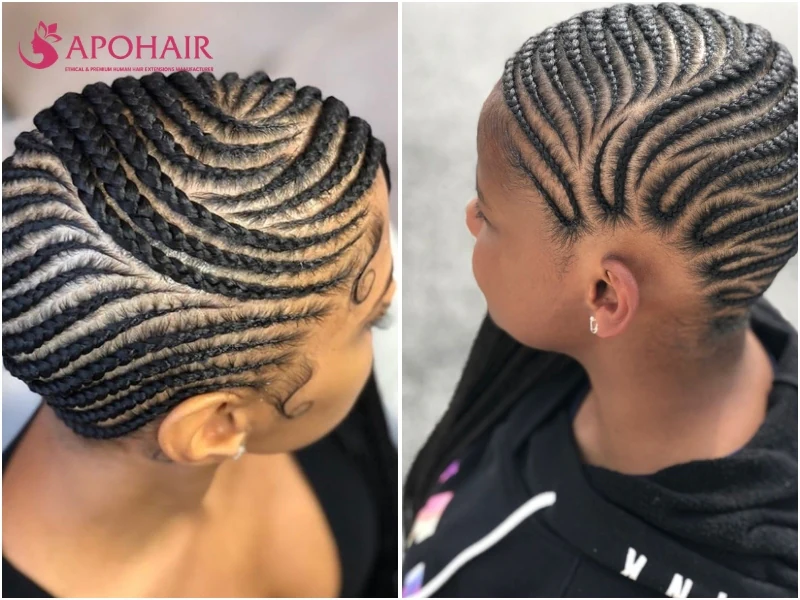
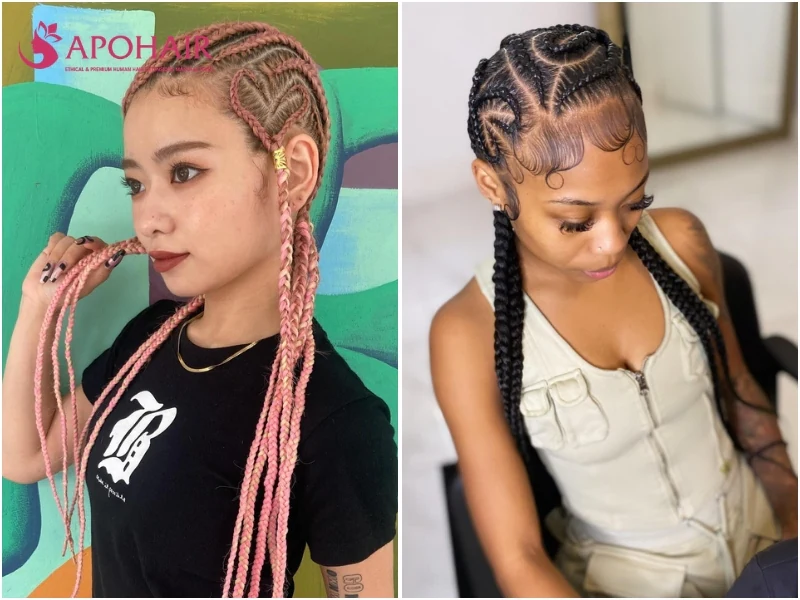
Classic Cornrow Hairstyles
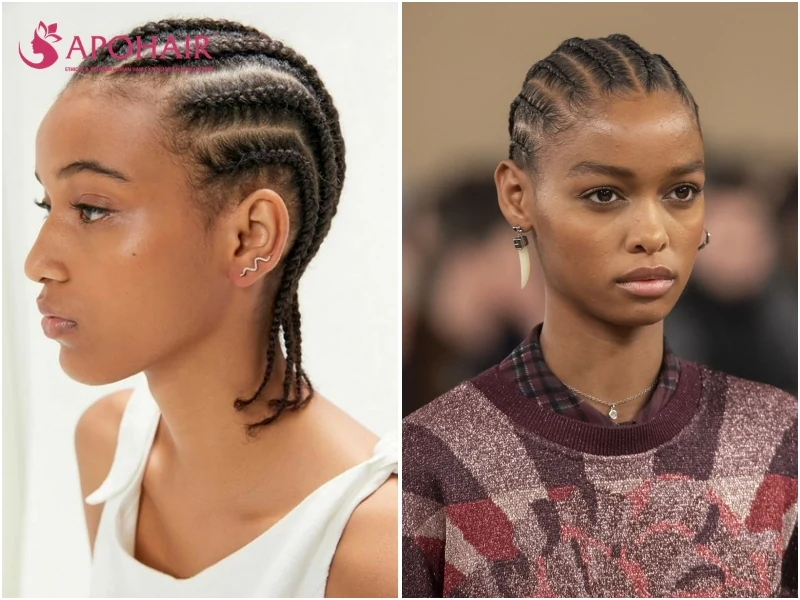
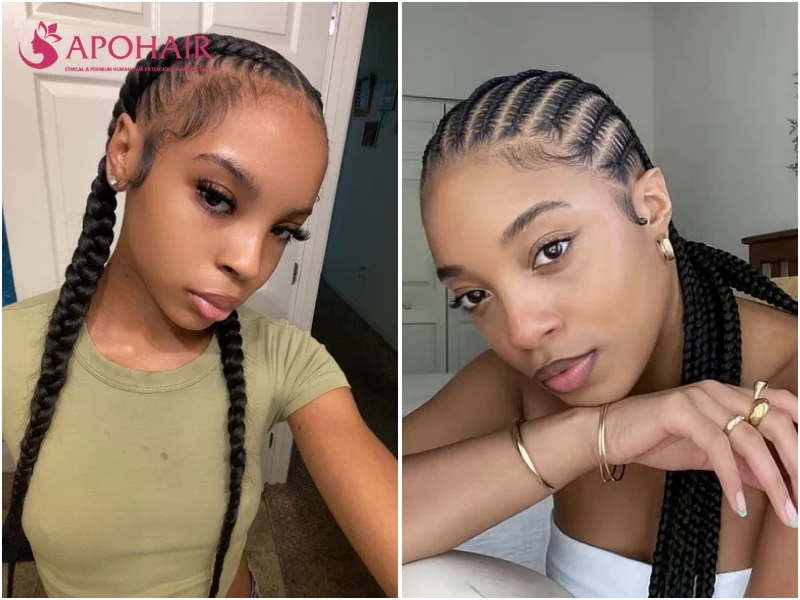
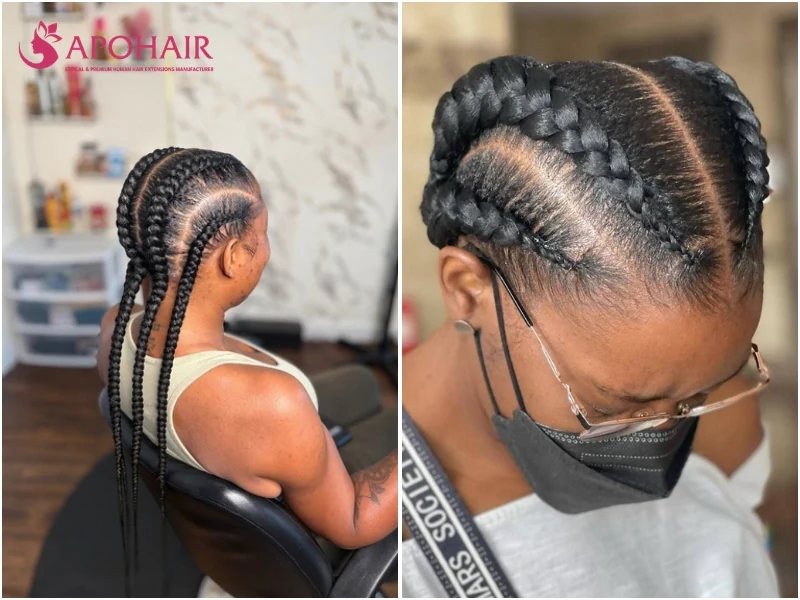
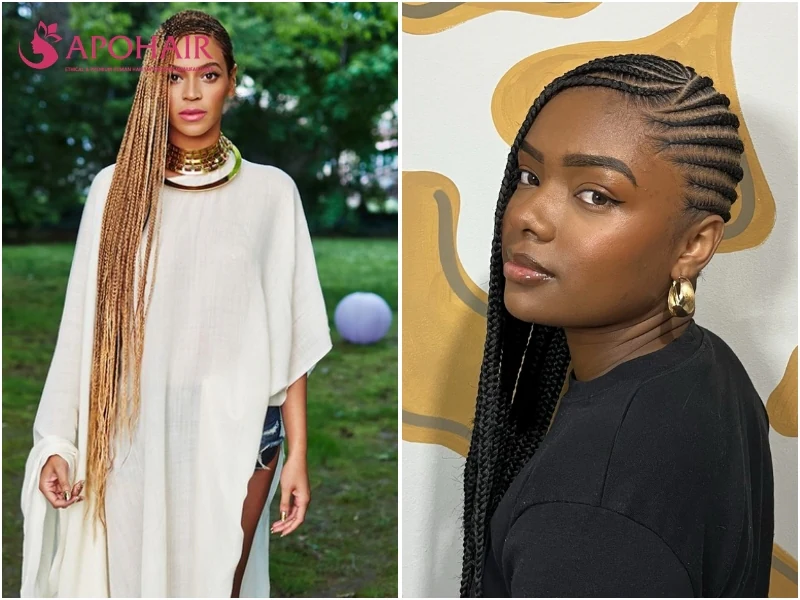
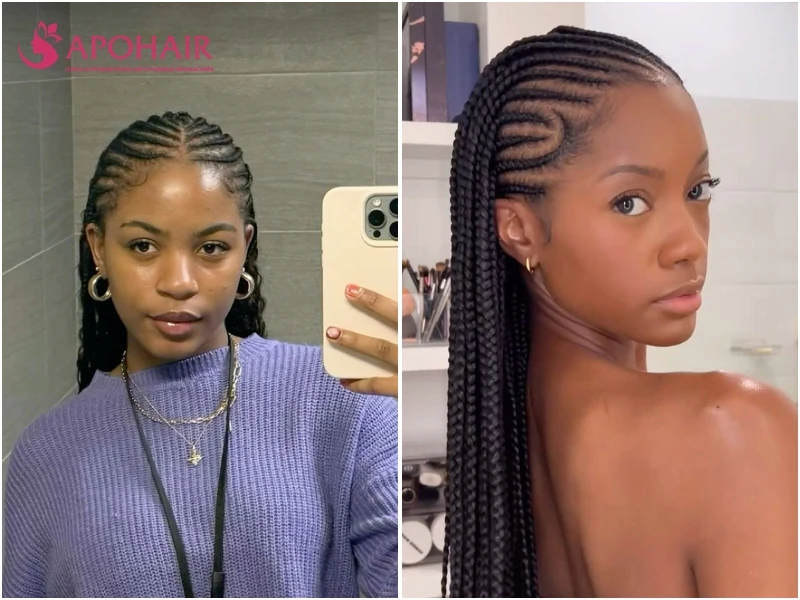
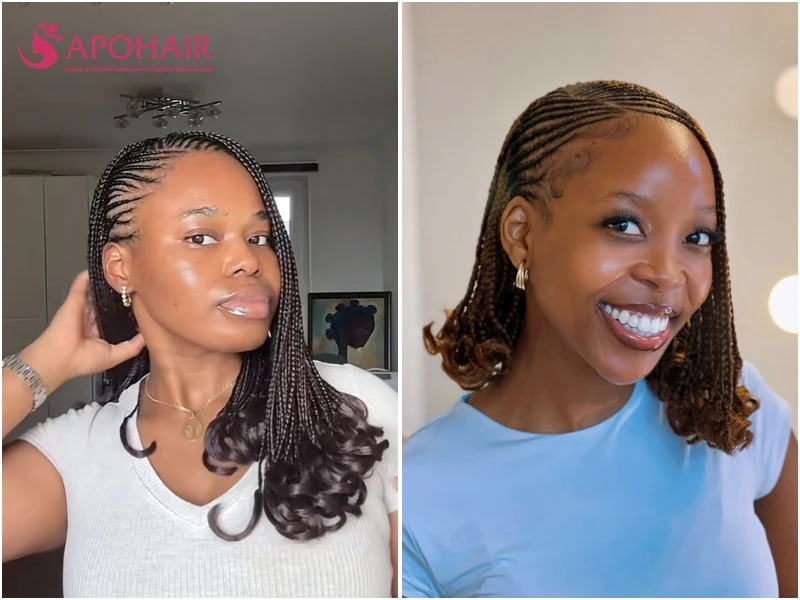
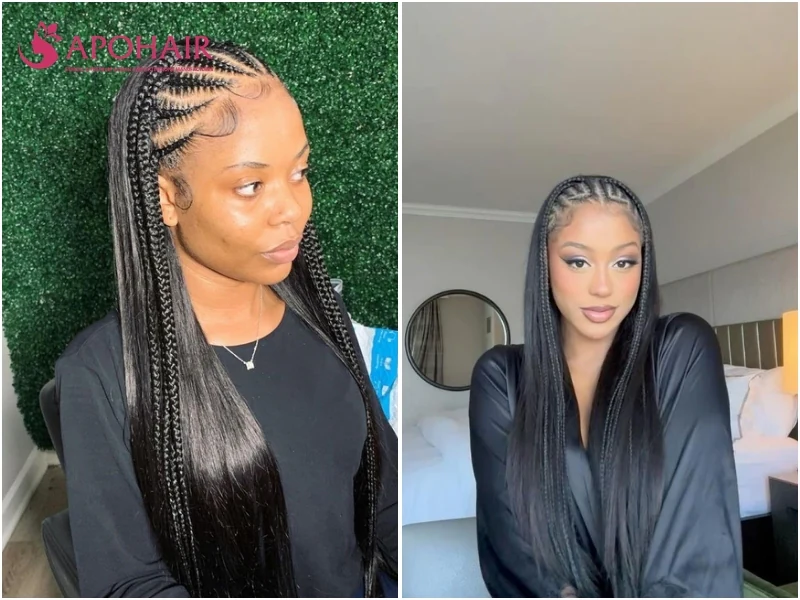
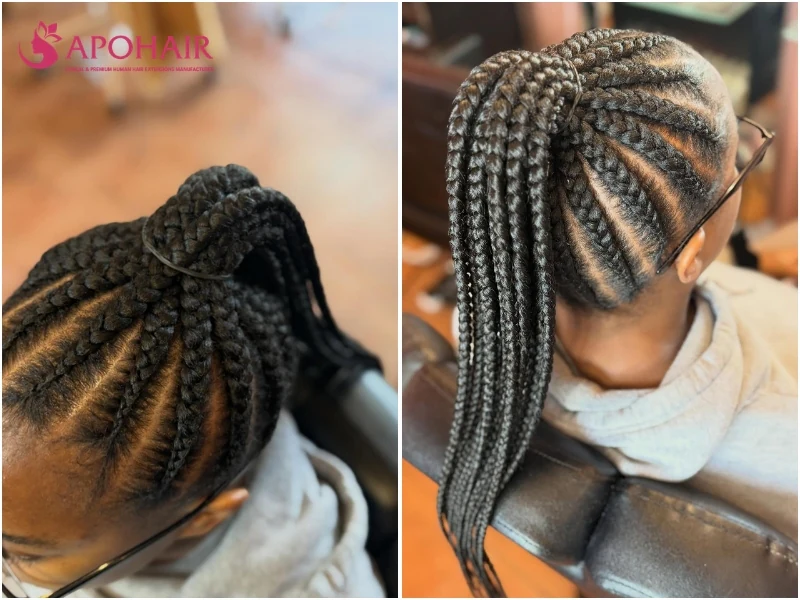
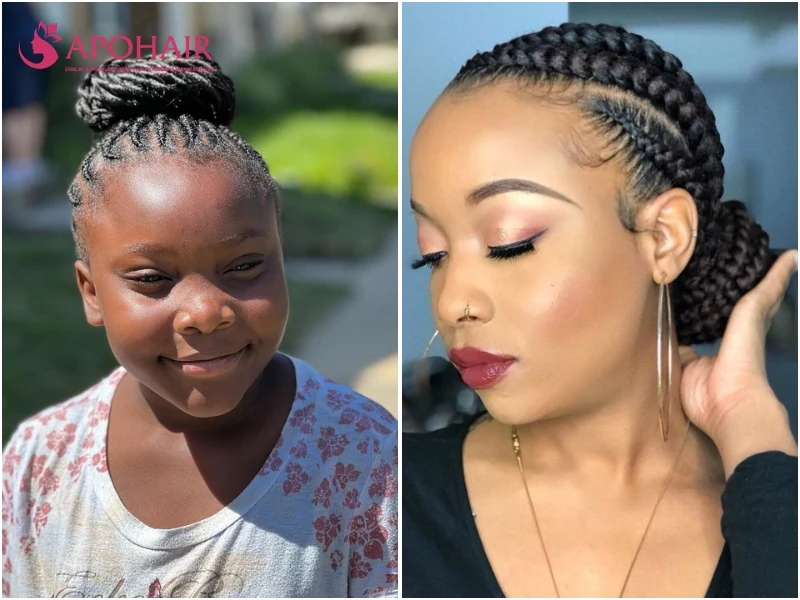
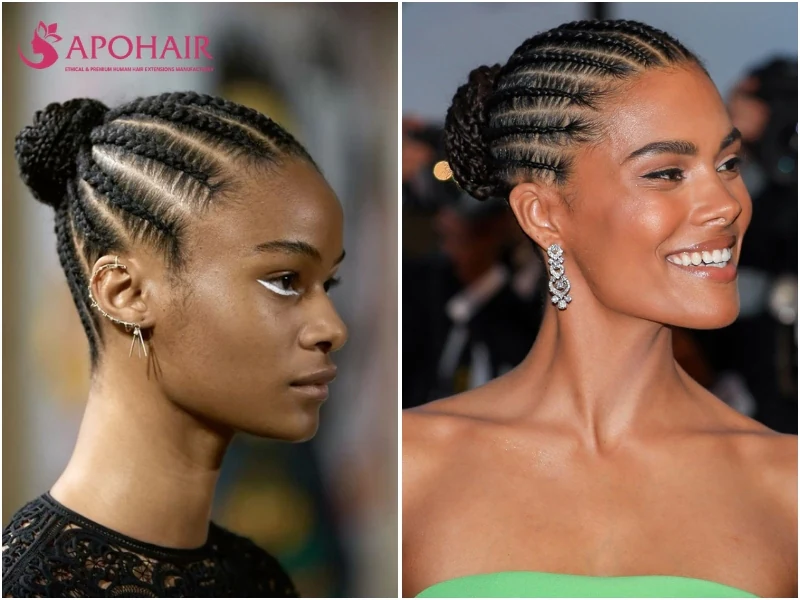
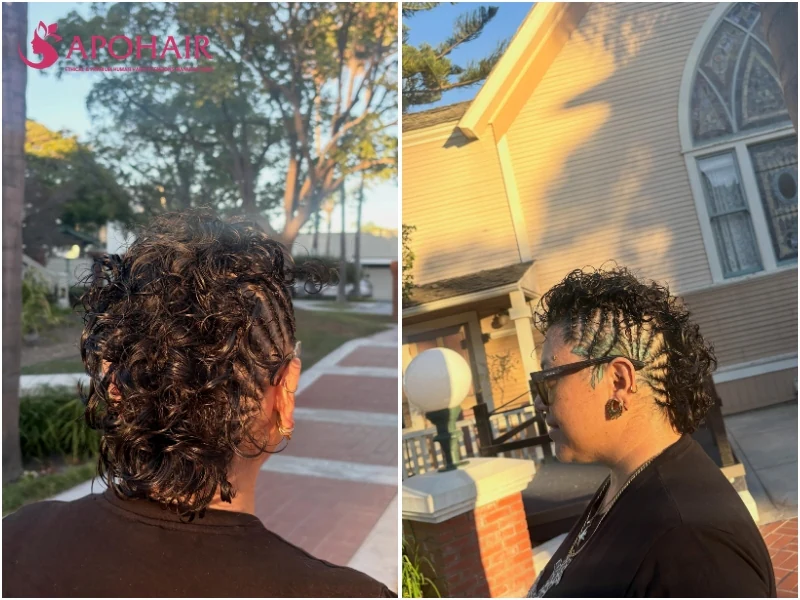
Classic cornrow hairstyles keep the parting simple and change mainly the number, size, and direction of the rows. Straight-back cornrows run parallel to the nape, feed-in cornrows build thickness gradually, and four cornrow braids and two cornrow braids limit the head to a few bold rows. Micro cornrows shrink the rows, jumbo cornrows enlarge them, mixed-size cornrows alternate the two, and side-swept cornrows curve across the head.
1. Straight-Back Cornrows
Straight-back cornrows braid the hair in parallel rows that run from the hairline to the nape, each row lying flat against the scalp. The underhand motion stacks the three strands into a raised line. The pattern is the base technique behind most other cornrow styles. Type 4 coils grip the rows tightest, and Type 1 to 2 straight or wavy hair, like most European hair, can wear the pattern with gel for grip. It suits workouts and travel.
Straight-back rows need about 2 inches of natural hair, and some cornrow patterns manage on shorter hair. The simplest version uses no added hair. The first stitches along the hairline stay firm but gentle to spare the edges. A full head of cornrows can take up to five hours. Natural-hair rows look neat for about two weeks before frizz and new growth show. A common mistake is braiding over tangled hair, which turns the rows fuzzy within days.
2. Feed-In Cornrows
Feed-in cornrows start each row with natural hair only and add small pieces of braiding hair as the braid moves back. The row grows thicker without a bulky knot at the root, so the base looks flat and natural. Type 3 and Type 4 hair blends easily with the added pieces. The layout ranges from two long rows to a full head of braids, and it suits workdays and vacations.
The natural hair needs about 2 inches to anchor the first stitches. Pre-stretched braiding hair feeds in piece by piece. Gradual feeding spreads the weight, although long braids hanging from small rows still drag on the scalp. The install usually takes a few hours. Feed-in cornrows commonly hold about three weeks before the base frizzes enough to need a redo. A common mistake is packing in a thick piece at the very first stitch, which leaves a lump near the hairline.
3. Four Cornrow Braids
Four cornrow braids part the hair into four rows that run back from the hairline and continue as long braids past the shoulders. The wide parts between rows make each braid bold and easy to see. Type 4 hair gives a smooth, full base, and Type 3 curls hold the rows with a little gel. The pattern suits active days and school runs.
Four rows work on hair about 2 inches long, and feed-in braiding hair adds the length and thickness. Each row carries a large share of the hair, so even parts matter, and the base stitches stay snug rather than tight. With only four rows to braid, the install often takes a couple of hours. The style lasts about two to three weeks, since large rows loosen and frizz sooner than small ones. A common mistake is placing the parts unevenly, which makes one braid visibly thicker than its neighbors.
4. Two Cornrow Braids
Two cornrow braids divide the hair down the middle into two rows that run back and hang as long braids over the shoulders or down the back. The simple split reads sporty and youthful. Type 3 and Type 4 hair takes the style with or without added hair. Type 1 to 2 straight or wavy hair, like most European hair, wears the same underhand pattern, often called double Dutch braids. The look suits workouts, festivals, and casual weekends.
The rows need about 2 inches of hair at the hairline, while braids that reach the waist come from feed-in braiding hair. Each row holds half the head, so long, heavy extensions pull hard at the nape and temples. Braiding two rows with added hair takes about a couple of hours. The braids stay neat for about two weeks. A common mistake is braiding the base extra tight to keep the center part crisp, which leaves the scalp sore.
5. Micro Cornrows
Micro cornrows braid the hair in many very thin rows packed closely together, so the whole head looks finely textured. Their small size lets the rows follow tight curves around the ears and hug the shape of the head. Type 4 hair holds tiny sections without slipping, while Type 3 curls need gel to keep the small rows smooth. The sleek result suits the office, fashion events, and outfits where statement earrings take the spotlight.
Micro rows can work on shorter hair, because small sections need less length to grip, and they usually use natural hair only. Each tiny section carries little weight, but a full head of them still adds up to many points of pull along the hairline. Micro cornrows take the longest to braid of any classic style, often close to five hours. Small cornrows typically last about two to six weeks with steady care. A common mistake is braiding the smallest rows at the edges too tightly, where fine hairline strands break first.
6. Jumbo Cornrows
Jumbo cornrows braid the hair into a small number of very thick rows, with added hair building the width and the length. The rope-like braids show clearly from any angle and often hang well past the shoulders. Type 4 hair supports the weight of large sections, and Type 3 curls work when the base is smoothed first. The chunky shape suits festivals, concerts, and quick braided styles before a trip.
Jumbo rows need about 2 inches of natural hair, and braiding hair fed into each row creates the thick shape. More added hair means more weight on every row, so the rows start snug and the braids stay at a moderate length. A set of jumbo cornrows usually takes a couple of hours. Jumbo cornrows stay in for less time than smaller rows, often about two weeks, because the large sections frizz and loosen sooner. A common mistake is choosing extra-long extensions, which swing and tug at the root with every movement.
7. Mixed-Size Cornrows
Mixed-size cornrows alternate thick and thin rows across the head, so each large braid sits between one or two small ones. The contrast adds rhythm to a straight-back pattern without complex parting. Type 4 hair keeps both sizes smooth, and Type 3 curls grip the thin rows with a firm gel. The look suits everyday wear, school, and casual workdays that call for more detail than plain rows.
The natural hair needs about 2 inches, and feed-in braiding hair mostly goes into the large rows, while the small rows take little or none. Thin rows beside heavy ones take strain unevenly, so the small rows at the hairline stay light. The extra parts make the install a little longer than same-size rows, usually a few hours. The style lasts about two to four weeks, with the thin rows staying neat longest. A common mistake is feeding the same amount of added hair into every row, which erases the size contrast.
8. Side-Swept Cornrows
Side-swept cornrows run diagonally from one side of the hairline and sweep across the head toward the opposite side, so the braids fall over one shoulder. The asymmetry frames the face and shows more of the pattern from the front. Type 3 and Type 4 hair both hold the angled direction. The look suits date nights, red-carpet events, and photos where the profile matters.
The rows need about 2 inches of hair at the hairline, and feed-in braiding hair adds the long braids on the swept side. Weight collects on one side, so the braids there pull more and do better with lighter extensions. The install takes a few hours, depending on the number of rows. Side-swept cornrows with extensions can last several weeks with care. A common mistake is sleeping on the swept side every night, which flattens and frizzes those braids first.
Popular Cornrow Braid Styles
Popular cornrow braid styles carry a recognized name and a signature layout. Fulani cornrows pair a center row with temple braids and beads, and Ghana braids thicken gradually toward the back. Stitch cornrows add small horizontal parts along each row, and lemonade braids sweep long braids to one side.
9. Fulani Cornrows
Fulani cornrows combine a center row running back, rows braided toward the face along each side, and loose braids hanging from the temples, often finished with gold cuffs or beads. The pattern draws on the braiding traditions of the Fulani people, a historically nomadic group living across West Africa, including Nigeria, Senegal, and Mali, the same region behind didi hairstyles and kiko braids. Beads and cowrie shells in the style have long signaled beauty, wealth, and cultural pride. Type 4 hair suits the layout best, and the style fits weddings, cultural celebrations, and vacations.
Fulani cornrows need about 2 inches of natural hair, with braiding hair such as Kanekalon adding length to the hanging braids. Small braids take about 6 to 8 hours, while large ones take about 3 to 4 hours. The braids at the temples pull on fine edge hair, so knotless starts there to reduce tension. The style lasts about 4 to 6 weeks, and keeping it past 6 to 8 weeks puts the edges at risk. A common mistake is loading heavy beads onto the thin temple braids, which drags on the front of the hairline.
10. Ghana Braids
Ghana braids are cornrows that start thin at the hairline and grow thicker toward the back as braiding hair feeds in, then continue as long braids. The rows usually look larger and more defined than classic cornrows, and they run straight back or in gentle curves. Type 4 hair gives a firm base, and Type 3 curls take the gradual feed well. Gray, blonde, or wavy braiding hair changes the mood, and the look suits travel and summer.
The rows need about 2 inches of natural hair, and pre-stretched braiding hair builds the gradual thickness. Starting thin keeps the base light, but long braids still pull at the nape. The install takes a few hours, depending on the number of rows. Ghana braids can last up to 8 weeks, which is also the upper limit the American Academy of Dermatology (AAD) suggests for braids. A common mistake is thickening the row too fast in the first inch, which creates a bump where the row begins.
11. Stitch Cornrows
Stitch cornrows add small horizontal parts along each row, so the braid shows a line of evenly spaced marks that look like stitches. The parts divide the hair picked up by the braid into precise sections as the row moves back. The crisp detail shows best on straight-back rows ending in long braids or a curly low bun. Type 4 hair holds the neat stitch sections, and the style suits photos, celebrations, and polished everyday wear.
Stitch rows need about 2 inches of hair so each small section reaches the braid. The tail of a comb separates each stitch, and a little edge gel keeps the lines clean. Added braiding hair is optional and only needed for long braids. The extra sectioning makes the install slower than plain cornrows. The stitch lines stay sharp for about two to three weeks, then blur as new growth comes in. A common mistake is spacing the stitches unevenly from row to row, which breaks the pattern at a glance.
12. Lemonade Braids
Lemonade braids are small to medium feed-in cornrows that curve from a deep side part and drape long braids over one shoulder. The name comes from Beyoncé’s 2016 visual album *Lemonade*, where she wore long side-swept braids. Compared with other side-swept cornrows, lemonade braids use more and thinner rows with very long braids. Type 4 hair holds the dense rows, and Type 3 curls wear them with a smooth base. The look suits concerts, date nights, and photo-ready events.
Hair at least 2 inches long anchors the rows, and long feed-in braiding hair, often black, honey blonde, or ombre, sets the length. Every braid lands on the same side, so the weight concentrates there, and medium-length extensions keep the pull lower. Many small rows take several hours to braid. Lemonade braids can last up to 8 weeks with care. A common mistake is placing the side part too close to the ear, which leaves the rows at the opposite temple under strain.
Cornrow Styles With Braids, Curls, and Extensions
Cornrow styles with braids, curls, and extensions pair the rows with a second technique. Cornrows into box braids switch to individual braids at the back, and cornrows with curly ends finish each braid in loose curls. A cornrow sew-in with extensions uses the rows as a flat base for wefts.
13. Cornrows Into Box Braids
Cornrows into box braids braid the front section as cornrows and the back section as individual box braids, so the style mixes flat patterned rows with free-hanging braids. The front rows can run straight back or curve into a swirl near the temple. Type 4 hair holds both techniques, and Type 3 curls work with a smooth, stretched base. The mix suits workdays and weekends alike, since the braids can hang loose or gather into a ponytail.
Natural hair needs about 2 inches for the cornrows, while box braids usually need a little more length to grip. Braiding hair extends both sections to the same length. The box braids at the back hang freely, which takes some load off the front rows. The install takes several hours. The style can stay in up to 6 to 8 weeks, since box braids leave the scalp easier to wash. A common mistake is making the box braids at the transition line too small, which leaves a visible gap between the two sections.
14. Cornrows With Curly Ends
Cornrows with curly ends braid the hair in small rows, continue into braids, and finish each braid with a few inches of loose curls. Shoulder-length and bob-length versions with bouncy curled ends are especially popular. The curls soften the braided shape and add movement around the jaw. Type 4 hair suits the braided base, and curly ends in a matching shade blend over any texture. The playful look suits brunch, holidays, and summer events.
The rows need about 2 inches of natural hair, and braiding hair or curly hair adds both the length and the curled ends. Curly human hair ends hold their pattern through washing and can be restyled, while synthetic curls tend to frizz and tangle sooner. Short braids carry little weight, so tension stays low. The install takes several hours. The style lasts about 4 to 6 weeks, although the curls may need refreshing sooner. A common mistake is skipping moisture on the curls, which lets them knot and mat together.
15. Cornrow Sew-In With Extensions
A cornrow sew-in with extensions braids cornrows as a base, sews wefts of hair onto the rows, and leaves a few front cornrows visible as a design. The base works on Type 3 and Type 4 hair, and wefts in straight, wavy, or curly textures change the finish. It suits workdays, events, and anyone who wants long hair with a braided detail.
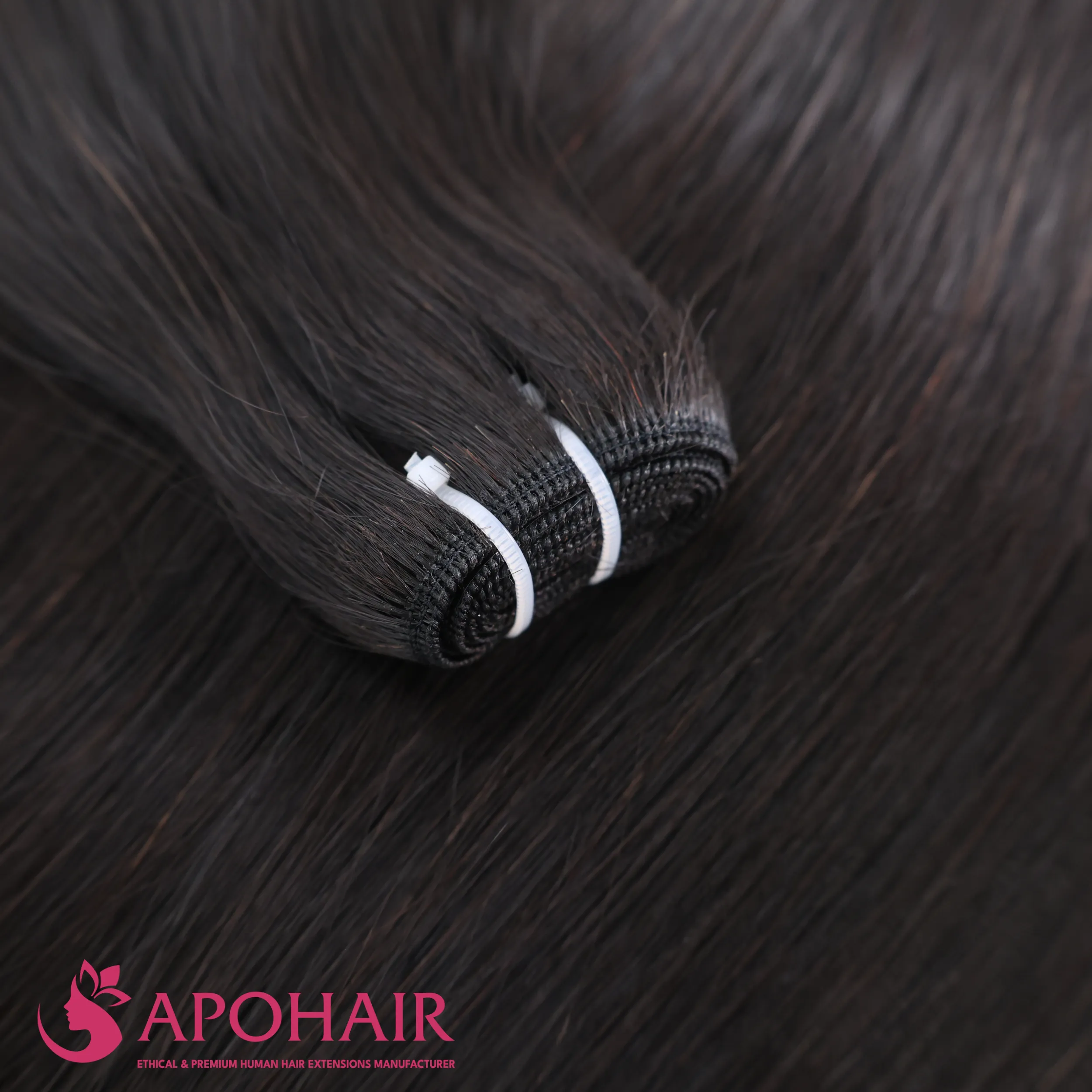
Natural hair needs about 2 inches for the base rows, which run flat so the wefts lie smooth. Human hair wefts can be washed, heat-styled, and reused, and a close texture match helps the look blend. The sewn tracks add weight to the base, so the rows stay firm without tight roots. A sew-in usually takes a few hours. The braided base is best taken down within 6 to 8 weeks, the limit the AAD suggests for braids. A common mistake is sewing too many wefts onto too few rows, which strains the base. We make factory-direct wholesale vietnamese hair wefts for exactly this kind of sew-in, and salons that order from us tell us straight bundles blend cleanest into a flat cornrow base.
Cornrow Ponytails, Buns, and Updos
Cornrow ponytails, buns, and updos gather the rows toward one point. A cornrow ponytail lifts the braids into a tail, and a cornrow bun coils them high or low. A cornrow updo sculpts them into a formal shape, and a cornrow mohawk braids the sides under a crest of loose hair.
16. Cornrow Ponytail
A cornrow ponytail braids every row up toward the crown and gathers the braids into a high ponytail. The rows converge from the nape, sides, and hairline, so the pattern shows from every angle. Type 4 hair keeps the upward rows smooth, and Type 3 curls hold them with gel. Feed-in braiding hair makes the tail long and full, the same trick behind most braid hairstyles with weave. The lifted shape suits workouts, busy weekdays, and evening events.
The rows need about 2 inches of hair, including at the nape, where hair is often shorter. Upward rows pull against the natural growth direction at the nape, and the AAD lists tightly pulled ponytails among styles linked to traction alopecia. Braiding a full head of upward rows takes a few hours. The style holds about two to four weeks. A common mistake is binding the tail with a tight elastic on top of tight rows, which doubles the tension at the crown.
17. Cornrow Bun
A cornrow bun braids the rows toward one point and coils the braids into a bun, either high at the crown or low at the nape. The rows can run straight back to a low bun or rise from all sides to a top bun made of braids or twists. Type 4 hair suits both versions, and short natural hair can wear the top bun with added hair. The neat shape works for school, work, and formal events.
About 2 inches of hair anchors the rows, and feed-in braiding hair or twisted extensions build the bun. A low bun rests the weight at the nape, while a top bun lifts it toward the crown. Pinning the bun loosely spreads the pull across all the rows instead of one point. A few large rows take a couple of hours. The style lasts about two to three weeks. A common mistake is wrapping too much added hair into the bun, which makes it heavy enough to drag on the rows.
18. Cornrow Updo
A cornrow updo sweeps curved rows up from the hairline and nape and arranges the braids into a sculpted knot or crown at the top of the head. Compared with a simple cornrow bun, an updo lifts every row upward and shapes the finish for dressier occasions. Type 4 hair holds the curves and the height, and Type 3 curls follow them with a setting gel. The elegant style suits galas, weddings, and red-carpet events.
The rows need about 2 inches of natural hair, and feed-in braiding hair gives the braids enough length to wrap into the knot. Curved rows pull in two directions, upward and sideways, so each row starts snug but not tight at the temples. Updos with many small rows take several hours. The shape usually looks sharp for about two weeks. A common mistake is fixing the top knot with many tight pins, which press into the scalp and loosen the rows around them.
19. Cornrow Mohawk
A cornrow mohawk braids rows along both sides of the head and leaves a strip of hair loose along the top, creating a mohawk shape without shaving. The top can stay as natural curls or curly extensions, and colored rows on the sides add contrast. Type 3 and Type 4 curls give the top its volume, and wavy hair can wear the look after a curl set. It suits concerts, nights out, and bold personal styling.
The side rows need about 2 inches of hair, and curly human hair added at the top keeps its volume through washing. The side rows angle upward, so the temples take most of the pull, and fine edge hair there stays out of tight stitches. Braiding the sides takes a couple of hours. The rows stay neat for about two weeks, while the loose curls need refreshing every few days. A common mistake is starting the side rows right at the ear, where the hair is thin.
Cornrow Designs and Patterns
Cornrow designs and patterns turn the parts themselves into the artwork. Zigzag cornrows use sharp angles, and curved or diagonal cornrows sweep in arcs. A heart cornrow design outlines a heart, and geometric cornrows build crossing or interlocking shapes.
20. Zigzag Cornrows
Zigzag cornrows braid rows along parts that turn back and forth at sharp angles, so each row forms a Z pattern from the hairline. The angles usually sit at the front, and the braids then run back into long braids or twists. Type 4 hair holds the sharp turns, and Type 3 curls keep the lines with gel. The graphic look suits festivals, campus life, and casual wear.
The zigzag parts need about 2 inches of hair, and braiding hair adds length to the braids or twists that hang from the rows. A rat-tail comb sets each angle before braiding starts. Each turn changes the direction of pull, so tight corners stress the hair at every bend. Zigzag rows take longer to part and braid than straight rows. With long braids attached, the style can last several weeks. A common mistake is cutting angles too sharp for the row size, which lets the braid round off the corners.
21. Curved or Diagonal Cornrows
Curved or diagonal cornrows run the rows in sweeping arcs or slanted lines instead of straight back, often wrapping around the ears toward the nape. Several rows curving the same way create a wave pattern, and laid edges with swirls finish the front. Type 4 hair holds the smooth arcs, and Type 3 curls can follow them with gel. The flowing design suits weddings, workdays, and events where the rows carry the whole look.
The rows need about 2 inches of hair, and braiding hair is optional unless the braids hang long. Curves call for careful parting with a rat-tail comb, so the rows stay parallel through each bend. Rows that bend around the ears pull sideways, so the edges near the temples stay loose. Curved patterns take longer than straight-back rows. Without extensions, the rows stay crisp for about two weeks. A common mistake is laying the edges with heavy gel every day, which builds up and dries fine hairline strands.
22. Heart Cornrow Design
A heart cornrow design braids one or two rows into the outline of a heart, usually at the crown or near the front, while the other rows run back into long braids. Small stitch parts often trace the curve of the heart. Type 4 hair holds the curved parts firmly, and Type 1 to 2 straight hair, like most European hair, can wear the design with colored braiding hair and firm gel. The playful look suits Valentine’s Day, birthdays, and festivals.
About 2 inches of hair shapes the heart, and braiding hair in pink, blonde, or black extends the braids. Straight hair slips out of curved parts more easily, so smaller sections help the outline hold. The two lobes of the heart pull in different directions near the part. The design adds time to an ordinary cornrow install. With long braids attached, the style can last several weeks. A common mistake is drawing the heart too small, which loses its shape once the rows are braided.
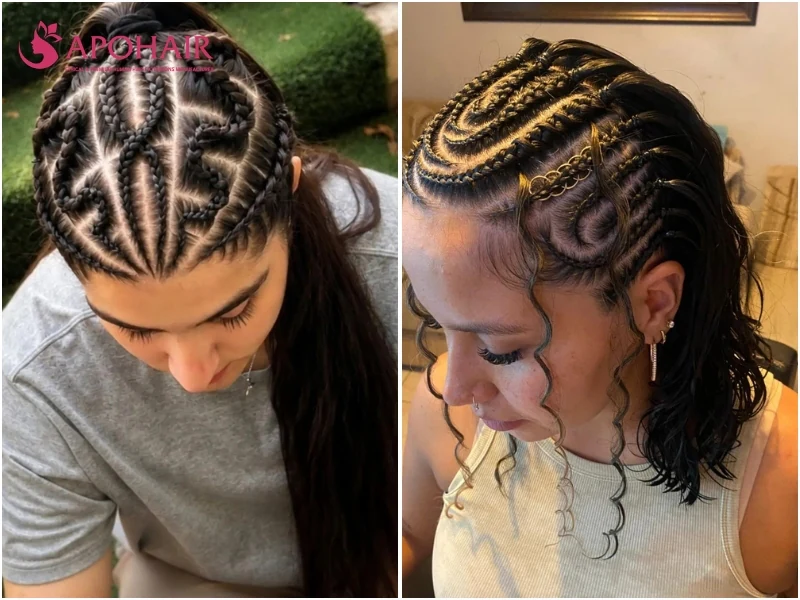
23. Geometric Cornrows
Geometric cornrows braid rows along crossing lines, diamonds, curves, or interlocking shapes, so the parts form a pattern across the scalp. Some designs weave braids over and under each other, while others combine spirals with chains or cuffs. Type 4 hair holds the precise parts, and Type 1 to 3 straight, wavy, or curly hair can wear geometric braids on top with the rest of the hair left loose. It suits creative events, festivals, and photo shoots.
The design needs about 2 inches of hair along each part, and the loose hair below can stay natural. Added braiding hair is optional. Crossing rows pull on the scalp from more than one angle, so each row stays moderate. Complex patterns take longer than any straight-back style. Geometric braids over loose hair last about one to two weeks, because loose strands frizz and tangle into the rows. A common mistake is planning a detailed pattern on thin hair, which leaves wide gaps of scalp between the shapes.
How to Choose a Cornrow Hairstyle?
Five decisions shape the right cornrow hairstyle: natural hair or extensions, the number and size of rows, the direction or pattern, the finish, and the maintenance level. Hair length and scalp comfort narrow the options before the look does.
- Natural hair or extensions decides length and weight. Natural-hair cornrows stay light and show the real length, which suits short hair, micro rows, and simple straight-back styles. Extensions add length for long braids, ponytails, and lemonade braids, but every added piece brings more weight onto the rows.
- The number and size of rows trade install time against wear. Two or four large rows braid quickly but loosen and frizz sooner. Many small rows take hours longer and stay neat for more weeks.
- The direction or pattern sets the character. Straight-back rows read clean and athletic, side-swept and curved rows frame the face, and zigzag, heart, or geometric parts turn the style into a design.
- The finish matches the occasion. Braids down the back suit everyday wear, a bun or updo polishes formal looks, curly ends soften the style, and a sew-in gives the look of long, loose hair.
- The maintenance level follows the build. Natural rows need frequent touch-ups on the edges, long extensions need nightly wrapping to protect the length, and a sew-in adds weft care on top of scalp care.
How Long Do Cornrows Last?
Cornrows last about two to eight weeks, with jumbo rows at the short end and small rows or cornrows ending in braids at the long end. The AAD recommends wearing braids for no longer than 6 to 8 weeks to limit strain on the hairline.
Several factors decide where a style lands in that range. Natural hair without extensions shows light frizz within about a week and new growth soon after. Large rows hold more hair each, so they loosen sooner, while micro rows stay neat longer. Sleeping in a satin scarf, rinsing off heavy sweat, and avoiding daily wetting all extend wear. Pain, stinging, small bumps, or broken hairs along the hairline are early signs of traction alopecia, and the style should come out at that point, whatever its age.
How to Care for Cornrows?
Caring for cornrows comes down to a clean scalp, light moisture along the rows, and protection at night. Good care keeps the rows neat longer without adding tension.
A satin or silk scarf or bonnet at night slows frizz and protects the edges from friction. Diluted shampoo applied along the parts, followed by a gentle rinse, cleans the scalp without roughing up the rows, and the hair should dry fully. A light oil or leave-in spray on the scalp and braids eases dryness and itching. Edge control works best in small amounts, since daily buildup dries the hairline. At take-down, unbraiding slowly from the ends, detangling and washing braiding hair with conditioner protects the shed hair that collects under the rows, especially when the same braiding hair goes back in for the next install.
Frequently Asked Questions
What Is the Easiest Cornrow Style?
Straight-back cornrows are usually the easiest cornrow style, because the rows run parallel from hairline to nape with simple parts and no added hair. Two cornrow braids are another beginner-friendly option, since only two rows need braiding. Both styles let a beginner practice the underhand motion before moving on to feed-ins or curved designs.
Can You Cornrow Short Hair?
Short hair can be cornrowed once it reaches about 2 inches, and some patterns work on even shorter hair. Small rows grip short hair best, since each section needs little length to catch in the braid. Very short hair can slip out within days, so a firm gel and a gentle take-down help protect the ends.
Can Cornrows Be Done Without Extensions?
Cornrows can be done without extensions, using only natural hair. Straight-back, micro, and many design rows often need no added hair, and the finished length matches the natural hair. Extensions become necessary only for long braids, thicker rows, ponytails, or buns that need more length or volume than the natural hair has.
How Many Cornrows Should I Get?
The right number of cornrows depends on the look, the time available, and hair density. Two or four rows give a bold style in a short sitting, while a full head of small rows gives a detailed finish. Fine or thin hair often looks fuller with fewer medium rows, since many small rows leave more scalp showing between the parts.
What Hair Is Best for Feed-In Cornrows?
Pre-stretched synthetic braiding hair, such as Kanekalon, is the most common choice for feed-in cornrows, because it is light, grips well, and needs no stretching before use. Its tapered ends blend smoothly into the braid. Human hair can be braided in too, but it is softer and slips more, so it suits curly ends and sew-ins better than tight rows.
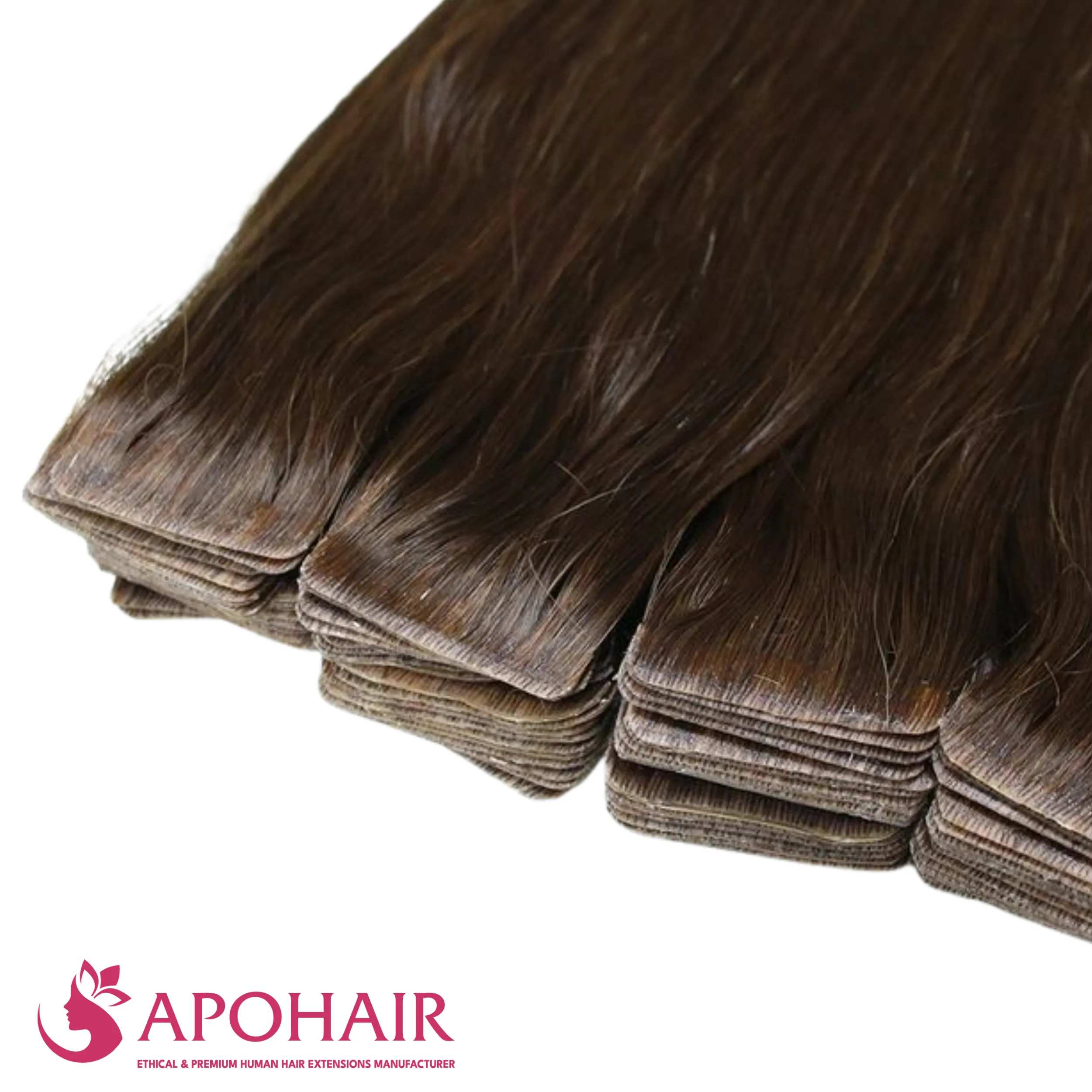
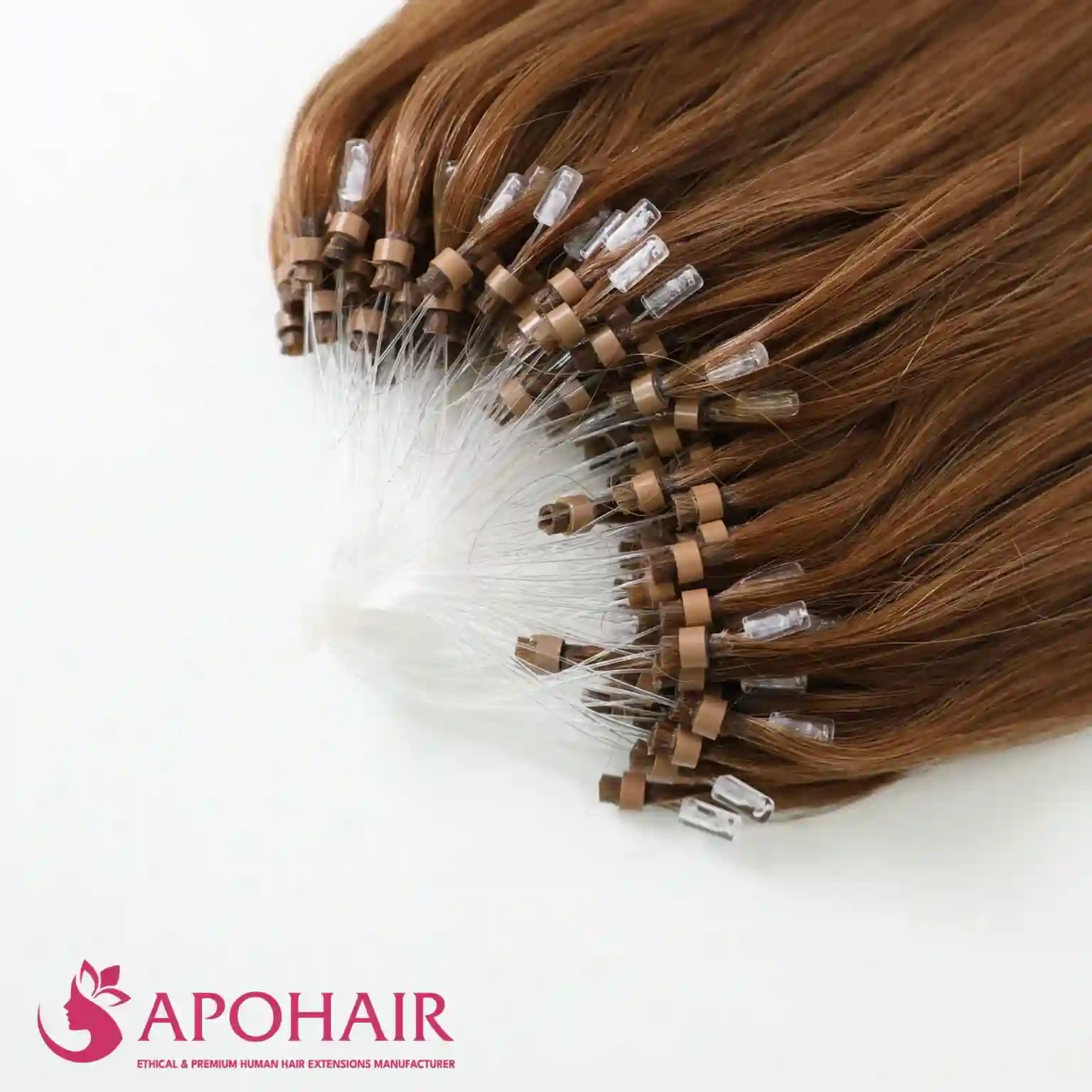
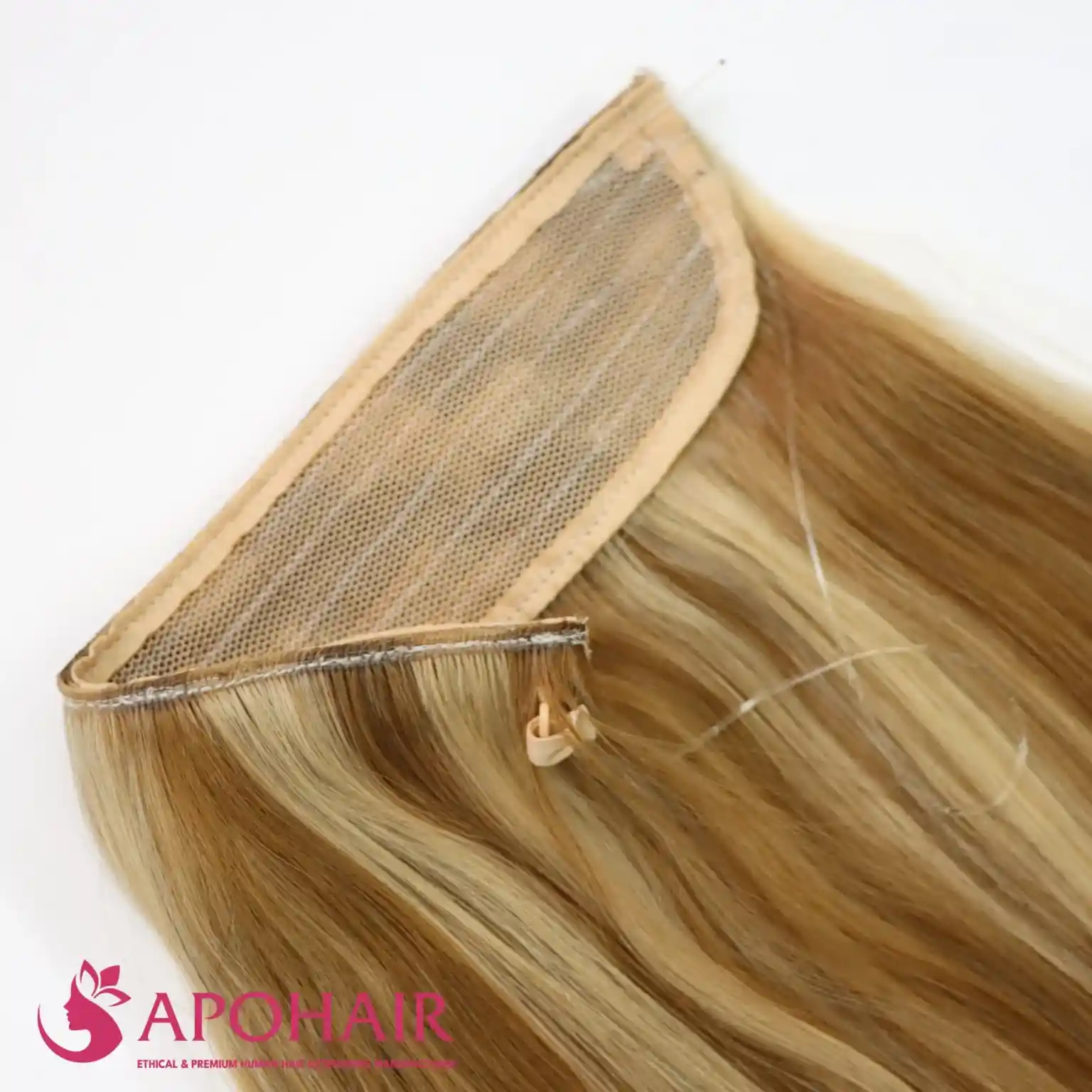
Feed-in rows only ever take synthetic braiding hair, but every sew-in, ponytail, and weave-backed cornrow above needs human hair. Three of our lines cover that side of the service: loose hair sold by weight for feeding into the rows and plaiting down, with no weft to sit under the parting, available as bulk hair extensions wholesale; hair sold by weight to match a client’s density and color across a full head before sewing onto the cornrow base, browsed as human hair bundles wholesale; and tape-in, clip-in, keratin tip, weft, and ponytail pieces in the same Vietnamese remy hair for adding length around a cornrow front, compared in our wholesale remy human hair extensions catalogue.
Conclusion
Cornrow hairstyles all build on one underhand braid laid close to the scalp, and the choices around it decide the result. Row count and size set the install time and wear, direction and pattern set the design, and braids, curls, or a sew-in change the finish. Gentle tension at the hairline and a take-down within about 8 weeks keep the edges healthy.
If you run a salon or supply braiders, cornrow sew-ins and cornrows with curly ends are where human hair makes a visible difference. Our team can send samples and factory-direct pricing on straight, wavy, and curly human hair wefts and bulk hair. Because we manufacture 100% Vietnamese Human Hair in our own facility, you can match length, density, and curl pattern to each client instead of settling for whatever a distributor has on the shelf.
