








Top 16 Fulani Hairstyles by Pattern, Construction, Texture, Styling & Accessories
Fulani hairstyles are braided looks built on a set layout: A cornrow down the center of the head, side cornrows running toward the face, and hanging braids often finished with beads. The style comes from the Fulani people, a traditionally nomadic group living across West Africa, including Nigeria, Senegal, Mali, Ghana, and Cameroon.
Their beads and cowrie shells have long expressed beauty, wealth, and cultural pride. That heritage keeps Fulani braids popular with Black women across the African diaspora, and Alicia Keys helped carry the beaded style into early-2000s fashion.
Beyond its meaning, a Fulani set keeps natural hair braided and protected for about 4 to 6 weeks with little daily styling. Beads, gold cuffs, colored braiding hair, and boho curls let the same layout move from classic to playful.
The guide gathers 16 Fulani hairstyles in five groups: signature patterns, braiding methods and hair construction, curls and texture, updos and pulled-back styles, and size, length, and accessories. Each style covers the natural hair it suits, the added hair it needs, install and wear time, and a common mistake.
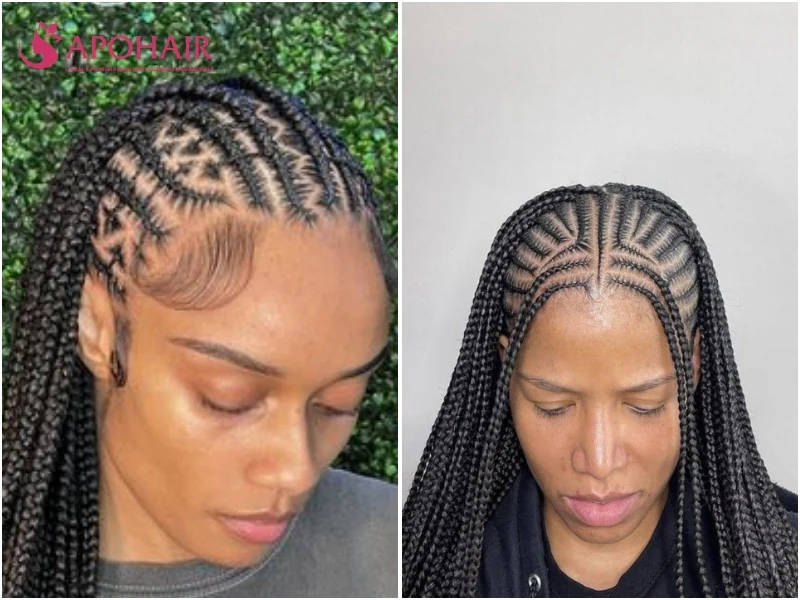
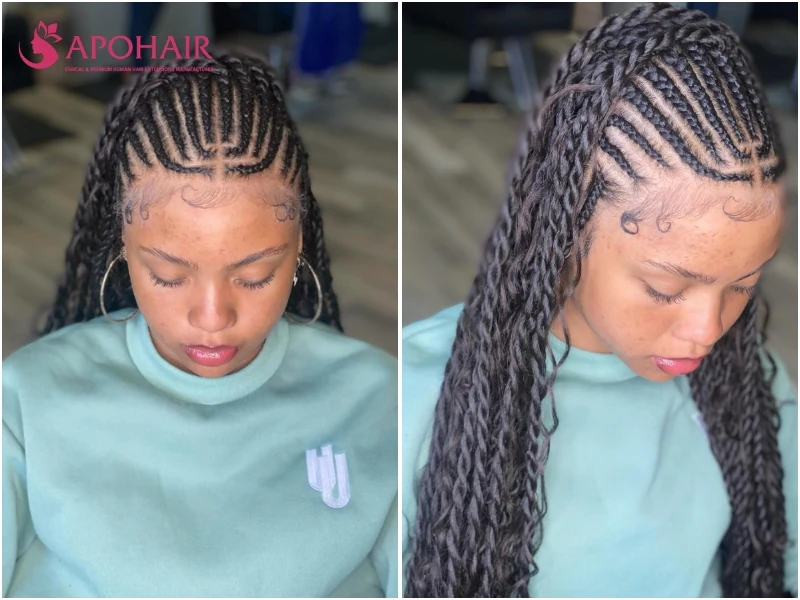
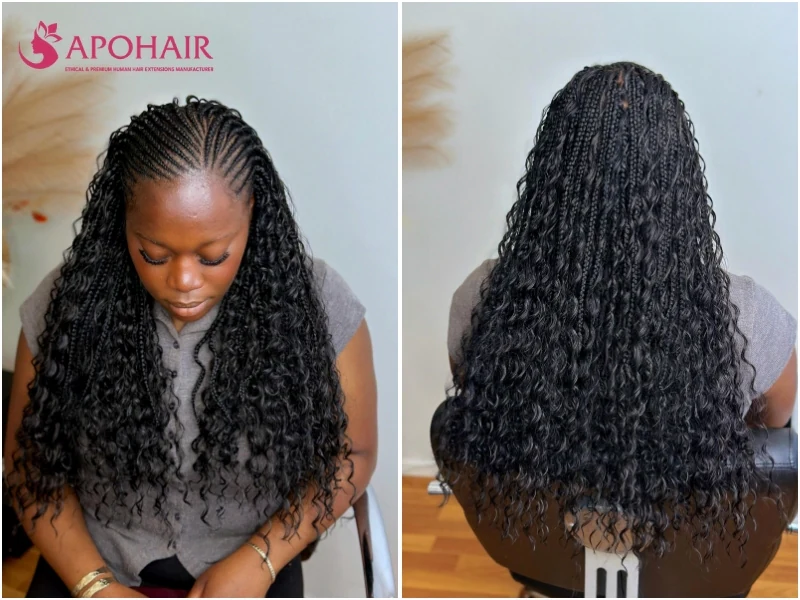
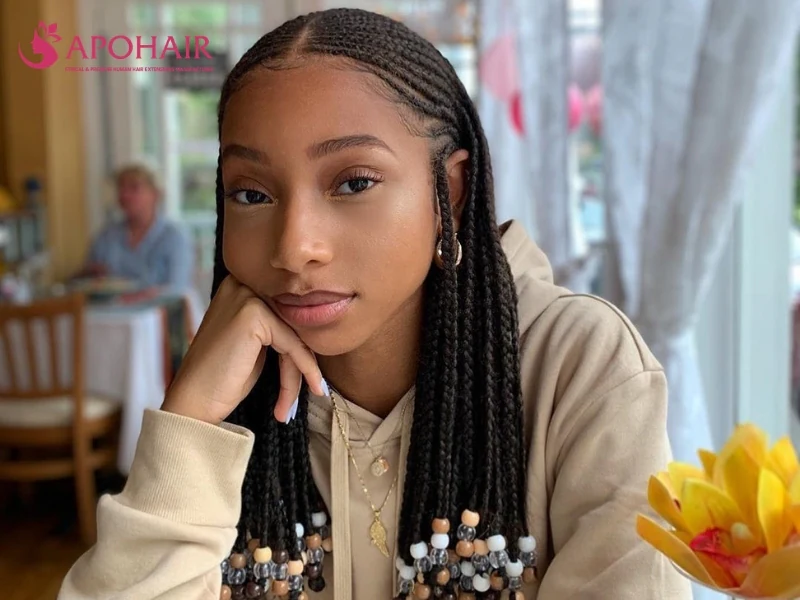
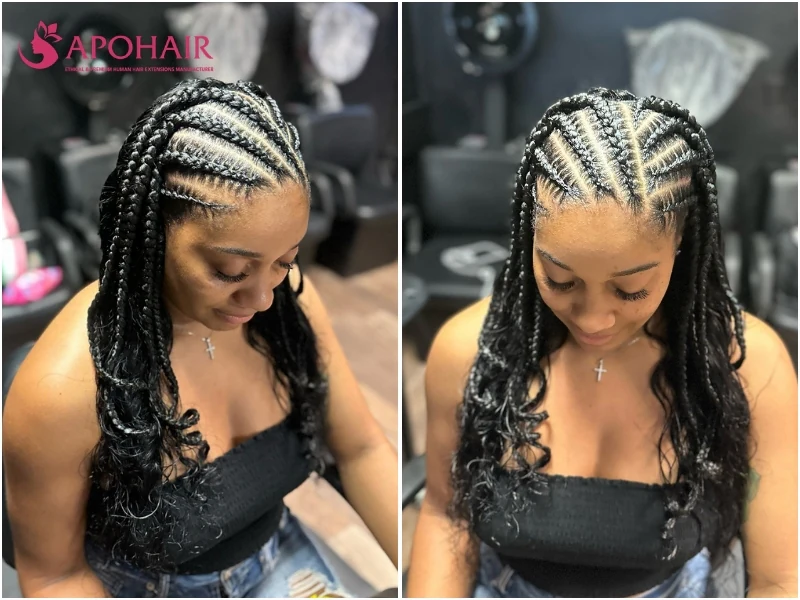
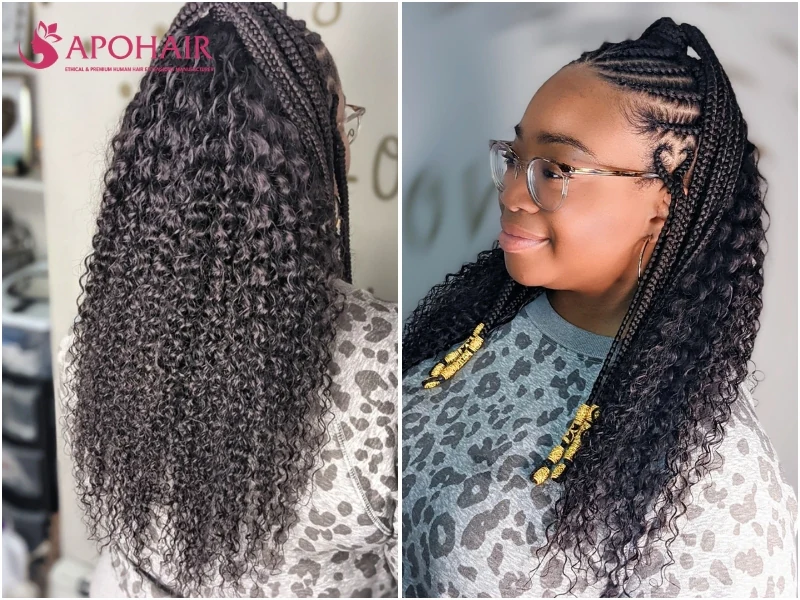
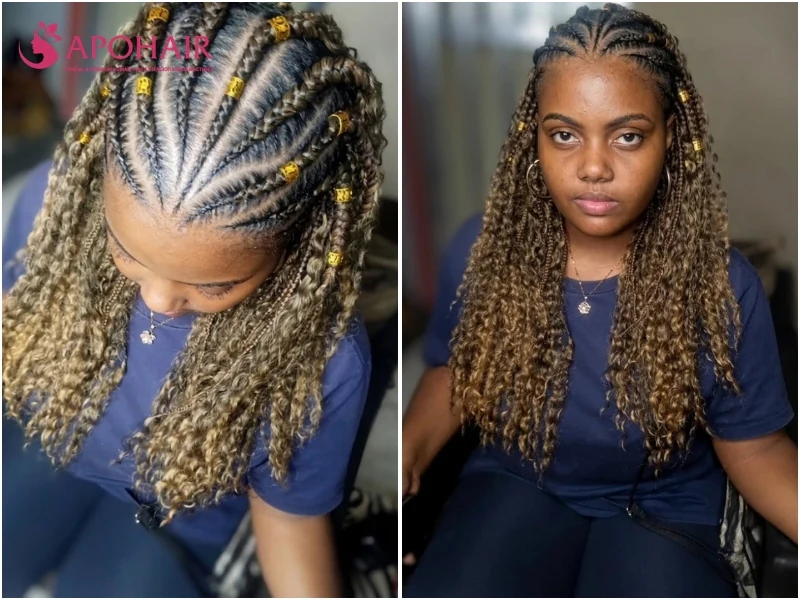
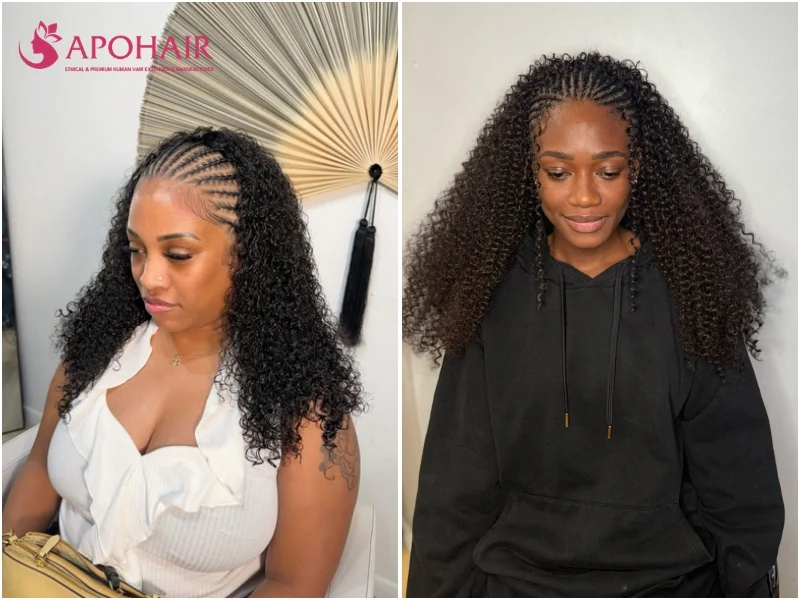
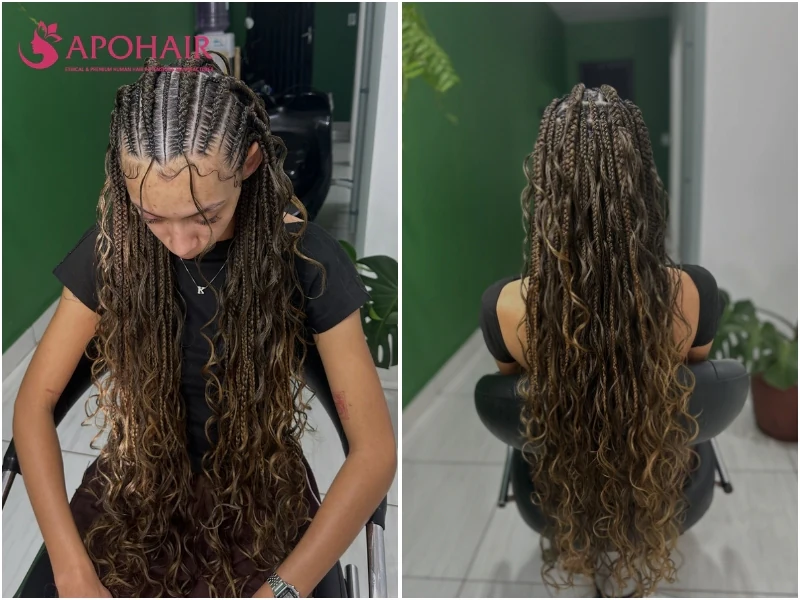
The sections that follow explain what makes a hairstyle Fulani, where it comes from, and how to choose one. They close with the hair needed, how long the braids last, and how to maintain them.
Fulani Hairstyles by Signature Braid Pattern
Fulani hairstyles by signature braid pattern differ in the parting map on top of the head. Traditional Fulani braids run a cornrow down the center, flip-over Fulani braids sweep the top section to one side, side-part Fulani braids curve the rows from an off-center part, and geometric Fulani braids draw zigzags into the parts.
1. Traditional Fulani Braids
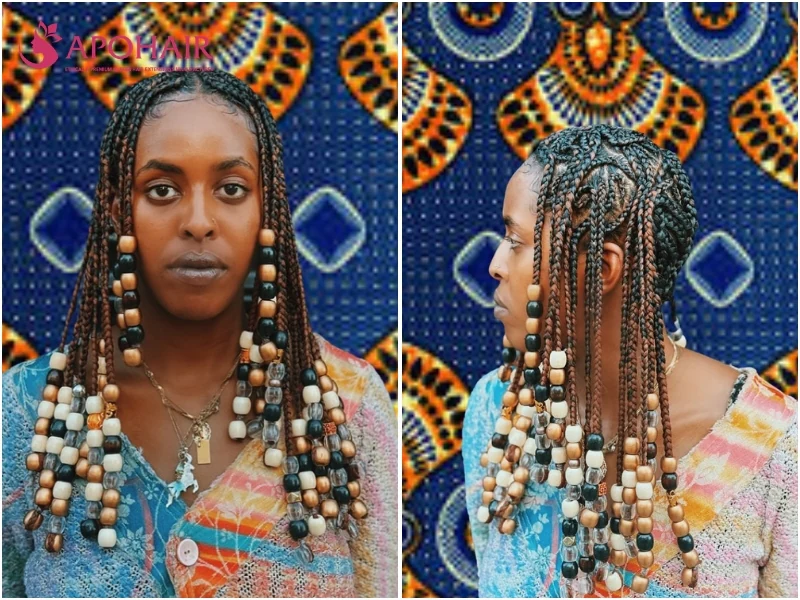
Traditional Fulani braids combine a cornrow down the center of the head, side cornrows that end in loose braids at the temples, and hanging braids finished with beads. The style comes from the Fulani people, a nomadic group across West Africa, where beads and cowrie shells have long symbolized beauty, wealth, and cultural pride. Type 4 hair holds the rows neatly, and braids built with added hair let wavy or straight hair wear the pattern too. It suits cultural celebrations, weddings, and everyday wear.
Creating the classic pattern starts with about 2 inches of hair so the cornrows can grip. Pre-stretched synthetic braiding hair lengthens the hanging braids. The center row and the side rows both pull toward the hairline, so the first stitches at the front stay loose. Medium braids take about 4 to 6 hours, and the set lasts 4 to 6 weeks. A common mistake is loading the ends with heavy beads, which drags on the braid roots.
2. Flip-Over Fulani Braids
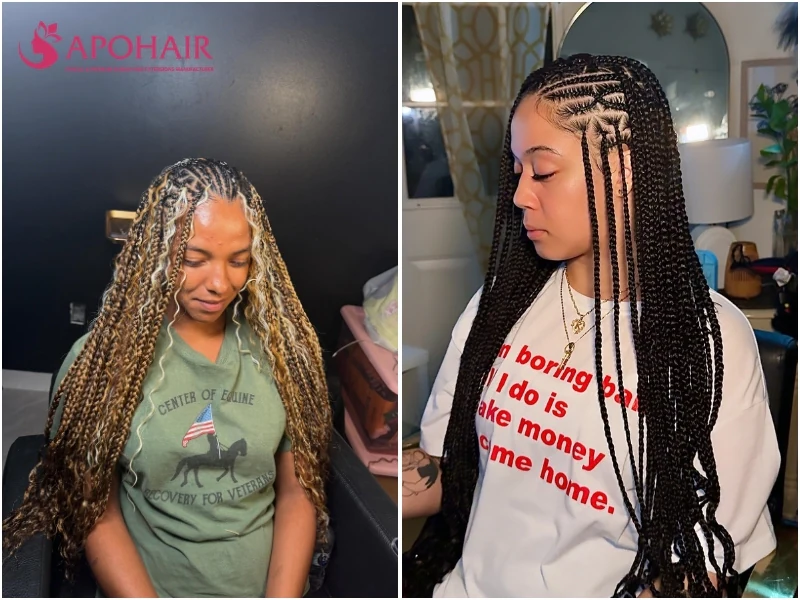
Flip-over Fulani braids cornrow the top section in one direction from a deep side part. That section then flips over, so its rows and braids fall across to the other side. The rest of the head carries long hanging braids. The swept top works on Type 4A to 4C hair and on relaxed or wavy hair when braids with added hair carry the length. It suits nights out, vacations, and portraits that show off the part.
The pattern needs about 2 inches of hair on top so the side rows lie flat once flipped. Pre-stretched braiding hair gives the long braids an even length and weight. The flipped section pulls against the part line, so the braids along the part stay loose. A medium set takes several hours and holds 4 to 6 weeks. The mistake to avoid is braiding the top rows too thick before the flip, which leaves a bulky ridge where the section folds over.
3. Side-Part Fulani Braids
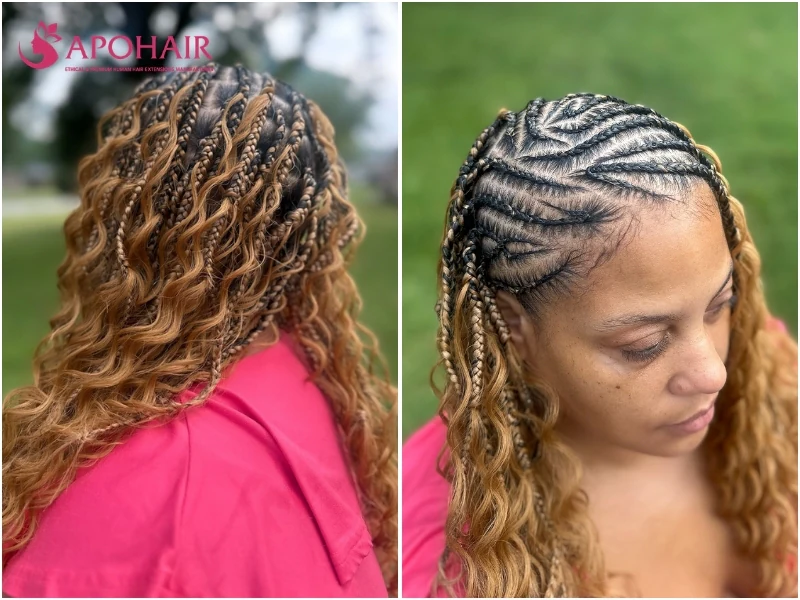
Side-part Fulani braids start from an off-center part and curve the cornrows away from it, so the rows sweep around the head in arcs rather than running straight back. The hanging braids often carry curly strands or a honey-blonde blend for a softer finish. Type 4 hair keeps the curved rows crisp, and braids with added hair extend the look to straighter or wavier textures. The asymmetry suits office wear, graduations, and portraits.
The side part needs clean sectioning with a rat-tail comb, and about 2 inches of hair lets the curved rows grip. Braiding hair builds the length, and loose curly pieces add movement near the face. Curved rows pull unevenly, with the strongest stretch on the short side of the part, so those rows start softer at the hairline. The braids hold 4 to 6 weeks. A common mistake is setting the part so deep that the short side has too little hair to anchor its rows.
4. Geometric Fulani Braids
Geometric Fulani braids draw zigzags, triangles, or chevrons into the cornrow parts on top while keeping the long hanging braids of the classic style. The parts become the design, so a sharp zigzag reads as a statement from across a room. Type 4 hair holds precise parts and flat rows best, and relaxed hair can wear the pattern when the rows stay small. The graphic look suits creative workplaces, concerts, and photo shoots.
Precise parts need a fine rat-tail comb and hair at least 2 inches long, so the angles do not blur. Pre-stretched braiding hair carries the length of the back braids. Sharp angles create small corners near the hairline, where a tight row can pull patches of hair, so the corners along the edges stay soft. The set lasts 4 to 6 weeks, though frizz softens fine parts sooner. The mistake to avoid is cutting tiny zigzags on hair too short to fill them, which leaves the design patchy.
Fulani Hairstyles by Braiding Method and Hair Construction
Fulani hairstyles by braiding method and hair construction keep the Fulani parting but change how each strand is built. Fulani twists swap braids for two-strand twists, knotless Fulani braids start each braid without a knot, Fulani braids with natural hair add nothing, and Fulani braids with weave feed in hair for length.
5. Fulani Twists
Fulani twists keep the cornrows along the front and top but turn the hanging sections into two-strand twists instead of braids. The twists look softer and slightly fuzzy, and they move more freely than braids. Type 4 hair twists easily and holds the twist at the root, while wavier textures rely on twisting hair to keep each twist closed. The relaxed finish suits casual days, travel, and warm weather.
Twisting needs about 2 inches of hair at the root, the same as the cornrows. Marley hair or another textured twisting hair gives the twists their soft surface and length. The cornrows at the front carry most of the pull, so the front stitches stay loose while the twists hang freely. Twisted sets usually last 4 to 6 weeks, and the ends are the weak point, since twists loosen there first. A common mistake is skipping a seal on the twist ends, which lets them unravel within the first week.
6. Knotless Fulani Braids
Knotless Fulani braids keep the Fulani cornrows on top but start each hanging braid with natural hair. Extension hair feeds in gradually, so no knot sits at the base. The roots lie flatter and look like the braids grow straight from the scalp. The feed-in start puts less tension on the scalp than a knotted one. Type 4 hair grips the feed-in best, and the style suits long wear, sensitive scalps, and boho sets.
Starting a braid with natural hair takes about 2 inches of length, so the first stitches hold before extension hair joins. Pre-stretched braiding hair feeds in a little at a time. The flat root lowers the pull, but tight cornrows at the front can still strain the edges. Building each braid gradually can take longer than a knotted start, and the set lasts 4 to 6 weeks. A common mistake is feeding in too much hair too early, which recreates the bump the method avoids.
7. Fulani Braids With Natural Hair
Fulani braids with natural hair follow the classic layout of center and side cornrows with hanging braids, using only the wearer’s own hair. The braids end where the natural hair ends, so their length and fullness match the hair’s own density. Type 4 hair at shoulder length or longer gives the fullest result, while shorter hair makes a neat chin-length set. It suits school, workdays, and breaks from extensions.
The natural hair needs enough length to braid past the cornrows, and stretched hair braids more evenly than shrunken coils. No extensions go in, which keeps the style light on the scalp. Natural braids are thinner than extension braids, so tight roots show breakage along the edges faster. The braids frizz sooner than sets built with braiding hair. A common mistake is braiding the hair while it is still shrunken, which leaves uneven lengths once the braids relax.
8. Fulani Braids With Weave
Fulani braids with weave keep the Fulani parting and cornrows but add extension hair to the hanging braids for extra length and even thickness. The braids can fall to mid-back or longer. Short or thin Type 4 hair can achieve long braids, and straight or wavy Type 1 to 2 hair can wear the look because the extension hair supplies the braid. It suits vacations and long stretches without daily styling.
This style starts with about 2 inches of hair for the cornrows and braid roots. Pre-stretched synthetic braiding hair is the usual choice, and a full set typically uses 4 to 6 packs. Long, full braids add weight at the roots, so thinner braids and a loose start at the hairline reduce the pull. Medium braids take 4 to 6 hours and last 4 to 6 weeks. The mistake to avoid is anchoring extension hair with a hard knot against the scalp, which concentrates tension at every base.
Fulani Hairstyles With Curls and Texture
Fulani hairstyles with curls and texture add loose curls to the classic braids. Fulani braids with curls pair the braids with a curly section or curly strands, and boho Fulani braids leave curly pieces along every braid for a softer, goddess finish.
9. Fulani Braids With Curls
Fulani braids with curls pair the Fulani cornrows and braids with loose curly hair, so curls fall between the braids or fill the back of the head. The look sets neat rows at the front against a full, curly silhouette behind. Type 4 hair blends with curly pieces easily, and curly extension hair lets any texture wear the look. It suits birthdays, vacations, and summer events.
The cornrows need about 2 inches of hair, while the curls come from curly hair braided in or attached at the base. Human hair curls hold their pattern through washing and can be reused, while synthetic curls cost less but tangle sooner. The curly sections add weight, so they sit on braids with a secure but gentle base. The braids last 4 to 6 weeks, though the curls need refreshing sooner. A common mistake is skipping moisture on the curls, which lets them mat into the braids within days.
10. Boho Fulani Braids (Goddess Fulani)
Boho Fulani braids, also called goddess Fulani, leave curly strands along the length of every braid and at the ends, so each braid looks soft and slightly undone. The top keeps the Fulani cornrows, often with gold cuffs. Type 4 hair grips the braids well, and the curly strands also blend with wavy or curly Type 2 to 3 textures. The romantic finish suits weddings, festivals, and beach trips.
The style needs about 2 inches of hair for the cornrows and braid roots. Curly strands braided in with the braiding hair create the boho pieces, and human hair curls keep their shape through washing longer than synthetic ones. The loose curls tangle with each other, so the set takes a light leave-in spray and finger detangling rather than tighter braiding. The braids hold 4 to 6 weeks. The mistake to avoid is sleeping without a silk or satin cover, which knots the curls against the pillow.
Fulani Updo and Pulled-Back Hairstyles
Fulani updo and pulled-back hairstyles gather the look off the face. Half-up half-down Fulani braids cornrow only the top half; a Fulani braid ponytail sweeps the rows into one tail, and a Fulani braided bun finishes the rows in a bun at the crown.
11. Half-Up Half-Down Fulani Braids
Half-up half-down Fulani braids cornrow only the top half of the head in the Fulani pattern and leave the lower half as loose, full curls. The neat rows frame the face, while the curls add volume and movement below. Type 4 hair can wear the lower half as its own curl pattern, and curly extension hair lets straighter textures match the look. It suits date nights, parties, and summer events.
Only the top half needs about 2 inches of hair for the cornrows, while the lower half can be natural hair or a curly sew-in. Curly human hair bundles blend with natural coils and can be washed and restyled. The top rows pull toward the crown, so the front rows start loose. The rows can stay in for weeks, while the loose curls need refreshing every few days. A common mistake is braiding the top rows tighter to hold a heavy sew-in below, which doubles the pull along the hairline.
12. Fulani Braid Ponytail
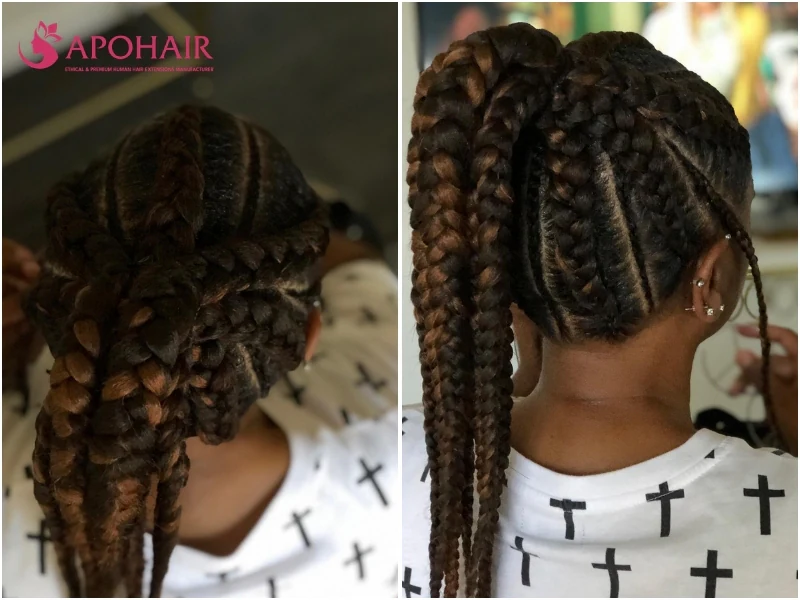
A Fulani braid ponytail runs the cornrows up and back toward the crown and gathers the ends into a single ponytail of thick braids. Jumbo feed-in rows in a two-tone brown or blonde blend make the ponytail look full from every side. Type 4 hair supports the upward rows, and extension hair gives shorter or finer hair enough length for the tail. The lifted style suits workouts, office days, and formal events.
The rows need about 2 inches of hair, while the ponytail length comes from braiding hair fed into each cornrow. Feed-in hair adds bulk gradually, so the rows grow thicker toward the crown. Ponytails pull hair up and back from the nape and temples, so the tail sits loose rather than cinched. Chunky rows install in about 2 to 3 hours and hold for several weeks. A common mistake is wrapping the tail with a tight band, which concentrates the pull at one point.
13. Fulani Braided Bun
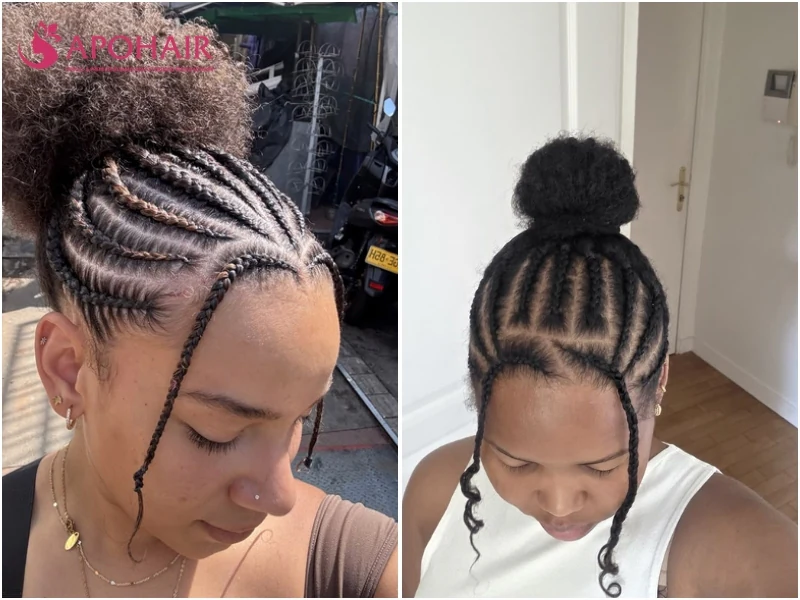
A Fulani braided bun runs the Fulani cornrows up from the hairline and finishes them in a bun or puff at the crown. Two thin braids often stay down at the front, and many versions use the wearer’s own coily hair for the bun. Type 4 hair makes a full, natural puff, and braiding hair can form the bun on shorter hair. The lifted shape suits workdays, workouts, and hot weather.
The rows need about 2 inches of hair, and longer or added hair forms a fuller bun. Natural hair works for the puff, while braiding hair or a bun piece adds size. Pulling the rows tightly upward to smooth the hairline strains the edges, so the rows stay firm without being tight. The rows last a couple of weeks. The mistake to avoid is securing the bun with a tight elastic in the same spot every day, which breaks hair at the band.
Fulani Hairstyles by Size, Length, and Accessories
Fulani hairstyles by size, length, and accessories change the weight and wear time of the set. Fulani braids with beads load the braids with beads; short Fulani braids stop at the chin or shoulders, and micro Fulani braids use very small braids that take the longest to install.
14. Fulani Braids With Beads
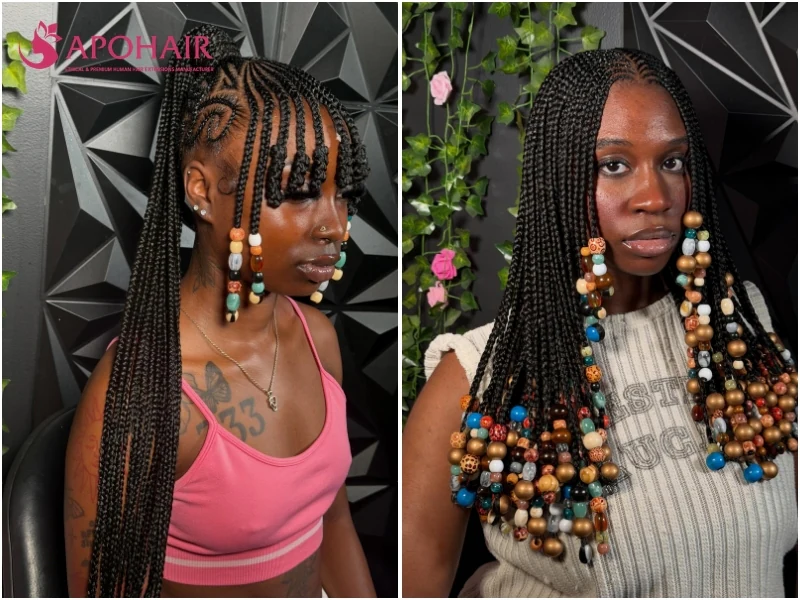
Fulani braids with beads thread wooden, acrylic, or clay beads onto the braid ends or along the front braids, turning the accessories into the focus. The beaded ends connect the look to its Fulani roots and to the broader run of 90s braid hairstyles that keep coming back around, where beads and cowrie shells symbolized beauty and wealth. Type 4 hair and extension braids both carry beads, and the look suits cultural events, festivals, and summer.
Beads need braids long and firm enough to hold them, with a few inches of braid below the last bead. Pre-stretched braiding hair keeps the braids even, and bead size works best matched to braid thickness. Beads add weight at the ends, which pulls on the roots over time, especially on the front braids near the hairline. The braids last 4 to 6 weeks. A common mistake is stacking heavy beads on thin front braids, which pulls the edges and can break the braid.
15. Short Fulani Braids (Fulani Bob)
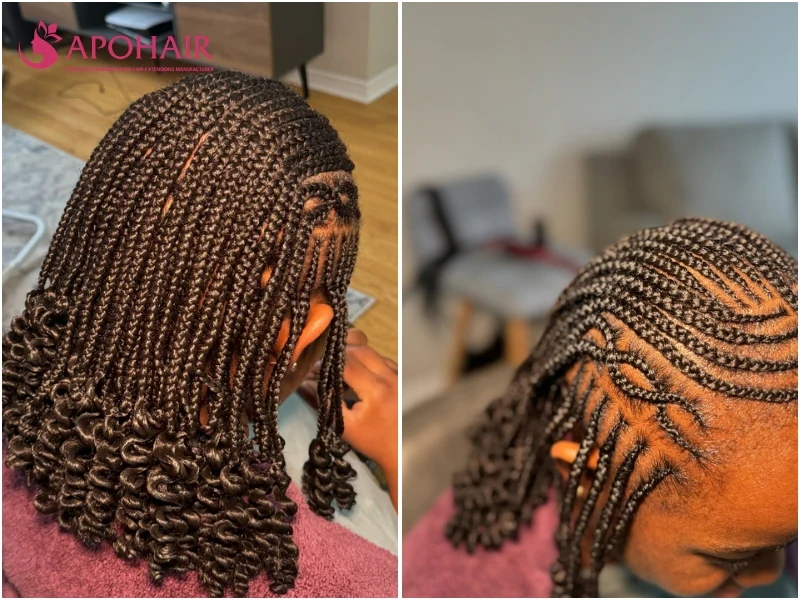
Short Fulani braids, also called a Fulani bob, keep the Fulani cornrow pattern but cut the hanging braids to chin or shoulder length. Many sets finish the ends in spiral curls for bounce. The shorter length feels lighter on the scalp and keeps the neck clear. Type 4 hair of almost any length can wear the bob with added hair, and relaxed or straight hair can wear it the same way. It suits hot climates, school, and busy weekdays.
The cornrows need about 2 inches of hair, and pre-stretched braiding hair keeps the short braids even. Spiral ends come from curly braiding hair or a hot-water set on synthetic hair. Shorter braids weigh less, which lowers the pull on the scalp compared with long sets. The bob holds 4 to 6 weeks. A common mistake is cutting the braids to length without sealing the ends, which lets them unravel.
16. Micro Fulani Braids
Micro Fulani braids use very small, thin braids behind the Fulani cornrows, often falling to the waist with curly strands woven through. The many fine braids move like loose hair and work in updos and ponytails. Type 4 hair with good density fills a micro set well, and the braids blend with wavy or curly textures. The detailed look suits weddings, long vacations, and anyone who wants the widest styling range.
Micro braids need about 2 inches of hair and a long appointment, since small braids take about 6 to 8 hours. Braiding hair adds length, and curly human hair pieces create a boho finish. Very small braids hold only a few strands each, so tight braiding can break fine hair at the root, especially along the edges. The set lasts 4 to 6 weeks, and take-down is slow. The mistake to avoid is keeping micro braids in past 8 weeks, which invites matting at the roots and breakage during removal.
What Makes a Hairstyle Fulani?
A hairstyle counts as Fulani when it combines cornrows and hanging braids in a set layout. A cornrow runs down the center of the head, side cornrows run toward the face, and loose braids fall at the temples. Beads, cuffs, or shells often finish the ends, and some versions wrap a braid around the hairline.
That layout separates Fulani braids from plain cornrows, which lie flat all the way back, and from box braids, which hang from square parts with no cornrows. Modern Fulani styles change the parting, the strand method, or the finish, but they keep the mix of flat rows and hanging braids. When the hanging braids become twists or curls, the style still reads as Fulani because the cornrow layout stays.
Where Do Fulani Hairstyles Come From?
Fulani hairstyles come from the Fulani people, a nomadic ethnic group living across West Africa, with communities in countries including Nigeria, Senegal, Mali, Ghana, and Cameroon. The style takes its name from them.
In Fulani culture, braiding traditionally expresses identity, and the beads, cowrie shells, and other ornaments woven into the hair symbolize beauty, wealth, and cultural pride. In Senegal, hairstyling more broadly has signaled origins, social status, and marital status. The style spread through the African diaspora and now appears in salons worldwide, which makes naming the Fulani people part of describing it accurately. Neighboring West African traditions part the hair on a similar logic with a different silhouette, including the inverted rows of didi hairstyles.
How to Choose the Right Fulani Hairstyle?
Four decisions determine the right Fulani hairstyle: the braid pattern, the strand method and hair used, how the braids are worn, and the size, length, and accessories. Hair texture and the occasion guide each one.
- The pattern sets the look. Traditional and geometric patterns show the most scalp design, while flip-over and side-part patterns add asymmetry. A clean center part suits formal and cultural events.
- The method and hair set weight and tension. Natural hair keeps the style light, knotless braids reduce tension at the roots, twists soften the finish, and weave or curly hair adds length and volume.
- The styling matches daily plans. Hanging braids suit everyday wear, a half-up look adds curls, and a ponytail or bun keeps hair off the neck for work or workouts.
- Size, length, and accessories finish the choice. Micro braids offer the widest styling range but take the longest; a Fulani bob is light and quick, and beads add weight as well as color.
What Hair Do You Need for Fulani Braids?
Fulani braids need natural hair of about 2 inches or more for the cornrows, plus pre-stretched synthetic braiding hair for most hair braiding styles with extensions. A full set usually takes 4 to 6 packs of pre-stretched braiding hair, depending on braid size and length.
Kanekalon and similar synthetic braiding hair suit the braids because they are light and hold a braid firmly. Marley or another textured twisting hair suits Fulani twists. Curly styles need separate curly hair for the loose pieces, and human hair curls keep their pattern through washing and reuse better than synthetic curls. Styles built only on natural hair need nothing added, though the braids end where the natural hair ends.
How Long Do Fulani Braids Last?
Fulani braids last about 4 to 6 weeks with good care, and the American Academy of Dermatology advises wearing braids no longer than 6 to 8 weeks. Braid size, hair type, and maintenance shift the timeline within that range.
Knotless braids keep flat roots as they grow out, and curly or boho pieces often need refreshing before the braids themselves, since loose curls tangle. New growth, frizz along the cornrows, and scalp itching signal that the set is ready to come out. Leaving braids in past 8 weeks raises the risk of matting at the roots and breakage during removal.
How to Maintain Fulani Braids?
Maintaining Fulani braids comes down to a comfortable scalp, protection at night, and gentle cleansing. That routine keeps the cornrows neat and the edges healthy.
In the first two weeks, a light oil or braid spray keeps the scalp comfortable, and a silk or satin scarf at night stops frizz. From the third week, a gentle scalp cleanse and a fresh layer of oil keep buildup down. Curly pieces take a leave-in spray and finger detangling. Braids that feel tight or raise bumps along the hairline need loosening or removal rather than more styling. A break between installs lets the edges recover.
Frequently Asked Questions
Are Fulani Braids the Same as Tribal Braids?
Fulani braids and tribal braids usually describe the same style: cornrows combined with hanging braids, often finished with beads. The name Fulani braids points to the Fulani people of West Africa, where the style comes from, while tribal braids is a broader label some salons use. Using the Fulani name keeps the style’s origin clear.
Are Fulani Braids a Protective Hairstyle?
Fulani braids are a protective hairstyle when they go in with gentle tension, because the ends stay tucked into braids and daily styling stops. The American Academy of Dermatology lists cornrows and tightly braided hair among the causes of traction alopecia. Loose roots at the hairline and breaks between installs keep the style protective.
Can Fulani Braids Be Knotless?
Fulani braids can be knotless. The hanging braids start with natural hair and take in extension hair gradually instead of starting with a knot, which puts less tension on the scalp. The cornrows on top stay the same, so knotless Fulani braids keep the classic pattern with flatter, more natural-looking roots.
Can You Do Fulani Braids With Natural Hair?
Fulani braids work with natural hair alone when the hair is long enough to braid past the cornrows, usually shoulder length or longer for full hanging braids. Stretching the hair first gives more even braids. The braids end where the natural hair ends, feel lighter than extension sets, and frizz sooner.
Can You Get Fulani Braids Without Extensions?
Fulani braids without extensions use only natural hair for both the cornrows and the hanging braids. The cornrows need about 2 inches of hair, while longer hair gives fuller hanging braids. The result is lighter and quicker to take down, though shorter and thinner than a set built with braiding hair.
Can You Wash Fulani Braids?
Fulani braids can be washed every one to two weeks with a diluted shampoo focused on the scalp. Squeezing water through the braids rather than rubbing prevents frizz, and drying them completely stops mildew inside the braids. Curly pieces need conditioner and gentle finger detangling after each wash.
How Many Packs of Hair Do You Need for Fulani Braids?
Fulani braids usually need 4 to 6 packs of pre-stretched braiding hair, depending on braid size, length, and hair density. Micro and waist-length sets sit at the top of that range, while a Fulani bob or chunky braids need fewer packs. Curly and boho styles also need separate curly hair for the loose pieces.
Can Fulani Braids Damage Your Hair?
Fulani braids can damage hair when the cornrows or braid roots are too tight, the braids are too heavy, or the set stays in too long. The American Academy of Dermatology links tight braids and cornrows to traction alopecia and advises wearing braids no longer than 6 to 8 weeks. Loose roots at the hairline and breaks between installs lower the risk.
Conclusion
Fulani hairstyles hold onto one layout, center and side cornrows with hanging braids, and change almost everything else. The pattern sets the look, the strand method and hair decide weight and tension, and curls, updos, size, and beads adjust the finish to the occasion. Gentle roots at the hairline and a 6 to 8 weeks limit keep the style protective.
If you run a salon or supply hair to one, boho, curly, and half-up Fulani sets often call for curly hair that holds its pattern through several washes. Our team can send samples and factory-direct pricing on curly human hair bundles and bulk hair, the kind salons that buy hair Vietnam factories process in house can match to a client before it ever reaches the braider. Because we manufacture 100% Vietnamese Human Hair in our own facility, you can match density and texture to each client rather than relying on whatever a middleman had in stock.
The cornrow base takes synthetic braiding hair, but the hanging braids, the goddess curls, and every added inch of length are where human hair earns its place. Three of our lines cover that side of the service: loose hair sold by weight for feeding down each cornrow and plaiting into the free braids, with no weft sitting under the parting, available when you buy bulk human hair wholesale; hair sold by weight that holds one curl pattern and color across a whole head, so leave-out pieces on goddess and boho sets read as the client’s own hair, browsed as wholesale bundles of human hair; and tape-in, clip-in, keratin tip, weft, and ponytail pieces in the same Vietnamese remy hair for adding length around a braided front instead of installing a whole set, compared in our bulk remy hair extensions range.
