







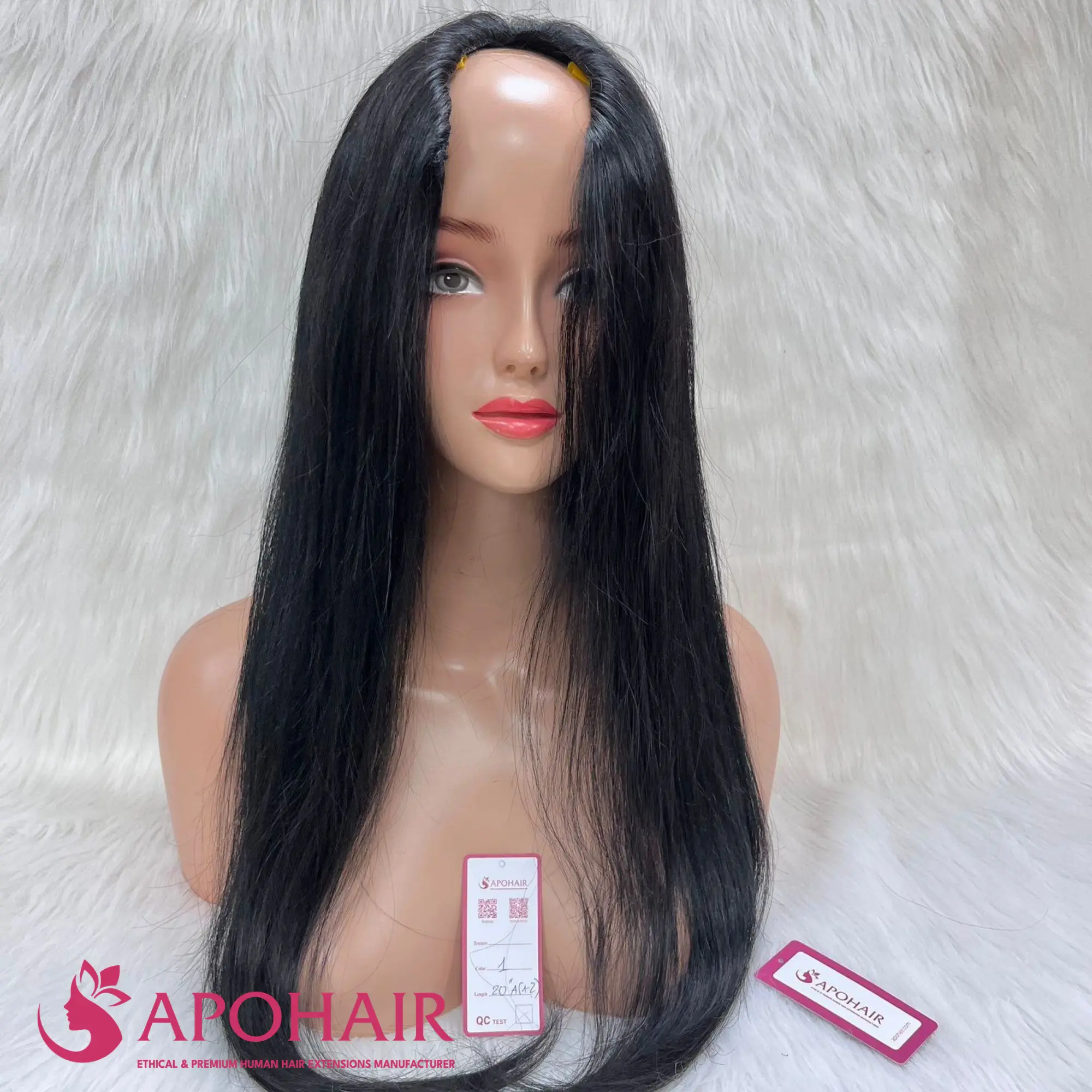

How to Choose the Right Extension Color: Ultimate Hair Color Chart
A hair color chart is a standardized system using numeric and tonal codes to ensure precise shade matching across different brands. Professionals and buyers primarily use two frameworks: the Universal Numeric System (#1–#613), the industry standard for purchasing pre-colored wigs and extensions, and the International Color Chart (ICC), used by stylists to formulate professional dyes like L’Oreal or Wella. To find your perfect match, identify your natural depth and undertone, cross-reference them with the chart’s level and hue codes, and always verify the blend using physical swatches in natural daylight.
This guide breaks down both color systems side by side, walks you through APOHAIR’s color chart, and covers maintenance tips that protect your color investment month after month.
What Is a Hair Color Chart?
A hair color chart is a standardized reference system that maps hair shades by number, tone code, or both. It contains shade codes (numbers or letters), depth levels from darkest to lightest, tone direction (warm, cool, or neutral), and visual swatches that show each shade under standardized lighting conditions. These charts are a daily go-to for stylists mixing color and clients trying to find that perfect extension match.
Keep in mind that color systems vary: extensions usually follow the Universal Numeric System (#1 to #613), while salon dyes stick to the ICC. Since hair quality and dyeing processes differ by factory, the same shade number can look different across brands. Your best bet for a perfect match? Always rely on a physical color ring before buying in bulk.

A hair color chart is a standardized reference system that maps hair shades by number, tone code, or both
Two Types of Hair Color Chart
There are two main color systems to know: the Universal Numeric System (#1–#613) and the International Color Chart (ICC). The former is the industry standard for factory-finished pieces like extensions, bundles, and wigs. In contrast, the ICC is what stylists use in-salon to mix and apply professional color directly to a client’s natural hair.
A quick heads-up: ICC codes like 6.13 or 5N don’t translate to hair extension orders. The ICC is for mixing salon dyes, not for identifying pre-colored hair. Using it will almost certainly lead to a color mismatch. If you’re a first-time buyer, stick to the Universal Numeric System (#1, #1B, #4, etc.)—these are the standard codes suppliers use for their physical stock.
Professional Salon Hair Color Chart (International Color Chart – ICC)
The International Color Chart (ICC) is the industry standard for pro brands like L’Oreal, Wella, and Redken. It uses a dual-coding system: a base level (1–10) for depth and a suffix (.1, .3, N) for tonality. For example: 1N for black; or 5R for rich copper brown.
In this hierarchy, hair depth is measured on a scale where:
- Level 1 (Jet Black) sits at the bottom.
- Level 5 is light brown.
- Level 7 is medium blonde.
- Level 10 (Lightest Blonde) is the peak.
Consequently, moving up the scale is a gradual process. A transition from dark brown to light blonde necessitates lifting 4 to 6 levels, a feat usually accomplished across multiple stages with high-volume developers to maintain hair health.
Beyond the base level, the ICC uses tone suffixes to dictate a shade’s directional reflect, like:
- .1 (Ash),
- .3 (Gold),
- .9 (Cendre)
Mastering these codes is how you get the perfect tone. It’s all about using the color wheel to balance out any brassy colors after bleaching. If you see yellow hair at Level 9 or 10, use violet. For orange tones at Level 6 or 7, go with blue (.1). And if red tones are showing through at Level 4 or 5, green is your best bet.

Universal Numeric System Hair Color Chart
The Universal Numeric System is the globally standardized color chart used exclusively for pre-colored hair extension products, including bundles, wigs, closures, tape-ins, and keratin extensions. Fixed shade codes (#1, #1B, #4, #27, #613) identify factory-dyed shades that buyers match directly to their natural hair without additional salon processing.
The system groups shades into four level ranges:
- #1 and #1B (Level 1 to 2, black range)
- #2, #4, and #6 (Level 2 to 5, dark brown range)
- #8, #18, #22, and #27 (Level 5 to 8, medium brown and blonde range)
For that platinum or bright blonde look, you’re looking at #60 and #613 (the Level 9 to 10+ range). On the darker end, #1 is a sharp jet black with cool blue undertones. If you want something more natural, #1B is an off-black—it has that warm, brownish softness that looks just like real, unprocessed hair. Then there’s #2, which is the darkest brown (think espresso); it’s just one visible step lighter than #1B and has a warm, deep brown feel to it.
Tone indicators after the base number tell you the color’s direction: A (Ash) for cool tones, G (Gold) for warmth, and R (Red) for copper vibes. You’ll also see P (Piano) for highlights and /613 for platinum. For instance, #27G is a warm honey blonde, while #18P613 gives you a striped, highlighted look.
If you’re looking for a factory-colored blend, #1B/4/27 is a three-tone balayage, starting with off-black roots, moving to chocolate brown, and finishing with honey blonde tips. For a smooth gradient, go with an ombre like #27/613, which fades from honey to platinum.

The Universal Numeric System is the globally standardized color chart used exclusively for pre-colored hair extension products
APOHAIR’s Color Chart
APOHAIR produces all extensions and wigs from 100% Vietnamese human hair, and the brand’s color chart reflects the full Universal Numeric System range. Each shade is steam-treated and dyed at the hair extensions factory using a controlled process that preserves cuticle alignment.
Below is Apohair’s color chart with over 40 different color codes for hair extensions and wigs, from basic colors to colors created using balayage, highlights, and piano techniques.
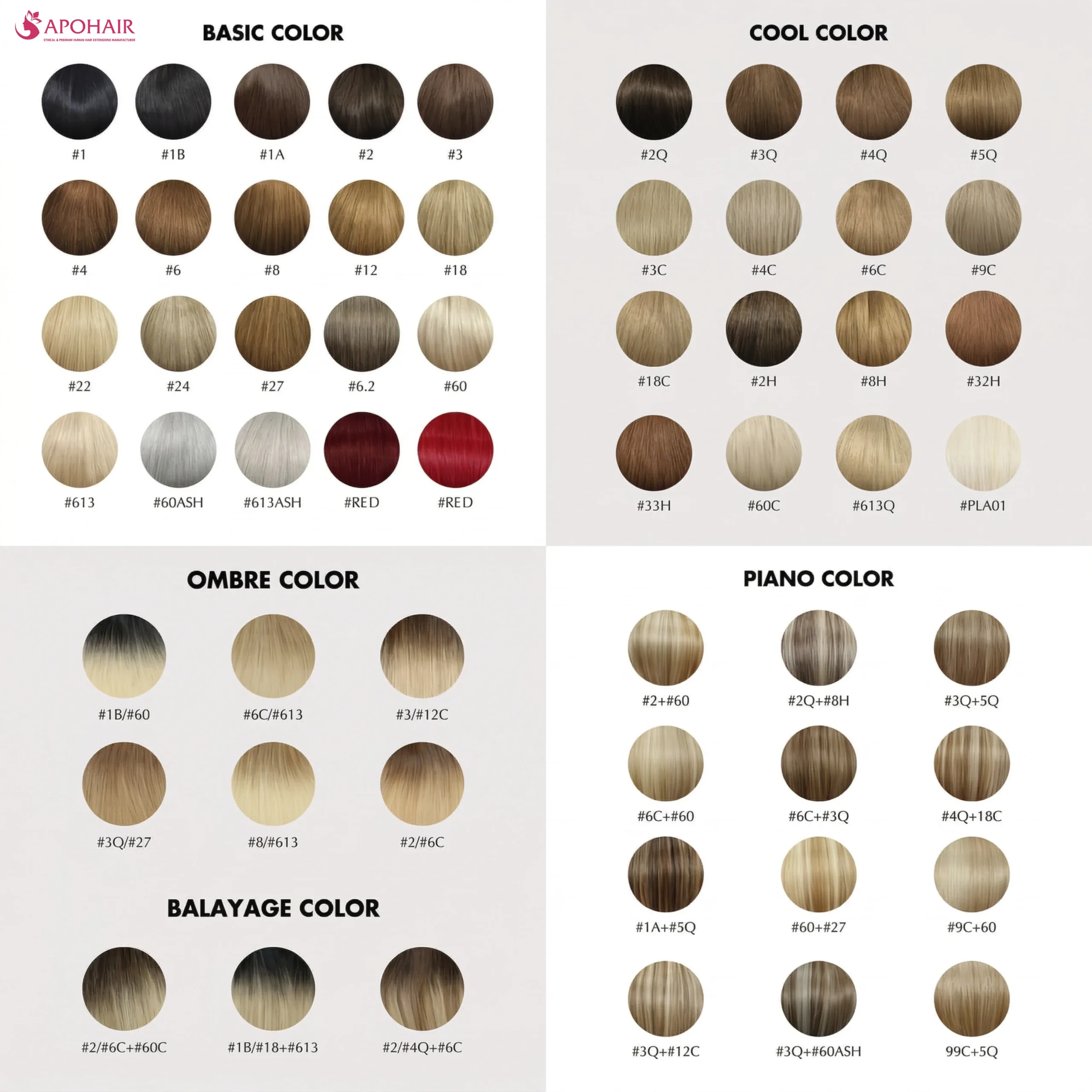
You can request a physical color ring from APOHAIR’s wholesale team to compare shades against your natural hair under daylight before placing a bulk order. Here is our color ring for your information:

How to Choose the Right Hair Color On The Color Chart?
Nailing the perfect hair extension match comes down to five simple steps: Find your natural depth, figure out your undertone, and then match both to the chart’s level and tone codes.
Remember that, always double-check with a physical swatch and see how it blends in natural daylight. Follow these steps to make sure your extensions look seamless, not obvious:
- Step 1: Find Your Natural Depth
Check your hair near a window in natural light, as indoor bulbs can make your shade look warmer than it really is. Figure out where you sit on the 1–12 scale: Dark (1–4), Medium (5–7), or Light (8–12).

- Step 2: Check Your Undertone
Look for the secondary tint in your hair. Are you Warm (gold/red), Cool (ash/gray), or Neutral? Even if two people have the same depth, the wrong undertone will make extensions look obvious and clashing.

- Step 3: Match Your Code to the Chart
Pick the code that hits both your depth and tone (like 6A for a Level 6 Ash). Matching both ensures your extensions blend seamlessly right at the root line.

- Step 4: Verify with a Physical Swatch
Always use a real color ring or sample strand. Screen colors can be off by up to 15%, so a physical swatch is the only way to get an 100% accurate match against your own hair.

- Step 5: Do a Final Daylight Check
Clip in a piece and step outside. Check for a smooth, continuous flow from your hair to the extensions. If it looks too heavy or dark, try going one level lighter on the chart for a better blend.

How to Maintain Hair Color Extensions and Wigs Longer?
Colored hair extensions and wigs stay vibrant much longer when you treat them with a little extra care. To prevent fading and keep that “just-colored” shine, follow these 5 pro-proven tips:
- Wash Less to Save Pigment: Every wash strips a bit of color. Aim for a maximum of 2 washes per week using a sulfate-free shampoo. Over-washing can cause your color to fade up to 40% faster in the very first month.
- Tone Smartly, Not Daily: For ash or blonde shades (#613, #6A, #8A), use a purple or blue toning shampoo once every 2–3 washes. This neutralizes brassiness without drying out the hair or leaving an unwanted violet tint.
- Turn Down the Heat: Excessive heat is the number one enemy of hair color. Keep your styling tools below 180°C (356°F) and always prep with a heat-protectant serum.
- Give It a Post-Color Break: After any toning or re-dyeing service, skip the heat tools for 7 to 10 days. This gives the hair cuticle time to fully seal and lock the new pigment in place.
- Protect While You Sleep: Friction is a silent color killer. Before bed, braid your hair or tie it back loosely to reduce rubbing against your pillow. When the cuticle stays smooth, the color stays trapped inside the hair shaft longer.

Those tips keep a shade looking fresh once a client owns it, and the problems below come up earlier, when a salon or reseller has to decide which product type fits which code on the chart.
What if a client worries that a shade will look too heavy or too dark on her?
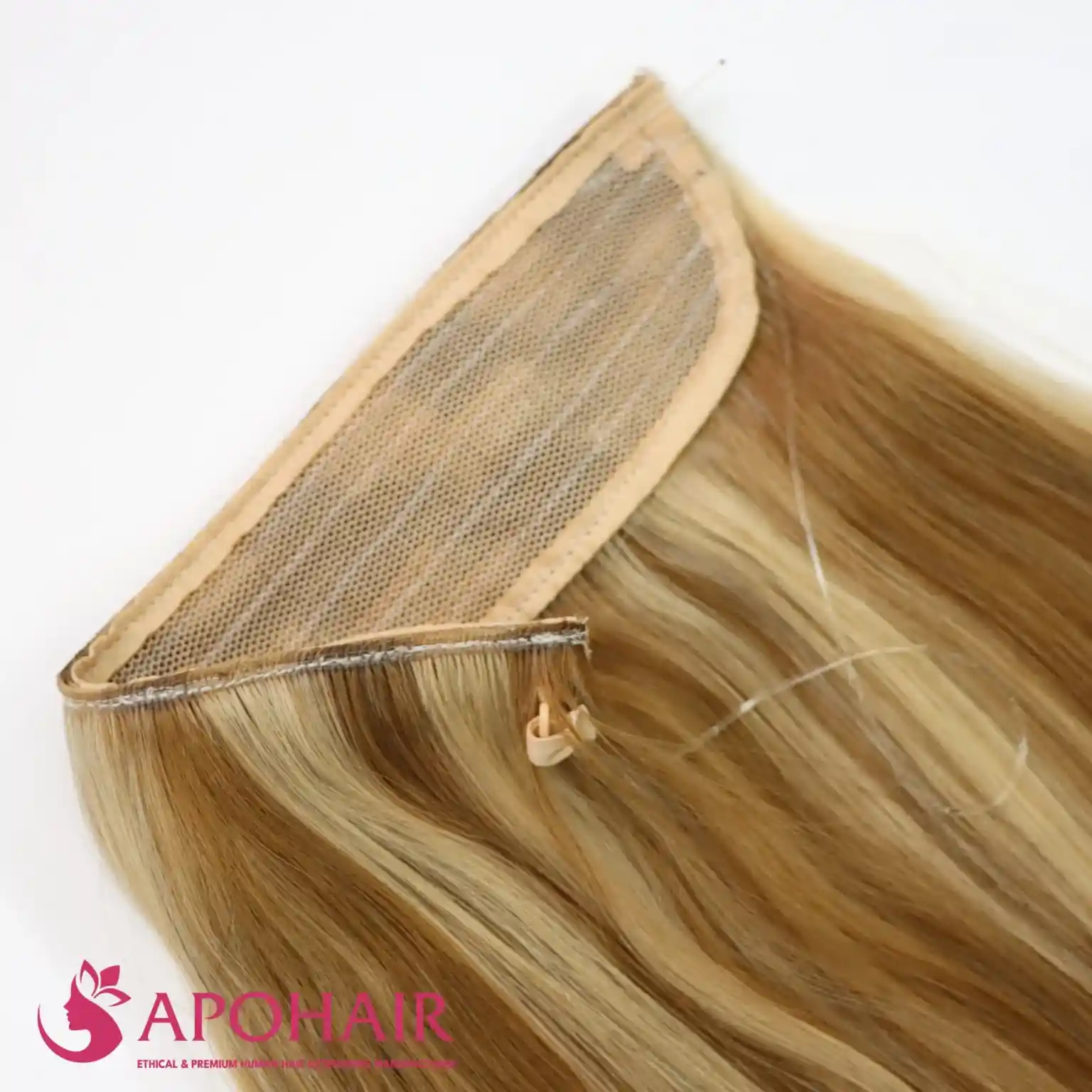
If a client worries about that, she should hold a piece up in natural daylight, judge how it flows, and go one level lighter on the chart if it still looks heavy. Remy clip in hair extensions wholesale clip on and off with stainless steel clips, so a client can test the lighter level at a window in daylight, and a salon can keep both levels on the shelf for the next customer.
Why does a client with the right depth still end up with extensions that look obvious?
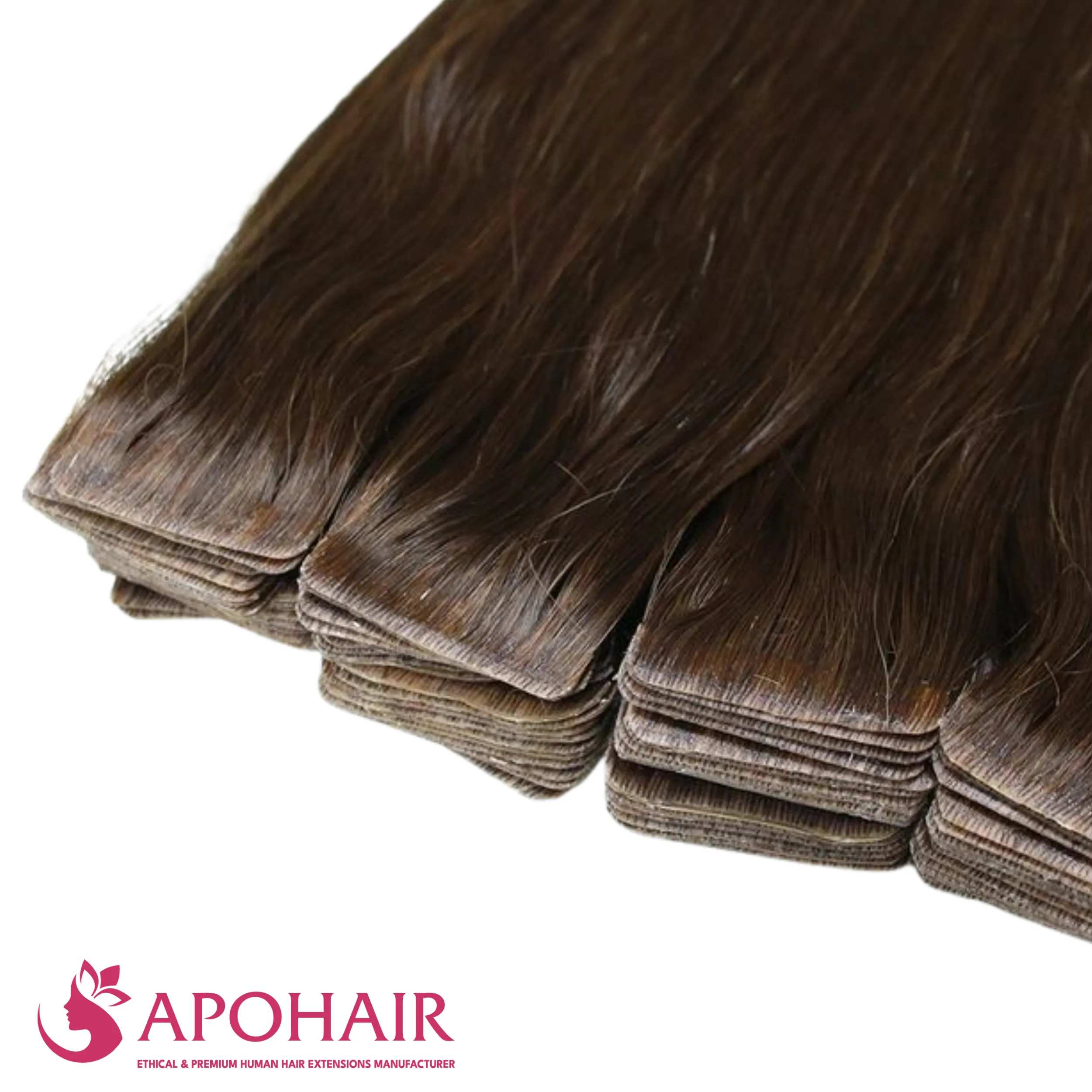
Because the undertone is wrong: two people can share the same depth, but a warm (gold or red) tone against a cool (ash or gray) one still clashes, so the code has to hit both, like 6A for a Level 6 Ash. Tape wefts come in ultra-thin and slim formats that lie flat along the root line, so a salon owner chasing a seamless result can go to a natural color tape hair extension factory and order the exact depth and undertone code together.
How can a client slow down fading in the first month?
A client can slow it by washing no more than twice a week with a sulfate-free shampoo, since over-washing can make color fade up to 40% faster in the first month. For long-term clients who keep asking about fade, wholesale keratin hair extensions give keratin-tipped strands that are bonded one at a time, so the shade lives in the extension and reorders can be placed against one code.
What if a first-time buyer orders with ICC codes like 6.13 or 5N?
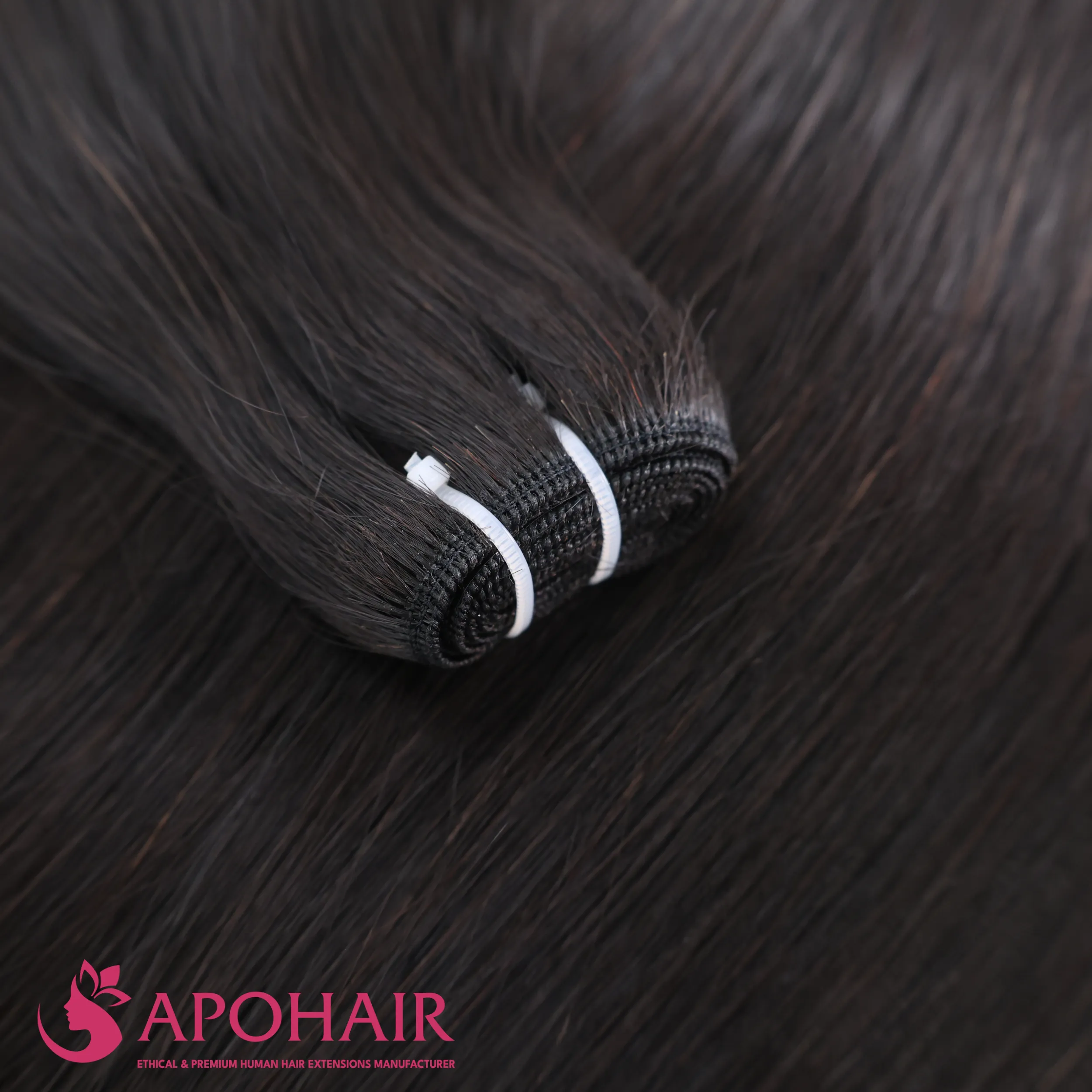
If a buyer orders with ICC codes, the shade will almost certainly mismatch, because those codes are for mixing salon dyes and do not identify pre-colored hair; the codes to use are the Universal Numeric ones such as #1, #1B or #4. A distributor who wants several of those codes at once might do best to buy human hair extensions weft wholesale, since a single order mixes color, texture and length and the wefts come in 100g packs.
How does a client get a three-tone #1B/4/27 balayage look without coloring her own hair?
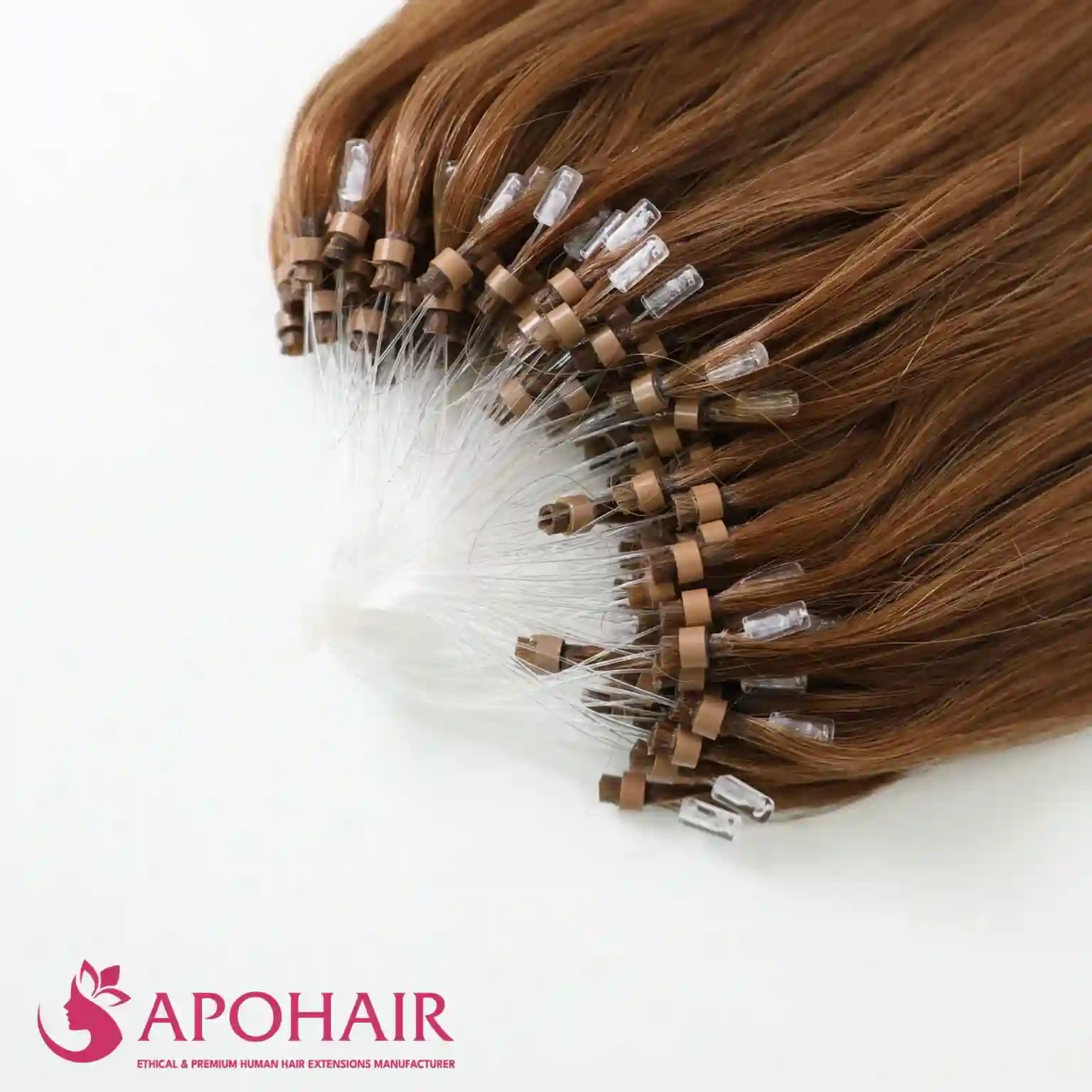
A client gets it by wearing the factory-colored blend, which already runs from off-black roots through chocolate brown to honey blonde tips, so none of the three tones has to be created on her own hair. For that client, i tip human hair extensions wholesale go on through cold fusion with silicone-lined rings, which lets a stylist place only the #27G strands where the hint of warmth belongs and move them later if she wants.
Which ombre gives a client a smooth fade from honey to platinum?
The ombre that does it is #27/613, which fades from honey to platinum as one gradient instead of a hard line between two shades. U tip hair extensions wholesale are heat-sealed keratin bonds that stay in for 3 to 6 months per installation, long enough for a salon to blend honey into platinum across the client’s own hair.
FAQs About Hair Color Chart
Which Hair Color Makes You Look Younger?
Shades within Levels 6 to 8 with warm undertones, such as honey blonde (#18), golden brown (#8), and strawberry blonde (#27), reflect light toward the face and soften the contrast between hair and skin. Darker roots paired with lighter mid-lengths through balayage create dimension that reduces flat, single-tone heaviness.
Is There a Way to See What Hair Color Looks Best on You?
Yes. The three most reliable methods are a physical color ring held against your hair in natural daylight, a sample strand clipped into your hair before purchase, and a virtual try-on filter as a shortlist tool only. APOHAIR’s color ring contains removable strands across the full shade range for this exact purpose.
What Is the Hardest Hair Color to Keep Up?
Platinum blonde (#613) is the most maintenance-intensive shade because it requires bleaching to Level 10 to 12 and regular toning every 4 to 6 weeks to prevent brassiness. Bleached hair has an open cuticle structure that releases pigment faster under UV, heat, and alkaline shampoos. Consistent purple shampoo and protein treatments are required.
What Is the Easiest Hair Color to Maintain?
Natural brown shades at Levels 4 to 6 (#4, #6, #4N, #6N) are the easiest to maintain because they sit close to the natural human hair pigment range. They require no bleaching, minimal toning, and tolerate sulfate-free wash routines without visible fade. A #4N extension washed twice per week retains its depth for 3 to 4 months.
Can You Dye Hair Extensions to a Different Color?
Yes. 100% Raw Human Hair extensions with an intact cuticle layer accept permanent dye the same way natural hair does. While dyeing is possible, it is highly recommended to have this done at a professional salon. A stylist can ensure the chemical process is managed correctly to achieve your desired shade while preventing significant damage or breakage to the hair extensions.
Conclusion
A hair color chart is your map for matching extensions and salon formulas to your natural shade with precision. The Universal Numeric System (#1 to #613) covers every pre-colored extension product. The International Color Chart (ICC) guides professional dye formulation in the salon. Match your depth, read your undertone, and test with a physical swatch before committing. APOHAIR offers 100% Vietnamese human hair across the full shade range, with a physical color ring available for wholesale clients. Protect your color with sulfate-free care, limited heat, and toning shampoo for ash and blonde shades. The right shade starts with the right chart.
APOHAIR ETHICAL & PREMIUM HUMAN HAIR EXTENSIONS MANUFACTURER
- Address: Building 3A, Lane 82 Duy Tan, Cau Giay, Hanoi, Vietnam
- Factory: Minh Luong, Yen Luong Ward, Ninh Binh, Vietnam
- WhatsApp: +84 862 132 366
- Email: [email protected]
- Website: https://apohair.com
