








The Best Hair Extensions for Thin or Fine Hair
The best hair extensions for thin or fine hair are the lightest, lowest-tension types, including: Halo extensions, tape-ins, hand-tied or invisible wefts, and seamless clip-ins. Each one adds volume without pulling hard on fragile strands or showing through sparse hair. For thin hair, the secret is lightweight hair placed strategically, matched to how much your own hair can actually hold, not the most volume you can pile on.
So how do you pick from them? Below, we rank the best types extensions for thin hair, flag the ones to avoid, walk through how to choose for your hair, show how to keep the attachment hidden, and answer whether extensions are safe for fragile strands. We make our hair factory-direct as 100% Vietnamese Human Hair, so we look at this from the material side: a lighter, cuticle-aligned weft drags far less on fine hair than a heavy one ever will. To help you navigate these options, the table below summarizes the best extensions for thin hair based on weight, concealment, and suitability.
| Type | Thin-hair fit | Weight & tension | How it hides | Best for |
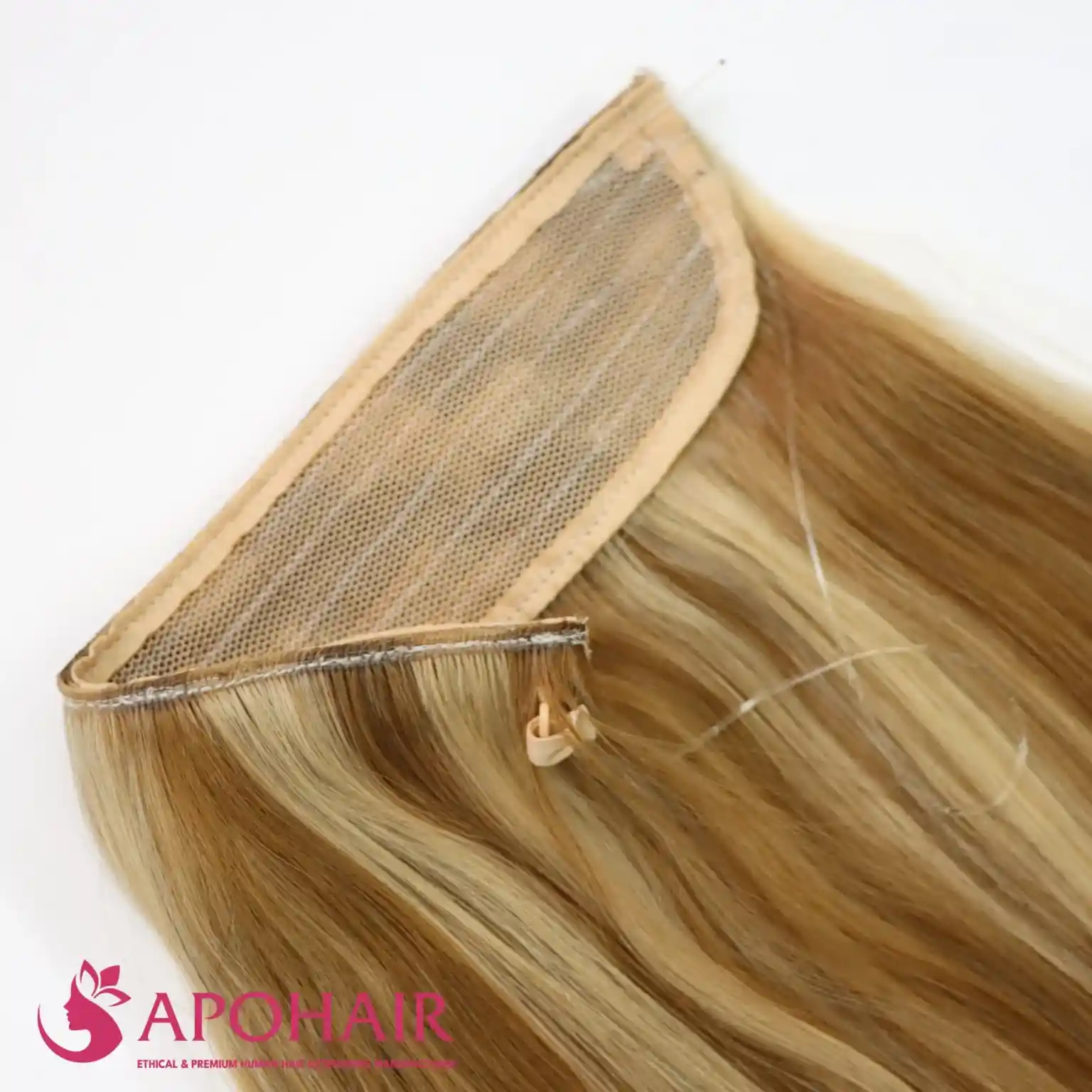
| Halo | Excellent | None on your hair (sits on a wire) | Disappears under the top layer | Low-tension daily volume; beginners |
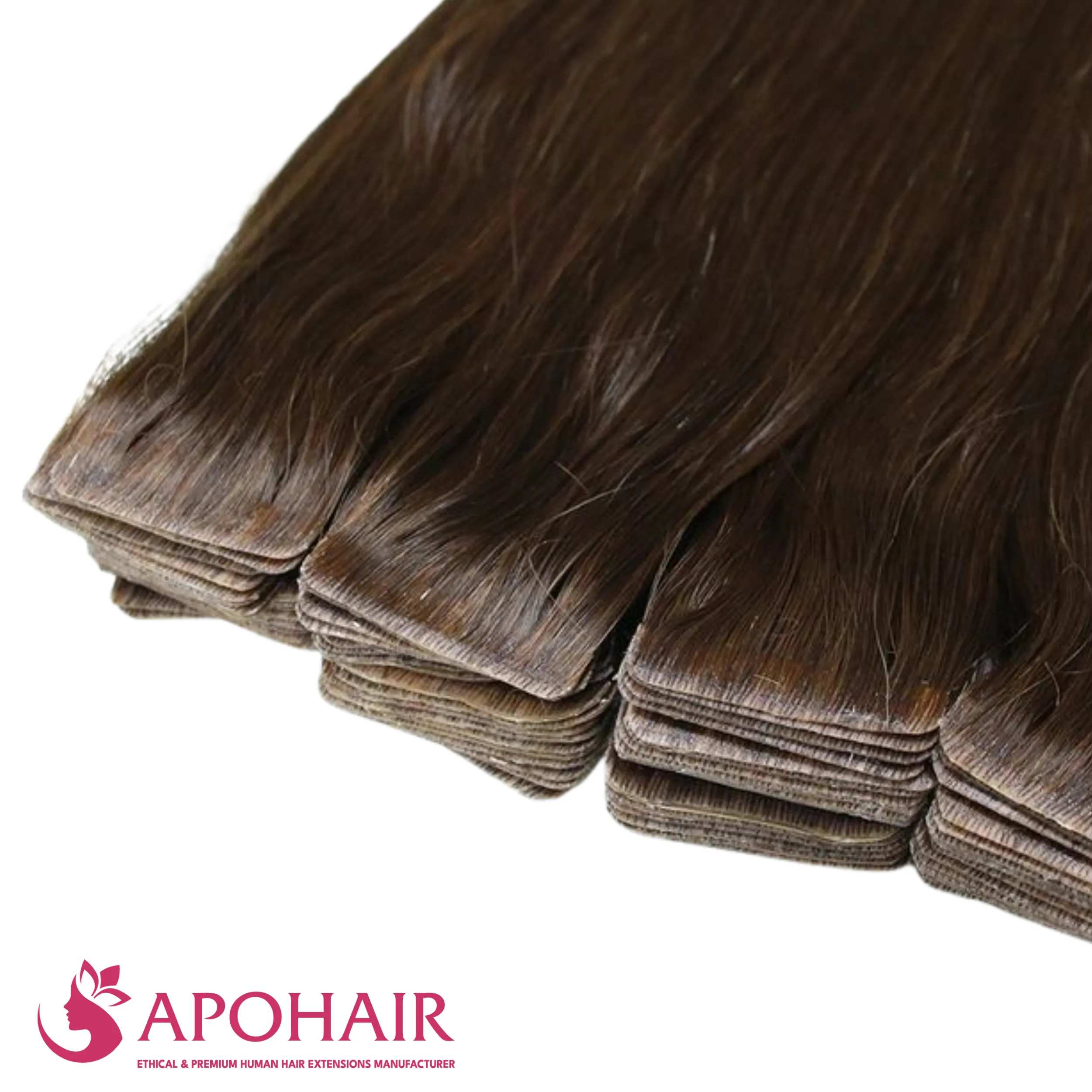
| Tape-in | Very good | Light (lighter with single-sided tape) | Flat wefts under the top layer | A natural, semi-permanent look |
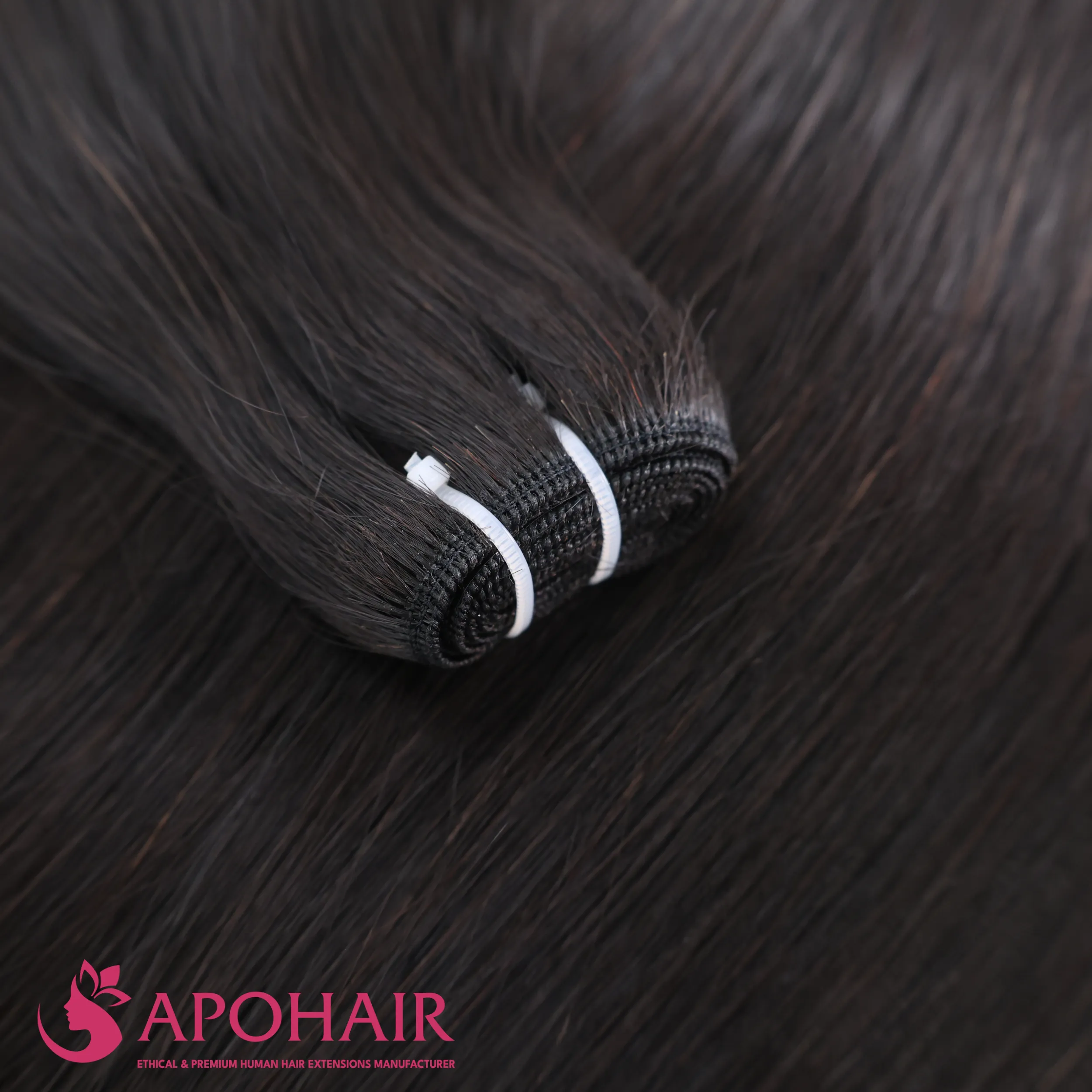
| Hand-tied / invisible weft | Very good | Light, spread along a row | Thinnest weft, lies flat | Long-term wear, fuller mid-lengths |
| Seamless clip-ins | Good | Light (a few small pieces) | Flat invisible base, small clips | DIY targeted volume; events |
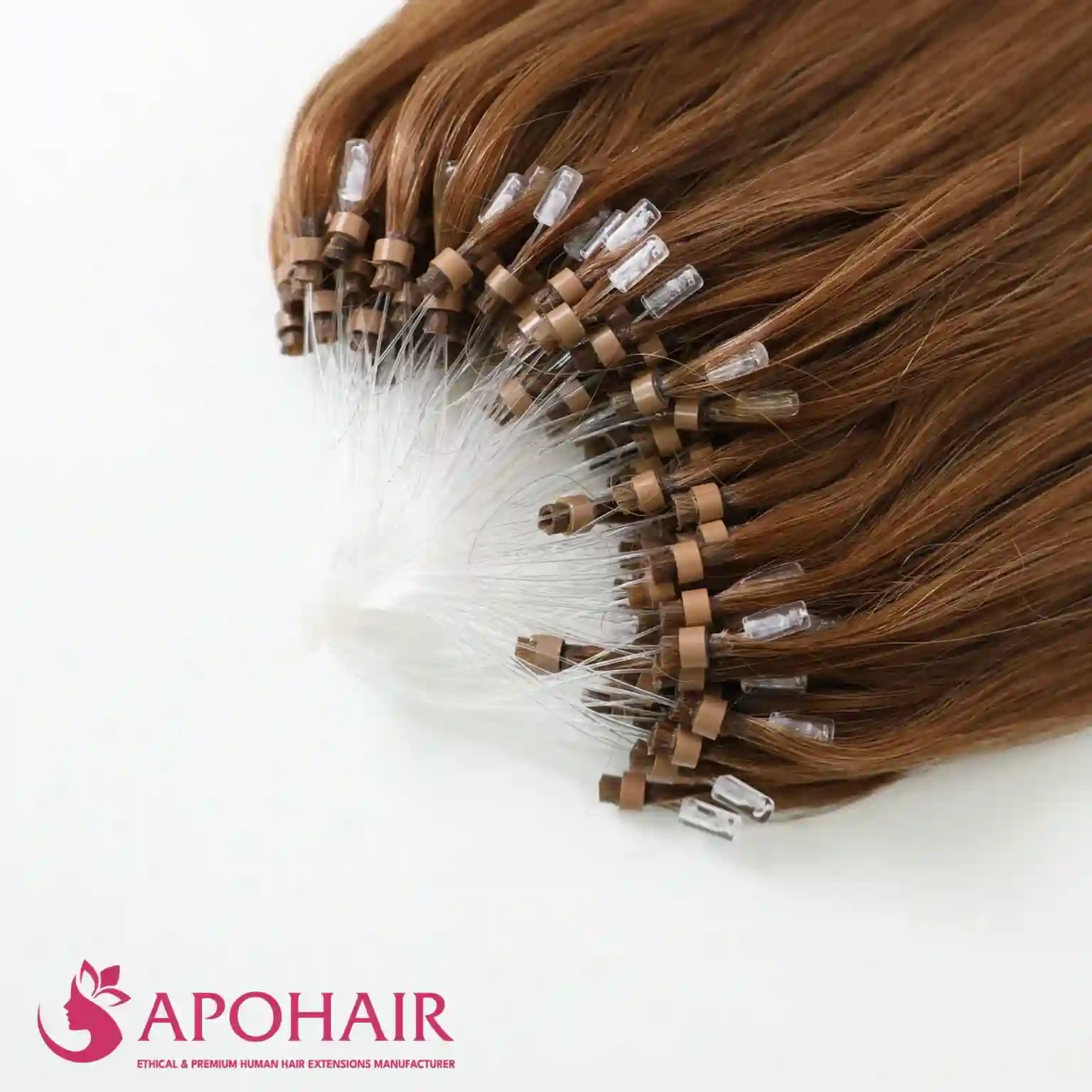
| Micro-bead / nano-tip | Conditional | Localized tension at each bead | Tiny beads (needs density to hide) | Medium-density fine hair + a skilled stylist |

Are halo extensions good for thin hair?
Halo extensions are the gentlest option for thin hair because the hair sits on a thin wire that rests on your head instead of clipping or bonding to your strands. Nothing pulls directly on your hair, so there is no bond tension that stresses fragile roots. That is why halos top almost every list of low-tension volume for fine hair.
The weight rests on your head, not on your hair. One flat weft tucks under the top layer of your own hair, and it goes on and off in seconds with zero commitment. That makes a halo the friendliest place to start if you have never worn extensions and worry about damage. Keep one caveat in mind, though. A halo adds all-around fullness, not coverage for a bare scalp, and you do need a little hair on top to hide the wire.

Do tape-in extensions work on thin hair?
Tape-in extensions suit thin hair when they go in lightly. Thin wefts taped flat against the head spread their weight across a wider area and lie invisibly under the top layer, so the look stays smooth rather than bulky.
A few thin-hair specifics make the difference. Ask whether single-sided tape fits your hair, since it uses less adhesive and can reduce the load on each fragile strand. Choose lightweight wefts, and have a professional handle both the install and the removal, because fine hair has little margin for error and the wrong solvent or a hard tug can take your own strands with the tape. Tape-ins can stress your hair if the wefts are too heavy or sit on greasy roots, so skip them on very fragile or actively shedding hair that cannot hide the weft or hold the tape.

Are hand-tied and invisible wefts good for thin hair?
Hand-tied and invisible injection wefts are a top choice for fine hair because they are among the thinnest wefts available and lie completely flat. They add fullness through the mid-lengths without a bulky seam, which is exactly what sparse hair needs.
The mechanics are simple. A thin, flat weft sits low along a beaded or sewn row, with no glue and no heat, so the tension spreads instead of pulling at one point. A quality flat weft can be noticeably thinner and flatter than a traditional bulkier weft, and a lighter, cuticle-aligned hair base drags far less on fine strands than a thick one. The trade-offs are clear: you want a pro install, rows spaced out and never stacked on top of each other, and enough density to anchor the row in the first place.

Weft choice decides how flat the track lies against fine hair. Hand tied vs machine weft compares the two, along with genius weft, on weight, durability, and price.
What about seamless clip-ins?
Seamless clip-in fill-ins are the easiest low-commitment option. They are a few thin wefts with small, flat clips and an invisible base that you put in yourself to fill the hairline, the part, and face-framing pieces, with no salon visit at all.
Why they work on thin hair comes down to weight and placement. Many fill-in packs run roughly 25 to 50 grams, the base mimics your root so it disappears, and the clips are small rather than bulky. You take them out at night, so there is no constant wear on your roots, and you place a few pieces only where you need volume instead of a full head. The catch is grip. Clips need a small secured section to hold and can slip on very fine roots, and fewer pieces almost always look more natural than a packed set.

Are micro-bead and nano-tip extensions good for thin hair?
Micro-bead and nano-tip extensions can suit thin hair because they use tiny beads instead of glue or heat. They are the most conditional pick on this list, though, since the bead tension can stress fine strands. They only work with enough density and a skilled stylist behind them.
The debate runs both ways, and the honest answer sits in the middle. Some stylists call beaded methods the gentlest for fine hair, since they skip glue and heat and use the smallest attachments going. Others warn that bead tension and visibility get risky on sparse hair, where a tiny bead has nowhere to hide and pulls at a single point of the root. It really does depend on three things: your density, the stylist’s hand, and the bead size. Stick to the finest beads, skip them on very low-density hair, and remember that they show if your hair is too thin to cover them.
If you have medium-density fine hair and a stylist who beads gently, they can sit comfortably for months. If your hair is genuinely sparse, one of the lighter picks above will serve you better.

On a shorter cut, the attachment also needs enough hair around it to hide. Hair extensions for short hair covers which types work, how short is too short, and what length to add.
3 Extension types to avoid on thin hair
For thin hair, keratin or fusion bonds, sew-ins or weaves, and heavy clip-in sets are usually the riskiest choices. They are not bad methods, but they can add more heat, weight, or tension than fine hair can comfortably handle.
- Keratin or fusion (K-tip): Heat goes in to apply the bonds, those bonds add localized weight at the root, and removal can be harsh on fine strands.
- Sew-in or weave: These methods require a strong braided base that your fine hair may not support, and the added weight can break the braid down.
- Heavy or overloaded clip-ins: A thick full set, or too much hair crammed onto one clip, drags on the root, slips on fine roots, and shows through sparse hair.
Material changes how a set feels on fine strands too. Human vs synthetic hair extensions compares them on styling, durability, cost, and upkeep.
How do you choose the right type for your thin hair?
To choose the right type, match the extension to two things: how much weight your hair can actually hold, and where you need the volume. Get those two right and the type almost picks itself. The types of hair extensions guide lays out every attachment method side by side if you want the full list first.
- Fine versus low density: These are not the same thing, and the difference decides everything. Fine means a thin strand diameter, while low density means fewer hairs per inch. A fine-but-dense head holds more weight and more pieces than a genuinely sparse one, so figure out which you are before you commit to a method.
- Weight over length: Aim for fullness through the mid-lengths, not dramatic length. Lightweight hair placed where you need it beats a heavy full head every time, and fewer, well-placed pieces win on thin hair.
- Quality of the hair: Lightweight, Remy, cuticle-aligned human hair lies flatter and tangles less, so it drags on your own hair less. We make our hair factory-direct as 100% Vietnamese Human Hair, light and cuticle-aligned, and we suggest ordering a sample to feel the weight in your hand before you commit to anything bulk.
- Your goal and where you are thin: For daily low-tension volume, reach for a halo or clip-in fill-ins. For a natural semi-permanent look, go with tape or a weft fitted by a pro. One honest caveat belongs here. Extensions blend into the hair around them, so they suit overall thinness well, but for a sparse crown, a widening part, or a single spot, there is not enough hair to hide the attachment, and a hair topper covers that better. If you are actively losing hair, see a professional first.

Strand diameter and density decide how much weight a head can carry. Thin hair vs thick hair sets out how the two differ and how to care for each.
How to make hair extensions look natural on thin hair?
To make hair extensions look natural on thin hair, use lightweight hair, keep the attachment points flat, and match the color, tone, and cut as closely as possible. Fine hair shows bulk quickly, so the best result usually comes from fewer grams, careful placement under the top layer, and a stylist who knows how to blend extensions without overloading the roots.
- Place it under the top layer: install wefts or clips below a section of your own hair so that hair covers the base completely.
- Match color and tone exactly: a precise shade match, plus a gloss or a root blend, is what makes extensions disappear on fine hair.
- Use fewer grams than you think: a single fill-in pack of about 25 to 50 grams can add natural volume, while a full 100-gram-plus set can look obvious or feel heavy on many fine-hair clients.
- Do not stack or overload: space wefts and beads out, and never layer two of them directly on top of each other.
- Blend the cut: a stylist trims the ends so your hair and the extensions move as one piece.
- Pick a stylist who works with fine hair: skill drives the result far more than the brand on the box.

Hair grade also changes how full the ends look and how many grams a set needs. Single drawn vs double drawn compares tail thickness, length, and price.
Will hair extensions damage thin hair?
Hair extensions do not have to damage thin hair, but fragile hair has less margin for error. Too much weight or tension can cause breakage, or even traction alopecia, a type of hair loss that comes from constant pulling at the roots. Dermatologists note that repeated pulling can damage follicles over time, which is why a light install matters more on fine hair than it does on denser hair.
So you stack the odds in your favor. Choose the lightest type, the right amount of hair, and a skilled stylist, then take breaks and stop the moment you feel tension or see thinning at the roots. Soreness, headaches, or little bumps where the bonds sit are signals to loosen things or take the set out. Quality, lightweight hair lowers the risk because it pulls less to begin with. Most of the scary stories trace back to heavy methods or a rushed install, not to extensions themselves.
Most extension damage traces back to tension, weight, and removal rather than the extensions themselves. Do hair extensions ruin your hair explains each cause and what recovery looks like.
Frequently Asked Questions
What are the most discreet extensions for fine hair?
Seamless clip-in fill-ins and invisible injection wefts are the most discreet, because their bases are flat and thin and sit close against the scalp. A halo disappears just as well once a layer of your own hair covers the wire. All three hide the attachment instead of adding bulk on top.
How many grams of hair extensions do I need for thin hair?
Less than you would think. For subtle volume, one fill-in pack of about 100 to 150 grams is often plenty. A full 100-gram-plus set can feel heavy or look obvious on many fine-hair clients, so start light and add only if you truly need more.
Are tape-in extensions safe for thin hair?
Yes, when they go in lightly and a professional handles them. Ask about single-sided tape and lightweight wefts to reduce the load on each strand. Skip tape-ins if your hair is actively shedding or feels very fragile, since it may not hold the bond or hide the weft.
Will hair extensions make my thin hair worse?
Not if they are light, fitted by a skilled stylist, and given regular breaks. Damage comes from heavy or too-tight methods, not from extensions themselves. Watch for tension at the roots, take time off between wears, and your own hair has a much better chance of staying healthy underneath.
Can you get hair extensions for thinning on top?
Extensions blend into the hair around them, so they do not cover a sparse crown or a widening part well. A hair topper is the better tool for thin-on-top, since it sits over the area and adds coverage. Active hair loss is always worth checking with a professional first.
Halo or clip-in: which is better for thin hair?
Both are removable and low-tension when used correctly. Choose a halo for fast all-around volume from one single piece. Choose seamless clip-in fill-ins when you want to target specific thin spots like the hairline or part.
Conclusion
The best extension for thin hair is the lightest one that hides well and suits your hair, and quality plus placement matter more than how much volume you pile on. Start light, blend it under your own hair, and let a skilled stylist do the fitting. It all begins with the right hair: we are one of the hair manufacturers in Vietnam that supply factory-direct 100% Vietnamese Human Hair, Remy and cuticle-aligned, made to wear light on fine strands. Salons and sellers sourcing wholesale can reach our team for samples and pricing.
Stocking lightweight sets for fine hair: Clients with thin hair need low-tension, lightweight formats, so a salon or reseller can cover the three lowest-load options in this guide from three APOHAIR categories.
Tape-ins: Wholesale tape in hair extensions supply the flat panels that spread weight across a wider section, which the table above rates very good for thin hair.
Clip-ins: Clip in hair extensions wholesale is the removable format behind the targeted fill-ins this guide recommends at the hairline and part.
Halos: Halo hair extensions wholesale lists the halo format this guide ranks as the gentlest option, with the weft resting on a wire instead of bonding to the hair.
APOHAIR — ETHICAL & PREMIUM HUMAN HAIR EXTENSIONS AND WIGS MANUFACTURER
- Address: Building 3A, Lane 82 Duy Tan, Cau Giay, Hanoi, Vietnam
- Factory: Minh Luong, Yen Luong Ward, Ninh Binh, Vietnam
- WhatsApp: +84 862 132 366
- Email: [email protected]
- Website: https://apohair.com/
