









Understanding Different Types of Hair Extensions: Methods and Materials
The main types of hair extensions are temporary and removable extensions (clip-ins and halos), semi-permanent tape-in and weft extensions (tape-ins and sew-in or weave extensions using machine or hand-tied wefts), and bonded or beaded strand-by-strand extensions (micro-links, I-tips, nano-rings, fusion extensions, keratin bonds, and K-tips). Hair extensions can also be classified by material as human hair or synthetic hair.
The attachment method determines whether you can apply the extensions at home, need professional installation, wear them for one day, or keep them installed for several weeks or months. The material affects how naturally the extensions move, how long they last, whether they can be reused, and how much heat styling they can tolerate.
The simplest approach is to choose an attachment method that fits your routine, budget, hair type, and maintenance commitment, then select a material that provides the appearance and styling flexibility you need. Clip-ins, tape-ins, wefts, and keratin-tip extensions can be made from either synthetic fiber or human hair, although the material affects their finish, lifespan, and performance.
This guide compares the main hair extension types by attachment method, material, lifespan, reusability, maintenance, cost, damage risk, and suitable hair type. The table below provides a quick side-by-side comparison before each category is explained in detail.
| Type | How it attaches | DIY / salon | How long it lasts | Reusable | Cost | Damage risk | Best for |
| Clip-in | Clips attached to removable hair wefts | DIY | Hair lasts 1–3 years; removed daily | Yes | $ | Low when removed before sleeping | Beginners, occasional length, or temporary volume |
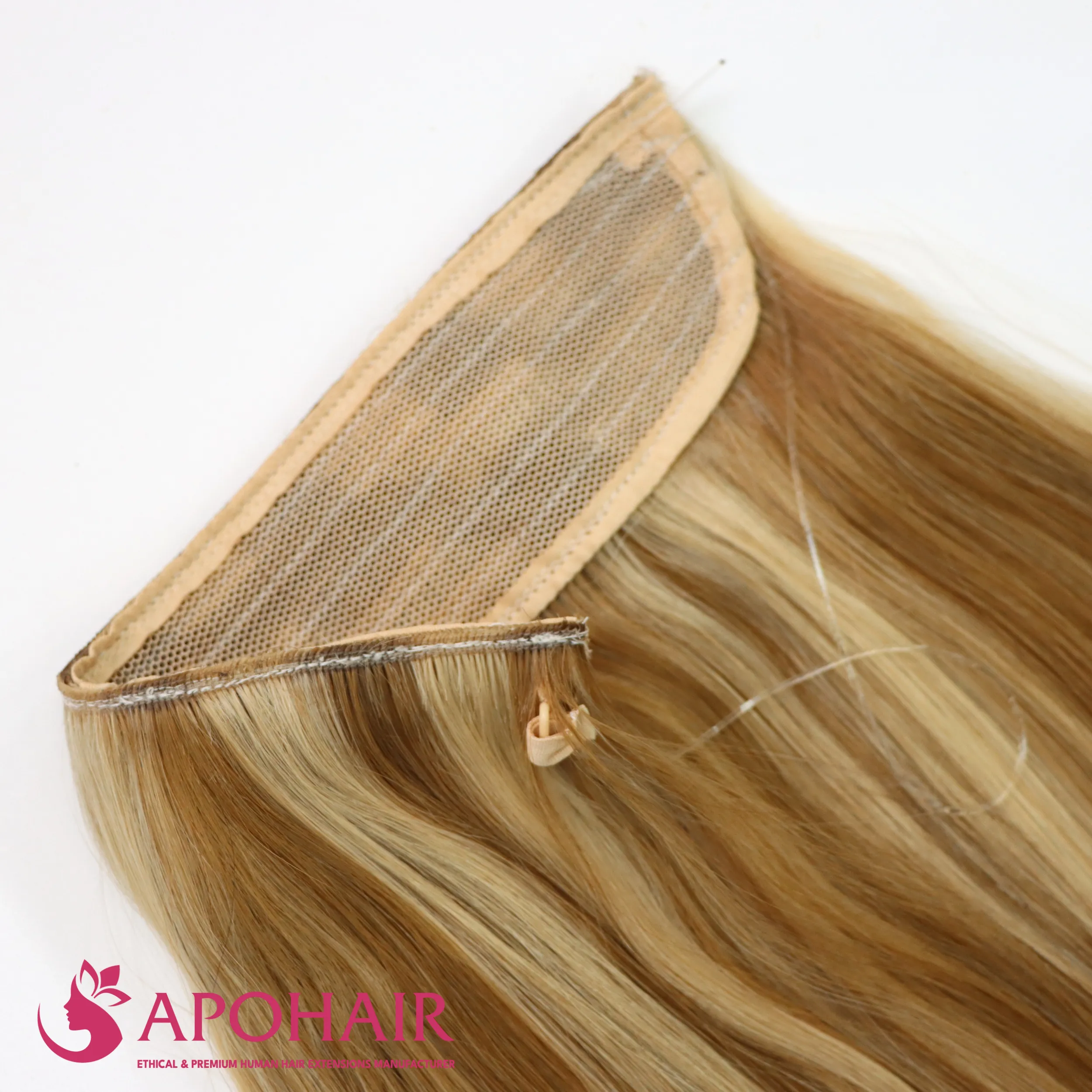
| Halo | One hair weft supported by a hidden wire | DIY | Hair lasts 1–2 years; removed daily | Yes | $ | Very low because there are no bonds or attachment points | Low-tension, all-around volume |
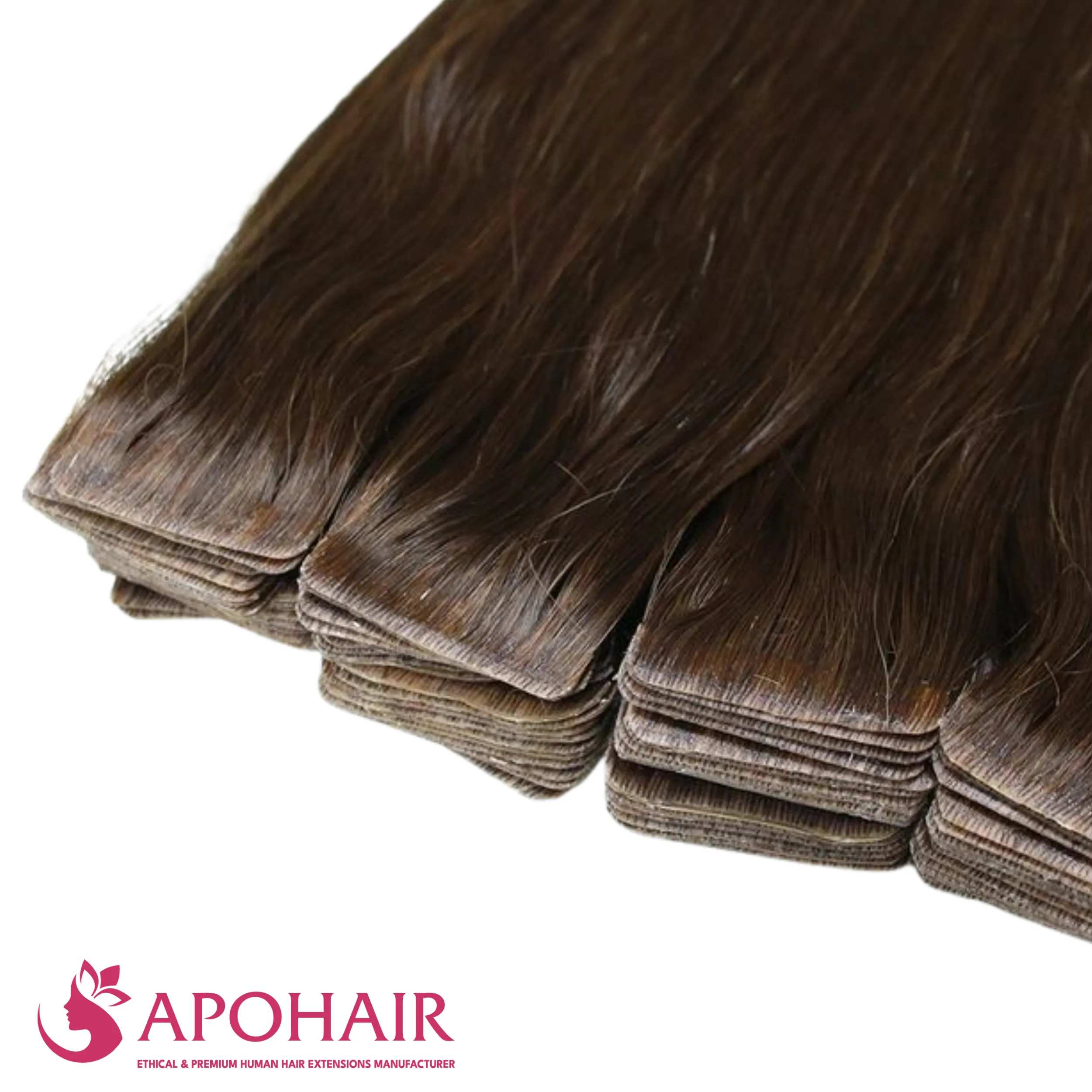
| Tape-in | Thin adhesive wefts attached near the roots | Salon | Hair lasts 6–12 months; re-taped every 6–8 weeks | Yes | $$ | Low when lightweight panels are applied and maintained correctly | A flat, natural-looking everyday result |
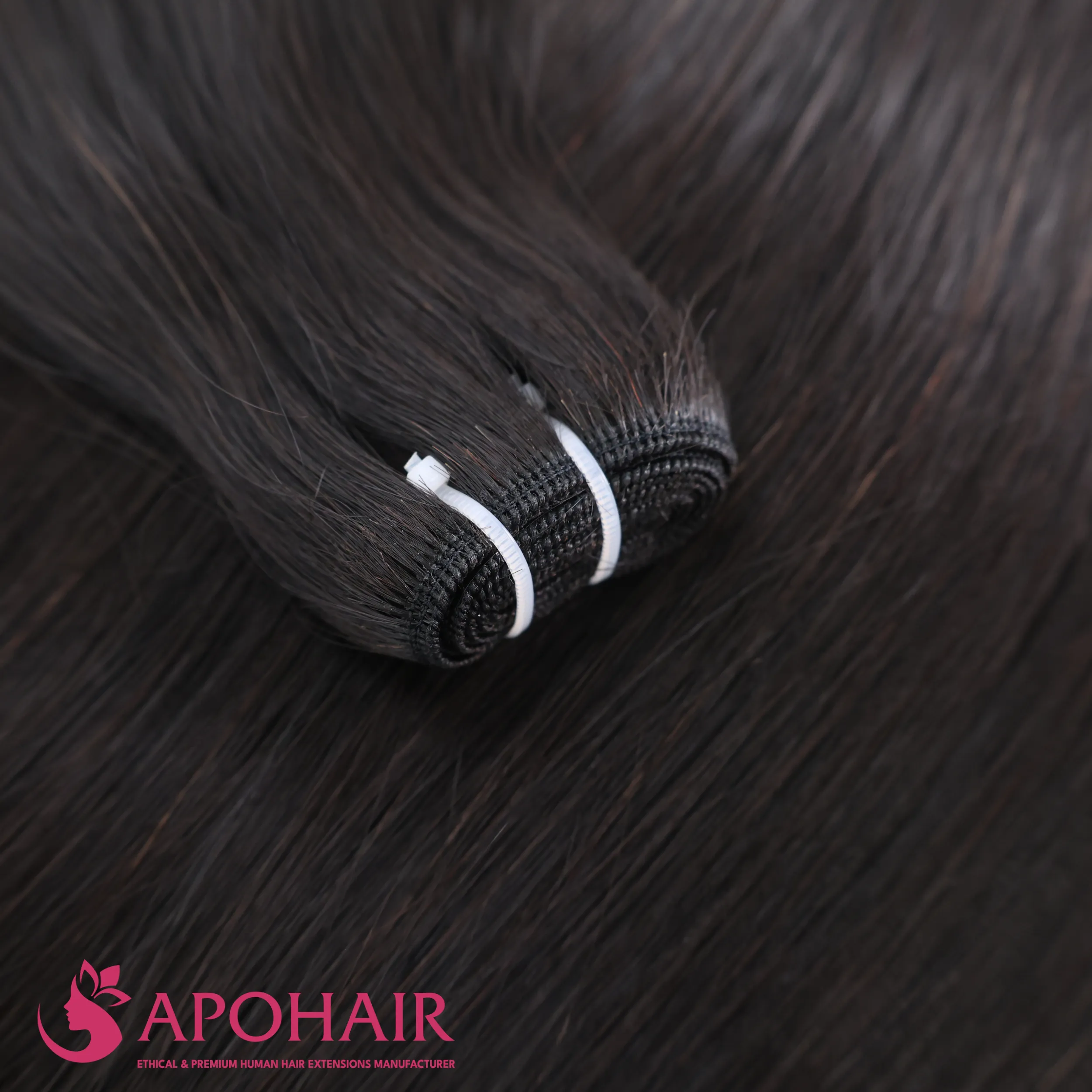
| Sew-in / weave | Machine or hand-tied wefts sewn onto cornrowed natural hair | Salon | Weft hair may last about 1 year; installation is redone every 6–10 weeks | Yes, when the wefts remain in good condition | $$$ | Moderate; depends on braid tension, weft weight, and maintenance | Thick, coarse, or textured hair that can support a braided foundation |
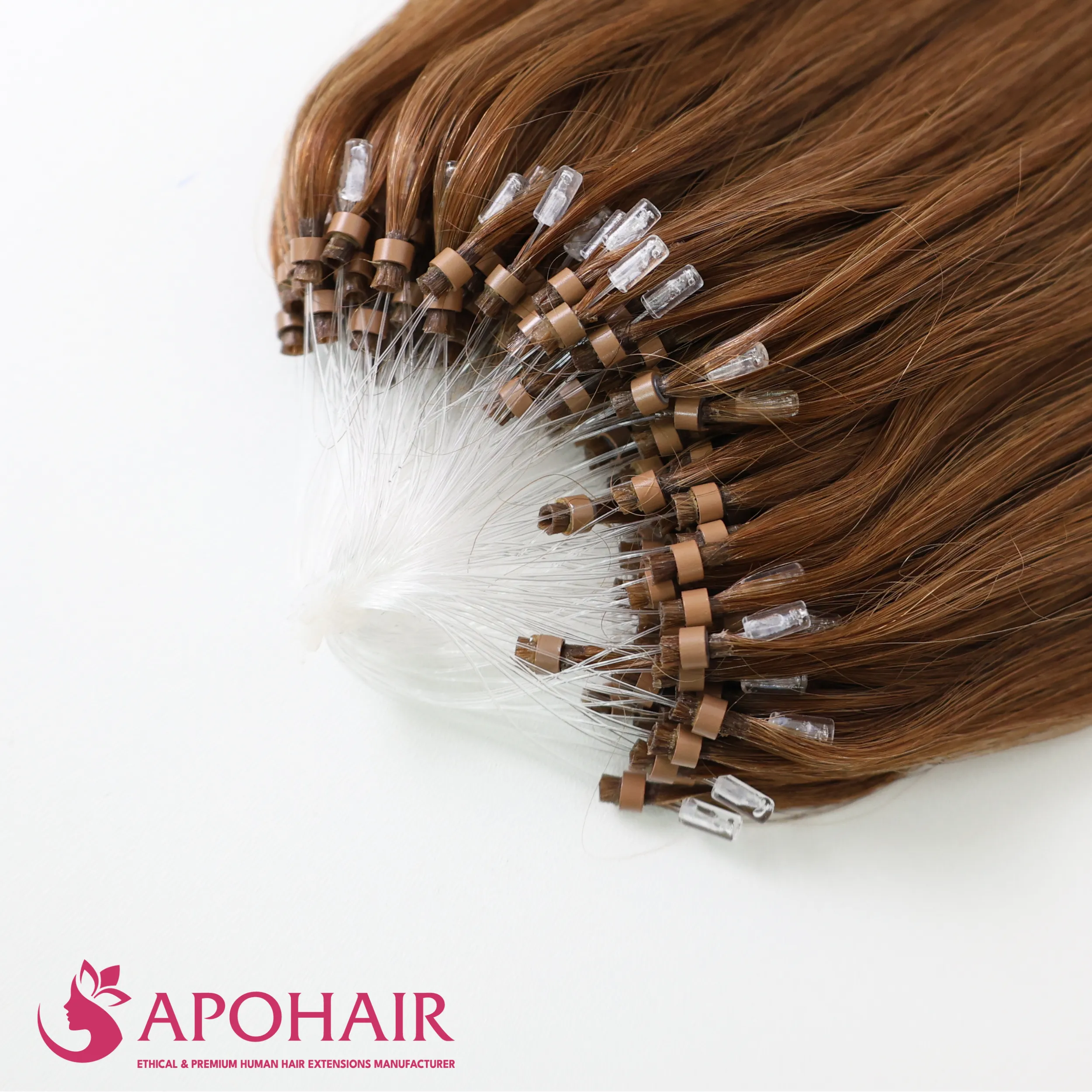
| Micro-link / I-tip / nano-ring | Individual extension strands secured with small beads | Salon | Hair may last about 1 year; move-ups every 2–4 months | Yes | $$$ | Low to moderate; bead tension can affect fine or fragile hair | A reusable option without adhesive or heat |
| Fusion / keratin / K-tip | Individual strands attached with keratin bonds | Salon | About 3–4 months before removal and replacement | No | $$$$ | Moderate to high; depends on bond size, heat, removal, and hair condition | A long-wear, natural-moving strand-by-strand result |
Temporary and Removable Hair Extensions
Temporary and removable hair extensions include clip-ins and halo hair extensions. Both add instant length and volume without a long-term commitment: clip-ins use small clips for flexible placement, while halos sit on a hidden wire for quick, low-tension wear.
Clip-in hair extensions
Clip-in extensions are wefts of hair fitted with small, silicone-lined clips that snap onto sections of your own hair. You put them in when you want more length or volume, then take them out before bed. If you want extra hair for a dinner, wedding, photo shoot, or weekend look, clip-ins are usually the easiest first step.
Pros
- Apply them yourself in a few minutes, with no salon visit.
- Take them out daily, so they create less ongoing tension than installed methods.
- Reusable for one to three years with care.
- Useful for a special event or for everyday volume.
- Easy to pack, store, and travel with.
Cons
- They should come out before you sleep or swim.
- Too many wefts at once can feel bulky.
- They can shift during a workout or a long, active day.
- On very fine hair, the clips can peek through if the wefts are too thick.
Best for: beginners, occasional wear, and anyone who wants flexibility without salon upkeep.
Hair types: fine to thick. If your hair is very fine, choose thinner clip-in wefts that lie flatter under your own hair.
How it is applied: You put the pieces on yourself in about 5 to 15 minutes, then take them out at night.
Care: brush gently, wash only when needed, and store the set flat or hung.
Lasts 1 to 3 years with proper care, depending on hair quality and how often you wear the set.

Halo hair extensions
A halo works differently because the hair sits on one thin, clear wire. The wire rests like a hidden headband, and a layer of your own hair covers it. Because nothing clips, tapes, or bonds to your strands, a halo is one of the lowest-tension removable extension types and one of the quickest to put on.
Pros
- The fastest method to put on.
- No clips, glue, or bond tension on your hair.
- Fully removable and reusable.
- A strong option for fine or thin hair that can cover the wire.
Cons
- It adds volume around the head rather than in one targeted spot.
- You need enough hair on top to hide the wire.
- It is one piece, so placement is less adjustable than separate wefts.
Best for: Fine or thin hair, quick volume, and anyone who wants a low-tension removable method.
Hair types: Fine to medium hair, especially when the top layer has enough density to cover the wire.
How it is applied: You put it on at home in under a minute, then take it off daily.
Care: Brush after wearing, wash only when needed, and store it flat.
Lasts: One to two years with good care, and sometimes longer when worn occasionally.

Semi-Permanent Tape-In and Weft Extensions
Semi-permanent tape-in and weft extensions include tape-ins and sew-in or weave extensions. Tape-ins use thin adhesive panels for a flat, natural everyday result, while sew-ins secure machine or hand-tied wefts to a braided base for longer-lasting fullness. Both require professional installation and scheduled maintenance.
Tape-in hair extensions
Tape-in extensions are thin wefts backed with adhesive tape. A stylist places each tab close to the roots, often sandwiching a small section of your hair between two tape pieces. Tape-ins are popular because they lie flat, feel light, and work well for a natural everyday look.
Pros
- Lie flat when the color matches and the placement is right.
- Feel lighter than heavier rowing methods.
- Faster salon application than many strand-by-strand methods.
- The hair can often be reused across several re-tapes.
Cons
- You need a stylist to apply and remove them.
- They need re-taping about every six to eight weeks.
- A heavy set can stress fine hair.
- Oil, conditioner, or heavy product near the bond can loosen the tape.
Best for: A flat-laying, everyday look if you can keep up with salon maintenance.
Hair types: Fine to medium hair. For very fine hair, ask the stylist whether single-sided tape or fewer panels would sit lighter.
How it is applied: At the salon, usually in one to two hours, with maintenance about every six to eight weeks.
Care: Use sulfate-free shampoo, keep oil away from the adhesive area, and dry the roots.
Lasts: Hair can last 6 to 12 months with care; the tape area requires maintenance every 6 to 8 weeks.

Sew-In or Weave Hair Extensions
Sew-in hair extensions, also called weaves, use continuous hair wefts that a stylist sews onto sections of natural hair braided into cornrows. These extensions commonly use machine wefts, which are thicker and more durable, or hand-tied wefts, which are thinner, lighter, and lie flatter against the head.
The method does not require adhesive or heat, but the braided foundation supports the wefts’ weight. A sew-in can work well as a protective style for thick, coarse, or textured hair when the braids remain comfortable and the stylist distributes the weight evenly. Fine or fragile hair may not provide a strong enough foundation for a traditional sew-in.
Pros
- Secure once installed.
- Uses no adhesive or heat during application.
- Works with machine-made, hand-tied, and other weft formats.
- Can protect thick, coarse, or textured hair when tension remains controlled.
- Creates substantial length and fullness without individual bonds.
Cons
- Tight braids or heavy wefts can place excessive tension on the scalp and edges.
- Natural hair must have enough density and strength to support the braided foundation.
- Application often takes two to four hours.
- The scalp and braided hair underneath require regular cleaning and complete drying.
- Hand-tied wefts require careful cutting and installation to prevent the weft from unraveling.
Best for: Thick, coarse, or textured hair that can support a secure braided foundation.
Hair types: Thick, coarse, curly, or coily hair. Fine, fragile, or low-density hair may not anchor traditional cornrows and wefts comfortably.
How it is applied: A stylist braids the natural hair into cornrows and sews machine, hand-tied, or another suitable type of weft onto the braids with thread. Application usually takes two to four hours, and the installation is normally redone every six to ten weeks.
Care: Keep the scalp clean, dry the braids and wefts completely after washing, detangle the extension hair gently, and report persistent pain, tightness, or scalp irritation to the stylist.
Lasts: Six to ten weeks per installation. The weft hair may be reused when its condition remains suitable, but the braids and sewing must be removed and redone as the natural hair grows.

Bonded and Beaded Strand-by-Strand Extensions
Bonded and beaded strand-by-strand extensions include micro-links, I-tips, nano-rings, fusion extensions, keratin bonds, and K-tips. These methods attach individual strands for precise placement and natural movement. Beaded options avoid glue and heat, while bonded options provide longer continuous wear and a seamless finish.
Micro-link, I Tip and nano-ring extensions
Micro-link extensions attach small extension strands to your own hair one section at a time. A stylist threads your hair and the extension strand through a tiny silicone-lined bead, then clamps the bead closed. You may also see this family called I-tips, micro-beads, micro-rings, or nano-rings.
This method does not use glue, tape, or heat during application. Each strand moves on its own, but the beads still need careful placement because too much tension can stress fine hair.
Pros
- No glue and no heat during application.
- Each strand moves freely.
- The hair can be reused.
- The beads can be moved up as your hair grows.
Cons
- Bead tension can stress fine or fragile hair.
- Beads can show if the hair is sparse.
- Application can take two to four hours.
- It needs a skilled stylist who knows section size and tension control.
Best for: Anyone who wants a glue-free, heat-free, reusable salon method.
Hair types: Best on medium density. Finer hair may need smaller beads, fewer strands, or a different method.
How it is applied: At the salon, often in two to four hours, with move-ups every two to four months depending on growth and placement.
Care: Brush around the beads, keep oil away from the roots, and detangle from the ends up.
Lasts: The hair can last about a year with good care; the beads need move-ups as the hair grows.

Fusion or keratin extensions (K-tip)
Fusion extensions bond small extension strands to your own hair one at a time. Each strand has a keratin tip, and a stylist softens that tip so it wraps around a small section of your hair. You may see this family called keratin bonds, K-tips, bonded extensions, or pre-bonded extensions.
Fusion is one of the highest-commitment salon methods and one of the most natural-feeling options when the color match, bond size, and placement are right. It also takes longer because every bond is handled by hand.
Pros
- Natural-feeling movement when applied well.
- Long continuous wear.
- Each strand moves separately.
- No visible row across the head.
Cons
- Heat or adhesive can stress fragile hair.
- Application can take three to five hours.
- Removal needs a professional product that can loosen the bond.
- The bonds are usually single-use.
- It is often one of the priciest methods.
Best for: A high-commitment, natural-feeling look on healthy medium to thick hair.
Hair types: Healthy medium to thick hair, not fragile hair or hair that is already breaking.
How it is applied: At the salon, often in three to five hours, with a full redo after the bonds grow out.
Care: Use sulfate-free shampoo, keep heavy oil away from the bonds, and avoid high heat near the bond area.
Lasts: About three to four months before a full redo, depending on growth, care, and stylist guidance.
Human vs. synthetic hair: The other “type” that matters
Apart from how extensions attach, they also split by what they are made of. This choice affects shine, movement, heat styling, tangling, and lifespan.
Synthetic hair is made from an artificial fiber. It costs less, but it does not behave like real hair. Most synthetic hair cannot take curling irons, flat irons, or high dryer heat because the fiber can melt or lose its shape. For a costume, test look, or one-time event, synthetic hair may be enough.
Human hair is real hair, so it behaves more like your own. Depending on quality and processing, it can be washed, curled, straightened, colored, and reused. It costs more upfront, but it usually lasts longer and blends more naturally.
Within human hair, a few quality terms matter:
- Remy hair keeps the cuticles aligned in the same direction. That alignment helps reduce tangling and keeps the hair smoother after washing.
- Virgin hair has not been chemically processed. It is often treated as a top-grade option when the sourcing is clear and the cuticle quality is still strong.
- Single-drawn and double-drawn describe the length mix. Double-drawn hair is sorted so more strands run close to the full length, which gives fuller ends.
- Non-Remy hair has cuticles that are not aligned, and lower-grade hair may rely on a surface coating to feel smooth at first. Once that coating wears down, tangling becomes more likely.
We know this part closely because we make the hair. On our factory floor, long-wear quality comes down to cuticle direction, sorting, and processing control. At APOHAIR, we produce factory-direct 100% Vietnamese Virgin and Remy Human Hair for clip-ins, halos, tape-ins, wefts, keratin tips, I-tips, U-tips, and micro-loop extensions, with a focus on cuticle-aligned hair that can hold up across professional methods.

How to choose the right hair extension type for you?
The right extension type comes down to five practical questions: wear time, hair type, budget, DIY or salon, and maintenance.
- How long do you want them in? For one event, clip-ins and halos go on and off the same day. For everyday wear, tape-ins, wefts, micro-links, and sew-ins hold through weeks of normal routines. For the longest continuous wear, fusion stays in until the bonds grow out.
- What is your hair type? Fine or thin hair usually does better with lightweight, lower-tension methods. Thick, coarse, or textured hair has more density to anchor a sew-in.
- Do you want DIY or salon work? Clip-ins and halos go in at home. Tape-ins, wefts, micro-links, sew-ins, and fusion need a stylist for application and removal.
- What upkeep can you actually keep up with? DIY methods cost less after purchase and ask less of your calendar. Salon methods add application fees and maintenance appointments, but they also stay in place for daily wear.
- What hair quality are you buying? This choice crosses every method. Remy human hair usually lasts longer and blends better than lower-grade hair, so don’t judge by attachment method alone.
Frequently asked questions
Which type of hair extension is best?
There is no single best type. Clip-ins suit beginners, halos suit quick low-tension volume, tape-ins suit a flat-laying everyday look, wefts suit long-term fullness, micro-links suit reusable salon wear without glue or heat, sew-ins suit thick or textured hair, and fusion suits a high-commitment strand-by-strand result.
What is the most natural-looking type?
Tape-ins, well-placed hand-tied wefts, halos, and fusion can all look natural when the color, density, texture, and placement are right. Remy human hair usually blends more naturally than synthetic fiber because it moves and reflects light more like your own hair.
Which type has the lowest damage risk?
Clip-ins and halos are usually the lowest-risk choices because they are removable and do not rely on adhesive, beads, braids, or keratin bonds. Among salon methods, lighter tape-ins, hand-tied wefts, and micro-links can be lower-tension options when placement and maintenance are right.
What is the difference between temporary, semi-permanent, and permanent?
Temporary extensions go on and off the same day, such as clip-ins and halos. Semi-permanent extensions stay in for weeks to a few months, such as tape-ins, wefts, micro-links, and sew-ins. Fusion is the highest-commitment category because the bonds stay in until they grow out and a stylist removes them.
What is the difference between Remy and virgin hair?
Remy means the cuticles are aligned in the same direction, which helps the hair stay smoother and tangle less. Virgin means the hair has not been chemically processed. A piece of hair can be Remy without being virgin, but high-quality virgin hair should also keep strong cuticle alignment.
Is a quick weave a type of extension?
Not exactly. A quick weave is an application method where wefts are usually glued onto a cap or protective base. The hair is still weft hair, so quick weave is better understood as an application approach.
Conclusion
The right hair extension type depends on three factors: your natural hair, preferred wear time, and maintenance routine. Choose between temporary and removable extensions such as clip-ins and halos, semi-permanent tape-in and weft extensions such as tape-ins and sew-in weaves, or bonded and beaded strand-by-strand extensions such as I-tips, nano-rings, and K-tips. Then select human or synthetic hair based on the desired appearance, lifespan, and styling flexibility.
For salons, distributors, and hair extension brands, each attachment method requires a suitable product format and consistent hair quality. APOHAIR supplies factory-direct 100% Vietnamese Virgin and Remy human hair for clip-ins, halos, tape-ins, machine and hand-tied wefts, I-tips, nano-rings, and keratin-tip extensions, helping wholesale buyers match each product to its intended installation method and performance requirements.
APOHAIR — ETHICAL & PREMIUM HUMAN HAIR EXTENSIONS AND WIGS MANUFACTURER
- Address: Building 3A, Lane 82 Duy Tan, Cau Giay, Hanoi, Vietnam
- Factory: (Old) Yen Luong Village, Y Yen District, Nam Dinh Province, Vietnam; (New) Minh Luong Hamlet, Van Thang Commune, Ninh Binh Province, Vietnam
- WhatsApp: +84 862 132 366
- Email: wholesale@apohair.com
- Website: https://apohair.com/


 ABOUT US
 Human Hair Extensions
 Wholesale Tape-In Hair Extensions
 Clip-In Hair Extensions
 Wholesale Keratin Hair Extensions
 Weft Hair Extensions
 BEST SELLING PRODUCTS
 Human Hair Wigs
 Bulk Human Hair For Braiding
 Contact Us