







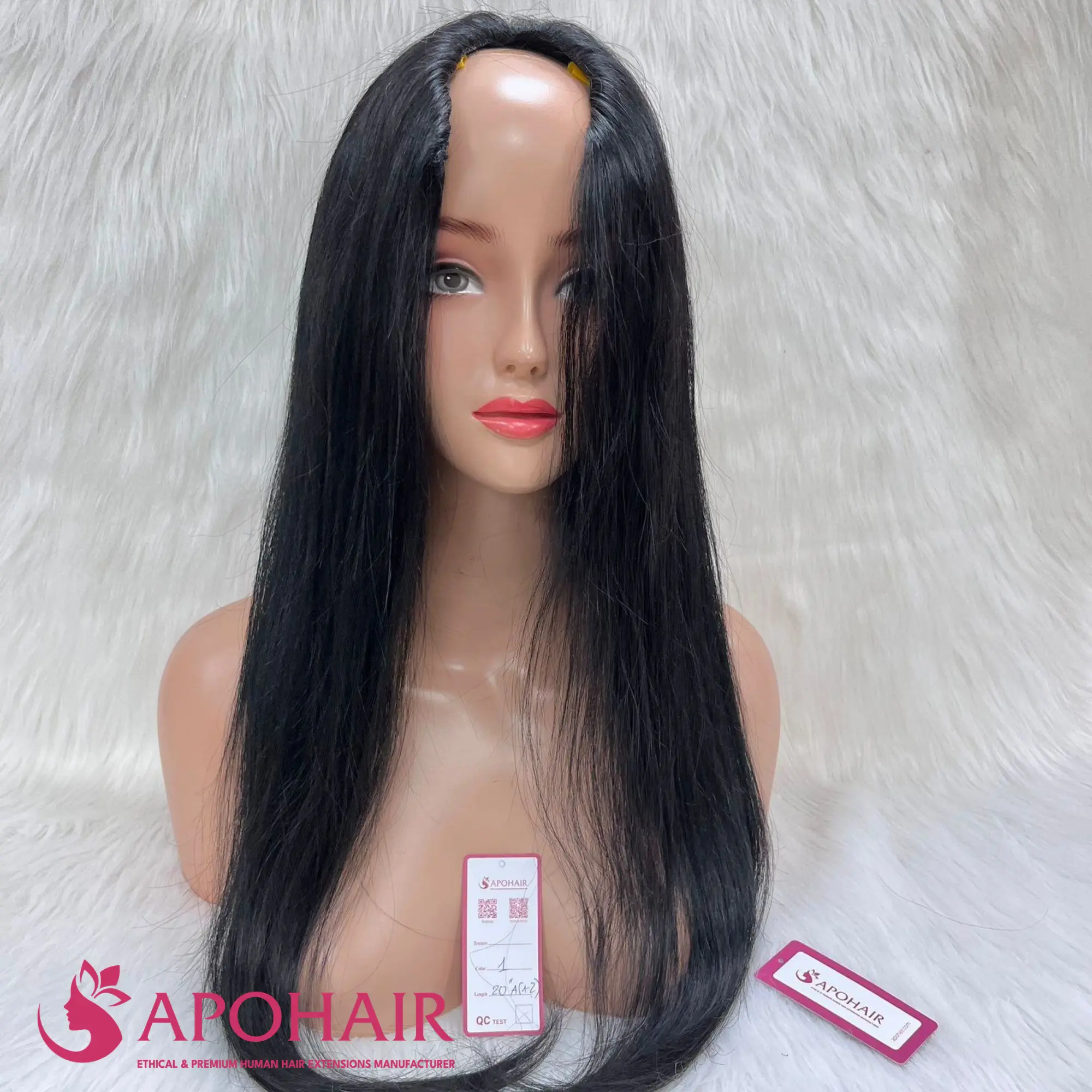

Hair Extensions Manufacturing Process: How Human Hair Extensions Are Made
Hair extensions are made by preparing human hair or synthetic fibers and securing the finished strands to an attachment structure such as a weft, tape strip, clip, or bonded tip. Human hair follows the longer production route: raw hair is sorted, hackled, washed, graded, colored when required, textured, constructed into the chosen extension type, inspected, and packaged.
Not every product passes through the same treatment. Natural dark hair needs less color processing than platinum blonde hair, while wefts, tape-ins, and pre-bonded extensions follow different construction methods after the hair itself has been prepared.
This guide focuses primarily on the human hair extensions manufacturing process, explaining how collected hair moves through each production stage, how different extension types are constructed, and how manufacturing decisions influence the quality of the finished product.

What Are Hair Extensions Made Of?
Hair extensions are made from either human hair or synthetic fibers, and the material determines how they are manufactured.
Human Hair Extensions Are Made From Collected Human Hair
Human hair extensions are made from hair obtained through commercial purchasing, voluntary donation, and organized collection networks. India has a long-established supply of hair donated through religious tonsuring, while manufacturers in Vietnam and other sourcing regions also obtain hair through commercial collection channels.
How the hair is collected affects the preparation required before manufacturing. Hair that is tied and cut as a ponytail is easier to keep in its original root-to-tip direction, while loose or mixed-source hair requires more sorting and alignment before further processing.
The condition of the collected hair also matters. Hair from different sources can vary in length, natural color, texture, and previous treatment, so manufacturers must sort and prepare it before it can be processed into a consistent extension product.
Synthetic Hair Extensions Are Made From Manufactured Fibers
Synthetic hair extensions are made from artificial fibers such as modacrylic, polyester, nylon, and related polymers. These materials are manufactured into filaments with controlled diameter, texture, shine, and flexibility before being assembled into extensions.
This creates a fundamentally different production process. Synthetic-hair manufacturers create the fiber itself, while human-hair manufacturers work with an existing biological fiber whose cuticle structure, pigment, condition, and strand direction must be preserved or modified.
Because the hair extension manufacturing process primarily concerns human hair production, the following steps focus on how collected human hair is transformed into finished extensions.
Heat tolerance, lifespan, and care routines differ sharply between the two materials, so the choice matters before any buying decision. Human vs synthetic hair extensions compares them on composition, styling, durability, cost, and upkeep.
How Are Human Hair Extensions Manufactured Step By Step?
Human hair extensions are manufactured through eight main stages: raw-hair sorting, hackling and grading, washing, color processing when required, texture setting, extension construction, final quality control, and packaging. The exact process varies with the condition of the raw hair and the extension type being produced.
Step 1: Raw Hair Sorting And Inspection
Manufacturing begins by sorting incoming raw hair into batches with similar length, natural color, texture, and overall condition. This reduces variation within each batch and helps the hair respond more consistently during later stages such as coloring, texturizing, and length grading.

Workers inspect the hair and remove strands that are visibly damaged, contaminated, or unsuitable for the required product. They also consider the starting color because hair with different base shades does not require the same level of processing to reach a target color. When the original root-to-tip direction has been preserved during collection, manufacturers also maintain that orientation during handling.
At APOHAIR’s factory, incoming Vietnamese human hair is sorted by length, color, and texture before it moves to the next production stage. The production team also checks the overall condition of each batch so unsuitable fibers can be removed before more labor and processing are invested.

This first stage does not create the final extension. It establishes a controlled raw-hair batch that can be aligned, refined by length, and prepared more precisely during hackling and grading.
Step 2: Hackling, Alignment, And Length Grading
After initial sorting, the hair is drawn through a hackle to remove tangles, align the strands, and refine the mix of lengths within each bundle. A hair hackle contains closely spaced metal pins that help workers separate loose, short, or unsuitable fibers while organizing the remaining hair into a more uniform bundle.

When the original root-to-tip direction has been preserved during collection, workers maintain that orientation during hackling. This matters because human hair has a directional cuticle structure. Weiand et al. (2025) describe anisotropic friction, in which friction changes depending on the direction the hair moves because the overlapping cuticle edges point toward the tip. Keeping strands aligned in the same direction therefore helps reduce one source of catching and tangling within the finished extension.
Length grading also takes place at this stage and determines how full the hair appears toward the ends:
- Single Drawn: Contains a wider range of strand lengths, creating a more natural taper.
- Double Drawn: Contains a higher proportion of strands close to the stated length, producing fuller ends.
- Super Double Drawn: Contains an even higher proportion of full-length strands, creating greater fullness from top to bottom.
These grading terms are widely used in the hair extension industry, although each manufacturer may apply its own criteria for how much shorter hair is removed at each grade. See the difference between Single Drawn and Double Drawn hair to better understand how these grading methods affect extension fullness and appearance.
After hackling and grading, the hair is more evenly aligned and prepared for washing, coloring, texturizing, and extension construction.
Step 3: Washing And Hair Preparation
After hackling and alignment, the hair is washed to remove oils, dust, handling residues, and other contaminants before further processing. Depending on the condition of the raw hair and the factory process, this stage may include cleansing, rinsing, conditioning, and drying.
During washing, workers handle the bundles carefully to prevent tangling and maintain strand alignment. Conditioning treatments may be applied to improve smoothness and combability during later manufacturing stages. Weiand et al. (2025) found that conditioning agents can reduce hair friction by adding lubricating substances to the fiber surface. However, this improves handling and surface feel rather than repairing structural damage caused by previous chemical or mechanical processing.

After washing, the hair is dried using air, controlled heat, or a combination of both. The goal is to remove moisture while minimizing unnecessary heat and mechanical stress. Because the cuticle may already be affected by previous chemical processing, friction, or heat exposure, careful drying helps avoid adding further surface damage.
Once the hair is clean and dry, it is ready for the next stage of production, such as coloring, texture setting, or extension construction.
Step 4: Bleaching And Coloring
Bleaching and coloring are used when the target shade differs from the hair’s natural color. Hair sold close to its original dark shade requires less chemical modification, while blonde, ash, highlighted, ombré, pastel, and other lighter colors usually require additional processing.
For lighter shades, manufacturers first reduce the natural melanin through oxidative bleaching to create a suitable base. The hair is then toned or dyed until it reaches the required shade.
A typical color-processing sequence includes:
- Assessing the starting color to determine how much lightening is required.
- Bleaching only to the necessary level for the target shade.
- Applying toner or dye to achieve the final color.
- Checking color consistency and correcting the batch only when necessary.
Bleaching changes more than the hair color. Grosvenor et al. (2018) found that stronger peroxide bleaching treatments caused greater structural damage to human hair, affecting both the outer cuticle and inner cortex while reducing important hair proteins.
Repeated coloring can also increase cumulative damage. Kwon et al. (2024) found that repeated dyeing cycles gradually affected hair surface condition and mechanical properties, with greater changes appearing after multiple treatments.
For manufacturers, these findings support a practical approach: start with hair that is as close as possible to the target shade and avoid unnecessary bleaching, recoloring, or corrective processing. This helps achieve the required color while limiting additional damage to the fiber.
Bleached hair does not biologically recover between processing stages because the hair shaft is no longer living tissue. Rest periods may be used as part of process control, but they do not rebuild damaged cuticle or cortex structures.

Step 5: Drying And Texture Setting
After washing or coloring, the hair is dried and shaped into the straight, wavy, or curly texture required for the finished extension. Manufacturers use different combinations of moisture, controlled heat, steam, mechanical shaping, or chemical perming depending on the target texture and production method.
Straight textures are typically created by aligning the strands while controlling moisture and heat. Wavy and curly textures may be formed by wrapping damp hair around rods or shaping forms before drying or steaming. Some manufacturers also use permanent-wave chemistry when the texture requires deeper restructuring of the hair fiber.

These methods affect the hair differently. Zhang et al. (2015) found that permanent waving creates deeper structural changes in hair fibers, while shampooing and conditioning mainly affect surface properties and manageability. This explains why chemically created curls usually maintain their pattern longer than temporary heat- or moisture-based styling.
At APOHAIR, bulk hair and several weft products are textured using hot steam without chemical perming. The hair is shaped into the required pattern and exposed to controlled heat and moisture rather than chemical restructuring.
Texture retention therefore depends on factors such as the original hair structure, setting method, previous chemical processing, temperature, moisture, and subsequent care. A steamed or mechanically shaped wave should not automatically be considered permanent.
After texture setting, the hair is prepared for extension construction or final finishing, depending on the product being manufactured.
Step 6: Extension Construction
Once the hair reaches the required length, color, and texture, manufacturers assemble it into the intended extension format. The same prepared hair can become a machine weft, hand-tied weft, tape-in extension, pre-bonded strand, clip-in, or another product type.
Once the hair reaches the required length, color, and texture, manufacturers assemble it into the intended extension format. The same prepared hair can become a machine weft, hand-tied weft, tape-in extension, pre-bonded strand, clip-in, or another product type. Readers can explore the main types of hair extensions to understand how these formats differ in structure and design.
Construction affects strand retention, attachment thickness, installation method, and shedding resistance. For this reason, wefts, tape-ins, and bonded extensions require different machinery and quality-control criteria.
Their individual construction methods are explained in the following sections.

Step 7: Finishing And Final Inspection
Finished extensions are trimmed, cleaned, and inspected against the required specification. Quality-control teams check length, color consistency, texture, hair distribution, attachment construction, and visible defects.
The inspection criteria depend on the extension format. Machine wefts require secure stitching and controlled shedding, tape-ins need even hair distribution and reliable bonding, and pre-bonded extensions require consistent tip size and strand weight.
Final QC therefore evaluates both the condition of the hair fiber and the construction that holds the extension together.

Step 8: Packaging And Labeling
Extensions that pass final inspection are organized, labeled, and packaged for storage or shipment. Labels typically identify attributes such as extension type, length, color, texture, product code, or batch reference.
Packaging protects the hair and attachment area during handling and transport. Custom boxes, branded labels, logo printing, and private-label artwork belong to the commercial packaging stage rather than the core hair-processing process.

How Are Different Hair Extension Types Constructed?
Prepared hair becomes a specific extension type when manufacturers change the structure used to secure the strands together. The processed hair may come from the same upstream production system, but the attachment method determines whether it becomes a weft, tape-in, pre-bonded strand, or clip-in extension.
How Are Weft Hair Extensions Made?
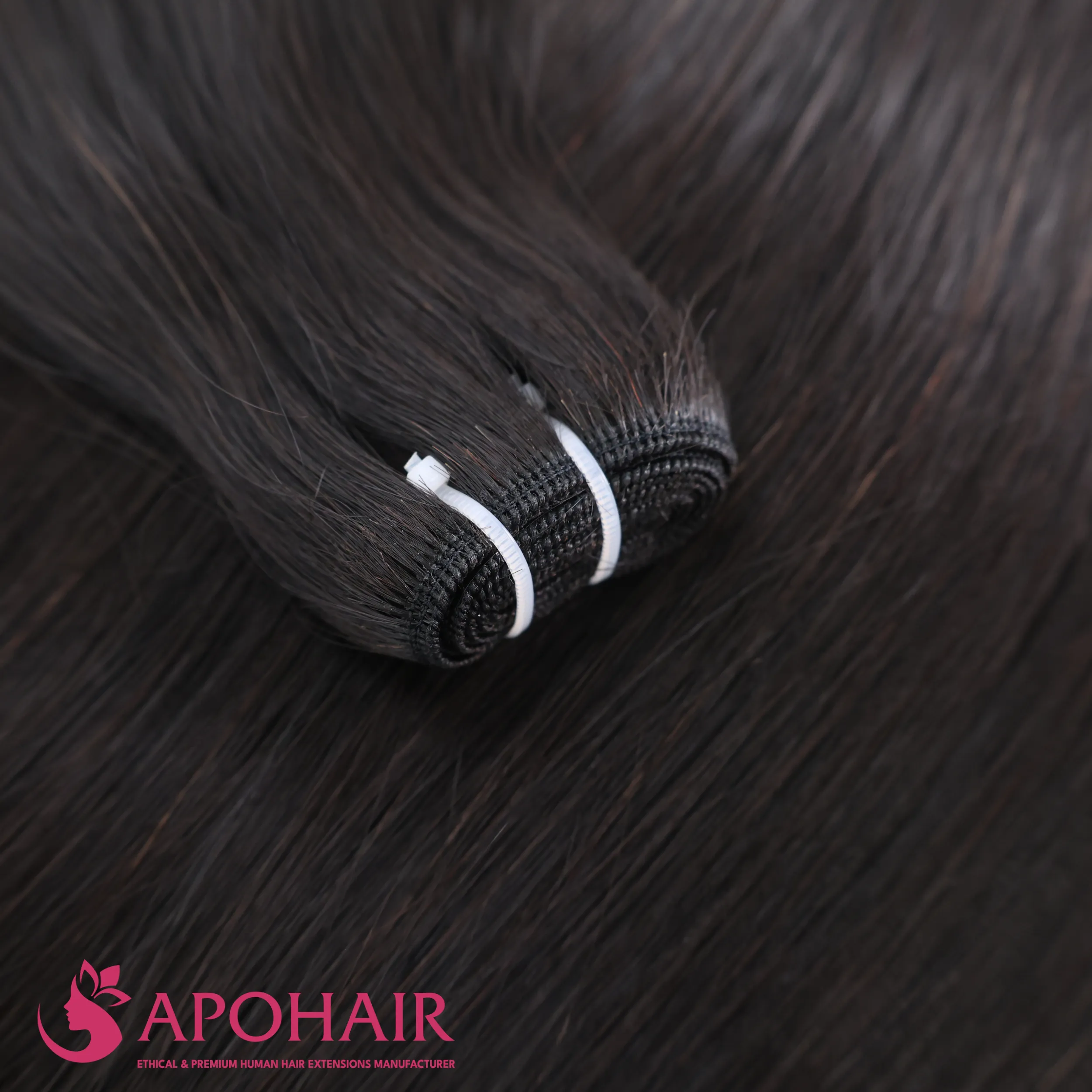
Weft extensions are made by securing aligned hair strands along a continuous upper track that holds the fibers together. Manufacturers first distribute the prepared hair across the required width before creating a seam, foundation, or reinforcement layer.
Common weft constructions include:
- Machine wefts: Hair is secured using industrial sewing equipment that creates one or more stitching lines across the upper section. Some designs add folding, additional stitching, or reinforcement materials to improve retention and reduce bulk.
- Hand-tied wefts: Individual sections of hair are manually tied onto a thread foundation, creating a thinner and more flexible track that requires more labor-intensive production.
- Thin or hybrid wefts: Manufacturers modify traditional designs through combinations of sewing, bonding, trimming, or reinforcement methods to create a flatter profile.
The main differences between machine weft and hand-tied weft hair extensions come from how the hair is secured, the amount of manual work involved, and the final structure of the weft.
Weft construction does not follow one universal design. Published manufacturing patents describe different approaches, including multiple sewing operations, folded seams, heat treatment, and adhesive reinforcement systems.
At APOHAIR, different weft formats use different construction methods. Machine Weft uses machine sewing, Genius Weft uses a thin-base construction, and Flat Weft and Hand-Tied Weft use manual preparation methods.
The final quality of a weft depends on more than the hair grade. Seam thickness, strand distribution, stitching consistency, edge finishing, and retention strength all affect the performance of the finished extension.
How Are Tape-In Hair Extensions Made?
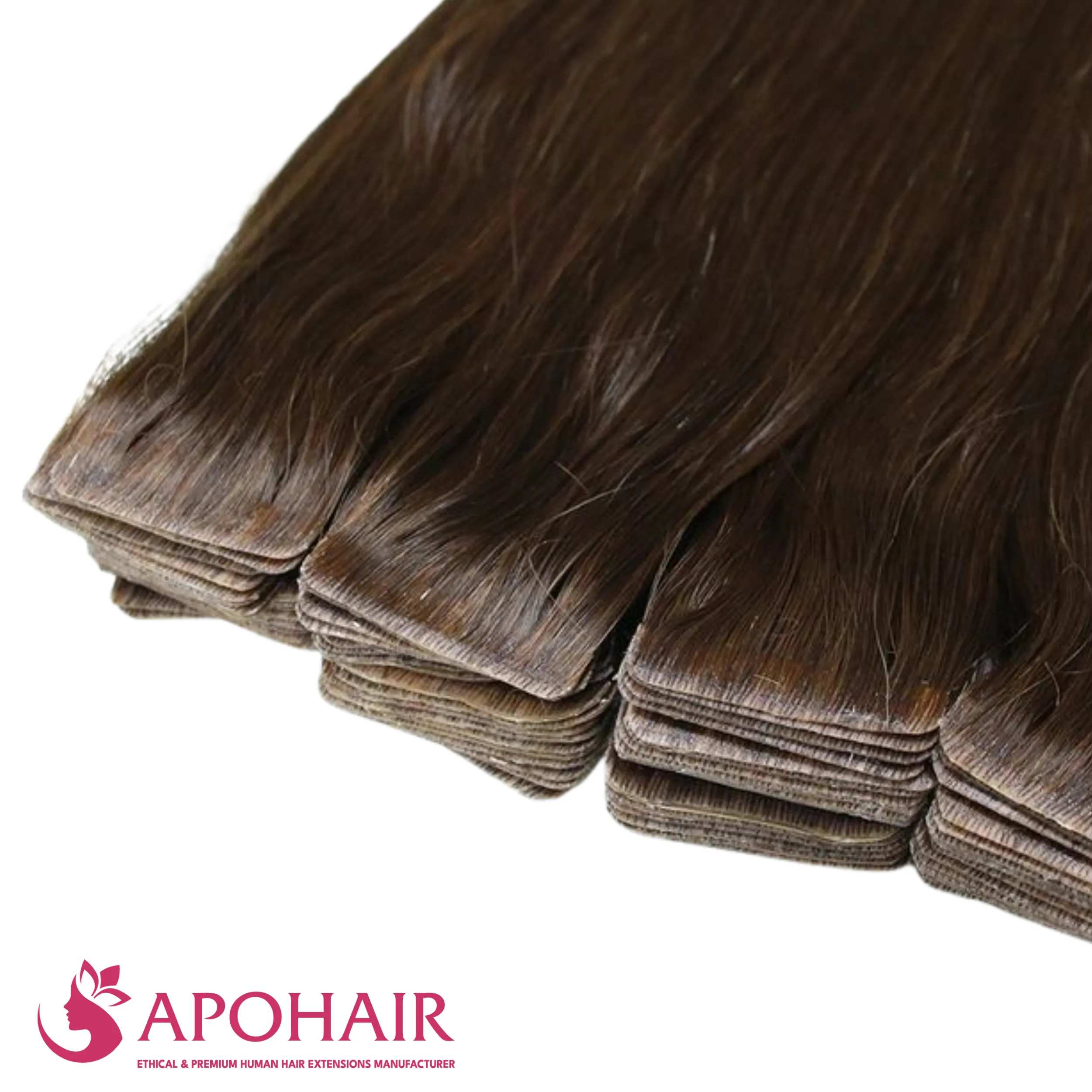
Tape-in extensions are made by arranging prepared hair into a thin panel and securing the upper section with a flat carrier and adhesive attachment layer. Unlike wefts, the goal is to create a lightweight and flat attachment area.
Manufacturers distribute the aligned hair evenly across the required width, secure the upper ends within the carrier structure, apply the adhesive component, cut the material into individual panels, and add a release liner before packaging.
The attachment area is the critical production point. Excess material can create unnecessary thickness, uneven distribution can affect density, and weak bonding between the hair and carrier can increase shedding.
Tape-in quality therefore depends on hair distribution, panel thickness, carrier structure, bonding consistency, and adhesive performance, not only the quality of the raw hair.
How Are Pre-Bonded Hair Extensions Made?
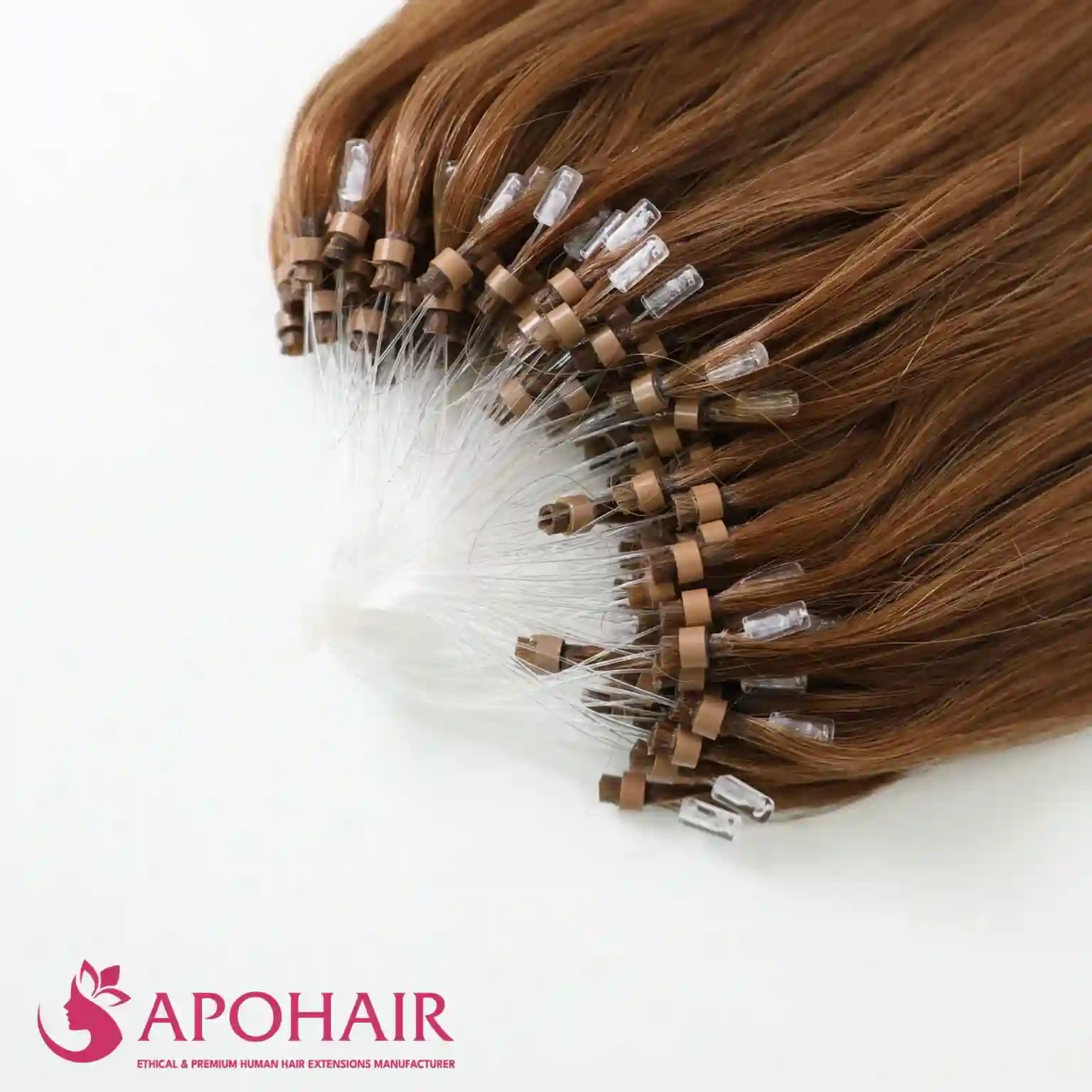
Pre-bonded extensions are made by dividing prepared hair into small sections and securing each section with a formed bonding tip. Different tip shapes create formats such as U-tip, K-tip, flat-tip, and I-tip extensions.
Manufacturers first control the amount of hair in each portion before applying and shaping the bonding material around the upper ends. The finished tip must maintain consistent size, shape, and strength while securely holding the fibers together.
At APOHAIR, I-tip production controls measurable specifications such as approximately 0.6–0.9 g per strand portion, a 1–1.3 cm (0.39–0.51 in) straight keratin tip, and approximately 110–160 tips per 100 g set. These specifications demonstrate how portion weight and tip dimensions are controlled during production.
Pre-bonded quality therefore depends on more than the bonding material. Portion weight, tip shape, bond consistency, and fiber retention determine the final performance of the extension.
How Are Clip-In Hair Extensions Made?
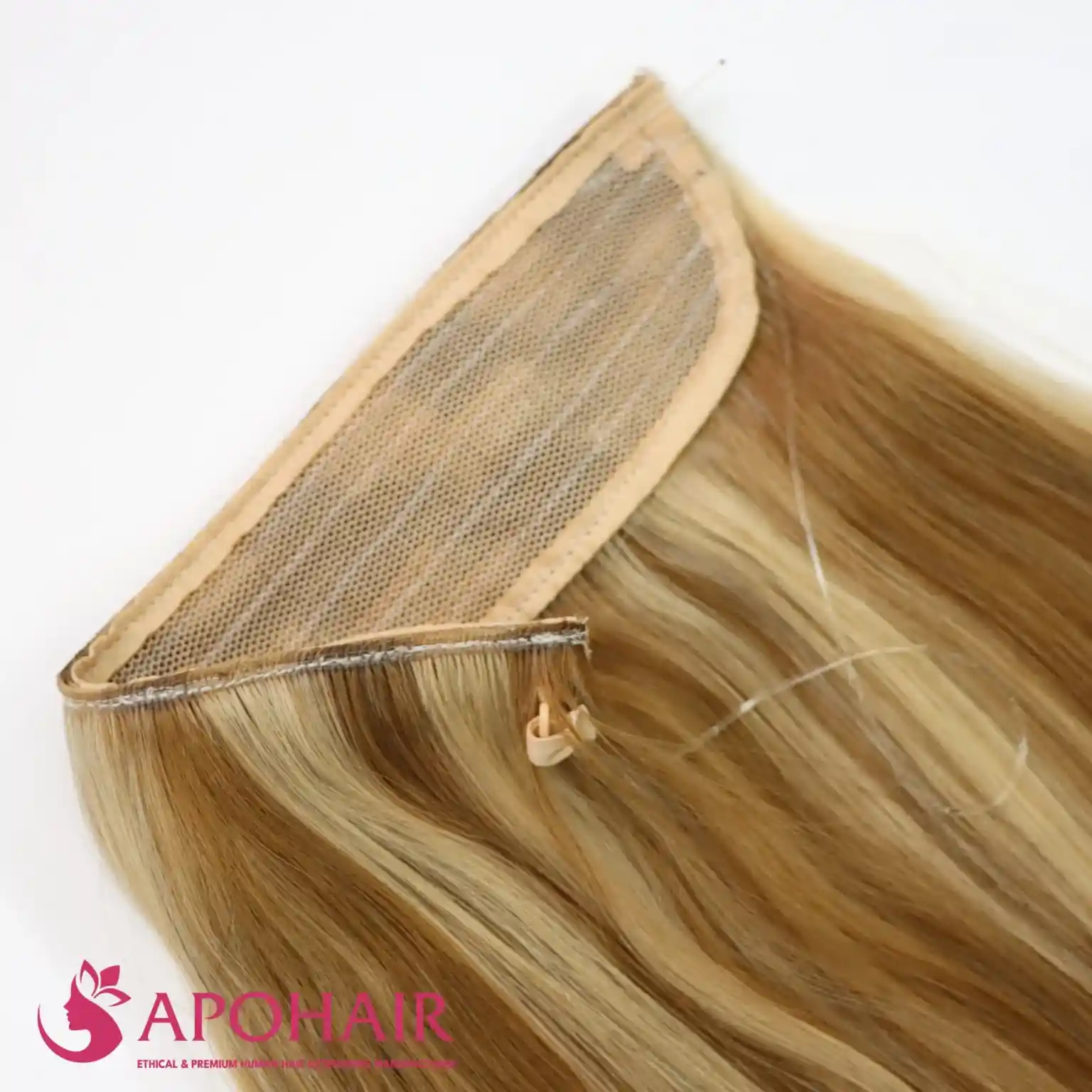
Clip-in extensions are made by cutting finished hair wefts into panels and attaching removable clips along the upper edge. The weft holds the strands together, while the clips provide the temporary attachment mechanism.
Manufacturers cut the weft into required panel widths, reinforce sections when needed, position the clips, secure them to the upper edge, and inspect the finished pieces.
Quality control focuses on both components: the weft must retain the hair securely, and the clips must remain firmly attached while opening and closing correctly.
The same processed human hair can become different extension products depending on the construction method applied at the attachment stage.
How Is Hair Extension Quality Checked After Manufacturing?
Final quality control checks whether the finished hair extension meets its required specifications for length, weight, color, texture, hair condition, strand retention, and attachment construction. The exact checks vary by product because wefts, tape-ins, pre-bonded extensions, and clip-ins have different structural failure points.
| QC Area | What Is Checked | Problems It Helps Detect |
| Length and weight | Usable length, piece or bundle weight, and hair distribution | Incorrect sizing, underweight products, or uneven fullness |
| Color and texture | Shade consistency and uniformity of straight, wavy, or curly patterns | Batch variation, uneven dyeing, or inconsistent texture |
| Hair condition | Combability, visible damage, dryness, matting, and abnormal tangling | Over-processing or poor fiber preparation |
| Strand retention | Hair loss during handling or combing | Weak stitching, bonding, or strand fixation |
| Attachment integrity | Weft seams, tape bases, bonded tips, or clip connections | Loose seams, weak bonds, irregular tips, or poor attachment |
| Finishing | Trimming, loose threads, excess adhesive, and visible defects | Incomplete or inconsistent workmanship |
The specific QC checks depend on the extension type. Weft extensions are checked closely for seam strength and shedding, while tape-ins require even hair distribution and secure bonding. Pre-bonded extensions are inspected for consistent strand weight and tip size, while clip-ins also require secure clips and evenly constructed panels.
For repeat orders, manufacturers may keep a sample from an earlier production batch as a reference. The production team can compare the new batch against it for color, texture, fullness, and construction, helping maintain consistency between orders.
Quality should not be assessed by softness or shine alone. Conditioners, silicones, and other finishing treatments can make processed hair feel smoother without showing its full chemical history or the strength of the attachment structure.
A complete quality check therefore looks at the condition of the hair, the required product specifications, and the strength and consistency of the finished construction.
How Does APOHAIR Manufacture Human Hair Extensions?
In practice, APOHAIR, a hair extensions manufacturer in Vietnam, organizes human hair extension production into five main stages, from preparing the raw hair to inspecting and packaging the finished product:
- Stage 1: Receive And Sort Raw HairAPOHAIR receives Vietnamese human hair and sorts it by length, base color, texture, and overall condition. This creates more consistent batches and helps the production team identify which hair is suitable for different lengths, drawn grades, colors, and extension types.
- Stage 2: Wash And Prepare The HairThe selected hair is cleaned and prepared according to the required product. Depending on the order, preparation includes hackling, strand alignment, length grading, coloring, and texture setting. APOHAIR produces Single Drawn, Double Drawn, and Super Double Drawn hair and uses hot-steam texturizing for several product lines instead of chemical texturizing.
- Stage 3: Construct The ExtensionOnce the hair reaches the required length, color, texture, and fullness, it is made into the selected extension type. The construction method varies by product: machine wefts use sewing equipment, hand-tied and flat wefts follow different construction techniques, and tape-ins and pre-bonded extensions use their own attachment systems.
- Stage 4: Perform Quality ControlFinished extensions are inspected against the confirmed product requirements. APOHAIR checks length, weight, color consistency, hair alignment, shedding, seam or attachment strength, and other product-specific construction details. Batch records and retained samples also help the production team maintain consistency across repeat orders.
- Stage 5: Package The Finished OrderExtensions that pass inspection are organized by length, color, texture, and product type before packaging. For wholesale and OEM orders, APOHAIR also provides private-label packaging when required before the finished products are prepared for shipment.
Frequently Asked Questions About Hair Extension Manufacturing
How Long Does It Take To Manufacture Human Hair Extensions?
There is no fixed production time for human hair extensions. Lead time depends on the starting hair, target color and texture, extension type, order quantity, and required QC. Natural-color wefts usually require fewer processing stages than heavily lightened colors or custom extension formats.
Are Remy Hair And Virgin Hair The Same Thing?
No. Remy and virgin describe different characteristics of human hair. Remy hair refers to strands kept in a consistent root-to-tip direction, while virgin hair generally refers to hair that has not been chemically colored, bleached, or permed.
Hair can therefore remain Remy after coloring if its strand orientation is preserved, but it is no longer considered virgin under the usual definition.
Are All Human Hair Extensions Bleached?
No. Human hair is bleached only when a lighter target shade requires it. Natural dark shades need little or no lightening, while blonde, ash, pastel, highlighted, and similar colors require more chemical processing.
Because repeated bleaching increases damage to the cuticle and cortex, manufacturers aim to reach the target shade with as little unnecessary processing as possible.
Is The Manufacturing Process Different In India, China, And Vietnam?
The core manufacturing stages are similar, but sourcing, equipment, processing methods, product specialization, and QC vary between factories. India is known for temple-hair collection, Vietnam supplies commercially collected human hair, and China has a large hair-processing and finished-extension manufacturing industry.
Country of origin alone does not determine quality. Raw-hair condition, processing history, strand alignment, construction, and quality control provide more useful indicators of the finished product.
Does The Manufacturing Process Affect Hair Extension Quality?
Yes. Manufacturing directly affects how hair extensions perform, even when the raw hair is similar. Strand alignment, bleaching, texture setting, and attachment construction influence tangling, fiber condition, curl retention, shedding, and overall durability.
This is why hair quality should be assessed by both the raw material and how the extension was processed and constructed.
Understanding the full hair extension manufacturing process makes it easier to see where product quality is created and where problems can occur. From raw-hair preparation to final construction and quality control, each stage affects the consistency and performance of the finished extension.
For wholesale and OEM buyers, this knowledge also helps them evaluate a manufacturer beyond basic labels such as “human hair” or “Remy.” At APOHAIR, these production stages are controlled against defined product specifications to maintain consistency across finished orders.
Ordering what this process produces: The stages above end in a finished extension, and a wholesale buyer can order the formats this guide describes from three APOHAIR categories.
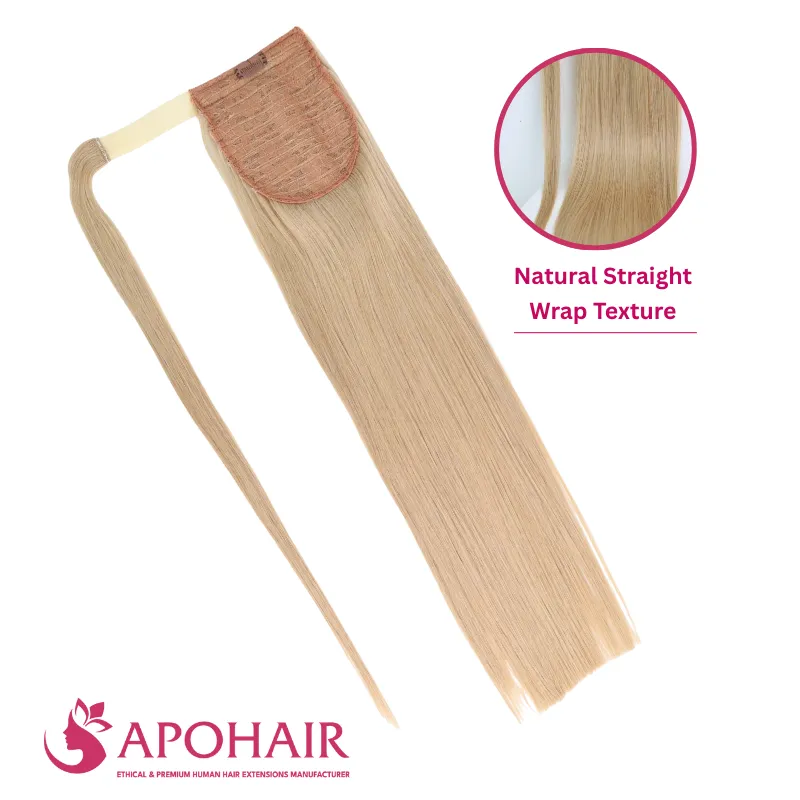
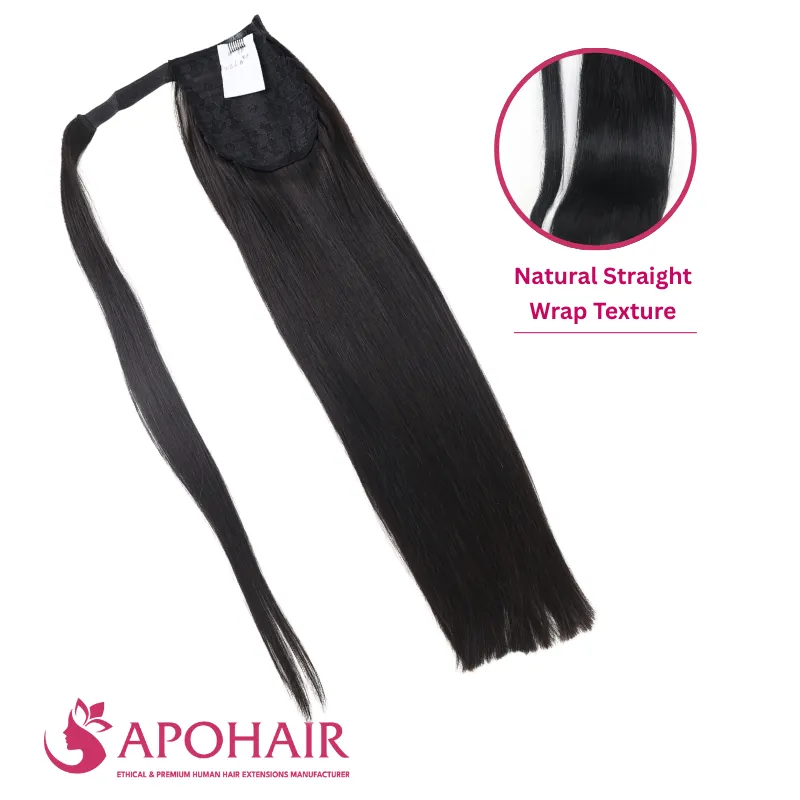
Extensions: Wholesale human hair extensions cover tape-in, keratin tip, clip-in, weft, and ponytail formats, the same constructions this guide explains.
Bulk hair: Bulk human hair wholesale is the stage before construction: loose, unwefted hair from 10 to 30 inches in single drawn, double drawn, and super double drawn grades, for buyers who build their own wefts, with orders from 200g per product type.
Wefts: A weft hair extensions supplier catalog lists eight weft types, including the machine weft and hand-tied weft constructions compared above, with orders from 200g per weft type.
References
Grosvenor, A. J., Deb-Choudhury, S., Middlewood, P. G., Thomas, A., Lee, E., Vernon, J. A., Woods, J. L., Taylor, C., Bell, F. I., & Clerens, S. (2018). The physical and chemical disruption of human hair after bleaching—Studies by transmission electron microscopy and redox proteomics. International Journal of Cosmetic Science, 40(6), 536–548. DOI: 10.1111/ics.12495.
Kwon, S., Lee, S., Jang, J., Lee, J. B., & Kim, K. S. (2024). Quantifying the effects of repeated dyeing: Morphological, mechanical, and chemical changes in human hair fibers. Heliyon, 10(18), Article e37871. DOI: 10.1016/j.heliyon.2024.e37871.
Park, I. G. (2014). Hair extension manufacturing method (WO Patent No. 2014200156A1). World Intellectual Property Organization.
Weiand, E., Rodriguez-Ropero, F., Roiter, Y., Angioletti-Uberti, S., Dini, D., & Ewen, J. P. (2025). Understanding and controlling the friction of human hair. Advances in Colloid and Interface Science, 345, Article 103580. DOI: 10.1016/j.cis.2025.103580.
Zhang, Y., Alsop, R. J., Soomro, A., Yang, F.-C., & Rheinstädter, M. C. (2015). Effect of shampoo, conditioner and permanent waving on the molecular structure of human hair. PeerJ, 3, e1296. DOI: 10.7717/peerj.1296
APOHAIR ETHICAL & PREMIUM HUMAN HAIR EXTENSIONS MANUFACTURER
- Address: Building 3A, Lane 82 Duy Tan, Cau Giay, Hanoi, Vietnam
- Factory: Yen Luong Village, Y Yen District, Nam Dinh Province, Vietnam
- WhatsApp: +84 862 132 366
- Email: [email protected]
- Website: https://apohair.com
