







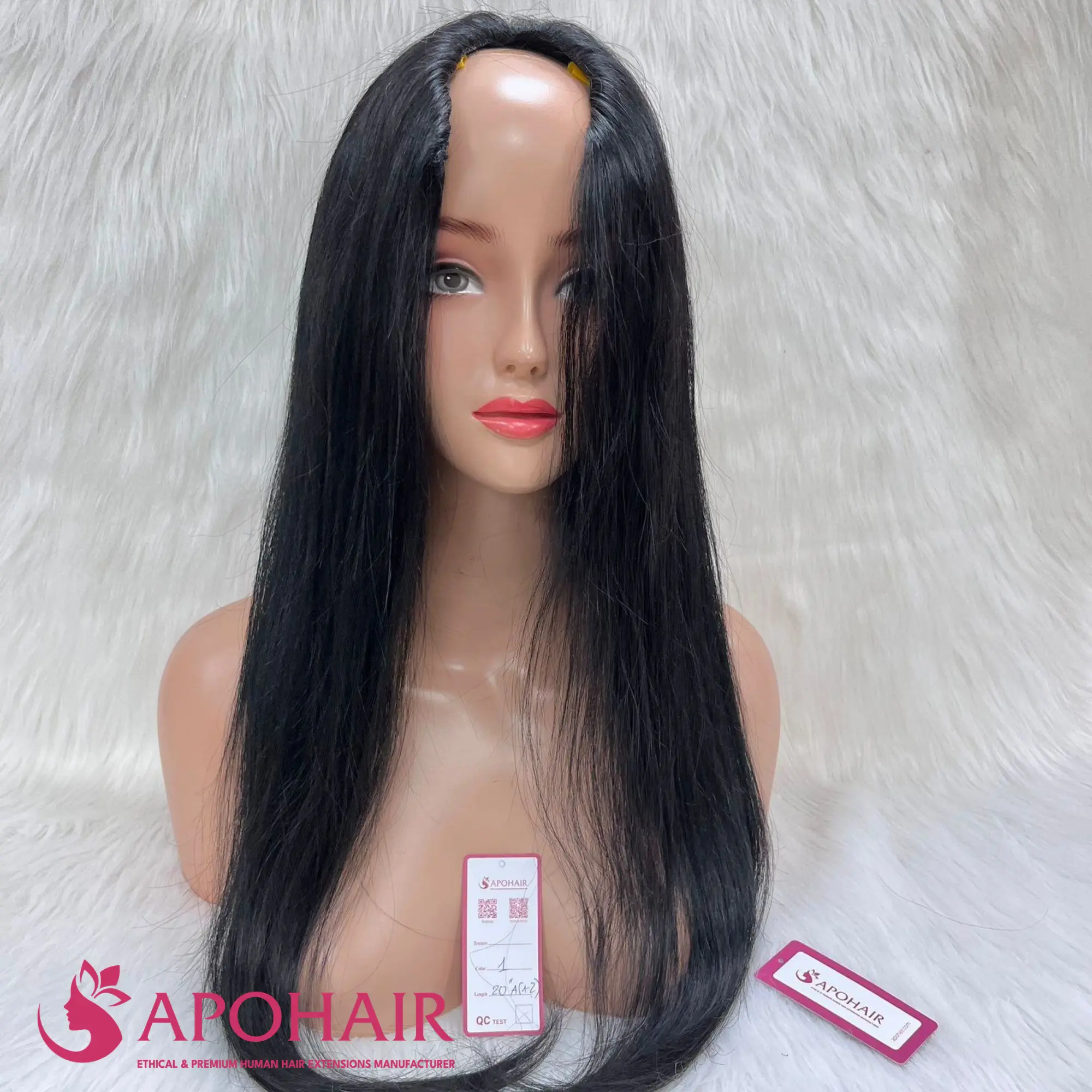

Best Hairstyles for Triangle Face Shape: Flattering Cuts for Every Type
Triangle face shapes can be categorized into two distinct types: The classic triangle, often referred to as pear-shaped, in which the jawline is wider than the forehead, and the inverted triangle, in which the forehead is broader than the jawline. Each shape requires a different hairstyle to enhance volume in the narrowest areas of the face and soften the wider sections.
This guide will walk you through methods for identifying face shapes, core styling principles, and provide recommendations for 12 flattering haircuts for triangle (pear) faces and 12 for inverted triangle faces. Additionally, you’ll find styles to avoid and a decision-making framework that accounts for hair texture, density, and age.
Whether you’re selecting a new look for yourself or advising a client, these recommendations are based on geometric face-balancing principles used by professional hairstylists — the same principles our broader guide to hairstyles for face shape applies across every proportion type.
How to Identify Your Triangle Face Shape?
To determine whether you have a triangle (pear) face or an inverted triangle face, you need to take three measurements: forehead width, cheekbone width, and jawline width. These measurements should then be compared to your face length to confirm your shape category.
- Step 1: Measure the forehead width at the widest point between your temples. Use a flexible measuring tape and record the measurement in inches or centimeters.
- Step 2: Measure the cheekbone width across the highest points of both cheekbones, just below the outer corners of each eye.
- Step 3: Measure the jawline by starting from the widest angle on one side, across the chin, to the widest angle on the other side.
Once you have your three measurements, compare them:
- If your jawline is wider than your cheekbones, and your cheekbones are wider than your forehead, you have a triangle (pear) face.
- If your forehead is wider than your cheekbones, and your cheekbones are wider than your jawline, you have an inverted triangle face.
A common point of confusion is distinguishing face shapes. A triangle face differs from a square face in that a square face has a forehead and jawline that are roughly equal in width. Additionally, an inverted triangle shape is not the same as a heart shape; a heart-shaped face typically features a widow’s peak at the hairline, whereas an inverted triangle has a straighter and wider hairline.
If a widow’s peak is exactly what you saw in the mirror, the styling approach shifts slightly from what follows here. Browse our roundup of hairstyles for heart shaped faces for cuts built around that hairline instead. With your exact shape confirmed, here are the principles that make a cut work for it.
Key Styling Principles for Triangle Face Shapes
Every flattering hairstyle for a triangle face follows one universal rule: create volume where the face is narrowest and minimize width where it is broadest. The direction of that volume shifts depending on whether you have a classic triangle or an inverted triangle.
- Triangle (Pear) principle: Add volume and width at the crown, temples, and forehead. Use layers that start above the jawline. Side-swept or wispy bangs widen the upper face, while avoiding styles that add bulk at the jaw, keeping proportions balanced.
- Inverted Triangle principle: Add fullness below the cheekbones and at the jawline. Chin-length cuts, flipped ends, and waves that begin below the ears all redirect the visual weight downward. Bangs or side parts reduce the forehead’s visual dominance.

Best Hairstyles for Triangle (Pear-Shaped) Faces
Triangle (pear-shaped) faces benefit most from hairstyles that build width and volume above the jawline, at the temples, crown, and forehead. Haircuts with layered tops, textured bangs, and off-center parts help to redirect visual weight upward.
Each style on this list includes one or more of the following characteristics: crown volume, face-framing movement, or a forehead-widening fringe. These elements work together to create the illusion of a wider forehead while softening a strong jawline through careful volume placement, texture direction, and strategic layering.
1. Layered Pixie with Volume at Crown
A short pixie with stacked layers building height at the crown and tapered sides creates immediate upward lift. The added volume at the crown helps to widen a narrow forehead, while the tapered sides prevent bulkiness at the jawline. This overall shape draws the eye upward, helping to rebalance a bottom-heavy face structure.
Styling tip for professionals: Use a razor to cut the crown layers for maximum lift and apply a texturizing spray to maintain volume without adding weight. This haircut is ideal for women with fine to medium hair texture, a petite frame, and an angular jawline who desire a bold, low-maintenance look.

2. Side-Swept Bangs with Textured Bob
A chin-to-jaw-length textured bob paired with deep side-swept bangs creates a diagonal line across the forehead. This diagonal bang line introduces asymmetry, which helps to visually widen a narrow forehead. The textured layers at the ends soften the jawline, avoiding a harsh horizontal line.
To cut the bangs, start at the arch of the brow and angle them toward the opposite ear. Point-cut the ends of the bob to allow for natural movement. This hairstyle flatters oval and triangle-shaped faces, works well with straight to wavy hair, and is suitable for professional or workplace settings.

3. Stacked Bob with Wispy Fringe
A short stacked bob features graduated layers that are shorter at the nape of the neck and longer toward the face. Paired with a light wispy fringe, this style creates natural volume at the back of the head. The stacked layers lift the crown effortlessly, while the wispy fringe softens the forehead line without overwhelming a narrow upper face.
To achieve a smooth stack, graduate the nape in 0.4-inch (1 cm) increments. Keep the fringe light and see-through rather than heavy. This haircut is particularly beneficial for fine hair that needs an illusion of volume. It also suits petite women and those with active lifestyles who prefer minimal daily styling.

4. Curly Bob with Side Part
A chin-to-jaw-length bob on naturally curly hair with a deep side part adds instant volume where pear-shaped faces need it the most. Curls create natural width at the temples and crown, while the side part introduces asymmetry that helps broaden a narrow forehead. The curl texture also softens the edges of the jawline.
When cutting curly bobs, it’s important to do so when the hair is dry to account for shrinkage; a wet cut often results in a style that is too short once the curls spring back up. To define curls, use cream instead of gel for hold without creating a crunchy texture. This cut yields excellent results for women with type 2C to 3B curls who want to embrace their natural texture.

5. Asymmetrical Lob
A long bob (lob) styled with one side 1 to 2 inches (about 2.5 to 5 cm) longer than the other, paired with a deep side part, creates a strong diagonal line. This asymmetry draws attention diagonally, helping to distract from any imbalance between the forehead and jaw width. The length of the lob falls just past the chin, which avoids highlighting the widest part of the jaw.
For this style, cut the longer side to just below the chin and the shorter side at the jawline. To maintain the angle, regular trims every 6 to 8 weeks are necessary. This hairstyle works well with straight to wavy hair, appeals to modern and edgy fashion preferences, and flatters women with strong angular jawlines who are looking for a trendy silhouette.

6. Voluminous Blowout (Medium Length)
A medium-length blowout, falling between the shoulders and collarbone, features volume concentrated at the crown and mid-shaft, which adds width to the upper face. The ends can be styled to flip slightly outward or curl under. Using a round-brush technique creates bounce through the mid-lengths, diverting attention from a wide jaw and allowing for natural movement.
To achieve maximum lift, direct airflow upward at the roots. A large-barrel round brush, between 1.5 to 2 inches (approximately 3.8 to 5 cm) in diameter, helps build volume without creating tightness. This hairstyle is ideal for women with medium to thick hair who want a polished, event-ready look. It works especially well on those with a softer, rather than angular, jawline.

7. Feathered Layers (Collarbone Length)
A collarbone-length cut with feathered layers starting at cheekbone level and flipped outward at the ends builds width at the upper-to-mid face zone. This offsets a wide jaw effectively. The outward flip at collarbone level avoids heaviness at the lowest point of the face.
Use a round brush and blow-dry the ends outward (not under) to maintain the feathered effect. This silhouette flatters thick hair and appeals to women over 40 seeking a youthful, lightweight look. It also works on oval-triangle hybrid shapes where the jaw is only slightly wider than the forehead.

8. Layered Shag with Curtain Bangs
A heavily layered shag with curtain bangs parting at center and feathered ends throughout creates dimension across the entire face. Curtain bangs frame both sides of the forehead symmetrically, adding width. Choppy layers throughout the crown and mid-lengths build volume above the jaw while the shag texture prevents heaviness at the bottom.
To maximize movement and texture, use a razor for layering. Keep the length of curtain bangs at cheekbone level for the most flattering framing effect. This haircut works best on wavy to curly hair, aligns well with a bohemian or relaxed style, and complements a round or soft jawline.

9. Tousled Waves with Off-Center Part
Medium to long tousled waves with a deep off-center part (not a full side part) create volume around the temples. The off-center part breaks the symmetry of the forehead, making a narrow forehead appear wider. The tousled texture adds natural width above the ears without looking overly styled.
To achieve this look, use a 1.25-inch (about 3.2 cm) curling iron, alternating the curl direction for a more natural tousled effect. Apply sea salt spray for added hold and definition. This style works best for women with naturally wavy hair and is great for casual, everyday wear, especially on medium-length faces.

10. Long Waves with Face-Framing Highlights
Long hair past the collarbone with soft waves and lighter highlights concentrated around the face from temple to chin creates a visual “halo” effect. That halo widens the upper face. Waves add body at the mid-lengths, preventing long hair from dragging the eye down to the jaw.
Place highlights in money-piece sections, 2 to 3 pieces per side, starting at the temple. The balayage technique produces the most natural blend. This approach suits women who prefer to keep their length, complements warm-toned complexions, and offers a subtle change without a major cut.

11. Half-Up, Half-Down with Crown Volume
The upper half is gathered into a loose crown puff or soft twist, while the lower half stays down with soft waves or straight texture. The lifted crown section adds height directly above the forehead, shifting the visual center of gravity upward. The loose lower section avoids drawing attention down to the jawline.
Backcomb the crown section before pinning for natural volume, and leave face-framing pieces loose around the temples. This versatile style works best on medium-to-long hair and suits event or occasion styling. It gives women a polished updo option that still balances a pear-shaped face.

12. Messy French Twist Updo
A loose French twist gathered at the back, with added volume at the crown and wispy tendrils at the temples and nape, is an elegant hairstyle option for pear-shaped faces. The vertical twist helps elongate the face, while the crown volume lifts the focal point upward. The soft tendrils at the temples help balance the width between the forehead and jaw.
To create this look, twist the hair loosely to maintain volume at the top. Use bobby pins at the base while allowing the upper portion to puff up naturally. This updo is ideal for formal events, works well on medium to long hair, and provides an elegant style that does not accentuate a wide jawline.

These 12 cuts assume your jaw is the widest point. If both your forehead and jaw taper in and your cheekbones are the widest measurement instead, explore our guide to diamond face shape hairstyles for that opposite balancing act. Next, here’s the mirror-image approach for a wide forehead instead of a wide jaw.
Best Hairstyles for Inverted Triangle Faces
Inverted triangle face shapes require a different styling approach. The goal is to minimize the prominence of the forehead while adding width and fullness below the cheekbones. Hairstyles such as bobs with bangs, waves that start below the ears, and chin-length cuts help redirect visual weight downward.
All 12 styles mentioned share features that narrow the forehead, such as bangs, side parts, and close-to-head crown styling, while incorporating elements that widen the jaw, like volume below the ears, flipped ends, and chin-length layers. These cuts are specifically selected for their ability to balance a broader forehead with a narrower lower face.
13. Layered Pixie with Side Fringe
A short pixie cut with longer layers on top swept to one side as a side fringe keeps all volume close to the head. The side fringe falls diagonally across the forehead, reducing its perceived width. The pixie length prevents top-heaviness that a broader forehead would amplify.
Leave the fringe 2 to 3 inches (about 5 to 7.6 cm) longer than the rest of the cut. Taper the sides close to minimize temple width. Fine-to-medium hair holds this shape with minimal product. This cut appeals to women who want a daring short style and complements heart-leaning inverted triangle shapes.

14. Chin-Length Bob with Full Bangs
A classic chin-length bob with full, blunt bangs that cover the entire forehead effectively addresses both imbalance points. The bangs conceal the wide forehead, immediately reducing the top-heavy appearance. The chin-length cut adds visual weight at the narrowest part of the face.
For optimal forehead coverage, cut the bangs at eyebrow level—never higher. Use a flat iron to achieve a sleek finish that maintains a clean, horizontal line. This hairstyle is ideal for straight to slightly wavy hair, appeals to women looking for a bold style statement, and works especially well for those with a high or prominent forehead.

15. Wavy Lob with Curtain Bangs
A shoulder-length lob with loose waves and curtain bangs parting from center breaks the forehead width at the midpoint. Waves at chin-to-shoulder level add fullness below the cheekbones. The lob length sits right at the shoulder where it creates maximum lateral width.
To achieve the look, use a 1-inch (about 2.5 cm) curling wand and alternate the curl directions. The curtain bangs should be kept at cheekbone length. Wavy hair texture yields the most natural results with this cut, providing daily versatility for those with heart or inverted-triangle face shapes.

16. Shoulder-Length Cut with Flipped Ends
A straight shoulder-length cut with ends flipped outward using a round brush or flat iron creates lateral width at the jawline. That’s the exact zone where inverted triangles are narrowest. Shoulder length avoids elongating the face further.
Use a medium round brush and flip the ends outward during the blowout. Set with a light hairspray to hold the flip throughout the day. Straight-to-slightly-wavy hair holds this shape best. The style appeals to retro and classic style lovers, and it works well for women over 50 seeking a polished, youthful look.

17. The Rachel (90s Layered Blowout Revival)
The iconic “Rachel” cut features collarbone-length hair with heavily blended layers and flipped-back volume concentrated at chin-to-shoulder level. The layers build maximum width at and below the chin. The signature flip-back creates lateral dimension exactly where inverted triangles need it most. The modern version uses softer blending than the original.
Use a large round brush to blow-dry the layers back and outward from the face. Finish with a flexible-hold spray that allows movement. Medium-to-thick hair holds this volume best. The style appeals to women seeking a retro-modern hybrid look and anyone riding the 90s style revival.

18. Textured Beach Waves (Below Shoulders)
Below-shoulder-length beach waves with tousled, undone texture create organic width and volume at the lower face and neck zone. The relaxed texture avoids the sleek, flat look that tends to emphasize a wide forehead.
Scrunch sea salt spray into damp hair and air-dry or diffuse. Avoid smooth blowouts that flatten the lower half. Naturally wavy or thick hair responds best to this approach. It suits a beach or boho aesthetic and appeals to women who prefer minimal daily styling effort.

19. Long Straight Hair with Heavy Layers Below Chin
Long straight hair with heavy, face-framing layers starting at chin level and increasing in volume toward the ends redirects all fullness to the lower face. Keeping the upper portion sleek and close to the head minimizes forehead width. Heavy layering below the chin adds visual density right at the narrow zone.
Use slide-cutting or point-cutting at chin level to create soft transitions. Avoid layers above the cheekbone that would add upper-face width. Thick straight hair holds this structure well. The style suits minimalist and sleek aesthetics, and it gives women maximum length with a face-balancing cut.

20. Long Layers with Soft Side-Swept Bangs
A long, layered haircut that extends past the collarbone, featuring soft side-swept bangs starting at the arch of one brow and sweeping across the forehead, helps to narrow the upper face. The diagonal line of the bangs reduces the visual width of the forehead. The long layers add movement and body to the hair below the chin, which helps to widen the lower face area.
To create a natural and uninterrupted flow, blend the bangs into the longest face-framing layer. This hairstyle is ideal for women who want to maintain their length, is particularly flattering for those with oval or inverted triangle face shapes, and looks polished in professional settings.

21. Deep Side Part with Loose Curls
Medium-to-long hair with a dramatic deep side part and loose barrel curls starting below the ears redistributes visual weight. The deep side part shifts hair mass to one side, breaking forehead symmetry. Curls concentrated below the ears create fullness exactly where the inverted triangle narrows.
Set the part 2 inches (about 5 cm) from center. Use a 1.5-inch (about 3.8 cm) barrel and curl only the bottom two-thirds of the hair. This style suits evening and formal occasions, works on thick or medium-density hair, and gives a glamorous, Old Hollywood feel.

22. Soft Curly Shag
A shaggy layered cut on naturally curly hair (type 2C to 3C) distributes the most volume at and below the cheekbones. Curly texture naturally builds width, and the shag cut directs that volume outward at the mid-to-lower face. This creates balance against a wide forehead without fighting the natural curl pattern.
Cut dry to respect the curl pattern and use a diffuser on low heat to set volume without frizz. Women with natural curls who want to celebrate their texture get the strongest results. This cut also suits creative or artistic personal style and works best on medium-to-thick density.

23. Half-Up Braided Crown
Two braids pulled from the temples across the crown and pinned at the back, with the rest of the hair worn down and wavy, keep the top of the head flat. The braided crown sits close against the scalp, reducing top-of-head width. The loose lower hair adds fullness at the jawline and below.
Keep braids close to the scalp at the temples and pull out a few pieces near the ears for softness. This style works on medium-to-long hair, fits boho or festival occasions, and lets women wear an updo without exposing forehead width.

24. Messy Low Bun with Face-Framing Tendrils
A loose, low bun gathered at the nape with deliberately pulled-out tendrils framing the face at the temples, cheekbones, and jawline avoids adding height at the crown. That’s key, because crown height would emphasize a wide forehead. Tendrils create soft width at the jawline and cheekbone zone.
Apply texturizing spray on the tendrils before curling them with a flat iron for an S-wave shape. This updo works on medium-to-long hair, suits formal occasions, and gives women an elegant option that softens angular features without exposing the full forehead.

Hairstyles to Avoid for Triangle and Inverted Triangle Faces
Certain hairstyles accentuate the imbalance of triangle and inverted triangle faces rather than correcting it. Knowing what to avoid saves time and prevents unflattering results.
For Triangle (Pear) Faces, avoid these styles:
- Slicked-Back Styles: These styles lack volume at the crown, which fully exposes a narrow forehead and emphasizes the width difference between the forehead and jaw.
- Chin-Length Blunt Bobs: These cuts create a horizontal line at the widest point of the jaw, making it appear even wider, especially when there are no layers.
- Heavy Straight-Across Bangs: These can shorten the face and make the jaw look broader by compressing the vertical space.
- Center Parts with Flat, Straight Hair: This style draws attention to the narrow forehead and does not add any necessary width at the top.
For Inverted Triangle Faces, avoid these styles:
- High-Volume Updos without Bangs: These styles lift all the visual weight to an already wide forehead, creating a dramatically top-heavy appearance.
- Super Straight Long Hair without Layers: This look elongates the face and further narrows the jaw.
- Slicked-Back Ponytails: These styles expose the broad forehead, eliminating any softening elements.
- Short Buzz Cuts or Very Close Crops: Such styles remove any options for softening the forehead, leaving the contrast between the width and jaw fully visible.
If a client currently wears one of these styles and wants to transition, gradual layering and strategic bang work can ease the shift without a dramatic chop.

How to Choose the Right Hairstyle for Your Triangle Face?
Choosing the right hairstyle involves more than just considering your face shape. Factors such as hair texture, density, age, and lifestyle all play a significant role in determining which cut works best for you. The framework below can help you narrow down 24 hairstyle options to 2 or 3 styles that suit your unique combination.
1. Define your Hair Texture:
- Straight Hair: This type holds styles like blowouts and sleek bobs well. Consider options like Textured Bob #2 or Chin-Length Bob #13.
- Wavy Hair: Wavy textures excel with shags and tousled styles. Layered Shag #4 and Beach Waves #16 are ideal choices.
- Curly Hair: Curly textures benefit from dry-cutting techniques and cuts that embrace volume. Good options include Curly Bob #9 and Soft Curly Shag #18.
2. Define your Hair Density:
- Fine Hair: Fine hair often requires layering techniques to create the illusion of fullness. Stacked Bobs (#6) and Teased Crown Sections (#7) can help maximize visual volume.
- Thick Hair: For thick hair, weight removal through razor-cut layers or thinning shears is essential to prevent the cut from appearing too heavy.
3. Define your Age:
Women over 50 typically benefit from softer layers, lighter feathered cuts (#8), and face-framing highlights (#11) that brighten the complexion and add a youthful touch. Based on our 20+ years of experience working with salon owners worldwide, we’ve found that these lighter, face-framing techniques are among the most requested services for mature clients.
4. Define your Lifestyle and Maintenance
- Low-Maintenance: If you prefer minimal effort, look for textured shags, air-dried waves, or natural curl styles.
- High-Maintenance: If you’re willing to invest daily effort, consider blowouts and precision bobs that can maintain their shape with regular styling.
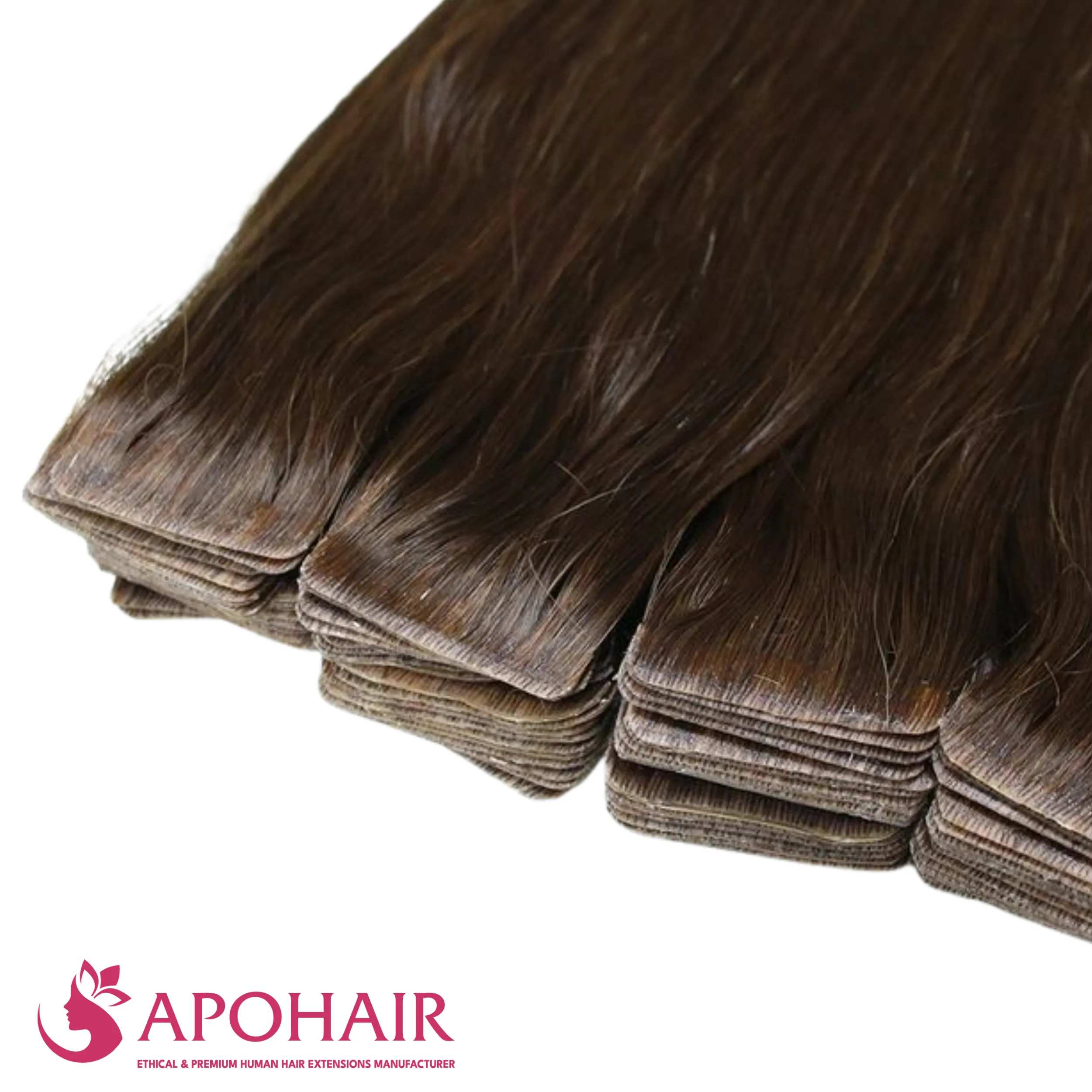
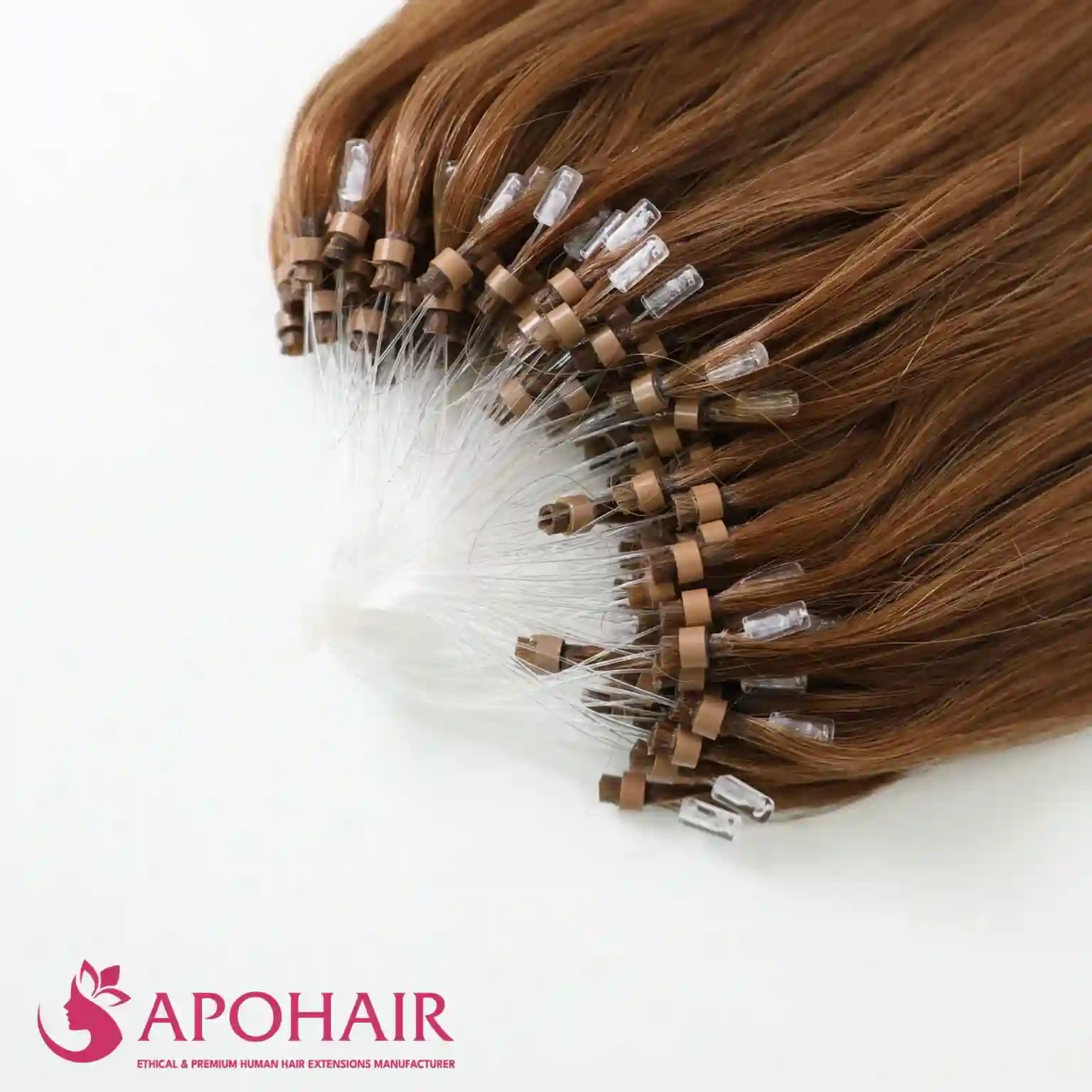
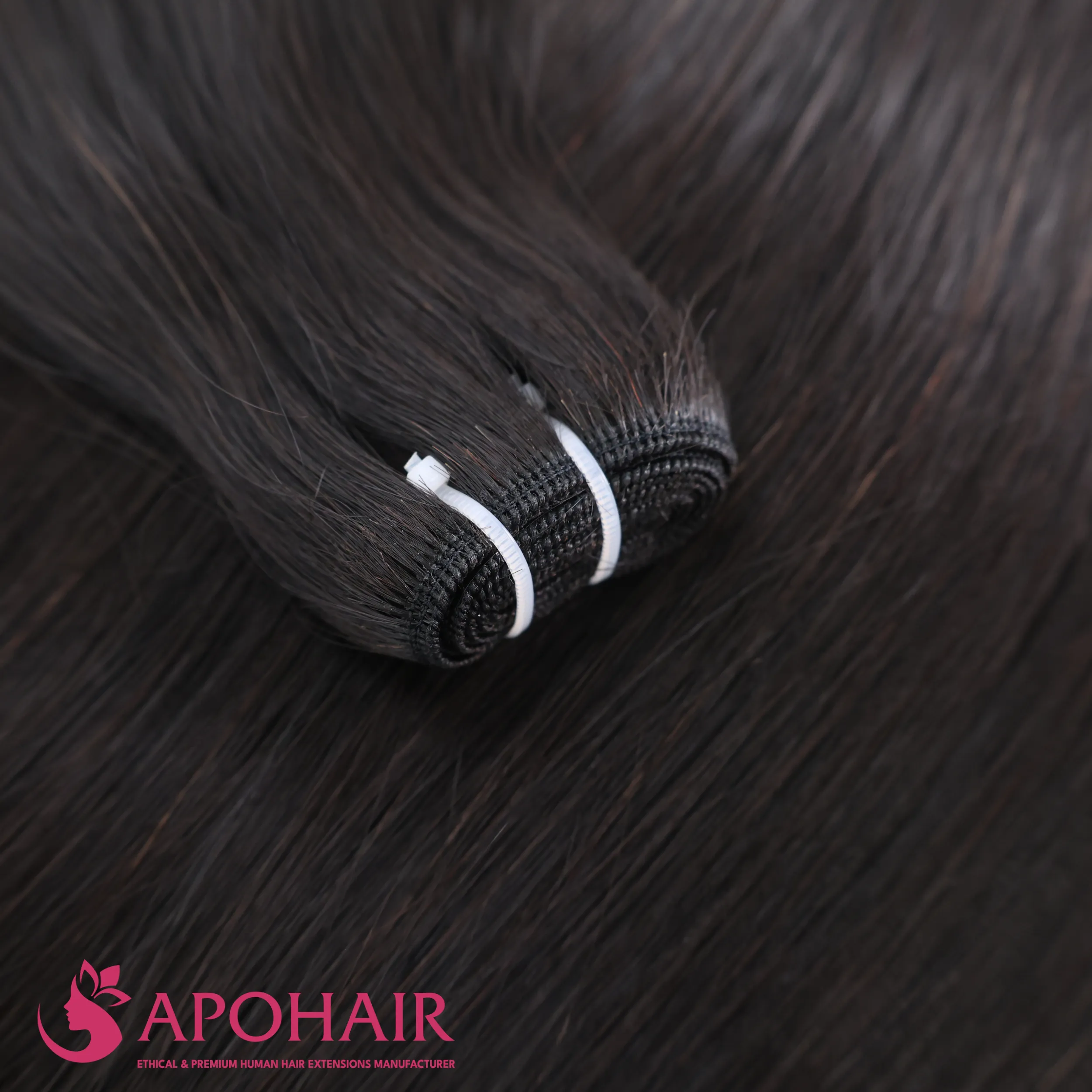
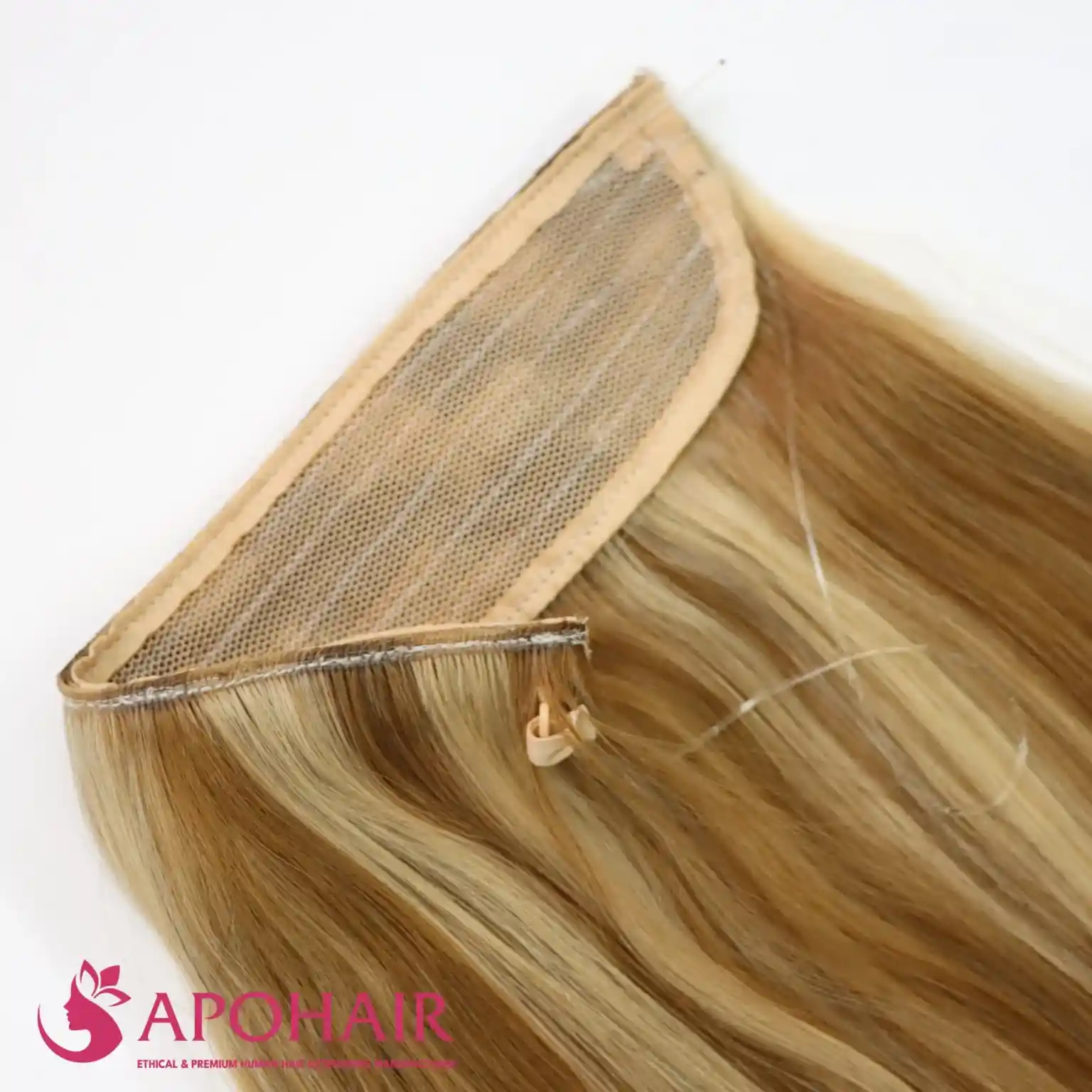
For stylists working with clients whose natural hair density needs extra support to achieve balanced volume for a triangular face, APOHAIR human hair clip-in extensions offer a professional solution. These clip-ins can add crown volume to pear-shaped faces, while longer extensions provide fullness below the jaw for inverted triangles. They give stylists an additional tool beyond just the haircut.
Frequently Asked Questions
What face shape is a triangle vs an inverted triangle?
A triangle (pear) face has a narrow forehead and a wider jawline, while an inverted triangle has a broad forehead tapering to a narrow jaw. You can tell them apart by measuring forehead, cheekbone, and jawline widths, then comparing the 3 measurements (see the identification method above). The inverted triangle is sometimes confused with the heart shape, but the key difference is that a heart face has a widow’s peak at the hairline.
Can bangs work on a triangle face shape?
Bangs work exceptionally well on triangle (pear) faces when they add width to the forehead. Side-swept, wispy, and curtain bangs are the 3 most flattering options for this shape. Avoid heavy blunt bangs, which shorten the face and make the jaw look wider. For inverted triangle faces, full or curtain bangs reduce forehead width by covering the broadest part of the face.
What is the best hair length for a triangle face?
Chin-to-collarbone length flatters triangle (pear) faces most because it allows layers and volume to build above the jawline without dragging the eye downward. For inverted triangles, shoulder-to-below-shoulder length works best because it adds fullness where the face narrows. Long hair works for both shapes if properly layered to place volume in the right zone.
How can hair extensions help balance a triangle face?
Hair extensions and toppers allow stylists to add volume exactly where a triangle face needs it: at the crown for pear shapes, or below the jaw for inverted triangles. This eliminates the need to rely solely on the cutting technique for volume placement. APOHAIR clip-in extensions give professionals a reliable tool for clients with fine or thinning hair who need strategic volume without permanent commitment.
What hairstyles suit both oval and triangle face shapes?
Layered lobs, curtain bangs, and soft waves suit both oval and triangle face shapes because they create balanced proportions without overcorrecting in either direction. These “universal flattering” styles work because they add moderate volume at the mid-face. That’s enough to balance a triangle jaw without disrupting the natural symmetry of an oval face.
Conclusion
The fundamental principle for flattering hairstyles for triangle-shaped faces is to add volume where the face is narrowest and create softness where it is widest. Whether opting for a bold pixie cut or a face-framing lob, the key is to match the style to the specific triangle-face subtype. Additionally, it’s important to use the right extensions, especially when natural hair density is lacking.
APOHAIR collaborates with salons and stylists worldwide, providing premium 100% human hair extensions and wigs designed for professional-grade results. Explore the APOHAIR wholesale collection to enhance your service menu with face-shape-balancing solutions.
Stock the volume placement this guide calls for: Whether it’s crown lift for a pear shape or fullness below the jaw for inverted triangle, the right base material makes the difference.
Extensions for targeted volume and length: For curtain bangs, face-framing layers, or crown lift, source from our remy hair extensions supplier range.
Wigs for full-look testing: Letting a client try a pixie or shag before committing to the chop? Our bulk human hair wigs catalogue covers bases built for that.
Bundles for thicker, voluminous finishes: The curly and wave-heavy looks on this list need weight and density, which our human hair bundles supplier line delivers.
Sourcing direct from Vietnam: As a Vietnamese hair in Vietnam supplier to salons and distributors worldwide, we back every format above with factory-direct pricing.
APOHAIR — ETHICAL & PREMIUM HUMAN HAIR EXTENSIONS AND WIGS MANUFACTURER
- Address: Building 3A, Lane 82 Duy Tan, Cau Giay, Hanoi, Vietnam
- Factory: (Old) Yen Luong Village, Y Yen District, Nam Dinh Province, Vietnam; (New) Minh Luong Hamlet, Van Thang Commune, Ninh Binh Province, Vietnam
- WhatsApp: +84 862 132 366
- Email: [email protected]
- Website: https://apohair.com
