








How To Find A Good Wholesale Hair Vendor: A Step-By-Step Guide
To find a good wholesale hair vendor, you need to verify the supplier’s production capability, hair quality, pricing terms, and ability to support repeat orders before placing a bulk purchase. A reliable vendor is not defined only by a low quote or attractive product photos, but by whether they can consistently deliver the quality and specifications your business requires.
Many companies present themselves as factories while operating as distributors or resellers. They may source finished products from other manufacturers, which can lead to hidden markups and inconsistent results across orders. Checking where the hair comes from, how it is processed, and who controls quality helps buyers avoid suppliers that cannot maintain the same standards over time.
This step-by-step guide explains how to evaluate wholesale hair vendors, from defining your order requirements and verifying manufacturing evidence to testing samples, comparing costs, reviewing OEM capability, and completing a test order before committing to a long-term supplier.
What Is A Wholesale Hair Vendor?
A wholesale hair vendor is a supplier that provides hair extensions, wigs, bundles, closures, and frontals in bulk to salons, distributors, and hair brands, with pricing, customization options, and quality control depending on how the supplier operates. Before comparing vendors, buyers need to understand whether they are dealing with a manufacturer, a distributor, or a reseller because each type handles production differently.
The difference matters because the company selling the hair may not always be the company producing it. A manufacturer controls the production process directly, while distributors and resellers usually source products from factories and add their own margin or service layer.
| Vendor type | Owns production | Typical price position | Can support OEM |
|---|---|---|---|
| Manufacturer / factory | Yes, controls production and quality processes | Lowest, factory-direct | Yes, full OEM and ODM |
| Distributor / importer | No, sources from factories | Mid, includes additional markup | Limited, depends on factory relationship |
| Reseller / dropship agent | No, usually does not control inventory or production | Highest, multiple markups possible | No |
The easiest way to separate these suppliers is to look for evidence of production control. A factory should be able to explain how it sources hair, manages processing, handles quality checks, and maintains consistency between batches. A reseller may provide good products, but it usually cannot answer those production questions directly.
For buyers, this distinction affects more than the first order. Production control influences whether the next shipment matches the previous one, whether custom requests can be fulfilled, and how problems are resolved when quality issues appear.
10 Steps To Find A Reliable Wholesale Hair Vendor
To find a reliable wholesale hair vendor, start by defining your product requirements, then verify the supplier’s manufacturing capability, hair quality, pricing, and order terms before committing to bulk purchases. You should also test samples, assess OEM and commercial support, check for supplier red flags, and use a trial order to confirm that the vendor can meet your standards consistently.
Step 1: Define Your Wholesale Hair Requirements First
Before contacting wholesale hair vendors, define your product requirements so suppliers can provide accurate quotes and suitable recommendations. Clear specifications also help you compare vendors based on the same criteria.
Prepare these details before requesting prices:
- Hair type: Choose between raw, virgin, or Remy hair based on your customers’ needs, styling requirements, and expected lifespan.
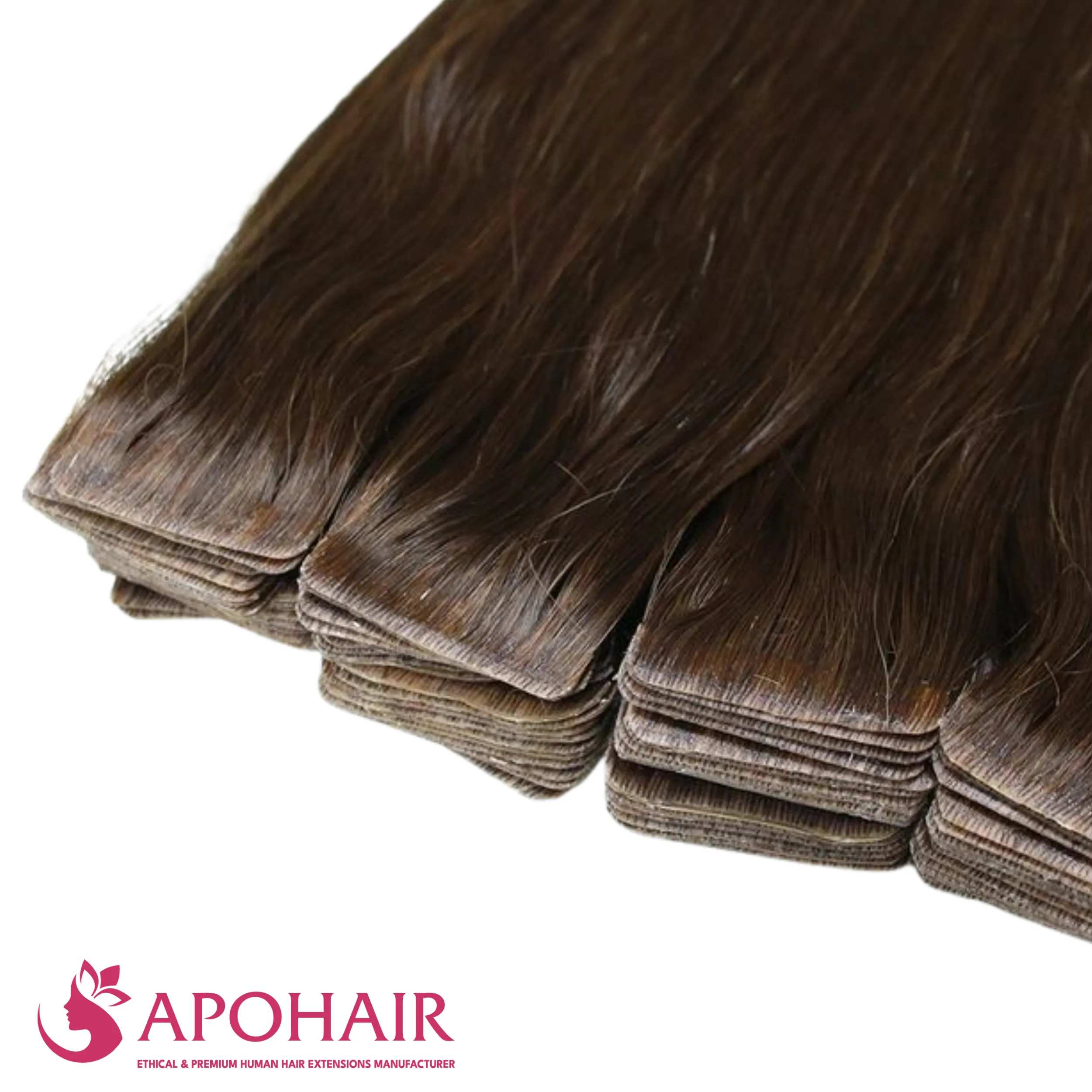
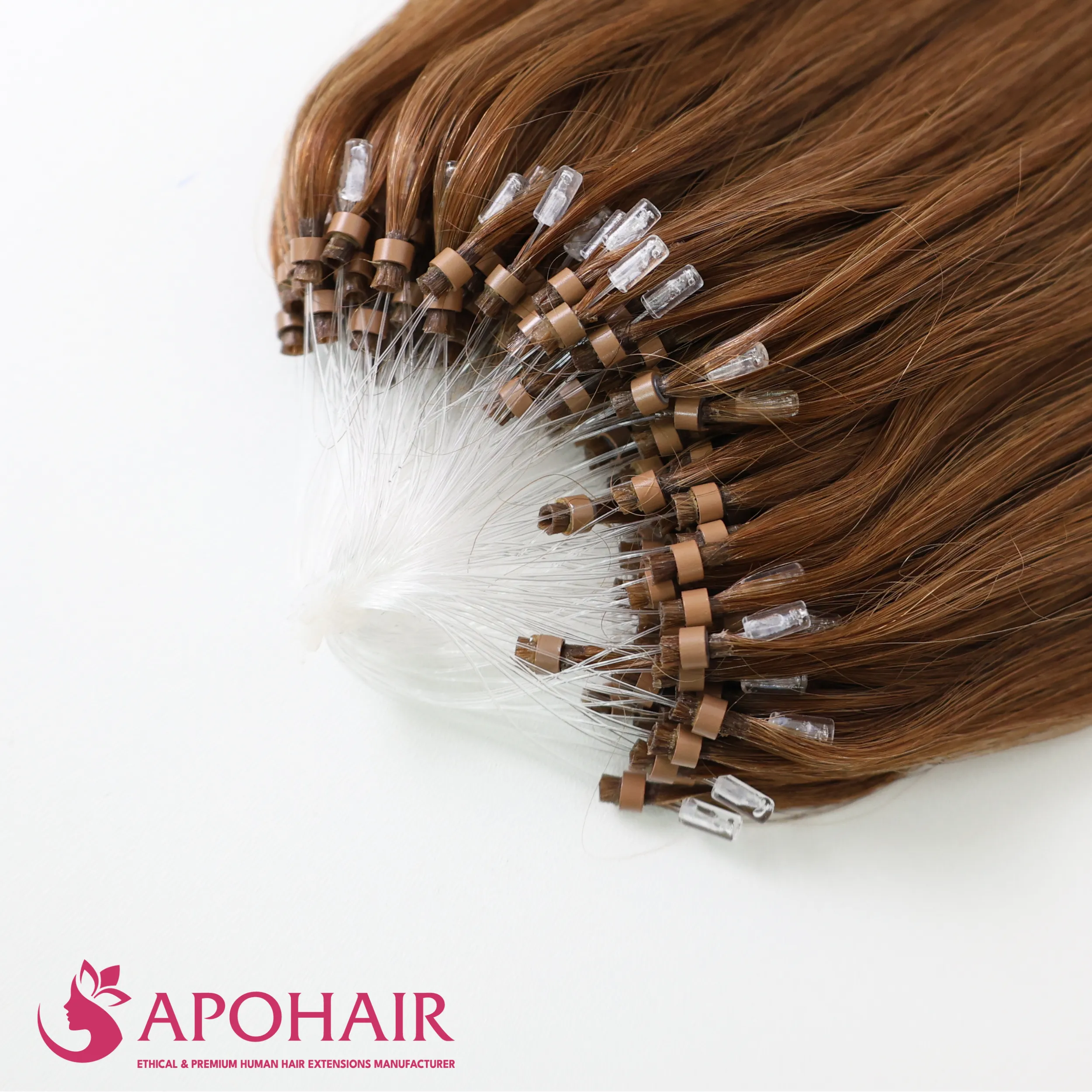
- Attachment method: Specify whether you need tape-ins, wefts, keratin tips, clip-ins, or wigs because each format requires different production methods.
- Length and color range: Provide exact measurements, such as 16 to 22 inches (40 to 56 cm), and list your preferred colors instead of using general descriptions.
- Monthly volume: Estimate demand based on salon installations, retail sales history, or your expected starting inventory.
- First-order budget: Include product costs, samples, shipping, import fees, and packaging to determine a realistic starting order.
If you are testing the market, begin with a manageable MOQ and increase your order volume after confirming product consistency.

Step 2: Search For Hair Vendors With Manufacturing Evidence
Finding wholesale hair vendors starts with building a supplier list, but the goal is not to collect as many names as possible. The important step is identifying which suppliers actually control production. Many buyers spend hours comparing photos and prices before realizing they are speaking with intermediaries rather than manufacturers.
A practical approach is to use multiple channels, then verify each supplier with production evidence:
Where To Look For Wholesale Hair Vendors?
- Google: Search specific manufacturing keywords instead of broad terms like “hair vendor.” Useful search queries include “Vietnam human hair factory,” “Vietnam hair extensions manufacturer,” “raw hair factory Vietnam,” “virgin hair wholesale supplier,” “human hair OEM manufacturer,” or “hair factory + [location]”. Factory websites often provide production details, but check whether the address, factory images, and company information match.
- B2B marketplaces: Platforms like Alibaba and Global Sources are useful for discovering suppliers quickly. However, many listings belong to trading companies, so treat marketplace profiles as a starting point rather than proof of manufacturing.
- Instagram and TikTok: Social platforms can reveal factory tours, production videos, and real customer installations. Useful hashtags include #hairfactory, #humanhairfactory, #vietnameshair, #vietnamhairfactory, #hairmanufacturer, #hairwholesale, #hairvendor, and #hairsupplier. Pay attention to whether the content shows actual workers, production stages, and consistent factory activity instead of only finished product photos or reposted images.
- Trade shows: Events such as Cosmoprof, Bronner Bros, and Canton Fair allow buyers to inspect samples, compare suppliers directly, and ask production questions face-to-face.
- LinkedIn: Company pages, employee profiles, and business history can help confirm whether a supplier has an established operation or only a sales presence.
- Stylist communities and industry groups: Feedback from salon owners and professionals can reveal real experiences with shedding, color consistency, delivery time, and after-sales support.

One common mistake is choosing the vendor with the most attractive online presence. A supplier may have thousands of followers and professional product images while still outsourcing production. During the first conversation, ask questions that require manufacturing knowledge, such as how the hair is sorted, processed, inspected, and prepared before shipment.
Create a comparison sheet while researching vendors. Record the supplier source, manufacturing evidence, product range, response quality, and any concerns before moving to sample testing.
Step 3: Compare Hair Quality Attributes
Before choosing a wholesale hair vendor, compare the quality factors that directly affect how the hair performs after installation. Product names such as “raw,” “virgin,” and “Remy” are useful references, but buyers should look deeper into sourcing, processing methods, and quality control because labels alone do not guarantee consistency.
Focus on these key attributes when comparing suppliers:
- Hair sourcing: Ask where the hair comes from and whether the vendor can explain the sourcing process. Hair collected from consistent sources usually allows better control over texture, color, and batch matching.
- Cuticle direction: Cuticle-aligned hair keeps the outer layer of each strand facing the same direction, which reduces friction and helps prevent tangling. Mixed cuticle direction is one of the main causes of matting after repeated washing.
- Chemical processing: Confirm whether the hair has been bleached, dyed, steamed, or coated with silicone. Heavy processing can make hair feel smooth initially but reduce its durability over time.
- Donor consistency: Check whether a bundle comes from a single donor or multiple sources. Fewer donor sources generally make it easier to maintain a consistent texture and appearance between bundles.
- Expected lifespan: Ask vendors how long the hair is designed to last under normal use and compare this with the processing level and price.
| Hair grade | Processing level | Cuticle condition | Typical lifespan |
|---|---|---|---|
| Raw hair | No chemical processing | Fully intact and aligned | 3 to 5+ years |
| Virgin hair | Light processing, usually steam treatment | Intact and aligned | 1 to 2 years |
| Remy hair | Processed while maintaining cuticle alignment | Aligned | 6 to 12 months |
| Non-Remy hair | Mixed sources and reversed cuticles | Not aligned | Weeks to months |

A common mistake among buyers is judging quality only by how the hair feels when it arrives. Some suppliers use silicone coatings to create a smooth texture that disappears after several washes. A better evaluation combines supplier transparency, technical answers, and sample testing before placing a bulk order.
When contacting vendors, ask specific questions about sourcing, processing, cuticle condition, donor selection, and expected lifespan. A supplier that controls production should be able to explain these details clearly instead of focusing only on price.
Step 4: Request Samples Before Bulk Orders
Before placing a large wholesale order, request samples that match the exact product specifications you plan to purchase. A sample is not only a way to check softness or appearance; it helps you evaluate whether the supplier can deliver consistent quality based on the claims they make.
Run several practical tests before approving a vendor:
- Wash test: Wash the hair multiple times using regular shampoo to check whether the smooth feeling comes from natural quality or temporary coating. Hair that becomes dry, rough, or tangled after washing may have heavy silicone treatment or poor cuticle condition.
- Brush test: Brush the hair from different directions to observe shedding, tangling, and matting. Excessive shedding or friction usually indicates problems with processing or cuticle alignment.
- Heat test: Apply heat with a flat iron or curling tool to check how the hair reacts to styling. Quality human hair should handle normal styling temperatures without a strong burnt smell or severe texture changes.
- Bleach test: For buyers selling colored extensions, test how the hair responds to lightening. Hair that breaks easily may have already gone through aggressive chemical processing.
- Curl retention test: Curl the hair and check whether it maintains the shape after cooling and resting. Weak elasticity often appears when the hair structure has been damaged.
- Smell test: Check the hair when dry and after washing. Strong chemical odors may indicate leftover processing agents.
- Air-dry test: Allow the hair to dry naturally after washing to observe its true texture without styling products or heat.
| Test | How to run it | What to observe |
|---|---|---|
| Wash | Shampoo and condition several times | Smoothness, dryness, tangling |
| Brush | Brush before and after washing | Shedding and matting |
| Heat | Use normal styling temperature | Burnt smell and texture change |
| Bleach | Lift color when required | Breakage and elasticity |
| Curl | Curl and leave for 24 hours | Shape retention |
| Smell | Check before and after washing | Chemical residue |
| Air-dry | Let the hair dry naturally | Natural texture and frizz |

One common mistake is testing only how the hair feels when it arrives. Many quality issues remain hidden because suppliers may send freshly coated or specially selected samples that represent their best stock. To get a more accurate result, request the same texture, length, and color you plan to order and ask whether the sample comes from current production inventory.
From a factory perspective, sample testing also reveals how a supplier handles feedback. A reliable vendor should be willing to discuss test results, explain possible causes, and suggest adjustments instead of immediately defending the product.
Keep a record of each sample test, including photos, notes, and results. Comparing vendors with the same testing process gives you a clearer picture than relying on price or first impressions alone.
Step 5: Check Wholesale Pricing And MOQ
Before comparing wholesale hair vendors, look at the total cost of getting the product into your business, not just the quoted price per bundle. A lower unit price does not always mean a better deal, as shipping, import costs, payment fees, customization requirements, and minimum order quantities can significantly affect the final cost.
Compare vendors based on these pricing factors:
- Product price: Compare the same hair grade, length, texture, and construction method. A 20-inch raw hair bundle and a 20-inch processed Remy bundle may look similar online but have very different production costs.
- Landed cost: Calculate the complete cost after adding shipping, customs duties, taxes, and payment fees. This gives a more realistic comparison between suppliers from different countries.
- MOQ (Minimum Order Quantity): Check whether the MOQ applies to total order value, weight, color, or length. A supplier may advertise a low MOQ but require higher quantities for custom colors or special sizes.
- Payment terms: Confirm deposit requirements, balance payment timing, and whether the payment method provides buyer protection.
- Volume discounts: Ask how pricing changes when your order volume increases instead of comparing only the first-order price.
| Product line | Typical wholesale range (USD) | Main price factors |
|---|---|---|
| Bundles and wefts | $60 to $200 per bundle | Hair grade, length, and drawing method |
| Tape-ins | $25 to $75 per pack | Hair quality, tape width, and quantity |
| Hand-tied wefts | $45 to $150 | Weft construction and labor |
| Keratin tips and I-tips | $35 to $140 | Tip type, strand count, and bonding method |
| HD lace wigs | $120 to $450 | Lace quality, density, and cap construction |

A common mistake among new buyers is choosing the lowest quotation without checking what is included. In the hair industry, unusually low prices often come from differences in hair sourcing, processing level, bundle weight, or product specifications rather than from a simple supplier discount.
From experience with wholesale orders, another issue appears when buyers compare quotes from different vendors using different units. One supplier may quote by 100-gram bundle, while another quotes by kilogram or pack, making the prices look different even when the actual cost is similar. Always ask vendors to provide pricing based on the same weight, length, and product specification before making a decision.
Terms To Confirm Before Payment
Before sending a deposit, confirm these details in writing:
- Return and refund policy: Understand the claim period and what happens if the received hair does not match the agreed specifications.
- Production timeline: Separate first-order production time from repeat-order restocking time.
- Shipping terms: Confirm delivery responsibilities, freight costs, and risk ownership during transportation.
- Customs responsibility: Clarify who handles import documents, duties, and related fees.
- Warranty coverage: Ask how defects are evaluated and what solutions are available.
- Payment conditions: Confirm deposit percentage, payment schedule, and transaction protection.
- Discount structure: Request written volume tiers for future orders.
A reliable supplier should provide clear pricing details and terms before payment. The goal is not to find the cheapest quote, but to understand exactly what you are paying for and whether the supplier can maintain the same standard across future orders.
Step 6: Evaluate OEM And Private Label Capability
If you plan to build your own hair brand, evaluate whether a wholesale hair vendor can support more than adding your logo to existing products. OEM capability shows whether a supplier can adjust products, packaging, and production processes according to your brand requirements.
Check the vendor’s capability across these levels:
- Branded packaging: The supplier provides custom boxes, labels, hang tags, or packaging designs using your brand identity. This is the easiest level and usually requires the lowest MOQ.
- Custom colors: The supplier develops shades based on your requirements, color codes, or reference samples. Ask about color approval processes because matching shades consistently across batches requires production control.
- Custom textures and lengths: The supplier modifies product specifications outside its standard catalog, such as creating specific textures, widths, or lengths. This usually requires a higher MOQ and sample approval before production.
- New product development: The supplier helps develop new constructions, attachment methods, or product models through testing and R&D. This requires stronger manufacturing capability and longer development timelines.
The main difference between private label and OEM is the level of control involved. Private label usually means applying your branding to an existing product, while OEM requires the supplier to adjust the product itself according to your specifications.

A common mistake is assuming every vendor offering custom packaging can provide full OEM support. Packaging changes do not prove that a supplier controls production. When a buyer requests a different color, texture, or construction, an actual manufacturer should be able to explain the development process, sample approval steps, and production timeline.
Before choosing an OEM partner, ask:
- Can you develop custom colors based on samples or color codes?
- What is the MOQ for customized products?
- How long does sample approval take before bulk production?
- Can you maintain the same specifications for repeat orders?
- Do you have an in-house design or R&D team?
From a factory perspective, the most important part of OEM is not creating the first sample. It is maintaining consistency after the product enters regular production. A supplier that can support repeat customization gives brands more control over product quality, inventory planning, and long-term growth.
Step 7: Verify Communication And Business Reliability
A reliable wholesale hair vendor should be evaluated based on daily communication, not just on product quality or pricing. The way a supplier responds before and after payment often reveals how they handle orders, solve problems, and support long-term partnerships.
Pay attention to these operational signals:
- Response quality: Fast replies are useful, but technical accuracy matters more. A supplier that can explain hair sourcing, processing methods, defect handling, and production timelines shows better product knowledge than one that only sends price lists.
- Technical communication: Ask specific questions about the products you plan to order. Vendors with direct production control usually provide detailed answers, while intermediaries often avoid manufacturing-related questions or redirect conversations toward pricing.
- Documentation readiness: Request documents such as quotations, proforma invoices, packing lists, and shipping details before making payment. Organized suppliers usually have a clear process for handling commercial orders.
- Post-payment support: Observe whether the vendor continues providing updates after receiving a deposit. Reliable suppliers communicate production progress, confirm shipping details, and notify buyers early of any delays.

One common mistake is judging a supplier only by the speed of the first reply. Sales teams are usually highly responsive when trying to secure a new customer, but the real test starts after payment. A vendor that becomes difficult to reach during production or after delivery may create problems when you need support.
A practical test is to ask a few detailed questions before placing an order and evaluate both the answer and the effort behind it. For example, ask how the supplier handles inconsistent color between batches or what steps they take when a customer reports a quality issue.
Check Third-Party Proof, Not Just The Vendor’s Website
Supplier claims should be compared with external evidence whenever possible. Useful proof includes:
- Customer installations: Videos or posts showing real stylists using the hair on clients.
- Tagged business accounts: Salon pages or professional accounts that can be verified independently.
- Long-term customer feedback: Reviews that mention repeat purchases, consistency between orders, and after-sales experience.
- Industry presence: Trade show participation, professional partnerships, or business activity outside the supplier’s own website.
A strong online presence does not always indicate manufacturing capability. Some resellers use professional images and marketing materials from factories they do not own. Checking third-party proof helps confirm whether the supplier’s claims match real customer experiences.
From experience working with wholesale buyers, the most valuable supplier relationships usually come from vendors that communicate clearly when problems occur. Mistakes can happen in any production process, but the difference is whether the supplier identifies the issue, explains the cause, and works toward a solution.
Step 8: Choose Vendors With Strong Commercial Support
A wholesale hair vendor should support your business beyond the first shipment. Long-term suppliers help buyers maintain inventory, manage repeat orders, and respond quickly to changes in customer demand. These capabilities become more important after you start selling consistently and need a predictable supply.
Evaluate the vendor’s commercial support through these areas:
- Restock capability: Ask how quickly the supplier can prepare repeat orders for your best-selling products. A supplier that understands your regular sales pattern can help prevent stock shortages, especially for popular lengths, colors, and textures.
- Inventory planning: Some suppliers can reserve stock based on your forecast or production schedule. This helps brands avoid unexpected shortages during high-demand periods.
- Sales support materials: Check whether the vendor can provide product photos, specifications, aftercare instructions, or other materials that help you present the products to customers.
- Dedicated account support: A consistent point of contact makes communication easier because they understand your previous orders, product preferences, and special requirements.

A common mistake among new buyers is evaluating suppliers solely on the first-order experience. The first shipment usually receives the closest attention because the vendor is trying to build the relationship. The real difference appears in repeat orders, when buyers need the same color, texture, and quality to be delivered under normal production conditions.
From a manufacturing perspective, repeat-order consistency is often more challenging than producing the first sample. A supplier may create an excellent initial batch, but maintaining the same specifications requires stable sourcing, production control, and quality checks.
Before committing to a long-term supplier, ask:
- How long does a repeat order usually take compared with a first order?
- Can you reserve popular products based on my monthly demand?
- Do you keep production records for previous orders?
- How do you handle differences between batches?
- Who will manage my account after the first purchase?
The best supplier relationships are built around reliable operations, not only competitive pricing. A vendor that understands your business goals can help you manage inventory, maintain customer satisfaction, and scale your wholesale hair business more effectively.
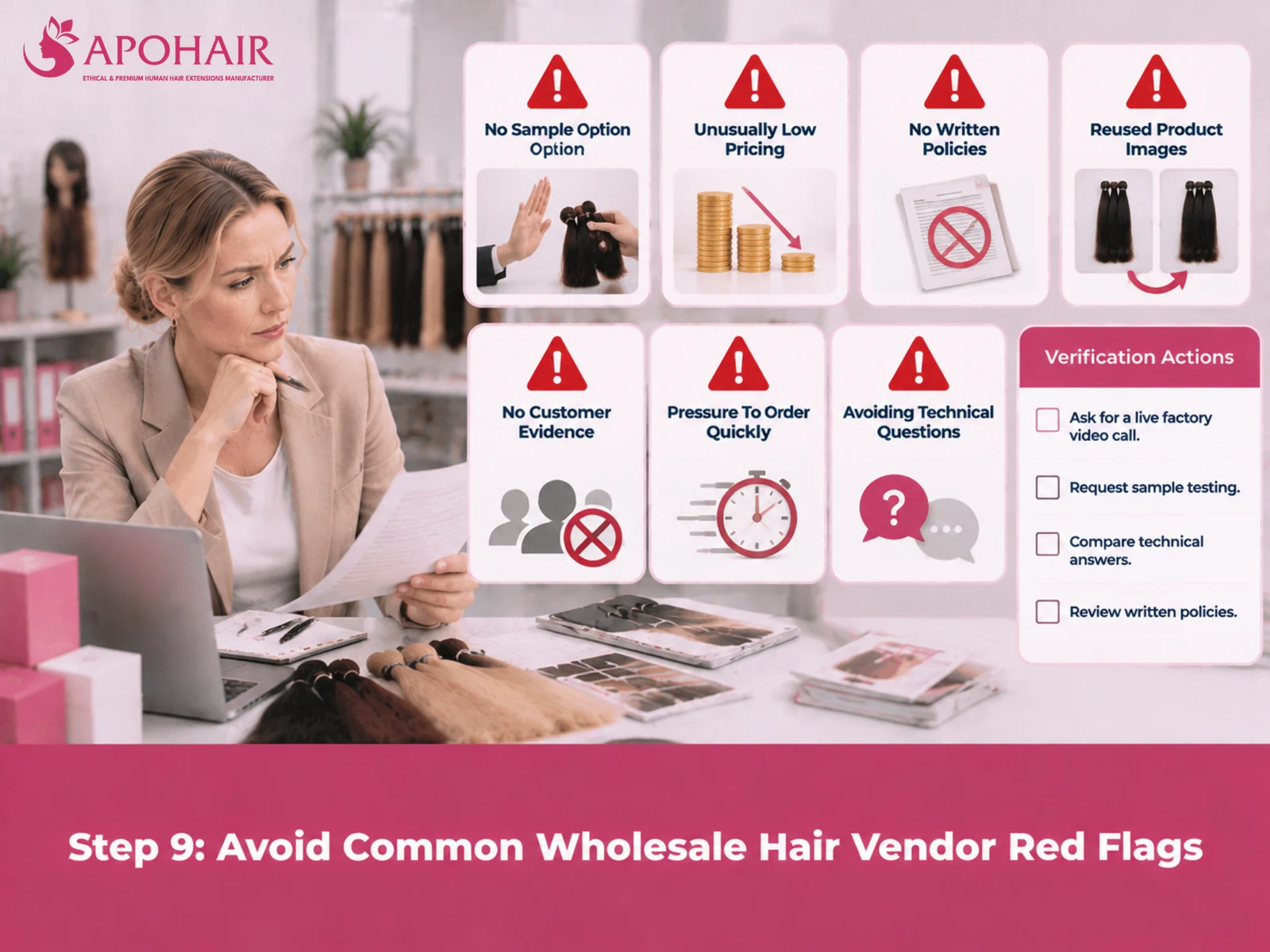
Step 9: Avoid Common Wholesale Hair Vendor Red Flags
Before committing to a wholesale hair vendor, identify warning signs that indicate problems with product quality, transparency, or long-term cooperation. A professional supplier does not need to be perfect, but they should be able to explain their products, provide verification, and communicate clearly when buyers ask detailed questions.
Watch for these common red flags:
- No sample option: A supplier that refuses samples prevents buyers from verifying hair quality before placing a bulk order. A legitimate vendor should allow buyers to test products before making a larger commitment.
- Unusually low pricing: Prices far below the normal market range often come from differences in hair sourcing, processing methods, weight, or product specifications. Low prices should be investigated rather than accepted immediately.
- No written policies: Missing return, warranty, or quality-claim terms can create problems when products do not meet the agreed specifications.
- Reused product images: Photos that appear across multiple unrelated supplier websites may indicate that the vendor does not own the products or the production process shown.
- No customer evidence: A lack of real installation videos, salon feedback, or verifiable customer accounts makes it harder to confirm product performance.
- Pressure to order quickly: Urgent sales tactics, limited-time discounts, or pressure to increase order volume before testing can be a warning sign.
- Avoiding technical questions: Suppliers that cannot explain sourcing, processing, quality checks, or production details may not control the manufacturing process.
Not every warning sign means a supplier is unreliable. For example, some factories allow distributors to use the same product photos, and some manufacturers may have limited public customer reviews because they mainly serve B2B buyers. The important step is to look for patterns and ask additional questions before making a decision.
From experience with wholesale buyers, the biggest issue is often not a supplier making a mistake; it is a supplier being unable to explain what happened when something goes wrong. A reliable vendor should be willing to discuss quality issues, provide solutions, and improve processes when problems appear.
Before removing a vendor from your shortlist, verify the concern with evidence:
- Ask for a live factory video call if production claims are unclear.
- Request sample testing if quality claims cannot be verified.
- Compare technical answers across suppliers rather than prices alone.
- Review written policies before sending payment.
A careful verification process helps buyers avoid suppliers that create problems after the order is placed, when changing vendors becomes more costly and time-consuming.
Step 10: Validate Your Final Vendor With A Trial Order
After checking the red flags in Step 9, you should be left with a small group of vendors that have passed your initial quality, pricing, production, and reliability checks. At this point, the goal is no longer to keep comparing suppliers broadly. You need to verify the few remaining uncertainties that could become costly once you start ordering at a larger volume.
Place a paid trial order with your strongest candidate, or with two vendors if the difference between them is still unclear. The order should be large enough to reflect normal production rather than a hand-selected sample, but small enough that a problem will not put significant inventory or cash at risk.
Use the trial to check the points that samples and supplier conversations cannot fully prove.
- Batch consistency: Compare the finished order with the approved sample for texture, color, length, weight, and construction. A good sample matters less if the supplier cannot reproduce it in normal production.
- Order accuracy: Check whether the quantities, product mix, packaging, labels, and custom requirements match the purchase specification without repeated corrections.
- Production execution: Compare the actual production and dispatch dates with the timeline confirmed before payment. Delays are not always a reason to reject a supplier, but unexpected delays without clear communication are a concern.
- Issue resolution: Use any small discrepancy during the trial to see how the vendor responds. A supplier that identifies the cause, communicates clearly, and offers a practical correction is easier to work with when larger orders are involved.
Define your acceptance criteria before the shipment arrives. For example, if color consistency is critical to your product line, decide in advance what variation is acceptable rather than making that judgment only after seeing the goods.

The purpose of the trial order is to close specific gaps in your evaluation. One vendor may already meet your quality requirements but still need to prove its custom color accuracy. Another may have strong products but need to show that it can follow packaging specifications or meet the agreed production schedule. Test the uncertainty that matters most instead of repeating checks you have already completed.
Once the trial is complete, choose the vendor that meets your required standard with the fewest unresolved risks. If one important issue remains unclear, run a second focused trial before increasing the order size. If the supplier passes, you now have enough evidence to move from vendor evaluation into an actual supplier relationship.
What Comes After Selecting A Wholesale Hair Vendor?
Once a vendor passes the trial order in Step 10, move from supplier evaluation to a repeatable purchasing process. Document the approved product standard, gradually increase order volume, check each shipment against the same reference, and establish a routine for production updates, quality claims, restocking, and inventory planning.
Start by documenting the exact standard approved during the trial, including product specifications, color references, bundle weight, construction details, packaging, and any acceptable tolerances. Future purchase orders should refer to this approved standard rather than relying on previous chats or photos.
Increase order volume gradually and compare each shipment against the approved reference. Check the factors that matter most to your business, such as color, texture, weight, shedding, construction, and packaging accuracy. Record any differences so they can be corrected before the next production run.
As orders become more regular, establish a simple routine for purchase confirmation, production updates, quality claims, and restocking. Share sales trends for your best-selling lengths, colors, and textures so the supplier can plan inventory more accurately.
Keep a qualified backup vendor available during the early stages. A stable supplier relationship is built when approved standards, quality checks, communication, and replenishment become consistent from one order to the next.
Frequently Asked Questions About Wholesale Hair Vendors
How To Get A Hair Vendor For A Wholesale Hair Business?
To get a reliable hair vendor, start by creating a list of potential suppliers through factory websites, B2B marketplaces, social media platforms, trade shows, and professional hair communities. The goal is not only to find vendors that sell hair, but to identify suppliers that can prove their production capability and quality standards.
Follow these steps:
- Define your requirements first: Prepare details such as hair type, product format, length, color, expected order volume, and budget before contacting suppliers.
- Search through multiple channels: Use Google, Alibaba, Instagram, TikTok, trade shows, and industry networks to find potential vendors.
- Verify manufacturing capability: Ask for factory information, production photos or videos, product specifications, and evidence that the supplier controls the production process.
- Request samples: Test the hair quality before placing a larger order. Compare texture, shedding, durability, and consistency with your business requirements.
- Evaluate communication and support: Choose vendors that provide clear answers, transparent pricing, and reliable follow-up during the ordering process.
A common mistake among new buyers is choosing a vendor based only on low prices or attractive social media content. A reliable supplier should be able to explain where the hair comes from, how it is processed, and how quality is maintained between orders.
What Is The Minimum Order Quantity For Wholesale Hair?
The minimum order quantity (MOQ) depends on the product type, customization level, and the supplier’s production process. Some vendors set MOQ by weight, while others calculate it by order value, color, or product unit.
Before comparing suppliers, confirm exactly how the MOQ is calculated. A vendor may advertise a low starting quantity but apply higher requirements for custom colors, special lengths, or branded packaging.
For example, some factories may accept small trial orders for standard products but require larger quantities when developing custom products.
Can You Buy Wholesale Hair Without A Business License?
Some wholesale hair vendors work with registered businesses, while others accept individual buyers who are testing the market. Requirements vary depending on the supplier, location, and order size.
Before spending time on samples and negotiations, ask whether the vendor requires business documents, tax information, or proof of retail activity. Understanding these requirements early helps you focus on suppliers that match your current business stage.
How Long Does A Wholesale Hair Order Take To Arrive?
Wholesale hair delivery time usually includes two separate stages: production time and shipping time. Buyers should ask vendors to provide both timelines instead of only asking when the order will arrive.
Standard products that are already available in stock usually move faster, while custom colors, textures, packaging, or OEM projects require additional production time.
When planning customer deliveries, allow extra time for quality checks, shipping delays, and customs procedures rather than relying only on the supplier’s estimated production date.
Is Factory-Direct Always Cheaper Than Buying From A Distributor?
Factory-direct pricing is often lower because it removes an additional supplier layer, but the lowest quote is not always the best option. The final cost depends on product quality, MOQ requirements, shipping fees, payment terms, and after-sales support.
A distributor may sometimes provide value through smaller order quantities or easier logistics, especially for new buyers. Compare the complete cost and service conditions before deciding between a factory and an intermediary.
What Is The Difference Between Raw, Virgin, And Remy Hair?
Raw, virgin, and Remy hair describe different levels of processing and quality characteristics:
- Raw hair: Hair that has not undergone chemical processing and typically maintains intact cuticles.
- Virgin hair: Hair that has not been chemically treated but may go through controlled processes such as steam treatment to achieve specific textures.
- Remy hair: Hair where the cuticles are maintained in the same direction, although the hair may have undergone additional processing.
The actual quality depends on how the supplier sources, processes, and controls the hair. Buyers should verify these claims through samples and testing rather than relying only on product labels.
Conclusion
Finding a reliable wholesale hair vendor is less about how good the first sample looks and more about whether the same quality holds across repeat orders. In our experience working with wholesale buyers, the problems that usually appear later are batch variation, delayed restocking, and differences between approved samples and delivered stock.
That is why we recommend testing at least two consecutive orders before increasing volume. Recheck the delivered hair for weight, length, texture, shedding, and wash performance against the original sample, and keep one qualified backup supplier active in case your primary source runs short on a key color or length.
At APOHAIR, these checks can be tied directly to our manufacturing operation. Our 33,000 m² (355,000 sq ft) factory in Ninh Binh has more than 700 workers and production capacity of up to 20 tons per month. Over more than 15 years of export operations, we have supplied buyers in 120+ countries, while our in-house R&D team supports OEM and ODM development using 100% ethically sourced Vietnamese human hair.
If you are comparing suppliers, use the ten-step process in this guide to verify production, test actual stock, calculate landed cost, and evaluate repeat-order performance before committing more capital. For product specifications, MOQ details, samples, or a factory-direct quotation, contact APOHAIR at [email protected].
APOHAIR — ETHICAL & PREMIUM HUMAN HAIR EXTENSIONS AND WIGS MANUFACTURER
- Address: Building 3A, Lane 82 Duy Tan, Cau Giay, Hanoi, Vietnam
- Factory: Minh Luong, Yen Luong Ward, Ninh Binh, Vietnam
- WhatsApp: +84 862 132 366
- Email: [email protected]
- Website: https://apohair.com/