




14 Short Hairstyles for Square Faces Women That Soften The Strong Jawline
Short hairstyles for square faces that soften the strong jawline are layered bob, pixie cut with soft tapered sides, and long bob (lob). A square face runs about as wide at the jaw as at the forehead and ends in a strong angle below each ear. A short cut softens it by keeping hard lines off that angle. Curves, texture, or a little height do the rest. Four decisions then narrow the choice: where the cut ends against the jaw, how the part and fringe fall, how the hair moves, and how much hair there is. A strong jawline narrows the list further, and short cuts fail when a blunt edge, a sharp geometric line, flat sides, or heavy straight bangs repeat the face’s angles.
Forehead, cheekbones, and jaw sit at nearly the same width on a square face, and its length stays close to that width. Short hair shows the jaw angle more than long hair does, since less length falls past it. That puts more weight on the edges of a short cut than on its length. Fourteen short cuts handle those edges well, from layered bobs and lobs to soft pixies, curls, and a softened pageboy.


14 Short Hairstyles for Women with Square Faces
The layered bob, the pixie cut with soft tapered sides, and the long bob suit women with square faces best, each keeping a hard edge off the jaw angle. The other eleven soften the corners with angles, choppy texture, rounded shapes, or natural curl.
1. Layered Bob
A layered bob cuts soft, overlapping layers into a bob that ends an inch or two past the chin. For women with square faces, the layers break the perimeter into several shorter edges, so no single line runs level with the jaw angle. The movement blurs the corner that sits behind it.
Layers begin around the cheekbone and stop short of the final inch of length, so the ends keep enough body to hold the shape. Slide-cutting rounds off each layer. Denser hair shows the movement clearly, and fine hair takes a few long layers at most. Every 8 weeks or so, the layers need refreshing before they blend back into one edge.
Why it works: Both women have square faces, and the layers break the bob’s edge into several shorter lines instead of one, so no single line runs level with the jaw angle.
2. Pixie Cut With Soft Tapered Sides
A pixie cut with soft tapered sides keeps a couple of inches on top, with every edge point-cut rather than clippered. On square faces, the soft top adds a little height, since these faces run about as wide as they are long. Rounded edges around the ears keep the cut from drawing corners beside the jaw, so the face gains curves its bone structure lacks.
The top carries about 2 inches and takes a texture paste for lift. Sideburns taper to a point instead of ending in a square. Thinner hair gives the softest edge, while thick hair needs its sides thinned so they lie close without puffing. A pixie this length holds its shape for 5 to 6 weeks before the edges need work.
Why it works: A little height on top and rounded edges around the ears add curves square faces’ bone structure lacks, instead of drawing corners beside the jaw.
3. Long Bob (Lob)
A lob, the long version of the bob, falls past the jaw toward the collarbone. On square faces, the extra length carries the hair several inches beyond the jaw angle, so the corner sits behind soft length instead of at the bob’s edge. The extra length also adds a vertical line to faces whose width matches their length.
Point-cut ends and a few long layers below the chin keep it moving. A side part angles the top across the forehead. Almost every texture carries it, and a natural wave adds the most softness at the jaw. Trimming about every 10 weeks keeps the ends light.
Why it works: Extra length past the jaw angle puts the corner behind soft length instead of at the bob’s edge, and the added vertical line offsets the matched width and length square faces have.
4. Short Shag
A short shag breaks the whole cut into choppy, feathered pieces with a tousled outline and wispy tips near the jaw. For women with square faces, the shag swaps straight edges for broken ones, while shorter crown pieces add a little lift above the wide forehead. The corners of the jaw end up behind feathered texture.
Crown pieces stay shorter than the side pieces, which gives the shag its lift without bulk at jaw level. The wispy tips thin out as they reach the jaw, so they never form a line. Hair with a natural wave, Type 2A to 3A, builds the shag on its own. Reshaping every 8 weeks keeps the pieces separate.
Why it works: Broken, feathered edges swap out the straight lines a square jaw would otherwise echo, so the corner ends up behind texture rather than a line.
5. French Bob
Cut to around lip level, a French bob sits above the jaw angle, with a soft, rough-dried edge and a light fringe over the brows. For women with square faces, the high line keeps the bob’s edge well away from the corner of the jaw, while the airy fringe interrupts the flat hairline. Attention settles on the eyes and mouth.
The line clears the jaw angle by about an inch, and point-cutting keeps it soft. The fringe stays sheer, since a dense fringe adds a heavy horizontal across a square forehead. Finer hair falls into that relaxed texture with little effort. Growth pulls the line closer to the corner of the jaw, so it goes back up with a recut every 5 to 6 weeks.
Why it works: Keeping the line well above the jaw angle, with a sheer fringe over it, moves attention to the eyes and mouth instead of underlining square faces’ jaws.
6. Bixie (Pixie Bob)
A bixie pairs a cropped, layered top with longer, soft sides that cover the ears and end before the corner of the jaw. For women with square faces, those sides veil the temples and cheeks, and the top adds lift. The cut softens the upper corners without drawing any line at the jaw.
Point-cut tips turn the sides slightly inward. Keeping roughly an inch between their ends and the jaw corner stops their edge from marking it. Medium density keeps both sections clean, and a natural wave softens the sides further. The sides move down toward the jaw as they grow, so a reshape after about 6 weeks keeps them clear.
Why it works: The longer sides veil the temples and cheeks while the top adds lift, softening the upper corners without drawing any line at a square jaw.
7. Angled Bob
An angled bob sits short at the nape and slopes down toward the front, finishing past the chin. For women with square faces, the slope crosses the jaw angle on a diagonal, so the corner meets a slanted line instead of a level one. The longer front also narrows the lower face.
A slope of about 1.5 to 2.5 inches from the back to the front keeps the diagonal clear without turning severe. Point-cut front corners keep the angle soft. Straight and slightly wavy hair show the slope most clearly. Growth at the back gradually flattens the angle, so the cut needs redoing every 6 to 8 weeks.
Why it works: A diagonal slope crosses the jaw angle instead of running level with it, so the corner meets a slanted line rather than a matching horizontal.
8. Asymmetrical Pixie
One side of an asymmetrical pixie sits close to the head, and the other keeps a longer, swept section that falls over the brow toward the cheekbone. For women with square faces, the uneven outline stops the two jaw corners from reading as a matched pair, and the swept section softens one temple. The shape gains movement where the face is most even.
The swept side carries 3 to 4 inches at the front and thins toward the ear, so it lies flat. On the short side, scissors taper the hair rather than clippers, which keeps a soft edge beside the jaw. A natural wave helps the long side fall more easily. Trimming the short side every 5 to 6 weeks keeps the difference sharp.
Why it works: The uneven outline stops the two jaw corners from reading as a matched pair, breaking the symmetry that makes a square jaw look boxy.
9. Short Textured Bob
Choppy, uneven pieces make up the perimeter of a short textured bob, which stops just below the chin. For women with square faces, that ragged edge cannot form the level line that would underline the jaw, and the texture softens both corners. The cut keeps a bob’s shape without a blunt bob’s hardness.
Razor work creates the texture, and a sea-salt spray separates the pieces. Keeping the line clearly below the chin, rather than at it, stops the ends from sitting on the jaw. Straight hair gains the most from the texture, since curly hair already breaks its own edge. The choppy finish lasts 7 to 8 weeks between cuts.
Why it works: A ragged edge cannot form the level line that would underline the jaw, so the texture softens both corners instead of tracing them.
10. Textured Pixie
A textured pixie cuts the top into piecey, separated layers with some lift and keeps the sides short but soft. For women with square faces, the piecey top breaks the straight hairline and pulls the eye upward, off the jaw and onto the crown, while the added height lengthens a face as long as it is wide. The texture keeps the whole outline from reading geometric.
Deep point-cutting on top separates the pieces and helps them stand, while the sides take only light texture so they lie close. A matte paste defines the top. Thicker hair holds the pieces best, and fine hair needs lighter texture so it does not clump. The pieces lose their definition after 5 to 6 weeks.
Why it works: Natalie Portman has a square face, and her piecey top pulls the eye upward, off the jaw and onto the crown, while the added height lengthens a face as wide as it is long.
11. Curly Bob
Natural curls give a curly bob its shape, with the cut ending past the chin and the fullest curls sitting at cheekbone height. Round curls answer the straight lines of square-faced women directly. Because the ends taper below the jaw, the volume never builds across the widest part of the jaw.
Dry cutting places the volume where the curls will actually sit after shrinkage. Long interior layers lighten the ends so the bob narrows under the jaw. Patterns from 3A to 4A carry the shape, and a curl cream holds the definition. A reshape roughly every two months keeps the volume high.
Why it works: Round curls answer the straight lines of square faces directly, and because the ends taper below the jaw, volume never builds across the widest point.
12. Rounded Bob
A rounded bob curves its whole outline, from a softly lifted crown down to ends that turn in just past the chin. For women with square faces, that curve surrounds the jaw angles with arcs, so the corners sit inside a round frame instead of beside straight edges. The small lift at the crown also adds length.
Even layering shapes the curve, and the sides stay close over the ears so the roundness adds no width at jaw level. The ends turn in below the chin rather than at the jaw. Medium-density hair gives the smoothest curve, and thick hair needs its interior thinned. The curve holds for about 6 to 8 weeks.
Why it works: Arcs surround the jaw angles instead of straight edges, so square faces’ corners sit inside a round frame rather than beside straight lines.
13. Curly Pixie
A curly pixie keeps short curls fuller on top and closer at the sides, so they build a rounded height above the forehead. For women with square faces, the curls soften the straight hairline, and the height lengthens the face while the close sides keep width off the jaw.
Shaping on dry curls sets the true height, and the sides taper in a curved line around the ears. Curls kept full at the temples would widen the corners of the forehead, so the fullness stays at the crown. Curls in the 3A to 3C range suit it, and a diffuser adds lift. Every 6 weeks or so, a reshape keeps the top fuller than the sides.
Why it works: The curls soften the straight hairline and the height lengthens the face, while the close sides keep width off a square jaw.
14. Soft Pageboy Cut With a Curved Fringe
A soft pageboy cut with a curved fringe keeps the classic pageboy’s one-length, rounded shape and curved-under ends, but drops the length and softens the fringe. On square-faced women, only this softened version works. Taken an inch or so past the chin, the curved-under ends wrap around the jaw angle as an arc rather than a straight edge, and the fringe stays soft instead of heavy.
A round brush turns the ends under, and a slight bevel under the perimeter helps the curve hold. The fringe runs a little longer at its outer corners, so it curves toward the temples instead of cutting straight across. A classic pageboy at jaw length with a dense, straight fringe repeats the square shape twice. Straight, medium-density hair holds the curve best, and the shape needs a recut every 6 weeks.
All fourteen soften square faces the same way, by keeping hard lines off the jaw angle and adding curves, texture, or height. Hair texture and density then decide which cut holds that softness.
Why it works: Curved-under ends wrap the jaw angle as an arc rather than a straight edge, and the soft fringe avoids repeating a square shape twice over.
How to Choose a Short Hairstyle for Women with a Square Face
Four decisions choose a short hairstyle for women with square faces: where the cut ends against the jaw, how the part and fringe fall, how the hair moves, and how much hair there is. The square shape sets the goal of softening the angles, and these four decide which cut does it.
- Where the cut ends: A pixie, a bixie, or a French bob stops clearly above the jaw angle, while a textured bob, a lob, or a pageboy cut falls past the chin. The length to avoid is a blunt edge anywhere from the jaw angle to the chin, which underlines the corner.
- The part and fringe: A side part or an asymmetrical pixie adds a diagonal across the wide top of the face, and a light, curved fringe softens its corners. A heavy straight fringe and a hard center part both add straight lines.
- Texture: decides how much softening the hair supplies on its own. Wavy and curly hair round every edge naturally, so shags and curly cuts need little styling. Straight hair needs point-cutting, layers, or a curve at the ends, or the cut reads geometric.
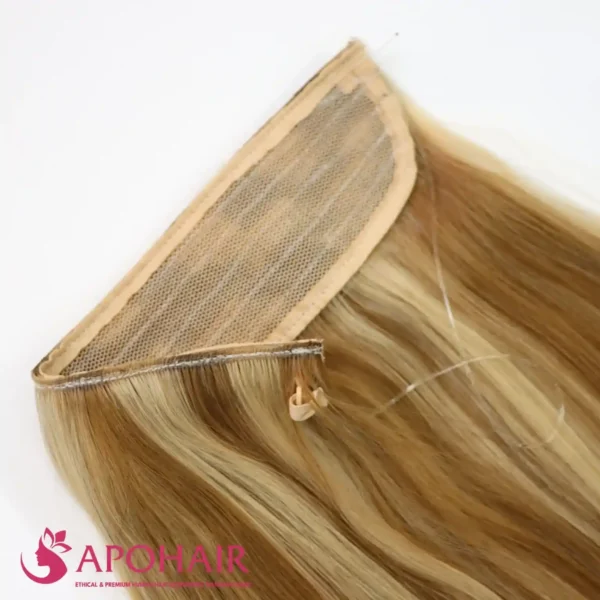
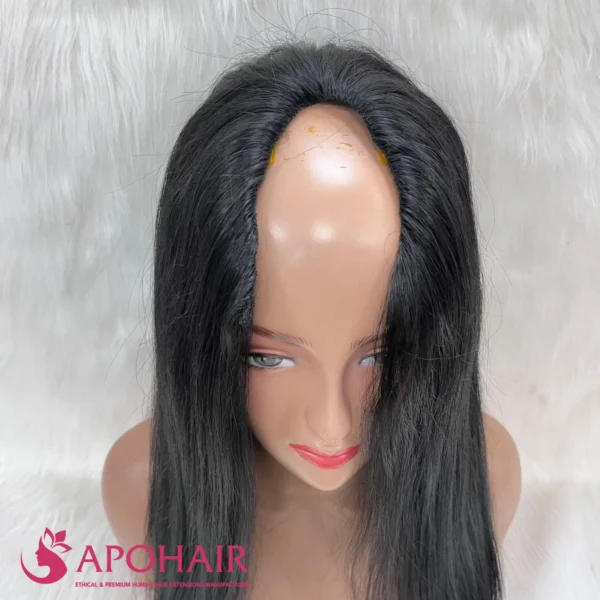
- Density: decides how much layering the cut can take. Thick hair suits layered bobs and shags that remove bulk at jaw level, while fine hair looks fullest in a lob or a rounded bob with light texture. For fine hair that thins out past the jaw, clip-in wefts under the crown restore fullness at the ends.
Which Short Hairstyle Is Best for Women With Square Faces and Strong Jawlines?
The best short hairstyles for women with square faces and strong jawlines are the layered bob, the short shag, the angled bob, the asymmetrical pixie, the textured pixie, and the curly bob.
A strong jawline has a sharp angle below each ear and a wide, flat line between them, and short hair leaves both on view. A cut that suits it breaks the jaw’s horizontal, keeps its own edges soft, and moves attention upward or onto a diagonal. Each of the six takes a different route:
- Layered Bob. Several shorter edges replace one long edge, so the jaw’s strong horizontal has no parallel line in the hair.
- Short Shag. Feathered ends near the jaw blur the angle itself, which suits a jaw that is both wide and sharp.
- Angled Bob. Its slope crosses the jawline on a diagonal and turns the strong horizontal into a slanted one.
- Asymmetrical Pixie. One swept side breaks the symmetry that makes a strong jaw read as a box.
- Textured Pixie. Lift on top draws the eye up to the crown and away from the jaw’s width.
- Curly Bob. Curves at cheek level contrast with the jaw’s straight edge instead of echoing it.

Which Short Hairstyles Should Women With Square Faces Avoid?
The short hairstyles women with square faces should avoid are the ones that draw hard, straight lines: a blunt edge at the jaw, a sharp geometric finish, flat sides, or a heavy fringe over a boxy cut. Each one repeats the angles square faces already have instead of softening them:
- A blunt chin-length bob with no layers. A single level edge between the jaw angle and the chin draws a horizontal right beside the face’s strongest line.
- A sleek geometric bob with sharp edges. Glossy, precise lines outline the face with the same corners the jaw already has.
- An ultra-short pixie with flat sides. Clippered, flat sides give the head the same straight outline as the jaw, so the angles repeat instead of softening.
- Straight heavy bangs with a boxy short cut. A dense fringe closes the top of the face while a boxy cut closes the sides, framing the face as a square.

Frequently Asked Questions
Does Short Hair Suit Women With Square Faces?
Short hair suits women with square faces when the cut keeps hard lines off the jaw angle and adds soft edges or height. A layered bob, a lob, a textured pixie, or a short shag all soften the corners. Short cuts fail when a blunt edge lands between the jaw angle and the chin, the sides lie flat, or a heavy fringe sits over a boxy shape.
Does a Pixie Cut Suit Women With Square Faces?
A pixie cut suits square faces when it keeps a little height on top and soft, tapered sides. The height lengthens the face, and point-cut edges keep the outline from repeating the jaw’s corners. A textured or asymmetrical pixie works especially well for these women. An ultra-short pixie with flat, clippered sides is the version to avoid.
Is a Bob Good for Women With Square Faces?
A bob is good for square faces when its edge sits clearly away from the jaw angle and carries layers or texture. A layered bob, an angled bob, or a lob past the chin softens the corners. A blunt chin-length bob with no layers or a sleek geometric bob does the opposite, drawing a hard line right beside the jaw.
Are Bangs Good for Women With Square Faces and Short Hair?
Bangs are good for women with square faces and short hair when they stay light or curved. A wispy fringe, a side-swept fringe, or the soft fringe of a French bob breaks the straight line of the forehead. Heavy straight bangs work against square faces, especially over a boxy short cut, because they add a solid horizontal at the top.
What Hair Part Is Best for Women With Square Faces?
A side part is usually best for square faces, because it lays a diagonal across the wide forehead and makes the face look less symmetrical. A deep side part works well with a bob, a lob, or an asymmetrical pixie. A hard center part with flat sides splits a short cut into two straight panels that point down at the jaw corners.
Final Thought!
Square faces ask short hair to soften rather than frame. The cut does that by keeping its edge clearly above the jaw angle or below the chin, adding layers, texture, or curl, and lifting the crown a little. Blunt chin-length edges, sharp geometric finishes, flat sides, and heavy straight bangs repeat the face’s angles instead. Texture and density then decide which of the 14 cuts holds its softness.
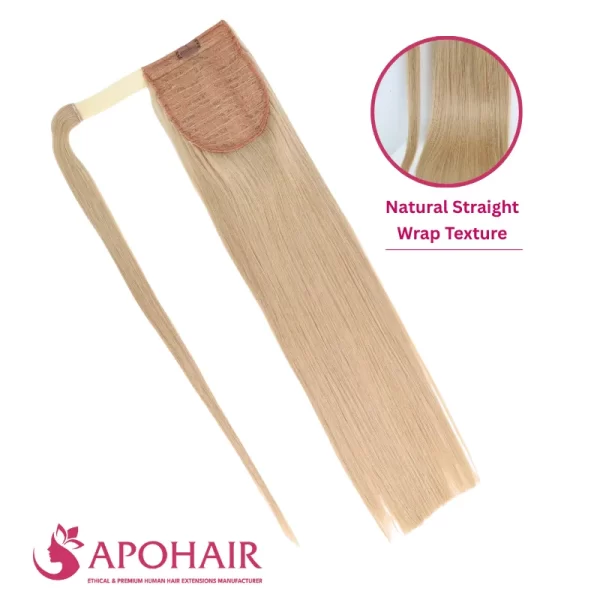
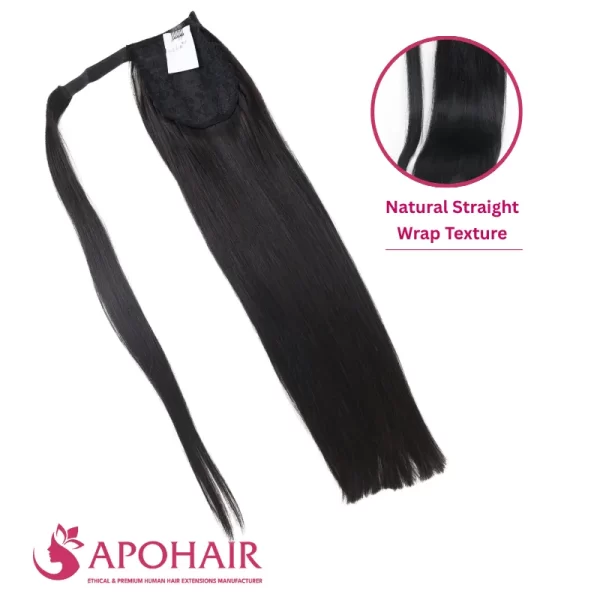
If you run a salon or supply hair to one, square-face clients who go short often want more lift at the crown or a fuller lob than fine hair can hold. Our team can send samples and factory-direct pricing on texture-matched clip-in wefts, toppers, and bulk hair. Because we manufacture 100% Vietnamese Human Hair in our own facility, you can match density and texture to each client rather than relying on whatever a middleman had in stock.
APOHAIR — ETHICAL & PREMIUM HUMAN HAIR EXTENSIONS AND WIGS MANUFACTURER
- Address: Building 3A, Lane 82 Duy Tan, Cau Giay, Hanoi, Vietnam
- Factory: Minh Luong, Yen Luong Ward, Ninh Binh, Vietnam
- WhatsApp: +84 862 132 366
- Email: [email protected]
- Website: https://apohair.com
