







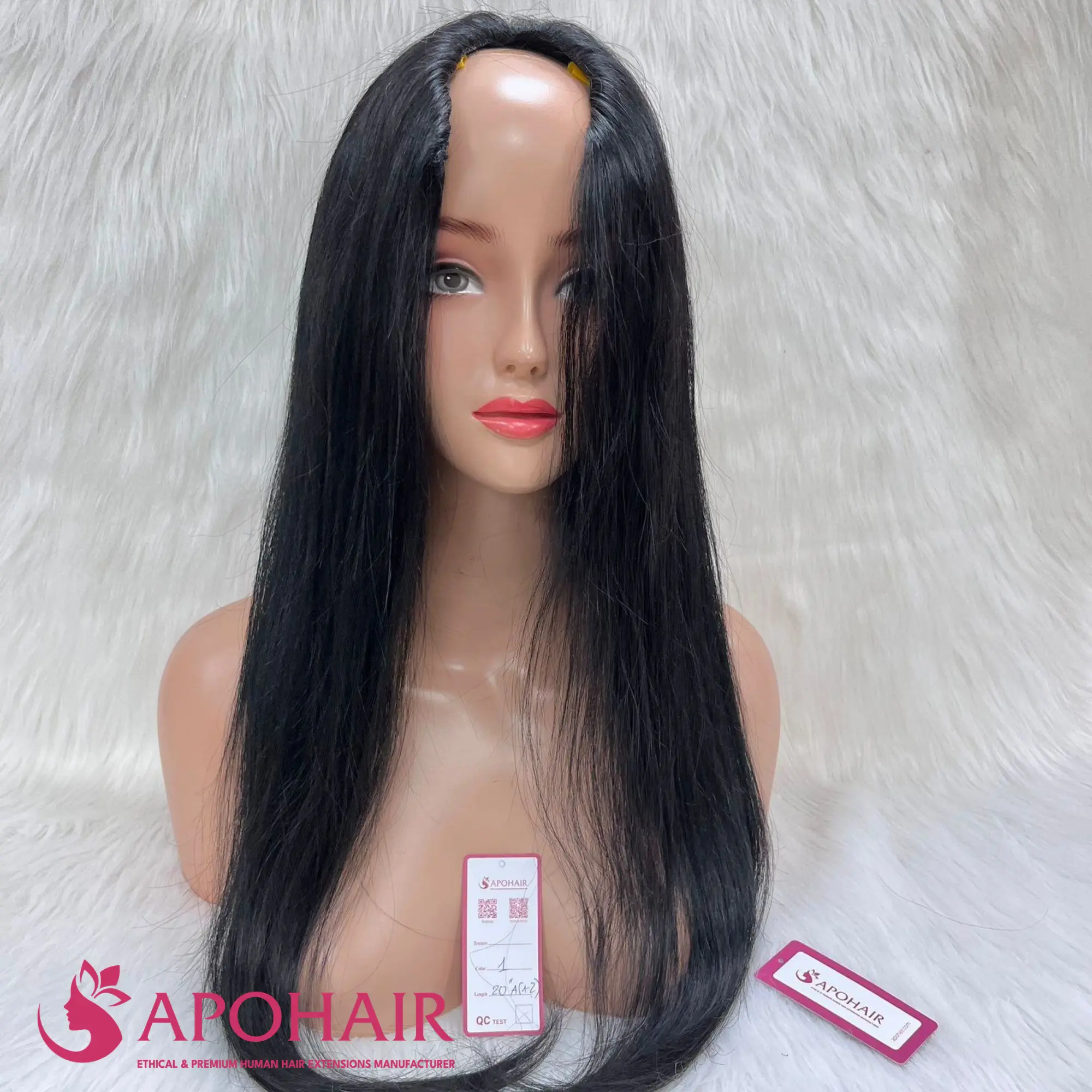

What to Know about A Lace Front Wig
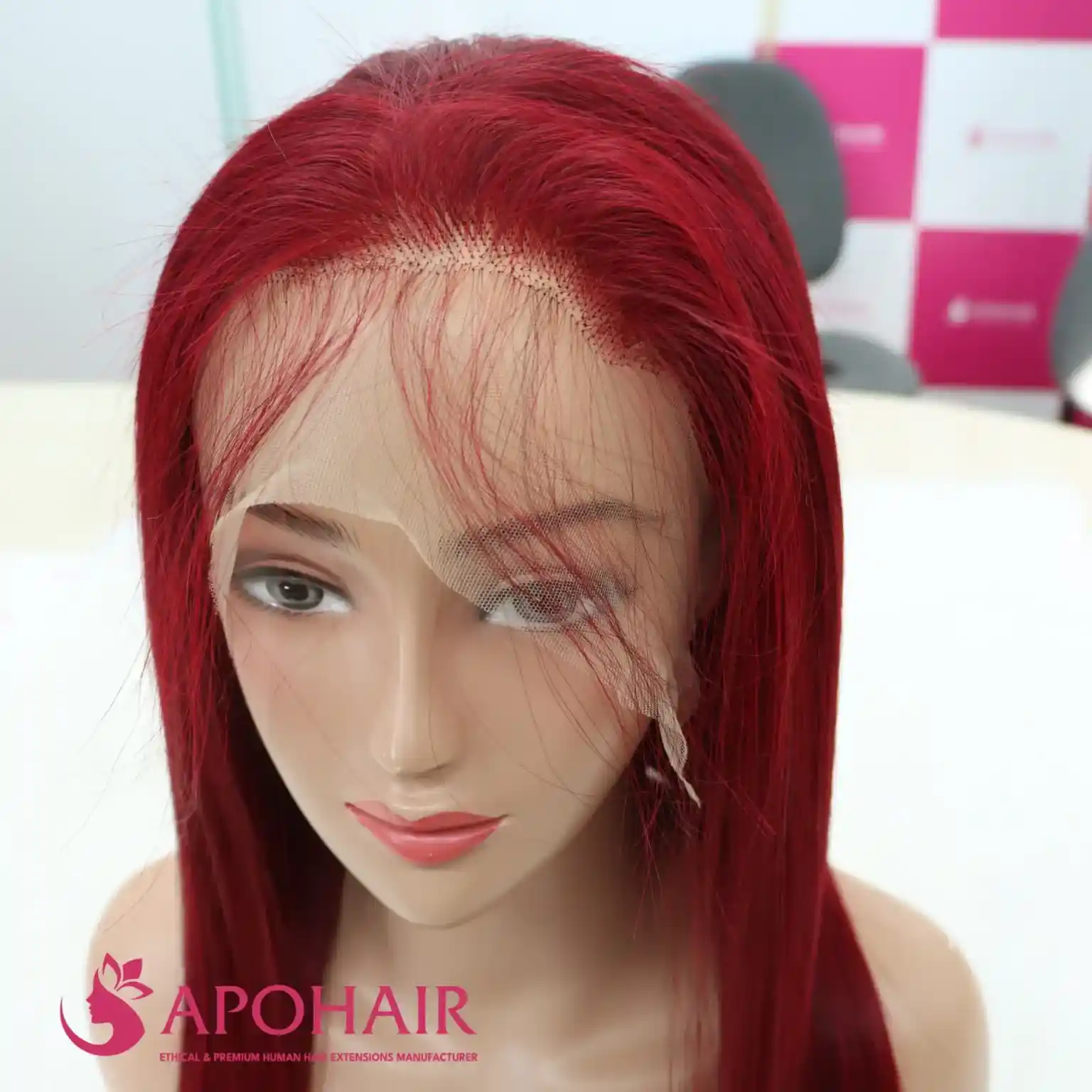
A lace front wig is a wig with a sheer lace panel at the front hairline, where the hairs are hand-tied one by one so the hairline looks like it grows from your scalp; the rest of the cap is machine-wefted. The term “lace front” refers to the front-lace feature, and the lace can be as small as a clip-in or as wide as an ear-to-ear frontal, which is why people use the term loosely.
For a first-time buyer, that one detail changes the whole look. You get a natural-looking hairline you can wear pushed off the face, which is why a lace front is a common entry point into realistic wigs. People managing hair loss may reach for them for the same reason: The front can look softer and more skin-like than a blunt wig edge.
Here’s what we’ll walk through, in order: what a lace front is and how it’s made; how it differs from a regular wig; and how it relates to a frontal, a full lace, and a closure. After that, we cover lace grades, the honest pros and cons, who a lace front suits, how to choose one, how to put it on, and how to care for it.

What Is a Lace Front Wig?
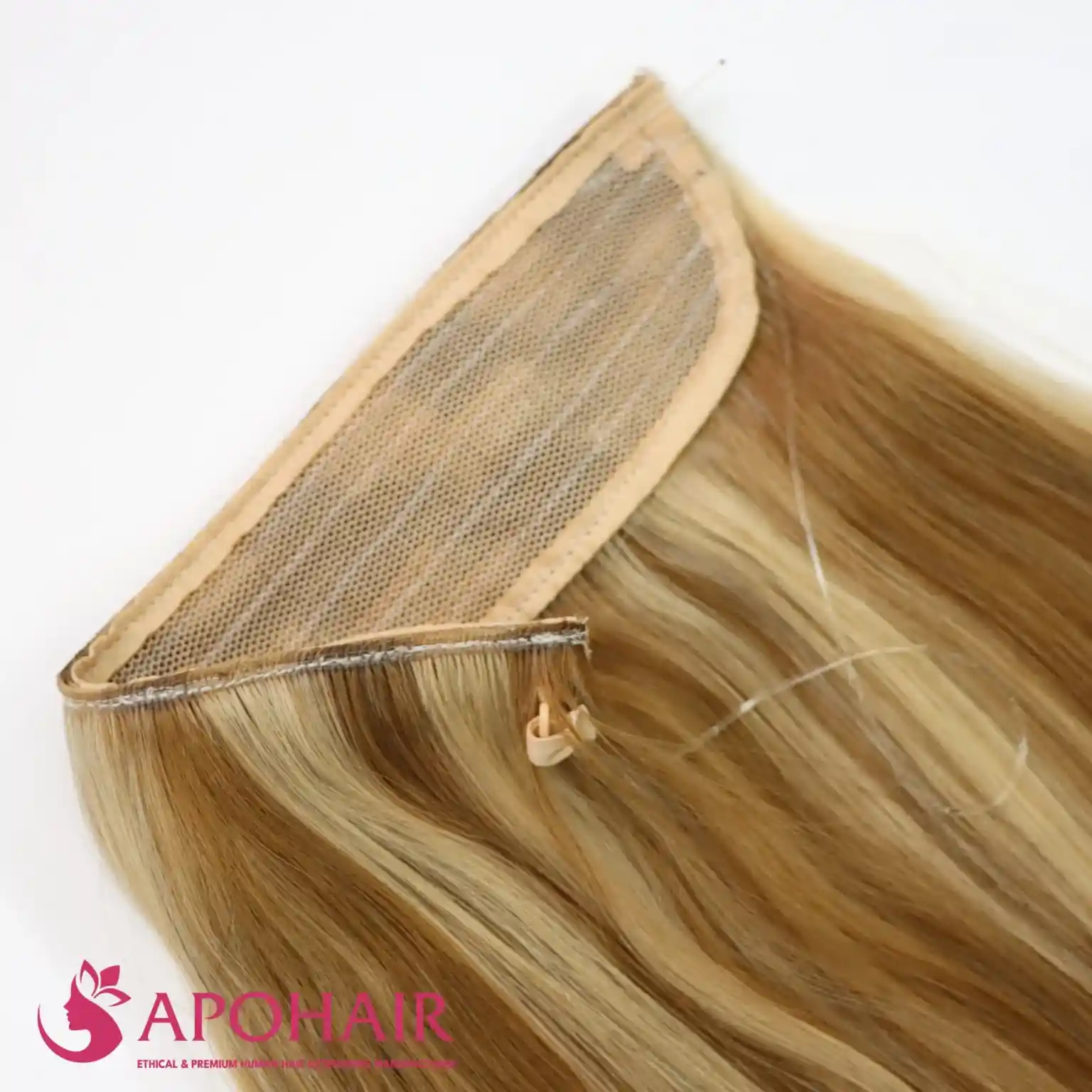
A lace front wig is a type of wig with a sheer hand-tied lace panel along the front hairline and a machine-wefted cap behind it. Front lace usually runs about 2 to 3 inches (about 5 to 8 cm), softens the hairline, lets the hair look like it grows from the scalp, and allows off-the-face styling that a regular wefted wig cannot create.
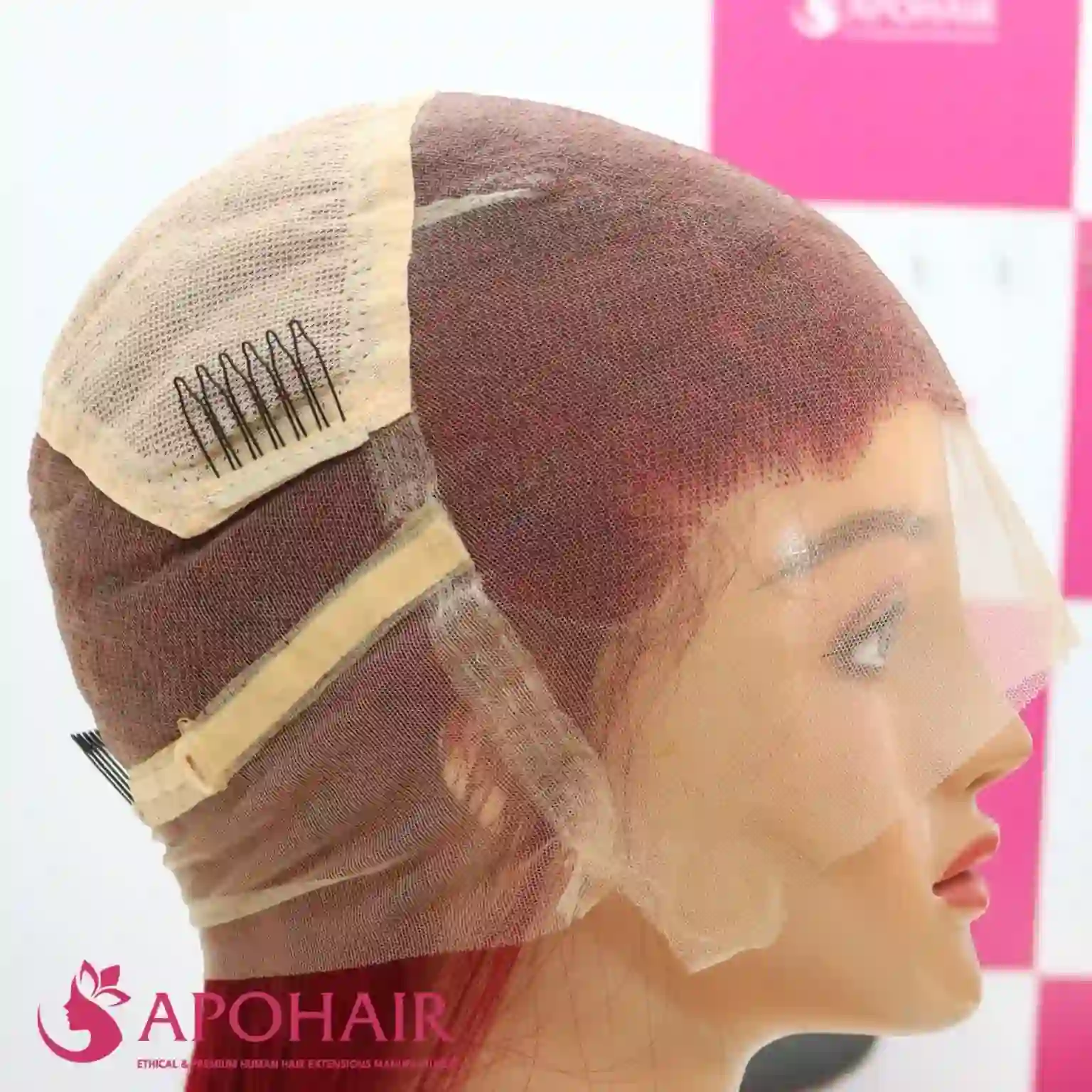
A lace front wig is constructed in three main parts. First, the lace panel is a fine mesh sitting right at the front hairline. Second come the hand-tied (ventilated) knots, where each strand is knotted into the lace by hand, one at a time, so the hairline blends into the skin instead of starting at a hard line. Third, the wefted cap behind it is machine-sewn rows of hair that give the wig its volume and structure.
So the rule worth remembering is simple: lace front means hand-tied lace at the front plus a wefted cap behind. A full lace wig, by contrast, is hand-tied everywhere. Keep in mind that “lace front” is a construction feature, not one fixed cap size. The lace can be narrow or stretch ear to ear, which is the larger version people call a frontal.
One more thing worth noting: Monofilament is a separate crown feature for a realistic part, and it can coexist with front lace. Don’t confuse the two.

Lace Front Wig vs. Regular Wig: What’s the Difference?
A regular (traditional) wig has hair wefts sewn across the entire cap, including a visible seam or blunt edge at the hairline, while a lace front swaps that front edge for a hand-tied sheer lace that can blend against the skin. That’s the whole difference in one sentence. Everything else about the two caps can be nearly identical.
| Feature | Regular wig | Lace front wig |
| Front hairline | Blunt edge or visible seam | Hand-tied sheer lace |
| Naturalness | Edge can be spotted up close | Scalp-like at the front |
| Off-the-face styling | Limited | Yes |
| Price | Lower | Higher |
The lace front’s one structural job is a believable hairline, the part a wefted cap can’t replicate. If you never push the hair off your forehead, a regular wig may serve you fine. The moment you want the front to read as skin, the lace earns its keep.

Lace Front Wig vs. Frontal, Full Lace, and Closure Wigs
Because “lace front” is a feature of variable size, it overlaps with other terms, so here is how a frontal, a full lace, and a closure each relate to it. Retailers use these labels loosely, so check the lace dimensions, not just the name on the box.
Lace Front vs. Frontal Wig
A frontal is simply the large version of a lace front: its lace spans ear to ear (13×4 or 13×6 inches), so you can part the hair anywhere across the front. A basic lace front has a smaller front-lace area. Think of it as a family tree. Every frontal is a lace front, but not every lace front is a frontal. The frontal sits at the wide, full-coverage end of the same feature. For the deep dive on sizes and parting, see our frontal wig guide.

Lace Front vs. Full Lace Wig
A full lace wig has a cap made entirely of lace with hair hand-tied everywhere, so you can part it anywhere and wear high ponytails or updos; a lace front has lace only at the front and a wefted cap behind, so fully pulled-back styles can expose the cap edge. Both can look natural at the front. The gap shows up when the hair goes back off the face.
| Feature | Lace front wig | Full lace wig |
| Front-hairline realism | Natural at the front | Natural at the front |
| Off-the-face wear | Looks like a wig pulled fully back | Natural all the way around |
| Coverage & price | Front lace + wefted cap; lower cost, sturdier | Entire-cap lace; pricier, more delicate |

Lace Front vs. Closure Wig
A closure is a small square of lace at the top-center part only (4×4 or 5×5 inches), so it’s a parting piece, not a front piece, which means you can’t brush the hair fully back off the face the way a lace front lets you. The placement tells you the job. A closure sits where you part. A lace front sits along the hairline. Same lace material, different work. For the full breakdown, see our closure wig guide.
Lace Grades: Standard, Transparent, and HD Lace
The lace comes in three grades that affect how natural the hairline looks: standard (Swiss) is often the lower-cost option and may need tinting to match your skin, transparent is clearer and often suits light-to-medium tones with less tinting, and HD is very thin and can blend softly into the skin when the match and install are right, at a higher price and with a little more delicacy.

Pros and Cons of a Lace Front Wig
A lace front wig gives you a natural-looking front hairline at a more accessible level than full lace, but the delicate lace asks for careful handling and a little skill.
Pros of a Lace Front Wig
- Natural-looking hairline. The hand-tied lace can blend into the skin, so the front reads more like scalp than a blunt wig edge.
- Wear it off the face. You can style the hair back from your forehead, something a blunt-edge regular wig simply can’t pull off.
- Versatile, customizable fit. Adjustable straps let you dial in the fit, making a lace front a friendly starting point for beginners.
- A non-surgical option for hair loss. It’s wearable through everyday life, with no procedure and no recovery time.
- Human-hair versatility. A human-hair lace front can be heat-styled, colored, and restyled, so the look isn’t locked in on day one.
Cons of a Lace Front Wig
- Delicate lace. The front mesh can fray, stretch, or gap if you handle it roughly.
- Adhesive sensitivity and a learning curve. Gluing and removing the lace takes practice, and some skin reacts to adhesives.
- Limited pulled-back styling. A basic lace front looks like a wig in a high updo; you’d want a full lace or 360 unit for that.
- Higher cost and upkeep than a regular wig, since the lace and the human hair both ask for more care.
- “Why are lace front wigs bad?” The usual culprits are a sensitive scalp, the wrong cap size, or improper adhesive use and removal. Most people find the lace soft and comfortable, though adhesives can irritate a sensitive scalp. Correct sizing and skin-safe technique fix most of the complaints.
Who Should Wear a Lace Front Wig?
Lace front wigs suit three groups: everyday natural-look wearers, versatile stylers, and people managing hair loss. The same front-lace hairline serves each group for a slightly different reason. Here’s how they break down.
- Everyday wearers and beginners. A lace front is affordable, gives a natural hairline, and offers an easy entry into realistic wigs without a steep learning curve.
- Versatile stylers. If you want an off-the-face hairline but don’t want to pay the full price of a full-lace unit, the lace front hits that middle ground well.
- People with hair loss, alopecia, or chemotherapy. Hand-tied lace caps can be lightweight and breathable, which some wearers find more comfortable on a sensitive scalp. A natural-looking hairline may also support confidence, but a wig is not a treatment for hair loss. A specialist wig fitter or your care team can help with fit and scalp comfort, especially if your scalp is tender or changing during treatment.

How Do You Choose a Lace Front Wig?
Choose your lace front based on four factors: fiber (human versus synthetic), lace grade, installation method, and cap fit. Get those right, and the rest follows. Match the wig to how you actually live, not to the prettiest photo.
- Lowest maintenance, ready-to-wear: a synthetic lace front. It holds its style after washing, though most synthetic fibers cannot be heat-styled.
- Natural movement, want to restyle or color: a human-hair lace front. You can cut, color, and heat-style it, though it can feel heavier than synthetic.
- Sensitive scalp, want an off-face hairline and free parting: an HD lace front, or step up to a 13×4 frontal for ear-to-ear parting.
- Comfort first: measure your head circumference (an average adult head is about 21 to 22 inches, roughly 53 to 56 cm), use the adjustable straps, and confirm the cap size before you buy.
A common mistake we see from first-time buyers is choosing the cap size off a photo, then fighting a wig that slides; measure first, then pick the straps.
Once you’ve picked your lace front wig, how do you put it on, and how should you handle water, sweat, and daily wear?
How Do You Put On a Lace Front Wig: Glue or Glueless?
You can secure a lace front two ways: glued (adhesive or tape at the hairline) or glueless (clips, combs, grip bands), and many people, especially those with sensitive scalps, start glueless. The glued route gives the longest hold; the glueless route is gentler and more forgiving. Pick the one your scalp can live with.
For the glued path, work through five steps:
- Flatten your natural hair and put on a nude wig cap so the surface underneath is smooth.
- Cleanse and prep the hairline with a skin-safe product so the adhesive has clean skin to grip.
- Apply a thin layer of wig glue or tape along the front and wait until it turns tacky.
- Press the lace down with a fine-tooth comb so it bonds evenly across the hairline.
- Trim and tint the lace, then lay the edges so the front blends into your skin tone.
Glueless options skip the adhesive entirely. Clips and combs, a medical-grade silicone grip, or a vacuum/suction cap can all hold the wig securely, which makes them a good fit for compromised scalps.

One safety note. Adhesives can irritate the skin or cause an allergic reaction in some people, so do a patch test 24-48 hours before your first use. Apply the product to your skin, not your edges. If a reaction shows up, stop and speak with a dermatologist or your care team.
How to Care for a Lace Front Wig?
Gentle handling around the lace is what keeps a lace front looking real and ensures it lasts its full lifespan. The front mesh is the fragile part, so most care practices focus on protecting it.
- Washing. Use a mild, gentle shampoo and cool water; never scrub the lace, and don’t put conditioner on the lace itself.
- Drying and heat. Air-dry the wig on a stand, and keep hot water and direct heat away from the lace, since heat loosens the hand-tied knots.
- Adhesive and lace. Take the glue off with an oil-based remover, and never peel the lace off dry, as it tears the knots and stretches the mesh.
- Storage. Keep it on a stand or in a silk or satin bag, away from direct sunlight.
A quick clarification on water: sweat, pool water, shower pressure, and heat can loosen adhesive and stress the delicate front lace. If you need to swim or work out, protect the install and gently clean the wig afterward. When it is time to wash the wig, take it off and clean it on a stand.
Frequently Asked Questions About Lace Front Wigs
How Do Lace Front Wigs Stay On?
Lace fronts are held by wig glue, tape, clips, or grip and suction bands. Some adhesive installs can stay in place longer than daily wear, though taking the wig off daily is gentler on your scalp. If your scalp is sensitive, glueless methods like combs and a silicone grip hold it without any adhesive at all.
Can you shower or swim with a lace-front wig?
These are two different questions. Swimming or exercise may be possible with the right hold, but water, sweat, friction, and heat can loosen the adhesive and stress the delicate lace. For showering and washing, take the wig off and clean it gently on a stand.
Are Lace Front Wigs Bad for Your Natural Hair?
A lace front wig itself does not damage your hair. Problems come from improper adhesive use on the hairline, peeling the lace off dry, or wearing the wig too long without a break. Apply glue to your skin and not your edges, use an oil-based remover, take rest days, and choose glueless if your scalp is sensitive. If irritation appears, stop and see a dermatologist.
How Long Does a Lace Front Wig Last?
A synthetic lace front usually lasts for months and may reach six to nine months with gentle wear, while a human-hair lace front can last over a year and often several years with proper care. Because the front lace is delicate, lifespan leans on gentle washing and protecting the hand-tied knots, so handle it more carefully than you would a closure’s smaller lace. This is the product lifespan, which is separate from how long a single install stays on your head.
How Much Does a Lace Front Wig Cost?
Prices span widely by fiber and source. Synthetic lace fronts usually cost less than human-hair lace fronts, and premium branded human-hair units can cost much more than factory-direct units. Cost is driven by fiber, lace grade, length, density, cap construction, supplier, and brand.
Are Lace Front Wigs Suitable for Chemo or Hair Loss?
Yes, many people find them suitable. Lightweight, breathable hand-tied lace caps can be comfortable for some sensitive scalps, and a natural-looking hairline may help wearers feel more like themselves, though a wig does not treat or affect hair loss. Prefer glueless or grip-band options for compromised scalps, do a patch test, and ask your care team or a specialist wig fitter for fit and comfort.
What Should Wholesale Buyers Check Before Ordering Frontal Wigs?
Wholesale buyers should check the frontal size, lace type, hair origin, density, texture, knot work, MOQ, sample policy, and private-label support before ordering frontal wigs in bulk. For frontal wigs, the key specs are 13×4 or 13×6 lace, HD or transparent lace, 100% human hair quality, clean ventilation along the hairline, consistent density, and a cap construction that supports either glue or glueless installs.
Conclusion
A lace front wig is defined by one feature: a hand-tied lace panel at the front hairline, with a wefted cap behind it. That feature comes in different sizes, which is why a frontal is a large lace front, a closure sits only at the part, and a full lace wig is hand-tied all over. Across those options, a lace front gives you a natural-looking front hairline at a more accessible level than full lace, but the delicate lace still needs careful handling and an install method that fits your scalp.
Once you have picked the fiber, lace grade, and install method, what matters next is the hair and the hand-tied front it is built on. We make ours at our own factory in Vietnam: human-hair lace front wigs, from 13×4 frontals to full lace and U/V-part units, built from 100% Vietnamese Human Hair, Ethically Sourced and sold factory-direct. Browse Apohair human hair wigs to compare textures and lace options, or talk to our team about wholesale and private-label orders. If you are choosing for a sensitive or tender scalp, ask us about a glueless grip-band fit first.
