








14 Bantu Knots Hairstyles by Technique, Hair Type, Styling, Size & Accessories
Bantu knots hairstyles are looks made by twisting sections of hair and wrapping each one around its base into a small, coiled knot that sits close to the scalp. The style is widely traced to the Zulu people of Southern Africa. Its name refers to the Bantu-speaking peoples of the region.
Black women and natural hair wearers love the knots for their bold, sculptural shape, a look stars such as Rihanna and Beyoncé have chosen for major career moments.
Beyond the look, the same set works as a short-term protective style that tucks the ends away and pauses daily combing for a few days to about a week. When the knots come down, they open into a heat-free knot-out with defined curls. Gold cuffs, barrettes, or bright color make each version personal.
The guide gathers 14 Bantu knots hairstyles in four groups: Knot technique, hair type and length, updos and partial styles, and size, parting, and accessories. Each style covers who it suits, how long it holds, and a common mistake.
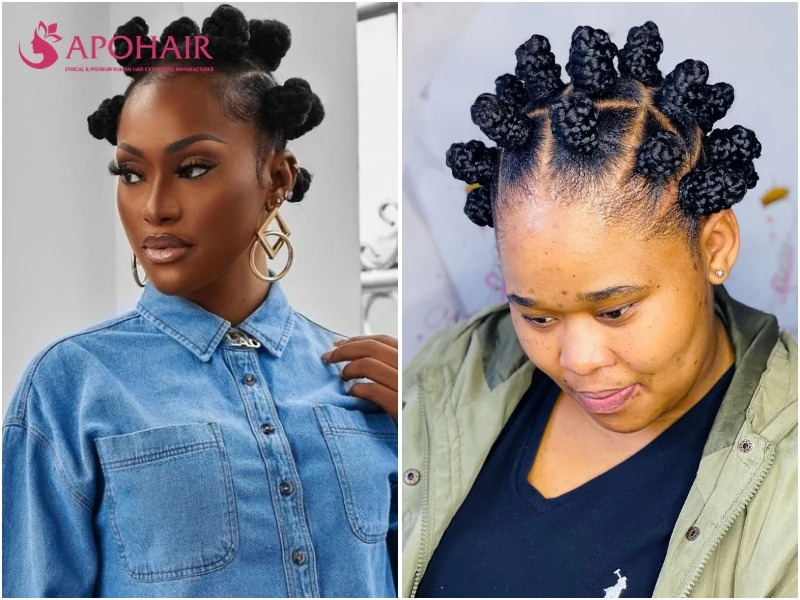
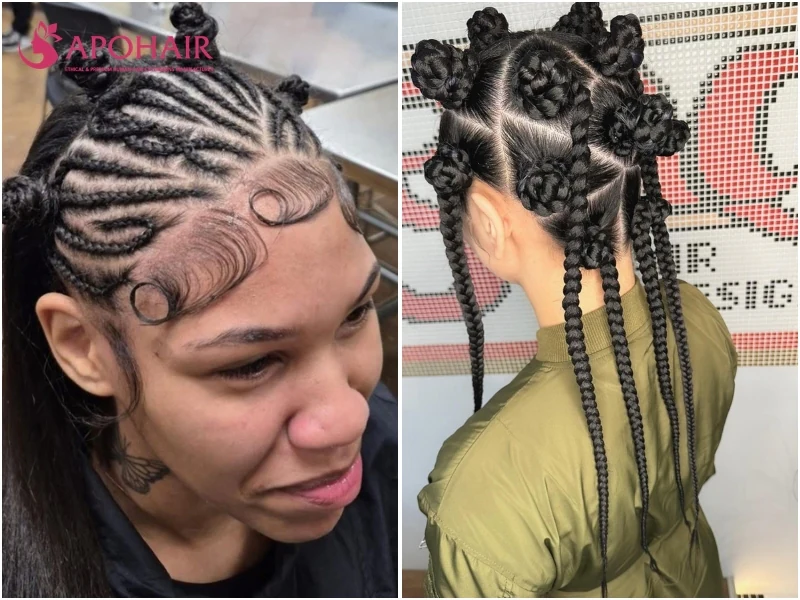
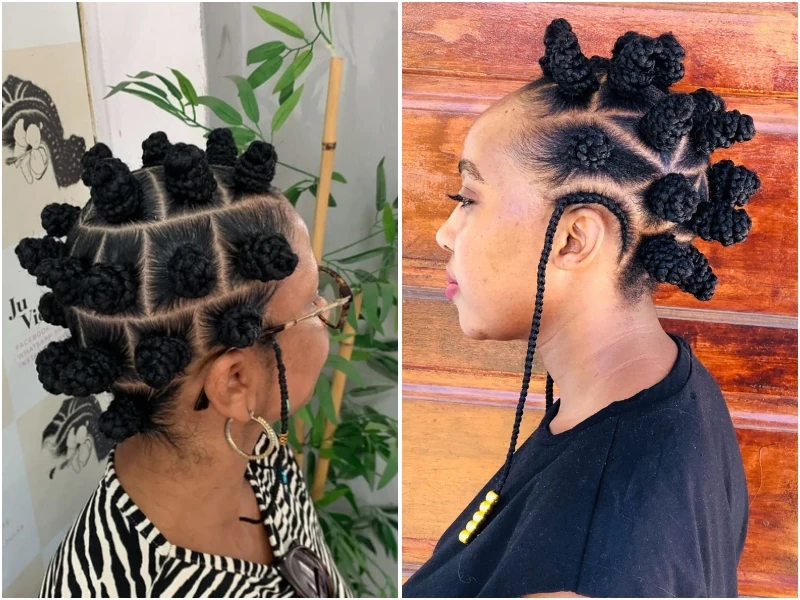
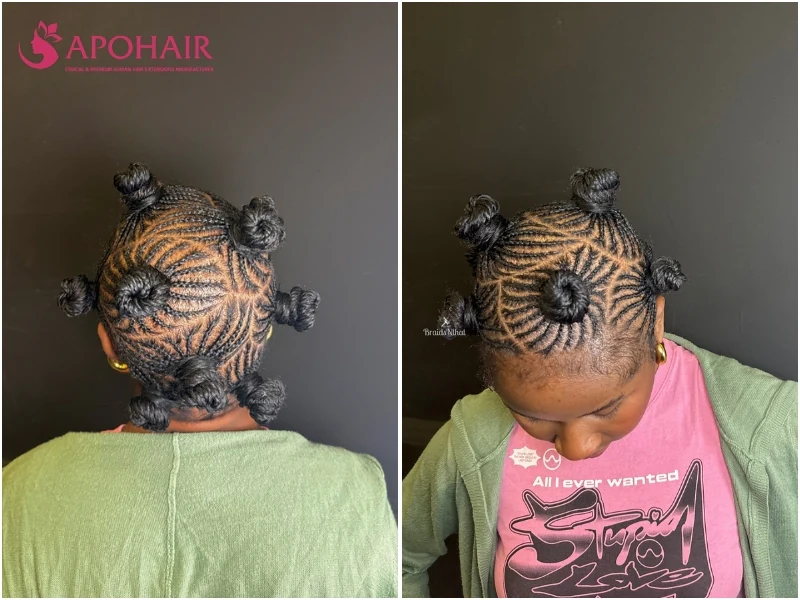
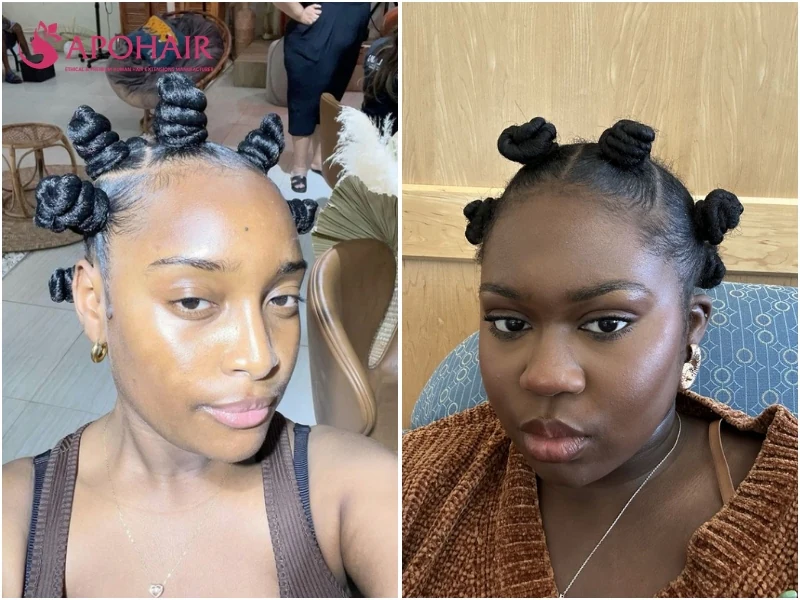
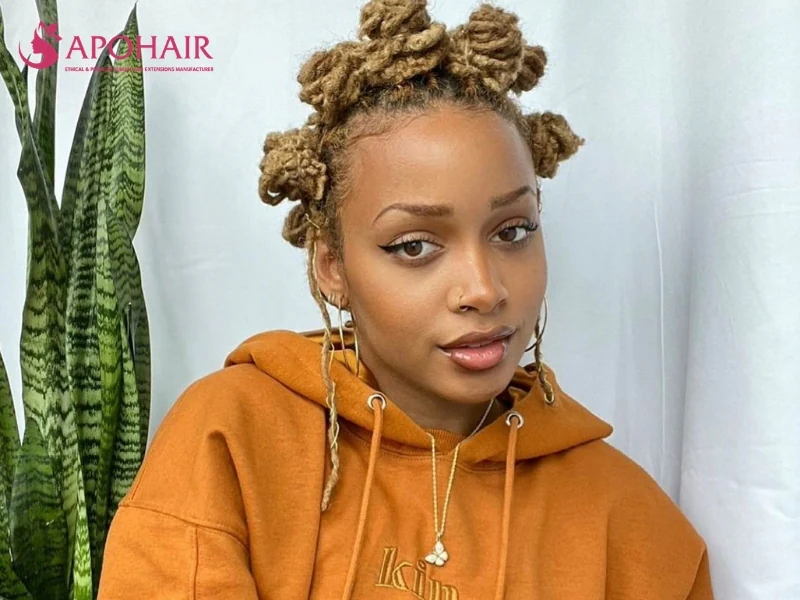
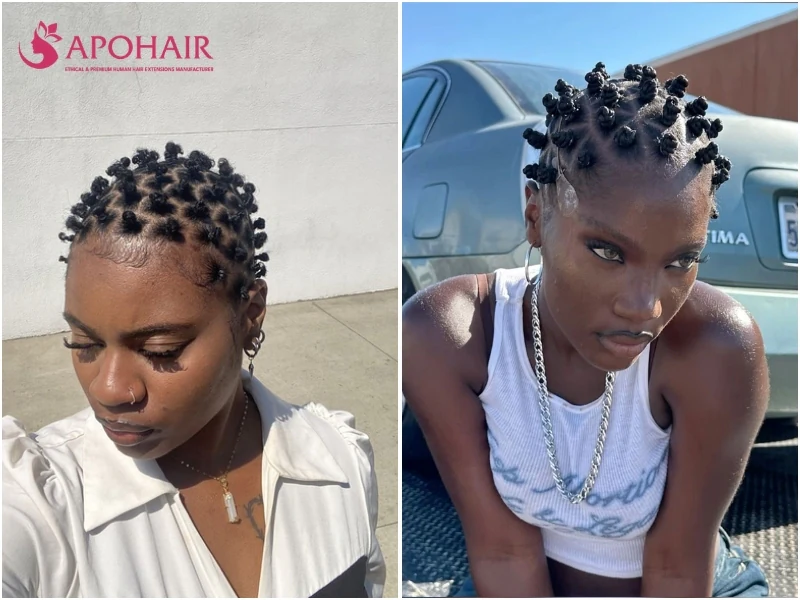
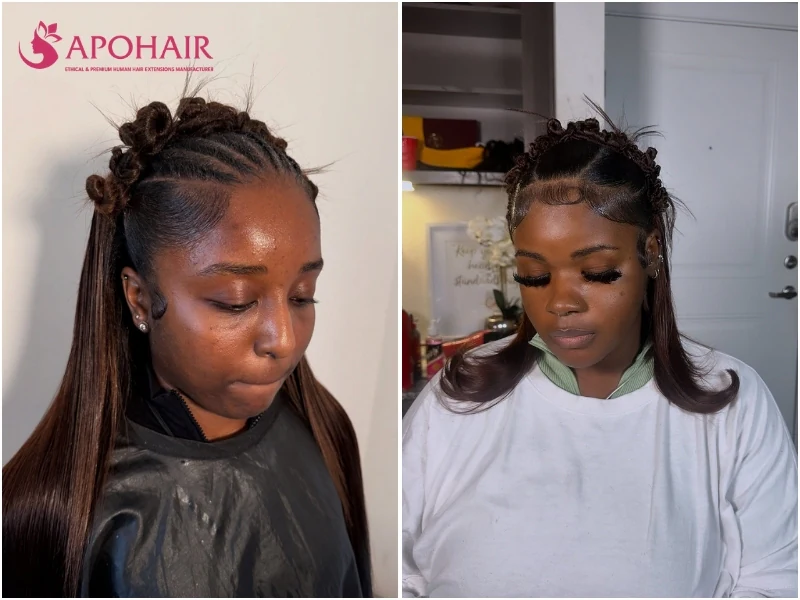
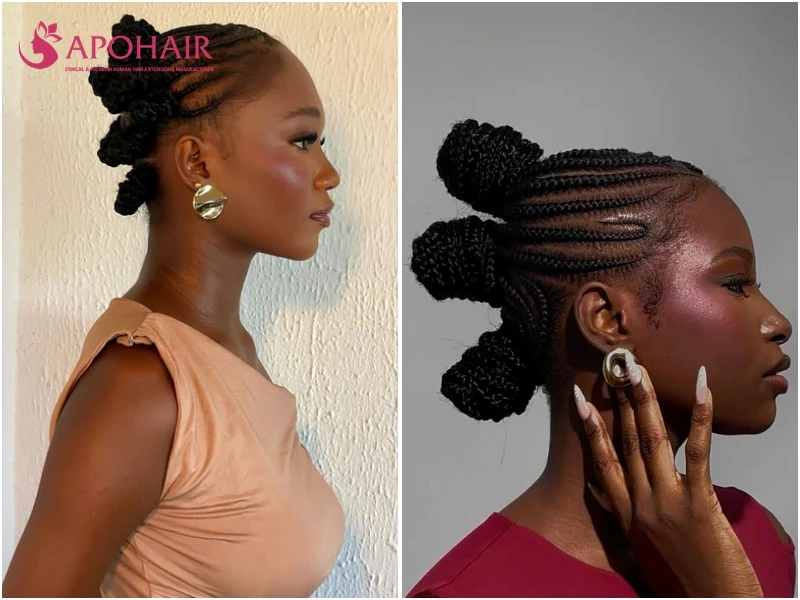
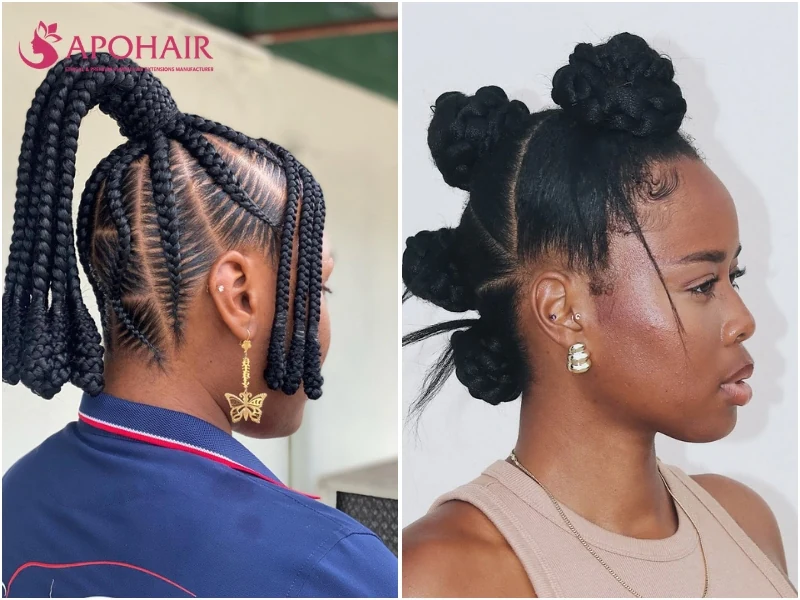
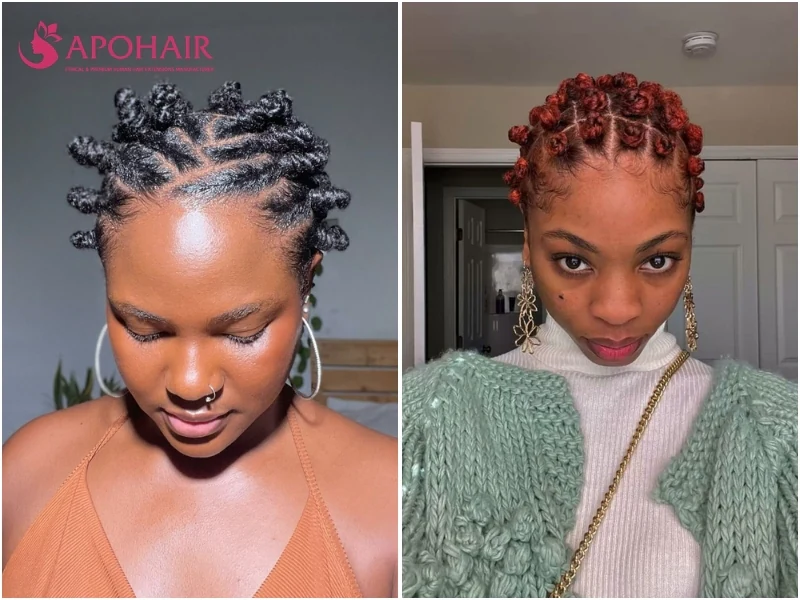
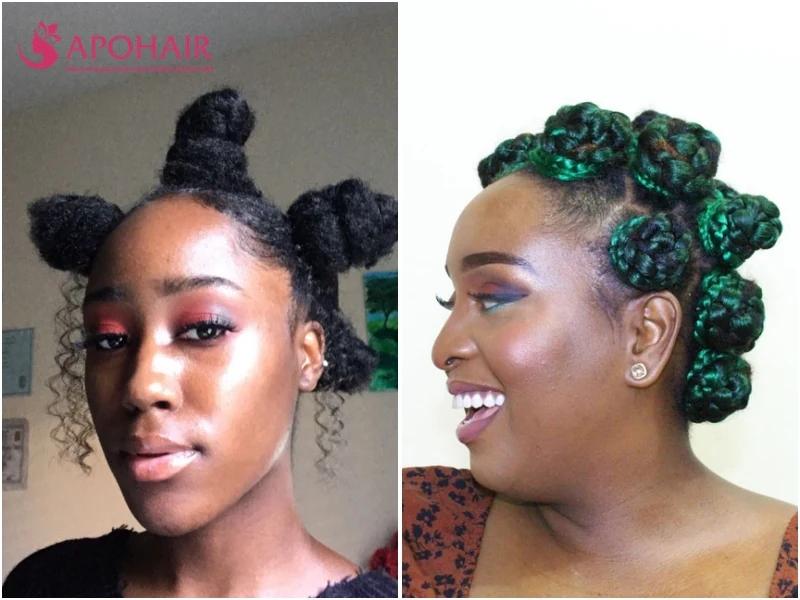
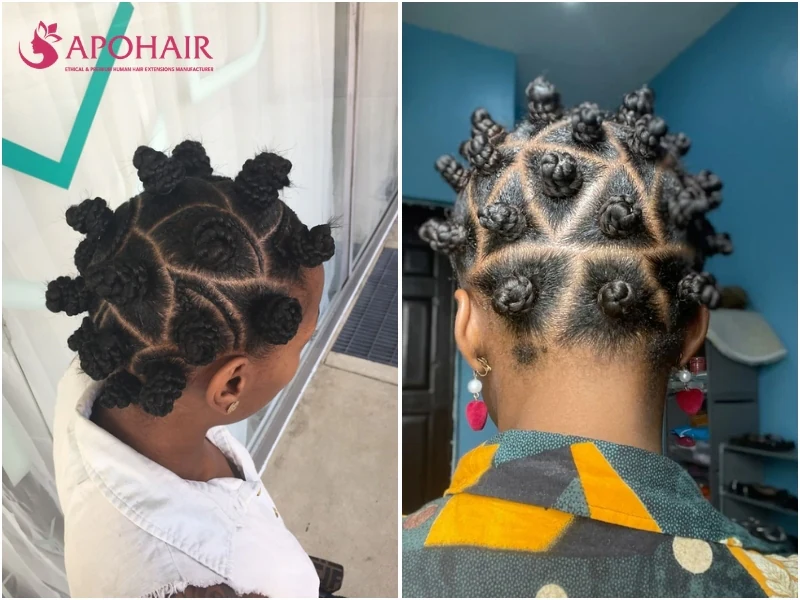
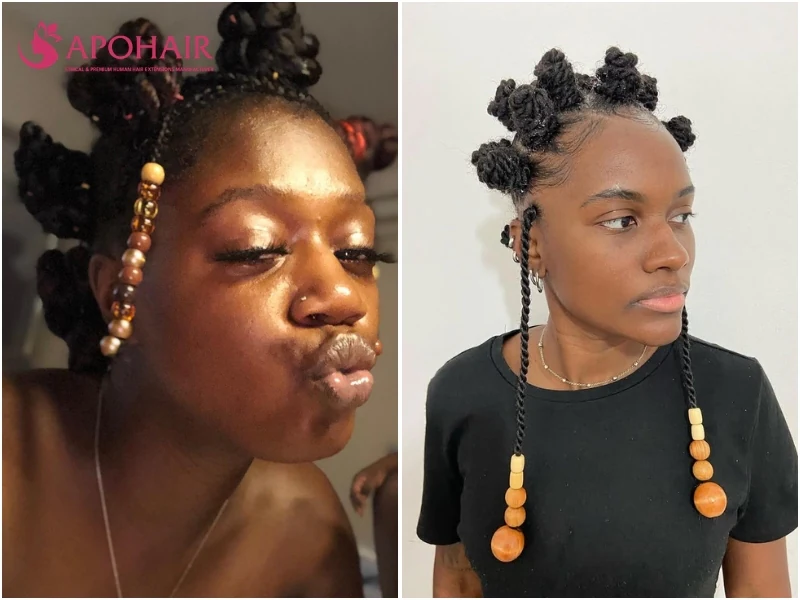
The sections that follow explain what defines a Bantu knot, where the style comes from, and how to choose and create one. They close with extensions, whether the knots protect the hair, how long they last, and how to maintain them.
Bantu Knots Hairstyles by Knot Technique
Bantu knots hairstyles by knot technique differ in how each section is built before it wraps. Traditional Bantu knots coil loose hair, braided Bantu knots wrap a finished braid, twisted Bantu knots wrap a two-strand twist, and cornrow Bantu knots finish flat rows in small knots. That first step sets how smooth each knot looks and how long it holds.
1. Traditional Bantu Knots
Traditional Bantu knots divide the hair into square or triangular sections and coil each one into a firm knot on its own base, with clean parts between them. The style is widely traced to the Zulu people of Southern Africa. Coily Type 4B and 4C hair holds the coil best, and straight or wavy Type 1 to 2 hair can hold it with a strong gel and pins. It suits festivals, photo shoots, and relaxed weekends.
The style starts with hair a few inches long, enough for each section to wrap around itself at least once. Tension builds at the base of every knot, so the knots along the hairline wrap looser than those at the crown. Worn as a set style, the knots hold for a few days to about a week. The most common mistake is coiling the sections too tightly, which lifts the scalp into small tents around each part.
2. Braided Bantu Knots
Braided Bantu knots wrap a finished box braid around its base instead of loose hair, so each knot shows a woven, rope-like surface. Some sets leave the braid ends hanging down the back. The braid keeps the knot from unraveling, so the style holds on Type 4 hair and on smoother textures that loosen from a plain coil. It works for concerts, vacations, and events that need a sculpted look to last.
Creating braided Bantu knots starts with box braids, and hair of about 2 inches or more gives the braids enough grip. Pre-stretched synthetic braiding hair adds the length and bulk that make the knots full. The added weight sits at the braid base, so thick braids wrapped tight along the edges strain the hairline fastest. Built on braids, the knots hold for one to two weeks. A frequent mistake is wrapping very long braids into knots that grow too heavy and droop by the second day.
3. Twisted Bantu Knots
Twisted Bantu knots build each knot from a two-strand twist, which gives the surface a spiral, rope-like pattern instead of a smooth coil. The twist adds grip, so the knot keeps its shape longer than a coil of loose hair. Type 4A to 4C hair twists and knots easily, and twists made with added hair let looser curl patterns, including 3c hair type textures, wear the style as well. It suits casual days, school, and travel.
This version works on natural hair a few inches long, or on twists made with added hair for bigger knots. Marley hair or the same kinky braiding hair behind most textured twists matches the texture of coily hair and grips well inside the twist. Twisting tightly at the root to hide the added hair stresses the edges, so the root of each twist stays relaxed. The knots hold for about a week. A common mistake is twisting soaking-wet hair, which shrinks as it dries and pulls on every knot.
4. Cornrow Bantu Knots
Cornrow Bantu knots braid the hair into flat cornrows that travel toward chosen points and finish in small knots at the ends. The rows can run straight, curve, or fan out in a fishbone pattern, so the scalp design becomes part of the look. Cornrows grip Type 4 hair closely, and relaxed or wavy hair can wear them when the rows stay small. The style suits long weekends, sports, and hot weather, because the rows keep hair off the neck.
Cornrowing needs roughly 2 inches of hair. Most versions use natural hair only, though feed-in braiding hair makes the end knots larger. Every row pulls along the hairline, so the first stitches at the front stay loose. With the rows holding the base, the knots last about one to two weeks. The mistake to avoid is ending every row at the same height, which stacks the knots in one band and makes them sag.
Bantu Knots Hairstyles by Hair Type and Length
Bantu knots hairstyles by hair type and length depend on what the hair can wrap. Bantu knots on natural hair coil loose strands, Bantu knots with locs wind each loc into a firm knot, and Bantu knots on short hair keep many small knots close to the head. The starting texture decides knot size, hold, and how the knots feel on the scalp.
5. Bantu Knots on Natural Hair
Bantu knots on natural hair twist or coil loose Type 4 hair into a handful of glossy knots, with no braids or added hair underneath. The knots show the hair’s own sheen and density. Type 4B and 4C hair holds the shape best, while straight or wavy hair tends to unwind without a strong gel. The style fits weekend wear and doubles as a set the night before an event, since the knots open into a defined knot-out.
This look needs only a few inches of hair and a styling cream or gel for hold. The knots along the hairline sit larger and wrap looser, because small, tight knots at the edges pull on the most fragile hair. Worn as knots, the style lasts a few days to about a week, and the knot-out holds 2 to 4 days. The most common mistake is knotting soaking-wet hair, which leaves the roots damp for hours and invites buildup and odor.
6. Bantu Knots With Locs
Bantu knots with locs coil each loc, or a small group of locs, around its base into a textured knot, a protective restyle in the same spirit as the dreadlock twist hairstyles that rework locs into something new. The matted structure of the locs gives each knot a nubby surface and a firm shape that holds without gel. The style works on locs formed from Type 4 hair or any texture that has fully locked, as long as the locs are long enough to wrap. Leaving a few locs down to frame the face suits dinners and brunch.
Locs need enough length to circle their own base at least once, so longer locs give the most options. No added hair is needed unless the locs already include extensions. Locs are heavy, and a knot of thick locs pulls on the scalp more than a knot of loose hair, so heavier locs wrap in smaller groups. The knots hold for several days. The mistake to avoid is wrapping new, immature locs, since tight coiling can loosen them.
7. Bantu Knots on Short Hair
Bantu knots on short hair form many small knots packed close together, often in neat rows that cover the whole head. Short hair wraps only once or twice, so the knots stay tiny and tidy. A teeny weeny afro (TWA) or a tapered cut in Type 4A to 4C hair holds these knots well, while short straight hair usually lacks the grip. The look suits gym days, beach trips, and a quick set that opens into a curly knot-out.
A couple of inches of hair is enough for small knots, and added hair is not needed. Tiny sections along the hairline put the most strain on the edges, so the front row uses slightly larger parts. The knots last a few days, and the knot-out that follows holds 2 to 4 days. A common mistake is parting sections too small for the hair’s length, which leaves stubby knots that unwind overnight.
Bantu Knot Updos and Partial Hairstyles
Bantu knot updos and partial hairstyles place the knots in one area and style the rest. Half-up half-down Bantu knots line the crown and leave the lower hair down, a Bantu knot fauxhawk runs knots along the center of the head, and a Bantu knot updo gathers the knots high. Placement sets how formal the finished look feels.
8. Half-Up Half-Down Bantu Knots
Half-up half-down Bantu knots turn only the top section into a row of small knots along the crown and leave the rest of the hair loose. Relaxed, pressed, or naturally straight hair shows the contrast most clearly, and coily Type 4 hair can wear the lower section as a twist-out or a sew-in. It suits date nights, birthdays, and events where a playful detail still needs a polished finish.
Only the top section needs a few inches of hair to wrap. Straight lengths often come from a sew-in or leave-out, and human hair bundles blend with pressed or relaxed hair because they take heat the same way. The knots sit right on the part line, so a tight part along the front edge pulls the hairline. The top knots hold a few days before they need re-wrapping. A common mistake is knotting hair that already anchors a heavy sew-in track, which doubles the pull in one spot.
9. Bantu Knot Fauxhawk
A Bantu knot fauxhawk braids or twists the sides toward the center of the head and finishes them in a line of knots running from forehead to nape. The knots form a raised ridge like a mohawk, with no shaved sides. Type 4 hair holds the flat side rows and the knots firmly, and braiding hair helps shorter textures reach the center. The bold profile suits concerts, parties, and photo shoots.
The side rows need about 2 inches of hair, while the center knots look fuller with longer hair or added braiding hair. Synthetic braiding hair fed into the rows builds bigger knots. The side rows pull upward against the temples, so the rows closest to the ears stay loose. Anchored by cornrows, the knots hold about one to two weeks. A frequent mistake is dragging every row to the exact same point, which crowds the center part and tips the knots to one side.
10. Bantu Knot Updo
A Bantu knot updo gathers the knots high on the head, either as a cluster at the crown or as braids swept up into one large knot. The sides stay smooth or cornrowed. Type 4 hair with braids or twists gives the knots their size, and braiding hair lets finer or shorter hair reach the crown. The lifted shape suits weddings, formal dinners, and workdays that call for a neat look.
The hair, or the braids built on it, has to reach the crown without strain. Pre-stretched braiding hair keeps the gathered knots light enough to pin in place. Updos pull hair upward from the nape and temples, so the sides stay relaxed rather than slicked flat under tension. Built on braids, the updo holds about one to two weeks. The most common mistake is securing all the knots with tight bands at a single point, which concentrates the pull at the crown.
Bantu Knots by Size, Parting, and Accessories
Bantu knots by size, parting, and accessories change the look through details rather than technique. Small Bantu knots cover the head with many tight knots, jumbo Bantu knots use a few large ones, geometric Bantu knots rely on sharp triangle or diamond parts, and Bantu knots with beads add beaded strands near the face. Size also changes install time and hold.
11. Small Bantu Knots
Small Bantu knots split the hair into many compact sections and coil each one into a fingertip-sized knot close to the scalp. Type 4A to 4C hair of short to medium length forms the tightest small knots, in natural color or in shades like copper. The style suits workdays and school, since the knots sit low and stay out of the face.
Small knots need only a couple of inches of hair and no added hair. The many parts take longer to finish than a few large knots. With so many sections, the ones along the hairline carry the most tension, and a slightly bigger front row protects the edges. The knots hold a few days to about a week and release into the tightest, most defined knot-out. A common mistake is loading each knot with heavy cream, which weighs the small knots down and leaves residue in the parts.
12. Jumbo Bantu Knots
Jumbo Bantu knots use only a few large sections to build big knots that stand out from the head. The oversized knots make a bold statement and can carry colored braiding hair. Thick Type 4 hair creates full jumbo knots on its own, while added hair lets thinner or shorter hair reach the same size. The style suits festivals, parties, and photo shoots.
Jumbo knots look fullest on hair long enough to wrap two or three times, or on braids built with extra hair. Kanekalon or other synthetic braiding hair adds the bulk and the color. Big knots are heavy, so the pull at every base runs higher. The few sections make jumbo knots quick to install, and they last a few days to a week. A common mistake is anchoring a jumbo knot on a small section of hair, which strains that patch of scalp.
13. Geometric Bantu Knots
Geometric Bantu knots use precise triangular, diamond, or brick-style parts, so the lines between the knots form a deliberate grid. The parts matter as much as the knots, and a clean triangle part reads sharper than a loose square. Type 4 hair holds crisp parts well, especially when each section is braided or twisted before it wraps, while straight hair struggles to keep the lines clean. The graphic finish suits photo shoots, creative workplaces, and events.
Geometric parting needs hair long enough to wrap after sectioning, and braids or twists help each knot keep the pattern sharp. Braiding hair is optional and mostly adds size. Triangles meet in sharp points near the hairline, which can pull small patches of hair, so the corners along the edges stay wider. The knots last about a week. A common mistake is parting without a rat-tail comb, which leaves wavy lines and breaks the pattern.
14. Bantu Knots With Beads
Bantu knots with beads leave a few thin braids or twists hanging from the knots and thread wooden, acrylic, or metal beads onto the ends. The beads add color and movement near the face while the knots stay compact above. Type 4 hair twists and braids tightly enough to hold the beads, and braiding hair lets finer textures carry them without slipping. The look suits summer, vacations, and cultural celebrations.
The hanging strands need a few inches of length below the knot for the beads to show. A small amount of braiding hair can lengthen those strands when the natural hair is short. Beads add weight at the end of each strand, which pulls on the root over time, so each strand carries only a few light beads. The knots hold about a week. The mistake to avoid is threading heavy beads onto very thin braids, which can break the hair near the root.
What Makes a Hairstyle Bantu Knots?
A hairstyle counts as Bantu knots when the hair is parted into sections and each section wraps around its own base into a knot that sits against the scalp. Three traits define it. The sections follow visible parts, usually squares or triangles. Each knot coils around itself rather than around a bun form or an elastic. The knots stay close to the head instead of hanging.
Those traits separate Bantu knots from a single bun, which gathers all the hair into one knot, and from space buns, which usually pull two knots from ponytails. Once the knots come down, the curly texture left behind is a knot-out, a set style rather than Bantu knots themselves. The base under each knot can be loose hair, a twist, a braid, a cornrow, or a loc, and that base shapes the whole style.
Where Do Bantu Knots Come From?
Bantu knots are widely traced to the Zulu people of Southern Africa. The name refers to the Bantu-speaking peoples, a large language family spread across Central, East, and Southern Africa. Many wearers use the name Zulu knots for the same reason.
Across African communities, hairstyles have long carried meaning about identity and belonging, and knotted styles are part of that history. The style traveled with the African diaspora and became a staple of the natural hair movement. There it serves two roles at once: a finished look and a heat-free way to set curls.
How to Choose the Right Bantu Knot Style
Four decisions choose the right Bantu knot style: the base under each knot, the hair’s type and length, where the knots sit on the head, and the knot size, parting, and extras. Texture narrows the options first, and the occasion settles the rest.
- The base sets how long the knots hold. Loose coils last a few days to about a week, while cornrows and braids anchor the knots for one to two weeks. Twists sit between the two and add a spiral surface.
- Hair type and length decide what wraps cleanly. Type 4B and 4C hair holds loose knots with little product, locs knot without gel, and short hair suits many small knots. Straight or wavy hair keeps the shape more reliably when the knots sit on braids.
- Placement matches the occasion. A full head of knots reads casual and bold, a half-up row keeps length down for events, and an updo or fauxhawk lifts the look for formal plans.
- Size, parting, and accessories finish the choice. Small knots give the most defined knot-out, jumbo knots install fastest, geometric parts suit a graphic look, and beads add movement near the face.
How to Do Bantu Knots on Natural Hair?
Bantu knots on natural hair come together in five steps: prep, parting, twisting, wrapping, and securing. Clean, detangled hair that is damp rather than soaking gives the smoothest knots.
- Prep. A leave-in conditioner and a styling cream or gel go through clean, detangled hair while it is still slightly damp.
- Parting. A rat-tail comb creates square or triangular sections, with larger ones at the hairline and smaller ones toward the crown.
- Twisting. Each section twists from root to tip, or coils with a little gel, until the strands hold together as one rope.
- Wrapping. The twisted section winds around its own base in one direction, each loop sitting slightly on top of the last.
- Securing. The end tucks under the knot, and a small pin holds it only when the hair is too smooth to stay put.
Letting the knots dry completely before release gives the longest-lasting knot-out. Air drying overnight or a hooded dryer on low heat both work, and the curls separate best with oiled fingers rather than a comb.
Can You Do Bantu Knots With Extensions?
Bantu knots work with extensions when the added hair goes into braids or twists first, since loose extension hair slides out of a plain coil. Box braids, twists, and feed-in cornrows made with braiding hair all wrap into knots that hold for about one to two weeks.
Pre-stretched synthetic braiding hair is the usual choice because it is light and holds a braid well, and Marley hair suits twisted knots that need a coily texture. Every inch of added length raises the weight of the knot, so thinner braids and moderate lengths keep the pull on the scalp lower. For half-up styles with straight lengths below the knots, human hair wefts blend with relaxed or pressed hair and can be reused after the style comes down.
Are Bantu Knots a Protective Hairstyle?
Bantu knots count as a protective hairstyle in the short term, under the same condition that keeps twists hairstyles protective rather than damaging, because the ends of the hair tuck inside each knot and daily combing stops. They protect less than long-wear styles such as box braids, since knots on loose hair last only a few days to about a week before they need redoing.
The protection depends on tension. The American Academy of Dermatology lists tightly braided hair and tightly pulled styles among the causes of traction alopecia. That type of hair loss can become permanent when left untreated. Loose wraps at the hairline, breaks between styles, and a gentle take-down keep Bantu knots on the protective side. The knot-out that follows is a set style rather than a protective one, because the ends are exposed again.
How Long Do Bantu Knots Last?
Bantu knots on loose natural hair last a few days to about a week, while knots built on cornrows or braids last about one to two weeks. The base under the knots makes the biggest difference.
Humidity, sweat, and sleeping without a silk or satin cover all loosen the knots faster. Coily Type 4 hair keeps the wrap longer than smoother textures, which start to unwind within a day or two. After take-down, a knot-out usually holds 2 to 4 days before the curls relax. For braided bases, the American Academy of Dermatology advises wearing braids no longer than 6 to 8 weeks, which is well beyond the life of the knots themselves.
How to Maintain Bantu Knots?
Maintaining Bantu knots comes down to protecting them at night, keeping the scalp comfortable, and re-wrapping any knot that loosens. The goal is to keep the knots neat without adding tension.
A silk or satin scarf or bonnet at night stops friction from frizzing the knots. A light oil or braid spray on the scalp every few days eases dryness without soaking the knots. Water loosens natural-hair knots, so a shower cap keeps them dry, while braided knots can take a gentle scalp cleanse, following the same routine as how to wash braiding hair once the knots come out. A knot that slips can unwind and rewrap on its own section instead of being pulled tighter. Take-down works best on dry hair, unwinding each knot in the direction it was wrapped.
Frequently Asked Questions
Can You Do Bantu Knots on Short Hair?
Bantu knots work on short hair as long as each section can wrap around itself at least once, which usually takes a couple of inches. Short hair suits many small knots rather than a few large ones. A firm gel helps the short ends stay tucked, and slightly larger sections along the hairline reduce the pull on the edges.
Can You Do Bantu Knots With Braids?
Bantu knots work well with braids, and box braids make one of the longest-lasting bases because the braid keeps each knot from unraveling. The braids can wrap fully into the knot or leave their ends hanging. Very long braids make heavy knots that droop, so medium-length braids give the neatest result.
Can You Do Bantu Knots With Cornrows?
Cornrows make a strong base for Bantu knots, with the rows running toward chosen points and the ends wrapped into small knots. The rows hold the scalp pattern in place, so the style lasts about one to two weeks. Loose stitches at the front protect the hairline from the pull of every row.
Can You Do Bantu Knots With Locs?
Locs wrap into Bantu knots easily and hold the shape without gel, thanks to their matted structure. Mature locs long enough to circle their own base work best. Heavy locs pull harder than loose hair, so wrapping them in smaller groups and leaving new, delicate locs out of the knots keeps the scalp comfortable.
Can You Use Brazilian Wool for Bantu Knots?
Brazilian wool, a soft acrylic yarn, can build Bantu knots when it wraps around a twist or braid before the section coils into a knot. The wool adds bulk and color while staying light. Loose wool grips less reliably than braiding hair, and removal takes patience so the fibers do not snag the natural hair.
How Many Bantu Knots Should You Make?
The right number of Bantu knots depends on hair length and the look. Short hair suits many small knots, while long or thick hair can form a few large jumbo knots. More, smaller knots give a tighter and more defined knot-out, and fewer knots install faster and read as a bolder statement.
Can You Sleep With Bantu Knots?
Sleeping in Bantu knots works, though large knots can feel lumpy against a pillow. A silk or satin scarf or bonnet keeps the knots smooth and cuts friction. Many people set the knots at night and take them down in the morning for a knot-out, and a silk pillowcase protects knots that stay in for several days.
Can Bantu Knots Damage Your Hair?
Bantu knots can damage hair when the sections wrap too tightly or the style stays in too long. The American Academy of Dermatology lists tightly pulled styles among the causes of traction alopecia. Loose wraps along the hairline, a gentle take-down on dry hair, and breaks between styles keep the risk low.
Conclusion
Bantu knots stay simple at their core: parted sections wrapped around their own base. The base under each knot sets how long it lasts, the hair’s texture decides which version holds, and placement, size, and beads tune the look to the occasion. Loose wraps at the hairline and breaks between styles keep the knots from costing the edges.
If you run a salon or supply hair to one, Bantu knot clients often pair the knots with half-up lengths or braided bases that need added hair. Our team can send samples and factory-direct pricing on human hair bundles and bulk hair in straight, wavy, and curly textures, cut and processed in our own human hair factory in Vietnam so the pattern stays consistent bundle to bundle. Because we manufacture 100% Vietnamese Human Hair in our own facility, you can match density and texture to each client rather than relying on whatever a middleman had in stock.
Your own hair carries a plain set, but jumbo knots, wool-filled knots, curly leave-out, and the braid combos all need bought hair. Three of our lines cover that side of the service: loose hair sold by weight that you wrap in as you coil each section, with no weft to sit under a small parting, available when you buy bulk hair wholesale; hair sold by weight that holds one curl pattern and shade across a whole head, so pieces left loose read as the client’s own hair, browsed as human hair bundles wholesale; and tape-in, clip-in, keratin tip, weft, and ponytail pieces in the same Vietnamese remy hair for adding length without committing the whole head to knots, compared in our wholesale remy human hair extensions range.
