




22 Best Braid Hairstyles for Black Women, From Knotless to Fulani Braids
Popular braid hairstyles for Black women include knotless box braids, boho braids, French curl braids, cornrows, stitch braids, Fulani braids, Lemonade braids, braided bobs, ponytails, and buns. These styles range from individual braids that move freely to scalp-hugging rows shaped through precise parting and feed-in techniques. Straight braided lengths create a clean, structured finish, while loose human-hair curls add movement to boho, goddess, and French curl styles.
The 22 ideas below are organized into individual braids, cornrow and feed-in styles, braided updos, and short or shoulder-length options. Each entry explains the finished look, installation method, type of added hair, maintenance needs, and main tension consideration. The right choice depends on natural-hair condition, scalp sensitivity, desired length, extension weight, installation time, and daily routine—not curl pattern alone. Braids reduce daily manipulation and keep the ends contained when installed with comfortable tension. Heavy extensions, tight hairline sections, and repeated high updos place additional stress on the roots, so comfort and weight matter as much as appearance.
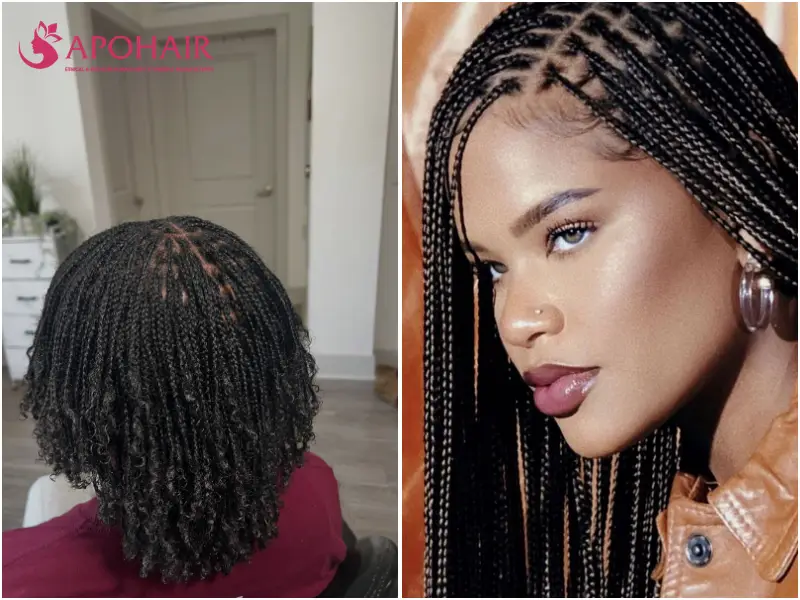
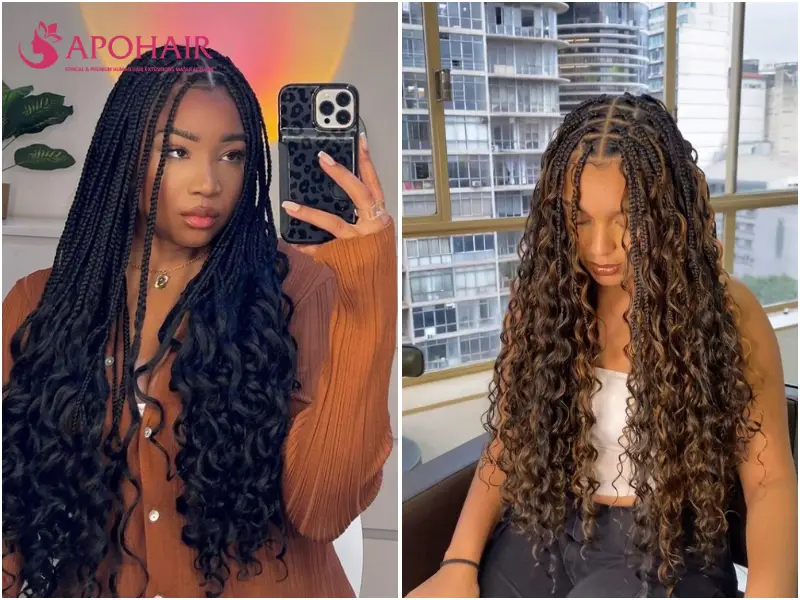
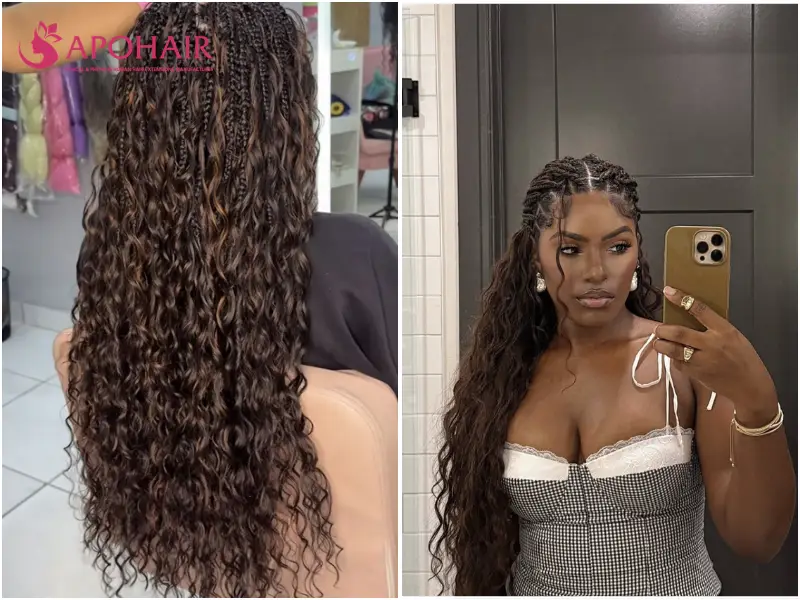
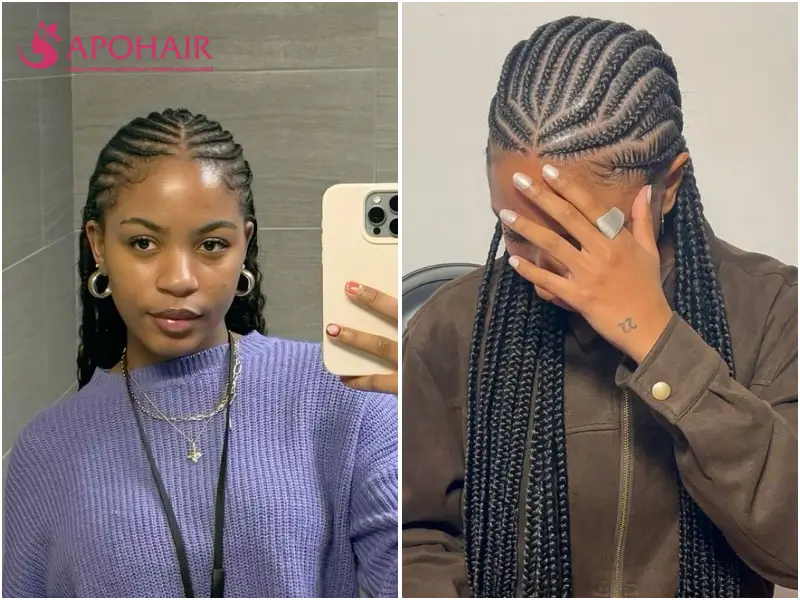
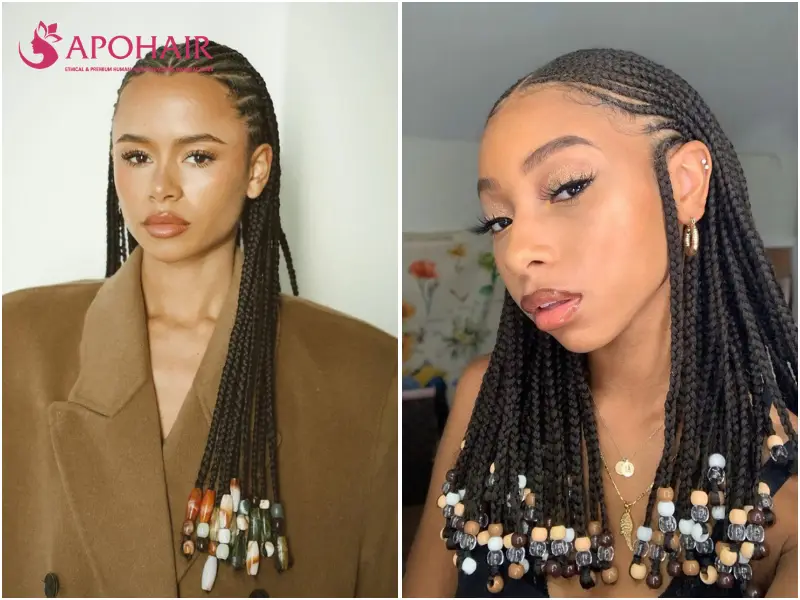
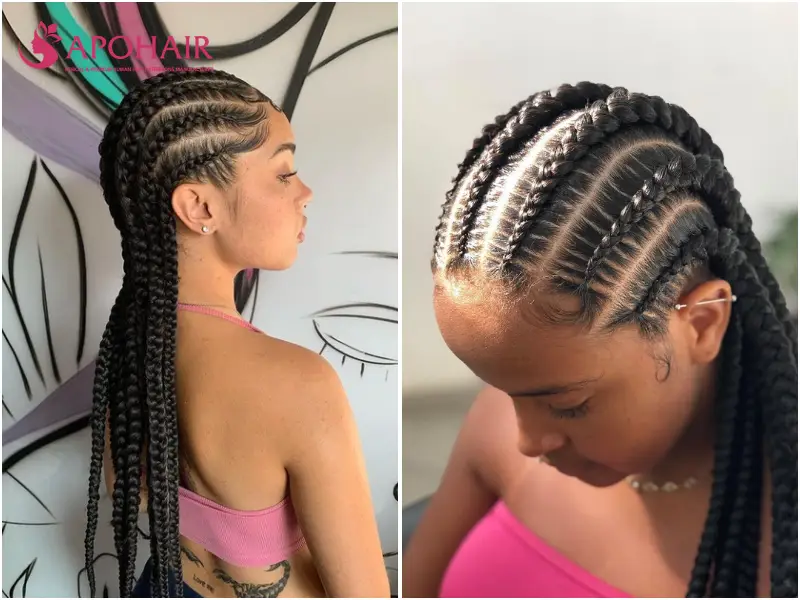
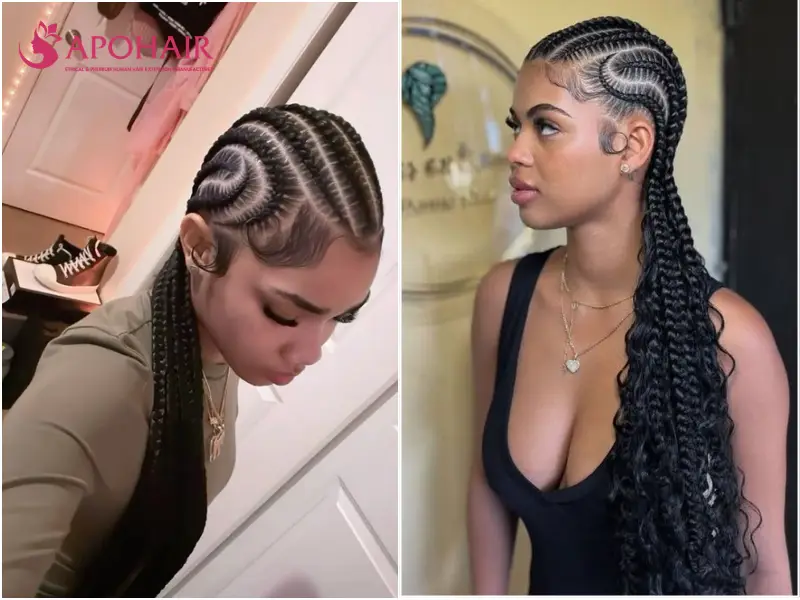
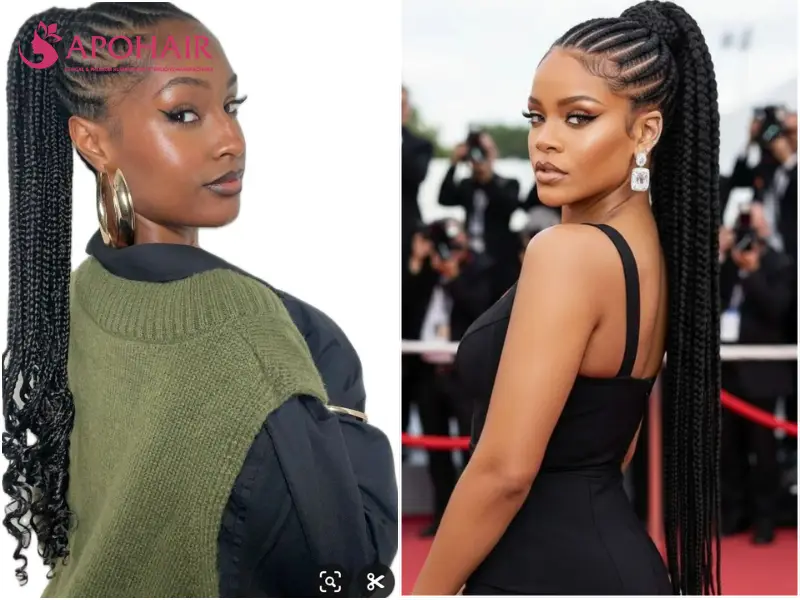
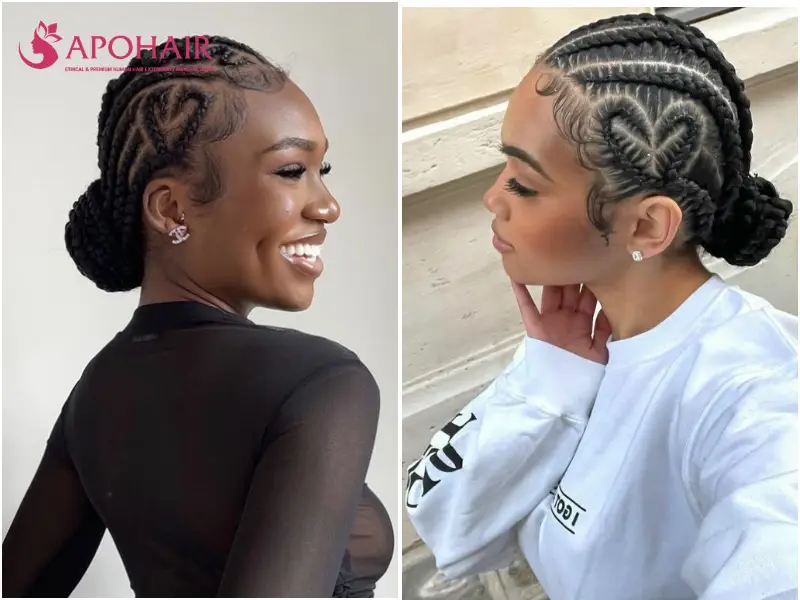
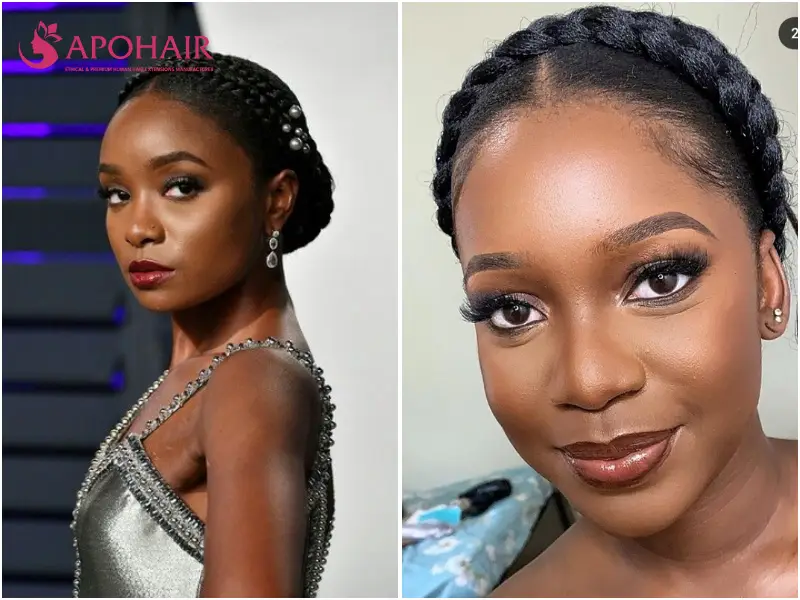
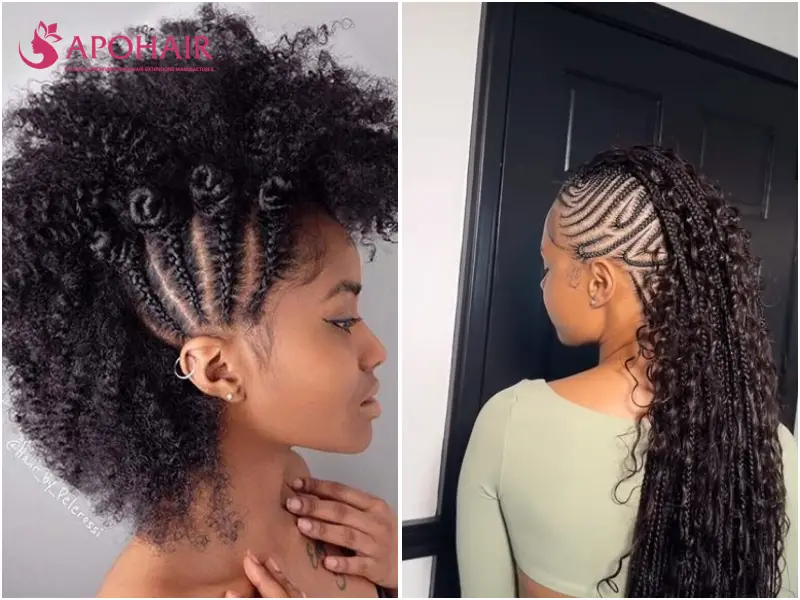
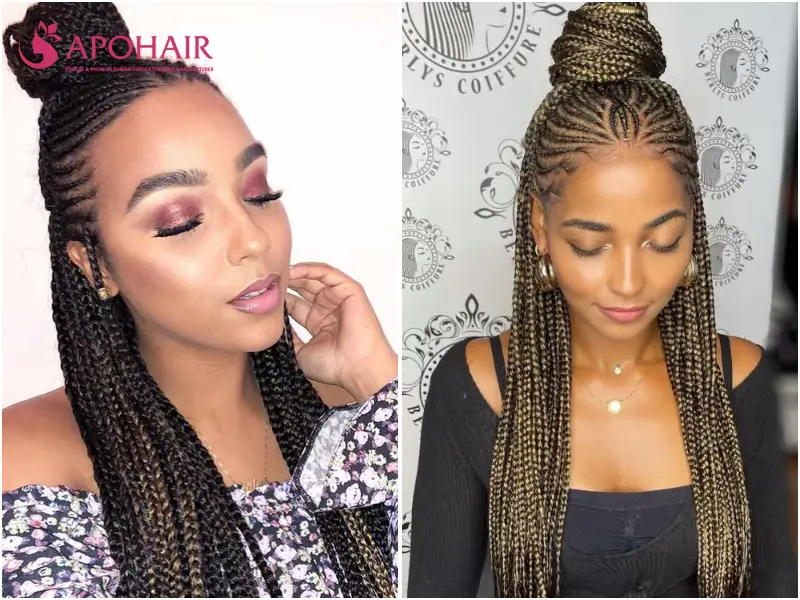
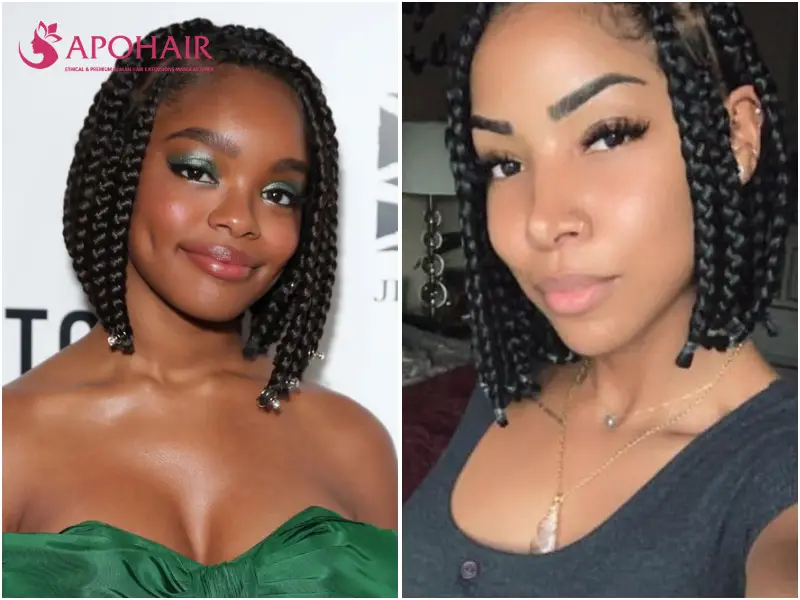
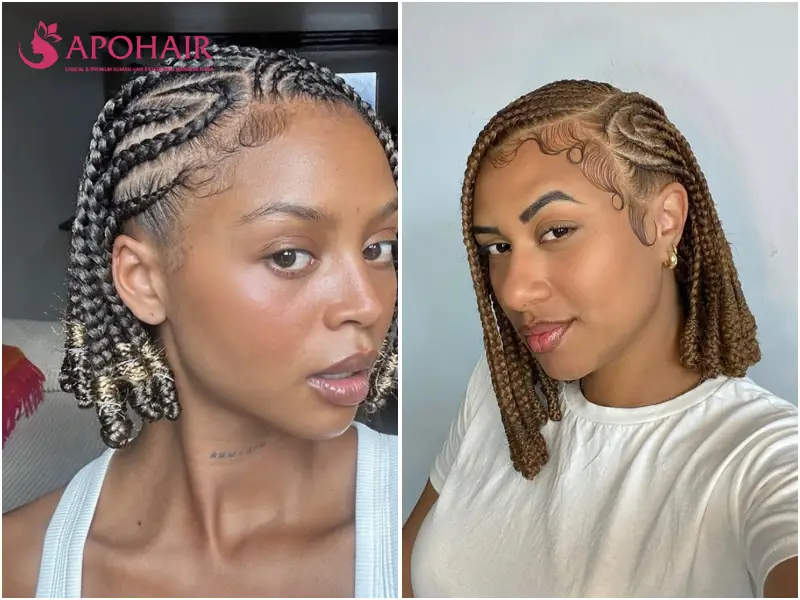
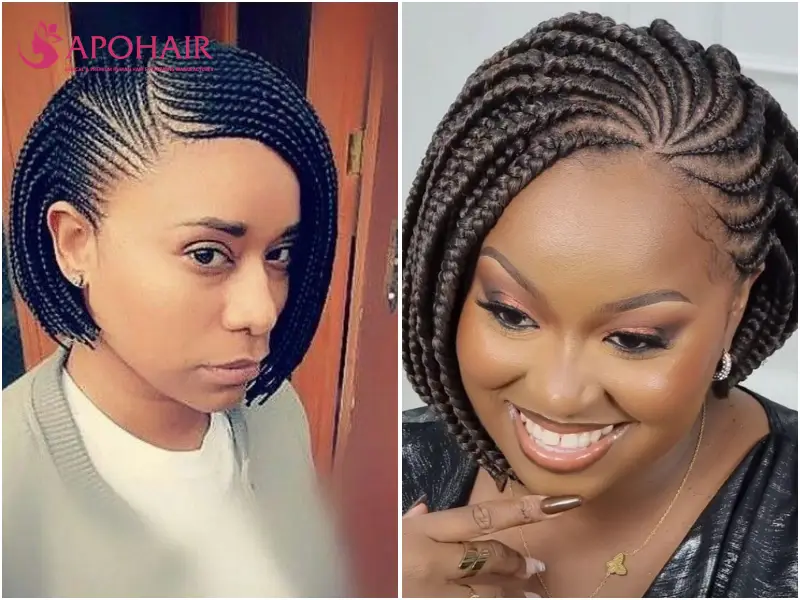
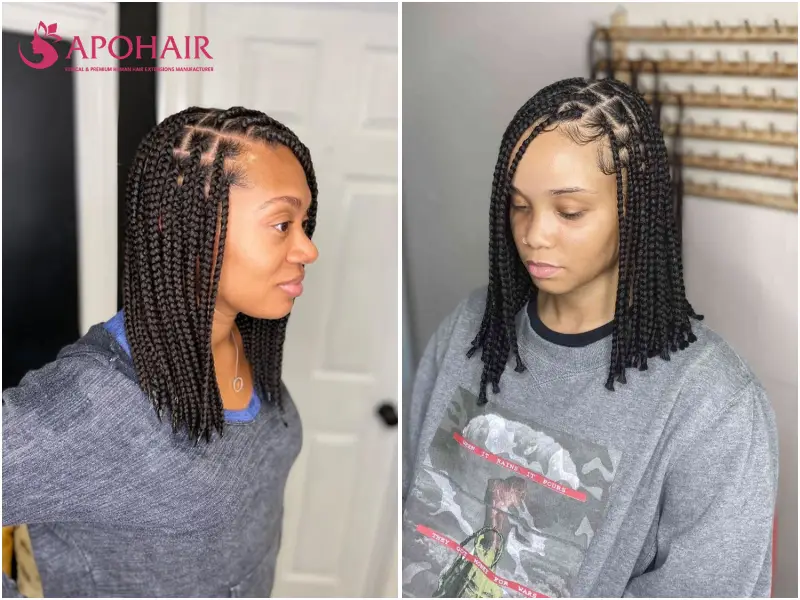
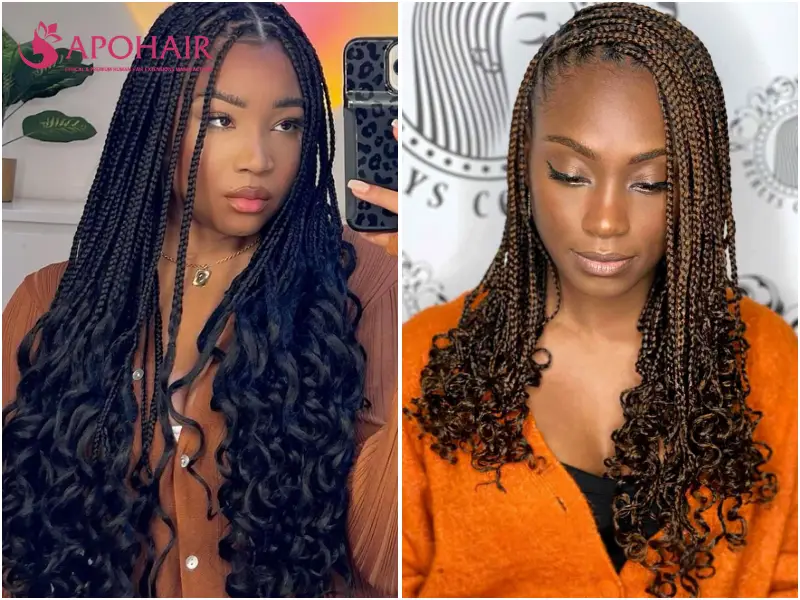
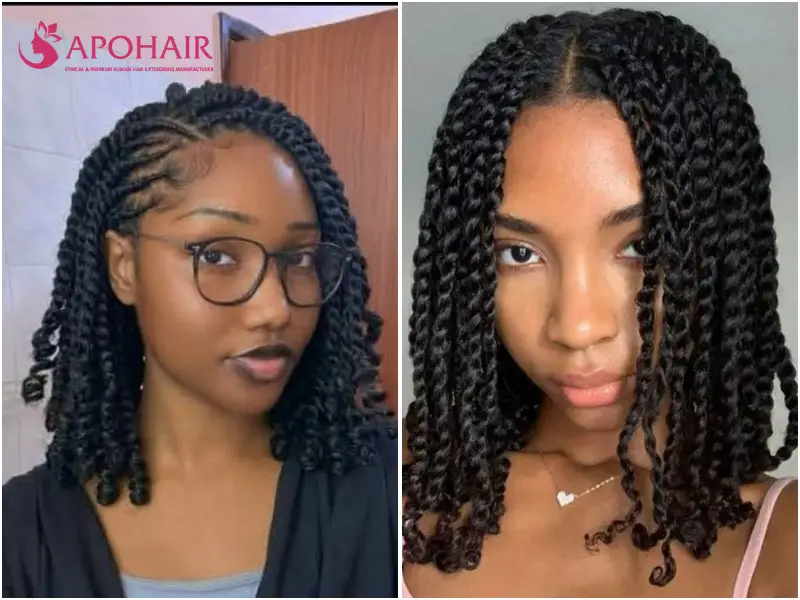
Individual Braid Hairstyles for Black Women: Box, Knotless, and Boho
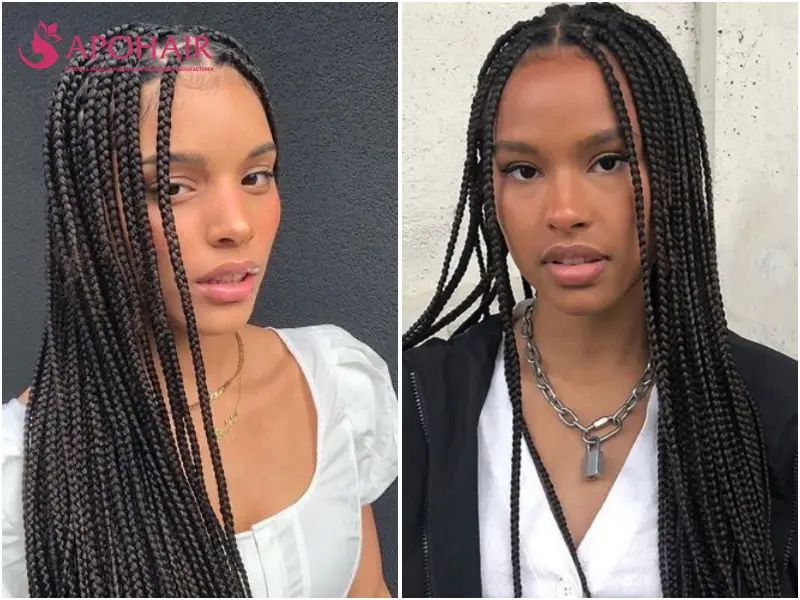
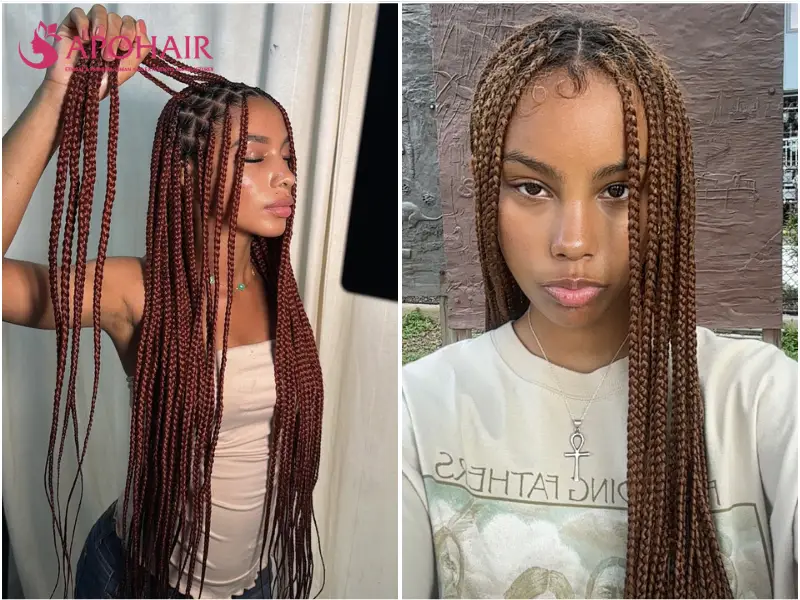
Individual braids hang free from a parted section rather than following the scalp. The group covers box braids, knotless braids, jumbo box braids, micro braids, goddess braids with curly pieces, and bohemian braids with loose curls. Each braid carries its own weight at a single root, which is what separates this group from flat rows.
1. Box Braids
Box braids part the hair into squares and braid each section with added hair from the root down, so every braid hangs free. The square parting is the signature, showing a clean grid across the scalp. Type 4 coils grip the added hair firmly at the root, and Type 3 curls hold it with a smooth base. Box braids suit work, travel, and weeks between salon visits.
Natural hair needs at least 2 inches, and box braids sit at the longer end of that range because the knot needs hair to grip. Pre-stretched braiding hair folds in half over the natural section at the root, and the three strands braid down as one from there. Around five to seven packs cover a full head, split into equal portions per section so braid thickness stays even. That knot concentrates tension at one point, so hairline sections stay small. A full head takes several hours. A common mistake is a knot pulled tight to stop slipping, which stresses the root from day one.
2. Knotless Braids
Knotless braids start each section with the wearer’s own hair and feed the added hair in gradually over the first few crossings, so no knot forms at the root. Without that knot, the braid lies flatter and the weight builds along its length rather than at one point. Type 3 and Type 4 hair both take the method. The flatter root makes knotless braids a common choice for fine edges, long installs, and anyone who found box braids uncomfortable.
The natural hair needs about 2 inches to anchor the first crossings. The first crossings use only natural hair, then small slivers of braiding hair join at each pass until the braid reaches full thickness. Feeding it in over several crossings is what keeps the start light, and rushing it recreates the knot the method exists to avoid. Hairline braids stay small, since fine strands break there first. Install runs longer than box braids. A common mistake is adding too much hair too early, which leaves a lump at the root.
3. Jumbo Box Braids
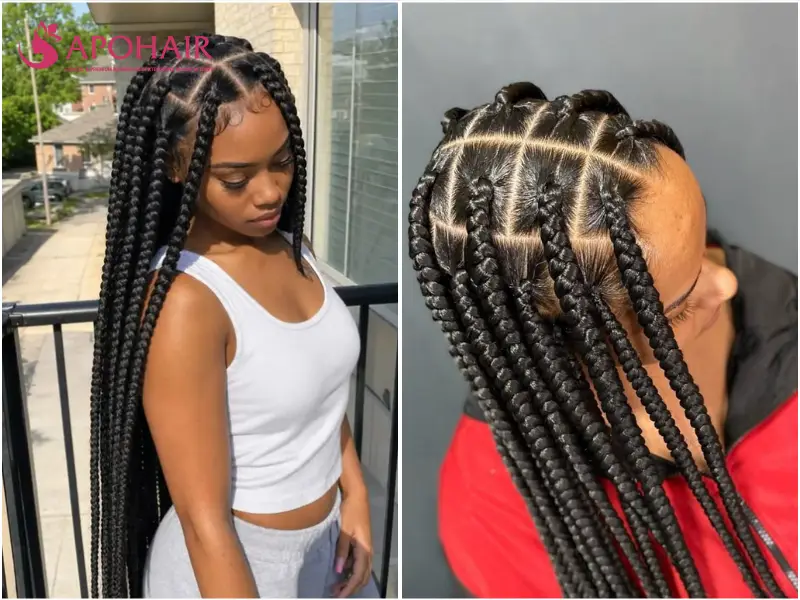
Jumbo box braids use the same square parting as standard box braids but take far larger sections, so a full head might hold only twenty to thirty braids. Fewer, thicker braids mean each root carries much more weight, which is the trade-off for a much shorter install. Type 4 hair supports the load best, since dense coils anchor a heavy braid. The bold scale suits festivals, short-term wear, and anyone short on chair time.
Natural hair needs at least 2 inches, with a firm root grip to hold the added hair. Each section takes a whole folded portion of braiding hair at once, so the finished braid runs several times thicker than the natural hair beneath it. Fewer, larger portions mean three to four packs usually cover the head. Weight is the main concern, so moderate lengths beat waist-length sets. Install takes only a few hours. A common mistake is parting sections wider at the hairline than at the crown, which puts the heaviest braids on the most fragile hair.
4. Micro Braids
Micro braids take very small sections, often a few millimeters wide, and braid each one with or without added hair. The small scale lets the finished braids move like loose hair and style in ways thicker braids cannot. Type 4 hair holds the tiny sections without slipping, and Type 3 curls work with a smoothed base. Micro braids suit long wear and anyone wanting braids that read as fine strands.
Natural hair needs about 2 inches, and micro sections grip shorter lengths better than large ones. Added hair is optional, since the braid is thin enough to hold on its own. Each braid carries little weight, but a full head means hundreds of separate anchor points along the hairline. Install is the longest of any style in this group, often running across two sittings. A common mistake is take-down without conditioner and patience, since hundreds of fine braids tangle and shed at removal.
5. Goddess Braids With Curly Pieces
Goddess braids leave curly hair loose along the length of each braid, so soft curls break the line instead of a smooth finish. The contrast between a tight braid and loose curls is the whole effect, and it softens a style that otherwise reads as very structured. Type 3 and Type 4 hair both blend with the curly pieces. The romantic finish suits weddings, holidays, and warm-weather wear.
Natural hair needs about 2 inches at the root. Curly human hair joins in short lengths at intervals down the braid, with each piece caught into a crossing and left to fall loose. Human hair keeps its pattern through washing and restyles, while synthetic curls tangle sooner. The loose pieces add drag as they catch on clothing, so the braids stay moderate in length. Install runs longer than a plain braid, since the curls go in as the braid travels. A common mistake is leaving too many curls loose, which mats them into each other within days.
6. Bohemian Braids With Loose Curls
Bohemian braids leave curly strands out at the ends and in scattered places along the braid, with the roots kept flat and neat. The deliberate contrast between a tidy root and undone lengths gives the style its name. Type 4 and Type 3 hair carry the braided base, and the loose curls blend across textures when the pattern matches. It suits vacations, festivals, and anyone wanting braids that do not read as formal.
Natural hair needs about 2 inches to anchor the braid. The braid starts with straight braiding hair at the root, then curly human hair feeds in lower down and at the ends, where the loose pieces sit. Human hair handles those pieces best, since it washes and holds its curl over the life of the set. Tension stays normal, though the loose curls need detangling the braids do not. Install matches a goddess set. A common mistake is skipping moisture on the loose curls, which lets them knot into the braids and makes take-down slow.
Scalp Braid Hairstyles That Lie Flat: Cornrows, Fulani, and Ghana
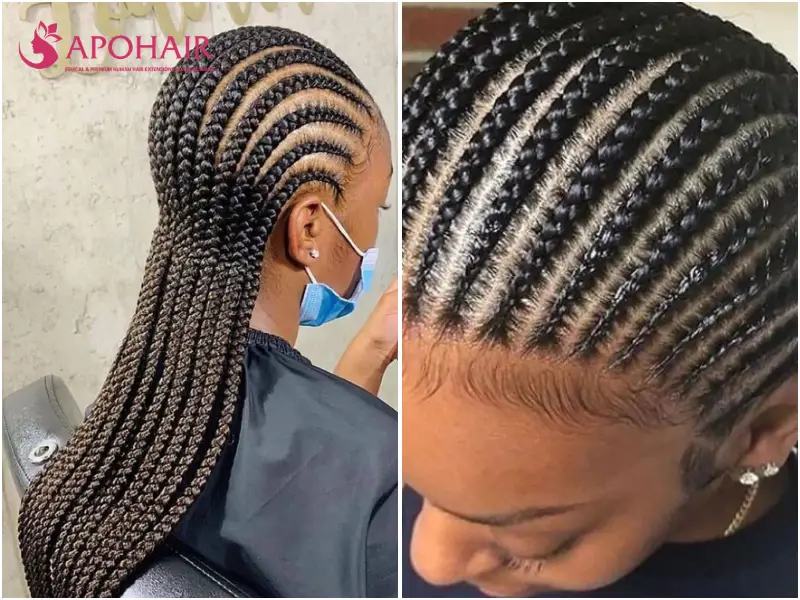
Scalp braids stay flat against the head, picking up hair as they travel. The group covers straight-back cornrows, feed-in cornrows, Fulani braids with beads, Ghana braids, and stitch braids. The weight spreads along a whole row rather than sitting on one root, and the parting between rows becomes the design.
7. Straight-Back Cornrows
Straight-back cornrows run parallel rows from front to nape, and they are the foundation every other scalp technique builds on. A row gathers hair continuously as it travels, so the load rides along its full length instead of pulling at one anchor. That distribution is why cornrows serve as the base under weaves, crochet sets, and wigs rather than only as a finished look. Type 4 coils grip the rows tightest, while looser textures need gel for the same hold.
This is the one technique that works below the 2 inch minimum other braid styles need, which makes it the entry point for shorter natural hair. No extensions are required, so cost and weight both stay at their lowest. Row count drives everything else: a few large rows finish in under an hour, while a dense pattern reaches five. Without added hair the pattern reads clean for roughly a fortnight. A common mistake is treating row count as a style choice alone, when it also sets install time and wear.
8. Feed-In Cornrows
Feed-in cornrows apply the knotless principle to a flat row, introducing extensions in stages rather than all at once. The technique solves the single weakness of a standard cornrow with extensions, where a thick start sits as a visible lump on the most delicate hair. Because the thickness builds gradually, the row tapers the way natural hair does. Type 3 and Type 4 textures blend with the added pieces most convincingly.
Pre-stretched fiber suits this method better than bulk hair, since tapered ends disappear into the row instead of blunt-cutting into it. The amount of hair per row is the variable that decides comfort, and more fiber means more load however gradually it enters. A documented wear test on 4B and 4C hair reached 21 days, with frizz appearing around day six. That timeline is typical for extension rows rather than exceptional. A common mistake is judging the install by its first hour, before the weight settles.
9. Fulani Braids With Beads
Fulani braids combine a row running back through the middle of the head, rows braided toward the face at the sides, and loose braids at the temples, usually finished with beads or cuffs. The layout comes from the braiding traditions of the Fulani people, a historically nomadic group living across West Africa, from Nigeria and Senegal to Mali and Cameroon. Their beads and cowrie shells have long signaled beauty, wealth, and cultural pride. Type 4 hair suits the layout best, and the style fits weddings, celebrations, and travel.
Natural hair needs about 2 inches. Kanekalon feeds into the cornrows as they travel and into the hanging temple braids, so only the sections meant to hang carry added hair while the flat rows stay light. Small braids take about 6 to 8 hours, large ones 3 to 4. Temple braids pull on fine edge hair, so knotless starts help. The set lasts about 4 to 6 weeks, within the 6 to 8 week ceiling the AAD advises. A common mistake is loading heavy beads onto thin temple braids.
10. Ghana Braids
Ghana braids take the feed-in method to its fullest extent, tapering from a fine start to a substantially thicker row that carries on as a hanging braid. Where feed-in cornrows aim to look natural, this one aims for scale, and the rows read as sculptural against the scalp. The name points to the West African tradition the technique traveled from. Type 4 hair anchors the heavier rows best, and Type 3 curls take the taper well.
The taper is the whole craft here: small slivers of braiding hair enter at successive crossings over several inches rather than in one handful, so the row widens smoothly from a fine start. Done properly, this technique reaches up to 8 weeks of wear, the longest of any style covered and the outer limit the AAD recommends. That longevity comes from the density of the finished row, which resists the frizz that ends lighter sets. Weight lands at the nape. A common mistake is choosing maximum length alongside maximum thickness, which doubles the load.
11. Stitch Braids
Stitch braids add small horizontal parts along each cornrow, so the finished row shows a line of evenly spaced marks that look like stitching. The parts divide the hair picked up by the braid into precise sections as the row travels. Type 4 hair holds the neat stitch sections best, since the pattern depends on clean partings that stay put. The crisp detail suits photos, celebrations, and polished everyday wear.
Natural hair needs about 2 inches so each small section reaches the braid. The tail of a comb separates each stitch, and light edge gel keeps the lines clean. Added hair is optional and only needed for long braids. The extra sectioning makes install slower than plain cornrows. The stitch lines stay sharp for about two to three weeks before new growth blurs them. A common mistake is spacing the stitches unevenly from row to row, which breaks the pattern at a glance.
Braided Updos, Ponytails, and Buns for Black Hair
These styles shape an existing braided set rather than adding a new technique. They run from a braided high ponytail and bun to a halo braid, a braided mohawk, and a half-up style. Wear time follows the braids underneath, so the shaping is a styling decision rather than a new install.
12. Braided High Ponytail
A braided high ponytail gathers braids at the crown and secures them into one tail, often wrapping a braid around the base to hide the tie. Gathering a full set of braids concentrates real weight at one point, which makes the anchor the main consideration rather than the look. Type 4 hair handles the upward direction well when the rows or braids beneath are not already tight. It suits events, workouts, and a second life for a set a few weeks old.
The braids need enough length to reach the crown and still hang. No new hair goes in beyond what the set already holds. The AAD lists tightly pulled ponytails among the styles linked to traction alopecia, so the gathering stays loose and the tie sits on braid rather than on scalp hair. Styling takes minutes. A common mistake is pulling a weeks-old set into a high tail, which stacks new tension on roots already carrying the weight of extensions.
13. Braided Bun
A braided bun coils gathered braids into a knot at the crown, the nape, or somewhere between. The coil holds itself once the braids wrap around the base, so a bun needs fewer pins than loose hair would. Type 4 hair gives the fullest bun, and any braid size works, with larger braids making a chunkier coil. It suits offices, formal events, and hot weather.
The braids need enough length to wrap at least once around the base. A low bun rests the weight at the nape, while a high one lifts it to the crown. Loose pins spread the load better than one tight elastic. Styling takes a few minutes on an existing set. A common mistake is coiling a heavy set into a high bun, which drags the crown roots for as long as it stays up.
14. Halo or Crown Braid
A halo braid wraps a braid or a pair of braids around the head above the ears and pins the ends into the start, forming a continuous circle. The circle distributes weight evenly around the whole head rather than at one anchor, which makes it one of the gentler ways to wear a full set up. Type 4 hair holds the shape firmly, and medium braids sit flattest. It suits weddings, heat, and multi-day wear.
The braids need enough length to travel the full circle, which usually means a set past the shoulders. Pins enter against the direction of the braid so they lock rather than slide. Weight spreads around the head, which is why this style suits longer wear than a high ponytail. Styling takes about ten minutes. A common mistake is pinning the circle tight against the hairline, which presses on the edges the braids already load.
15. Braided Mohawk
A braided mohawk braids the sides flat against the head and leaves a raised strip of braids or curls running down the middle from front to nape. The contrast between flat sides and a high center is the shape, and it puts almost no weight on the side sections. Type 4 hair holds both the flat rows and the raised center, and added hair builds the crest. It suits concerts, nights out, and bold styling.
The side rows need about 2 inches of natural hair, while the center strip works with more length. Side rows angle upward toward the strip, so the temples take most of the pull and fine edge hair stays out of tight stitches. Install runs a few hours for the rows plus the center. The flat sides stay neat for about two to three weeks before new growth shows. A common mistake is braiding the side rows right at the ear, where hair is thin.
16. Half-Up Braided Style
A half-up braided style gathers the braids from the crown and temples into a bun or tail while the rest hangs loose. Only half the set moves, so the weight lifted off the face is a fraction of a full updo and the roots at the nape stay undisturbed. Every braid size works, and Type 4 hair holds the gathered section without slipping. It suits everyday wear and anyone who wants the length visible.
The braids need enough length to reach the gathering point, usually a few inches past the crown. Nothing new goes in. Gathering only the top half keeps the pull light, though securing the same section daily concentrates stress at the crown. Styling takes a minute. A common mistake is using a thin elastic on braids, which snags the added hair and frays it where the tie sits.
Short and Shoulder-Length Braid Hairstyles for Black Women
Short sets cut both weight and chair time. The group covers bob box braids, a short cornrow bob, a braided pixie, shoulder-length knotless braids, braids with curly ends, and short two-strand twists. Less length at the root is the shared mechanism, which makes this group the lightest to wear.
17. Bob Box Braids
Bob box braids use the same square parting as full-length box braids but stop at or above the jaw. The short length removes most of the weight that makes long box braids heavy, so the same knot at the root carries a fraction of the load. Type 4 hair holds the parting cleanly, and Type 3 curls work with a smoothed base. The sharp outline suits offices, summer, and anyone testing braids for the first time.
Natural hair needs at least 2 inches for the braid to grip. Braiding hair sets the length, and each section takes a shorter folded portion than a waist-length set, so two to three packs usually suffice. Light braids mean the root tension stays low even with a knotted start. Install runs shorter than full-length box braids, often by half. A common mistake is cutting the braids level after install instead of braiding to length, which leaves blunt synthetic ends that fray.
18. Short Cornrow Bob
A short cornrow bob braids flat rows from the hairline and lets them continue into short braids that stop around the jaw. Flat rows plus short ends put almost no load on the scalp, which makes it the lightest of the scalp-braid options. Type 4 hair grips the rows, and Type 3 curls hold with gel. It suits heat, workouts, and anyone growing out a longer set.
Natural hair needs about 2 inches for the rows. Added hair is optional and only sets the length of the hanging section. With both flat rows and short ends, tension stays low at every point. Install takes a few hours depending on row count. The rows look neat for about two to three weeks before new growth shows at the parting. A common mistake is braiding the rows tight to make them last, which trades a few extra days for stress on the hairline.
19. Braided Pixie
A braided pixie braids very short natural hair into small flat rows or tiny braids that follow the head closely, with no added length at all. Working on cropped hair means the braid grips at the root and nothing hangs, so no weight loads the scalp at all. Type 4 coils hold small sections even when short, which is what makes the style possible. It suits a teeny weeny afro growing out, hot weather, and low-effort weeks.
Natural hair needs only a few inches, and some patterns manage on less. No added hair goes in. Short sections carry no load, so comfort depends entirely on how gently the rows start. Install is quick compared with any extension set. The style holds about one to two weeks before the shortest pieces slip. A common mistake is braiding sections too small on very short hair, which leaves nothing for the braid to hold and lets it unravel overnight.
20. Shoulder-Length Knotless Braids
Shoulder-length knotless braids use the gradual feed-in start but stop the braids at the shoulders. The knotless start and the short length together make this the lightest way to wear a full extension set, since neither root nor length concentrates weight. Type 3 and Type 4 hair both take it. It suits long-wear protective styling for anyone with fine edges or a history of tension.
Natural hair needs about 2 inches to anchor the first crossings. Braiding hair feeds in over the first few crossings only, in slivers small enough that the root stays flat, and shorter portions keep the finished braid at the shoulder. Between the flat start and the modest length, this set puts very little strain on the hairline. Install takes several hours, shorter than a waist-length version. A common mistake is assuming low weight means unlimited wear time, since new growth and buildup still set the 6 to 8 week ceiling the AAD advises.
21. Braids With Curly Ends
Braids with curly ends braid most of the length and leave a few inches of loose curl at the tip of each braid. The curled tips soften the blunt line that braids otherwise end on, and they do it without adding weight along the braid. Type 4 hair holds the braided section, and curly ends in a matching pattern blend across textures. The playful finish suits parties, holidays, and shoulder-length sets.
Natural hair needs about 2 inches at the root. Straight braiding hair carries the braid down, then curly human hair joins in the last few inches and stays unbraided at the tip. Human hair there keeps its pattern through washing and refreshes with water, while synthetic curls frizz sooner. The short curly section adds little weight. Install runs like any braid set of the same length. A common mistake is braiding too far down the curly hair, which leaves only a small curl at the tip and wastes the effect.
22. Short Two-Strand Twists
Short two-strand twists are the counterpoint to every braided style: two strands wrapped together rather than three interlaced. That single structural difference explains the trade-off between the two families. A twist takes roughly half the time to build and comes down far faster, but its looser structure gives way sooner. Type 4 coils grip each other firmly enough to hold unaided, which is why the technique suits natural hair worn between longer installs.
The minimum length runs higher than for cornrows, because a two-strand structure needs enough length to lock against itself. Nothing is added on a short natural set, which keeps this the lightest option covered. Root tension runs lower than any braided equivalent, making twists a common rest period between extension styles. Expect one to two weeks of neat wear. A common mistake is extending that window by twisting the roots harder, which trades a few days against the edges. Instead of pulling the roots tighter, wrapping each twist around its own base into a small coil creates bantu knots hairstyles that tuck the ends away for about a week.
What Types of Braids Are There for Black Women?
The braid types Black women wear most are straight-back cornrows, feed-in cornrows, Fulani braids, Ghana braids, box braids, and knotless braids. They divide on two questions: whether the braid lies flat against the scalp or hangs free from a parted section, and whether extensions go in.
Those two answers set install time, wear time, and where the weight lands on the head. Cornrows, Fulani braids, and Ghana braids gather hair continuously as the row travels, so the load spreads along its whole length. Box braids and knotless braids carry their weight at one root each, which is why the starting method matters so much for comfort.
| Technique | Flat or hanging | Added hair | Install time | Typical wear |
|---|---|---|---|---|
| Straight-back cornrows | Flat to the scalp | Optional | Up to 5 hours | About 2 weeks without added hair |
| Feed-in cornrows | Flat to the scalp | Yes, fed gradually | A few hours | About 3 weeks |
| Fulani braids | Flat rows plus hanging braids | Yes | 3 to 8 hours by size | 4 to 6 weeks |
| Ghana braids | Flat to the scalp | Yes, fed gradually | A few hours | Up to 8 weeks |
| Box braids | Hanging from square parts | Yes | Several hours | Several weeks |
| Knotless braids | Hanging, flat start | Yes, fed gradually | Longer than box braids | Several weeks |
Two figures anchor the whole table. Natural hair needs at least 2 inches for most braid styles, though some cornrow patterns manage on less. The AAD advises wearing braids no longer than 6 to 8 weeks whatever the technique. Every type in the table except cornrows on natural hair depends on added hair for its finished length, so the extension choice belongs in the same decision as the technique. The same decision applies to other black hair extensions styles, from goddess braids and feed-in cornrow ponytails to ombre waves and mermaid curls.
How to Choose the Right Braid Hairstyle for Your Hair
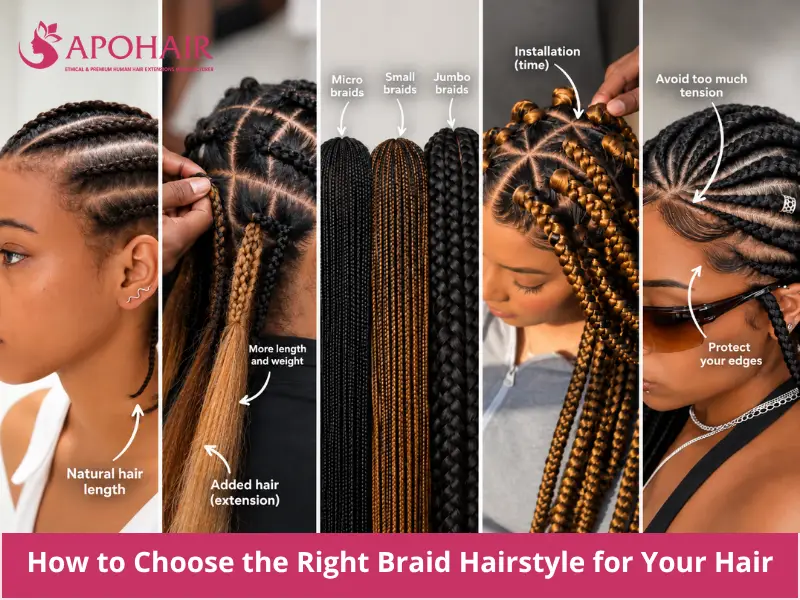
To choose the right braid hairstyle, work through five decisions: the natural hair available, whether added hair goes in, braid size, install time, and the tension the hairline can take. Natural hair length rules out the impossible first.
- The natural hair sets the floor. Most braid styles need at least 2 inches, cornrow patterns manage on less, and a braided pixie works on a few inches with no added hair at all.
- Added hair decides length and weight together. Box braids, knotless braids, jumbo box braids, Fulani braids, Ghana braids, feed-in cornrows, and both bob-length sets depend on extensions for their finished length. Goddess braids, bohemian braids, and braids with curly ends need curly human hair specifically. Straight-back cornrows, micro braids, stitch braids, a braided pixie, and short twists work on natural hair alone.
- Braid size trades time against wear. Micro and small braids take the longest to install and hold the longest, while jumbo sections go in fastest and loosen soonest.
- Install time is a real constraint. Fulani braids run 6 to 8 hours in small sizes and 3 to 4 in large, and a full head of cornrows can take up to five hours.
- Tension and edges decide what is safe. The AAD advises loosening braids around the hairline and wearing them no longer than 6 to 8 weeks. Pain or stinging after an install means the style is too tight.
How Long Do Braids Last on Black Hair?
Braids on Black hair last from about two weeks to eight, and the technique sets where a style falls in that range. Cornrows with no added length hold about two weeks, feed-in rows about three, Fulani sets 4 to 6 weeks, and Ghana braids up to 8.
Three things end a set early. New growth lifts the rows away from the scalp and blurs the partings, frizz creeps along the braid, and product builds up on a scalp that cannot be washed normally. One documented wear test on feed-in cornrows saw frizz begin around day six and the style come down at day 21. Whatever the technique, the AAD advises wearing braids no longer than 6 to 8 weeks. Pain, stinging, small bumps, or broken hairs along the hairline mean the set comes out earlier.
How to Care for Braided Hair and Protect Your Edges
To care for braided hair and protect the edges, keep the scalp clean, the braids moisturized, and the whole set covered at night. Good care extends wear without adding tension, which is the trade-off every long-wear style has to manage.
- Wash the scalp, not the braids. Diluted shampoo applied along the partings lifts buildup without roughing up the braid surface, and the hair dries fully afterward so no damp spot sits against the scalp.
- Moisturize between washes. A light oil or leave-in spray on the scalp and along the braids eases the dryness that makes braided hair brittle by week three.
- Cover the set at night. A satin or silk scarf or bonnet cuts the friction that turns movement into frizz, and it protects the edges where fine hairs break first.
- Use edge control sparingly. Small amounts smooth the hairline, while daily buildup dries the exact hair the product is meant to protect.
- Act on tension early. The AAD advises loosening braids around the hairline, so any row that stings after install comes down rather than waiting it out.
- Take the set down slowly. Unbraiding from the ends and detangling with conditioner protects the shed hair collected inside each braid, which is where most take-down breakage happens.
Frequently Asked Questions About Braid Hairstyles
What Braids Last the Longest?
Small braids with added hair outlast every other option, because tight sections resist frizz and unraveling. Ghana braids reach up to 8 weeks and Fulani sets 4 to 6, while cornrows on natural hair with no extensions blur within about two. Jumbo sizes sit at the short end, since large sections loosen soonest whatever the technique. Dookie braids are another braid style in this family, known for 90s plaits that start thick at the roots and taper toward the ends.
Are Knotless Braids Better Than Box Braids?
Knotless braids start flatter and spread weight along the braid instead of concentrating it in a root knot, which makes them more comfortable for fine edges. Box braids install faster and grip more firmly on very short hair. The trade-off is chair time against root tension, so the better choice depends on which matters more.
How Much Hair Do You Need for Braids?
Most braid styles need at least 2 inches of natural hair, though some cornrow patterns work on shorter lengths. Box braids sit at the longer end of that minimum because the starting knot needs hair to grip. A braided pixie works on a few inches with no added hair at all.
Do Braids Damage Natural Hair?
Braids do not damage hair when they go in with gentle tension and come out on time. Damage comes from tight roots, heavy extensions, and sets worn too long, which the AAD links to traction alopecia. Pain, stinging, small bumps, or broken hairs along the hairline are early signs that a set is too tight.
Conclusion
Braid hairstyles for Black women come down to three decisions in order. The technique sets the shape and whether the weight sits along a flat row or on a single root. Braid size trades install time against how long the set holds, and tension at the hairline decides what the edges can take. Everything else, from beads to curly ends, is finishing on top of those three.
If you run a salon or supply braiders, goddess braids, bohemian braids, and braids with curly ends are where human hair earns its place. Those curls get washed, refreshed, and reused across installs. Our team can send samples and factory-direct pricing on curly and wavy human hair bundles and bulk hair. Because we manufacture 100% Vietnamese Human Hair in our own facility, you can match curl pattern and color to each client instead of settling for stock on hand.
