








21 Twist Hairstyles for Women: Two-Strand, Kinky, Marley, Passion & More
Twist hairstyles wrap two strands of hair around each other, either on natural hair alone or with braiding hair added for length, texture, and wear time. Several named styles carry a clear origin: Senegalese twists come from Senegal, and passion twists are credited to stylist Kailyn Rogers.
Black women and natural hair wearers love twists for their soft texture and range, from the passion twists Ciara has worn to the mini twists favored by Lupita Nyong’o. Twists also go in faster than most braids, feel light on the head, and tuck the ends away. Honey blonde, amber-red, and ombre shades show especially well on coily twists.
When a natural set comes down, it turns into a defined, heat-free twist-out. Natural twists last one to two weeks, and extension twists last up to 8 weeks.
The guide gathers 21 twist hairstyles in five groups: twists for natural hair, protective twists with added hair, short twists, curly and boho twists, and twist updos and styling ideas. Each style covers the hair it suits, the added hair it needs, install and wear time, and a common mistake.
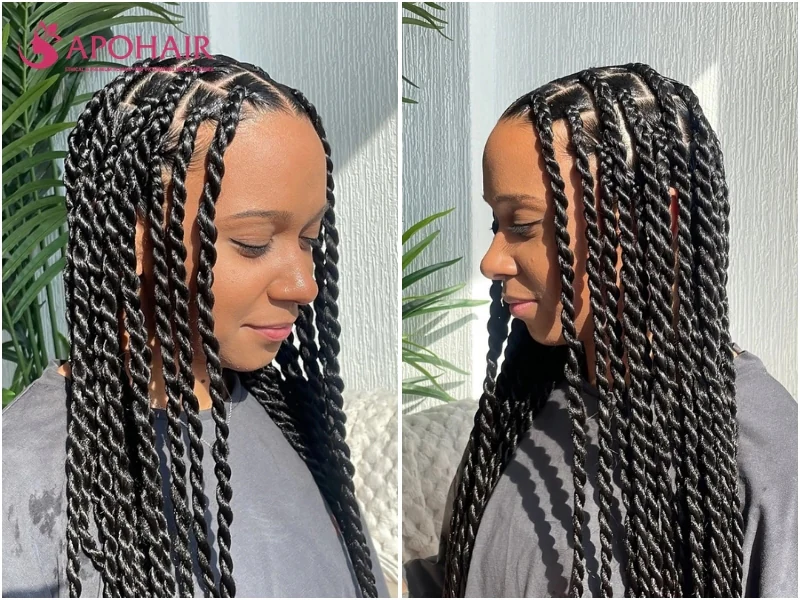
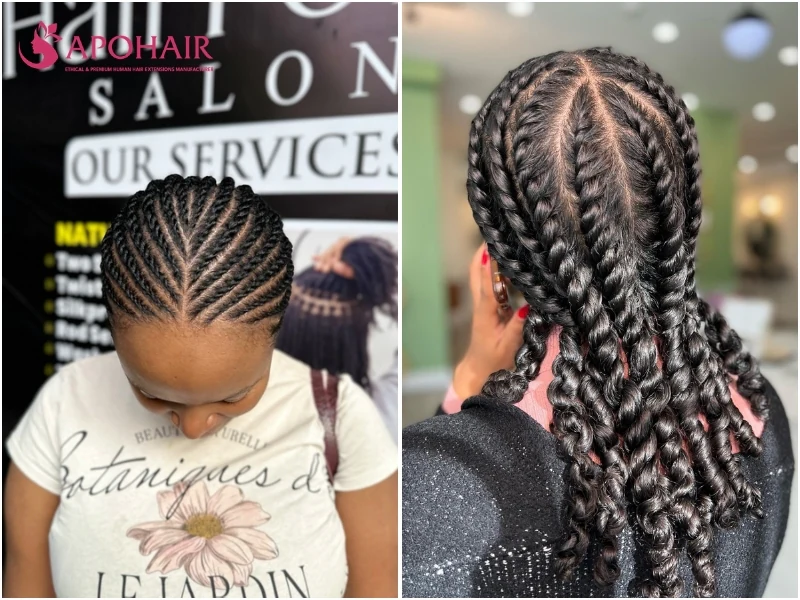
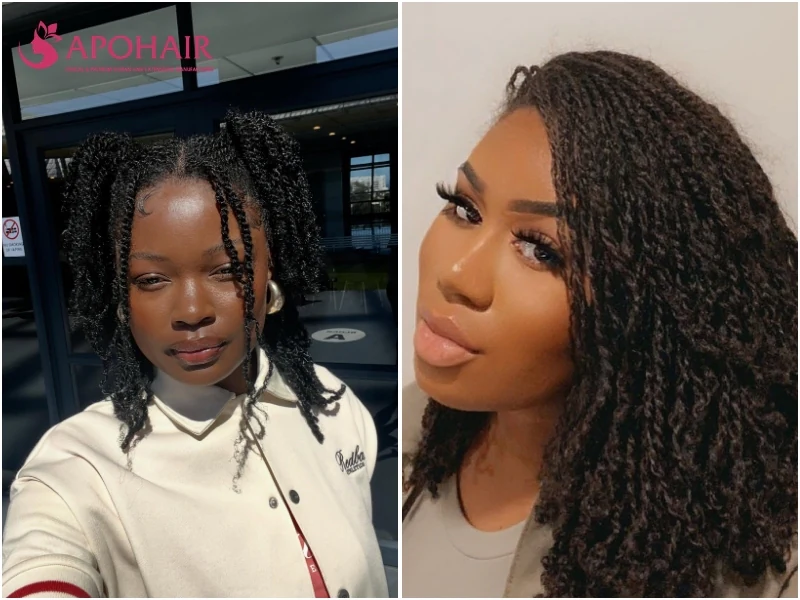
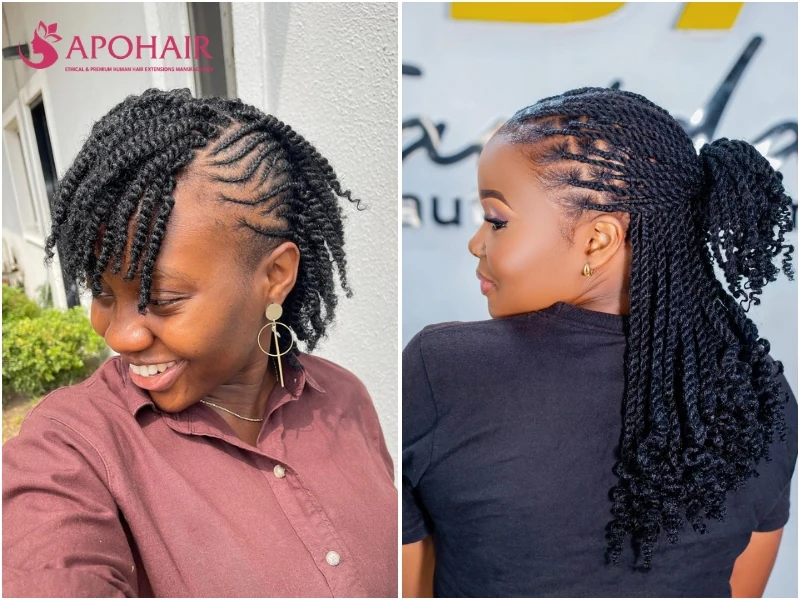
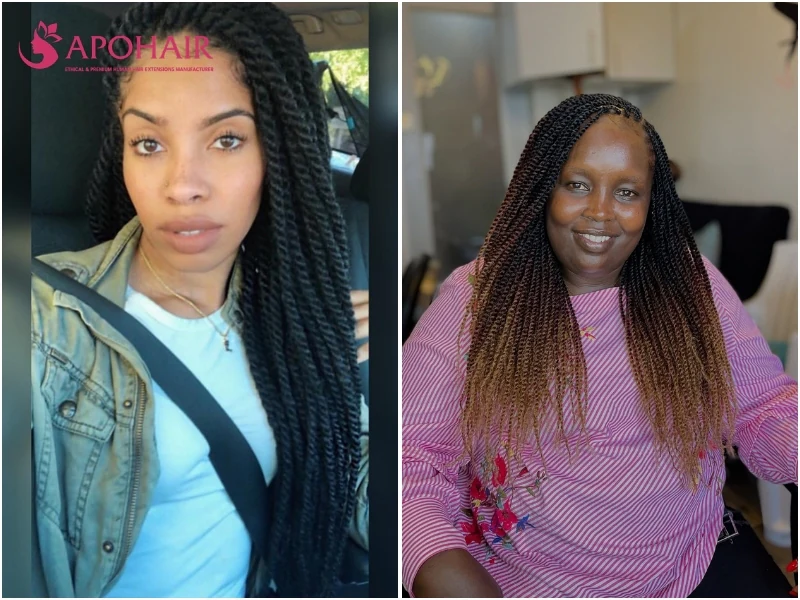
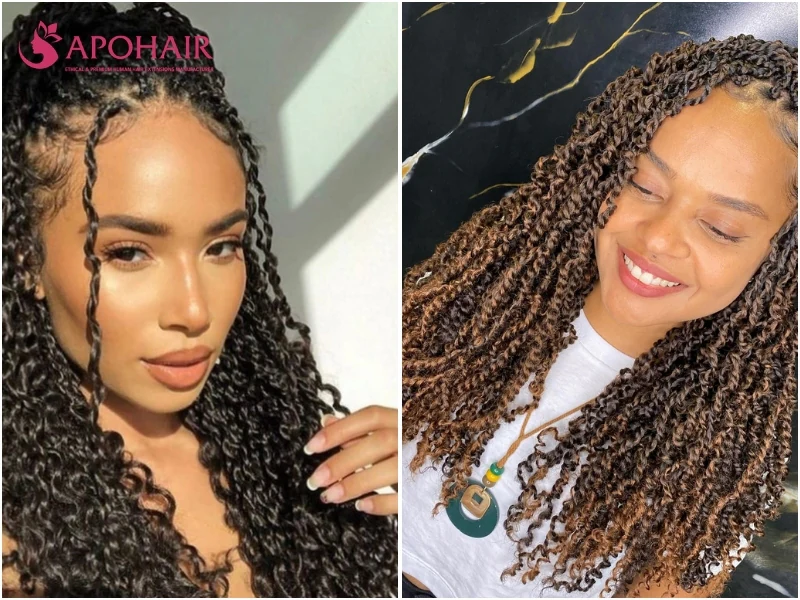
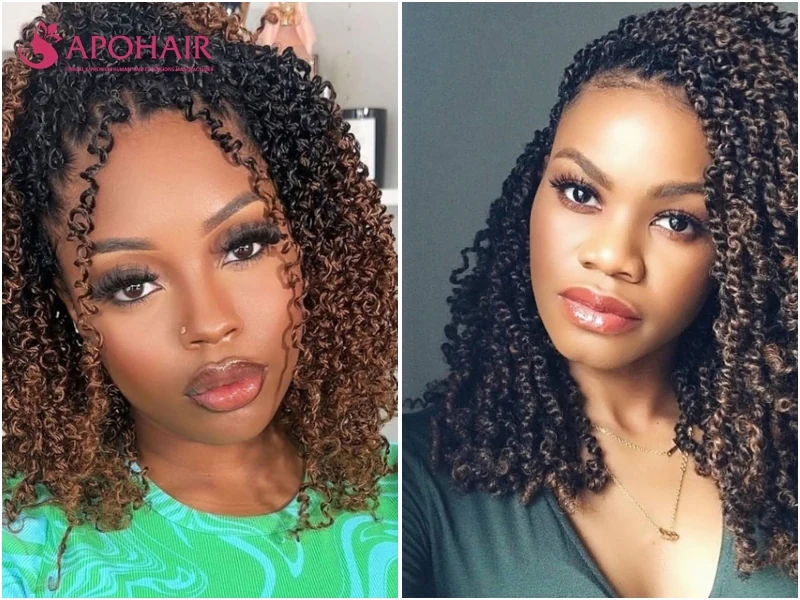
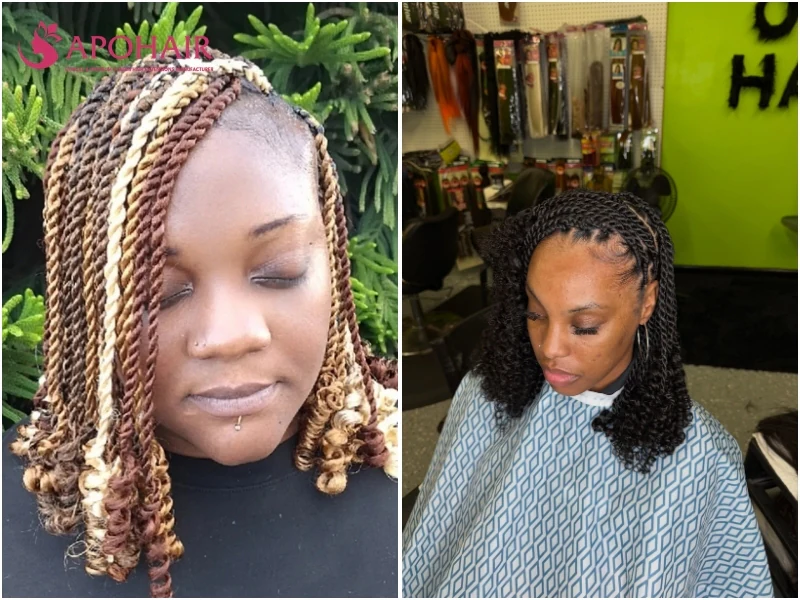
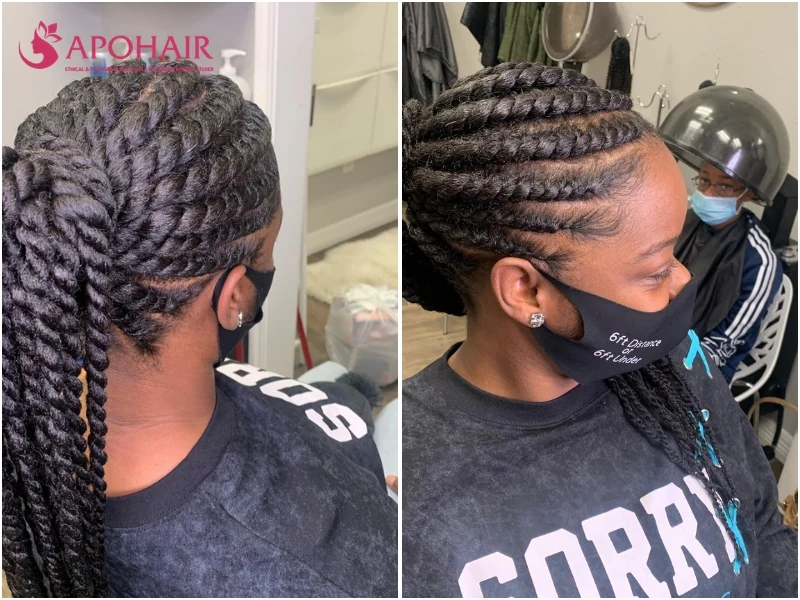
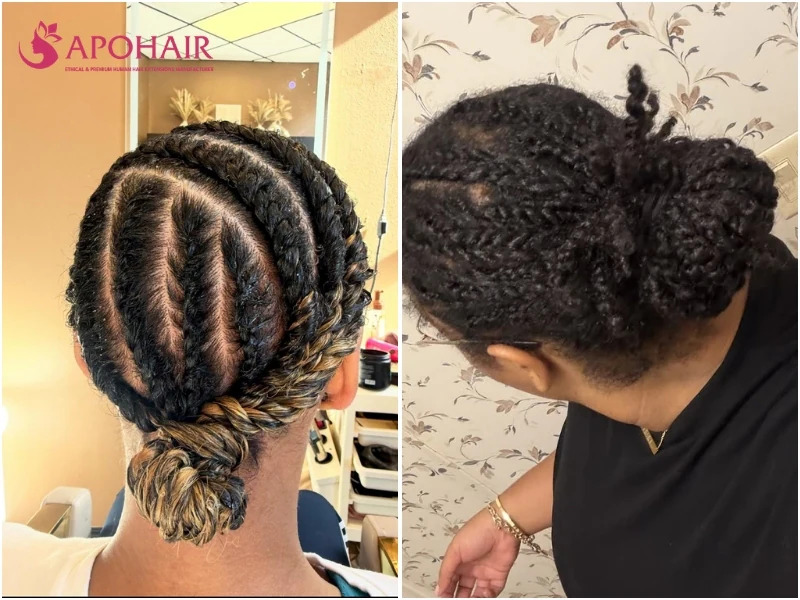
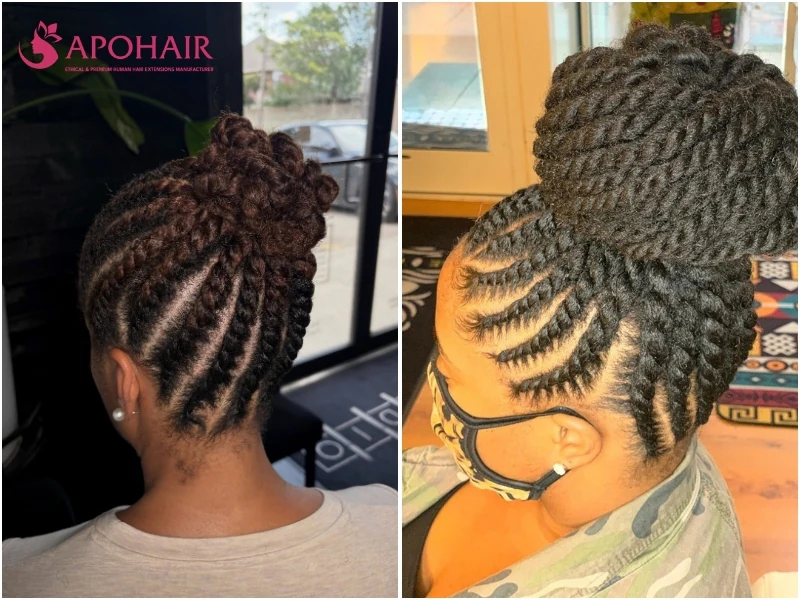
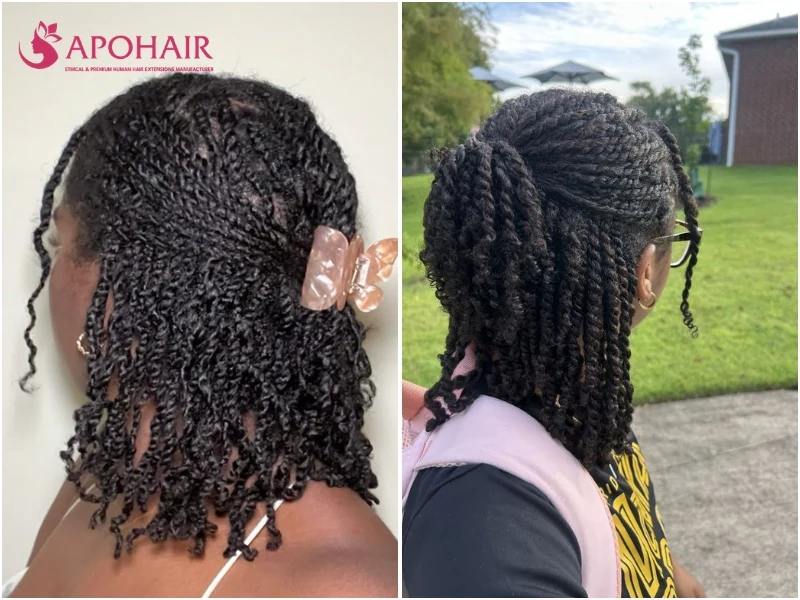
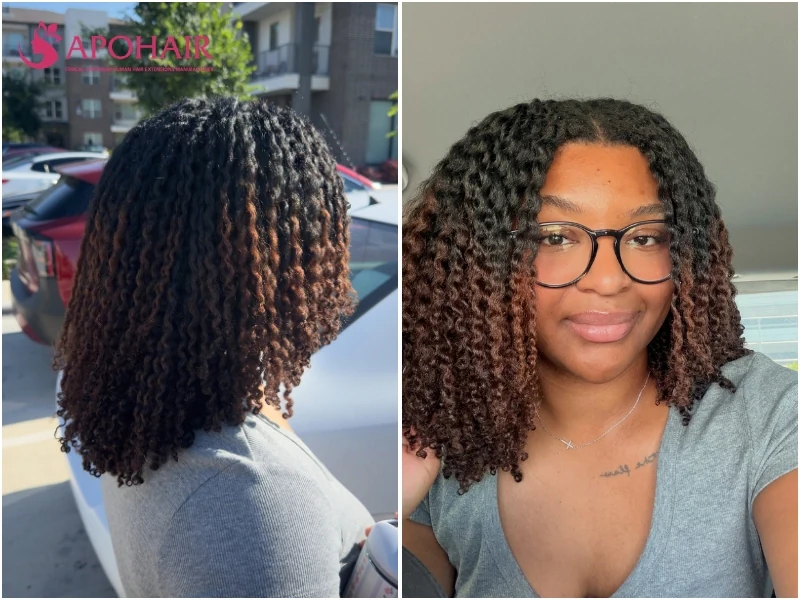
The sections that follow explain how to choose a twist hairstyle, which hair works best, and how to do two-strand twists. They close with how long twists last and how to maintain them.
Twist Hairstyles for Natural Hair
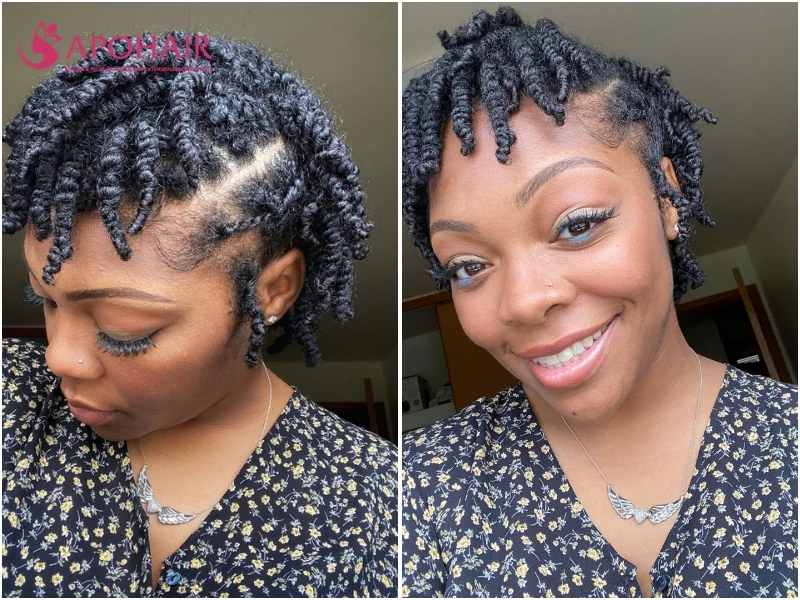
Twist hairstyles for natural hair use only the wearer’s own hair. Two-strand twists hang freely from square or triangle parts, flat twists lie along the scalp, and mini twists shrink the sections for a full, fine texture.
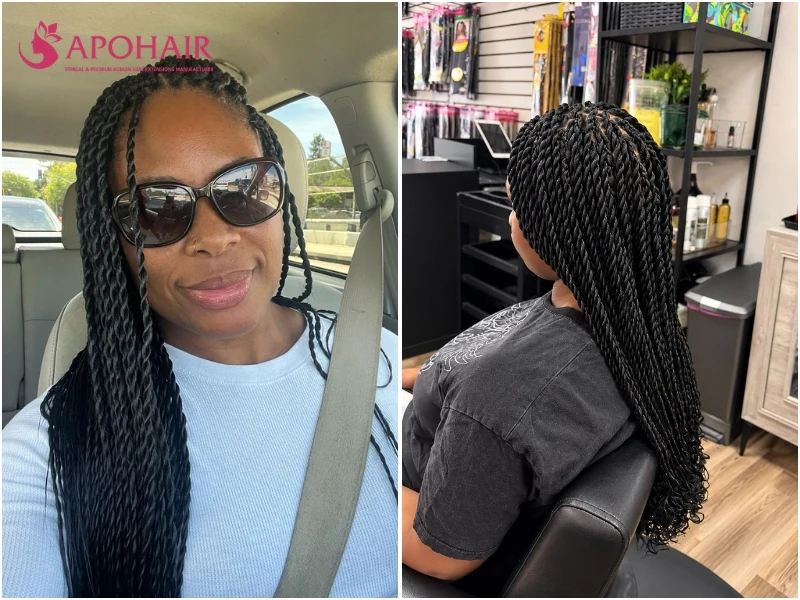
1. Two-Strand Twists
Two-strand twists divide the hair into sections and wrap two strands of each section around each other from root to tip, creating rope-like twists that hang freely. Type 4 coils hold the twist firmly because the strands grip each other, and Type 3 curls can wear them with a styling cream. Type 1 to 2 straight hair, like most European hair, tends to unravel unless braiding hair is twisted in. The look suits everyday wear and work.
Two-strand twists on natural hair need a few inches of length. Added braiding hair is optional and makes a longer set. Twisting pulls less at the root than cornrows, but a tight start at the hairline still strains the edges. A full head takes a few hours. Twists on natural hair last about one to two weeks. A common mistake is twisting the roots extra tight to make the set last, which leaves the scalp sore and breaks hair at the base.
2. Flat Twists
Flat twists wrap two strands along the scalp and pick up hair as the twist moves, so each row lies flat with a soft, rope-like texture. The rows can run straight back, form a herringbone pattern, or end in loose twists with curly ends. Type 4 hair holds the flat rows neatly, and Type 3 curls work with a smoothing gel. The tidy shape suits workdays, school, and the gym.
Flat twists need a few inches of natural hair, and they often use no added hair at all. Hanging twists at the ends can take braiding hair for extra length. Each row gathers hair along the scalp, so the rows near the hairline stay snug but relaxed. Twisting a full head of flat rows takes a couple of hours. Flat twists last about one week before the rows loosen. A common mistake is picking up uneven amounts of hair along a row, which makes the twist bulge in some places and thin out in others.
3. Mini Twists
Mini twists are very small two-strand twists done on natural hair, so the head looks full and finely textured. The small size lets them swing, clip up, or fall around the face much like loose hair. Type 4 hair holds mini twists well because small sections grip tightly and resist frizz. Type 3 curls can wear them too, often with a curl cream for hold. The versatile look suits work, school, and anyone who likes to change styles day to day.
Mini twists work on hair from a few inches long to well past the shoulders, and they usually use natural hair only. Small sections carry little weight, but twisting them tightly at the root still stresses fine hairline strands. Mini twists take the longest of the natural twist styles, often several hours. They last about one to two weeks. A common mistake is making the edge sections so tiny that the hairline strands thin and snap when the twists come out.
Protective Twist Hairstyles With Added Hair
Protective twist hairstyles with added hair use braiding or crochet hair for length, texture, and longer wear. Kinky twists and Marley twists have a matte, textured surface, while passion twists and spring twists add waves or springy coils. Senegalese twists look sleek, and Havana twists look fluffy and full. Jumbo twists enlarge the sections, and crochet twists loop pre-twisted hair onto cornrows.
4. Kinky Twists
Kinky twists use braiding hair with a kinky, textured finish that resembles natural Afro-textured hair, twisted into small to medium two-strand twists. The matte, slightly fuzzy surface blends closely with Type 4 hair, so the twists look like the wearer’s own hair grown long. Flat twists at the front or a gathered ponytail add variety to the same set. The natural-looking finish suits the office, campus life, and everyday wear.
Kinky twists need about 2 inches of natural hair to anchor the added hair. Kinky braiding hair wraps into each section, and the amount depends on length and twist size. The added weight rests at the root, so medium lengths keep the pull comfortable. A full head takes several hours. Kinky twists last about 6 to 8 weeks with care. A common mistake is leaving the ends unsecured, which lets the textured fiber separate within the first week.
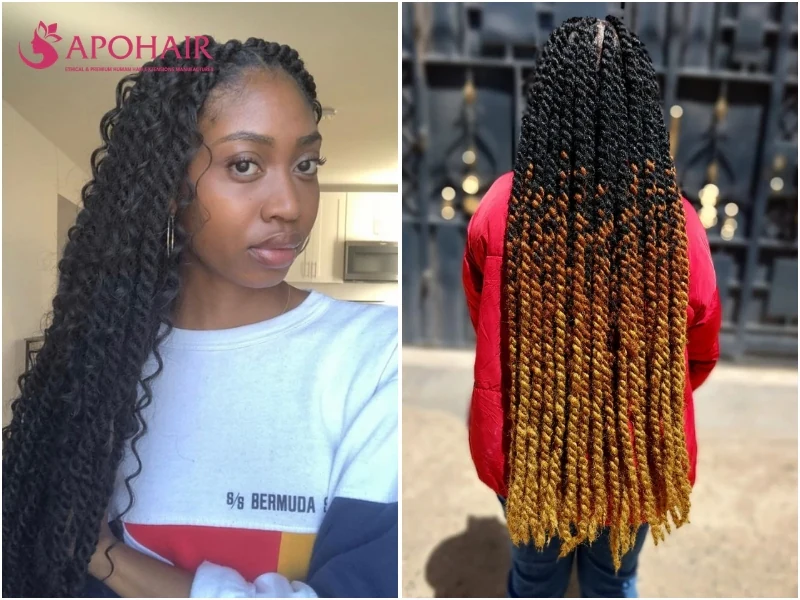
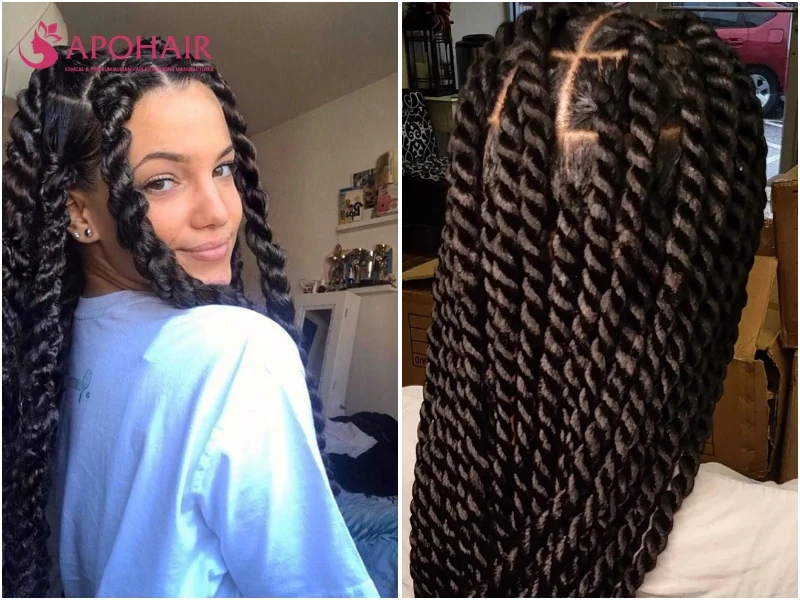
5. Marley Twists
Marley twists are two-strand twists made with Marley hair, a coarse, matte braiding hair with a texture close to blown-out Type 4 hair. The result is thick, full twists that hang long, often in black or an ombre fade from dark roots to brown or honey tones. The textured fiber grips Type 4 coils well and hides frizz as the style ages. It suits work, vacations, and long stretches of low-effort wear.
Marley twists need about 2 inches of natural hair so the Marley hair can grip at the root. Marley hair is light for its volume, but thick, waist-length twists still add weight at the scalp. Starting each twist with a gentle wrap rather than a hard pull protects the edges. A full head takes several hours. Marley twists last about 4 to 6 weeks. A common mistake is twisting Marley hair loosely toward the ends, which lets the coarse fiber fan apart.
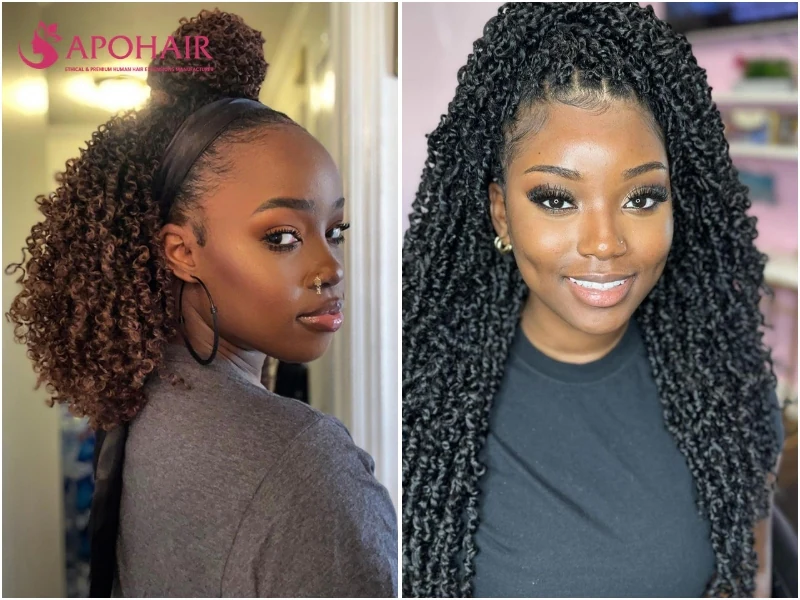
6. Passion Twists
Passion twists use water-wave braiding hair to create soft, loosely twisted strands with a bohemian, slightly undone curl pattern. Stylist Kailyn Rogers is widely credited with creating the style. Loose curly pieces often slip out along the twists and around the face, which adds to the effect. Type 3 and Type 4 hair both blend easily with the wavy fiber. The romantic look suits vacations, summer festivals, and weddings.
Passion twists need about 2 inches of natural hair to anchor the wavy fiber, and many installs use crochet or pre-twisted hair to save time. Water-wave hair is light, so the twists move freely without much drag at the root. The front twists stay loose to protect the edges. An individually twisted install takes a few hours. Passion twists last about 6 to 8 weeks. A common mistake is loading the wavy hair with heavy creams, which weighs the curls down and causes matting.
7. Spring Twists
Spring twists use tightly coiled braiding hair to create bouncy, springy twists that look like defined coils. They are usually worn short to shoulder length, and ombre shades add warmth at the ends. The tight coil pattern blends with Type 4 hair and gives fine hair a fuller look. The light, playful style suits hot weather, workouts, and casual days.
Spring twists need about 2 inches of natural hair, and spring twist hair or crochet hair supplies the coils. The fiber is light and fairly short, so tension at the scalp stays low. Snug rather than tight roots keep the hairline comfortable. A crochet install goes quickly, while individual twists take a few hours. Spring twists last about 4 to 6 weeks. A common mistake is combing or brushing the coils, which separates them into frizz.
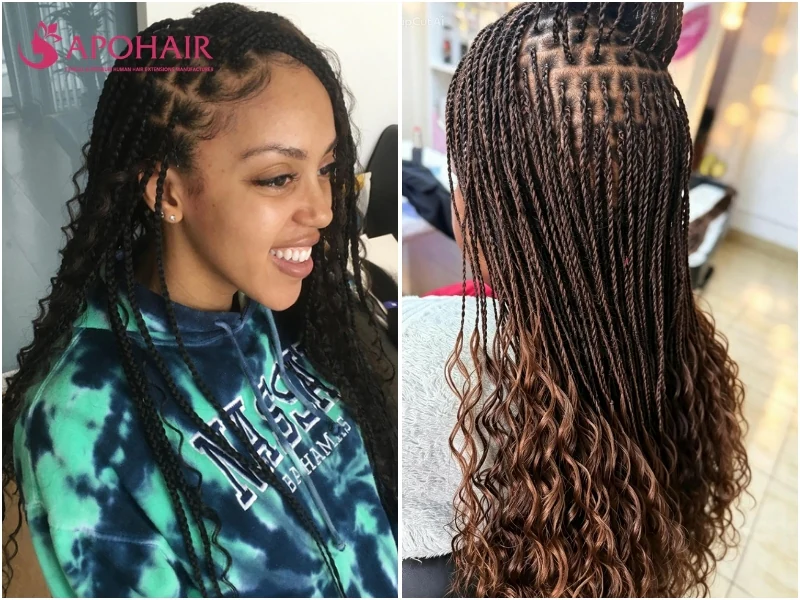
8. Senegalese Twists
Senegalese twists turn smooth Kanekalon braiding hair into slim, glossy ropes, each strand wound firmly for a uniform finish. The style takes its name from Senegal, where it originated. The smooth fiber covers the natural hair completely, so Type 3 and Type 4 hair both wear it well. Type 1 to 2 straight hair, like most European hair, can hold the fiber when the sections stay small. The polished look suits the office, travel, and long-wear styling.
Senegalese twists need about 2 inches of natural hair, and the Kanekalon hair adds most of the length. Small twists pull less at each root, but long twists add up to real weight at the nape. The install usually takes four to eight hours, depending on size and length. Senegalese twists last about 6 to 8 weeks. A common mistake is wrapping the two strands in the same direction each strand was twisted, which makes the rope unravel.
9. Havana Twists
Havana twists use Havana hair, a thick and fluffy braiding hair, to create chunky twists with a soft, full body. They usually use fewer, larger twists than Marley twists. The fluffy fiber blends with Type 4 hair and covers the root well. Bold ombre fades from black to copper or gold stand out on the thick twists. The voluminous look suits vacations, concerts, and casual weekends.
Havana twists need about 2 inches of natural hair, and Havana hair gives each twist its thick shape. Large twists place more hair on each section, so the weight at the root grows with length. Waist-length Havana twists pull harder than shoulder-length ones. With fewer twists to make, the install often takes a few hours. Havana twists last about 4 to 6 weeks. A common mistake is choosing very long Havana hair for fine natural hair, which strains the small anchor sections.
10. Jumbo Twists
Jumbo twists wrap large sections of hair, usually with added braiding hair, into thick, bold twists. The big sections make the twists quick to install and easy to see from across a room. Type 4 hair supports the weight of large sections, and Type 3 curly hair can wear jumbo twists as well. The statement look suits festivals, weekends, and a short break between longer styles.
Jumbo twists need about 2 inches of natural hair, and braiding hair builds the thickness. Large sections carry the most weight of any twist style, so moderate lengths keep the pull comfortable. The install often takes only a couple of hours. Jumbo twists last about 2 to 4 weeks, since large twists loosen and frizz sooner. A common mistake is parting the sections too wide at the hairline, which puts heavy twists right on the edges.
11. Crochet Twists
Crochet twists loop pre-twisted hair onto cornrows with a crochet needle, instead of twisting extensions into each section. The method gives the look of passion, spring, or Senegalese twists in less time, and the natural hair stays braided underneath. Any texture that can be cornrowed, from Type 4 coils to straight hair, can wear crochet twists. Half-up buns and long, full sets both work. The quick, low-commitment look suits busy weeks and trying a new style.
The cornrow base needs about 2 inches of natural hair, and packs of pre-twisted crochet hair provide the twists. Crochet loops add weight to the cornrows, so the base rows stay snug but not tight. A crochet install can take three hours or less. Crochet twists last about 6 to 8 weeks, which matches the longest the AAD suggests keeping braids in. A common mistake is leaving wide gaps between loops, which lets the cornrows show through.
Short Twist Hairstyles
Short twist hairstyles keep the twists at chin or shoulder length. Short two-strand twists use natural hair, short kinky twists add textured braiding hair, and a twist bob shapes the lengths into a rounded line with curled ends.
12. Short Two-Strand Twists
Short two-strand twists twist short natural hair into small to medium twists that sit around the face and crown. The compact twists show off the coil pattern and often fall from a soft side part. Type 4 hair, including a teeny weeny afro (TWA), holds short twists well, and Type 3 curls can twist once the hair reaches a few inches. The low-maintenance look suits hot weather, the office, and growing out a big chop.
Short twists need a few inches of hair, since very short coils slip out of the twist. No added hair goes in. Short twists place little weight on the scalp, so tension stays low as long as the root is not wound tightly. A head of short twists takes less time than longer twists because each one is quick to finish. Short two-strand twists last about one to two weeks. A common mistake is overloading short twists with gel, which leaves flakes and makes them stiff.
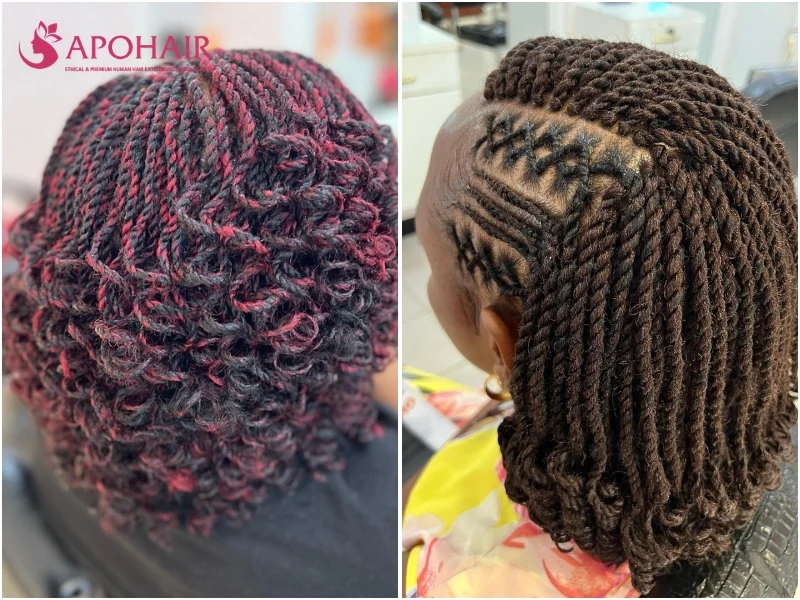
13. Short Kinky Twists
Short kinky twists use kinky braiding hair to create twists that stop around the chin or jaw, often with slightly curled ends. The textured fiber matches Type 4 hair, and colors such as red or brown mixed with black add personality. Some versions pair the twists with a cornrow design on one side. The short, easy look suits work, school, and warm months.
Short kinky twists need about 2 inches of natural hair, and kinky braiding hair supplies the twist and the length. Short lengths carry little weight, which keeps the scalp comfortable. A side cornrow design needs gentle tension near the temple. The install takes a few hours. Short kinky twists can last about 6 to 8 weeks, like longer kinky twists, although the ends show wear sooner. A common mistake is cutting the fiber too short before twisting, which leaves too little length to curl or secure the ends.
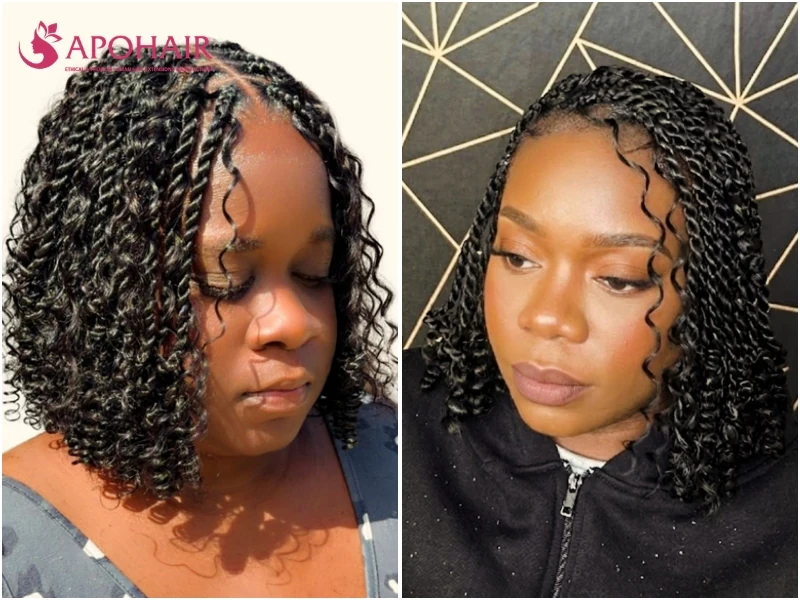
14. Twist Bob
A twist bob sets twists at bob length, around the jaw or just above the shoulders, usually with curled ends that swing as the head moves. The rounded shape frames the face from a center or side part. Type 4 hair wears the style with added twisting hair, and Type 3 curls blend with the curly ends. The chic look suits the office, dinners, and warm weather.
A twist bob needs about 2 inches of natural hair, with braiding hair adding the twist and the curl at the ends. The short length keeps weight at the root low. Ends set with hot water or perm rods hold their curl longer. The install takes a few hours. A twist bob with curly ends lasts about 4 to 6 weeks. A common mistake is cutting the lengths unevenly before setting the curls, which breaks the clean bob line.
Curly and Boho Twist Hairstyles
Curly and boho twist hairstyles leave curls loose within the style. Goddess twists let curly pieces fall along the length, and twists with curly ends keep the curls at the tips.
15. Goddess Twists
Goddess twists are twists with curly or wavy hair left out along the length and at the ends, which gives a soft, bohemian finish. Micro or small twists often end in long, loose waves, and brown or honey shades add warmth. The curly pieces blend with Type 3 and Type 4 hair. The romantic style suits weddings, beach trips, and summer events.
Goddess twists need about 2 inches of natural hair, with braiding hair for the twists and curly hair for the loose pieces. Curly human hair can be washed and restyled without losing its pattern, while synthetic curls tangle sooner. The twists stay light at the root, especially along the hairline. The install takes several hours, since the curls go in along the way. Goddess twists last about 6 to 8 weeks. A common mistake is leaving too many loose curls, which knot into each other within days.
16. Twists With Curly Ends
Twists with curly ends twist the hair most of the way down and finish each twist with a few inches of loose curls. Unlike goddess twists, the curls sit only at the tips rather than along the length. Multicolored twists in brown, blonde, and cream look playful, while black twists with fuller curls read softer. Type 4 hair holds the twists, and curly ends in a matching pattern blend with Type 3 curls. The fun look suits brunch, vacations, and parties.
The style needs about 2 inches of natural hair, with braiding hair for the twists and curly hair for the ends. Curly human hair ends can be refreshed with water and keep their pattern through washing. The short curly section adds little weight to the root. The install takes a few hours. Twists with curly ends last about 4 to 6 weeks. A common mistake is twisting too far down the curly hair, which leaves only a small curl at the tip.
Twist Updos and Styling Ideas
Twist updos and styling ideas reshape twists that are already in or set for a single look. A twist ponytail gathers flat twists into a tail, a twist bun coils twists high or low, and a flat-twist updo sweeps every row to the crown. Half-up twists gather only the top section, and a twist-out takes the twists down for defined curls.
17. Twist Ponytail
A twist ponytail sweeps chunky flat twists from the hairline up toward the crown and gathers the loose twists into a high or mid-height ponytail. The flat twists create a sculpted pattern along the sides, while the tail hangs long and full. Type 4 hair holds the flat rows, and Type 3 curls work with gel. The polished look suits work, events, and busy weekdays.
The flat twists need about 2 inches of natural hair, and braiding hair such as Marley or Havana hair builds the thick tail. Upward rows pull against the growth direction at the nape, and the AAD lists tightly pulled ponytails as a traction alopecia risk. The rows stay snug but relaxed for that reason. The install takes a few hours. The flat-twisted base looks neat for about a week. A common mistake is binding the tail too tightly, which adds strain on top of the flat twists.
18. Twist Bun
A twist bun gathers twists, flat twists, or both into a bun, from a low knot at the nape to a high bun at the crown. Flat twists can wrap around the head, while blonde or brown twists coil into the bun itself. Type 4 natural hair can form the bun with or without added hair, and Type 3 curls hold it with a light gel. The neat look suits work, church, and formal events.
The style needs a few inches of natural hair, and added twists give short hair enough length for a full bun. A low bun rests on the nape, while a high bun lifts the weight toward the crown. Loose pins spread the pull better than one tight elastic. Flat twisting a full head takes a couple of hours. The bun holds about a week on natural flat twists and longer when the twists use added hair. A common mistake is pinning the bun hard against the scalp, which presses the twists into sore spots.
19. Flat-Twist Updo
A flat-twist updo sweeps flat twists up from the nape, sides, and hairline and gathers them into a high bun of chunky twists at the crown. Compared with a twist bun, the updo sends every row upward, so the pattern shows from every angle. Type 4 hair holds the rows firmly, and ombre brown twists add dimension. The elegant look suits weddings, graduations, and formal events.
The rows need about 2 inches of natural hair, and Marley or Havana hair adds bulk to the top bun. Rows that travel up from the nape pull against the growth direction, so each row starts relaxed at the neck and temples. The install takes a few hours. A flat-twist updo looks sharp for about a week. A common mistake is piling too much added hair into the top bun, which makes it heavy and tugs at the crown.
20. Half-Up Twists
Half-up twists gather the top section of the twists into a bun, puff, clip, or ponytail while the lower twists hang free. The style works with mini twists and two-strand twists, and a claw clip or scrunchie makes the change in seconds. Type 3 and Type 4 hair both wear the look, on natural twists or twists with added hair. It suits school, errands, and casual days.
Half-up twists need twists long enough to reach the gathering point, usually a few inches on top. No extra hair is needed beyond the twists themselves. Gathering only the top half keeps the pull light, but securing the same spot every day strains the crown. Styling takes only a few minutes once the twists are in. The half-up shape holds for the life of the twists, about one to two weeks on natural hair. A common mistake is using a thin elastic band, which snags and frays the twists.
21. Twist-Out
A twist-out is a styled look created by taking down two-strand twists after the hair dries, so the curls keep the defined, stretched shape of the twists. The set can sit for a few hours or overnight before take-down. Type 3 and Type 4 hair show the clearest definition, and color on the ends highlights the curl pattern. The soft, voluminous look suits dates, work, and weekends.
A twist-out needs hair a few inches long, and longer hair gives looser, heavier curls. No added hair goes in. Tension stays low because the twists stay in only until the hair is dry. Twisting takes a few hours, plus drying time before take-down. A twist-out lasts about 2 to 4 days before the curls lose definition. A common mistake is taking the twists down while the hair is still damp, which leaves frizz instead of defined curls.
How to Choose the Right Twist Hairstyle?
Five decisions determine the right twist hairstyle: natural or added hair, the finish, the size and length, the time available, and the upkeep. Hair length and how long the style needs to last narrow the options first.
- Natural or added hair sets length and wear. Natural twists stay light and last about one to two weeks, while added hair extends both the length and the wear to several weeks.
- The finish sets the look. Kinky, Marley, and Havana hair give a matte, textured surface; Senegalese twists give a sleek shine, and passion, spring, and goddess styles bring curls into the set.
- The size and length balance time and weight. Mini twists take the longest but hold their detail, jumbo twists go in fast but loosen sooner, and waist-length twists put the most weight on the scalp.
- The time available separates the installs. Crochet twists go in fastest, while small individual twists such as Senegalese twists can fill most of a day.
- The upkeep follows the style. A twist-out needs a new set every few days, natural twists need moisture and retwisting at the edges, and extension twists need nightly wrapping to control frizz.
What Hair Is Best for Twist Hairstyles?
The best hair for twist hairstyles depends on the finish: Kanekalon for sleek Senegalese twists, Marley or kinky braiding hair for textured twists, Havana hair for fluffy chunky twists, and water-wave or spring twist hair for passion and spring twists. Natural twists and twist-outs need no added hair.
Pre-twisted and crochet hair extensions styles save the most time, since the twist is already formed. Synthetic fibers hold a twist well and can be sealed at the ends, which is why most long-wear twist styles use them. Human hair works best where softness and reuse matter, such as the curly pieces in goddess twists and the curly ends on a twist bob, because it can be washed and restyled without losing its pattern. Whatever the fiber, lighter hair at a moderate length keeps the pull at the root low.
How to Do Two-Strand Twists?
Two-strand twists come together in five steps: detangling, sectioning, applying product, twisting, and securing the ends. Clean, stretched hair twists the most evenly.
- Step 1: Detangle. Freshly washed and conditioned hair is detangled with fingers or a wide-tooth comb.
- Step 2: Section. A comb parts the hair into square or triangle sections, and smaller sections give longer-lasting twists.
- Step 3: Apply product. A leave-in conditioner and a twisting cream or butter on each section add slip and hold.
- Step 4: Twist. Each section splits into two equal strands that wrap around each other from root to tip with even tension.
- Step 5: Secure the ends. A finger coil at the tip, or a little extra cream, keeps the end from unraveling.
Slightly damp hair twists smoothly, while soaking-wet hair shrinks as it dries and loosens the twist at the root. Turning every twist in the same direction keeps the pattern uniform across the head.
How Long Do Twist Hairstyles Last?
Twist hairstyles on natural hair last about one to two weeks, flat twists about one week, and a twist-out about 2 to 4 days. Twists with added hair last longer, from about 2 to 4 weeks for jumbo twists to 6 to 8 weeks for Senegalese, passion, kinky, and crochet twists.
Smaller twists usually outlast larger ones, since tight sections resist frizz and unraveling. New growth, frizz at the roots, and buildup on the scalp signal that a set is ready to come out. The AAD advises wearing braids for no longer than 6 to 8 weeks, and that ceiling suits extension twists too, since they pull on the same roots. Pain, bumps, or broken hairs along the hairline call for an earlier take-down.
How to Maintain Twist Hairstyles?
Maintaining twists comes down to moisture, scalp care, and protection at night. Gentle upkeep keeps the twists neat without adding tension.
A satin or silk scarf, bonnet, or pillowcase cuts down frizz overnight. A light leave-in spray or water mixed with a little oil keeps natural twists soft, while extension twists mainly need moisture on the scalp. Diluted shampoo worked along the parts cleans the scalp, and the twists should dry completely afterward to avoid odor. Frizzy twists at the edges can be redone one at a time instead of redoing the whole head. At take-down, unraveling each twist slowly and detangling with conditioner protects the shed hair caught inside.
Frequently Asked Questions About Twist Hairstyles
What Is the Difference Between Twists and Braids?
Twists wrap two strands of hair around each other, while braids weave three strands over and under. Twists usually go in faster and feel lighter, but they unravel and frizz sooner. Braids hold a tighter structure, so styles such as box braids generally outlast natural two-strand twists, while twists come down more easily at removal.
What Is the Difference Between Marley and Senegalese Twists?
Marley twists use coarse, matte Marley hair that looks like textured natural hair, while Senegalese twists use smooth Kanekalon for a sleek, glossy rope. Marley twists are usually thicker and faster to install. Senegalese twists are often smaller and take longer, but they tend to last longer too, about 6 to 8 weeks, compared to 4 to 6 weeks.
What Is the Difference Between Passion Twists and Spring Twists?
Passion twists use water-wave hair for loose, wavy twists with a soft bohemian finish, and they are often worn long. Spring twists use tightly coiled hair for bouncy twists that look like defined coils, and they are usually shorter. Passion twists typically last about 6 to 8 weeks, while spring twists last about 4 to 6 weeks.
Are Twists a Protective Style?
Most twists count as protective styles, because they tuck the ends away and cut down on daily combing and handling. Twists with added hair shield the natural hair for several weeks. A twist-out is different: it is a styled look made by unraveling twists, so the ends are exposed again. Tight roots can cancel the benefit of any protective style. Left twisted for months instead of taken down, two-strand twists are also how many wearers start their dreadlock twist hairstyles, including on straighter textures covered in our white girl dreads styles guide.
Do Twists Damage Natural Hair?
Twists do not damage natural hair when they go in with gentle tension and come out on time. Damage comes from tight roots, heavy extensions, and sets kept in too long, which the AAD links to traction alopecia. Pain, small bumps, or broken hairs along the hairline show that the twists are too tight and should come out.
Do Twists Help Hair Grow?
Twists do not make hair grow faster, because growth happens at the scalp. They can help retain length by protecting the ends from breakage and reducing daily handling. Stretched twists also reveal more of the hair’s true length, so many wearers notice longer-looking hair after a run of twist styles.
Conclusion
Twist hairstyles all start from two strands wrapped around each other, and the fiber, size, and finish decide everything else. Natural twists stay light and short-lived, extension twists trade weight for weeks of wear, and curls, buns, and twist-outs change the look without a new technique. Gentle roots and a take-down within about 8 weeks keep the hairline healthy.
If you run a salon or supply twist stylists, goddess twists, twists with curly ends, and twist bobs are where curly human hair earns its place. Our team can send samples and factory-direct pricing on curly and wavy human hair Vietnam manufacturers rarely offer outside a distributor markup. Because we manufacture 100% Vietnamese Human Hair in our own facility, you can match curl pattern and color to each client and reuse the hair across installs.
Marley, Kanekalon, and water-wave hair cover the synthetic side of a twist service, but goddess twists, curly ends, and any client who wants real hair need the human side of the shelf. Three of our lines cover it: loose hair sold by weight for twisting or feeding into a section, with no weft to hide at the root, available as bulk human hair wholesale; hair sold by weight that holds one curl pattern and shade across a full head, so pieces left out for goddess sets read as the client’s own hair, browsed as wholesale bundles of human hair; and tape-in, clip-in, keratin tip, weft, and ponytail pieces in the same Vietnamese remy hair for adding length around a set of twists instead of sitting through a full install, compared in our bulk remy hair extensions range.
