









Coily vs Curly Hair: Key Differences, Care Tips & Extension Guide
Coily hair (Type 4) and curly hair (Type 2- 4) differ in curl shape, hair structure, moisture level, and daily care needs. Coily hair has very tight curls or small zigzag shapes and shrinks noticeably when dry. Curly hair forms a loose S-shape and holds its pattern with far less effort. Coily hair behaves differently from curly hair because its tighter curl pattern stops natural scalp oils from traveling down the hair shaft, making each strand drier and more fragile.
Most people search this topic because they want to change their hairstyle, buy hair extensions, or understand why their natural hair behaves the way it does. Your hair texture shapes how much time you spend on your morning routine, which products work for your strands, and how your style holds throughout the day.
This article covers the definitions, structural differences, and daily care demands for both hair types. It also guides you on choosing the right extensions or wigs to match your texture.

What Is Coily Hair?
Coily hair is the tightest hair texture, marked by dense, small-diameter corkscrew or Z-shaped curl patterns that begin directly at the root. This texture forms because the hair follicle has an uneven, oval shape, which causes each strand to curl tightly from the start rather than falling into loose waves.
Coily hair falls under Type 4 in the standard hair classification system. The three subtypes, 4A, 4B, and 4C, differ in curl size, strand thickness, and the degree of shrinkage they experience when dry. Type 4A has defined, pen-width coils. Type 4B carries a tight Z-shaped pattern. Type 4C has the most compact curl structure with the least visible definition.

What Are the Main Characteristics of Coily Hair?
Coily hair (Type 4) is characterized by very tight, dense, and fragile curls or Z-shaped zigzag patterns that form close to the scalp. Ranging from fine to coarse, this hair type produces intense volume and reacts strongly to shifts in humidity and moisture.
- Tight curl pattern: Coily hair has very small, tight curls or zigzag shapes, covering Types 4A, 4B, and 4C, each with a distinct curl diameter and level of visible definition.
- High shrinkage: The hair can look much shorter than its actual length. Coily strands shrink up to about 75% of their stretched length when fully dry.
- Very dry: Natural scalp oils struggle to travel down the tightly coiled shaft, so coily hair needs consistently applied moisture to stay healthy and resilient.
- Prone to breakage: Coily hair is structurally fragile and breaks most easily at the points where strands bend. It responds best to gentle handling and rich, nourishing products.
- Thick and full appearance: This hair type produces strong natural volume and a visually full silhouette, even at average density.
- Variable texture: Coily hair can feel soft and fine or dense and wiry. Different sections of the same head may carry noticeably different textures.

What Is Curly Hair?
Curly hair is a texture where strands form spirals, loops, or ringlets, ranging from loose waves to tight corkscrew coils. It is genetically determined, growing from an elliptical or oval-shaped follicle rather than a round one. That follicle shape bends each strand as it grows, producing its distinctive curl.
Curly hair looks fuller and carries more natural volume and bounce than straight hair. The hair classification system places curly hair across Types 2 (wavy), 3 (spiral curls), and 4 (coily and kinky textures), making it the broadest category in the texture spectrum.

What Are the Main Characteristics of Curly Hair?
Curly hair is characterized by elliptical-shaped follicles that produce S-shaped or spiral ringlet patterns. Key traits include a tendency toward dryness, high susceptibility to frizz, strong volume, and a consistent need for moisture to maintain curl definition.
- Structure and shape: Curly hair develops from oval or unevenly shaped follicles. Curl patterns (Type 3A to 3C) range from large, loose, and bouncy spirals to tighter pencil-width corkscrews.
- Dryness and hydration: The bends in curly strands stop natural oils (sebum) from moving easily from the scalp to the ends, which makes curly hair drier and more porous than straight hair.
- Frizz susceptibility: The cuticle layer of curly hair tends to lift slightly, making it more likely to absorb airborne moisture and expand unevenly, especially in humid conditions.
- Volume and density: Curly hair carries natural body, giving it a fuller and more dimensional appearance even without styling products.
- Fragility and tangling: The curved shape of each strand increases the chance of knots and breakage, so curly hair benefits from low-manipulation handling and gentle detangling tools.
- Shrinkage: Curly hair often looks shorter than its actual length when dry. Strands contract noticeably as they air dry compared to their wet, elongated state.

What Are the Differences Between Coily and Curly Hair?
Coily and curly hair differ most clearly in curl tightness, oil distribution, shrinkage level, and daily care demands. Coily hair sits at the tighter and drier end of the texture spectrum, while curly hair retains more natural moisture and curl definition with less effort.
| Feature | Curly Hair | Coily Hair |
| Texture | Soft, springy spirals from loose ringlets (3A) to tight corkscrews (3C) | Dense, tight zigzag or corkscrew coils (4A to 4C) with a cotton-like feel |
| Frizz Control | Frizzes in humidity due to a porous cuticle; manageable with light creams or gels | More frizz-prone overall; needs heavier sealants like shea butter to hold definition |
| Maintenance Level | Moderate; benefits from regular moisture, sulfate-free cleansers, and gentle handling | High; requires deep conditioning, protective styling, and heavy butters or oils |
| Shine | Can achieve a soft, warm sheen with proper hydrating products and natural oils | Naturally matte; needs glossing treatments or heavy oils to produce visible shine |
| Humidity Resistance | Partially manageable with lightweight serums and thorough drying before stepping outside | Low; absorbs airborne moisture quickly, leading to shrinkage and rapid pattern loss |
Structure
Coily hair has tighter, zigzag, or small circular curl patterns that sit close to the scalp. It appears dense and full, and experiences strong shrinkage that makes it look much shorter than its actual length. Two inches (about 5 cm) of stretched coily hair may appear as less than half an inch once completely dry.
Curly hair feels springy and looks full, with visible spiral or wave patterns that give the hair a three-dimensional appearance even without any added product. The curl structure stays defined with proper moisture, keeping each ringlet visible from root to tip.

Frizz Control
Coily hair faces a higher frizz risk than curly hair because its naturally dry structure makes it quick to react to any change in air moisture. Without products that actively seal the strand, humidity breaks down coil definition and triggers tangling within minutes of exposure.
Curly hair becomes frizzy in humid conditions because its porous cuticle absorbs moisture from the surrounding air and swells. That uneven expansion along the strand pulls the curl out of shape and produces the feathered, undefined look many curly-haired people work to prevent.

Maintenance Level
Coily hair demands the highest level of consistent daily care. Heavy butters and oils are needed to prevent strand breakage, and protective styles like braids or twists help retain length by keeping fragile ends tucked away and protected. Deep conditioning at least once per week is standard practice for healthy coily hair.
Curly hair also calls for steady care, particularly consistent moisture to stay healthy and well-defined. It responds best to gentle, sulfate-free cleansers that clean the scalp without stripping the natural oils that the curl pattern already struggles to distribute evenly.

Shine
Coily hair naturally looks matte. Its tight, angled curl patterns scatter light in many directions at once, which prevents the strand from reflecting light evenly. Achieving visible shine typically requires specific glossing treatments or rich oils applied directly to each strand.
Curly hair can appear glossy when the cuticle is properly sealed using hydrating products, argan oil, coconut oil, or a dedicated gloss treatment. The result is a soft, warm sheen rather than the mirror-like shine of straight hair, but still noticeably more luminous than coily hair at rest.

Humidity Resistance
Coily hair reacts to humidity with intense shrinkage and a rapid loss of curl pattern. Applying heavy sealants like shea butter before stepping into humid air helps maintain structure and prevents the hair from expanding into an undefined, cloud-like frizz.
Curly hair manages humidity better when treated with a lightweight oil or smoothing serum that locks down the cuticle. It also needs to be completely dried before exposure to damp conditions, preferably with a diffuser, to set the curl pattern and limit how much moisture the strand absorbs from the air.

Styling Options
Coily hair’s tight curl structure produces strong volume and a bold natural presence. It rarely benefits from heat styling. Defined looks like twist-outs, braid-outs, and wash-and-go styles work naturally with coily textures and protect each strand from unnecessary stress.
Curly hair offers natural volume and vivid texture, letting you create a lively, layered look with very little daily heat. Using APOHAIR extensions or wigs lets you switch instantly between coily and curly textures, or try different lengths, without placing any strain on your natural strands.

Coily vs Curly Hair Extensions: Which One Should You Choose?
The right choice between coily and curly extensions depends on whether you want tight, full-volume definition or softer, more fluid curl movement. Matching your extension texture to your natural hair type produces the most natural-looking blend.
Coily hair extensions suit people with naturally coily hair (Types 4A to 4C) and anyone who wants a full, natural-looking style without daily manipulation. Curly hair extensions work best for people with naturally wavy to curly hair (Types 2 through 3) and for those who want volume and texture without heat styling their natural hair every day.

Buy Coily and Curly Hair Extensions and Wigs Wholesale at APOHAIR
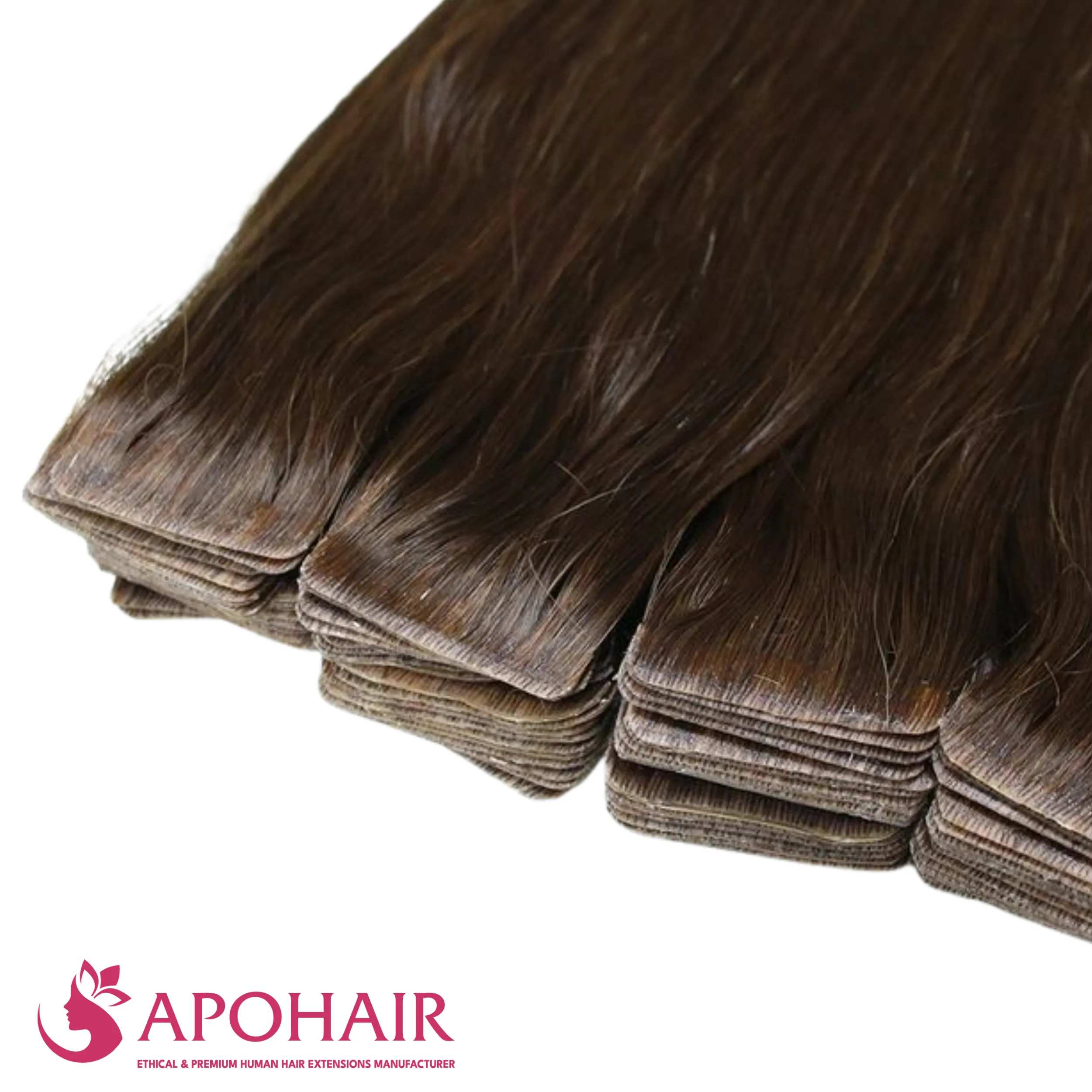
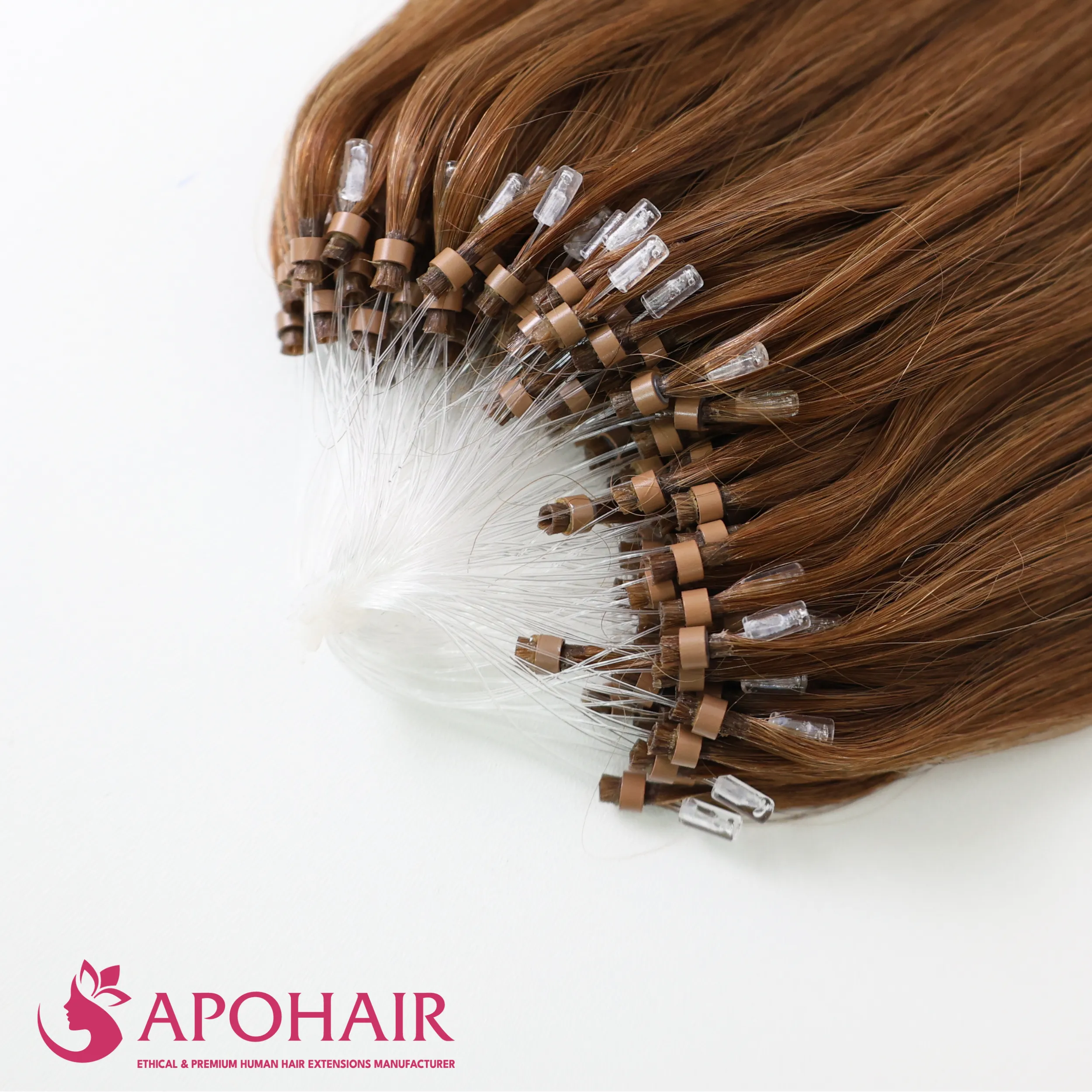
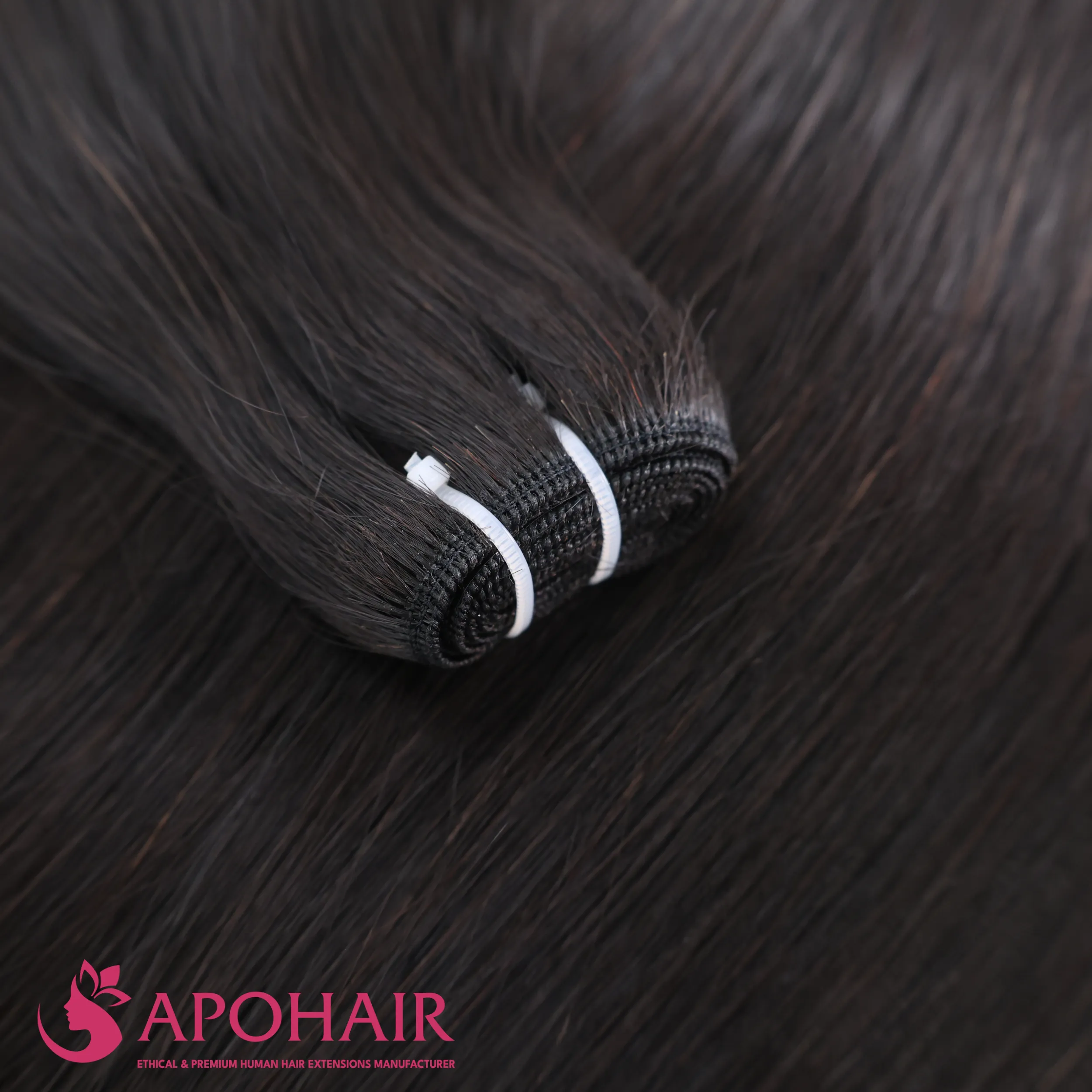
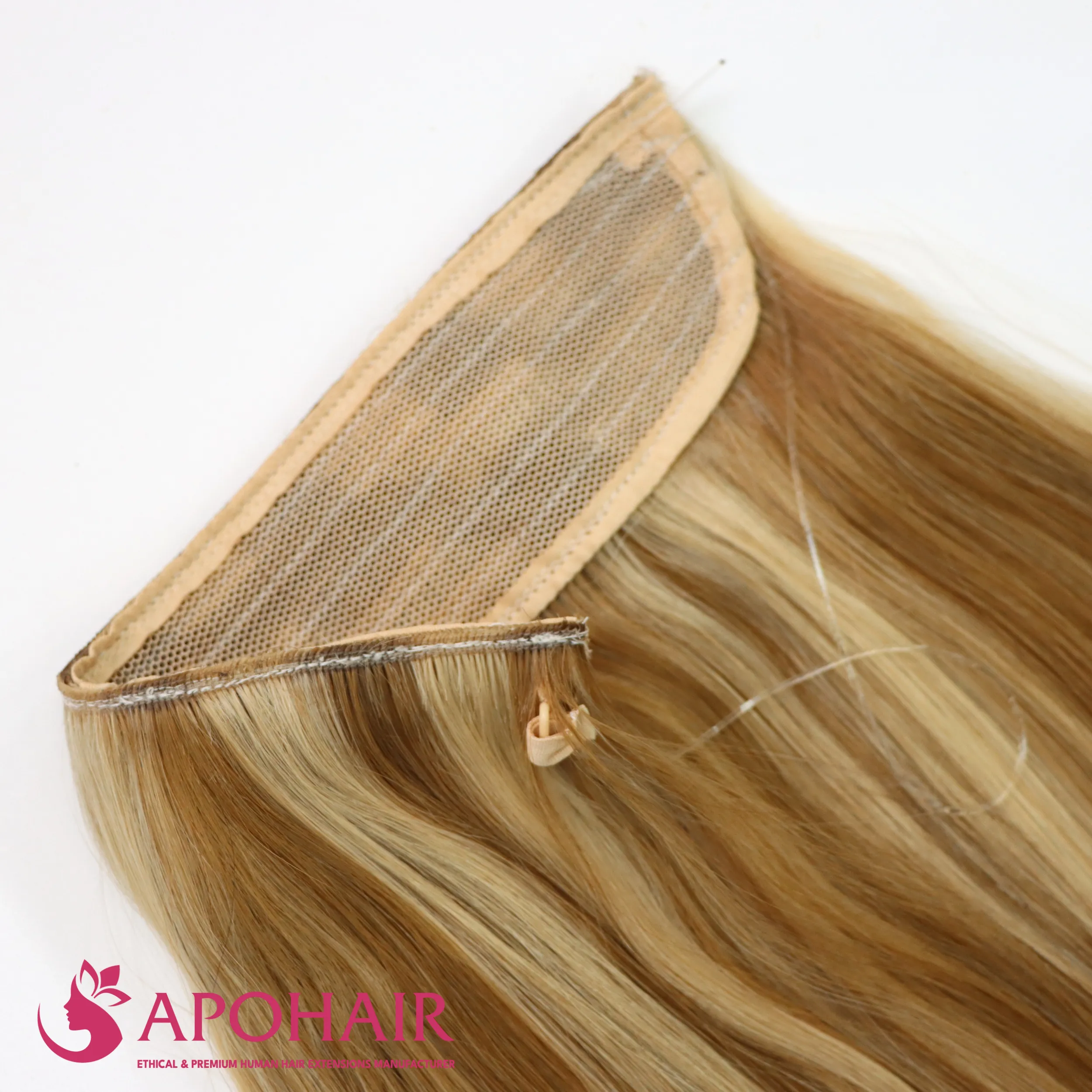
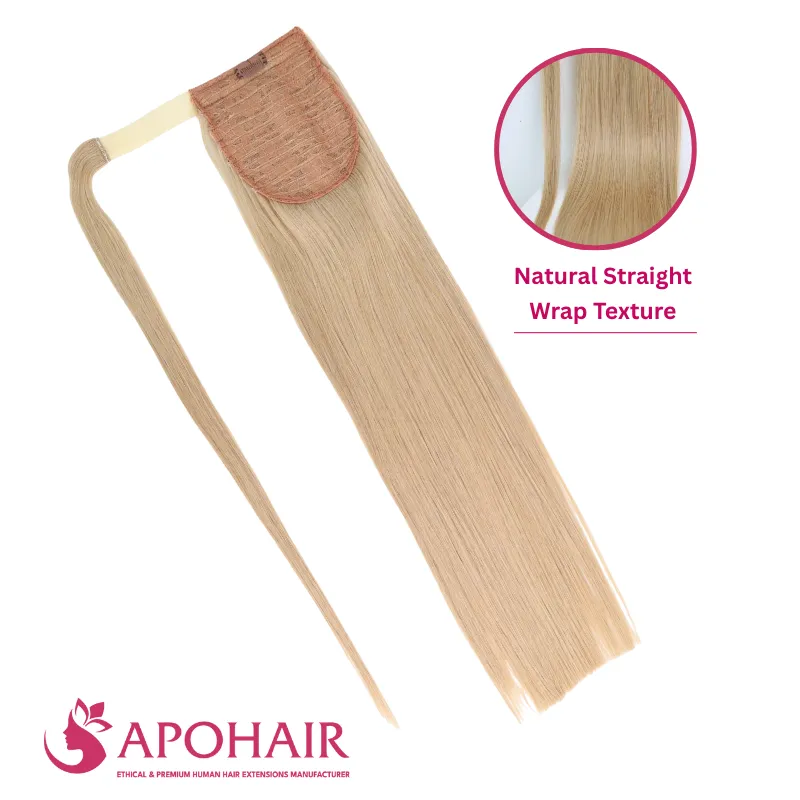
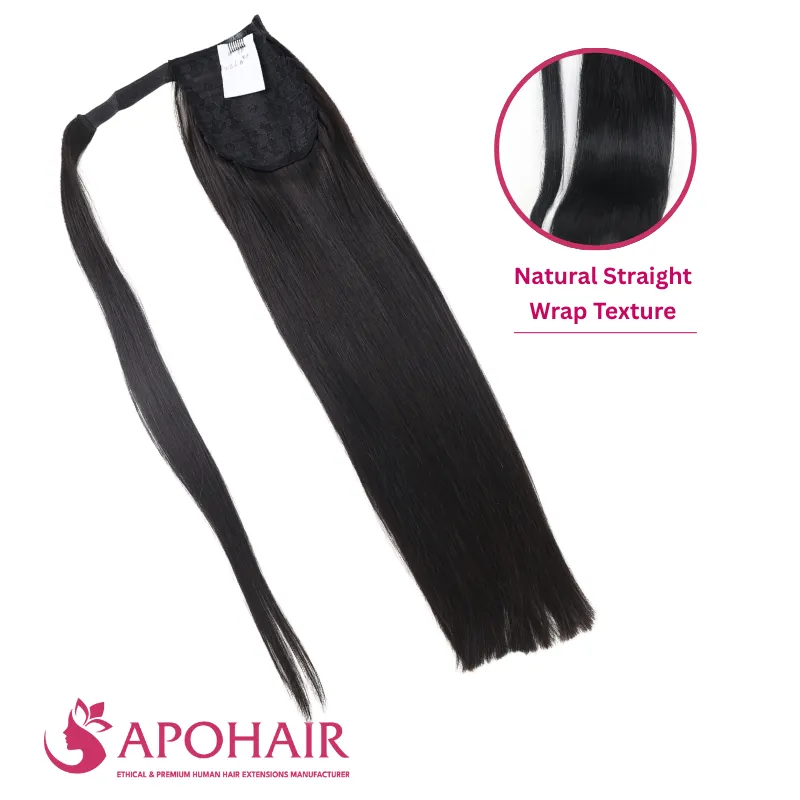
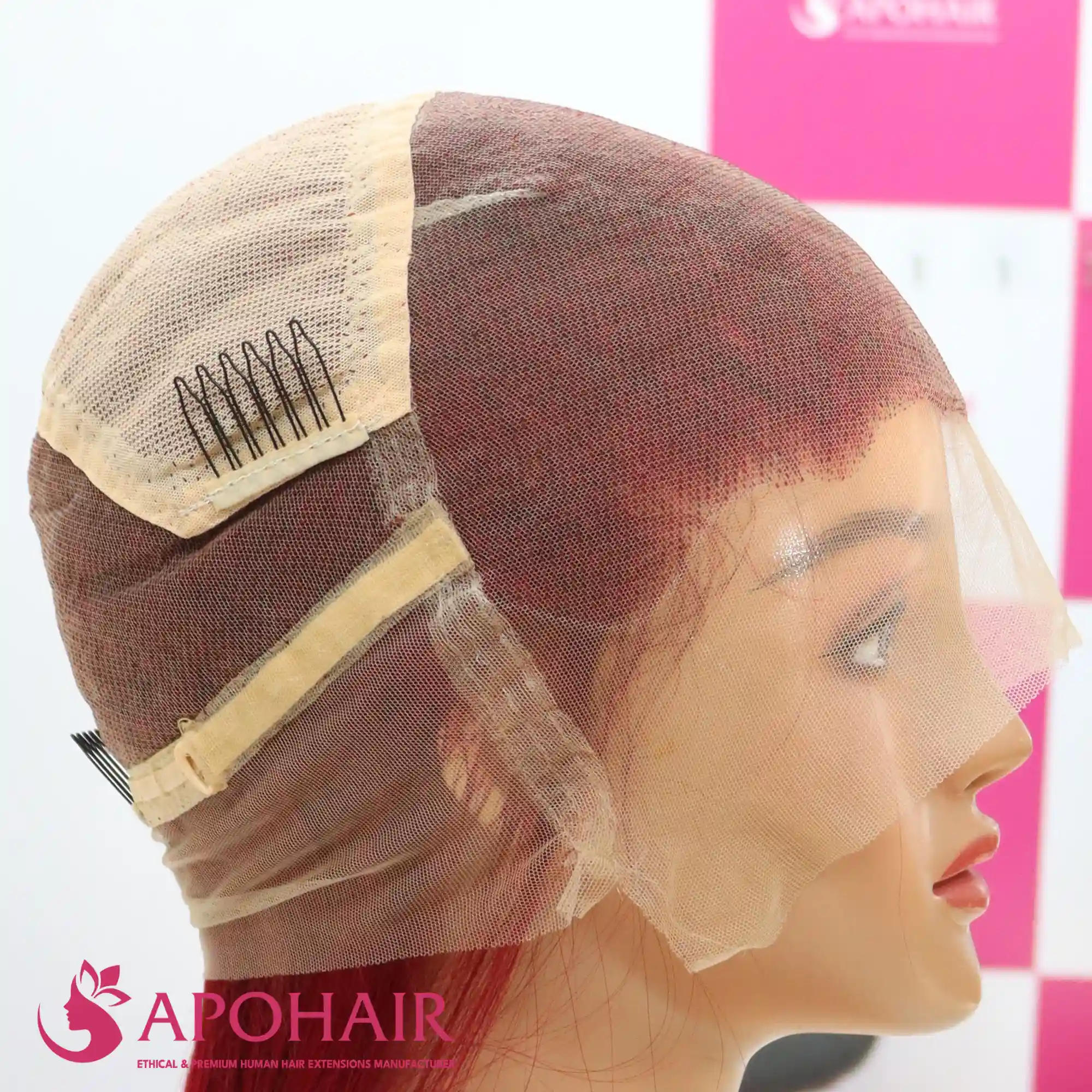
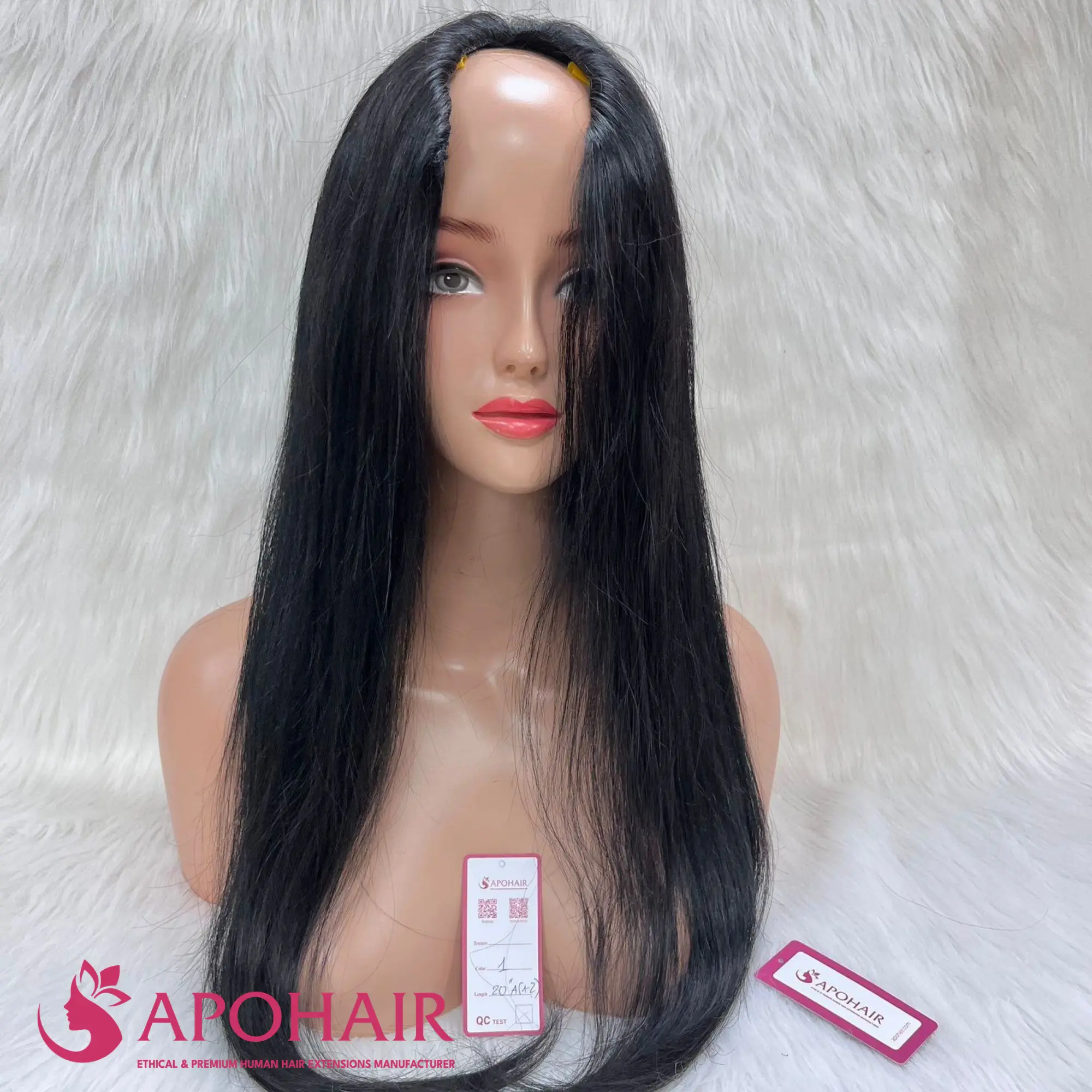
APOHAIR offers both coily and curly textures made from 100% Vietnamese human hair in all major extension types, including weft, tape-in, clip-in, keratin tip, bulk hair, and wigs, all produced at its factory in Vietnam.
APOHAIR classifies coily and curly textures into specific categories to match different client needs. Coily textures include Kinky Curly, Deep Curly, and 4C Coily, built for maximum volume and tight definition. Curly textures include Deep Wave, Water Wave, and Loose Curly, offering softer curl movement and greater flexibility. We create these textures by steaming hair bundles on specialized equipment and wrapping them around curl formers or wave rods, setting the pattern without synthetic additives so the curl behaves like natural human hair.
As a factory-direct manufacturer supplying 50+ countries, APOHAIR gives wholesale buyers consistent quality, ethical sourcing, and factory-direct pricing with no intermediaries.
- 100% Vietnamese Human Hair: Single-donor collection keeps texture and color consistent across every bundle. The intact cuticle layer accepts color treatment reliably and evenly.
- Cuticle-Aligned Technology: All cuticles face the same direction, eliminating tangling at the source and extending product lifespan.
- Ethical Sourcing: Hair is collected through a verified network of collectors in Vietnamese villages, with fair compensation confirmed at every step.
- Factory-Direct Pricing: No middlemen. Wholesale rates run 30 to 40% below standard retail market prices.
- 20+ Year Track Record: Operations backed by 1,000+ factory workers and 100+ dedicated sales staff.
- State-of-the-Art Manufacturing: A 33,000 m² (355,208 sq ft) factory in Nam Dinh Province houses modern production lines built for high-volume, consistent output.
- Global Distribution: Orders are processed within 24 hours and delivered to the US, UK, EU, Australia, Africa, and Asia within 2 to 7 business days.
- Quality Guarantee: A 7-day warranty with a free replacement policy covers any quality concern after delivery.
- Wholesale Flexibility: Orders start from a minimum of 200 grams, making APOHAIR accessible to boutique buyers and large-scale distributors alike.
APOHAIR transforms authentic raw Vietnamese hair into premium extensions trusted by salon owners and wholesalers worldwide. Our commitment: becoming a global leader in the hair industry through ethical practices, manufacturing excellence, and client success.
Ready to order coily or curly hair extensions wholesale? Contact APOHAIR today.
APOHAIR – ETHICAL & PREMIUM HUMAN HAIR EXTENSIONS MANUFACTURER
- Address: Building 3A, Lane 82 Duy Tan, Cau Giay, Hanoi, Vietnam
- Factory: Yen Luong Village, Y Yen District, Nam Dinh Province, Vietnam
- Phone: (+84) 862 132 366
- Email: wholesale@apohair.com
FAQs
1. What is the main difference between coily hair and curly hair?
Coily hair has tighter, smaller curls or zigzag patterns (Type 4), while curly hair has looser, more defined ringlets (Type 2 to 3). Coily hair also shrinks more and needs heavier moisture products.
2. Are curly and coily hair the same?
No, Coily hair is a subtype within the broader curly hair family, but carries tighter curl patterns, higher shrinkage, and greater moisture and care requirements than standard curly hair.
3. Which hair extensions are best for coily hair?
Kinky curly and afro curly extensions blend most naturally with coily hair types (4A to 4C) because their tight curl diameter and dense volume match the structure of naturally coily strands.
Conclusion
Coily hair (Type 4) and curly hair (Type 2-4) share the same textured family but behave very differently day to day. Coily strands are tighter, drier, and more fragile, requiring heavier products and protective care to stay healthy. Curly strands hold their shape more easily and respond well to lightweight moisture. Knowing your exact hair type helps you choose the right products, styles, and extensions for your routine.
For premium coily and curly textures in 100% Vietnamese human hair, APOHAIR supplies wholesale buyers worldwide with factory-direct quality and verified ethical sourcing.
Read more: Curly vs straight hair: What are the key differences?


 ABOUT US
 Human Hair Extensions
 Wholesale Tape-In Hair Extensions
 Clip-In Hair Extensions
 Wholesale Keratin Hair Extensions
 Weft Hair Extensions
 Human Hair Wigs
 Bulk Human Hair For Braiding
 BEST SELLING PRODUCTS
 Contact Us